
9 Books Recommended

The Passion Trap: How to Right an Unbalanced Relationship
by Dean C. Delis
Rating: 4.3 ⭐
• 2 recommendations ❤️
Who gets caught in the Passion Trap? It's the catch-22 of romantic The more deeply one partner falls in love, the more distant the other becomes. This is the passion trap, an emotional dynamic that results in increasing desire and desperation in the "one-down" lover, and dissatisfaction, often mingled with guilt and withdrawal, in the "one-up." Now Dr. Dean Delis, a renowned psychologist who believes the passion trap is both common and curable, shows you how to change the patterns that threaten your relationship. Drawing from his counseling work with individuals and couples, he offers fresh insights and powerful, proven techniques--from Trial Closeness to Healthy Distance--to help you and your partner rekindle romance and discover a new equilibrium of love and desire for a lifetime of happiness.

First came the days of the plague. Then came the dreams. Dark dreams that warned of the coming of the dark man. The apostate of death, his worn-down boot heels tramping the night roads. The warlord of the charnel house and Prince of Evil. His time is at hand. His empire grows in the west and the Apocalypse looms.For hundreds of thousands of fans who read The Stand in its original version and wanted more, this new edition is Stephen King's gift. And those who are listening to The Stand for the first time will discover a triumphant and eerily plausible work of the imagination that takes on the issues that will determine our survival.

Poor Charlie's Almanack: The Wit and Wisdom of Charles T. Munger
by Charles T. Munger
Rating: 4.6 ⭐
• 37 recommendations ❤️
EXPANDED THIRD EDITION includes Charlie's 2007 USC Law School Commencement address. Edited by Peter D. Kaufman. Brand New.
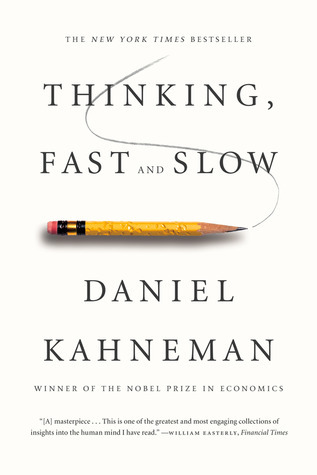
Major New York Times bestsellerWinner of the National Academy of Sciences Best Book Award in 2012Selected by the New York Times Book Review as one of the best books of 2011A Globe and Mail Best Books of the Year 2011 TitleOne of The Economist's 2011 Books of the Year One of The Wall Street Journal's Best Nonfiction Books of the Year 20112013 Presidential Medal of Freedom RecipientIn the international bestseller, Thinking, Fast and Slow, Daniel Kahneman, the renowned psychologist and winner of the Nobel Prize in Economics, takes us on a groundbreaking tour of the mind and explains the two systems that drive the way we think. System 1 is fast, intuitive, and emotional; System 2 is slower, more deliberative, and more logical. The impact of overconfidence on corporate strategies, the difficulties of predicting what will make us happy in the future, the profound effect of cognitive biases on everything from playing the stock market to planning our next vacation—each of these can be understood only by knowing how the two systems shape our judgments and decisions. Engaging the reader in a lively conversation about how we think, Kahneman reveals where we can and cannot trust our intuitions and how we can tap into the benefits of slow thinking. He offers practical and enlightening insights into how choices are made in both our business and our personal lives—and how we can use different techniques to guard against the mental glitches that often get us into trouble. Winner of the National Academy of Sciences Best Book Award and the Los Angeles Times Book Prize and selected by The New York Times Book Review as one of the ten best books of 2011, Thinking, Fast and Slow is destined to be a classic.

"If you live in an urban area, you probably don’t need to walk very far to find a martial arts dojo. "Why aren’t there dojos that teach rationality? "Very recently—in just the last few decades—the human species has acquired a great deal of new knowledge about human rationality. Experimental investigations of empirical human psychology; and theoretical probability theory to interpret what our experiments tell us; and evolutionary theory to explain the conclusions. "These fields give us new focusing lenses through which to view the landscape of our own minds. We have a shared vocabulary in which to describe problems and solutions. "Humanity may finally be ready to synthesize the martial art of to refine, share, systematize, and pass on techniques of personal rationality." When human brains try to do things, they can run into some very strange problems. Self-deception, confirmation bias, magical thinking—it sometimes seems our ingenuity is boundless when it comes to shooting ourselves in the foot. In Map and Territory , decision theorist Eliezer Yudkowsky asks what a “martial art” of rationality would look like, beginning with the basic fighting stance—the orientation toward the world that lets us get the most bang for our cognitive buck, that best positions us to understand and react to brains’ strange acts of self-destruction.

Suggestible You: The Curious Science of Your Brain's Ability to Deceive, Transform, and Heal
by Erik Vance
Rating: 4.1 ⭐
• 1 recommendation ❤️
National Geographic's riveting narrative explores the world of placebos, hypnosis, false memories, and neurology to reveal the groundbreaking science of our suggestible minds. Could the secrets to personal health lie within our own brains? Journalist Erik Vance explores the surprising ways our expectations and beliefs influence our bodily responses to pain, disease, and everyday events. Drawing on centuries of research and interviews with leading experts in the field, Vance takes us on a fascinating adventure from Harvard’s research labs to a witch doctor’s office in Catemaco, Mexico, to an alternative medicine school near Beijing (often called “China’s Hogwarts”). Vance’s firsthand dispatches will change the way you think—and feel. Expectations, beliefs, and self-deception can actively change our bodies and minds. Vance builds a case for our “internal pharmacy”—the very real chemical reactions our brains produce when we think we are experiencing pain or healing, actual or perceived. Supporting this idea is centuries of placebo research in a range of forms, from sugar pills to shock waves; studies of alternative medicine techniques heralded and condemned in different parts of the world (think crystals and chakras); and most recently, major advances in brain mapping technology. Thanks to this technology, we're learning how we might leverage our suggestibility (or lack thereof) for personalized medicine, and Vance brings us to the front lines of such study.

“I believe that it is right and proper for me, as a human being, to have an interest in the future, and what human civilization becomes in the future. One of those interests is the human pursuit of truth, which has strengthened slowly over the generations (for there was not always science). I wish to strengthen that pursuit further, in this generation. That is a wish of mine, for the Future. For we are all of us players upon that vast gameboard, whether we accept the responsibility or not. “And that makes your rationality my business. “Is this a dangerous idea? Yes, and not just pleasantly edgy 'dangerous.' People have been burned to death because some priest decided that they didn’t think the way they should. Deciding to burn people to death because they ‘don’t think properly’—that’s a revolting kind of reasoning, isn’t it? You wouldn’t want people to think that way, why, it’s disgusting. People who think like that, well, we’ll have to do something about them...“I agree! Here’s my Let’s argue against bad ideas but not set their bearers on fire.” Human intelligence is a an amazing capacity that has single-handedly put humans in a dominant position on Earth. When human intelligence defeats itself and goes off the rails, the fallout therefore tends to be a uniquely big deal. In How to Actually Change Your Mind , decision theorist Eliezer Yudkowsky asks how we can better identify and sort out our biases, integrate new evidence, and achieve lucidity in our daily lives. Because it really seems as though we should be able to do better— —and a three-pound all-purpose superweapon is a terrible thing to waste.
The Scout Mindset: Why Some People See Things Clearly and Others Don't
by Julia Galef
Rating: 4.1 ⭐
• 4 recommendations ❤️
When it comes to what we believe, humans see what they want to see. In other words, we have what Julia Galef calls a soldier mindset. From tribalism and wishful thinking, to rationalizing in our personal lives and everything in between, we are driven to defend the ideas we most want to believe--and shoot down those we don't. But if we want to get things right more often, argues Galef, we should train ourselves to have a scout mindset. Unlike the soldier, a scout's goal isn't to defend one side over the other. It's to go out, survey the territory, and come back with as accurate a map as possible. Regardless of what they hope to be the case, above all, the scout wants to know what's actually true. In The Scout Mindset, Galef shows that what makes scouts better at getting things right isn't that they're smarter or more knowledgeable than everyone else. It's a handful of emotional skills, habits, and ways of looking at the world--which anyone can learn. With fascinating examples ranging from how to survive being stranded in the middle of the ocean, to how Jeff Bezos avoids overconfidence, to how superforecasters outperform CIA operatives, to Reddit threads and modern partisan politics, Galef explores why our brains deceive us and what we can do to change the way we think.
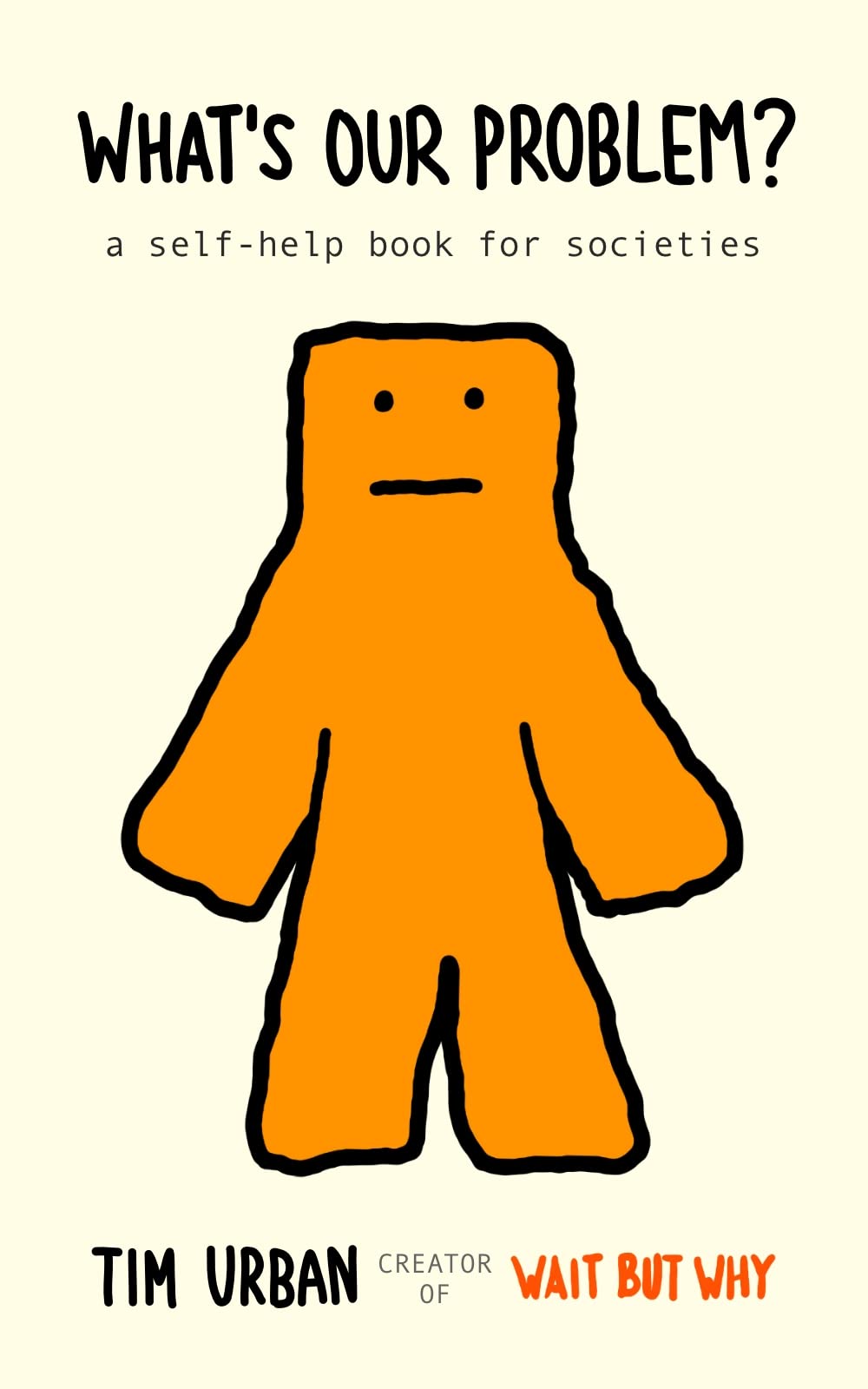
From the creator of the wildly popular blog Wait But Why, a fun and fascinating deep dive into what the hell is going on in our strange, unprecedented modern times.Between 2013 and 2016, Tim Urban became one of the world’s most popular bloggers, writing dozens of viral, long-form articlesabout everything from AI to colonizing Mars to procrastination. Then, he turned his attention to a new topic: the society around him. Why was everything such a mess? Why was everyone acting like such a baby? When did things get so tribal? Why do humans do this stuff?This massive topic sent Tim tumbling down his deepest rabbit hole yet, through mountains of history, evolutionary psychology, political theory, neuroscience, and modern-day political movements, as he tried to figure out the answer to a simple question: What’s our problem?Six years later, he emerged from the hole holding this book. What’s Our Problem? is a deep and expansive analysis of our modern times, in the classic style of Wait But Why, packed with original concepts, sticky metaphors, and 300 drawings. The book provides an entirely new framework and language for thinking and talking about today’s complex world. Instead of focusing on the usual left-center-right horizontal political axis, which is all about what we think, the book introduces a verticalaxis that explores how we think, as individuals and as groups. Readers will find themselves on a delightful and fascinating journey that will ultimately change the way they see the world around them.Anyway he wanted to say a lot more about all of this but there was a word limit on this book description so just go read the book.