
Linda Sarsour Recommended Books
Palestinian-American political activist
10 Books Recommended

Democracy Matters: Winning the Fight Against Imperialism
by Cornel West
Rating: 4.0 ⭐
• 2 recommendations ❤️
In his major bestseller, Race Matters, philosopher Cornel West burst onto the national scene with his searing analysis of the scars of racism in American democracy. In Democracy Matters, West returns to the analysis of the arrested development of democracy, both in America and in the crisis-ridden Middle East.In a strikingly original diagnosis, he argues that if America is to become a better steward of democratization around the world, we must first wake up to the long history of imperialist corruption that has plagued our own democracy. Both our failure to foster peace in the Israeli-Palestinian conflict and the crisis of Islamist anti-Americanism stem largely from hypocrisies in our dealings with the world.Racism and imperial expansionism have gone hand in hand in our country's inexorable drive toward hegemony, and our current militarism is only the latest expression of that drive. Even as we are shocked by Islamic fundamentalism, our own brand of fundamentalism, which West dubs Constantinian Christianity, has joined forces with imperialist corporate and political elites in an unholy alliance, and four decades after the murder of Dr. Martin Luther King, Jr., insidious racism still inflicts debilitating psychic pain on so many of our citizens.But there is a deep democratic tradition in America of impassioned commitment to the fight against imperialist corruptions---the last great expression of which was the civil rights movement led by Dr. King---and West brings forth the powerful voices of that great democratizing tradition in a brilliant and deeply moving call for the revival of our better democratic nature. His impassioned and provocative argument for the revitalization of America's democracy will reshape the terms of the raging national debate about America's role in today's troubled world.
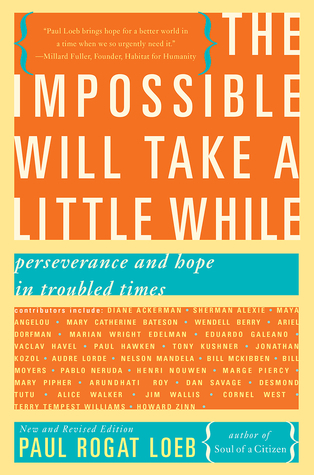
The Impossible Will Take a Little While: A Citizen's Guide to Hope in a Time of Fear
by Paul Rogat Loeb
Rating: 4.2 ⭐
• 2 recommendations ❤️
What keeps us going when times get tough? How do we keep on working for a more humane world, no matter how hard it sometimes seems? In a time when our involvement has never been needed more, this anthology of political hope will help readers with the essential work of healing our communities, our nation, our planet—despite all odds. In THE IMPOSSIBLE WILL TAKE A LITTLE WHILE, a phrase borrowed from Billie Holliday, the editor of Soul of a Citizen brings together fifty stories and essays that range across nations, eras, wars, and political movements.Danusha Goska, an Indiana activist with a paralyzing physical disability, writes about overcoming political immobilization, drawing on her history with the Peace Corps and Mother Teresa. Vaclav Havel, the former president of the Czech Republic, finds value in seemingly doomed or futile actions taken by oppressed peoples.Rosemarie Freeney Harding recalls the music that sustained the civil rights movement, and Paxus Calta-Star recounts the powerful vignette of an 18-year-old who launched the overthrow of Bulgaria’s dictatorship.Many of the essays are new, others classic works that continue to inspire. Together, these writers explore a path of heartfelt community involvement that leads beyond despair to compassion and hope. The voices collected in THE IMPOSSIBLE WILL TAKE A LITTLE WHILE will help keep us all working for a better world despite the obstacles.pt. 1. Seeds of the possible. From "The cure at Troy" / Seamus HeaneyA slender thread / Diane AckermanOrdinary resurrections / Jonathan KozolStanding up for children / Marian Wright EdelmanYou are brilliant and the earth is hiring / Paul HawkenPolitical paralysis / Danusha Veronica Goskapt. 2. Dark before the dawn. From "September 1, 1939" / W.H. AudenThe optimism of uncertainty / Howard ZinnOn being different / Dan SavageThe dark years / Nelson MandelaAn orientation of the heart / Václav HavelReluctant activists / Mary Pipherpt. 3. Everyday grace. "The peace of wild things" / Wendell BerryGate A-4 / Naomi Shihab NyeMountain music / Scott Russell SandersThe Sukkah of Shalom / Arthur WaskowGetting our gaze back / Rose Marie BergerFragile and hidden / Henri NouwenThere is a season / Parker Palmerpt. 4. Rebellious imagination. "Celebration of the human voice" / Eduardo Galeano"Last night as I was sleeping" / Antonio MachadaChildhood and poetry / Pablo NerudaTo love the marigold / Susan GriffinWalking with the wind / John LewisRough translation / Toni MirosevichJesus and Alinsky / Walter WinkStories from the cha cha cha / Vern HuffmanDo not go gentle / Sherman AlexieDespair is a lie we tell ourselves / Tony Kushnerpt. 5. Courage is contagious. "To be of use" / Marge PiercyThe transformation of silence / Audre LordeThe small work in the great work / Victoria SaffordWe are all Khaled Said / Wael GhonimArab revolutions / Stephen ZunesNot deterred / Paxus CaltaIn what do I place my trust? / Rosalie BertellFaith works / Jim WallisThe progressive story of America / Bill Moyerspt. 6. The global stage. "Imagine the angels of bread" / Martín EspadaKids, trees, and climate change / Mark HertsgaardCuritiba / Bill McKibben with a postscript by Paul Rogat LoebCome September / Arundhati RoyThe black hole / Ariel DorfmanBehemoth in a bathrobe / Carla Seaquistpt. 7. Radical dignity. "How have you spent your life?" / Jalaluddin RumiLetter from Birmingham Jail / Martin Luther King, JrThe real Rosa Parks / Paul Rogat LoebPrisoners of hope / Cornel WestRoad to redemption / Billy Wayne SinclairResisting terror / Peter Ackerman and Jack DuVallComposing a life story / Mary Catherine Batesonpt. 8. Beyond hope. "Origami emotion" / Elizabeth BarretteFrom "The New York poem" / Sam HamillStaying the course / Mary-Wynne AshfordThe elm dance / Joanna MacyIs there hope on climate change? / David RobertsThe inevitability trap / K.C. GoldenHoping against hope / Nadezhda MandelstamYou have to pick your team / Sonya Vetra Tinsley, as told to Paul Rogat LoebFrom Hope to hopelessness / Margaret Wheatleypt. 9. Only justice can stop a curse. "Still I rise" / Maya AngelouOnly justice can stop a curse / Alice WalkerThe clan of one-breasted women / Terry Tempest WilliamsNext year in Mas'Ha / StarhawkThe gruntwork of peace / Amos OzNo future without forgiveness / Desmond Tutu

On May 2, 1973, Black Panther Assata Shakur (aka JoAnne Chesimard) lay in a hospital, close to death, handcuffed to her bed, while local, state, and federal police attempted to question her about the shootout on the New Jersey Turnpike that had claimed the life of a white state trooper. Long a target of J. Edgar Hoover's campaign to defame, infiltrate, and criminalize Black nationalist organizations and their leaders, Shakur was incarcerated for four years prior to her conviction on flimsy evidence in 1977 as an accomplice to murder.This intensely personal and political autobiography belies the fearsome image of JoAnne Chesimard long projected by the media and the state. With wit and candor, Assata Shakur recounts the experiences that led her to a life of activism and portrays the strengths, weaknesses, and eventual demise of Black and White revolutionary groups at the hand of government officials. The result is a signal contribution to the literature about growing up Black in America that has already taken its place alongside The Autobiography of Malcolm X and the works of Maya Angelou.Two years after her conviction, Assata Shakur escaped from prison. She was given political asylum by Cuba, where she now resides.
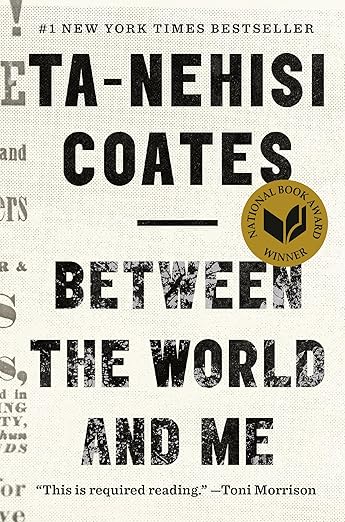
In a profound work that pivots from the biggest questions about American history and ideals to the most intimate concerns of a father for his son, Ta-Nehisi Coates offers a powerful new framework for understanding our nation’s history and current crisis. Americans have built an empire on the idea of “race,” a falsehood that damages us all but falls most heavily on the bodies of black women and men—bodies exploited through slavery and segregation, and, today, threatened, locked up, and murdered out of all proportion. What is it like to inhabit a black body and find a way to live within it? And how can we all honestly reckon with this fraught history and free ourselves from its burden?Between the World and Me is Ta-Nehisi Coates’s attempt to answer these questions in a letter to his adolescent son. Coates shares with his son—and readers—the story of his awakening to the truth about his place in the world through a series of revelatory experiences, from Howard University to Civil War battlefields, from the South Side of Chicago to Paris, from his childhood home to the living rooms of mothers whose children’s lives were taken as American plunder. Beautifully woven from personal narrative, reimagined history, and fresh, emotionally charged reportage, Between the World and Me clearly illuminates the past, bracingly confronts our present, and offers a transcendent vision for a way forward.-front flap

Freedom is a Constant Struggle: Ferguson, Palestine and the Foundations of a Movement
by Angela Y. Davis
Rating: 4.5 ⭐
• 2 recommendations ❤️
In these newly collected essays, interviews, and speeches, world-renowned activist and scholar Angela Y. Davis illuminates the connections between struggles against state violence and oppression throughout history and around the world.Reflecting on the importance of black feminism, intersectionality, and prison abolitionism for today's struggles, Davis discusses the legacies of previous liberation struggles, from the Black Freedom Movement to the South African anti-Apartheid movement. She highlights connections and analyzes today's struggles against state terror, from Ferguson to Palestine.Facing a world of outrageous injustice, Davis challenges us to imagine and build the movement for human liberation. And in doing so, she reminds us that "Freedom is a constant struggle."

When They Call You a Terrorist: A Black Lives Matter Memoir
by Patrisse Cullors
Rating: 4.5 ⭐
• 2 recommendations ❤️
THE INSTANT NEW YORK TIMES BESTSELLER.New York Times Editor’s Pick.Library Journal Best Books of 2019.TIME Magazine's "Best Memoirs of 2018 So Far."O , Oprah’s Magazine’s “10 Titles to Pick Up Now.”Politics & Current Events 2018 O.W.L. Book Awards WinnerThe Root Best of 2018"This remarkable book reveals what inspired Patrisse's visionary and courageous activism and forces us to face the consequence of the choices our nation made when we criminalized a generation. This book is a must-read for all of us." - Michelle Alexander, New York Times bestselling author of The New Jim CrowA poetic and powerful memoir about what it means to be a Black woman in America―and the co-founding of a movement that demands justice for all in the land of the free.Raised by a single mother in an impoverished neighborhood in Los Angeles, Patrisse Khan-Cullors experienced firsthand the prejudice and persecution Black Americans endure at the hands of law enforcement. For Patrisse, the most vulnerable people in the country are Black people. Deliberately and ruthlessly targeted by a criminal justice system serving a white privilege agenda, Black people are subjected to unjustifiable racial profiling and police brutality. In 2013, when Trayvon Martin’s killer went free, Patrisse’s outrage led her to co-found Black Lives Matter with Alicia Garza and Opal Tometi.Condemned as terrorists and as a threat to America, these loving women founded a hashtag that birthed the movement to demand accountability from the authorities who continually turn a blind eye to the injustices inflicted upon people of Black and Brown skin.Championing human rights in the face of violent racism, Patrisse is a survivor. She transformed her personal pain into political power, giving voice to a people suffering inequality and a movement fueled by her strength and love to tell the country―and the world―that Black Lives Matter.When They Call You a Terrorist is Patrisse Khan-Cullors and asha bandele’s reflection on humanity. It is an empowering account of survival, strength and resilience and a call to action to change the culture that declares innocent Black life expendable.

Black students' minds and bodies are under attack. We're fighting back."Again the folks at Rethinking Schools have stepped out to produce a timely volume that should become a central staple in how we understand race and the radical imaginary in K-12 classrooms. The heft and depth of Teaching for Black Lives stands as a revolutionary tool in the resistance against racist, fascist, white nationalist ideology in education." - David Stovall, Professor of African American Studies and Educational Policy Studies, University of Illinois Chicago.CONTENTSSection 1 — Making Black Lives Matter in Our SchoolsSection 2 — Enslavement, Civil Rights, and Black LiberationSection 3 — Gentrification, Displacement, and Anti-BlacknessSection 4 — Discipline, the Schools-to-Prison Pipeline, and Mass IncarcerationSection 5 — Teaching Blackness, Loving Blackness, and Exploring Identity

Katherine Franke makes a powerful case for reparations for Black Americans by amplifying the stories of formerly enslaved people and calling for repair of the damage caused by the legacy of American slavery. Repair invites readers to explore the historical context for reparations, offering a detailed account of the circumstances that surrounded the emancipation of enslaved Black people in two unique contexts, the Sea Islands of South Carolina and Davis Bend, Mississippi, Jefferson Davis’s former plantation. Through these two critical historical examples, Franke unpacks intergenerational, systemic racism and white privilege at the heart of American society and argues that reparations for slavery are necessary, overdue and possible. Katherine Franke is one of the nation’s leading scholars writing on law, racial justice, and African American history. Her first book was The Perils of Marriage Equality . She is the Sulzbacher Professor of Law, Gender and Sexuality Studies at Columbia University and chair of the board of Trustees of the Center for Constitutional Rights.

Eyes to the Wind: A Memoir of Love and Death, Hope and Resistance
by Ady Barkan
Rating: 4.3 ⭐
• 2 recommendations ❤️
In this “gripping story of resistance and the triumph of human will” (Senator Elizabeth Warren), activist and subject of the new documentary Not Going Quietly Ady Barkan explores his life with ALS and how his diagnosis gave him a profound new understanding of his commitment to social justice for all.Ady Barkan loved taking afternoon runs on the California coast and holding his newborn son, Carl. But one day, he noticed a troubling weakness in his hand. At first, he brushed it off as carpal tunnel syndrome, but after a week of neurological exams and two MRIs, he learned the cause of the amyotrophic lateral sclerosis, better known as ALS or Lou Gehrig’s disease. At age thirty-two, Ady was given just three to four years to live. Yet despite the devastating diagnosis, he refused to let his remaining days go to waste.Eyes to the Wind is a rousing memoir featuring intertwining storylines about determination, perseverance, and how to live a life filled with purpose and intention. The first traces Ady’s battle with how he turned the initial shock and panic from his diagnosis into a renewed commitment to social justice—not despite his disability but because of it. The second, told in flashbacks, illustrates Ady’s journey from a goofy political nerd to a prominent figure in the enduring fight for equity and justice whose “selfless activism fighting to make health care a right should be an inspiration to us all” (Senator Bernie Sanders).From one of today’s most vocal advocates for social justice, Eyes to the Wind ’s “primary question is how to live when you are dying? Barkan’s answer is to share, open up, act, and capital-R Resist, and his memoir, clearly and candidly written, establishes a legacy” ( Booklist ).

This edited volume makes an impassioned and informed case for the central place of Palestine in socialist organizing and of socialism in the struggle to free Palestine.Palestine: A Socialist Introduction systematically tackles a number of important aspects of the Palestinian struggle for liberation, contextualizing it in an increasingly polarized world and offering a socialist perspective on how full liberation can be won.Through an internationalist, anti-imperialist lens, this book explores the links between the struggle for freedom in the United States and that in Palestine, and beyond. It examines both the historical and contemporary trajectory of the Palestine solidarity movement in order to glean lessons for today’s organizers, and compellingly lays out the argument that, in order to achieve justice in Palestine, the movement has to take up the question of socialism regionally and internationally.Contributors include: Jehad Abusalim, Shireen Akram-Boshar, Omar Barghouti, Nada Elia, Toufic Haddad, Omar Hassan, Remi Kanazi, Annie Levin, Mostafa Omar, Khury Petersen-Smith, and Daphna Thier.