
Kevin Systrom Recommended Books
American computer programmer and entrepreneur (born 1983)
17 Books Recommended
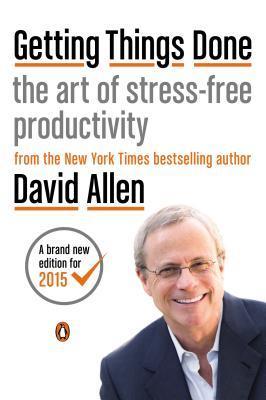
Getting Things Done: The Art of Stress-Free Productivity
by David Allen
Rating: 4.1 ⭐
• 14 recommendations ❤️
A completely revised and updated edition of the blockbuster bestseller from the personal productivity guru. (Fast Company) Since it was first published almost fifteen years ago, David Allen's Getting Things Done has become one of the most influential business books of its era, and the ultimate book on personal organization. GTD is now shorthand for an entire way of approaching professional and personal tasks, and has spawned an entire culture of websites, organizational tools, seminars, and offshoots. Allen has rewritten the book from start to finish, tweaking his classic text with important perspectives on the new workplace, and adding material that will make the book fresh and relevant for years to come. This new edition of Getting Things Done will be welcomed not only by its hundreds of thousands of existing fans but also by a whole new generation eager to adopt its proven principles.
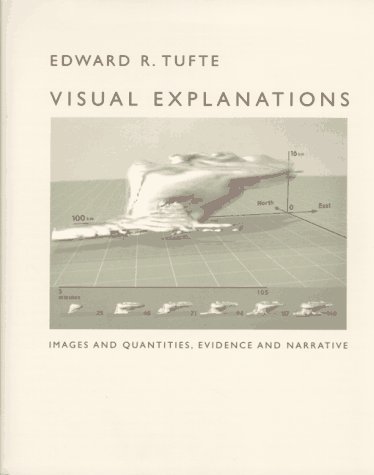
Visual Explanations: Images and Quantities, Evidence and Narrative
by Edward R. Tufte
Rating: 4.3 ⭐
• 4 recommendations ❤️
Few would disagree: Life in the information age can be overwhelming. Through computers, the Internet, the media, and even our daily newspapers, we are awash in a seemingly endless stream of charts, maps, infographics, diagrams, and data. Visual Explanations is a navigational guide through this turbulent sea of information. The book is an essential reference for anyone involved in graphic, web, or multimedia design, as well as for educators and lecturers who use graphics in presentations or classes.Jacket design: Dmitry Krasny.Other artwork by Bonnie Scranton, Dmitry Krasny, and Weilin Wu.

The Anatomy of Buzz: How to Create Word of Mouth Marketing
by Emanuel Rosen
Rating: 3.8 ⭐
• 2 recommendations ❤️
The first guide to creating the word-of-mouth magic that breaks through the skepticism and information overload of today's consumers, and drive sales--and profits--to new heights.As Newsweek recently proclaimed, "Buzz greases the great conveyor belt of culture and commerce, moving everything from movies to fashions of the body and mind faster and faster."Now available in paperback, The Anatomy of Buzz , written by former marketing VP Emanuel Rosen, pinpoints the products and services that benefit the most from buzz and offers specific strategies for creating and sustaining effective word-of-mouth strategies. Drawing on interviews with more than 150 marketing executives who have successfully built buzz for major brands, Rosen describes the ins-and-outs of attracting the attention of influential first-users and "bigmouth" movers-and-shakers, and discusses proven techniques for stimulating customer-to-customer selling–including how companies can spread the word to new territories by taking advantage of customer hubs and networks on the Internet and elsewhere.Recent surveys show that 74 percent of young people rely to some extent on others when selecting a car, that 56 percent of moviegoers follow the recommendations of friends, and that 65 percent of the people who bought a Palm Pilot were inspired by the enthusiasm of others. With The Anatomy of Buzz , business leaders have what they need to reignite excitement about an existing product or service or turbocharge the launch of a new product.

The Goal: 40th Anniversary Edition: A Process of Ongoing Improvement
by Eliyahu M. Goldratt
Rating: 4.1 ⭐
• 9 recommendations ❤️
*A Graphic Novel version of this title is now available: "The Goal: A Business Graphic Novel"30th Anniversary Edition. Written in a fast-paced thriller style, The Goal, a gripping novel, is transforming management thinking throughout the world. It is a book to recommend to your friends in industry - even to your bosses - but not to your competitors. Alex Rogo is a harried plant manager working ever more desperately to try improve performance. His factory is rapidly heading for disaster. So is his marriage. He has ninety days to save his plant - or it will be closed by corporate HQ, with hundreds of job losses. It takes a chance meeting with a professor from student days - Jonah - to help him break out of conventional ways of thinking to see what needs to be done. The story of Alex's fight to save his plant is more than compulsive reading. It contains a serious message for all managers in industry and explains the ideas, which underline the Theory of Constraints (TOC), developed by Eli Goldratt.One of Eli Goldratt s convictions was that the goal of an individual or an organization should not be defined in absolute terms. A good definition of a goal is one that sets us on a path of ongoing improvement.Pursuing such a goal necessitates more than one breakthrough. In fact it requires many. To be in a position to identify these breakthroughs we should have a deep understanding of the underlying rules of our environment. Twenty-five years after writing The Goal, Dr. Goldratt wrote Standing on the Shoulders of Giants. In this article he provided the underlying rules of operations. This article appears at the end of this book.Like Mrs. Fields and her cookies,The Goal was too tasty to remain obscure. Companies began buying big batches and management schools included it in their curriculums. Fortune MagazineA survey of the reading habits of managers found that though they buy books by the likes of Tom Peters for display purposes, the one management book they have actually read from cover to cover is The Goal. The Economist"Goal readers are now doing the best work of their lives. Success MagazineA factory may be an unlikely setting for a novel, but the book has been wildly effective.: Tom PetersRequired reading for Amazon's Management.

We Wish to Inform You That Tomorrow We Will Be Killed with Our Families
by Philip Gourevitch
Rating: 4.2 ⭐
• 4 recommendations ❤️
In April of 1994, the government of Rwanda called on everyone in the Hutu majority to kill everyone in the Tutsi minority. Over the next three months, 800,000 Tutsis were murdered in the most unambiguous case of genocide since Hitler's war against the Jews. Philip Gourevitch's haunting work is an anatomy of the killings in Rwanda, a vivid history of the genocide's background, and an unforgettable account of what it means to survive in its aftermath.
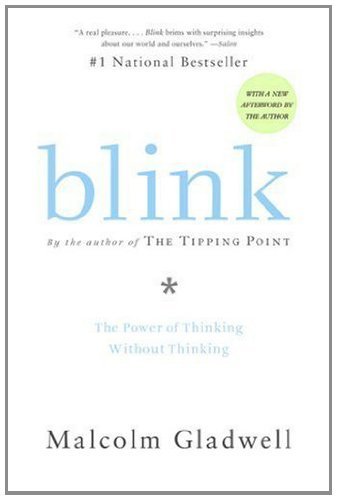
Drawing on cutting-edge neuroscience and psychology and displaying all of the brilliance that made The Tipping Point a classic, Blink changes the way you'll understand every decision you make. Never again will you think about thinking the same way.Malcolm Gladwell redefined how we understand the world around us. Now, in Blink, he revolutionizes the way we understand the world within. Blink is a book about how we think without thinking, about choices that seem to be made in an instant - in the blink of an eye - that actually aren't as simple as they seem. Why are some people brilliant decision makers, while others are consistently inept? Why do some people follow their instincts and win, while others end up stumbling into error? How do our brains really work - in the office, in the classroom, in the kitchen, and in the bedroom? And why are the best decisions often those that are impossible to explain to others? In Blink we meet the psychologist who has learned to predict whether a marriage will last, based on a few minutes of observing a couple; the tennis coach who knows when a player will double-fault before the racket even makes contact with the ball; the antiquities experts who recognize a fake at a glance. Here, too, are great failures of "blink": the election of Warren Harding; "New Coke"; and the shooting of Amadou Diallo by police. Blink reveals that great decision makers aren't those who process the most information or spend the most time deliberating, but those who have perfected the art of "thin-slicing" - filtering the very few factors that matter from an overwhelming number of variables.

How to Read a Book: The Classic Guide to Intelligent Reading
by Mortimer J. Adler
Rating: 4.2 ⭐
• 5 recommendations ❤️
With more than half a million paperback copies in print and now in this stunning hardcover keepsake edition, How to Read a Book is the classic and definitive guide to reading comprehension and retention for students of literature, scholars across disciplines, and anyone who just loves to read.Originally written in 1940 and first published by Simon & Schuster in 1972, How to Read a Book introduces and elucidates the various levels of reading and how to achieve them in order to gain the most understanding and insight from any book. From elementary reading, through systematic skimming and inspectional reading, to speed reading and beyond, readers will learn when and how to “judge a book by its cover,” perceive structure no matter the prose, read critically, and extract the author’s message from the text.Also included are specific reading techniques that work best for reading particular genres, whether they be practical books, imaginative literature, plays, poetry, history, science and mathematics, philosophy, or social science works. A recommended reading list and multiple comprehension tests are incorporated as well in order to measure progress in reading skills, speed, and understanding.As poignant and applicable today as it was nearly seventy-five years ago, this beautiful hardcover edition is the perfect way for you to discover or rediscover How to Read a Book, a rare phenomenon and the best and most successful guide to reading comprehension.

The Tipping Point: How Little Things Can Make a Big Difference
by Malcolm Gladwell
Rating: 4.0 ⭐
• 17 recommendations ❤️
From the bestselling author of The Bomber Mafia: discover Malcolm Gladwell's breakthrough debut and explore the science behind viral trends in business, marketing, and human behavior.The tipping point is that magic moment when an idea, trend, or social behavior crosses a threshold, tips, and spreads like wildfire. Just as a single sick person can start an epidemic of the flu, so too can a small but precisely targeted push cause a fashion trend, the popularity of a new product, or a drop in the crime rate. This widely acclaimed bestseller, in which Malcolm Gladwell explores and brilliantly illuminates the tipping point phenomenon, is already changing the way people throughout the world think about selling products and disseminating ideas.
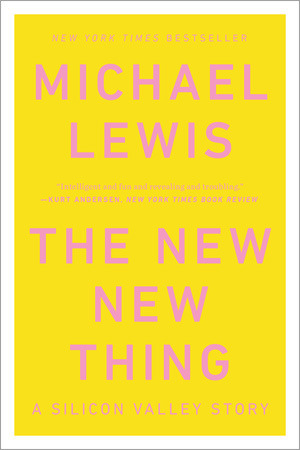
In the weird glow of the dying millennium, Michael Lewis set out on a safari through Silicon Valley to find the world’s most important technology entrepreneur. He found this in Jim Clark, a man whose achievements include the founding of three separate billion-dollar companies. Lewis also found much more, and the result—the best-selling book The New New Thing—is an ingeniously conceived history of the Internet revolution.

Nudge: Improving Decisions About Health, Wealth, and Happiness
by Richard H. Thaler
Rating: 3.9 ⭐
• 6 recommendations ❤️
From the winner of the 2017 Nobel Prize in Economics, Richard H. Thaler, and Cass R. Sunstein: a revelatory look at how we make decisionsNew York Times bestsellerNamed a Best Book of the Year by The Economist and the Financial Times Every day we make choices—about what to buy or eat, about financial investments or our children’s health and education, even about the causes we champion or the planet itself. Unfortunately, we often choose poorly. Nudge is about how we make these choices and how we can make better ones. Using dozens of eye-opening examples and drawing on decades of behavioral science research, Nobel Prize winner Richard H. Thaler and Harvard Law School professor Cass R. Sunstein show that no choice is ever presented to us in a neutral way, and that we are all susceptible to biases that can lead us to make bad decisions. But by knowing how people think, we can use sensible “choice architecture” to nudge people toward the best decisions for ourselves, our families, and our society, without restricting our freedom of choice.

A concise survey of the culture and civilization of mankind, The Lessons of History is the result of a lifetime of research from Pulitzer Prize–winning historians Will and Ariel Durant.With their accessible compendium of philosophy and social progress, the Durants take us on a journey through history, exploring the possibilities and limitations of humanity over time. Juxtaposing the great lives, ideas, and accomplishments with cycles of war and conquest, the Durants reveal the towering themes of history and give meaning to our own.

The Wisdom of Crowds: Why the Many Are Smarter Than the Few
by James Surowiecki
Rating: 3.7 ⭐
• 8 recommendations ❤️
In this fascinating book, New Yorker business columnist James Surowiecki explores a deceptively simple idea: Large groups of people are smarter than an elite few, no matter how brilliant -- better at solving problems, fostering innovation, coming to wise decisions, even predicting the future.With boundless erudition and in delightfully clear prose, Surowiecki ranges across fields as diverse as popular culture, psychology, ant biology, behavioral economics, artificial intelligence, military history, and politics to show how this simple idea offers important lessons for how we live our lives, select our leaders, run our companies, and think about our world.

Most startups fail. But many of those failures are preventable. The Lean Startup is a new approach being adopted across the globe, changing the way companies are built and new products are launched. Eric Ries defines a startup as an organization dedicated to creating something new under conditions of extreme uncertainty. This is just as true for one person in a garage or a group of seasoned professionals in a Fortune 500 boardroom. What they have in common is a mission to penetrate that fog of uncertainty to discover a successful path to a sustainable business.The Lean Startup approach fosters companies that are both more capital efficient and that leverage human creativity more effectively. Inspired by lessons from lean manufacturing, it relies on "validated learning," rapid scientific experimentation, as well as a number of counter-intuitive practices that shorten product development cycles, measure actual progress without resorting to vanity metrics, and learn what customers really want. It enables a company to shift directions with agility, altering plans inch by inch, minute by minute.Rather than wasting time creating elaborate business plans, The Lean Startup offers entrepreneurs - in companies of all sizes - a way to test their vision continuously, to adapt and adjust before it's too late. Ries provides a scientific approach to creating and managing successful startups in a age when companies need to innovate more than ever.

On a winter day in 1903, on the remote Outer Banks of North Carolina, two brothers changed history. But it would take the world some time to believe that The age of flight had begun, with the first heavier-than-air powered machine carrying a pilot.Far more than a couple of Dayton bicycle mechanics who happened to hit on success, Wilbur and Orville Wright were men of exceptional ability, unyielding determination, and far-ranging intellectual interest and curiosity. Two-time Pulitzer Prize winner David McCullough tells the dramatic story of how these courageous brothers taught the world how to fly - and how their devoted sister, Katherine, played a far more important role than has been generally understood.

Competing Against Luck: The Story of Innovation and Customer Choice
by Clayton M. Christensen
Rating: 4.1 ⭐
• 5 recommendations ❤️
The foremost authority on innovation and growth presents a path-breaking book every company needs to transform innovation from a game of chance to one in which they develop products and services customers not only want to buy, but are willing to pay premium prices for.How do companies know how to grow? How can they create products that they are sure customers want to buy? Can innovation be more than a game of hit and miss? Harvard Business School professor Clayton Christensen has the answer. A generation ago, Christensen revolutionized business with his groundbreaking theory of disruptive innovation. Now, he goes further, offering powerful new insights.After years of research, Christensen has come to one critical conclusion: our long held maxim—that understanding the customer is the crux of innovation—is wrong. Customers don’t buy products or services; they "hire" them to do a job. Understanding customers does not drive innovation success, he argues. Understanding customer jobs does. The "Jobs to Be Done" approach can be seen in some of the world’s most respected companies and fast-growing startups, including Amazon, Intuit, Uber, Airbnb, and Chobani yogurt, to name just a few. But this book is not about celebrating these successes—it’s about predicting new ones.Christensen contends that by understanding what causes customers to "hire" a product or service, any business can improve its innovation track record, creating products that customers not only want to hire, but that they’ll pay premium prices to bring into their lives. Jobs theory offers new hope for growth to companies frustrated by their hit and miss efforts.This book carefully lays down Christensen’s provocative framework, providing a comprehensive explanation of the theory and why it is predictive, how to use it in the real world—and, most importantly, how not to squander the insights it provides.

It is because mathematics is often misunderstood, it is commonlybelieved it has nothing to say about politics. The high schoolexperience with mathematics, for so many the lasting impressionof the subject, suggests that mathematics is the study of numbers,operations, formulas, and manipulations of symbols. Thosebelieving this is the extent of mathematics might concludemathematics has no relevance to politics. This book counters this impression.The second edition of this popular book focuses on mathematical reasoningabout politics. In the search for ideal ways to make certain kindsof decisions, a lot of wasted effort can be averted if mathematics can determine thatfinding such an ideal is actually impossible in the first place.In the first three parts of this book, we address the following threepolitical questions:(1) Is there a good way to choose winners of elections?(2) Is there a good way to apportion congressional seats?(3) Is there a good way to make decisions in situations of conflict anduncertainty?In the fourth and final part of this book, we examine the ElectoralCollege system that is used in the United States to select a president.There we bring together ideas that are introduced in each of the threeearlier parts of the book.

Ray Dalio, one of the world’s most successful investors and entrepreneurs, shares the unconventional principles that he’s developed, refined, and used over the past forty years to create unique results in both life and business—and which any person or organization can adopt to help achieve their goals.In 1975, Ray Dalio founded an investment firm, Bridgewater Associates, out of his two-bedroom apartment in New York City. Forty years later, Bridgewater has made more money for its clients than any other hedge fund in history and grown into the fifth most important private company in the United States, according to Fortune magazine. Dalio himself has been named to Time magazine’s list of the 100 most influential people in the world. Along the way, Dalio discovered a set of unique principles that have led to Bridgewater’s exceptionally effective culture, which he describes as “an idea meritocracy that strives to achieve meaningful work and meaningful relationships through radical transparency.” It is these principles, and not anything special about Dalio—who grew up an ordinary kid in a middle-class Long Island neighborhood—that he believes are the reason behind his success.In Principles, Dalio shares what he’s learned over the course of his remarkable career. He argues that life, management, economics, and investing can all be systemized into rules and understood like machines. The book’s hundreds of practical lessons, which are built around his cornerstones of “radical truth” and “radical transparency,” include Dalio laying out the most effective ways for individuals and organizations to make decisions, approach challenges, and build strong teams. He also describes the innovative tools the firm uses to bring an idea meritocracy to life, such as creating “baseball cards” for all employees that distill their strengths and weaknesses, and employing computerized decision-making systems to make believability-weighted decisions. While the book brims with novel ideas for organizations and institutions, Principles also offers a clear, straightforward approach to decision-making that Dalio believes anyone can apply, no matter what they’re seeking to achieve.Here is a rare opportunity to gain proven advice unlike anything you’ll find in the conventional business press.