
Kevin Kelly Recommended Books
American author and co-founder of Wired magazine
20 Books Recommended

When Walt Whitman self-published "Leaves of Grass" in 1855, he rocked the literary world and forever changed the course of poetry. In subsequent editions, Whitman continued to revise and expand his poems--but none matched the raw power and immediacy of the first edition. This beautifully designed volume presents the 1855 "Leaves of Grass" in its entirety, unchanged, along with Ralph Waldo Emerson's famous letter to Whitman. [Published by www.AmericanRenaissanceBooks.com.]

When The Sound of the One Hand came out in Japan in 1916 it caused a scandal. Zen was a secretive practice, its wisdom relayed from master to novice in strictest privacy. That a handbook existed recording not only the riddling koans that are central to Zen teaching but also detailing the answers to them seemed to mark Zen as rote, not revelatory.For all that, The Sound of the One Hand opens the door to Zen like no other book. Including koans that go back to the master who first brought the koan teaching method from China to Japan in the eighteenth century, this book offers, in the words of the translator, editor, and Zen initiate Yoel Hoffmann, “the clearest, most detailed, and most correct picture of Zen” that can be found. What we have here is an extraordinary introduction to Zen thought as lived thought, a treasury of problems, paradoxes, and performance that will appeal to artists, writers, and philosophers as well as Buddhists and students of religion.

Peopleware asserts that most software development projects fail because of failures within the team running them. This strikingly clear, direct book is written for software development-team leaders and managers, but it's filled with enough commonsense wisdom to appeal to anyone working in technology. Authors Tom DeMarco and Timothy Lister include plenty of illustrative, often amusing anecdotes; their writing is light, conversational, and filled with equal portions of humor and wisdom, and there is a refreshing absence of "new age" terms and multistep programs. The advice is presented straightforwardly and ranges from simple issues of prioritization to complex ways of engendering harmony and productivity in your team. Peopleware is a short read that delivers more than many books on the subject twice its size.

Regional Advantage: Culture and Competition in Silicon Valley and Route 128
by AnnaLee Saxenian
Rating: 4.0 ⭐
• 2 recommendations ❤️
Why is it that in the ’90s, business in California’s Silicon Valley flourished, while along Route 128 in Massachusetts it declined? The answer, Annalee Saxenian suggests, has to do with the fact that despite similar histories and technologies, Silicon Valley developed a decentralized but cooperative industrial system while Route 128 came to be dominated by independent, self-sufficient corporations. The result of more than one hundred interviews, this compelling analysis highlights the importance of local sources of competitive advantage in a volatile world economy.

NEW YORK TIMES BESTSELLER • The classic work that predicted the anxieties of a world upended by rapidly emerging technologies—and now provides a road map to solving many of our most pressing crises. “Explosive . . . brilliantly formulated.” — The Wall Street Journal Future Shock is the classic that changed our view of tomorrow. Its startling insights into accelerating change led a president to ask his advisers for a special report, inspired composers to write symphonies and rock music, gave a powerful new concept to social science, and added a phrase to our language. Published in over fifty countries, Future Shock is the most important study of change and adaptation in our time. In many ways, Future Shock is about the present. It is about what is happening today to people and groups who are overwhelmed by change. Change affects our products, communities, organizations—even our patterns of friendship and love. But Future Shock also illuminates the world of tomorrow by exploding countless clichés about today. It vividly describes the emerging global the rise of new businesses, subcultures, lifestyles, and human relationships—all of them temporary. Future Shock will intrigue, provoke, frighten, encourage, and, above all, change everyone who reads it.

One of the most influential books in the history of literature, recognized as the greatest literary masterpiece in Arabic, the Qur'an is the supreme authority and living source of all Islamic teaching, the sacred text that sets out the creed, rituals, ethics, and laws of Islam. Yet despite the growing interest in Islamic teachings and culture, there has never been a truly satisfactory English translation of the Qur'an, until now.This superb new translation of the Qur'an is written in contemporary language that remains faithful to the meaning and spirit of the original, making the text crystal clear while retaining all of this great work's eloquence. The translation is accurate and completely free from the archaisms, incoherence, and alien structures that mar existing translations. Thus, for the first time, English-speaking readers will have a text of the Qur'an which is easy to use and comprehensible. Furthermore, Haleem includes notes that explain geographical, historical, and personal allusions as well as an index in which Qur'anic material is arranged into topics for easy reference. His introduction traces the history of the Qur'an, examines its structure and stylistic features, and considers issues related to militancy, intolerance, and the subjection of women.Clearly written and filled with helpful information and guidance, this brilliant translation of the Qur'an is the best available introduction to the faith of Moslems around the world.
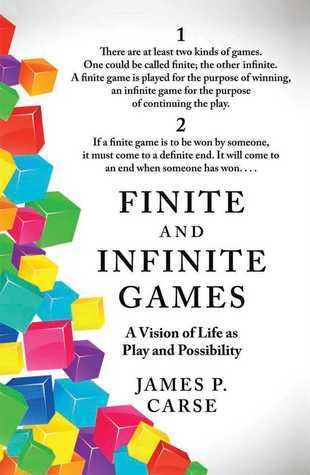
“There are at least two kinds of games,” states James P. Carse as he begins this extraordinary book. “One could be called finite; the other infinite. A finite game is played for the purpose of winning, an infinite game for the purpose of continuing the play.”Finite games are the familiar contests of everyday life; they are played in order to be won, which is when they end. But infinite games are more mysterious. Their object is not winning, but ensuring the continuation of play. The rules may change, the boundaries may change, even the participants may change—as long as the game is never allowed to come to an end.What are infinite games? How do they affect the ways we play our finite games? What are we doing when we play—finitely or infinitely? And how can infinite games affect the ways in which we live our lives?Carse explores these questions with stunning elegance, teasing out of his distinctions a universe of observation and insight, noting where and why and how we play, finitely and infinitely. He surveys our world—from the finite games of the playing field and playing board to the infinite games found in culture and religion—leaving all we think we know illuminated and transformed. Along the way, Carse finds new ways of understanding everything, from how an actress portrays a role to how we engage in sex, from the nature of evil to the nature of science. Finite games, he shows, may offer wealth and status, power and glory, but infinite games offer something far more subtle and far grander.Carse has written a book rich in insight and aphorism. Already an international literary event, Finite and Infinite Games is certain to be argued about and celebrated for years to come. Reading it is the first step in learning to play the infinite game.

What the Dormouse Said: How the Sixties Counterculture Shaped the Personal Computer Industry
by John Markoff
Rating: 3.8 ⭐
• 2 recommendations ❤️
“This makes entertaining reading. Many accounts of the birth of personal computing have been written, but this is the first close look at the drug habits of the earliest pioneers.” —New York TimesMost histories of the personal computer industry focus on technology or business. John Markoff’s landmark book is about the culture and consciousness behind the first PCs—the culture being counter– and the consciousness expanded, sometimes chemically. It’s a brilliant evocation of Stanford, California, in the 1960s and ’70s, where a group of visionaries set out to turn computers into a means for freeing minds and information. In these pages one encounters Ken Kesey and the phone hacker Cap’n Crunch, est and LSD, The Whole Earth Catalog and the Homebrew Computer Lab. What the Dormouse Said is a poignant, funny, and inspiring book by one of the smartest technology writers around.

It's All Too Much: An Easy Plan for Living a Richer Life with Less Stuff
by Peter Walsh
Rating: 3.9 ⭐
• 2 recommendations ❤️
Whether it’s tidying up or tiny-house living, the decluttering revolution is taking America by storm. In It’s All Too Much organizational expert Peter Walsh reveals the tools for taking control of your physical—and emotional—clutter in order to reclaim your life.Are you surrounded by papers? Overstuffed closets? Are you stepping over toys or searching under piles, and leaving boxes of mementos unopened for years? Do you feel under siege by your belongings? Peter Walsh, the organizational guru from TLC's hit show Clean Sweep , understands.It's All Too Much is Peter’s proven system for anyone who wants to let go and escape the suffocating clutter in their lives. With his good humor and reassuring advice, Peter shows you how to face the really big What is the vision for the life you want to live? Through simple techniques and step-by-step plans, you can assess the state of your home, prioritize your possessions, and let go of the clutter you have been holding on to that has kept you from living the life you imagine. Going way beyond color-coded boxes and storage bin solutions, It's All Too Much shows you how to honestly determine what adds to your quality of life and what's keeping you from living the life of your dreams. The result is freed-up space, less stress, and more energy for living a happier, richer life every day.

Gödel, Escher, Bach: An Eternal Golden Braid
by Douglas R. Hofstadter
Rating: 4.3 ⭐
• 16 recommendations ❤️
Douglas Hofstadter's book is concerned directly with the nature of “maps” or links between formal systems. However, according to Hofstadter, the formal system that underlies all mental activity transcends the system that supports it. If life can grow out of the formal chemical substrate of the cell, if consciousness can emerge out of a formal system of firing neurons, then so too will computers attain human intelligence. Gödel, Escher, Bach is a wonderful exploration of fascinating ideas at the heart of cognitive science: meaning, reduction, recursion, and much more.

This revised and expanded edition of The Essential Rumi includes a new introduction by Coleman Barks and more than 80 never-before-published poems.Through his lyrical translations, Coleman Barks has been instrumental in bringing this exquisite literature to a remarkably wide range of readers, making the ecstatic, spiritual poetry of thirteenth-century Sufi Mystic Rumi more popular than ever.The Essential Rumi continues to be the bestselling of all Rumi books, and the definitive selection of his beautiful, mystical poetry.
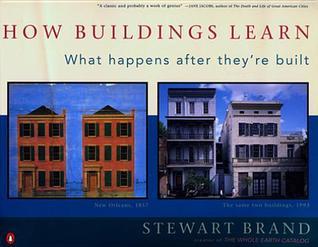
How Buildings Learn: What Happens After They're Built
by Stewart Brand
Rating: 4.5 ⭐
• 1 recommendation ❤️
Buildings have often been studies whole in space, but never before have they been studied whole in time. How Buildings Learn is a masterful new synthesis that proposes that buildings adapt best when constantly refined and reshaped by their occupants, and that architects can mature from being artists of space to becoming artists of time.From the connected farmhouses of New England to I.M. Pei's Media Lab, from "satisficing" to "form follows funding," from the evolution of bungalows to the invention of Santa Fe Style, from Low Road military surplus buildings to a High Road English classic like Chatsworth-this is a far-ranging survey of unexplored essential territory.More than any other human artifacts, buildings improve with time-if they're allowed to. How Buildings Learn shows how to work with time rather than against it.

The Adventures of Johnny Bunko: The Last Career Guide You'll Ever Need
by Daniel H. Pink
Rating: 3.7 ⭐
• 2 recommendations ❤️
View the animated video for The Adventures of Johnny Bunko and check out popular books for the new graduate here. There’s never been a career guide like The Adventures of Johnny Bunko by Daniel H. Pink (author of To Sell Is Human: The Surprising Truth About Motivating Others). Told in manga—the Japanese comic book format that’s an international sensation—it’s the fully illustrated story of a young Everyman just out of college who lands his first job.Johnny Bunko is new to the Boggs Corp., and he stumbles through his early months as a working stiff until a crisis prompts him to rethink his approach. Step by step he builds a career, illustrating as he does the six core lessons of finding, keeping, and flourishing in satisfying work. A groundbreaking guide to surviving and flourishing in any career, The Adventures of Johnny Bunko is smart, engaging and insightful, and offers practical advice for anyone looking for a life of rewarding work.

The description for this book, The Ultimate Resource, will be forthcoming.
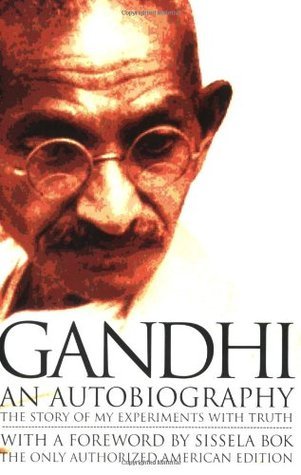
Gandhi An Autobiography: The Story of My Experiments With Truth
by Mahatma Gandhi
Rating: 4.1 ⭐
• 6 recommendations ❤️
Mohandas K. Gandhi is one of the most inspiring figures of our time. In his classic autobiography he recounts the story of his life and how he developed his concept of active nonviolent resistance, which propelled the Indian struggle for independence and countless other nonviolent struggles of the twentieth century.In a new foreword, noted peace expert and teacher Sissela Bok urges us to adopt Gandhi's "attitude of experimenting, of tesing what will and will not bear close scrutiny, what can and cannot be adapted to new circumstances,"in order to bring about change in our own lives and communities. All royalties earned on this book are paid to the Navajivan Trust, founded by Gandhi, for use in carrying on his work.

Now a major television series from Apple TV+ starring Charlie Hunnam!“It took me a long time and most of the world to learn what I know about love and fate and the choices we make, but the heart of it came to me in an instant, while I was chained to a wall and being tortured.”An escaped convict with a false passport, Lin flees maximum security prison in Australia for the teeming streets of Bombay, where he can disappear. Accompanied by his guide and faithful friend, Prabaker, the two enter the city’s hidden society of beggars and gangsters, prostitutes and holy men, soldiers and actors, and Indians and exiles from other countries, who seek in this remarkable place what they cannot find elsewhere.As a hunted man without a home, family, or identity, Lin searches for love and meaning while running a clinic in one of the city’s poorest slums, and serving his apprenticeship in the dark arts of the Bombay mafia. The search leads him to war, prison torture, murder, and a series of enigmatic and bloody betrayals. The keys to unlock the mysteries and intrigues that bind Lin are held by two people. The first is Khader Khan: mafia godfather, criminal-philosopher-saint, and mentor to Lin in the underworld of the Golden City. The second is Karla: elusive, dangerous, and beautiful, whose passions are driven by secrets that torment her and yet give her a terrible power.Burning slums and five-star hotels, romantic love and prison agonies, criminal wars and Bollywood films, spiritual gurus and mujaheddin guerrillas―this huge novel has the world of human experience in its reach, and a passionate love for India at its heart.
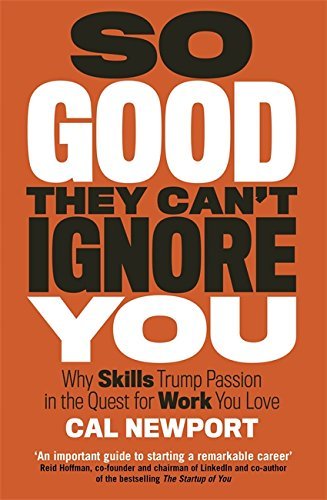
In this eye-opening account, Cal Newport debunks the long-held belief that "follow your passion" is good advice. Not only is the cliché flawed—preexisting passions are rare and have little to do with how most people end up loving their work—but it can also be dangerous, leading to anxiety and chronic job hopping.After making his case against passion, Newport sets out on a quest to discover the reality of how people end up loving what they do. Spending time with organic farmers, venture capitalists, screenwriters, freelance computer programmers, and others who admitted to deriving great satisfaction from their work, Newport uncovers the strategies they used and the pitfalls they avoided in developing their compelling careers.Matching your job to a preexisting passion does not matter, he reveals. Passion comes after you put in the hard work to become excellent at something valuable, not before. In other words, what you do for a living is much less important than how you do it.With a title taken from the comedian Steve Martin, who once said his advice for aspiring entertainers was to "be so good they can't ignore you," Cal Newport's clearly written manifesto is mandatory reading for anyone fretting about what to do with their life, or frustrated by their current job situation and eager to find a fresh new way to take control of their livelihood. He provides an evidence-based blueprint for creating work you love.So Good They Can't Ignore You will change the way we think about our careers, happiness, and the crafting of a remarkable life.
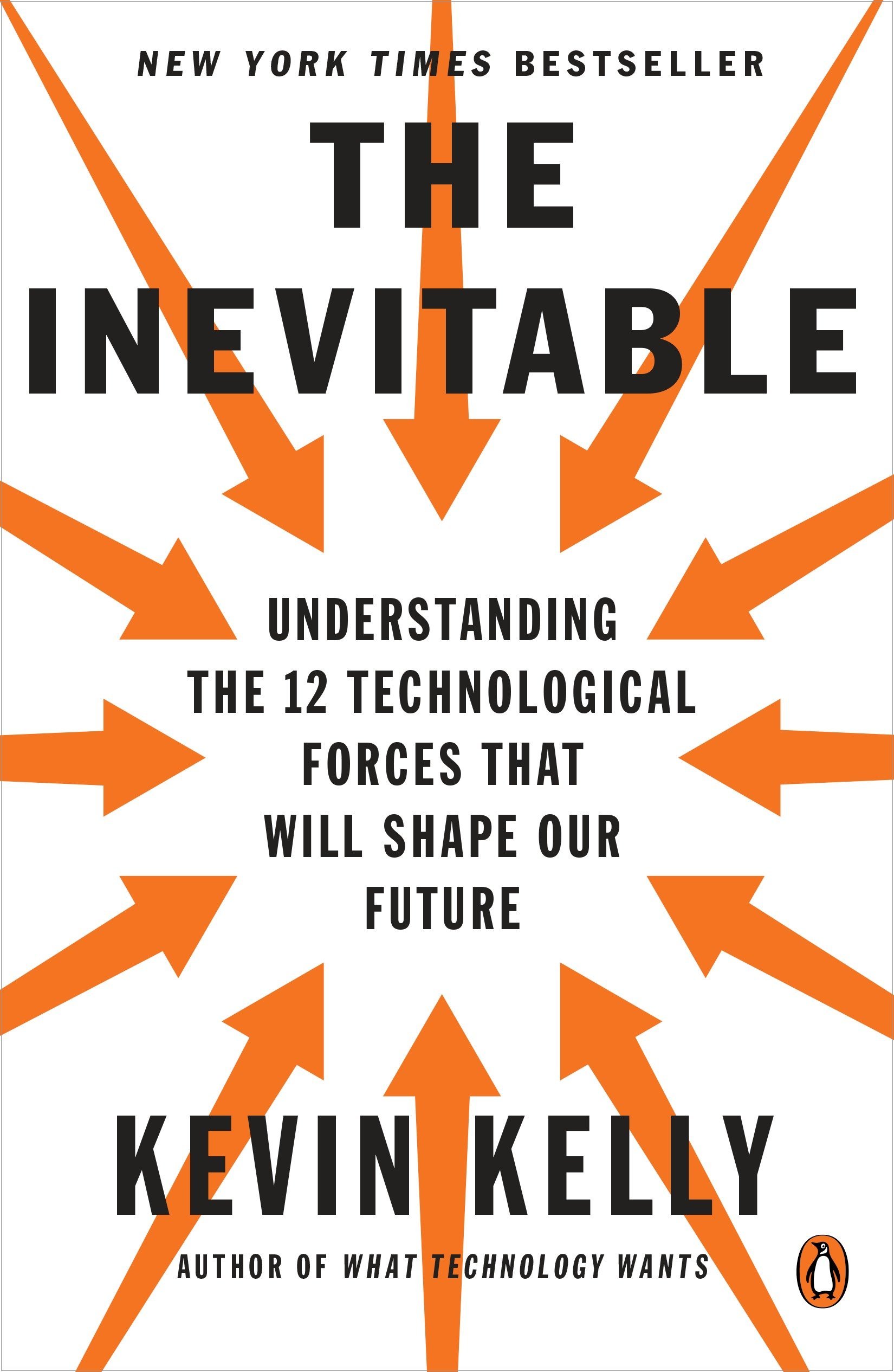
The Inevitable: Understanding the 12 Technological Forces That Will Shape Our Future
by Kevin Kelly
Rating: 4.1 ⭐
• 4 recommendations ❤️
Come vivremo fra trent’anni? Non siamo ancora in grado di prevedere il futuro, ma alcune risposte sono certe, o quasi. Per esempio, non avremo un’auto di proprietà: pagheremo per abbonarci a un servizio di mobilità e trasporto da utilizzare all’occorrenza. Anzi, non possederemo quasi nulla, ma quando ci servirà qualcosa potremo accedervi facilmente. La realtà virtuale sarà ormai «reale», farà parte di qualsiasi telefono cellulare. Dialogheremo con tutti i nostri dispositivi elettronici grazie a una serie predefi nita di gesti, e tutte le superfi ci saranno coperte di schermi interattivi, ognuno dei quali ricambierà puntualmente i nostri sguardi. Tutti gli aspetti della nostra vita quotidiana saranno tracciabili e registrabili, da noi stessi ma anche dagli altri. I robot e le macchine pensanti ci avranno rimpiazzati nei vecchi impieghi, ma non resteremo senza lavoro, perché nel frattempo proprio quelle tecnologie avranno creato nuove occupazioni.Trent’anni fa Kevin Kelly – uno dei fondatori della rivista Wired – previde che l’avvento di Internet avrebbe rivoluzionato il mondo. L’inevitabile descrive – con il saggio ottimismo che è proprio dei grandi visionari – la strada che l’innovazione sta tracciando per i prossimi decenni. Leggendo queste pagine saremo catapultati in un futuro nel quale l’intelligenza artifi ciale e immense reti di dati e saperi avranno permeato di conoscenza ogni aspetto della realtà umana; e tutto sarà fl uido, accessibile, condivisibile, interattivo e sempre in divenire. La prosa entusiasmante di Kelly ci farà vivere le nostre vite future, e osserveremo il nostro nuovo modo di lavorare, apprendere, giocare, comprare, comunicare con gli altri.Le forze tecnologiche che stanno riplasmando la società sono già attive, sono interdipendenti, e sono soprattutto inarrestabili. È inutile opporsi. Dobbiamo invece predisporci ad accogliere la complessa e stupefacente convergenza tra l’umanità e le macchine, una sinergia che spezzerà ogni confi ne nazionale e ogni legge dell’economia, e che a volte potrà produrre caos e scontento, ma porterà soprattutto straordinari benefi ci individuali e sociali.

KJV Holy Bible, Giant Print Standard Size Faux Leather Red Letter Edition - Thumb Index & Ribbon Marker, King James Version, Dark Brown
by Anonymous
Rating: 4.7 ⭐
• 40 recommendations ❤️
New - Holy Bible: KJV Giant Print Thumb Index Edition: Brown (King James Bible). Great for gift or personal study.
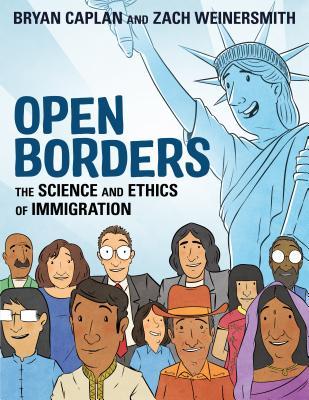
Open Borders: The Science and Ethics of Immigration
by Bryan Caplan
Rating: 4.1 ⭐
• 1 recommendation ❤️
Economist Bryan Caplan makes a bold case for unrestricted immigration in this fact-filled graphic nonfiction.American policy-makers have long been locked in a heated battle over whether, how many, and what kind of immigrants to allow to live and work in the country. Those in favor of welcoming more immigrants often cite humanitarian reasons, while those in favor of more restrictive laws argue the need to protect native citizens.But economist Bryan Caplan adds a new, compelling perspective to the immigration debate: He argues that opening all borders could eliminate absolute poverty worldwide and usher in a booming worldwide economy—greatly benefiting humanity.With a clear and conversational tone, exhaustive research, and vibrant illustrations by Zach Weinersmith, Open Borders makes the case for unrestricted immigration easy to follow and hard to deny.