6 Books Recommended
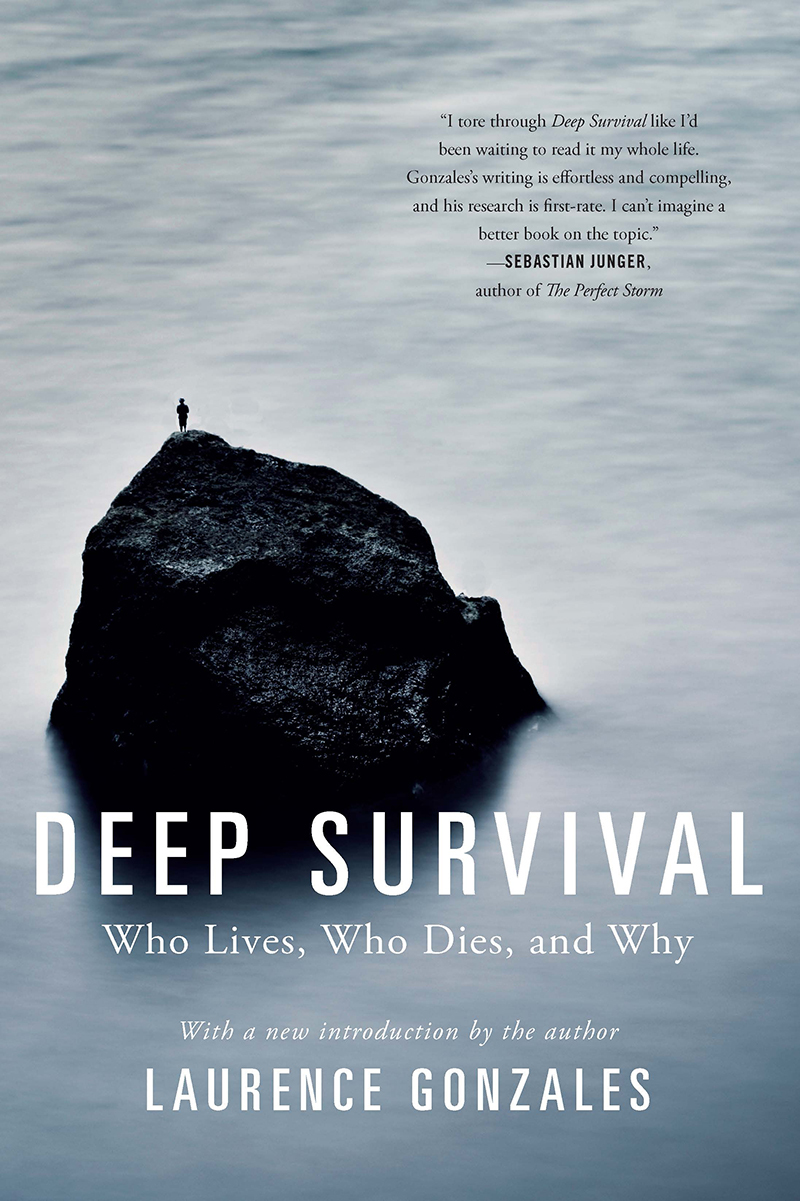
"Unique among survival books…stunning…enthralling. Deep Survival makes compelling, and chilling, reading." ― Denver Post Laurence Gonzales’s bestselling Deep Survival has helped save lives from the deepest wildernesses, just as it has improved readers’ everyday lives. Its mix of adventure narrative, survival science, and practical advice has inspired everyone from business leaders to military officers, educators, and psychiatric professionals on how to take control of stress, learn to assess risk, and make better decisions under pressure.

The Diamond Age: Or, a Young Lady's Illustrated Primer
by Neal Stephenson
Rating: 4.2 ⭐
• 10 recommendations ❤️
The Diamond Age: Or, a Young Lady's Illustrated Primer is a postcyberpunk novel by Neal Stephenson. It is to some extent a science fiction coming-of-age story, focused on a young girl named Nell, and set in a future world in which nanotechnology affects all aspects of life. The novel deals with themes of education, social class, ethnicity, and the nature of artificial intelligence.

"Strange and beautiful, revealing courage, serenity, and greatness of spirit."
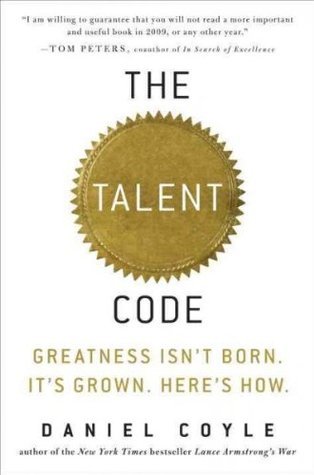
The Talent Code: Greatness Isn't Born. It's Grown. Here's How.
by Daniel Coyle
Rating: 4.2 ⭐
• 14 recommendations ❤️
What is the secret of talent? How do we unlock it? In this groundbreaking work, journalist and New York Times bestselling author Daniel Coyle provides parents, teachers, coaches, businesspeople—and everyone else—with tools they can use to maximize potential in themselves and others.Whether you’re coaching soccer or teaching a child to play the piano, writing a novel or trying to improve your golf swing, this revolutionary book shows you how to grow talent by tapping into a newly discovered brain mechanism.Drawing on cutting-edge neurology and firsthand research gathered on journeys to nine of the world’s talent hotbeds—from the baseball fields of the Caribbean to a classical-music academy in upstate New York—Coyle identifies the three key elements that will allow you to develop your gifts and optimize your performance in sports, art, music, math, or just about anything. • Deep Practice Everyone knows that practice is a key to success. What everyone doesn’t know is that specific kinds of practice can increase skill up to ten times faster than conventional practice.• Ignition We all need a little motivation to get started. But what separates truly high achievers from the rest of the pack? A higher level of commitment—call it passion—born out of our deepest unconscious desires and triggered by certain primal cues. Understanding how these signals work can help you ignite passion and catalyze skill development.• Master Coaching What are the secrets of the world’s most effective teachers, trainers, and coaches? Discover the four virtues that enable these “talent whisperers” to fuel passion, inspire deep practice, and bring out the best in their students.These three elements work together within your brain to form myelin, a microscopic neural substance that adds vast amounts of speed and accuracy to your movements and thoughts. Scientists have discovered that myelin might just be the holy grail: the foundation of all forms of greatness, from Michelangelo’s to Michael Jordan’s. The good news about myelin is that it isn’t fixed at birth; to the contrary, it grows, and like anything that grows, it can be cultivated and nourished. Combining revelatory analysis with illuminating examples of regular people who have achieved greatness, this book will not only change the way you think about talent, but equip you to reach your own highest potential.From the Hardcover edition.

The Power of Habit: Why We Do What We Do in Life and Business
by Charles Duhigg
Rating: 4.3 ⭐
• 21 recommendations ❤️
NEW YORK TIMES BESTSELLER • This instant classic explores how we can change our lives by changing our habits.NAMED ONE OF THE BEST BOOKS OF THE YEAR BY The Wall Street Journal • Financial TimesIn The Power of Habit, award-winning business reporter Charles Duhigg takes us to the thrilling edge of scientific discoveries that explain why habits exist and how they can be changed. Distilling vast amounts of information into engrossing narratives that take us from the boardrooms of Procter & Gamble to the sidelines of the NFL to the front lines of the civil rights movement, Duhigg presents a whole new understanding of human nature and its potential. At its core, The Power of Habit contains an exhilarating argument: The key to exercising regularly, losing weight, being more productive, and achieving success is understanding how habits work. As Duhigg shows, by harnessing this new science, we can transform our businesses, our communities, and our lives.With a new Afterword by the author “Sharp, provocative, and useful.” —Jim Collins “Few [books] become essential manuals for business and living. The Power of Habit is an exception. Charles Duhigg not only explains how habits are formed but how to kick bad ones and hang on to the good.” — Financial Times “A flat-out great read.” —David Allen, bestselling author of Getting Things Done: The Art of Stress-Free Productivity“You’ll never look at yourself, your organization, or your world quite the same way.” —Daniel H. Pink, bestselling author of Drive and A Whole New Mind“Entertaining . . . enjoyable . . . fascinating . . . a serious look at the science of habit formation and change.” — The New York Times Book Review

The Sports Gene: Inside the Science of Extraordinary Athletic Performance
by David Epstein
Rating: 4.2 ⭐
• 9 recommendations ❤️
The New York Times bestseller – with a new afterword about early specialization in youth sports – from the author of Range: Why Generalists Triumph in a Specialized World .The debate is as old as physical competition. Are stars like Usain Bolt, Michael Phelps, and Serena Williams genetic freaks put on Earth to dominate their respective sports? Or are they simply normal people who overcame their biological limits through sheer force of will and obsessive training? In this controversial and engaging exploration of athletic success and the so-called 10,000-hour rule, David Epstein tackles the great nature vs. nurture debate and traces how far science has come in solving it. Through on-the-ground reporting from below the equator and above the Arctic Circle, revealing conversations with leading scientists and Olympic champions, and interviews with athletes who have rare genetic mutations or physical traits, Epstein forces us to rethink the very nature of athleticism.