
Joyce Carol Oates Recommended Books
American author
32 Books Recommended

Novelist, poet, dramatist and author of many of the best American short stories of our time, Joyce Carol Oates shows yet another aspect of her unbounded creativity in these tales of the grotesque. Haunted, a collection of sixteen tales that range from classic ghost stories to portrayals of chilling psychological terror, raises the genre to the level of fine literature - complex, multi-layered, and gripping fiction that is very scary indeed. In the title story, "Haunted, " the pubescent Melissa and her best friend, the sexually precocious Mary Lou, ignore "no trespassing" signs to explore forbidden houses. But the deserted Minton farm is one place where they should not have gone, and years later Melissa is tormented by her memories of its malevolence...and the murder of Mary Lou. In the novella, "The Model, " a sexual threat seems to underlie the interaction between young Sybil Blake and "Mr. Starr, " who asks her to be his model, but the truth about her own identity, and his, shows that the danger is lurking in a different part of the heart. The "Accursed Inhabitants of the House of Bly, " a macabre reworking of Henry James's "The Turn of the Screw, " resurrects the evil of Miss Jessel and Quint, who are up to their old tricks with the children, Miles and Flora, but with new, perverse, and brilliant revelations. The tales in this collection plunge the reader into nightmare worlds where violence slips in unexpectedly, where reality turns into a funhouse mirror, and where American culture goes awry in shocking, provocative ways. Joyce Carol Oates is a master storyteller of the dark side. She writes with skillfully controlled prose, tightly woven plots, and deep psychological insight that m her fictional horror worthy to set alongside the stories of Edgar Allan Poe - and far above all the rest.Haunted --The doll --The bingo master --The white cat --The model --Extenuating circumstances --Don't you trust me --The guilty party --The premonition --Phase change --Poor Bibi --Thanksgiving --Blind --The radio astronomer --Accursed inhabitants of the House of Bly --Martyrdom

A Convergence of Birds: Original Fiction and Poetry Inspired by the Work of Joseph Cornell
by Jonathan Safran Foer
Rating: 4.0 ⭐
• 1 recommendation ❤️
Jonathan Safran Foer has long had a passion for the work of the twentieth-century American assemblage artist Joseph Cornell. Inspired by Cornell's avian-themed boxes, and suspecting that they would be similarly inspiring to others, Foer began to write letters. The responses he received from luminaries of American writing were nothing short of astounding. Twenty writers generously contributed pieces of prose and poetry that are as eclectic as they are imaginative, and the result is a unique collaborative project and one of the most significant engagements of literature with art for many years.

The Pulitzer Prize-winning view of the continent, across the fortieth parallel and down through 4.6 billion yearsTwenty years ago, when John McPhee began his journeys back and forth across the United States, he planned to describe a cross section of North America at about the fortieth parallel and, in the process, come to an understanding not only of the science but of the style of the geologists he traveled with. The structure of the book never changed, but its breadth caused him to complete it in stages, under the overall title Annals of the Former World.Like the terrain it covers, Annals of the Former World tells a multilayered tale, and the reader may choose one of many paths through it. As clearly and succinctly written as it is profoundly informed, this is our finest popular survey of geology and a masterpiece of modern nonfiction.Annals of the Former World is the winner of the 1999 Pulitzer Prize for Nonfiction.

The Lottery, one of the most terrifying stories written in this century, created a sensation when it was first published in The New Yorker. "Power and haunting," and "nights of unrest" were typical reader responses. This collection, the only one to appear during Shirley Jackson's lifetime, unites "The Lottery:" with twenty-four equally unusual stories. Together they demonstrate Jackson's remarkable range--from the hilarious to the truly horrible--and power as a storyteller.

The authoritative edition of Titus Andronicus from The Folger Shakespeare Library, the trusted and widely used Shakespeare series for students and general readers.Titus Andronicus is the earliest tragedy and the earliest Roman play attributed to Shakespeare. Titus, a model Roman, has led twenty-one of his twenty-five sons to death in Rome’s wars; he stabs another son to death for what he views as disloyalty to Rome. Yet Rome has become “a wilderness of tigers.” After a death sentence is imposed on two of his three remaining sons, and his daughter is raped and mutilated, Titus turns his loyalty toward his family.Aaron the Moor, a magnificent villain and the empress’s secret lover, makes a similar transition. After the empress bears him a child, Aaron devotes himself to preserving the baby. Retaining his thirst for evil, he shows great tenderness to his little family—a tenderness that also characterizes Titus before the terrifying conclusion.This edition -Freshly edited text based on the best early printed version of the play-Full explanatory notes conveniently placed on pages facing the text of the play-Scene-by-scene plot summaries-A key to the play’s famous lines and phrases-An introduction to reading Shakespeare’s language-An essay by a leading Shakespeare scholar providing a modern perspective on the play-Fresh images from the Folger Shakespeare Library’s vast holdings of rare books-An annotated guide to further readingEssay by Alexander LeggattThe Folger Shakespeare Library in Washington, DC, is home to the world’s largest collection of Shakespeare’s printed works, and a magnet for Shakespeare scholars from around the globe. In addition to exhibitions open to the public throughout the year, the Folger offers a full calendar of performances and programs. For more information, visit Folger.edu.
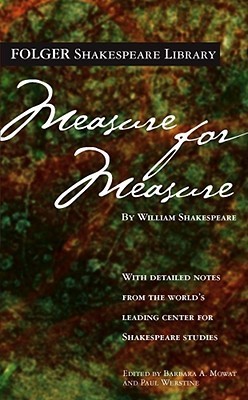
Measure for Measure is among the most passionately discussed of Shakespeare’s plays. In it, a duke temporarily removes himself from governing his city-state, deputizing a member of his administration, Angelo, to enforce the laws more rigorously. Angelo chooses as his first victim Claudio, condemning him to death because he impregnated Juliet before their marriage.Claudio’s sister Isabella, who is entering a convent, pleads for her brother’s life. Angelo attempts to extort sex from her, but Isabella preserves her chastity. The duke, in disguise, eavesdrops as she tells her brother about Angelo’s behavior, then offers to ally himself with her against Angelo.

Finnegans Wake is a complex novel that blends the reality of life with a dream world. The motive idea of the novel, inspired by the 18th-century Italian philosopher Giambattista Vico, is that history is cyclical. To demonstrate this, the book ends with the first half of the first sentence of the novel. Thus, the last line is actually part of the first line, and the first line a part of the last line. The plot itself is difficult to follow, as the novel explores a number of fractured story lines. The main tension, however, comes from the juxtaposition of reality and dream, which is achieved through changing characters and settings. The beginning of the book introduces the reader to Mr. and Mrs. Porter, who have three children—Kevin and Jerry (twins) and Issy. The Porters live above a pub in Chapelizod (near Dublin). Once Mr. and Mrs. Porter go to sleep, however, their entire world changes.In the dream world, these characters are given different names. Mr. Porter is Humphrey Chimpden Earwicker (HCE), Mrs. Porter is Anna Livia Plurabelle (ALP), and the boys are Shem the Penman and Shaun the Postman, while Issy remains Issy. HCE plays the archetypal father role and is referred to by a number of variations of the acronym HCE throughout the book. While the exact situation is unclear, it is revealed that HCE has behaved inappropriately in the presence of young girls, for which he feels both innocent and guilty. Rumours are spread about this indiscretion for most of the novel. ALP is representative of the archetypal wife and mother, and it is she who attempts to exonerate HCE. The beginning of the novel also introduces Tim Finnegan, the man named in the novel’s title. Finnegan, a construction worker, died in a workplace accident. At his wake, the strangeness of the story continues: Finnegan’s wife attempts to serve her husband’s corpse as a dish. The novel itself ends with a monologue recited by ALP as she attempts to awaken HCE.

Shakespeare's tragic and comic dramatization of the Trojan War endures in one of his most intriguing plays. Shakespeare's portrayal of the snares of young love set against a backdrop of a senseless and endless war can be fully appreciated for the beauty of its verse and the profundity of its themes.

The Mulvaneys of High Point Farm in Mt. Ephraim, New York, are a large and fortunate clan, blessed with good looks, abundant charisma, and boundless promise. But over the twenty-five year span of this ambitious novel, the Mulvaneys will slide, almost imperceptibly at first, from the pinnacle of happiness, transformed by the vagaries of fate into a scattered collection of lost and lonely souls.It is the youngest son, Judd, now an adult, who attempts to piece together the fragments of the Mulvaneys' former glory, seeking to uncover and understand the secret violation that occasioned the family's tragic downfall. Each of the Mulvaneys endures some form of exile- physical or spiritual - but in the end they find a way to bridge the chasms that have opened up among them, reuniting in the spirit of love and healing.

The Complete Stories brings together all of Kafka’s stories, from the classic tales such as “The Metamorphosis,” “In the Penal Colony,” and “A Hunger Artist” to shorter pieces and fragments that Max Brod, Kafka’s literary executor, released after Kafka’s death. With the exception of his three novels, the whole of Kafka’s narrative work is included in this volume. Two Introductory parables: - Before the law - Imperial message Longer stories: - Description of a struggle - Wedding preparations in the country - Judgment - Metamorphosis - In the penal colony - Village schoolmaster (The giant mole) - Blumfeld, and elderly bachelor - Warden of the tomb - Country doctor - Hunter Gracchus - Hunter Gracchus: A fragment - Great Wall of China - News of the building of the wall: A fragment - Report to an academy - Report to an academy: Two fragments - Refusal - Hunger artist - Investigations of a dog - Little woman - The burrow - Josephine the singer, or the mouse folk Shorter Stories- Children on a country road - The trees - Clothes - Excursion into the mountains- Rejection - The street window - The tradesman - Absent-minded window-gazing - The way home - Passers-by - On the tram - Reflections for gentlemen-jockeys- The wish to be a red Indian - Unhappiness - Bachelor's ill luck - Unmasking a confidence trickster - The sudden walk - Resolutions - A dream- Up in the gallery - A fratricide - The next village - A visit to a mine - Jackals and Arabs - The bridge - The bucket rider - The new advocate - An old manuscript - The knock at the manor gate - Eleven sons - My neighbor - A crossbreed (A sport) - The cares of a family man - A common confusion - The truth about Sancho Panza - The silence of the sirens - Prometheus - The city coat of arms - Poseidon - Fellowship - At night - The problem of our laws - The conscription of troops - The test - The vulture - The helmsman - The top - A little fable - Home-coming - First sorrow - The departure - Advocates - The married couple - Give it up! - On parables.

Complete and unabridged paperback edition. An essay containing the most extensive statements of Wilde's aesthetic philosophy.First published in 1891.

Originally published in 1978, this classic exploration of humanity’s complex relationship with and understanding of wolves returns with a new afterword by the author.Humankind's relationship with the wolf is the sum of a spectrum of responses ranging from fear to admiration and affection. Lopez’s classic, careful study has won praise from a wide range of reviewers and improved the way books on wild animals are written. Of Wolves and Men explores the uneasy interaction between wolves and civilization over the centuries, and the wolf's prominence in our thoughts about wild creatures. Drawing upon an impressive array of literature, history, science, and mythology as well as extensive personal experience with captive and free-ranging wolves, Lopez argues for the wolf's preservation and immerses the reader in its sensory world, creating a compelling portrait of the wolf both as a real animal and as imagined by different kinds of men. A scientist might perceive the wolf as defined by research data, while an Eskimo hunter sees a family provider much like himself. For many Native Americans the wolf is also a spiritual symbol, a respected animal that can strengthen the individual and the community. With irresistible charm and elegance, Of Wolves and Men celebrates careful scientific fieldwork, dispels folklore that has enabled the Western mind to demonize wolves, explains myths, and honors indigenous traditions, allowing us to understand how this remarkable animal has become so prominent for so long in the human heart.

In Salthill-on-Hudson, a half-hour train ride from Manhattan, everyone is rich, beautiful, and -- though they look much younger -- middle-aged. But when Adam Berendt, a charismatic, mysterious sculptor, dies suddenly in a brash act of heroism, shock waves rock the town. But who was Adam Berendt? Was he in fact a hero, or someone more flawed and human?

In Othello, Shakespeare creates a powerful drama of a marriage that begins with fascination (between the exotic Moor Othello and the Venetian lady Desdemona), with elopement, and with intense mutual devotion and that ends precipitately with jealous rage and violent deaths. He sets this story in the romantic world of the Mediterranean, moving the action from Venice to the island of Cyprus and giving it an even more exotic coloring with stories of Othello's African past. Shakespeare builds so many differences into his hero and heroine—differences of race, of age, of cultural background—that one should not, perhaps, be surprised that the marriage ends disastrously. But most people who see or read the play feel that the love that the play presents between Othello and Desdemona is so strong that it would have overcome all these differences were it not for the words and actions of Othello's standard-bearer, Iago, who hates Othello and sets out to destroy him by destroying his love for Desdemona. As Othello succumbs to Iago's insinuations that Desdemona is unfaithful, fascination—which dominates the early acts of the play—turns to horror, especially for the audience. We are confronted by spectacles of a generous and trusting Othello in the grip of Iago's schemes; of an innocent Desdemona, who has given herself up entirely to her love for Othello only to be subjected to his horrifying verbal and physical assaults, the outcome of Othello's mistaken convictions about her faithlessness.

John Milton's Paradise Lost is one of the greatest epic poems in the English language. It tells the story of the Fall of Man, a tale of immense drama and excitement, of rebellion and treachery, of innocence pitted against corruption, in which God and Satan fight a bitter battle for control of mankind's destiny. The struggle rages across three worlds - heaven, hell, and earth - as Satan and his band of rebel angels plot their revenge against God. At the center of the conflict are Adam and Eve, who are motivated by all too human temptations but whose ultimate downfall is unyielding love.Marked by Milton's characteristic erudition, Paradise Lost is a work epic both in scale and, notoriously, in ambition. For nearly 350 years, it has held generation upon generation of audiences in rapt attention, and its profound influence can be seen in almost every corner of Western culture.

“I give you the mausoleum of all hope and desire. . . . I give it to you not that you may remember time, but that you might forget it now and then for a moment and not spend all of your breath trying to conquer it. Because no battle is ever won he said. They are not even fought. The field only reveals to man his own folly and despair, and victory is an illusion of philosophers and fools.” —from The Sound and the Fury The Sound and the Fury is the tragedy of the Compson family, featuring some of the most memorable characters in literature: beautiful, rebellious Caddy; the manchild Benjy; haunted, neurotic Quentin; Jason, the brutal cynic; and Dilsey, their black servant. Their lives fragmented and harrowed by history and legacy, the character’s voices and actions mesh to create what is arguably Faulkner’s masterpiece and one of the greatest novels of the twentieth century.

The Hamlet, the first novel of Faulkner's Snopes trilogy, is both an ironic take on classical tragedy and a mordant commentary on the grand pretensions of the antebellum South and the depths of its decay in the aftermath of war and Reconstruction. It tells of the advent and the rise of the Snopes family in Frenchman's Bend, a small town built on the ruins of a once-stately plantation. Flem Snopes -- wily, energetic, a man of shady origins -- quickly comes to dominate the town and its people with his cunning and guile.

The 20th anniversary edition of the National Book Award finalist and national bestseller exploring the life and legend of Marilyn MonroeIn one of her most ambitious works, Joyce Carol Oates boldly reimagines the inner, poetic, and spiritual life of Norma Jeane Baker—the child, the woman, the fated celebrity, and idolized blonde the world came to know as Marilyn Monroe. In a voice startlingly intimate and rich, Norma Jeane tells her own story of an emblematic American artist—intensely conflicted and driven—who had lost her way. A powerful portrait of Hollywood’s myth and an extraordinary woman’s heartbreaking reality, Blonde is a sweeping epic that pays tribute to the elusive magic and devastation behind the creation of the great 20th-century American star.
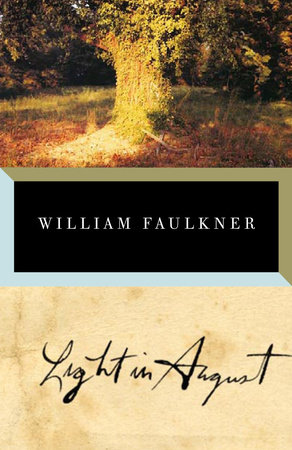
Light in August, a novel that contrasts stark tragedy with hopeful perseverance in the face of mortality, which features some of Faulkner’s most memorable characters: guileless, dauntless Lena Grove, in search of the father of her unborn child; Reverend Gail Hightower, a lonely outcast haunted by visions of Confederate glory; and Joe Christmas, a desperate, enigmatic drifter consumed by his mixed ancestry.
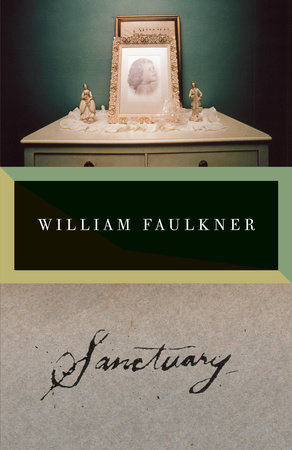
Psychologically astute and wonderfully poetic, Sanctuary is a powerful novel examining the nature of true evil, through the prisms of mythology, local lore, and hard-boiled detective fiction. This is the dark, at times brutal, story of the kidnapping of Mississippi debutante Temple Drake, who introduces her own form of venality into the Memphis underworld where she is being held.

Hamlet is Shakespeare’s most popular, and most puzzling, play. It follows the form of a “revenge tragedy,” in which the hero, Hamlet, seeks vengeance against his father’s murderer, his uncle Claudius, now the king of Denmark. Much of its fascination, however, lies in its uncertainties.Among them: What is the Ghost—Hamlet’s father demanding justice, a tempting demon, an angelic messenger? Does Hamlet go mad, or merely pretend to? Once he is sure that Claudius is a murderer, why does he not act? Was his mother, Gertrude, unfaithful to her husband or complicit in his murder?

One night on the heath, the brave and respected general Macbeth encounters three witches who foretell that he will become king of Scotland. At first sceptical, he’s urged on by the ruthless, single-minded ambitions of Lady Macbeth, who suffers none of her husband’s doubt. But seeing the prophecy through to the bloody end leads them both spiralling into paranoia, tyranny, madness, and murder.This shocking tragedy - a violent caution to those seeking power for its own sake - is, to this day, one of Shakespeare’s most popular and influential masterpieces.

The authoritative edition of King Lear from The Folger Shakespeare Library, the trusted and widely used Shakespeare series for students and general readers.Shakespeare’s King Lear challenges us with the magnitude, intensity, and sheer duration of the pain that it represents. Its figures harden their hearts, engage in violence, or try to alleviate the suffering of others. Lear himself rages until his sanity cracks. What, then, keeps bringing us back to King Lear? For all the force of its language, King Lear is almost equally powerful when translated, suggesting that it is the story, in large part, that draws us to the play.The play tells us about families struggling between greed and cruelty, on the one hand, and support and consolation, on the other. Emotions are extreme, magnified to gigantic proportions. We also see old age portrayed in all its vulnerability, pride, and, perhaps, wisdom—one reason this most devastating of Shakespeare’s tragedies is also perhaps his most moving.This edition includes:-Freshly edited text based on the best early printed version of the play-Full explanatory notes conveniently placed on pages facing the text of the play-Scene-by-scene plot summaries-A key to the play’s famous lines and phrases-An introduction to reading Shakespeare’s language-An essay by a leading Shakespeare scholar providing a modern perspective on the play-Fresh images from the Folger Shakespeare Library’s vast holdings of rare books-An annotated guide to further reading

Joyce Carol Oates' Wonderland Quartet comprises four remarkable novels that explore social class in America and the inner lives of young Americans. As powerful and relevant today as it on its initial publication, them chronicles the tumultuous lives of a family living on the edge of ruin in the Detroit slums, from the 1930s to the 1967 race riots. Praised by The Nation for her "potent, life-gripping imagination," Oates traces the aspirations and struggles of Loretta Wendall, a dreamy young mother who is filled with regret by the age of sixteen, and the subsequent destinies of her children, Maureen and Jules, who must fight to survive in a world of violence and danger. Winner of the National Book Award, them is an enthralling novel about love, class, race, and the inhumanity of urban life. It is, raves The New York Times, "a superbly accomplished vision." Them is the third novel in the Wonderland Quartet. The books that complete this acclaimed series, A Garden of Earthly Delights, Expensive People, and Wonderland, are also available from the Modern Library.

Oates, Joyce Carol, By The North Gate

Since its immediate success in 1813, Pride and Prejudice has remained one of the most popular novels in the English language. Jane Austen called this brilliant work "her own darling child" and its vivacious heroine, Elizabeth Bennet, "as delightful a creature as ever appeared in print." The romantic clash between the opinionated Elizabeth and her proud beau, Mr. Darcy, is a splendid performance of civilized sparring. And Jane Austen's radiant wit sparkles as her characters dance a delicate quadrille of flirtation and intrigue, making this book the most superb comedy of manners of Regency England.Alternate cover edition of ISBN 9780679783268

The newest edition is here. Another alternate cover can be found here.Emma Woodhouse is one of Austen's most captivating and vivid characters. Beautiful, spoilt, vain and irrepressibly witty, Emma organizes the lives of the inhabitants of her sleepy little village and plays matchmaker with devastating effect.

Unlike anything Joyce Carol Oates has written before, A Widow’s Story is the universally acclaimed author’s poignant, intimate memoir about the unexpected death of Raymond Smith, her husband of forty-six years, and its wrenching, surprising aftermath. A recent recipient of National Book Critics Circle Ivan Sandrof Lifetime Achievement Award, Oates, whose novels ( Blonde , The Gravedigger’s Daughter , Little Bird of Heaven , etc.) rank among the very finest in contemporary American fiction, offers an achingly personal story of love and loss. A Widow’s Story is a literary memoir on a par with The Year of Magical Thinking by Joan Didion and Calvin Trillin’s About Alice .

"The Corn Maiden" is the gut-wrenching story of Marissa, a beautiful and sweet, but somewhat slow, eleven-year-old girl with hair the color of corn silk. Her single mother comes home one night to find her missing and panics, frantically knocking on the doors of her neighbors. She finally calls the police, who want to know why she left her young daughter alone until 8:00 o’clock.Suspicion falls on a computer teacher at her school with no alibi for the time of the abduction. Obvious clues—perhaps too obvious--point directly to him. Unsuspected is Judah (born Judith), an older girl from the same school who has told two friends in her thrall of the Indian legend of the Corn Maiden, a girl sacrificed to ensure a good crop.The trusting Marissa happily went to a secluded basement with the older girls, pleased to be included, and is convinced that the world has ended and that they are the last survivors. Remaining an unaware hostage for days, she grows weaker on a sparse diet as Judah prepares her for sacrifice.The seemingly inevitable fate of Marissa becomes ever more terrifying as Judah relishes her power, leading to unbearable tension with a shocking conclusion.“Helping Hands,” published here for the first time, begins with an apparently optimistic line: “He came into her life when it had seemed to her that her life was finished.”A lonely woman meets a man in the unlikely clutter of a dingy charity shop and extends friendliness, which soon turns to quiet and unacknowledged desire. With the mind-set of a victim, struggling to overcome her shyness and fears, she has no idea what kinds of doors she may be opening.The powerful stories in this extraordinary collection further enhance Joyce Carol Oates’s standing as one of the world’s greatest writers of suspense.

Written with the raw honesty and poignant insight that were the hallmarks of her acclaimed bestseller A Widow’s Story, an affecting and observant memoir of growing up from one of our finest and most beloved literary masters The Lost Landscape is Joyce Carol Oates’ vivid chronicle of her hardscrabble childhood in rural western New York State. From memories of her relatives, to those of a charming bond with a special red hen on her family farm; from her first friendships to her earliest experiences with death, The Lost Landscape is a powerful evocation of the romance of childhood, and its indelible influence on the woman and the writer she would become.In this exceptionally candid, moving, and richly reflective account, Oates explores the world through the eyes of her younger self, an imaginative girl eager to tell stories about the world and the people she meets. While reading Alice in Wonderland changed a young Joyce forever and inspired her to view life as a series of endless adventures, growing up on a farm taught her harsh lessons about sacrifice, hard work, and loss. With searing detail and an acutely perceptive eye, Oates renders her memories and emotions with exquisite precision, transporting us to a forgotten place and time—the lost landscape of her youth, reminding us of the forgotten landscapes of our own earliest lives.
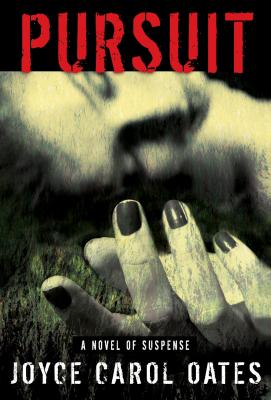
As a child, Abby had the same recurring nightmare night after night, in which she wandered through a field ridden with human skulls and bones. Now an adult, Abby thinks she's outgrown her demons, until, the evening before her wedding, the terrible dream returns and forces her to confront the dark secrets from her past she has kept from her new husband, Willem. The following day—less than 24 hours after exchanging vows—Abby steps out into traffic. As his wife lies in her hospital bed, sleeping in fits and starts, Willem tries to determine whether this was an absentminded accident or a premeditated plunge, and he quickly discovers a mysterious set of clues about what his wife might be hiding. Why, for example is there a rash-like red mark circling her wrist? What does she dream about that causes her to wake from the sound of her own screams? Slowly, Abby begins to open up to her husband, revealing to him what she has never shared with anyone before—the story of a terrified mother; a jealous, drug addled father; and a daughter's terrifying captivity. With a suspenseful, alternating narrative that travels between the present and Abby's tortured childhood, The Pursuit is a meticulously crafted, deeply disquieting tale that showcases Oates's masterful storytelling.

Taken from the poverty of her parents' home in Portsmouth, Fanny Price is brought up with her rich cousins at Mansfield Park, acutely aware of her humble rank and with her cousin Edmund as her sole ally. During her uncle's absence in Antigua, the Crawford's arrive in the neighbourhood bringing with them the glamour of London life and a reckless taste for flirtation. Mansfield Park is considered Jane Austen's first mature work and, with its quiet heroine and subtle examination of social position and moral integrity, one of her most profound.