
Jordan Peterson Recommended Books
Canadian clinical psychologist, author, and political commentator and manosphere activist
118 Books Recommended
This is a book about how we see: the environment around us (its surfaces, their layout, and their colors and textures); where we are in the environment; whether or not we are moving and, if we are, where we are going; what things are good for; how to do things (to thread a needle or drive an automobile); or why things look as they do. The basic assumption is that vision depends on the eye which is connected to the brain. The author suggests that natural vision depends on the eyes in the head on a body supported by the ground, the brain being only the central organ of a complete visual system. When no constraints are put on the visual system, people look around, walk up to something interesting and move around it so as to see it from all sides, and go from one vista to another. That is natural vision -- and what this book is about.

The World’s Religions, by beloved author and pioneering professor Huston Smith (Tales of Wonder), is the definitive classic for introducing the essential elements and teachings of the world's predominant faiths, including Hinduism, Buddhism, Confucianism, Taoism, Judaism, Christianity, Islam, as well as regional native traditions.This revised and updated edition provides sympathetic descriptions of the various traditions, explaining how they work “from the inside,” which is a big reason why this cherished classic has sold more than two million copies since it first appeared in 1958.

The Rape of Nanking: The Forgotten Holocaust of World War II
by Iris Chang
Rating: 4.4 ⭐
• 4 recommendations ❤️
The New York Times bestselling account of one of history's most brutal—and forgotten—massacres, when the Japanese army destroyed China's capital city on the eve of World War II, "piecing together the abundant eyewitness reports into an undeniable tapestry of horror". (Adam Hochschild, Salon)In December 1937, one of the most horrific atrocities in the long annals of wartime barbarity occurred. The Japanese army swept into the ancient city of Nanking (what was then the capital of China), and within weeks, more than 300,000 Chinese civilians and soldiers were systematically raped, tortured, and murdered. In this seminal work, Iris Chang, whose own grandparents barely escaped the massacre, tells this history from three that of the Japanese soldiers, that of the Chinese, and that of a group of Westerners who refused to abandon the city and created a safety zone, which saved almost 300,000 Chinese.Drawing on extensive interviews with survivors and documents brought to light for the first time, Iris Chang's classic book is the definitive history of this horrifying episode.

They are an unlikely pair: George is “small and quick and dark of face”; Lennie, a man of tremendous size, has the mind of a young child. Yet they have formed a “family,” clinging together in the face of loneliness and alienation.Laborers in California’s dusty vegetable fields, they hustle work when they can, living a hand-to-mouth existence. For George and Lennie have a plan: to own an acre of land and a shack they can call their own. When they land jobs on a ranch in the Salinas Valley, the fulfillment of their dream seems to be within their grasp. But even George cannot guard Lennie from the provocations of a flirtatious woman, nor predict the consequences of Lennie’s unswerving obedience to the things George taught him.

A Doctor's Revolutionary Research into the Biology of Near-Death & Mystical Experiences.A clinical psychiatrist explores the effects of DMT: A behind-the-scenes look at the cutting edge of psychedelic research.From 1990 to 1995 Dr. Rick Strassman conducted US DEA-approved clinical research at the University of New Mexico in which he injected 60 volunteers with DMT, one of the most powerful psychedelics known. His detailed account of those sessions is an inquiry into the nature of the human mind and the therapeutic potential of psychedelics. DMT, a plant-derived chemical that is also manufactured by the human brain, consistently produced near-death and mystical experiences. Many volunteers reported convincing encounters with intelligent nonhuman presences, especially "aliens." Nearly all felt that the sessions were among the most profound experiences of their lives.Strassman's research connects DMT with the pineal gland, considered by Hindus to be the site of the seventh chakra and by René Descartes to be the seat of the soul. DMT: The Spirit Molecule makes the case that DMT, naturally released by the pineal gland, facilitates the soul's movement in and out of the body and is an integral part of the birth and death experiences, as well as the highest states of meditation and even sexual transcendence. Strassman also believes that alien abduction experiences are brought on by accidental releases of DMT. If used wisely, DMT could trigger a period of remarkable progress in the scientific exploration of the most mystical regions of the human mind and soul.

In his first book since What Went Wrong? Bernard Lewis examines the historical roots of the resentments that dominate the Islamic world today and that are increasingly being expressed in acts of terrorism. He looks at the theological origins of political Islam and takes us through the rise of militant Islam in Iran, Egypt, and Saudi Arabia, examining the impact of radical Wahhabi proselytizing, and Saudi oil money, on the rest of the Islamic world.The Crisis of Islam ranges widely through thirteen centuries of history, but in particular it charts the key events of the twentieth century leading up to the violent confrontations of today: the creation of the state of Israel, the Cold War, the Iranian Revolution, the Soviet defeat in Afghanistan, the Gulf War, and the September 11th attacks on the United States.While hostility toward the West has a long and varied history in the lands of Islam, its current concentration on America is new. So too is the cult of the suicide bomber. Brilliantly disentangling the crosscurrents of Middle Eastern history from the rhetoric of its manipulators, Bernard Lewis helps us understand the reasons for the increasingly dogmatic rejection of modernity by many in the Muslim world in favor of a return to a sacred past. Based on his George Polk Award–winning article for The New Yorker , The Crisis of Islam is essential reading for anyone who wants to know what Usama bin Ladin represents and why his murderous message resonates so widely in the Islamic world.

Essays which state the fundamentals of Jung's psychological system: "On the Psychology of the Unconscious" and "The Relations Between the Ego and the Unconscious," with their original versions in an appendix.

The Old Man and the Sea, an apparently simple fable, represents the mature Hemingway at his best. He was awarded the Nobel Prize for Literature soon after its publication, and half a century later it is still one of his most read books.

An Anthropologist on Mars: Seven Paradoxical Tales
by Oliver Sacks
Rating: 4.2 ⭐
• 2 recommendations ❤️
The works of neurologist Oliver Sacks have a special place in the swarm of mind-brain studies. He has done as much as anyone to make nonspecialists aware of how much diversity gets lumped under the heading of "the human mind." The stories in An Anthropologist on Mars are medical case reports not unlike the classic tales of Berton Roueché in The Medical Detectives. Sacks's stories are of "differently brained" people, and they have the intrinsic human interest that spurred his book Awakenings to be re-created as a Robin Williams movie. The title story in Anthropologist is that of autistic Temple Grandin, whose own book Thinking in Pictures gives her version of how she feels--as unlike other humans as a cow or a Martian. The other minds Sacks describes are equally remarkable: a surgeon with Tourette's syndrome, a painter who loses color vision, a blind man given the ambiguous gift of sight, artists with memories that overwhelm "real life," the autistic artist Stephen Wiltshire, and a man with memory damage for whom it is always 1968. Oliver Sacks is the Carl Sagan or Stephen Jay Gould of his field; his books are true classics of medical writing, of the breadth of human mentality, and of the inner lives of the disabled. --Mary Ellen Curtin

The Mystery of Capital: Why Capitalism Triumphs in the West and Fails Everywhere Else
by Hernando de Soto
Rating: 4.0 ⭐
• 2 recommendations ❤️
"The hour of capitalism's greatest triumph," writes Hernando de Soto, "is, in the eyes of four-fifths of humanity, its hour of crisis." In The Mystery of Capital, the world-famous Peruvian economist takes up the question that, more than any other, is central to one of the most crucial problems the world faces today: Why do some countries succeed at capitalism while others fail?In strong opposition to the popular view that success is determined by cultural differences, de Soto finds that it actually has everything to do with the legal structure of property and property rights. Every developed nation in the world at one time went through the transformation from predominantly informal, extralegal ownership to a formal, unified legal property system. In the West we've forgotten that creating this system is also what allowed people everywhere to leverage property into wealth. This persuasive book will revolutionize our understanding of capital and point the way to a major transformation of the world economy.

Of the various English translations of Freud's major works to appear in his lifetime, only one was authorized by Freud The Standard Edition of the Complete Psychological Works of Sigmund Freud under the general editorship of James Strachey. Freud approved the overall editorial plan, specific renderings of key words and phrases, and the addition of valuable notes, from bibliographical and explanatory. Many of the translations were done by Strachey himself; the rest were prepared under his supervision. The result was to place the Standard Edition in a position of unquestioned supremacy over all other existing versions.Newly designed in a uniform format, each new paperback in the Standard Edition opens with a biographical essay on Freud's life and work —along with a note on the individual volume—by Peter Gay, Sterling Professor of History at Yale.

Winner of the Pulitzer prize in 1974 and the culmination of a life's work, The Denial of Death is Ernest Becker's brilliant and impassioned answer to the "why" of human existence. In bold contrast to the predominant Freudian school of thought, Becker tackles the problem of the vital lie -- man's refusal to acknowledge his own mortality. In doing so, he sheds new light on the nature of humanity and issues a call to life and its living that still resonates more than twenty years after its writing.

Our Culture, What's Left of It: The Mandarins and the Masses
by Theodore Dalrymple
Rating: 4.1 ⭐
• 2 recommendations ❤️
This new collection of essays bears the unmistakable stamp of Theodore Dalrymple's bracingly clearsighted view of the human condition. In these twenty-six pieces, Dr. Dalrymple ranges over literature and ideas, from Shakespeare to Marx, from the break-down of Islam to the legalization of drugs. The book includes "When Islam Breaks Down," named by David Brooks of the New York Times as the best journal article of 2004.Informed by years of medical practice in a wide variety of settings, Dr. Dalrymple's acquaintance with the outer limits of human experience allows him to discover the universal in the local and the particular, and makes him impatient with the humbug and obscurantism that have too long marred our social and political discourse.His essays are incisive yet undogmatic, beautifully composed and devoid of disfiguring jargon. Our Culture, What's Left of It is a book that restores our faith in the central importance of literature and criticism to our civilization.

Life at the Bottom: The Worldview That Makes the Underclass
by Theodore Dalrymple
Rating: 4.2 ⭐
• 2 recommendations ❤️
Here is a searing account-probably the best yet published-of life in the underclass and why it persists as it does. Theodore Dalrymple, a British psychiatrist who treats the poor in a slum hospital and a prison in England, has seemingly seen it all. Yet in listening to and observing his patients, he is continually astonished by the latest twist of depravity that exceeds even his own considerable experience. Dalrymple's key insight in Life at the Bottom is that long-term poverty is caused not by economics but by a dysfunctional set of values, one that is continually reinforced by an elite culture searching for victims. This culture persuades those at the bottom that they have no responsibility for their actions and are not the molders of their own lives. Drawn from the pages of the cutting-edge political and cultural quarterly City Journal, Dalrymple's book draws upon scores of eye-opening, true-life vignettes that are by turns hilariously funny, chillingly horrifying, and all too revealing-sometimes all at once. And Dalrymple writes in prose that transcends journalism and achieves the quality of literature.

The Origins and History of Consciousness draws on a full range of world mythology to show how individual consciousness undergoes the same archetypal stages of development as human consciousness as a whole. Erich Neumann was one of C. G. Jung's most creative students and a renowned practitioner of analytical psychology in his own right. In this influential book, Neumann shows how the stages begin and end with the symbol of the Uroboros, the tail-eating serpent. The intermediate stages are projected in the universal myths of the World Creation, Great Mother, Separation of the World Parents, Birth of the Hero, Slaying of the Dragon, Rescue of the Captive, and Transformation and Deification of the Hero. Throughout the sequence, the Hero is the evolving ego consciousness.Featuring a foreword by Jung, this Princeton Classics edition introduces a new generation of readers to this eloquent and enduring work.

The Fratricides by the Greek author Nikos Kazantzakis recounts the tragic violence that swallowed the Greek countryside in the civil war of the late 1940s. Castello, a village in Epirus is not spared all the death and destruction which culminated during the Holy Week.

The Genealogy of Morals consists of three essays exploring morality and its origins where Nietzsche makes ample use of his training as a philologist. These works contain Nietzsche's most thorough and clear expression of his psychological philosophy. This edition includes Ecce Homo, Nietzsche's review of his life and works, with the exception of The Antichrist. These two books are compiled, translated and annotated by renowned Nietzsche scholar Walter Kaufmann.

Tolstoy by Troyat, Henri; Nancy Amphoux, trans.. 8vo.

The Forge and the Crucible: The Origins and Structure of Alchemy
by Mircea Eliade
Rating: 4.2 ⭐
• 2 recommendations ❤️
Primitive man's discovery of the ability to change matter from one state to another brought about a profound change in spiritual behavior. In The Forge and the Crucible, Mircea Eliade follows the ritualistic adventures of these ancient societies, adventures rooted in the people's awareness of an awesome new power.The new edition of The Forge and the Crucible contains an updated appendix, in which Eliade lists works on Chinese alchemy published in the past few years. He also discusses the importance of alchemy in Newton's scientific evolution.

Written 75 years ago, 1984 was George Orwell’s chilling prophecy about the future. And while 1984 has come and gone, his dystopian vision of a government that will do anything to control the narrative is timelier than ever...This 75th Anniversary Edition includes:• A New Introduction by Dolen Perkins-Valdez, author of Take My Hand, winner of the 2023 NAACP Image Award for Outstanding Literary Work—Fiction• A New Afterword by Sandra Newman, author of Julia: A Retelling of George Orwell’s 1984“The Party told you to reject the evidence of your eyes and ears. It was their final, most essential command.”Winston Smith toes the Party line, rewriting history to satisfy the demands of the Ministry of Truth. With each lie he writes, Winston grows to hate the Party that seeks power for its own sake and persecutes those who dare to commit thoughtcrimes. But as he starts to think for himself, Winston can’t escape the fact that Big Brother is always watching...A startling and haunting novel, 1984 creates an imaginary world that is completely convincing from start to finish. No one can deny the novel’s hold on the imaginations of whole generations, or the power of its admonitions—a power that seems to grow, not lessen, with the passage of time.• Nominated as one of America’s best-loved novels by PBS’s The Great American Read •
A provocative and enlightening look at spiritual unease and its contribution to the void in modern civilization Considered by many to be one of the most important books in the field of psychology, Modern Man in Search of a Soul is a comprehensive introduction to the thought of Carl Gustav Jung. In this book, Jung examines some of the most contested and crucial areas in the field of analytical psychology, including dream analysis, the primitive unconscious, and the relationship between psychology and religion. Additionally, Jung looks at the differences between his theories and those of Sigmund Freud, providing a valuable basis for anyone interested in the fundamentals of psychoanalysis.

Translation of: La formation du symbole chez l'enfant.
Esta es la versión completa y definitiva de una de las obras más revolucionarias y centrales de C. G. Jung. A partir de la reconstrucción y examen de los procesos semiconscientes e inconscientes del caso de una joven, Jung muestra que la psicología no puede prescindir de la historia del espíritu humano. La fantasía creadora dispone del espíritu primitivo, con sus imágenes específicas, que se manifiestan en las mitologías de todos los pueblos y épocas e integran lo inconsciente colectivo.

On Becoming a Person: A Therapist's View of Psychotherapy
by Carl R. Rogers
Rating: 4.2 ⭐
• 2 recommendations ❤️
The late Carl Rogers, founder of the humanistic psychology movement, revolutionized psychotherapy with his concept of "client-centered therapy." His influence has spanned decades, but that influence has become so much a part of mainstream psychology that the ingenious nature of his work has almost been forgotten. A new introduction by Peter Kramer sheds light on the significance of Dr. Rogers's work today. New discoveries in the field of psychopharmacology, especially that of the antidepressant Prozac, have spawned a quick-fix drug revolution that has obscured the psychotherapeutic relationship. As the pendulum slowly swings back toward an appreciation of the therapeutic encounter, Dr. Rogers's "client-centered therapy" becomes particularly timely and important.

Zen and the Art of Motorcycle Maintenance: An Inquiry Into Values
by Robert M. Pirsig
Rating: 3.7 ⭐
• 18 recommendations ❤️
At its heart, the story is all too simple: a man and his son take a lengthy motorcycle trip through America. But this is not a simple trip at all, for around every corner, through mountain and desert, wind and rain, and searing heat and biting cold, their pilgrimage leads them to new vistas of self-discovery and renewal.Zen and the Art of Motorcycle Mantenance is an elemental work that has helped to shape and define the past twenty-five years of American culture. This special audio edition presents this adventure in a compelling way - for the millions who have already taken this journey and want to travel these roads again, and for the many more who will discover for the first time the wonders and challenges of a journey that will change the way they think and feel about their lives.

They say if you remember the '60s, you weren't there. But, fortunately, Tom Wolfe was there, notebook in hand, politely declining LSD while Ken Kesey and his Merry Pranksters fomented revolution, turning America on to a dangerously playful way of thinking as their Day-Glo conveyance, Further, made the most influential bus ride since Rosa Parks's. By taking On the Road's hero Neal Cassady as his driver on the cross-country revival tour and drawing on his own training as a magician, Kesey made Further into a bully pulpit, and linked the beat epoch with hippiedom. Paul McCartney's Many Years from Now cites Kesey as a key influence on his trippy Magical Mystery Tour film. Kesey temporarily renounced his literary magic for the cause of "tootling the multitudes"--making a spectacle of himself--and Prankster Robert Stone had to flee Kesey's wild party to get his life's work done. But in those years, Kesey's life was his work, and Wolfe infinitely multiplied the multitudes who got tootled by writing this major literary-journalistic monument to a resonant pop-culture moment.Kesey's theatrical metamorphosis from the distinguished author of One Flew over the Cuckoo's Nest to the abominable shaman of the "Acid Test" soirees that launched The Grateful Dead required Wolfe's Day-Glo prose account to endure (though Kesey's own musings in Demon Box are no slouch either). Even now, Wolfe's book gives what Wolfe clearly got from Kesey: a contact high.

Mephistopheles: The Devil in the Modern World
by Jeffrey Burton Russell
Rating: 4.1 ⭐
• 2 recommendations ❤️
Mephistopheles is the fourth and final volume of a critically acclaimed history of the concept of the Devil. The series constitutes the most complete historical study ever made of the figure that has been called the second most famous personage in Christianity.In his first three volumes Jeffrey Burton Russell brought the history of Christian diabology to the end of the Middle Ages, showing the development of a degree of consensus, even in detail, on the concept of the Devil. Mephistopheles continues the story from the Reformation to the present, tracing the fragmentation of the tradition. Using examples from theology, philosophy, art, literature, and popular culture, he describes the great changes effected in our idea of the Devil by the intellectual and cultural developments of modem times.Emphasizing key figures and movements, Russell covers the apogee of the witch craze in the Renaissance and Reformation, the effects of the Enlightenment's rationalist philosophy, the Romantic image of Satan, and the cynical or satirical literary treatments of the Devil in the late nineteenth century. He concludes that although today the Devil may seem an outworn metaphor, the very real horrors of the twentieth century suggest the continuing need for some vital symbol of radical evil.A work of great insight and learning, Mephistopheles deepens our understanding of the ways in which people in Western societies have dealt with the problem of evil.

Affective Neuroscience: The Foundations of Human and Animal Emotions
by Jaak Panksepp
Rating: 4.4 ⭐
• 2 recommendations ❤️
Some investigators have argued that emotions, especially animal emotions, are illusory concepts outside the realm of scientific inquiry. However, with advances in neurobiology and neuroscience, researchers are demonstrating that this position is wrong as they move closer to a lasting understanding of the biology and psychology of emotion. In Affective Neuroscience, Jaak Panksepp provides the most up-to-date information about the brain-operating systems that organize the fundamental emotional tendencies of all mammals. Presenting complex material in a readable manner, the book offers a comprehensive summary of the fundamental neural sources of human and animal feelings, as well as a conceptual framework for studying emotional systems of the brain. Panksepp approaches emotions from the perspective of basic emotion theory but does not fail to address the complex issues raised by constructionist approaches. These issues include relations to human consciousness and the psychiatric implications of this knowledge. The book includes chapters on sleep and arousal, pleasure and fear systems, the sources of rage and anger, and the neural control of sexuality, as well as the more subtle emotions related to maternal care, social loss, and playfulness. Representing a synthetic integration of vast amounts of neurobehavioral knowledge, including relevant neuroanatomy, neurophysiology, and neurochemistry, this book will be one of the most important contributions to understanding the biology of emotions since Darwins The Expression of the Emotions in Man and Animals.

Bollingen Series XX'Collected Works, The Symbolic Life' has 160 items representative of the author's numerous interests, his wide circle of professional & personal acquaintance, & his inquiring mind. Its contents span 60 years; they include forewords to books by pupils & colleagues, replies to journalistic questionnaires, encyclopedia articles, occasional addresses & letters on technical subjects.

One of the most remarkable and influential books of the nineteenth century—Nietzsche's attempt to sum up his philosophy.In nine parts the book is designed to give the reader a comprehensive idea of Nietzsche's thought and style: they span "The Prejudices of Philsophers," "The Free Spirit," religion, morals, scholarship, "Our Virtues," "Peoples and Fatherlands," and "What Is Noble," as well as epigrams and a concluding poem. This translation by Walter Kaufmann has become the standard one, for accuracy and fidelity to the eccentricities and grace of the style of the original. The translation is based on the only edition Nietzsche himself published, and all variant reading in later editions. This volume offers an inclusive index of subjects and persons, as well as a running footnote commentary on the text.
Jung's last major work, completed in his 81st year, on the synthesis of the opposites in alchemy and psychology.

s/t: A Study of the Nature and Origins of Christianity within the Fertility Cults of the Ancient Near EastWhere did god come from? What do the bible stories really tell us? Who or what was Jesus Christ? This book challenges everything we think we know about the nature of religion. The ancient fertility cult at the heart of Christianity. The living power of cultic rites and symbols. The sacred mushroom as the emblem and embodiment of divinity. The secret meaning of biblical myths. The language of religion that links us to our ancestors. The Sacred Mushroom and the Cross sets out John Allegro's quest through a family tree of languages to find the truth about where Christianity came from.

“The richest comic novel of the last ten years.”V S Pritchett“Mr Joyce Cary is an important and exciting writer… if you like rich writing full of gusto and accurate original character drawing, you will get it from The Horse’s Mouth”John Betjeman“The coming to perfect ripeness of a rare and blessed talent; and I recommend it out of a profound personal appreciation and joy.”Pamela Hansford Johnson“The Horse’s Mouth has the kick of ten stallions. Mr Joyce Cary writes at top pace, at the top of his voice, and the top of his form.”The Observer“Mr Joyce Cary is a most exciting novelist. There is a thrill in his books which comes from his own extraordinary vision of men and women, he writes so well, with such a fine understanding that at the end the reader feels there is nothing left to be said about the person, nothing left that one wants to know… the book is real and true. It flows over with life.”Daily TelegraphThe Horse’s Mouth, famously filmed with Alec Guinness in the central role, is a portrait of an artistic temperament. Its principal character, Gulley Jimson, is an impoverished painter who bothers little about conventional values. His unquestioning certainty that he must live and paint according to his intuition without regard for the cost to himself or others makes him a man of great, if sometimes flawed, vision.

The First Circle of Dante’s Hell—where the souls of the pre-Christian philosophers are doomed to exist throughout eternity—stands in this novel as a metaphor for certain penal institutions of Stalin’s Russia. These were scientific research centers, operating within special prisons and staffed by political prisoners—physicists, mathematicians, electrical engineers, technicians. They were luxurious in comparison with other prisons and the hard-labor camps of the far north—from which many of their inmates were drawn, to which many would return: the prisoners were fed enough to ensure their effectiveness; they slept between sheets. But their prison terms were long, their contacts with the world of freedom minimal, and an administrator’s whim was enough to ship them to the lower circles of Hell.Much of the action of The First Circle takes place in one such research center on the outskirts of Moscow, during the four days from December 24 through 27, 1949. It ranges from there to the apartments and streets of Moscow…to a university dormitory…to the offices of awesome men with absolute power over the lives of others, who are themselves the terror-ridden chattels of one man. It enters even his small, fortified, windowless workroom. There the 70-year-old Stalin plans a new purge, a new assassination, greater moments to himself…The hero of The First Circle is the prisoner Nerzhin, a brilliant mathematician. At the age of 31, Nerzhin has, like the author, survived the war years on the German front and the poswar years in a succession of Russian prisons and labor camps. His story is interwoven with the stories of a dozen fellow prisoners—each an unforgettable human being—from the prison janitor to the nearsighted genius who designed the Dnieper dam; the reigning intellectuals and their friends in high places; and the women, wretched or privileged, bound to these men. As we follow Nerzhin’s fortunes we become familiar with the inner paths of an entire society—one vast Inferno—and the diverse ways by which different men and women managed—or failed—to live within it.Each scene intensely felt; each person passionately realized; a narrative power that seizes the reader and will not turn him loose; a literary mastery unsurpassed by any novelist of our time…these are the qualities of The First Circle. It is a sublime hymn of praise to man, an outpouring of love and pride, a celebration of nobility, courage, selflessness, honor. Nerzhin and his friends are slaves of the most pervasive tyranny modern history has known, deprived of every human right, their wives and families hounded and persecuted. Yet, in the tradition of Russia’s martyr-patriots, they stand radiant as archangels in their afflicted land, their own survival less to them now—dearly though they still love life—than the survival of truth, justice, mercy, freedom.It is also a denunciation…of one man in particular and the many other men he found to do his will: those he perverted; those who were already corrupt; all those who blighted the bright promise of human life and imposed the dominion of evil on millions. It is the author’s masterpiece…the offering he has created out of his own substance—his pain, his love and his belief—to the place on the altar of humanity.
Words with Power: Being a Second Study of the Bible and Literature
by Northrop Frye
Rating: 4.1 ⭐
• 2 recommendations ❤️
Frye continues his exploration, begun in The Great Code, of the influence of Biblical themes and forms of expression on Western literature, with discussions of authors ranging from Chaucer and Shakespeare to Yeats and Eliot. Frye identifies four key elements found in the Bible-the mountain, the garden, the cave, and the furnace-and describes how they recur in later secular writings. Indices.

Here is Friedrich Nietzsche's great masterpiece The Anti-Christ, wherein Nietzsche attacks Christianity as a blight on humanity. This classic is essential reading for anyone wishing to understand Nietzsche and his place within the history of philosophy. "We should not deck out and embellish Christianity: it has waged a war to the death against this higher type of man, it has put all the deepest instincts of this type under its ban, it has developed its concept of evil, of the Evil One himself, out of these instincts-the strong man as the typical reprobate, the 'outcast among men.' Christianity has taken the part of all the weak, the low, the botched; it has made an ideal out of antagonism to all the self-preservative instincts of sound life; it has corrupted even the faculties of those natures that are intellectually most vigorous, by representing the highest intellectual values as sinful, as misleading, as full of temptation. The most lamentable example: the corruption of Pascal, who believed that his intellect had been destroyed by original sin, whereas it was actually destroyed by Christianity!" -Friedrich Nietzsche
Why have people from different cultures and eras formulated myths and stories with similar structures? What does this similarity tell us about the mind, morality, and structure of the world itself? Jordan Peterson offers a provocative new hypothesis that explores the connection between what modern neuropsychology tells us about the brain and what rituals, myths, and religious stories have long narrated. A cutting-edge work that brings together neuropsychology, cognitive science, and Freudian and Jungian approaches to mythology and narrative, Maps of Meaning presents a rich theory that makes the wisdom and meaning of myth accessible to the critical modern mind.

An examination of the influence of the Bible on Western art and literature and on the Western creative imagination in general. Frye persuasively presents the Bible as a unique text distinct from all other epics and sacred writings. “No one has set forth so clearly, so subtly, or with such cogent energy as Frye the literary aspect of our biblical heritage” (New York Times Book Review). Indices.

The Discovery of the Unconscious: The History and Evolution of Dynamic Psychiatry
by Henri F. Ellenberger
Rating: 4.5 ⭐
• 2 recommendations ❤️
This classic work is a monumental, integrated view of man's search for an understanding of the inner reaches of the mind. In an account that is both exhaustive and exciting, the distinguished psychiatrist and author demonstrates the long chain of development—through the exorcists, magnetists, and hypnotists—that led to the fruition of dynamic psychiatry in the psychological systems of Janet, Freud, Adler, and Jung.
Systemantics: How Systems Work and Especially How They Fail
by John Gall
Rating: 4.3 ⭐
• 2 recommendations ❤️
Hardcover published by Quadragle/The New York Times Book Co., third printing, August 1977, copyright 1975.

This landmark book explores the Great Mother as a primordial image of the human psyche. Here the renowned analytical psychologist Erich Neumann draws on ritual, mythology, art, and records of dreams and fantasies to examine how this archetype has been outwardly expressed in many cultures and periods since prehistory. He shows how the feminine has been represented as goddess, monster, gate, pillar, tree, moon, sun, vessel, and every animal from snakes to birds. Neumann discerns a universal experience of the maternal as both nurturing and fearsome, an experience rooted in the dialectical relation of growing consciousness, symbolized by the child, to the unconscious and the unknown, symbolized by the Great Mother.Featuring a new foreword by Martin Liebscher, this Princeton Classics edition of The Great Mother introduces a new generation of readers to this profound and enduring work.

Ordinary Men: Reserve Police Battalion 101 and the Final Solution in Poland
by Christopher R. Browning
Rating: 4.1 ⭐
• 4 recommendations ❤️
Christopher R. Browning’s shocking account of how a unit of average middle-aged Germans became the cold-blooded murderers of tens of thousands of Jews—now with a new afterword and additional photographs. Ordinary Men is the true story of Reserve Police Battalion 101 of the German Order Police, which was responsible for mass shootings as well as round-ups of Jewish people for deportation to Nazi death camps in Poland in 1942. Browning argues that most of the men of RPB 101 were not fanatical Nazis but, rather, ordinary middle-aged, working-class men who committed these atrocities out of a mixture of motives, including the group dynamics of conformity, deference to authority, role adaptation, and the altering of moral norms to justify their actions. Very quickly three groups emerged within the battalion: a core of eager killers, a plurality who carried out their duties reliably but without initiative, and a small minority who evaded participation in the acts of killing without diminishing the murderous efficiency of the battalion whatsoever.While this book discusses a specific Reserve Unit during WWII, the general argument Browning makes is that most people succumb to the pressures of a group setting and commit actions they would never do of their own volition. Ordinary Men is a powerful, chilling, and important work, with themes and arguments that continue to resonate today.

The seminal book by this century's most important developmental psychologist chronicles the evolution of children's moral thinking.The Moral Judgement of the Child traces children's moral thinking from preschool to adolescence, tracing their concepts of lying, cheating, adult authority, punishment, and responsibility and offering important insights into how they learn -- or fail to learn -- the difference between right and wrong.

A profound and deeply personal collection of essays by renowned psychologist Carl RogersThe late Carl Rogers, founder of the humanistic psychology movement and father of client-centered therapy, based his life's work on his fundamental belief in the human potential for growth. A Way of Being was written in the early 1980s, near the end of Carl Rogers's career, and serves as a coda to his classic On Becoming a Person. More philosophical than his earlier writings, it traces his professional and personal development and ends with a prophetic call for a more humane future.

The Bible: Designed to be Read as Living Literature, the Old and the New Testaments in the King James Version
by
Rating: 4.4 ⭐
• 2 recommendations ❤️
The Holy Bible, Christian Literature & Studies, Religious Studies

Aion: Researches into the Phenomenology of the Self, originally published in German in 1951, is one of the major works of Jung's later life. The central theme of the volume is the symbolic representation of the psychic totality thru the concept of the Self, whose traditional historical equivalent is the figure of Christ. Jung demonstrates his thesis by an investigation of the Allegoria Christi, especially the fish symbol, but also of gnostic & alchemical symbolism, which he treats as phenomena of cultural assimilation. The first four chapters, on the ego, the shadow & the anima/us, provide a valuable summation of these key concepts in his psychological system.

Existence: A New Dimension in Psychiatry and Psychology
by Ernest Angel
Rating: 4.1 ⭐
• 2 recommendations ❤️
Since its publication in 1958, Existence has been regarded as the most important, complete and lucid account of the existentialist approach to psychology. From the works of the leading spokesmen of the existential analytical movement, the editors have selected classic case histories and other writings to define the new approach which seeks to understand mental illness, in the words of Rollo May, "...not as deviations from the conceptual yardstick of this or that psychiatrist...but as deviations in the structure of the particular patient's existence, the disruptions of his condition humaine."

The Emotional Brain: The Mysterious Underpinnings of Emotional Life
by Joseph E. LeDoux
Rating: 4.1 ⭐
• 2 recommendations ❤️
The Emotional Brain investigates the origins of human emotions and explains that many exist as part of complex neural systems that evolved to enable us to survive.

A detailed memoir and self-analysis by a mass murderer. Panzram was born in 1891 on a Minnesota farm and died in 1930 on the gallows at the U.S.Penitentiary, Fort Leavenworth, Kansas. Imprisoned for most of his life from the age of twelve and brutally punished, Panzram's keen insight into the arbitrary cruelty of his fellow human being is graphically illustrated with a litany of prison abuses, as well as the details of his own sordid, tragic life. Panzram arrives as a gripping warning from America's past to new prison-industrial complex era. The authors add an historical and sociological framework for Panzram's words.

A harrowing story that follows the wanderings of a boy abandoned by his parents during World War II, The Painted Bird is a dark novel that examines the proximity of terror and savagery to innocence and love.

This volume has become known as perhaps the best introduction to Jung's work. In these famous essays. "The Relations between the Ego and the Unconscious" and "On the Psychology of the Unconscious," he presented the essential core of his system. Historically, they mark the end of Jung's intimate association with Freud and sum up his attempt to integrate the psychological schools of Freud and Adler into a comprehensive framework.This is the first paperback publication of this key work in its revised and augmented second edition of 1966. The earliest versions of the Two Essays, "New Paths in Psychology" (1912) and "The Structure of the Unconscious" (1916), discovered among Jung's posthumous papers, are published in an appendix, to show the development of Jung's thought in later versions. As an aid to study, the index has been comprehensively expanded.
The first complete, annotated English Translation of Mikhail Bulgakov's comic masterpiece.An audacious revision of the stories of Faust and Pontius Pilate, The Master and Margarita is recognized as one of the essential classics of modern Russian literature. The novel's vision of Soviet life in the 1930s is so ferociously accurate that it could not be published during its author's lifetime and appeared only in a censored edition in the 1960s. Its truths are so enduring that its language has become part of the common Russian speech.One hot spring, the devil arrives in Moscow, accompanied by a retinue that includes a beautiful naked witch and an immense talking black cat with a fondness for chess and vodka. The visitors quickly wreak havoc in a city that refuses to believe in either God or Satan. But they also bring peace to two unhappy Muscovites: one is the Master, a writer pilloried for daring to write a novel about Christ and Pontius Pilate; the other is Margarita, who loves the Master so deeply that she is willing literally to go to hell for him. What ensues is a novel of inexhaustible energy, humor, and philosophical depth, a work whose nuances emerge for the first time in Diana Burgin's and Katherine Tiernan O'Connor's splendid English version.

The Man Who Mistook His Wife for a Hat and Other Clinical Tales
by Oliver Sacks
Rating: 4.0 ⭐
• 3 recommendations ❤️
In his most extraordinary book, Oliver Sacks recounts the stories of patients lost in the bizarre, apparently inescapable world of neurological disorders. These are case studies of people who have lost their memories and with them the greater part of their pasts; who are no longer able to recognize people or common objects; whose limbs have become alien; who are afflicted and yet are gifted with uncanny artistic or mathematical talents. In Dr Sacks' splendid and sympathetic telling, each tale is a unique and deeply human study of life struggling against incredible adversity.

环境的极致,信念的极致,生命的极致,你能熬过去吗?700天冰海历劫,20世纪最伟大的南极探险故事!弃船的命令下午5时发出。然而,对于大多数船员来说,其实已经没必要了,因为人人都知道这船彻底完了,是该放弃了。没有人表现出恐惧甚或忧虑。他们已经一刻不停地奋战了整整三天,但最终还是功败垂成。对于逃离沉船后的那种普遍的解脱感,有个人是不认可的。他的名字是欧内斯特·沙克尔顿爵士,就是他率领了这支大英帝国穿越南极探险队。这一天是1915年10月27日。探险船的名字叫“坚忍号”。目前的坐标是南纬69.5度,西经51.3度,处于南极诡秘莫测的威德尔海千里冰原深处,正好在南极点与离得最近的人类居住点之间,居住点距此有1200英里。自从最后一次同现代文明接触之后,已经过去了将近一年时间。外界根本就没有人知道他们遇到了麻烦。当时,他们没有无线电发报机,而且,就算用无线电发出了紧急求救信号, 最后能否有人及时赶来救援还是问题。那是1915年,没有直升机,没有小型登陆车,没有履带式雪地车,也没有合用的救援飞机。已知离得最近的能让他们找到食物和住所的地方,就只有小小的保利特岛。1903年,就在这个小岛上,被威德尔海的坚冰撞坏的瑞典船“南极号”的船员度过了整个冬天。该船最终获救,撤离时船员们将船上的给养留在了保利特岛上,以备日后任何遭遇海难者的不时之需。饶有意味的是,当年正是沙克尔顿受命购买了这些给养,而现在,整整十二年之后,这恰恰是他自己最需要的。

This text presents a novel theory of creativity that is based on the linkage between the psychopathological characteristics of creative persons and geniuses. It traces creativity from DNA through personality to special cognitive processes and the qualities of genius.
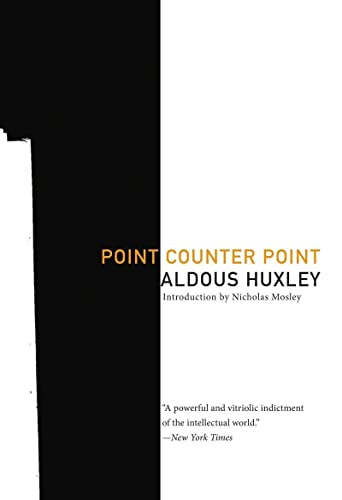
Aldous Huxley's lifelong concern with the dichotomy between passion and reason finds its fullest expression both thematically and formally in his masterpiece Point Counter Point. By presenting a vision of life in which diverse aspects of experience are observed simultaneously, Huxley characterizes the symptoms of "the disease of the modern man" in the manner of a composer--themes and characters are repeated, altered slightly, and played off one another in a tone that is at once critical and sympathetic.First published in 1928, Huxley's satiric view of intellectual life in the '20s is populated with characters based on such celebrities as D.H. Lawrence, Katherine Mansfield, Nancy Cunard, and John Middleton Murry, as well as Huxley himself.

A treasure worth killing for. Sam Spade, a slightly shopworn private eye with his own solitary code of ethics. A perfumed grafter named Joel Cairo, a fat man name Gutman, and Brigid O’Shaughnessy, a beautiful and treacherous woman whose loyalties shift at the drop of a dime. These are the ingredients of Dashiell Hammett's coolly glittering gem of detective fiction, a novel that has haunted generations of readers,

Analysis of the Encounter between Contemporary Faiths and Archaic Realities

First published in 1951, "Shamanism" soon became the standard work in the study of this mysterious & fascinating phenomenon. Writing as the founder of the modern study of the history of religion, Romanian emigre--scholar Mircea Eliade (1907-86) surveys the practice of Shamanism over two & a half millennia of human history, moving from the Shamanic traditions of Siberia & Central Asia--where Shamanism was first observed--to North & South America, Indonesia, Tibet, China & beyond. In this authoritative survey, Eliade illuminates the magico-religious life of societies that give primacy of place to the figure of the Shaman--at once magician & medicine man, healer & miracle-doer, priest, mystic & poet. Synthesizing the approaches of psychology, sociology & ethnology, "Shamanism" will remain for years to come the reference book of choice for those intrigued by this practice.

Down-and-out drunk Terry Lennox has a problem: his millionaire wife is dead and he needs to get out of LA fast. So he turns to the only friend he can trust: private investigator Philip Marlowe. Marlowe is willing to help a man down on his luck, but later Lennox commits suicide in Mexico and things start to turn nasty. Marlowe is drawn into a sordid crowd of adulterers and alcoholics in LA's Idle Valley, where the rich are suffering one big suntanned hangover. Marlowe is sure Lennox didn't kill his wife, but how many stiffs will turn up before he gets to the truth?

Handsome, ambitious Julien Sorel is determined to rise above his humble provincial origins. Soon realizing that success can only be achieved by adopting the subtle code of hypocrisy by which society operates, he begins to achieve advancement through deceit and self-interest. His triumphant career takes him into the heart of glamorous Parisian society, along the way conquering the gentle, married Madame de Rênal, and the haughty Mathilde. But then Julien commits an unexpected, devastating crime - and brings about his own downfall. The Red and the Black is a lively, satirical portrayal of French society after Waterloo, riddled with corruption, greed, and ennui, and Julien - the cold exploiter whose Machiavellian campaign is undercut by his own emotions - is one of the most intriguing characters in European literature.Roger Gard's fine translation remains faithful to the natural, conversational tone of the original, while his introduction elucidates the complexities of Julien's character. This edition also contains a chronology, further reading and an appendix on Stendhal's use of epigraphs.

The Road To Wigan Pier: (Authorized Orwell Edition): A Mariner Books Classic
by George Orwell
Rating: 3.9 ⭐
• 6 recommendations ❤️
George Orwell, the author of "1984" and "Animal Farm" and the prophet of dystopia, was always a staunch socialist throughout his life. This may confuse today's readers who do not understand the changes in the political spectrum, but for Orwell, this was a natural choice.In the 1930s, commissioned by a left-wing book club, Orwell went to the industrial areas of northern England to investigate and record the real situation of the working class. Orwell did more than just investigate; he went down to the deepest part of the mine, lived in dilapidated and filthy workers' houses, and used the tip of his pen to vividly reveal every aspect of the coal miners' lives. Reading today, 80 years later, Still shockingly true. The despair and poverty conveyed by this picture have a terrifying power that transcends time and national boundaries. At the same time, the Road to Wigan Pier is also Orwell's road to socialism as he examines his own inner self. Born in the British middle class, he recalled how he gradually began to doubt and then hate the strict class barriers that divided British society at that time. Because in his mind, socialism ultimately means only one concept: "justice and freedom."
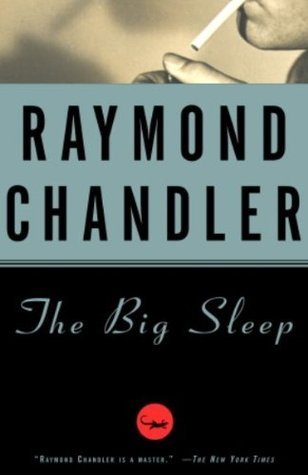
When a dying millionaire hires Philip Marlowe to handle the blackmailer of one of his two troublesome daughters, Marlowe finds himself involved with more than extortion. Kidnapping, pornography, seduction, and murder are just a few of the complications he gets caught up in.Librarian's note: this is an alternate cover edition.

The magnificent second novel from the legendary author of One Flew Over the Cuckoo's Nest... Following the astonishing success of his first novel, One Flew Over the Cuckoo's Nest, Ken Kesey wrote what Charles Bowden calls "one of the few essential books written by an American in the last half century." This wild-spirited tale tells of a bitter strike that rages through a small lumber town along the Oregon coast. Bucking that strike out of sheer cussedness are the Stampers. Out of the Stamper family's rivalries and betrayals Ken Kesey has crafted a novel with the mythic impact of Greek tragedy.

Fear and Loathing in Las Vegas: A Savage Journey to the Heart of the American Dream
by Hunter S. Thompson
Rating: 4.1 ⭐
• 7 recommendations ❤️
Fear and Loathing in Las Vegas is the best chronicle of drug-soaked, addle-brained, rollicking good times ever committed to the printed page. It is also the tale of a long weekend road trip that has gone down in the annals of American pop culture as one of the strangest journeys ever undertaken.

Headstrong and naïve, the young Italian aristocrat Fabrizio del Dongo is determined to defy the wrath of his right-wing father and go to war to fight for Napoleon. He stumbles on the Battle of Waterloo, ill-prepared, yet filled with enthusiasm for war and glory. Finally heeding advice, Fabrizio sneaks back to Milan, only to become embroiled in a series of amorous exploits, fuelled by his impetuous nature and the political chicanery of his aunt Gina and her wily lover. Judged by Balzac to be the most important French novel of its time, The Charterhouse of Parma is a compelling novel of extravagance and daring, blending the intrigues of the Italian court with the romance and excitement of youth.For more than seventy years, Penguin has been the leading publisher of classic literature in the English-speaking world. With more than 1,700 titles, Penguin Classics represents a global bookshelf of the best works throughout history and across genres and disciplines. Readers trust the series to provide authoritative texts enhanced by introductions and notes by distinguished scholars and contemporary authors, as well as up-to-date translations by award-winning translators.

In this book, Dr. Jung, who has been the author of some of the most provocative hypotheses in modern psychology, describes what he regards as an authentic religious function in the unconscious mind. Using a wealth of material from ancient and medieval gnostic, alchemistic, and occultistic literature, he discusses the religious symbolism of unconscious processes and the possible continuity of religious forms that have appeared and reappeared through the centuries.

The Rise and Fall of the Third Reich: A History of Nazi Germany
by William L. Shirer
Rating: 4.6 ⭐
• 4 recommendations ❤️
The fiftieth anniversary edition of the National Book Award–winning bestseller that is the definitive study of Adolf Hitler, the rise of Nazi Germany, the Holocaust, and World War II. This special edition now features a new introduction by Ron Rosenbaum, author of Explaining Hitler and How the End Begins .No other powerful empire ever bequeathed such mountains of evidence about its birth and destruction as the Third Reich. When the bitter war was over, and before the Nazis could destroy their files, the Allied demand for unconditional surrender produced an almost hour-by-hour record of the nightmare empire built by Adolph Hitler. This record included the testimony of Nazi leaders and of concentration camp inmates, the diaries of officials, transcripts of secret conferences, army orders, private letters—all the vast paperwork behind Hitler's drive to conquer the world.The famed foreign correspondent and historian William L. Shirer, who had watched and reported on the Nazis since 1925, spent five and a half years sifting through this massive documentation. The result is a monumental study that has been widely acclaimed as the definitive record of one of the most frightening chapters in the history of mankind.Here is the complete story of Hitler's empire, one of the most important stories ever told, written by one of the men best equipped to write it.This worldwide bestseller has been acclaimed as the definitive book on Nazi Germany; it is a classic work.

Alternate cover here.Inspired by the true story of a political murder that horrified Russia in 1869, Fyodor Dostoevsky conceived of Demons as a "novel-pamphlet" in which he would say everything about the plague of materialist ideology that he saw infecting his native land. What emerged in 1872 was at once his darkest novel until The Brothers Karamazov and his most ferociously funny. For alongside its relentlessly escalating plot of conspiracy and assassination, Demons (which earlier translators erroneously translated as The Possessed) is a blistering comedy of ideas run amok. And like all of Dostoevsky's novels, it is also a riot of literary voices, whose profusion, energy and variety are rendered wonderfully in this new English version.--back cover

From the author of The Last Tsar, the first full-scale life of Stalin to have what no previous biography has fully obtained: the facts. Granted privileged access to Russia's secret archives, Edvard Radzinsky paints a picture of the Soviet strongman as more calculating, ruthless, and blood-crazed than has ever been described or imagined. Stalin was a man for whom power was all, terror a useful weapon, and deceit a constant companion.As Radzinsky narrates the high drama of Stalin's epic quest for domination-first within the Communist Party, then over the Soviet Union and the world-he uncovers the startling truth about this most enigmatic of historical figures. Only now, in the post-Soviet era, can what was suppressed be told: Stalin's long-denied involvement with terrorism as a young revolutionary; the crucial importance of his misunderstood, behind-the-scenes role during the October Revolution; his often hostile relationship with Lenin; the details of his organization of terror, culminating in the infamous show trials of the 1930s; his secret dealings with Hitler, and how they backfired; and the horrifying plans he was making before his death to send the Soviet Union's Jews to concentration camps-tantamount to a potential second Holocaust. Radzinsky also takes an intimate look at Stalin's private life, marked by his turbulent relationship with his wife Nadezhda, and recreates the circumstances that led to her suicide.As he did in The Last Tsar, Radzinsky thrillingly brings the past to life. The Kremlin intrigues, the ceaseless round of double-dealing and back-stabbing, the private worlds of the Soviet Empire's ruling class-all become, in Radzinsky's hands, as gripping and powerful as the great Russian sagas. And the riddle of that most cold-blooded of leaders, a man for whom nothing was sacred in his pursuit of absolute might--and perhaps the greatest mass murderer in Western history--is solved.

A stunning new translation of the classic book—and basis for the beloved Oscar-winning film—brings the clarity and beauty of Kazantzakis’s language and story alive.First published in 1946, Zorba the Greek , is, on one hand, the story of a Greek working man named Zorba, a passionate lover of life, the unnamed narrator who he accompanies to Crete to work in a lignite mine, and the men and women of the town where they settle. On the other hand it is the story of God and man, The Devil and the Saints; the struggle of men to find their souls and purpose in life and it is about love, courage and faith.Zorba has been acclaimed as one of the truly memorable creations of literature—a character created on a huge scale in the tradition of Falstaff and Sancho Panza. His years have not dimmed the gusto and amazement with which he responds to all life offers him, whether he is working in the mine, confronting mad monks in a mountain monastery, embellishing the tales of his life or making love to avoid sin. Zorba’s life is rich with all the joys and sorrows that living brings and his example awakens in the narrator an understanding of the true meaning of humanity. This is one of the greatest life-affirming novels of our time.Part of the modern literary canon, Zorba the Greek , has achieved widespread international acclaim and recognition. This new edition translated, directly from Kazantzakis’s Greek original, is a more faithful rendition of his original language, ideas, and story, and presents Zorba as the author meant him to be.
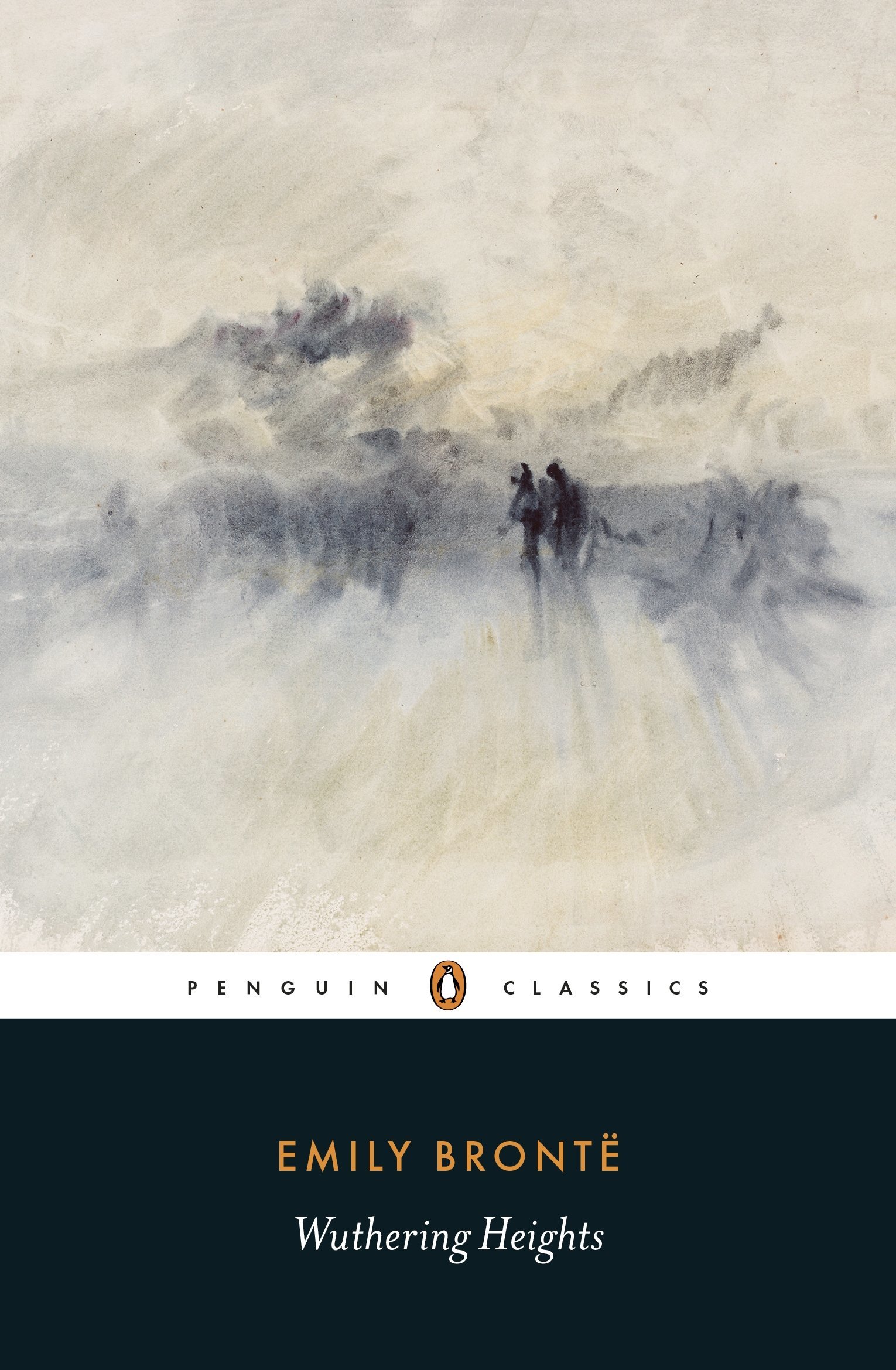
An alternative cover edition for this ISBN can be found here.Emily Brontë's only novel, a work of tremendous and far-reaching influence, the Penguin Classics edition of Wuthering Heights is the definitive edition of the text, edited with an introduction by Pauline Nestor. Lockwood, the new tenant of Thrushcross Grange, situated on the bleak Yorkshire moors, is forced to seek shelter one night at Wuthering Heights, the home of his landlord. There he discovers the history of the tempestuous events that took place years before; of the intense relationship between the gypsy foundling Heathcliff and Catherine Earnshaw; and how Catherine, forced to choose between passionate, tortured Heathcliff and gentle, well-bred Edgar Linton, surrendered to the expectations of her class. As Heathcliff's bitterness and vengeance at his betrayal is visited upon the next generation, their innocent heirs must struggle to escape the legacy of the past.

The Neuropsychology of Anxiety: An Enquiry into the Functions of the Septo-Hippocampal System
by Jeffrey A. Gray
Rating: 4.1 ⭐
• 2 recommendations ❤️
The Neuropsychology of Anxiety first appeared in 1982 as the first volume in the Oxford Psychology Series, and it quickly established itself as the classic work on the subject. This completely updated and revised edition is essential for postgraduate students and researchers in experimental psychology and neuroscience, as well as for all clinical psychologists.

By turns heartbreaking, hilarious, and utterly human, The House of God is a mesmerizing and provocative novel about Roy Basch and five of his fellow interns at the most renowned teaching hospital in the country. "The raunchy, troubling, and hilarious novel that turned into a cult phenomenon. Singularly compelling...brutally honest."--The New York TimesStruggling with grueling hours and sudden life-and-death responsibilities, Basch and his colleagues, under the leadership of their rule-breaking senior resident known only as the Fat Man, must learn not only how to be fine doctors but, eventually, good human beings.A phenomenon ever since it was published, The House of God was the first unvarnished, unglorified, and uncensored portrait of what training to become a doctor is truly like, in all its terror, exhaustion and black comedy. With more than two million copies sold worldwide, it has been hailed as one of the most important medical novels ever written.With an introduction by John Updike

Answer to Job: (From Vol. 11 of the Collected Works of C. G. Jung)
by C.G. Jung
Rating: 4.1 ⭐
• 2 recommendations ❤️
Considered one of Jung's most controversial works, Answer to Job also stands as Jung's most extensive commentary on a biblical text. Here, he confronts the story of the man who challenged God, the man who experienced hell on earth and still did not reject his faith. Job's journey parallels Jung's own experience--as reported in The Red Liber Novus --of descending into the depths of his own unconscious, confronting and reconciling the rejected aspects of his soul.This paperback edition of Jung's classic work includes a new foreword by Sonu Shamdasani, Philemon Professor of Jung History at University College London. Described by Shamdasani as "the theology behind The Red Book ," Answer to Job examines the symbolic role that theological concepts play in an individual's psychic life.

The Myth of Mental Illness – Foundations of a Theory of Personal Conduct
by Thomas Szasz
Rating: 3.7 ⭐
• 2 recommendations ❤️
A classic work that has revolutionized thinking throughout the Western world about the nature of the psychiatric profession and the moral implications of its practices. "Bold and often brilliant."--Science

An outstanding feature of Mr. Porter's book is its depiction of the interrelationships between statistics and certain intellectual and social movements. . . . [The book] is unfailingly interesting -Morris Kline, New York Times Book Review "The Rise of Statistical Thinking avoids technicalities and concentrates on the flow of ideas between the natural and social sciences. It emphasizes the philosophical issues raised by novel statistical methods, and how they affected the subject's development" -Ian Stewart, Nature

What are the most common dreams and why do we have them? What does a dream about death mean? What do dreams of swimming, failing, or flying symbolize?First published by Sigmund Freud in 1899, The Interpretation of Dreams considers why we dream and what it means in the larger picture of our psychological lives. Delving into theories of manifest and latent dream content, the special language of dreams, dreams as wish fulfillments, the significance of childhood experiences, and much more, Freud, widely considered the “father of psychoanalysis,” thoroughly and thoughtfully examines dream psychology. Encompassing dozens of case histories and detailed analyses of actual dreams, this landmark text presents Freud’s legendary work as a tool for comprehending our sleeping experiences.Renowned for translating Freud’s German writings into English, James Strachey—with the assistance of Anna Freud—first published this edition in 1953. Incorporating all textual alterations made by Freud over a period of thirty years, it remains the most complete translation of the work in print.Completely redesigned and available for the first time in trade paperback

Brain Architecture: Understanding the Basic Plan
by Larry W. Swanson
Rating: 3.7 ⭐
• 2 recommendations ❤️
Depending on your point of view the brain is an organ, a machine, a biological computer, or simply the most important component of the nervous system. How does it work as a whole? What are its major parts and how are they interconnected to generate thinking, feelings, and behavior? Thisbook surveys 2,500 years of scientific thinking about these profoundly important questions from the perspective of fundamental architectural principles, and then proposes a new model for the basic plan of neural systems organization based on an explosion of structural data emerging from theneuroanatomy revolution of the 1970'sThe importance of a balance between theoretical and experimental morphology is stressed throughout the book. Great advances in understanding the brain's basic plan brain have come especially from two traditional lines of biological thought- evolution and embryology, because each begins with thesimple and progresses to the more complex. Understanding the organization of brain circuits, which contain thousands of links or pathways, is much more difficult. It is argued here that a four-system network model can explain the structure-function organization of the brain. Possible relationshipsbetween neural networks and gene networks revealed by the human genome project are explored in the final chapter.The book is written in clear and sparkling prose, and it is profusely illustrated. It is designed to be read by anyone with an interest in the basic organization of the brain, from neuroscience to philosophy to computer science to molecular biology. It is suitable for use in neuroscience corecourses because it presents basic principles of the structure of the nervous system in a systematic way.
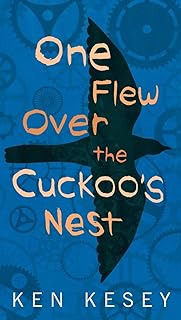
In this classic of the 1960s, Ken Kesey's hero is Randle Patrick McMurphy, a boisterous, brawling, fun-loving rebel who swaggers into the world of a mental hospital and takes over. A lusty, life-affirming fighter, McMurphy rallies the other patients around him by challenging the dictatorship of Nurse Ratched. He promotes gambling in the ward, smuggles in wine and women, and openly defies the rules at every turn. But this defiance, which starts as a sport, soon develops into a grim struggle, an all-out war between two relentless opponents: Nurse Ratched, back by the full power of authority, and McMurphy, who has only his own indomitable will. What happens when Nurse Ratched uses her ultimate weapon against McMurphy provides the story's shocking climax.--back cover
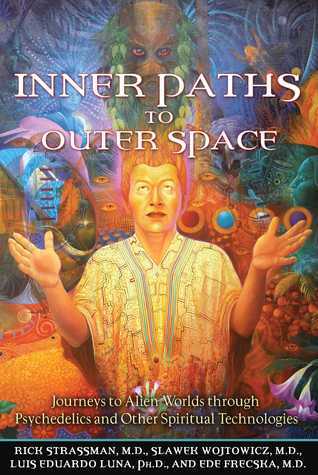
Inner Paths to Outer Space: Journeys to Alien Worlds through Psychedelics & Other Spiritual Technologies
by Rick Strassman
Rating: 4.1 ⭐
• 1 recommendation ❤️
An investigation into experiences of other realms of existence and contact with otherworldly beings • Examines how contact with alien life-forms can be obtained through the “inner space” dimensions of our minds • Presents evidence that other worlds experienced through consciousness-altering technologies are often as real as those perceived with our five senses • Correlates science fiction’s imaginal realms with psychedelic research For thousands of years, voyagers of inner space--spiritual seekers, shamans, and psychoactive drug users--have returned from their inner imaginal travels reporting encounters with alien intelligences. Inner Paths to Outer Space presents an innovative examination of how we can reach these other dimensions of existence and contact otherworldly beings. Based on their more than 60 combined years of research into the function of the brain, the authors reveal how psychoactive substances such as DMT allow the brain to bypass our five basic senses to unlock a multidimensional realm of existence where otherworldly communication occurs. They contend that our centuries-old search for alien life-forms has been misdirected and that the alien worlds reflected in visionary science fiction actually mirror the inner space world of our minds. The authors show that these “alien” worlds encountered through altered states of human awareness, either through the use of psychedelics or other methods, possess a sense of reality as great as, or greater than, those of the ordinary awareness perceived by our five senses.
Librarian's note: There is an Alternate Cover Edition for this edition of this book here.A farm is taken over by its overworked, mistreated animals. With flaming idealism and stirring slogans, they set out to create a paradise of progress, justice, and equality. Thus the stage is set for one of the most telling satiric fables ever penned –a razor-edged fairy tale for grown-ups that records the evolution from revolution against tyranny to a totalitarianism just as terrible. When Animal Farm was first published, Stalinist Russia was seen as its target. Today it is devastatingly clear that wherever and whenever freedom is attacked, under whatever banner, the cutting clarity and savage comedy of George Orwell’s masterpiece have a meaning and message still ferociously fresh.

In 1937 Ernest Hemingway traveled to Spain to cover the civil war there for the North American Newspaper Alliance. Three years later he completed the greatest novel to emerge from "the good fight," For Whom the Bell Tolls.The story of Robert Jordan, a young American in the International Brigades attached to an antifascist guerilla unit in the mountains of Spain, it tells of loyalty and courage, love and defeat, and the tragic death of an ideal. In his portrayal of Jordan's love for the beautiful Maria and his superb account of El Sordo's last stand, in his brilliant travesty of La Pasionaria and his unwillingness to believe in blind faith, Hemingway surpasses his achievement in The Sun Also Rises and A Farewell to Arms to create a work at once rare and beautiful, strong and brutal, compassionate, moving, and wise. "If the function of a writer is to reveal reality," Maxwell Perkins wrote Hemingway after reading the manuscript, "no one ever so completely performed it." Greater in power, broader in scope, and more intensely emotional than any of the author's previous works, it stands as one of the best war novels of all time.

The Gay Science: With a Prelude in Rhymes and an Appendix of Songs
by Friedrich Nietzsche
Rating: 4.3 ⭐
• 4 recommendations ❤️
"[This book] mirrors all of Nietzsche's thought and could be related in hundreds of ways to his other books, his notes, and his letters. And yet it is complete in itself. For it is a work of art." —Walter Kaufmann in the IntroductionNietzsche called The Gay Science "the most personal of all my books." It was here that he first proclaimed the death of God—to which a large part of the book is devoted—and his doctrine of the eternal recurrence.Walter Kaufmann's commentary, with its many quotations from previously untranslated letters, brings to life Nietzsche as a human being and illuminates his philosophy. The book contains some of Nietzsche's most sustained discussions of art and morality, knowledge and truth, the intellectual conscience and the origin of logic.Most of the book was written just before Thus Spoke Zarathustra, the last part five years later, after Beyond Good and Evil. We encounter Zarathustra in these pages as well as many of Nietzsche's most interesting philosophical ideas and the largest collection of his own poetry that he himself ever published.Walter Kaufmann's English versions of Nietzsche represent one of the major translation enterprises of our time. He is the first philosopher to have translated Nietzsche's major works, and never before has a single translator given us so much of Nietzsche.

The Sacred and the Profane: The Nature of Religion
by Mircea Eliade
Rating: 4.1 ⭐
• 2 recommendations ❤️
In the classic text The Sacred and the Profane, famed historian of religion Mircea Eliade observes that even moderns who proclaim themselves residents of a completely profane world are still unconsciously nourished by the memory of the sacred. Eliade traces manifestations of the sacred from primitive to modern times in terms of space, time, nature, and the cosmos. In doing so he shows how the total human experience of the religious man compares with that of the nonreligious. This book of great originality and scholarship serves as an excellent introduction to the history of religion, but its perspective also encompasses philosophical anthropology, phenomenology, and psychology. It will appeal to anyone seeking to discover the potential dimensions of human existence.

An informative guide to the modern mythologies! This classic study, translated from the original French, deals primarily with societies around the world in which myth is--or was until very recently-- "living," in the sense that it supplies models for human behavior and, by that very fact, gives meaning and value to life. The author believes that understanding the structure and function of myths in these traditional societies serves to clarify a stage in the history of human thought: "myths reveal that the World, man, and life have a supernatural origin and history, and that this history is significant, precious, and exemplary."

The must-have Pevear and Volokhonsky translation of one of the greatest Russian novels ever writtenDescribed by William Faulkner as the best novel ever written and by Fyodor Dostoevsky as “flawless,” Anna Karenina tells of the doomed love affair between the sensuous and rebellious Anna and the dashing officer, Count Vronsky. Tragedy unfolds as Anna rejects her passionless marriage and thereby exposes herself to the hypocrisies of society. Set against a vast and richly textured canvas of nineteenth-century Russia, the novel's seven major characters create a dynamic imbalance, playing out the contrasts of city and country life and all the variations on love and family happiness.While previous versions have softened the robust and sometimes shocking qualities of Tolstoy's writing, Pevear and Volokhonsky have produced a translation true to his powerful voice. This authoritative edition, which received the PEN Translation Prize and was an Oprah Book Club™ selection, also includes an illuminating introduction and explanatory notes. Beautiful, vigorous, and eminently readable, this Anna Karenina will be the definitive text for fans of the film and generations to come. This Penguin Classics Deluxe Edition also features French flaps and deckle-edged paper.
Phía đông vườn địa đàng là câu chuyện của những người Mỹ, khoảng những năm từ nửa cuối thế kỷ trước đến chiến tranh thế giới lần thứ nhất. Tác giả cho nó diễn ra ở chính quê hương mình. Tiểu thuyết được xuất bản năm 1952. Có thể là nhà văn đã thai nghén nó trong thời kỳ chiến tranh thế giới lần thứ hai. Phải chăng cuộc “người tàn sát người” khủng khiếp ấy đã làm cho Steinbeck băn khoăn về ý nghĩa cuộc sống, về bản chất của con người và cố tìm ra lời đáp. Phía đông vườn Địa đàng, đây là cuốn truyện về con người. Nhận vật trung tâm mang cái tên Adam, con người đầu tiên của nhân loại. Với nó nhà văn muốn đặt cơ sở cho một chủ nghĩa nhân đạo hữu hiệu. Steinbeck khẳng định niềm tin vào con người, vào cuộc sống, nhưng không phải một niềm tin lý tưởng hóa. Niềm tin ấy phải là cái cây đứng chắc, bắt rễ sâu vào miếng đất thực tế có cả đất màu mỡ lẫn sỏi đá, biết tránh sỏi đá, hút màu mỡ mà sinh trái ngọt.Trong phong trào đổi mới của ta hiện nay Phía đông vườn Địa đàng là cuốn sách nên đọc.

Awakenings is a 1973 non-fiction book by Oliver Sacks. It recounts the life histories of those who had been victims of the 1920s encephalitis lethargica epidemic. Sacks chronicles his efforts in the late 1960s to help these patients at the Beth Abraham Hospital in the Bronx, New York.

From A to Z, the Penguin Drop Caps series collects 26 unique hardcovers—featuring cover art by Jessica Hische It all begins with a letter. Fall in love with Penguin Drop Caps, a new series of twenty-six collectible and hardcover editions, each with a type cover showcasing a gorgeously illustrated letter of the alphabet. In a design collaboration between Jessica Hische and Penguin Art Director Paul Buckley, the series features unique cover art by Hische, a superstar in the world of type design and illustration, whose work has appeared everywhere from Tiffany & Co. to Wes Anderson's recent film Moonrise Kingdom to Penguin's own bestsellers Committed and Rules of Civility. With exclusive designs that have never before appeared on Hische's hugely popular Daily Drop Cap blog, the Penguin Drop Caps series launches with six perennial favorites to give as elegant gifts, or to showcase on your own shelves.G is for Golding. At the dawn of the next world war, a plane crashes on an uncharted island, stranding a group of schoolboys. At first, with no adult supervision, their freedom is something to celebrate; this far from civilization the boys can do anything they want. Anything. They attempt to forge their own society, failing, however, in the face of terror, sin and evil. And as order collapses, as strange howls echo in the night, as terror begins its reign, the hope of adventure seems as far from reality as the hope of being rescued. Labeled a parable, an allegory, a myth, a morality tale, a parody, a political treatise, even a vision of the apocalypse, Lord of the Flies is perhaps our most memorable tale about “the end of innocence, the darkness of man’s heart.”

The Pulitzer Prize-winning epic of the Great Depression, a book that galvanized—and sometimes outraged—millions of readers. First published in 1939, Steinbeck’s Pulitzer Prize-winning epic of the Great Depression chronicles the Dust Bowl migration of the 1930s and tells the story of one Oklahoma farm family, the Joads-driven from their homestead and forced to travel west to the promised land of California. Out of their trials and their repeated collisions against the hard realities of an America divided into Haves and Have-Nots evolves a drama that is intensely human yet majestic in its scale and moral vision, elemental yet plainspoken, tragic but ultimately stirring in its human dignity. A portrait of the conflict between the powerful and the powerless, of one man’s fierce reaction to injustice, and of one woman’s stoical strength, the novel captures the horrors of the Great Depression and probes into the very nature of equality and justice in America. The Grapes of Wrath summed up its era in the way that Uncle Tom’s Cabin summed up the years of slavery before the Civil War. Sensitive to fascist and communist criticism, Steinbeck insisted that “The Battle Hymn of the Republic” be printed in its entirety in the first edition of the book—which takes its title from the first verse: “He is trampling out the vintage where the grapes of wrath are stored.” At once a naturalistic epic, captivity narrative, road novel, and transcendental gospel, Steinbeck’s powerful landmark novel is perhaps the most American of American Classics. This edition contains an introduction and notes by Steinbeck scholar Robert Demott.
Cancer Ward examines the relationship of a group of people in the cancer ward of a provincial Soviet hospital in 1955, two years after Stalin's death. We see them under normal circumstances, and also reexamined at the eleventh hour of illness. Together they represent a remarkable cross-section of contemporary Russian characters and attitudes. The experiences of the central character, Oleg Kostoglotov, closely reflect the author's Solzhenitsyn himself became a patient in a cancer ward in the mid-1950s, on his release from a labor camp, and later recovered. Translated by Nicholas Bethell and David Burg.

Brave New World is a dystopian social science fiction novel by English author Aldous Huxley. Largely set in a futuristic World State, whose citizens are environmentally engineered into an intelligence-based social hierarchy, the novel anticipates huge scientific advancements in reproductive technology, sleep-learning, psychological manipulation and classical conditioning that are combined to make a dystopian society which is challenged by only a single individual: the story's protagonist.

A study of the analogies between alchemy, Christian dogma, and psychological symbolism. Revised translation, with new bibliography and index.

In his final novel, which he considered his most important, Aldous Huxley transports us to the remote Pacific island of Pala, where an ideal society has flourished for 120 years. Inevitably, this island of bliss attracts the envy and enmity of the surrounding world. A conspiracy is underway to take over Pala, and events are set in motion when an agent of the conspirators, a newspaperman named Faranby, is shipwrecked there. What Faranby doesn't expect is how his time with the people of Pala will revolutionize all his values and-to his amazement-give him hope.
"Shoot all the bluejays you want, if you can hit 'em, but remember it's a sin to kill a mockingbird."A lawyer's advice to his children as he defends the real mockingbird of Harper Lee's classic novel - a black man charged with the rape of a white girl. Through the young eyes of Scout and Jem Finch, Harper Lee explores with exuberant humour the irrationality of adult attitudes to race and class in the Deep South of the 1930s. The conscience of a town steeped in prejudice, violence and hypocrisy is pricked by the stamina of one man's struggle for justice. But the weight of history will only tolerate so much."To Kill A Mockingbird" became both an instant bestseller and a critical success when it was first published in 1960. It went on to win the Pulitzer Prize in 1961 and was later made into an Academy Award-winning film.

Charlie Gordon is about to embark upon an unprecedented journey. Born with an unusually low IQ, he has been chosen as the perfect subject for an experimental surgery that researchers hope will increase his intelligence - a procedure that has already been highly successful when tested on a lab mouse named Algernon.As the treatment takes effect, Charlie's intelligence expands until it surpasses that of the doctors who engineered his metamorphosis. The experiment appears to be a scientific breakthrough of paramount importance, until Algernon suddenly deteriorates. Will the same happen to Charlie?

Man's Search for Meaning has riveted generations of readers with its descriptions of life in Nazi death camps and its lessons for spiritual survival. Between 1942 and 1945 psychiatrist Viktor Frankl labored in four different camps, including Auschwitz, while his parents, brother, and pregnant wife perished. Based on his own experience and the stories of his many patients, Frankl argues that we cannot avoid suffering but we can choose how to cope with it, find meaning in it, and move forward with renewed purpose. Frankl's theory—known as logotherapy, from the Greek word logos ("meaning")—holds that our primary drive in life is not pleasure, as Freud maintained, but the discovery and pursuit of what we personally find meaningful. In the decades since its first publication in 1959, Man's Search for Meaning has become a classic, with more than twelve million copies in print around the world. A 1991 Library of Congress survey that asked readers to name a "book that made a difference in your life" found Man's Search for Meaning among the ten most influential books in America. At once a memoir, a meditation, a treatise, and a history, it continues to inspire us all to find significance in the very act of living.(back cover)

The murder of brutal landowner Fyodor Karamazov changes the lives of his sons irrevocably: Mitya, the sensualist, whose bitter rivalry with his father immediately places him under suspicion for parricide; Ivan the intellectual, whose mental tortures drive him to breakdown; the spiritual Alyosha, who tries to heal the family's rifts; and the shadowy figure of their bastard half-brother, Smerdyakov. As the ensuing investigation and trial reveal the true identity of the murder, Dostoyevsky's dark masterwork evokes a world where the lines between innocence and corruption, good and evil, blur, and everyone's faith in humanity is tested.This powerful translation of The Brothers Karamazov features an introduction highlighting Dostoyevsky's recurrent themes of guilt and salvation, with a new chronology and further reading.

Raskolnikov, a destitute and desperate former student, wanders through the slums of St Petersburg and commits a random murder without remorse or regret. He imagines himself to be a great man, a Napoleon: acting for a higher purpose beyond conventional moral law. But as he embarks on a dangerous game of cat and mouse with a suspicious police investigator, Raskolnikov is pursued by the growing voice of his conscience and finds the noose of his own guilt tightening around his neck. Only Sonya, a downtrodden prostitute, can offer the chance of redemption.This vivid translation by David McDuff has been acclaimed as the most accessible version of Dostoyevsky’s great novel, rendering its dialogue with a unique force and naturalism.

Milano, Bompiani, 1955, 8vo (cm. 20,5 x 12) brossura editoriale con sovraccoperta illustrata a colori, pp. 479 (I delfini).

Excerpt from A Farewell to Arms IN the late summer of that year we lived in a house in a village that looked across the river and the plain to the mountains. In the bed of the river there were peb bles and boulders, dry and white in the sun, and the water was clear and swiftly moving and blue in the channels. Troops went by the house and down the road and the dust they raised powdered the leaves of the trees. The trunks of the trees too were dusty and the leaves fell early that year and we saw the troops march ing along the road and the dust rising and leaves, stirred by the breeze, falling and the soldiers marching and afterward the road bare and white except for the leaves. The plain was rich with crops; there were many orchards of fruit trees and beyond the plain the moun tains were brown and bare. There was fighting in the mountains and at night we could see the flashes from the artillery. In the dark it was like summer lightning, but the nights were cool and there was not the feeling of a storm coming. About the Publisher Forgotten Books publishes hundreds of thousands of rare and classic books. Find more at www.forgottenbooks.com This book is a reproduction of an important historical work. Forgotten Books uses state-of-the-art technology to digitally reconstruct the work, preserving the original format whilst repairing imperfections present in the aged copy. In rare cases, an imperfection in the original, such as a blemish or missing page, may be replicated in our edition. We do, however, repair the vast majority of imperfections successfully; any imperfections that remain are intentionally left to preserve the state of such historical works.

Little Science, Big Science...and Beyond
by Derek John de Solla Price
Rating: 3.5 ⭐
• 2 recommendations ❤️
Columbia University Press Science 62 Based on four 1962 Pegram Lectures given at the Brookehaven National Laboratory.

After his great portrayal of a guilty man in Crime and Punishment, Dostoevsky set out in The Idiot to portray a man of pure innocence. The twenty-six-year-old Prince Myshkin, following a stay of several years in a Swiss sanatorium, returns to Russia to collect an inheritance and “be among people.” Even before he reaches home he meets the dark Rogozhin, a rich merchant’s son whose obsession with the beautiful Nastasya Filippovna eventually draws all three of them into a tragic denouement. In Petersburg the prince finds himself a stranger in a society obsessed with money, power, and manipulation. Scandal escalates to murder as Dostoevsky traces the surprising effect of this “positively beautiful man” on the people around him, leading to a final scene that is one of the most powerful in all of world literature.Richard Pevear and Larissa Volokhonsky’s masterful translation of The Idiot is destined to stand with their versions of Crime and Punishment, The Brothers Karamazov, and Demons as the definitive Dostoevsky in English.

The New Executive Brain: Frontal Lobes in a Complex World
by Elkhonon Goldberg
Rating: 4.1 ⭐
• 2 recommendations ❤️
Elkhonon Goldberg's groundbreaking The Executive Brain was a classic of scientific writing, revealing how the frontal lobes command the most human parts of the mind. Now he offers a completely new book, providing fresh, iconoclastic ideas about the relationship between the brain and the mind. In The New Executive Brain, Goldberg paints a sweeping panorama of cutting-edge thinking in cognitive neuroscience and neuropsychology, one that ranges far beyond the frontal lobes. Drawing on the latest discoveries, and developing complex scientific ideas and relating them to real life through many fascinating case studies and anecdotes, the author explores how the brain engages in complex decision-making; how it deals with novelty and ambiguity; and how it addresses moral choices. At every step, Goldberg challenges entrenched assumptions. For example, we know that the left hemisphere of the brain is the seat of language--but Goldberg argues that language may not be the central adaptation of the left hemisphere. Apes lack language, yet many also show evidence of asymmetric hemispheric development. Goldberg also finds that a complex interaction between the frontal lobes and the amygdale--between a recently evolved and a much older part of the brain--controls emotion, as conscious thoughts meet automatic impulses. The author illustrates this observation with a personal the difficulty he experienced when trying to pick up a baby alligator he knew to be harmless, as his amygdala battled his effort to extend his hand. The New Executive Brain , Goldberg affirms Goldberg's place as one of our most creative and insightful scientists, offering lucid writing and bold, paradigm-shifting ideas.

“Ridley writes with panache, wit, and humor and displays remarkable ingenuity in finding ways to present complicated materials for the lay reader.” — Los Angeles TimesIn a bold and provocative interpretation of economic history, Matt Ridley, the New York Times-bestselling author of Genome and The Red Queen, makes the case for an economics of hope, arguing that the benefits of commerce, technology, innovation, and change—what Ridley calls cultural evolution—will inevitably increase human prosperity. Fans of the works of Jared Diamond (Guns, Germs, and Steel), Niall Ferguson (The Ascent of Money), and Thomas Friedman (The World Is Flat) will find much to ponder and enjoy in The Rational Optimist.

With her life nearly behind her, the witty, irascible, and fiercely proud Hagar Shipley escapes from her nursing home and sets out in search of a way to reconcile herself to her tumultuous past. Through her reflections, we come to know the rebellious young bride in a remote prairie town, her love for her two sons, the freedom she claimed and the joys she denied herself.In this bold, final step toward freedom and independence, Hagar gains a deeper understanding of the meaning of acceptance. Her thoughts evoke not only the rich pattern of her past experience but also the meaning of what it is to grow old and to come to terms with mortality.

How to Spend $75 Billion to Make the World a Better Place
by Bjørn Lomborg
Rating: 4.0 ⭐
• 2 recommendations ❤️
New improved edition with updated introduction by Bjorn Lomborg. The world faces myriad challenges - yet we are constrained by scarce resources. In the 21st Century, how do we deal with natural disasters, tackle global warming, achieve better nutrition, educate children... and address countless global issues? If you want to change the world, this inspiring and enlightening book is for you. Bjorn Lomborg presents the costs and benefi ts of the smartest solutions to twelve global problems. By prioritizing the top solutions, this helps us better spend $75 billion to do the most good. Featuring the cutting edge research of more than sixty eminent economists, including four Nobel Laureates, produced for the Copenhagen Consensus, this book will inform, enlighten and motivate actions to make our world a better place.

Great Escape Health, Wealth, and the Origins of Inequality
by Angus Deaton
Rating: 3.9 ⭐
• 4 recommendations ❤️
A Nobel Prize-winning economist tells the remarkable story of how the world has grown healthier, wealthier, but also more unequal over the past two and half centuriesThe world is a better place than it used to be. People are healthier, wealthier, and live longer. Yet the escapes from destitution by so many has left gaping inequalities between people and nations. In The Great Escape, Nobel Prize-winning economist Angus Deaton--one of the foremost experts on economic development and on poverty--tells the remarkable story of how, beginning 250 years ago, some parts of the world experienced sustained progress, opening up gaps and setting the stage for today's disproportionately unequal world. Deaton takes an in-depth look at the historical and ongoing patterns behind the health and wealth of nations, and addresses what needs to be done to help those left behind.Deaton describes vast innovations and wrenching setbacks: the successes of antibiotics, pest control, vaccinations, and clean water on the one hand, and disastrous famines and the HIV/AIDS epidemic on the other. He examines the United States, a nation that has prospered but is today experiencing slower growth and increasing inequality. He also considers how economic growth in India and China has improved the lives of more than a billion people. Deaton argues that international aid has been ineffective and even harmful. He suggests alternative efforts--including reforming incentives to drug companies and lifting trade restrictions--that will allow the developing world to bring about its own Great Escape.Demonstrating how changes in health and living standards have transformed our lives, The Great Escape is a powerful guide to addressing the well-being of all nations.

Nietzsche’s notebooks, kept by him during his most productive years, offer a fascinating glimpse into the workshop and mind of a great thinker, and compare favorably with the notebooks of Gide and Kafka, Camus and Wittgenstein. The Will to Power, compiled from the notebooks, is one of the most famous books of the past hundred years, but few have studied it. Here is the first critical edition in any language.Down through the Nazi period The Will to Power, was often mistakenly considered to be Nietzche’s crowning systematic labor; since World War II it has frequently been denigrated. In fact, it represents a stunning selection from Nietzsche’s notebooks, in a topical arrangement that enables the reader to find what Nietzsche wrote on nihilism, art, morality, religion, the theory of knowledge, and whatever else interested him. But no previous edition—even in the original German—shows which notes Nietzsche utilized subsequently in his works, and which sections are not paralleled in the finished books. Nor has any previous edition furnished a commentary or index.Walter Kaufmann, in collaboration with R. J. Holilngdale, brings to this volume his unsurpassed skills as a Nietzsche translator and scholar. Professor Kaufmann has included an approximate date of each note. His running footnote commentary offers information needed to follow Nietzsche’s train of thought, and indicates, among other things, which notes were eventually superseded by later formulations. The comprehensive index serves to guide the reader to the extraordinary riches of this book.

Earth in Human Hands: Shaping Our Planet's Future
by David Grinspoon
Rating: 4.2 ⭐
• 2 recommendations ❤️
For the first time in Earth's history, our planet is experiencing a confluence of rapidly accelerating changes prompted by one species: humans. Climate change is only the most visible of the modifications we've made—up until this point, inadvertently—to the planet. And our current behavior threatens not only our own future but that of countless other creatures. By comparing Earth's story to those of other planets, astrobiologist David Grinspoon shows what a strange and novel development it is for a species to evolve to build machines, and ultimately, global societies with world-shaping influence.Without minimizing the challenges of the next century, Grinspoon suggests that our present moment is not only one of peril, but also great potential, especially when viewed from a 10,000-year perspective. Our species has surmounted the threat of extinction before, thanks to our innate ingenuity and ability to adapt, and there's every reason to believe we can do so again.Our challenge now is to awaken to our role as a force of planetary change, and to grow into this task. We must become graceful planetary engineers, conscious shapers of our environment and caretakers of Earth's biosphere. This is a perspective that begs us to ask not just what future do we want to avoid, but what do we seek to build? What kind of world do we want? Are humans the worst thing or the best thing to ever happen to our planet? Today we stand at a pivotal juncture, and the answer will depend on the choices we make.
Dostoevsky’s most revolutionary novel, Notes from Underground marks the dividing line between nineteenth- and twentieth-century fiction, and between the visions of self each century embodied. One of the most remarkable characters in literature, the unnamed narrator is a former official who has defiantly withdrawn into an underground existence. In complete retreat from society, he scrawls a passionate, obsessive, self-contradictory narrative that serves as a devastating attack on social utopianism and an assertion of man’s essentially irrational nature.Richard Pevear and Larissa Volokhonsky, whose Dostoevsky translations have become the standard, give us a brilliantly faithful edition of this classic novel, conveying all the tragedy and tormented comedy of the original.

What does everyone in the modern world need to know? Renowned psychologist Jordan B. Peterson's answer to this most difficult of questions uniquely combines the hard-won truths of ancient tradition with the stunning revelations of cutting-edge scientific research.Humorous, surprising, and informative, Dr. Peterson tells us why skateboarding boys and girls must be left alone, what terrible fate awaits those who criticize too easily, and why you should always pet a cat when you meet one on the street.What does the nervous system of the lowly lobster have to tell us about standing up straight (with our shoulders back) and about success in life? Why did ancient Egyptians worship the capacity to pay careful attention as the highest of gods? What dreadful paths do people tread when they become resentful, arrogant, and vengeful? Dr. Peterson journeys broadly, discussing discipline, freedom, adventure, and responsibility, distilling the world's wisdom into 12 practical and profound rules for life. 12 Rules for Life shatters the modern commonplaces of science, faith, and human nature while transforming and ennobling the mind and spirit of its listeners.
Progress: Ten Reasons to Look Forward to the Future
by Johan Norberg
Rating: 4.1 ⭐
• 2 recommendations ❤️
It’s all over our televisions, newspapers and the internet. Every day we’re bludgeoned by news of how bad everything is — Brexit, financial collapse, unemployment, poverty, environmental disasters, disease, hunger, war. Indeed, our world now seems to be on the brink of collapse, and yet we’ve made more progress over the last 100 years than in the first 100,000. 285,000 more people have gained access to safe water every day for the last 25 years, and in the last 50 years world poverty has fallen more than it did in the preceding 500.Contrary to what most of us believe, our progress over the past few decades has been unprecedented. By almost any index you care to identify, things are markedly better now than they have ever been for almost everyone alive.Examining official data from the United Nations, the World Bank and the World Health Organization, Johan Norberg traces just how far we have come in tackling the issues facing our species. While it’s true that not every problem has been solved, we do now have a good idea of the solutions and we know what it will take to see this progress continue. Counter-intuitive, dramatic and uplifting, Progress is a call for renewed hope in defiance of the doom-mongering of politicians and the media.

Factfulness: Ten Reasons We're Wrong About the World – and Why Things Are Better Than You Think
by Hans Rosling
Rating: 4.4 ⭐
• 10 recommendations ❤️
Factfulness: The stress-reducing habit of only carrying opinions for which you have strong supporting facts.When asked simple questions about global trends—what percentage of the world’s population live in poverty; why the world’s population is increasing; how many girls finish school—we systematically get the answers wrong. So wrong that a chimpanzee choosing answers at random will consistently outguess teachers, journalists, Nobel laureates, and investment bankers.In Factfulness, Professor of International Health and global TED phenomenon Hans Rosling, together with his two long-time collaborators, Anna and Ola, offers a radical new explanation of why this happens. They reveal the ten instincts that distort our perspective—from our tendency to divide the world into two camps (usually some version of us and them) to the way we consume media (where fear rules) to how we perceive progress (believing that most things are getting worse).Our problem is that we don’t know what we don’t know, and even our guesses are informed by unconscious and predictable biases.It turns out that the world, for all its imperfections, is in a much better state than we might think. That doesn’t mean there aren’t real concerns. But when we worry about everything all the time instead of embracing a worldview based on facts, we can lose our ability to focus on the things that threaten us most.Inspiring and revelatory, filled with lively anecdotes and moving stories, Factfulness is an urgent and essential book that will change the way you see the world and empower you to respond to the crises and opportunities of the future.
Enlightenment Now: The Case for Reason, Science, Humanism, and Progress
by Steven Pinker
Rating: 4.2 ⭐
• 18 recommendations ❤️
If you think the world is coming to an end, think again: people are living longer, healthier, freer, and happier lives, and while our problems are formidable, the solutions lie in the Enlightenment ideal of using reason and science.Is the world really falling apart? Is the ideal of progress obsolete? In this elegant assessment of the human condition in the third millennium, cognitive scientist and public intellectual Steven Pinker urges us to step back from the gory headlines and prophecies of doom, which play to our psychological biases. Instead, follow the data: In seventy-five jaw-dropping graphs, Pinker shows that life, health, prosperity, safety, peace, knowledge, and happiness are on the rise, not just in the West, but worldwide. This progress is not the result of some cosmic force. It is a gift of the Enlightenment: the conviction that reason and science can enhance human flourishing.Far from being a naïve hope, the Enlightenment, we now know, has worked. But more than ever, it needs a vigorous defense. The Enlightenment project swims against currents of human nature–tribalism, authoritarianism, demonization, magical thinking–which demagogues are all too willing to exploit. Many commentators, committed to political, religious, or romantic ideologies, fight a rearguard action against it. The result is a corrosive fatalism and a willingness to wreck the precious institutions of liberal democracy and global cooperation.With intellectual depth and literary flair, Enlightenment Now makes the case for reason, science, and humanism: the ideals we need to confront our problems and continue our progress.

Solzhenitsyn's first book, this economical, relentless novel is one of the most forceful artistic indictments of political oppression in the Stalin-era Soviet Union. The simply told story of a typical, grueling day of the titular character's life in a labor camp in Siberia, is a modern classic of Russian literature and quickly cemented Solzhenitsyn's international reputation upon publication in 1962. It is painfully apparent that Solzhenitsyn himself spent time in the gulags--he was imprisoned for nearly a decade as punishment for making derogatory statements about Stalin in a letter to a friend. Introduction by Yevgeny Yevtushenko
The sequel to 12 Rules for Life offers further guidance on the periolus path of modern life. In 12 Rules for Life, clinical psychologist and celebrated professor at Harvard and the University of Toronto Dr. Jordan B. Peterson helped millions of readers impose order on the chaos of their lives. Now, in this bold sequel, Peterson delivers twelve more lifesaving principles for resisting the exhausting toll that our desire to order the world inevitably takes. In a time when the human will increasingly imposes itself over every sphere of life—from our social structures to our emotional states—Peterson warns that too much security is dangerous. What’s more, he offers strategies for overcoming the cultural, scientific, and psychological forces causing us to tend toward tyranny, and teaches us how to rely instead on our instinct to find meaning and purpose, even—and especially—when we find ourselves powerless. While chaos, in excess, threatens us with instability and anxiety, unchecked order can petrify us into submission. Beyond Order provides a call to balance these two fundamental principles of reality itself, and guides us along the straight and narrow path that divides them.