
Jonathan Haidt Recommended Books
American social psychologist (1963-)
25 Books Recommended

The Happiness Hypothesis: Finding Modern Truth in Ancient Wisdom
by Jonathan Haidt
Rating: 4.1 ⭐
• 10 recommendations ❤️
In his widely praised book, award-winning psychologist Jonathan Haidt examines the world’s philosophical wisdom through the lens of psychological science, showing how a deeper understanding of enduring maxims-like Do unto others as you would have others do unto you, or What doesn’t kill you makes you stronger-can enrich and even transform our lives.

Nearly two thousand years after it was written, Meditations remains profoundly relevant for anyone seeking to lead a meaningful life.Few ancient works have been as influential as the Meditations of Marcus Aurelius, philosopher and emperor of Rome (A.D. 161–180). A series of spiritual exercises filled with wisdom, practical guidance, and profound understanding of human behavior, it remains one of the greatest works of spiritual and ethical reflection ever written. Marcus’s insights and advice—on everything from living in the world to coping with adversity and interacting with others—have made the Meditations required reading for statesmen and philosophers alike, while generations of ordinary readers have responded to the straightforward intimacy of his style. For anyone who struggles to reconcile the demands of leadership with a concern for personal integrity and spiritual well-being, the Meditations remains as relevant now as it was two thousand years ago.In Gregory Hays’s new translation—the first in thirty-five years—Marcus’s thoughts speak with a new immediacy. In fresh and unencumbered English, Hays vividly conveys the spareness and compression of the original Greek text. Never before have Marcus’s insights been so directly and powerfully presented.With an Introduction that outlines Marcus’s life and career, the essentials of Stoic doctrine, the style and construction of the Meditations, and the work’s ongoing influence, this edition makes it possible to fully rediscover the thoughts of one of the most enlightened and intelligent leaders of any era.

Dhammapada means “the path of dharma,” the path of truth, harmony, and righteousness that anyone can follow to reach the highest good. Easwaran’s translation of this classic Buddhist text is the best-selling edition in its field, praised by Huston Smith as a “sublime rendering.”The introduction gives an overview of the Buddha’s teachings that is penetrating and clear – accessible for readers new to Buddhism, but also with fresh insights and practical applications for readers familiar with this text. Chapter introductions place individual verses into the context of the broader Buddhist canon.Easwaran is a master storyteller, and his opening essay includes many stories that make moving, memorable reading, bringing young Siddhartha and his heroic spiritual quest vividly to life.But Easwaran’s main qualification for interpreting the Dhammapada, he said, was that he knew from his own experience that these verses could transform our lives. This faithful rendition brings us closer to the compassionate heart of the Buddha.

In his bestselling The Moral Animal , Robert Wright applied the principles of evolutionary biology to the study of the human mind. Now Wright attempts something even more explaining the direction of evolution and human history–and discerning where history will lead us next.In The Logic of Human Destiny , Wright asserts that, ever since the primordial ooze, life has followed a basic pattern. Organisms and human societies alike have grown more complex by mastering the challenges of internal cooperation. Wright's narrative ranges from fossilized bacteria to vampire bats, from stone-age villages to the World Trade Organization, uncovering such surprises as the benefits of barbarian hordes and the useful stability of feudalism. Here is history endowed with moral significance–a way of looking at our biological and cultural evolution that suggests, refreshingly, that human morality has improved over time, and that our instinct to discover meaning may itself serve a higher purpose. Insightful, witty, profound, Nonzero offers breathtaking implications for what we believe and how we adapt to technology's ongoing transformation of the world.

Dancing in the Streets: A History of Collective Joy
by Barbara Ehrenreich
Rating: 3.8 ⭐
• 1 recommendation ❤️
From the bestselling social commentator and cultural historian comes Barbara Ehrenreich's fascinating exploration of one of humanity's oldest the celebration of communal joyIn the acclaimed Blood Rites , Barbara Ehrenreich delved into the origins of our species' attraction to war. Here, she explores the opposite impulse, one that has been so effectively suppressed that we lack even a term for the desire for collective joy, historically expressed in ecstatic revels of feasting, costuming, and dancing.Ehrenreich uncovers the origins of communal celebration in human biology and culture. Although sixteenth-century Europeans viewed mass festivities as foreign and "savage," Ehrenreich shows that they were indigenous to the West, from the ancient Greeks' worship of Dionysus to the medieval practice of Christianity as a "danced religion." Ultimately, church officials drove the festivities into the streets, the prelude to widespread Protestants criminalized carnival, Wahhabist Muslims battled ecstatic Sufism, European colonizers wiped out native dance rites. The elites' fear that such gatherings would undermine social hierarchies was the festive tradition inspired French revolutionary crowds and uprisings from the Caribbean to the American plains. Yet outbreaks of group revelry persist, as Ehrenreich shows, pointing to the 1960s rock-and-roll rebellion and the more recent "carnivalization" of sports.Original, exhilarating, and deeply optimistic, Dancing in the Streets concludes that we are innately social beings, impelled to share our joy and therefore able to envision, even create, a more peaceable future."Fascinating . . . An admirably lucid, level-headed history of outbreaks of joy from Dionysus to the Grateful Dead."―Terry Eagleton, The Nation

The Bhagavad Gita is the best known of all the Indian scriptures, and Eknath Easwaran's best-selling translation is reliable, readable, and profound.Easwaran's 55-page introduction places the Bhagavad Gita in its historical setting, and brings out the universality and timelessness of its teachings. Chapter introductions clarify key concepts, and notes and a glossary explain Sanskrit terms.Easwaran grew up in the Hindu tradition in India, and learned Sanskrit from a young age. He was a professor of English literature before coming to the West on a Fulbright scholarship. A gifted teacher, he is recognized as an authority on the Indian classics and world mysticism.The Bhagavad Gita opens, dramatically, on a battlefield, as the warrior Arjuna turns in anguish to his spiritual guide, Sri Krishna, for answers to the fundamental questions of life. Yet, as Easwaran points out, the Gita is not what it seems - it's not a dialogue between two mythical figures at the dawn of Indian history. "The battlefield is a perfect backdrop, but the Gita's subject is the war within, the struggle for self-mastery that every human being must wage if he or she is to emerge from life victorious."Arjuna's struggle in the Bhagavad Gita is acutely modern. He has lost his way on the battlefield of life and turns to find the path again by asking direct, uncompromising questions of his spiritual guide, Sri Krishna, the Lord himself. Krishna replies in 700 verses of sublime instruction on living and dying, loving and working, and the nature of the soul.Easwaran shows the Gita's relevance to us today as we strive, like Arjuna, to do what is right."No one in modern times is more qualified - no, make that 'as qualified' - to translate the epochal Classics of Indian Spirituality than Eknath Easwaran. And the reason is clear. It is impossible to get to the heart of those classics unless you live them, and he did live them. My admiration of the man and his works is boundless." - Huston Smith, author of The World's Religions.

Handbook of Epictetus also known as Enchiridion written by legendary Greek Stoic philosopher Epictetus is a manual of Stoic ethical advice. Compiled by Arrian, who was a student of Epictetus, this great classic will surely attract a whole new generation of readers. For many, the Handbook of Epictetus is required reading for various courses and curriculums. And for others who simply enjoy reading timeless pieces of classic literature, this gem by Epictetus is highly recommended. Published by Classic Books America and beautifully produced, the Handbook of Epictetus would make an ideal gift and it should be a part of everyone's personal library.

The Year of Living Biblically: One Man's Humble Quest to Follow the Bible As Literally As Possible
by A.J. Jacobs
Rating: 3.8 ⭐
• 5 recommendations ❤️
What would it require for a person to live all the commandments of the Bible for an entire year? That is the question that animates this hilarious, quixotic, thought-provoking memoir from Jacobs (The Know-It-All). He didn't just keep the Bible's better-known moral laws (being honest, tithing to charity and trying to curb his lust), but also the obscure and unfathomable ones: not mixing wool with linen in his clothing; calling the days of the week by their ordinal numbers to avoid voicing the names of pagan gods; trying his hand at a 10-string harp; growing a ZZ Top beard; eating crickets; and paying the babysitter in cash at the end of each work day. (He considered some rules, such as killing magicians, too legally questionable to uphold.) In his attempts at living the Bible to the letter, Jacobs hits the road in highly entertaining fashion to meet other literalists, including Samaritans in Israel, snake handlers in Appalachia, Amish in Lancaster County, Pa., and biblical creationists in Kentucky. Throughout his journey, Jacobs comes across as a generous and thoughtful (and, yes, slightly neurotic) participant observer, lacing his story with absurdly funny cultural commentary as well as nuanced insights into the impossible task of biblical literalism.

Discussed and debated from time immemorial, the concept of personal liberty went without codification until the 1859 publication of On Liberty . John Stuart Mill's complete and resolute dedication to the cause of freedom inspired this treatise, an enduring work through which the concept remains well known and studied.The British economist, philosopher, and ethical theorist's argument does not focus on "the so-called Liberty of the Will…but Civil, or Social the nature and limits of the power which can be legitimately exercised by society over the individual." Mill asks and answers provocative questions relating to the boundaries of social authority and individual sovereignty. In powerful and persuasive prose, he declares that there is "one very simple principle" regarding the use of coercion in society — one may only coerce others either to defend oneself or to defend others from harm.The new edition offers students of political science and philosophy, in an inexpensive volume, one of the most influential studies on the nature of individual liberty and its role in a democratic society.

Free-Range Kids: How Parents and Teachers Can Let Go and Let Grow
by Lenore Skenazy
Rating: 3.9 ⭐
• 2 recommendations ❤️
Learn to raise independent, can-do kids with a new edition of the book that started a movement In the newly revised and expanded Second Edition of Free-Range Kids , New York columnist-turned-movement leader Lenore Skenazy delivers a compelling and entertaining look at how we got so worried about everything our kids do, see, eat, read, wear, watch and lick -- and how to bid a whole lot of that anxiety goodbye. With real-world examples, advice, and a gimlet-eyed look at the way our culture forces fear down our throats, Skenazy describes how parents and educators can step back so kids step up. Positive change is faster, easier and a lot more fun than you’d believe. This is the book that has helped millions of American parents feel brave and optimistic again – and the same goes for their kids. Using research, humor, and feisty common sense, the book shows: Perfect for parents and guardians of children of all ages, Free-Range Kids will also earn a place in the libraries of K-12 educators who want their students to blossom with newfound confidence and cheer.

The Moral Landscape: How Science Can Determine Human Values
by Sam Harris
Rating: 4.0 ⭐
• 7 recommendations ❤️
New York Times bestselling author Sam Harris’s first book, The End of Faith , ignited a worldwide debate about the validity of religion. In the aftermath, Harris discovered that most people—from religious fundamentalists to non-believing scientists—agree on one point: science has nothing to say on the subject of human values. Indeed, our failure to address questions of meaning and morality through science has now become the primary justification for religious faith.In this highly controversial book, Sam Harris seeks to link morality to the rest of human knowledge. Defining morality in terms of human and animal well-being, Harris argues that science can do more than tell how we are; it can, in principle, tell us how we ought to be. In his view, moral relativism is simply false—and comes at an increasing cost to humanity. And the intrusions of religion into the sphere of human values can be finally repelled: for just as there is no such thing as Christian physics or Muslim algebra, there can be no Christian or Muslim morality. Using his expertise in philosophy and neuroscience, along with his experience on the front lines of our “culture wars,” Harris delivers a game-changing book about the future of science and about the real basis of human cooperation.

The Righteous Mind: Why Good People Are Divided by Politics and Religion
by Jonathan Haidt
Rating: 4.3 ⭐
• 10 recommendations ❤️
NEW YORK TIMES BESTSELLER • The acclaimed social psychologist challenges conventional thinking about morality, politics, and religion in a way that speaks to conservatives and liberals alike—a “landmark contribution to humanity’s understanding of itself” ( The New York Times Book Review ).Drawing on his twenty-five years of groundbreaking research on moral psychology, Jonathan Haidt shows how moral judgments arise not from reason but from gut feelings. He shows why liberals, conservatives, and libertarians have such different intuitions about right and wrong, and he shows why each side is actually right about many of its central concerns.In this subtle yet accessible book, Haidt gives you the key to understanding the miracle of human cooperation, as well as the curse of our eternal divisions and conflicts. If you’re ready to trade in anger for understanding, read The Righteous Mind .
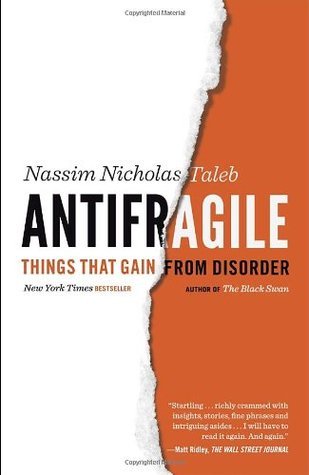
Antifragile: Things That Gain from Disorder
by Nassim Nicholas Taleb
Rating: 4.2 ⭐
• 23 recommendations ❤️
Antifragile is a standalone book in Nassim Nicholas Taleb’s landmark Incerto series, an investigation of opacity, luck, uncertainty, probability, human error, risk, and decision-making in a world we don’t understand. The other books in the series are Fooled by Randomness, The Black Swan, Skin in the Game, and The Bed of Procrustes .Nassim Nicholas Taleb, the bestselling author of The Black Swan and one of the foremost thinkers of our time, reveals how to thrive in an uncertain world.Just as human bones get stronger when subjected to stress and tension, and rumors or riots intensify when someone tries to repress them, many things in life benefit from stress, disorder, volatility, and turmoil. What Taleb has identified and calls “antifragile” is that category of things that not only gain from chaos but need it in order to survive and flourish. In The Black Swan, Taleb showed us that highly improbable and unpredictable events underlie almost everything about our world. In Antifragile, Taleb stands uncertainty on its head, making it desirable, even necessary, and proposes that things be built in an antifragile manner. The antifragile is beyond the resilient or robust. The resilient resists shocks and stays the same; the antifragile gets better and better.Furthermore, the antifragile is immune to prediction errors and protected from adverse events. Why is the city-state better than the nation-state, why is debt bad for you, and why is what we call “efficient” not efficient at all? Why do government responses and social policies protect the strong and hurt the weak? Why should you write your resignation letter before even starting on the job? How did the sinking of the Titanic save lives? The book spans innovation by trial and error, life decisions, politics, urban planning, war, personal finance, economic systems, and medicine. And throughout, in addition to the street wisdom of Fat Tony of Brooklyn, the voices and recipes of ancient wisdom, from Roman, Greek, Semitic, and medieval sources, are loud and clear.Antifragile is a blueprint for living in a Black Swan world.Erudite, witty, and iconoclastic, Taleb’s message is revolutionary: The antifragile, and only the antifragile, will make it.Praise for Antifragile“Ambitious and thought-provoking . . . highly entertaining.” — The Economist“A bold book explaining how and why we should embrace uncertainty, randomness, and error . . . It may just change our lives.” — Newsweek

The Opposite of Spoiled: Raising Kids Who Are Grounded, Generous, and Smart About Money
by Ron Lieber
Rating: 3.9 ⭐
• 2 recommendations ❤️
New York Times Bestseller “We all want to raise children with good values—children who are the opposite of spoiled—yet we often neglect to talk to our children about money. . . . From handling the tooth fairy, to tips on allowance, chores, charity, checking accounts, and part-time jobs, this engaging and important book is a must-read for parents.” — Gretchen Rubin, author of The Happiness Project In the spirit of Wendy Mogel’s The Blessing of a Skinned Knee and Po Bronson and Ashley Merryman’s Nurture Shock, New York Times “Your Money” columnist Ron Lieber delivers a taboo-shattering manifesto that explains how talking openly to children about money can help parents raise modest, patient, grounded young adults who are financially wise beyond their years. For Ron Lieber, a personal finance columnist and father, good parenting means talking about money with our kids. Children are hyper-aware of money, and they have scores of questions about its nuances. But when parents shy away from the topic, they lose a tremendous opportunity—not just to model the basic financial behaviors that are increasingly important for young adults but also to imprint lessons about what the family truly values. Written in a warm, accessible voice, grounded in real-world experience and stories from families with a range of incomes, The Opposite of Spoiled is both a practical guidebook and a values-based philosophy. The foundation of the book is a detailed blueprint for the best ways to handle the basics: the tooth fairy, allowance, chores, charity, saving, birthdays, holidays, cell phones, checking accounts, clothing, cars, part-time jobs, and college tuition. It identifies a set of traits and virtues that embody the opposite of spoiled, and shares how to embrace the topic of money to help parents raise kids who are more generous and less materialistic. But The Opposite of Spoiled is also a promise to our kids that we will make them better with money than we are. It is for all of the parents who know that honest conversations about money with their curious children can help them become more patient and prudent, but who don’t know how and when to start.

How to Have a Good Day: Harness the Power of Behavioral Science to Transform Your Working Life
by Caroline Webb
Rating: 4.0 ⭐
• 2 recommendations ❤️
In How to Have a Good Day, Caroline Webb—economist and former partner at consulting powerhouse McKinsey—shows us how to use recent findings from behavioral economics, psychology and neuroscience to transform our approach to everyday working life. Her science-based techniques have boosted workplace performance and enjoyment for people in hundreds of organizations. Here, Webb shows us how to build these powerful tools into our own daily routines, to give us more control over the quality of our days. The book is arranged around seven practices that are central to having a good day: setting the right priorities, making productive use of our time, having effective conversations, doing our very best work, achieving great personal impact, being resilient to setbacks, and sustaining our energy. Throughout, Webb teaches us how to be at our best even under pressure, and equips us to handle common challenges such as co-worker conflicts and difficult deadlines. Filled with real stories of people who have used the Webb’s insights to improve their working lives, and drawing on cutting-edge ideas from the latest research in behavioral science, How to Have a Good Day is the book people wanted to read when they finished Blink and Thinking Fast and Slow, and were looking for practical ways to apply what they had learned to their own lives and careers.

Sebastian Junger, the bestselling author of War and The Perfect Storm, takes a critical look at post-traumatic stress disorder and the many challenges today’s returning veterans face in modern society.There are ancient tribal human behaviors-loyalty, inter-reliance, cooperation-that flare up in communities during times of turmoil and suffering. These are the very same behaviors that typify good soldiering and foster a sense of belonging among troops, whether they’re fighting on the front lines or engaged in non-combat activities away from the action. Drawing from history, psychology, and anthropology, bestselling author Sebastian Junger shows us just how at odds the structure of modern society is with our tribal instincts, arguing that the difficulties many veterans face upon returning home from war do not stem entirely from the trauma they’ve suffered, but also from the individualist societies they must reintegrate into.A 2011 study by the Canadian Forces and Statistics Canada reveals that 78 percent of military suicides from 1972 to the end of 2006 involved veterans. Though these numbers present an implicit call to action, the government is only just taking steps now to address the problems veterans face when they return home. But can the government ever truly eliminate the challenges faced by returning veterans? Or is the problem deeper, woven into the very fabric of our modern existence? Perhaps our circumstances are not so bleak, and simply understanding that beneath our modern guises we all belong to one tribe or another would help us face not just the problems of our nation but of our individual lives as well.Well-researched and compellingly written, this timely look at how veterans react to coming home will reconceive our approach to veteran’s affairs and help us to repair our current social dynamic.

The Coddling of the American Mind: How Good Intentions and Bad Ideas Are Setting Up a Generation for Failure
by Greg Lukianoff
Rating: 4.3 ⭐
• 4 recommendations ❤️
New York Times Bestseller - Finalist for the 2018 National Book Critics Circle Award in Nonfiction - A New York Times Notable Book - Bloomberg Best Book of 2018 Something has been going wrong on many college campuses in the last few years. Speakers are shouted down. Students and professors say they are walking on eggshells and are afraid to speak honestly. Rates of anxiety, depression, and suicide are rising--on campus as well as nationally. How did this happen?First Amendment expert Greg Lukianoff and social psychologist Jonathan Haidt show how the new problems on campus have their origins in three terrible ideas that have become increasingly woven into American childhood and education: What doesn't kill you makes you weaker; always trust your feelings; and life is a battle between good people and evil people. These three Great Untruths contradict basic psychological principles about well-being and ancient wisdom from many cultures. Embracing these untruths--and the resulting culture of safetyism--interferes with young people's social, emotional, and intellectual development. It makes it harder for them to become autonomous adults who are able to navigate the bumpy road of life.Lukianoff and Haidt investigate the many social trends that have intersected to promote the spread of these untruths. They explore changes in childhood such as the rise of fearful parenting, the decline of unsupervised, child-directed play, and the new world of social media that has engulfed teenagers in the last decade. They examine changes on campus, including the corporatization of universities and the emergence of new ideas about identity and justice. They situate the conflicts on campus within the context of America's rapidly rising political polarization and dysfunction.This is a book for anyone who is confused by what is happening on college campuses today, or has children, or is concerned about the growing inability of Americans to live, work, and cooperate across party lines.

Science Fictions: How Fraud, Bias, Incompetence, and Hype Undermine the Search for Truth
by Stuart Ritchie
Rating: 4.3 ⭐
• 2 recommendations ❤️
Hypeology will expose the bias, hype, incompetence and fraud that plague the peer-reviewed world where many of the most seductive and striking scientific studies originate, and will take a Freakonomics-style look at the implications of this crisis for us all.A whole industry of books and TED-talks has been built on the findings of psychological studies, presenting them as a toolkit we can apply to our lives. That industry proved resilient in the face of the ‘Replication Crisis’ of 2011 that revealed hundreds of famous experiments to be unrepeatable, dramatically undermining their conclusions. But as Dr Stuart Ritchie will explain, far from being solved that crisis has since spread to other disciplines.In one large-scale organised replication effort in 2015, in which psychologists repeated 100 experiments from top academic journals, only 39 of those papers’ results were successfully replicated. Another recent analysis found that almost half of 30,000 scientific papers published in peer-reviewed journals contained numerical errors; 15% of them contained errors so severe that they entirely flipped the results described in the paper. A 2016 survey of scientists across all fields found that 52% believed science is facing a “significant crisis”.Hypeology will explain how bad practice and dodgy results have become endemic in contemporary science, and it will provide a devastating and gripping take-down of the over-simplified way many of us – including scientists – present and interpret even those results that are reliable. It will be a celebration of everything that is great about science, a manifesto for a better and more rigorous way of thinking about scientific data and its importance for society, and it will provide the reader with a toolkit for spotting bad science for themselves in order to save science from itself.

Let's Be Reasonable: A Conservative Case for Liberal Education
by Jonathan Marks
Rating: 3.7 ⭐
• 2 recommendations ❤️
A conservative college professor's compelling defense of liberal educationNot so long ago, conservative intellectuals such as William F. Buckley Jr. believed universities were worth fighting for. Today, conservatives seem more inclined to burn them down. In Let's Be Reasonable , conservative political theorist and professor Jonathan Marks finds in liberal education an antidote to this despair, arguing that the true purpose of college is to encourage people to be reasonable―and revealing why the health of our democracy is at stake.Drawing on the ideas of John Locke and other thinkers, Marks presents the case for why, now more than ever, conservatives must not give up on higher education. He recognizes that professors and administrators frequently adopt the language and priorities of the left, but he explains why conservative nightmare visions of liberal persecution and indoctrination bear little resemblance to what actually goes on in college classrooms. Marks examines why advocates for liberal education struggle to offer a coherent defense of themselves against their conservative critics, and demonstrates why such a defense must rest on the cultivation of reason and of pride in being reasonable.More than just a campus battlefield guide, Let's Be Reasonable recovers what is truly liberal about liberal education―the ability to reason for oneself and with others―and shows why the liberally educated person considers reason to be more than just a tool for scoring political points.

Breaking the Social Media Prism: How to Make Our Platforms Less Polarizing
by Chris Bail
• 2 recommendations ❤️
A revealing look at how user behavior is powering deep social divisions online--and how we might yet defeat political tribalism on social mediaIn an era of increasing social isolation, platforms like Facebook and Twitter are among the most important tools we have to understand each other. We use social media as a mirror to decipher our place in society but, as Chris Bail explains, it functions more like a prism that distorts our identities, empowers status-seeking extremists, and renders moderates all but invisible. Breaking the Social Media Prism challenges common myths about echo chambers, foreign misinformation campaigns, and radicalizing algorithms, revealing that the solution to political tribalism lies deep inside ourselves.Drawing on innovative online experiments and in-depth interviews with social media users from across the political spectrum, this book explains why stepping outside of our echo chambers can make us more polarized, not less. Bail takes you inside the minds of online extremists through vivid narratives that trace their lives on the platforms and off--detailing how they dominate public discourse at the expense of the moderate majority. Wherever you stand on the spectrum of user behavior and political opinion, he offers fresh solutions to counter political tribalism from the bottom up and the top down. He introduces new apps and bots to help readers avoid misperceptions and engage in better conversations with the other side. Finally, he explores what the virtual public square might look like if we could hit reset and redesign social media from scratch through a first-of-its-kind experiment on a new social media platform built for scientific research.Providing data-driven recommendations for strengthening our social media connections, Breaking the Social Media Prism shows how to combat online polarization without deleting our accounts.

The Way Out: How to Overcome Toxic Polarization
by Peter T. Coleman
Rating: 3.7 ⭐
• 2 recommendations ❤️
The partisan divide in the United States has widened to a chasm. Legislators vote along party lines and rarely cross the aisle. Political polarization is personal, too--and it is making us miserable. Surveys show that Americans have become more fearful and hateful of supporters of the opposing political party and imagine that they hold much more extreme views than they actually do. We have cordoned ourselves off: we prefer to date and marry those with similar opinions and are less willing to spend time with people on the other side. How can we loosen the grip of this toxic polarization and start working on our most pressing problems?The Way Out offers an escape from this morass. The social psychologist Peter T. Coleman explores how conflict resolution and complexity science provide guidance for dealing with seemingly intractable political differences. Deploying the concept of attractors in dynamical systems, he explains why we are stuck in this rut as well as the unexpected ways that deeply rooted oppositions can and do change. Coleman meticulously details principles and practices for navigating and healing the difficult divides in our homes, workplaces, and communities, blending compelling personal accounts from his years of working on entrenched conflicts with lessons from leading-edge research. The Way Out is a vital and timely guide to breaking free from the cycle of mutual contempt in order to better our lives, relationships, and country.

Stolen Focus: Why You Can't Pay Attention— and How to Think Deeply Again
by Johann Hari
Rating: 4.2 ⭐
• 13 recommendations ❤️
Our ability to pay attention is collapsing. From the New York Times bestselling author of Chasing the Scream and Lost Connections comes a groundbreaking examination of why this is happening--and how to get our attention back. In the United States, teenagers can focus on one task for only sixty-five seconds at a time, and office workers average only three minutes. Like so many of us, Johann Hari was finding that constantly switching from device to device and tab to tab was a diminishing and depressing way to live. He tried all sorts of self-help solutions--even abandoning his phone for three months--but nothing seemed to work. So Hari went on an epic journey across the world to interview the leading experts on human attention--and he discovered that everything we think we know about this crisis is wrong.We think our inability to focus is a personal failure to exert enough willpower over our devices. The truth is even more disturbing: our focus has been stolen by powerful external forces that have left us uniquely vulnerable to corporations determined to raid our attention for profit. Hari found that there are twelve deep causes of this crisis, from the decline of mind-wandering to rising pollution, all of which have robbed some of our attention. In Stolen Focus, he introduces readers to Silicon Valley dissidents who learned to hack human attention, and veterinarians who diagnose dogs with ADHD. He explores a favela in Rio de Janeiro where everyone lost their attention in a particularly surreal way, and an office in New Zealand that discovered a remarkable technique to restore workers' productivity.Crucially, Hari learned how we can reclaim our focus--as individuals, and as a society--if we are determined to fight for it. Stolen Focus will transform the debate about attention and finally show us how to get it back.

A groundbreaking, revelatory history of Abraham Lincoln’s plan to secure a just and lasting peace after the Civil War—a vision that inspired future presidents as well as the world’s most famous peacemakers, including Nelson Mandela, Mahatma Gandhi, and Martin Luther King, Jr. It is a story of war and peace, race and reconciliation.As the tide of the Civil War turned in the spring of 1865, Abraham Lincoln took a dangerous two-week trip to visit the troops on the front lines accompanied by his young son, seeing combat up close, meeting liberated slaves in the ruins of Richmond, and comforting wounded Union and Confederate soldiers.The power of Lincoln’s personal example in the closing days of the war offers a portrait of a peacemaker. He did not demonize people he disagreed with. He used humor, logic, and scripture to depolarize bitter debates. Balancing moral courage with moderation, Lincoln believed that decency could be the most practical form of politics, but he understood that people were more inclined to listen to reason when greeted from a position of strength. Ulysses S. Grant’s famously generous terms of surrender to General Robert E. Lee at Appomattox that April were a direct expression of the president’s belief that a soft peace should follow a hard war.While his assassination sent the country careening off course, Lincoln’s vision would be vindicated long after his death, inspiring future generations in their own quests to secure a just and lasting peace. As US General Lucius Clay, architect of the post-WWII German occupation, said when asked what guided his “I tried to think of the kind of occupation the South would have had if Abraham Lincoln had lived.”Lincoln and the Fight for Peace reveals how Lincoln’s character informed his commitment to unconditional surrender followed by a magnanimous peace. Even during the Civil War, surrounded by reactionaries and radicals, he refused to back down from his belief that there is more that unites us than divides us. But he also understood that peace needs to be waged with as much intensity as war. Lincoln’s plan to win the peace is his unfinished symphony, but in its existing notes, we can find an anthem that can begin to bridge our divisions today.
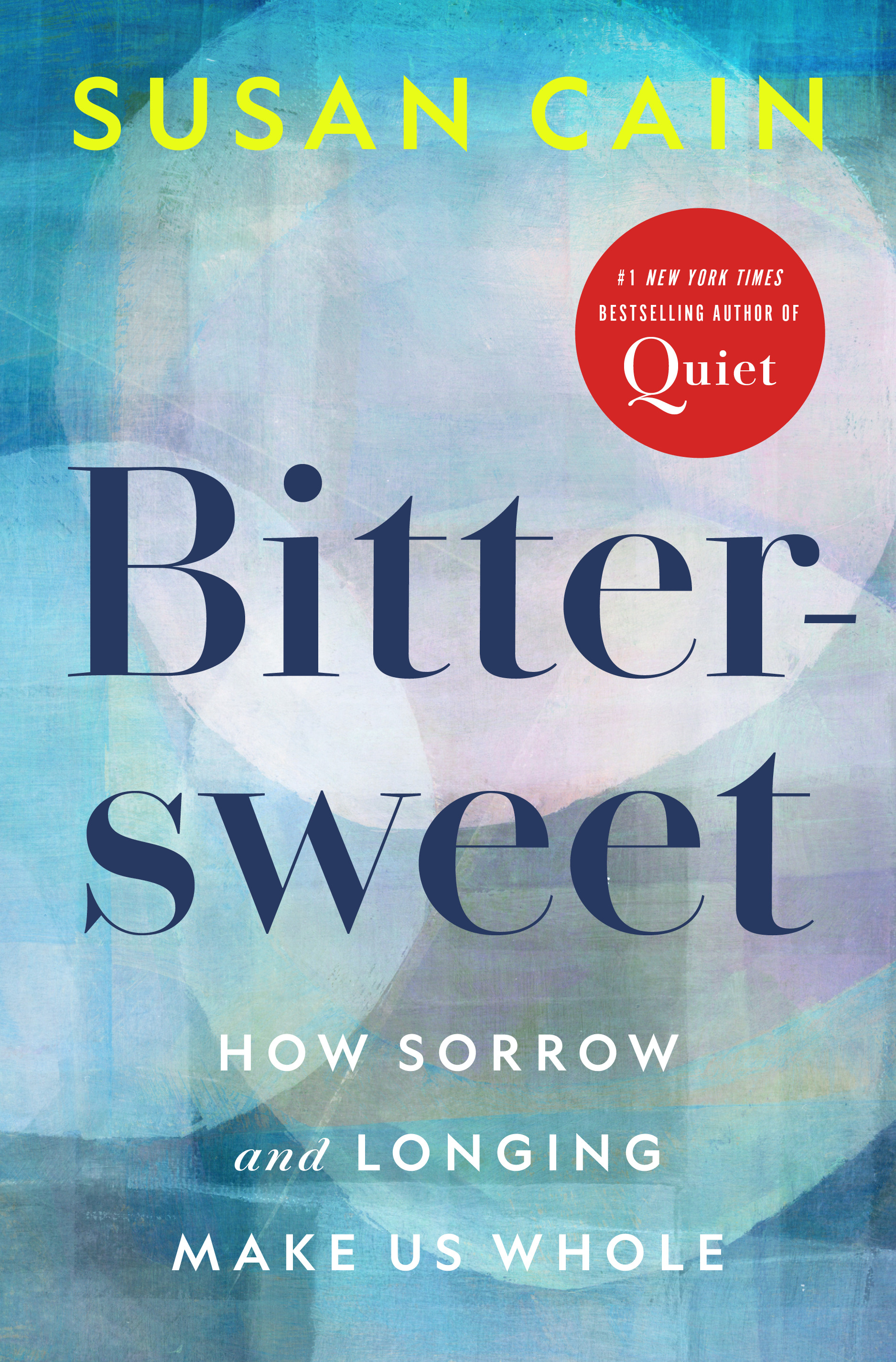
In her new masterpiece, the author of the bestselling phenomenon Quiet reveals the power of a bittersweet outlook on life, and why we’ve been so blind to its value.With Quiet, Susan Cain urged our society to cultivate space for the undervalued, indispensable introverts among us, thereby revealing an untapped power hidden in plain sight. Now she employs the same mix of research, storytelling, and memoir to explore why we experience sorrow and longing, and the surprising lessons these states of mind teach us about creativity, compassion, leadership, spirituality, mortality, and love. Bittersweetness is a tendency to states of longing, poignancy, and sorrow; an acute awareness of passing time; and a curiously piercing joy when beholding beauty. It recognizes that light and dark, birth and death—bitter and sweet—are forever paired. A song in a minor key, an elegiac poem, or even a touching television commercial all can bring us to this sublime, even holy, state of mind—and, ultimately, to greater kinship with our fellow humans. But bittersweetness is not, as we tend to think, just a momentary feeling or event. It’s also a way of being, a storied heritage. Our artistic and spiritual traditions—amplified by recent scientific and management research—teach us its power. Cain shows how a bittersweet state of mind is the quiet force that helps us transcend our personal and collective pain. If we don’t acknowledge our own sorrows and longings, she says, we can end up inflicting them on others via abuse, domination, or neglect. But if we realize that all humans know—or will know—loss and suffering, we can turn toward each other. And we can learn to transform our own pain into creativity, transcendence, and connection. At a time of profound discord and personal anxiety, Bittersweet brings us together in deep and unexpected ways.

Of Boys and Men: Why the Modern Male Is Struggling, Why It Matters, and What to Do about It
by Richard V. Reeves
Rating: 4.1 ⭐
• 2 recommendations ❤️
A positive vision for masculinity in a postfeminist worldBoys and men are struggling. Profound economic and social changes of recent decades have many losing ground in the classroom, the workplace, and in the family. While the lives of women have changed, the lives of many men have remained the same or even worsened.Our attitudes, our institutions, and our laws have failed to keep up. Conservative and progressive politicians, mired in their own ideological warfare, fail to provide thoughtful solutions.The father of three sons, a journalist, and a Brookings Institution scholar, Richard V. Reeves has spent twenty-five years worrying about boys both at home and work. His new book, Of Boys and Men, tackles the complex and urgent crisis of boyhood and manhood.Reeves looks at the structural challenges that face boys and men and offers fresh and innovative solutions that turn the page on the corrosive narrative that plagues this issue. Of Boys and Men argues that helping the other half of society does not mean giving up on the ideal of gender equality.