
Q2718421 Recommended Books
American broadcaster, comedian, and actor (born 1967)
45 Books Recommended

The Happiness Hypothesis: Finding Modern Truth in Ancient Wisdom
by Jonathan Haidt
Rating: 4.1 ⭐
• 10 recommendations ❤️
In his widely praised book, award-winning psychologist Jonathan Haidt examines the world’s philosophical wisdom through the lens of psychological science, showing how a deeper understanding of enduring maxims-like Do unto others as you would have others do unto you, or What doesn’t kill you makes you stronger-can enrich and even transform our lives.

The twenty-fifth-anniversary edition of the groundbreaking classic, with a new introductionFirst published in 1993, on the one-year anniversary of the Los Angeles riots, Race Matters became a national best seller that has gone on to sell more than half a million copies. This classic treatise on race contains Dr. West's most incisive essays on the issues relevant to black Americans, including the crisis in leadership in the Black community, Black conservatism, Black-Jewish relations, myths about Black sexuality, and the legacy of Malcolm X. The insights Dr. West brings to these complex problems remain relevant, provocative, creative, and compassionate.In a new introduction for the twenty-fifth-anniversary edition, Dr. West argues that we are in the midst of a spiritual blackout characterized by imperial decline, racial animosity, and unchecked brutality and terror as seen in Baltimore, Ferguson, and Charlottesville. Calling for a moral and spiritual awakening, Dr. West finds hope in the collective and visionary resistance exemplified by the Movement for Black Lives, Standing Rock, and the Black freedom tradition.Now more than ever, Race Matters is an essential book for all Americans, helping us to build a genuine multiracial democracy in the new millennium.

A Doctor's Revolutionary Research into the Biology of Near-Death & Mystical Experiences.A clinical psychiatrist explores the effects of DMT: A behind-the-scenes look at the cutting edge of psychedelic research.From 1990 to 1995 Dr. Rick Strassman conducted US DEA-approved clinical research at the University of New Mexico in which he injected 60 volunteers with DMT, one of the most powerful psychedelics known. His detailed account of those sessions is an inquiry into the nature of the human mind and the therapeutic potential of psychedelics. DMT, a plant-derived chemical that is also manufactured by the human brain, consistently produced near-death and mystical experiences. Many volunteers reported convincing encounters with intelligent nonhuman presences, especially "aliens." Nearly all felt that the sessions were among the most profound experiences of their lives.Strassman's research connects DMT with the pineal gland, considered by Hindus to be the site of the seventh chakra and by René Descartes to be the seat of the soul. DMT: The Spirit Molecule makes the case that DMT, naturally released by the pineal gland, facilitates the soul's movement in and out of the body and is an integral part of the birth and death experiences, as well as the highest states of meditation and even sexual transcendence. Strassman also believes that alien abduction experiences are brought on by accidental releases of DMT. If used wisely, DMT could trigger a period of remarkable progress in the scientific exploration of the most mystical regions of the human mind and soul.

Food of the Gods: The Search for the Original Tree of Knowledge
by Terence McKenna
Rating: 4.1 ⭐
• 3 recommendations ❤️
A Radical History of Plants, Drugs & Human EvolutionFor the first time in paperback, the counterculture manifesto on mind-altering drugs & hallucinogens. Illustrated.

The path to achieving Zen (a balance between the body and the mind) is brilliantly explained by Professor Eugen Herrigel in this timeless account.This book is the result of the author’s six year quest to learn archery in the hands of Japanese Zen masters. It is an honest account of one man’s journey to complete abandonment of ‘the self’ and the Western principles that we use to define ourselves. Professor Herrigel imparts knowledge from his experiences and guides the reader through physical and spiritual lessons in a clear and insightful way.Mastering archery is not the key to achieving Zen, and this is not a practical guide to archery. It is more a guide to Zen principles and learning and perfect for practitioners and non-practitioners alike.

s/t: A Study of the Nature and Origins of Christianity within the Fertility Cults of the Ancient Near EastWhere did god come from? What do the bible stories really tell us? Who or what was Jesus Christ? This book challenges everything we think we know about the nature of religion. The ancient fertility cult at the heart of Christianity. The living power of cultic rites and symbols. The sacred mushroom as the emblem and embodiment of divinity. The secret meaning of biblical myths. The language of religion that links us to our ancestors. The Sacred Mushroom and the Cross sets out John Allegro's quest through a family tree of languages to find the truth about where Christianity came from.
The Four Agreements: A Practical Guide to Personal Freedom
by Miguel Ruiz
Rating: 4.2 ⭐
• 25 recommendations ❤️
In The Four Agreements , bestselling author don Miguel Ruiz reveals the source of self-limiting beliefs that rob us of joy and create needless suffering. Based on ancient Toltec wisdom, The Four Agreements offer a powerful code of conduct that can rapidly transform our lives to a new experience of freedom, true happiness, and love.• A New York Times bestseller for over a decade• An international bestseller published in 52 languages worldwide“This book by don Miguel Ruiz, simple yet so powerful, has made a tremendous difference in how I think and act in every encounter.” — Oprah Winfrey“Don Miguel Ruiz’s book is a roadmap to enlightenment and freedom.” — Deepak Chopra, Author, The Seven Spiritual Laws of Success“An inspiring book with many great lessons.” — Wayne Dyer, Author, Real Magic“In the tradition of Castaneda, Ruiz distills essential Toltec wisdom, expressing with clarity and impeccability what it means for men and women to live as peaceful warriors in the modern world.” — Dan Millman, Author, Way of the Peaceful Warrior

Brother Sam: The Short, Spectacular Life of Sam Kinison
by Bill Kinison
Rating: 4.1 ⭐
• 2 recommendations ❤️
A brother recalls the excessive and flamboyant life of the late comedian who died in an April 1992 car crash, portraying Kinison's checkered early years, his road to fame and fortune, and his personal struggles. National ad/promo.

Best Evidence: Disguise and Deception in the Assassination of John F. Kennedy
by David S. Lifton
Rating: 4.4 ⭐
• 2 recommendations ❤️
Critics called the movie JFK fiction, but they won't be able to say that about this shocking, unimpeachably convincing book that pieces together startling new disclosures behind John F. Kennedy's assassination. David S. Lifton's skilled analysis leads to one irrefutable conclusion: that the plot didn't begin in the twisted mind of a lone assassin but was a successfully executed conspiracy that reached the highest level of the federal government. "Sometime during Kennedy's thousand days, a secret veto was cast on his presidency & his life." Lifton's obsession with unanswered questions has led him again & again to the "best evidence"--that the president's body fell into the hands of people who deceived the nation & the world & who, to this day, have not been brought to justice.

Son of the Morning Star: Custer and the Little Bighorn
by Evan S. Connell
Rating: 4.2 ⭐
• 3 recommendations ❤️
Custer's Last Stand is among the most enduring events in American history--more than one hundred years after the fact, books continue to be written and people continue to argue about even the most basic details surrounding the Little Bighorn. Evan S. Connell, whom Joyce Carol Oates has described as "one of our most interesting and intelligent American writers," wrote what continues to be the most reliable--and compulsively readable--account of the subject. Connell makes good use of his meticulous research and novelist's eye for the story and detail to re-vreate the heroism, foolishness, and savagery of this crucial chapter in the history of the West.

The War of Art: Break Through the Blocks and Win Your Inner Creative Battles
by Steven Pressfield
Rating: 4.1 ⭐
• 38 recommendations ❤️
The Art of War meets "The Artist's Way" in this no-nonsense, profoundly inspiring guide to overcoming creative blocks of every kind.

Blood and Thunder: The Epic Story of Kit Carson & the Conquest of the American West
by Hampton Sides
Rating: 4.4 ⭐
• 2 recommendations ❤️
In the fall of 1846 the venerable Navajo warrior Narbona, greatest of his people’s chieftains, looked down upon the small town of Santa Fe, the stronghold of the Mexican settlers he had been fighting his whole long life. He had come to see if the rumors were true—if an army of blue-suited soldiers had swept in from the East and utterly defeated his ancestral enemies. As Narbona gazed down on the battlements and cannons of a mighty fort the invaders had built, he realized his foes had been vanquished—but what did the arrival of these “New Men” portend for the Navajo?Narbona could not have known that “The Army of the West,” in the midst of the longest march in American military history, was merely the vanguard of an inexorable tide fueled by a self-righteous ideology now known as “Manifest Destiny.” For twenty years the Navajo, elusive lords of a huge swath of mountainous desert and pasturelands, would ferociously resist the flood of soldiers and settlers who wished to change their ancient way of life or destroy them.Hampton Sides’s extraordinary book brings the history of the American conquest of the West to ringing life. It is a tale with many heroes and villains, but as is found in the best history, the same person might be both. At the center of it all stands the remarkable figure of Kit Carson—the legendary trapper, scout, and soldier who embodies all the contradictions and ambiguities of the American experience in the West. Brave and clever, beloved by his contemporaries, Carson was an illiterate mountain man who twice married Indian women and understood and respected the tribes better than any other American alive. Yet he was also a cold-blooded killer who willingly followed orders tantamount to massacre. Carson’s almost unimaginable exploits made him a household name when they were written up in pulp novels known as “blood-and-thunders,” but now that name is a bitter curse for contemporary Navajo, who cannot forget his role in the travails of their ancestors.

Miyamoto Musashi's Go Rin no Sho or the book of five rings, is considered a classic treatise on military strategy, much like Sun Tzu's The Art of War and Chanakya's Arthashastra. The five "books" refer to the idea that there are different elements of battle, just as there are different physical elements in life, as described by Buddhism, Shinto, and other Eastern religions. Through the book Musashi defends his thesis: a man who conquers himself is ready to take it on on the world, should need arise.

When it was first published in 1959, The Hustler was the first—and the best—novel written about billiards in the 400-year history of the game. The book quickly won a respected readership and later an audience for the movie with the same name starring Paul Newman and Jackie Gleason. The Hustler is about the victories and losses of one "Fast" Eddie Felson, a poolroom hustler who travels from town to town conning strangers into thinking they could beat him at the game when in fact, he is a skillful player who has never lost a game. Until he meets his match in Minnesota Fats, the true king of the poolroom, causing his life to change drastically. This is a classic tale of a man's struggle with his soul and his self-esteem.

Fingerprints of the Gods: The Evidence of Earth's Lost Civilization
by Graham Hancock
Rating: 4.2 ⭐
• 4 recommendations ❤️
Could the story of mankind be far older than we have previously believed? Using tools as varied as archaeo-astronomy, geology, and computer analysis of ancient myths, Graham Hancock presents a compelling case to suggest that it is.In Fingerprints of the Gods, Hancock embarks on a worldwide quest to put together all the pieces of the vast and fascinating jigsaw of mankind’s hidden past. In ancient monuments as far apart as Egypt’s Great Sphinx, the strange Andean ruins of Tihuanaco, and Mexico’s awe-inspiring Temples of the Sun and Moon, he reveals not only the clear fingerprints of an as-yet-unidentified civilization of remote antiquity, but also startling evidence of its vast sophistication, technological advancement, and evolved scientific knowledge. A record-breaking number one bestseller in Britain, Fingerprints of the Gods contains the makings of an intellectual revolution, a dramatic and irreversible change in the way that we understand our past—and so our future.And Fingerprints of the Gods tells us something more. As we recover the truth about prehistory, and discover the real meaning of ancient myths and monuments, it becomes apparent that a warning has been handed down to us, a warning of terrible cataclysm that afflicts the Earth in great cycles at irregular intervals of time—a cataclysm that may be about to recur.

The Tipping Point: How Little Things Can Make a Big Difference
by Malcolm Gladwell
Rating: 4.0 ⭐
• 17 recommendations ❤️
From the bestselling author of The Bomber Mafia: discover Malcolm Gladwell's breakthrough debut and explore the science behind viral trends in business, marketing, and human behavior.The tipping point is that magic moment when an idea, trend, or social behavior crosses a threshold, tips, and spreads like wildfire. Just as a single sick person can start an epidemic of the flu, so too can a small but precisely targeted push cause a fashion trend, the popularity of a new product, or a drop in the crime rate. This widely acclaimed bestseller, in which Malcolm Gladwell explores and brilliantly illuminates the tipping point phenomenon, is already changing the way people throughout the world think about selling products and disseminating ideas.

Guns, Germs, and Steel: The Fates of Human Societies
by Jared Diamond
Rating: 4.1 ⭐
• 24 recommendations ❤️
Winner of the Pulitzer Prize • New York Times Bestseller • Over Two Million Copies Sold“One of the most significant projects embarked upon by any intellectual of our generation” (Gregg Easterbrook, New York Times), Guns, Germs, and Steel presents a groundbreaking, unified narrative of human history.Why did Eurasians conquer, displace, or decimate Native Americans, Australians, and Africans, instead of the reverse? In this “artful, informative, and delightful” (William H. McNeill, New York Review of Books) book, a classic of our time, evolutionary biologist Jared Diamond dismantles racist theories of human history by revealing the environmental factors actually responsible for its broadest patterns.The story begins 13,000 years ago, when Stone Age hunter-gatherers constituted the entire human population. Around that time, the developmental paths of human societies on different continents began to diverge greatly. Early domestication of wild plants and animals in the Fertile Crescent, China, Mesoamerica, the Andes, and other areas gave peoples of those regions a head start at a new way of life. But the localized origins of farming and herding proved to be only part of the explanation for their differing fates. The unequal rates at which food production spread from those initial centers were influenced by other features of climate and geography, including the disparate sizes, locations, and even shapes of the continents. Only societies that moved away from the hunter-gatherer stage went on to develop writing, technology, government, and organized religions as well as deadly germs and potent weapons of war. It was those societies, adventuring on sea and land, that invaded others, decimating native inhabitants through slaughter and the spread of disease.A major landmark in our understanding of human societies, Guns, Germs, and Steel chronicles the way in which the modern world, and its inequalities, came to be.

“The most promising debut by a nature writer in years . . . a hymn to a complicated, long-standing human-animal relationship.”— San Francisco ChronicleA hunt for the American buffalo, an adventurous, fascinating examination of an animal that has haunted the American imagination—from the host of the show MeatEater as seen on Netflix In 2005, Steven Rinella won a lottery permit to hunt for a wild buffalo, or American bison, in the Alaskan wilderness. Despite the odds—there’s only a 2 percent chance of drawing the permit, and fewer than 20 percent of those hunters are successful—Rinella managed to kill a buffalo on a snow-covered mountainside and then raft the meat back to civilization while being trailed by grizzly bears and suffering from hypothermia. Throughout these adventures, Rinella found himself contemplating his own place among the 14,000 years’ worth of buffalo hunters in North America, as well as the buffalo’s place in the American experience. At the time of the Revolutionary War, North America was home to approximately 40 million buffalo, the largest herd of big mammals on the planet, but by the mid-1890s only a few hundred remained. Now that the buffalo is on the verge of a dramatic ecological recovery across the West, Americans are faced with the challenge of how, and if, we can dare to share our land with a beast that is the embodiment of the American wilderness.American Buffalo is a narrative tale of Rinella’s hunt. But beyond that, it is the story of the many ways in which the buffalo has shaped our national identity. Rinella takes us across the continent in search of the buffalo’s past, present, and future: to the Bering Land Bridge, where scientists search for buffalo bones amid artifacts of the New World’s earliest human inhabitants; to buffalo jumps where Native Americans once ran buffalo over cliffs by the thousands; to the Detroit Carbon works, a “bone charcoal” plant that made fortunes in the late 1800s by turning millions of tons of buffalo bones into bone meal, black dye, and fine china; and even to an abattoir turned fashion mecca in Manhattan’s Meatpacking District, where a depressed buffalo named Black Diamond met his fate after serving as the model for the American nickel.Rinella’s erudition and exuberance, combined with his gift for storytelling, make him the perfect guide for a book that combines outdoor adventure with a quirky blend of facts and observations about history, biology, and the natural world. Both a captivating narrative and a book of environmental and historical significance, American Buffalo tells us as much about ourselves as Americans as it does about the creature who perhaps best of all embodies the American ethos.

A preeminent scientist - and the world's most prominent atheist - asserts the irrationality of belief in God, and the grievous harm religion has inflicted on society, from the Crusades to 9/11.With rigor and wit, Dawkins examines God in all his forms, from the sex-obsessed tyrant of the Old Testament, to the more benign (but still illogical) Celestial Watchmaker favored by some Enlightenment thinkers. He eviscerates the major arguments for religion, and demonstrates the supreme improbability of a supreme being. He shows how religion fuels war, foments bigotry, and abuses children, buttressing his points with historical and contemporary evidence.The God Delusion makes a compelling case that belief in God is not just wrong, but potentially deadly. It also offers exhilarating insight into the advantages of atheism to the individual and society, not the least of which is a clearer, truer appreciation of the universe's wonders than any faith could ever muster.

In this stunning new book, Malcolm Gladwell takes us on an intellectual journey through the world of "outliers"--the best and the brightest, the most famous and the most successful. He asks the question: what makes high-achievers different?His answer is that we pay too much attention to what successful people are like, and too little attention to where they are from: that is, their culture, their family, their generation, and the idiosyncratic experiences of their upbringing. Along the way he explains the secrets of software billionaires, what it takes to be a great soccer player, why Asians are good at math, and what made the Beatles the greatest rock band. Brilliant and entertaining, Outliers is a landmark work that will simultaneously delight and illuminate.
The Talent Code: Greatness Isn't Born. It's Grown. Here's How.
by Daniel Coyle
Rating: 4.2 ⭐
• 14 recommendations ❤️
What is the secret of talent? How do we unlock it? In this groundbreaking work, journalist and New York Times bestselling author Daniel Coyle provides parents, teachers, coaches, businesspeople—and everyone else—with tools they can use to maximize potential in themselves and others.Whether you’re coaching soccer or teaching a child to play the piano, writing a novel or trying to improve your golf swing, this revolutionary book shows you how to grow talent by tapping into a newly discovered brain mechanism.Drawing on cutting-edge neurology and firsthand research gathered on journeys to nine of the world’s talent hotbeds—from the baseball fields of the Caribbean to a classical-music academy in upstate New York—Coyle identifies the three key elements that will allow you to develop your gifts and optimize your performance in sports, art, music, math, or just about anything. • Deep Practice Everyone knows that practice is a key to success. What everyone doesn’t know is that specific kinds of practice can increase skill up to ten times faster than conventional practice.• Ignition We all need a little motivation to get started. But what separates truly high achievers from the rest of the pack? A higher level of commitment—call it passion—born out of our deepest unconscious desires and triggered by certain primal cues. Understanding how these signals work can help you ignite passion and catalyze skill development.• Master Coaching What are the secrets of the world’s most effective teachers, trainers, and coaches? Discover the four virtues that enable these “talent whisperers” to fuel passion, inspire deep practice, and bring out the best in their students.These three elements work together within your brain to form myelin, a microscopic neural substance that adds vast amounts of speed and accuracy to your movements and thoughts. Scientists have discovered that myelin might just be the holy grail: the foundation of all forms of greatness, from Michelangelo’s to Michael Jordan’s. The good news about myelin is that it isn’t fixed at birth; to the contrary, it grows, and like anything that grows, it can be cultivated and nourished. Combining revelatory analysis with illuminating examples of regular people who have achieved greatness, this book will not only change the way you think about talent, but equip you to reach your own highest potential.From the Hardcover edition.

Sex at Dawn: How We Mate, Why We Stray & What It Means for Modern Relationships
by Christopher Ryan
Rating: 4.1 ⭐
• 11 recommendations ❤️
A controversial, idea-driven book that challenges everything you (think you) know about sex, monogamy, marriage, and family. In the words of Steve Taylor (The Fall, Waking From Sleep), Sex at Dawn is “a wonderfully provocative and well-written book which completely re-evaluates human sexual behavior and gets to the root of many of our social and psychological ills.”

A Summer Reading Pick for President Barack Obama, Bill Gates, and Mark Zuckerberg From a renowned historian comes a groundbreaking narrative of humanity’s creation and evolution—a #1 international bestseller—that explores the ways in which biology and history have defined us and enhanced our understanding of what it means to be “human.”One hundred thousand years ago, at least six different species of humans inhabited Earth. Yet today there is only one—homo sapiens. What happened to the others? And what may happen to us?Most books about the history of humanity pursue either a historical or a biological approach, but Dr. Yuval Noah Harari breaks the mold with this highly original book that begins about 70,000 years ago with the appearance of modern cognition. From examining the role evolving humans have played in the global ecosystem to charting the rise of empires, Sapiens integrates history and science to reconsider accepted narratives, connect past developments with contemporary concerns, and examine specific events within the context of larger ideas.Dr. Harari also compels us to look ahead, because over the last few decades humans have begun to bend laws of natural selection that have governed life for the past four billion years. We are acquiring the ability to design not only the world around us, but also ourselves. Where is this leading us, and what do we want to become?Featuring 27 photographs, 6 maps, and 25 illustrations/diagrams.

The Art of Living and Dying: Celebrating Life and Celebrating Death
by Osho
Rating: 4.0 ⭐
• 2 recommendations ❤️
Why are we afraid of death? What is acceptance in the face of cancer? How do I decide whose advice to take? How to relax in the certainty of death? Ought we to tell someone when they are dying or not? Is the theory of reincarnation true? What is happening around the dying? How best to support a dying person? My young daughter is asking about death: what do I tell her? How can I celebrate death as you suggest? Osho responds to these questions and many others from those who find themselves inexplicably attracted to the subject, as well as from those who are facing imminent death and from their carers. He does not simply show how our fear of death is based on a misunderstanding of its nature; he also shows how dying is a tremendous opportunity for inner growth and how death is the most sacred of mysteries. Death is not an event but a process, and one that begins with birth. Each exhalation is a small death; each inhalation, a rebirth. When life is lived consciously and totally, death is not a catastrophe but a joyous climax.

Going Clear: Scientology, Hollywood, and the Prison of Belief
by Lawrence Wright
Rating: 4.3 ⭐
• 2 recommendations ❤️
A clear-sighted revelation, a deep penetration into the world of Scientology by the Pulitzer Prize-winning author of the now-classic study of al-Qaeda's 9/11 attack, the Looming Tower. Based on more than two hundred personal interviews with both current and former Scientologists--both famous and less well known--and years of archival research, Lawrence Wright uses his extraordinary investigative skills to uncover for us the inner workings of the Church of Scientology: its origins in the imagination of science-fiction writer L. Ron Hubbard; its struggles to find acceptance as a legitimate (and legally acknowledged) religion; its vast, secret campaign to infiltrate the U.S. government; and its dramatic efforts to grow and prevail after the death of Hubbard.At the book's center, two men whom Wright brings vividly to life, showing how they have made Scientology what it is today: The darkly brilliant L. Ron Hubbard--whose restless, expansive mind invented a new religion tailor-made to prosper in the spiritually troubled post-World War II era. And his successor, David Miscavige--tough and driven, with the unenviable task of preserving the church in the face of ongoing scandals and continual legal assaults.We learn about Scientology's esoteric cosmology; about the auditing process that determines an inductee's state of being; about the Bridge to Total Freedom, through which members gain eternal life. We see the ways in which the church pursues celebrities, such as Tom Cruise and John Travolta, and how young idealists who joined the Sea Org, the church's clergy, whose members often enter as children, signing up with a billion-year contract and working with little pay in poor conditions. We meet men and women "disconnected" from friends and family by the church's policy of shunning critical voices. And we discover, through many firsthand stories, the violence that has long permeated the inner sanctum of the church.In Going Clear, Wright examines what fundamentally makes a religion a religion, and whether Scientology is, in fact, deserving of the constitutional protections achieved in its victory over the IRS. Employing all his exceptional journalistic skills of observations, understanding, and synthesis, and his ability to shape a story into a compelling narrative, Lawrence Wright has given us an evenhanded yet keenly incisive book that goes far beyond an immediate exposé and uncovers the very essence of what makes Scientology the institution it is.

The New York Times best-selling account of how coyotes--long the target of an extermination policy--spread to every corner of the United States Finalist for the PEN/E.O. Wilson Literary Science Writing Award "A masterly synthesis of scientific research and personal observation." - Wall Street Journal Legends don't come close to capturing the incredible story of the coyote. In the face of centuries of campaigns of annihilation employing gases, helicopters, and engineered epidemics, coyotes didn't just survive, they thrived, expanding across the continent from Alaska to New York. In the war between humans and coyotes, coyotes have won, hands-down. Coyote America is the illuminating five-million-year biography of this extraordinary animal, from its origins to its apotheosis. It is one of the great epics of our time.

Sebastian Junger, the bestselling author of War and The Perfect Storm, takes a critical look at post-traumatic stress disorder and the many challenges today’s returning veterans face in modern society.There are ancient tribal human behaviors-loyalty, inter-reliance, cooperation-that flare up in communities during times of turmoil and suffering. These are the very same behaviors that typify good soldiering and foster a sense of belonging among troops, whether they’re fighting on the front lines or engaged in non-combat activities away from the action. Drawing from history, psychology, and anthropology, bestselling author Sebastian Junger shows us just how at odds the structure of modern society is with our tribal instincts, arguing that the difficulties many veterans face upon returning home from war do not stem entirely from the trauma they’ve suffered, but also from the individualist societies they must reintegrate into.A 2011 study by the Canadian Forces and Statistics Canada reveals that 78 percent of military suicides from 1972 to the end of 2006 involved veterans. Though these numbers present an implicit call to action, the government is only just taking steps now to address the problems veterans face when they return home. But can the government ever truly eliminate the challenges faced by returning veterans? Or is the problem deeper, woven into the very fabric of our modern existence? Perhaps our circumstances are not so bleak, and simply understanding that beneath our modern guises we all belong to one tribe or another would help us face not just the problems of our nation but of our individual lives as well.Well-researched and compellingly written, this timely look at how veterans react to coming home will reconceive our approach to veteran’s affairs and help us to repair our current social dynamic.

From the best-selling author of Why We Get Fat, a groundbreaking, eye-opening exposé that makes the convincing case that sugar is the tobacco of the new backed by powerful lobbies, entrenched in our lives, and making us very sick.Among Americans, diabetes is more prevalent today than ever; obesity is at epidemic proportions; nearly 10% of children are thought to have nonalcoholic fatty liver disease. And sugar is at the root of these, and other, critical society-wide, health-related problems. With his signature command of both science and straight talk, Gary Taubes delves into Americans' history with its uses as a preservative, as an additive in cigarettes, the contemporary overuse of high-fructose corn syrup. He explains what research has shown about our addiction to sweets. He clarifies the arguments against sugar, corrects misconceptions about the relationship between sugar and weight loss; and provides the perspective necessary to make informed decisions about sugar as individuals and as a society.

Winner of the Society of American Historians' Francis Parkman PrizeWinner of the PEN / Jacqueline Bograd Weld Award for BiographyBest Biography of 2016, True West magazine Winner of the Western Writers of America 2017 Spur Award, Best Western BiographyFinalist, National Book Critics Circle Award for BiographyLong-listed for the Cundill History PrizeOne of the Best Books of 2016, The Boston GlobeThe epic life story of the Native American holy man who has inspired millions around the worldBlack Elk, the Native American holy man, is known to millions of readers around the world from his 1932 testimonial Black Elk Speaks. Adapted by the poet John G. Neihardt from a series of interviews with Black Elk and other elders at the Pine Ridge Reservation in South Dakota, Black Elk Speaks is one of the most widely read and admired works of American Indian literature. Cryptic and deeply personal, it has been read as a spiritual guide, a philosophical manifesto, and a text to be deconstructed—while the historical Black Elk has faded from view.In this sweeping book, Joe Jackson provides the definitive biographical account of a figure whose dramatic life converged with some of the most momentous events in the history of the American West. Born in an era of rising violence between the Sioux, white settlers, and U.S. government troops, Black Elk killed his first man at the Little Bighorn, witnessed the death of his second cousin Crazy Horse, and traveled to Europe with Buffalo Bill’s Wild West show. Upon his return, he was swept up in the traditionalist Ghost Dance movement and shaken by the Massacre at Wounded Knee. But Black Elk was not a warrior, instead accepting the path of a healer and holy man, motivated by a powerful prophetic vision that he struggled to understand. Although Black Elk embraced Catholicism in his later years, he continued to practice the old ways clandestinely and never refrained from seeking meaning in the visions that both haunted and inspired him.In Black Elk, Jackson has crafted a true American epic, restoring to its subject the richness of his times and gorgeously portraying a life of heroism and tragedy, adaptation and endurance, in an era of permanent crisis on the Great Plains.

Stealing Fire: How Silicon Valley, the Navy SEALs, and Maverick Scientists Are Revolutionizing the Way We Live and Work
by Steven Kotler
Rating: 4.0 ⭐
• 4 recommendations ❤️
National Bestseller CNBC and Strategy + Business Best Business Book of the Year It’s the biggest revolution you’ve never heard of, and it’s hiding in plain sight. Over the past decade, Silicon Valley executives like Eric Schmidt and Elon Musk, Special Operators like the Navy SEALs and the Green Berets, and maverick scientists like Sasha Shulgin and Amy Cuddy have turned everything we thought we knew about high performance upside down. Instead of grit, better habits, or 10,000 hours, these trailblazers have found a surprising short cut. They're harnessing rare and controversial states of consciousness to solve critical challenges and outperform the competition. New York Times bestselling author Steven Kotler and high performance expert Jamie Wheal spent four years investigating the leading edges of this revolution—from the home of SEAL Team Six to the Googleplex, the Burning Man festival, Richard Branson’s Necker Island, Red Bull’s training center, Nike’s innovation team, and the United Nations’ Headquarters. And what they learned was In their own ways, with differing languages, techniques, and applications, every one of these groups has been quietly seeking the same the boost in information and inspiration that altered states provide. Today, this revolution is spreading to the mainstream, fueling a trillion dollar underground economy and forcing us to rethink how we can all lead richer, more productive, more satisfying lives. Driven by four accelerating forces—psychology, neurobiology, technology and pharmacology—we are gaining access to and insights about some of the most contested and misunderstood terrain in history. Stealing Fire is a provocative examination of what’s actually possible; a guidebook for anyone who wants to radically upgrade their life.

Irresistible: The Rise of Addictive Technology and the Business of Keeping Us Hooked
by Adam Alter
Rating: 3.8 ⭐
• 2 recommendations ❤️
Welcome to the age of behavioral addiction—an age in which half of the American population is addicted to at least one behavior. We obsess over our emails, Instagram likes, and Facebook feeds; we binge on TV episodes and YouTube videos; we work longer hours each year; and we spend an average of three hours each day using our smartphones. Half of us would rather suffer a broken bone than a broken phone, and Millennial kids spend so much time in front of screens that they struggle to interact with real, live humans. In this revolutionary book, Adam Alter, a professor of psychology and marketing at NYU, tracks the rise of behavioral addiction, and explains why so many of today's products are irresistible. Though these miraculous products melt the miles that separate people across the globe, their extraordinary and sometimes damaging magnetism is no accident. The companies that design these products tweak them over time until they become almost impossible to resist. By reverse engineering behavioral addiction, Alter explains how we can harness addictive products for the good—to improve how we communicate with each other, spend and save our money, and set boundaries between work and play—and how we can mitigate their most damaging effects on our well-being, and the health and happiness of our children.

In Sapiens, he explored our past. In Homo Deus, he looked to our future. Now, one of the most innovative thinkers on the planet turns to the present to make sense of today's most pressing issues.How do computers and robots change the meaning of being human? How do we deal with the epidemic of fake news? Are nations and religions still relevant? What should we teach our children?Yuval Noah Harari's 21 Lessons for the 21st Century is a probing and visionary investigation into today's most urgent issues as we move into the uncharted territory of the future. As technology advances faster than our understanding of it, hacking becomes a tactic of war, and the world feels more polarized than ever, Harari addresses the challenge of navigating life in the face of constant and disorienting change and raises the important questions we need to ask ourselves in order to survive.In twenty-one accessible chapters that are both provocative and profound, Harari builds on the ideas explored in his previous books, untangling political, technological, social, and existential issues and offering advice on how to prepare for a very different future from the world we now live in: How can we retain freedom of choice when Big Data is watching us? What will the future workforce look like, and how should we ready ourselves for it? How should we deal with the threat of terrorism? Why is liberal democracy in crisis?Harari's unique ability to make sense of where we have come from and where we are going has captured the imaginations of millions of readers. Here he invites us to consider values, meaning, and personal engagement in a world full of noise and uncertainty. When we are deluged with irrelevant information, clarity is power. Presenting complex contemporary challenges clearly and accessibly, 21 Lessons for the 21st Century is essential reading.

It's hard being a person, especially in a family, and no one knows that better than stand-up comedian, family man, and A Prairie Home Companion head writer and performer, Tom Papa.How do you deal with a life filled with a whole host of characters and their bizarre, inescapable behavior? Especially when you're related to them? Tom Papa is here to help you make sense of it all. Your Dad Stole My Rake is a hilarious and warm book that saws deep into every branch of the family tree and uncovers the most bizarre and surprisingly meaningful aspects of our lives. He exposes everyone, from crazy aunts with mustaches, grandparents who communicate by yelling, and uncles who use marijuana as a condiment.Among the topics covered: - Tiger Mom v. Ice-Cream Mom - Stop Trying to be Cool - In Defense of Family Vacations - No Fighting Before Coffee - Least Popular Baby Names - Wife Lie Detector - Your Cat Thinks You're Too NeedyAnyone who has a family, grew up in a family, or has spent time with another human being will love this book.

Joe Beef: Surviving the Apocalypse: Another Cookbook of Sorts
by Frederic Morin
Rating: 4.1 ⭐
• 2 recommendations ❤️
A new cookbook/survival guide/love letter to Montreal for these apocalyptic times, from the James Beard Award-nominated culinary adventurists and proprietors of the beloved restaurant, Joe Beef. "The first Joe Beef cookbook changed forever what a cookbook could be. Anything that came after had to take it into account. Now, with this latest and even more magnificent beast, the rogue princes of Canadian cuisine and hospitality show us the way out of the numbing, post-apocalyptic restaurant Hell of pretentiousness and mediocrity that threatens to engulf us all. It makes us believe that the future is shiny, bright, beautiful, delicious--and probably Quebecois. This book will change your life." --Anthony BourdainIt's the end of the world as we know it. Or not. Either way, you want Joe Beef: Surviving the Apocalypse in your bunker and/or kitchen.In their much-loved first cookbook, Frederic Morin, David McMillan, and Meredith Erickson introduced readers to the art of living the Joe Beef way. Now, they're back with another deeply personal, refreshingly unpretentious collection of more than 150 new recipes, some taken directly from the menus of Fred and Dave's acclaimed Montreal restaurants, others from summers spent on Laurentian lakes and Sunday dinners at home. Think Watercress Soup with Trout Quenelles, Artichokes Bravas, and seasonal variations on Pot-au-Feu--alongside Smoked Meat Croquettes, a Tater Tot Galette, and Squash Sticky Buns.Also included are instructions for making your own soap and cough drops, not to mention an epic 16-page fold-out gatefold with recipes and guidance for stocking a cellar with apocalyptic essentials (Canned Bread, Pickled Pork Butt, and Smoked Apple Cider Vinegar) for throwing the most sought-after in-bunker dinner partyFilled with recipes, reflections, and ramblings, in this book you'll find chapters devoted to the Quebecois tradition of celebrating Christmas in July, the magic of public television, and Fred and Dave's unique take on barbecue (Burnt-End Bourguignon, Cassoulet Rapide), as well as ruminations on natural wine and gluten-free cooking, and advice on how children should behave at dinner.Whether you're holing up for a zombie holocaust or just cooking at home, Joe Beef is a book about doing it yourself, about making it on your own, and about living--or at least surviving--in style.

Charlamagne Tha God, New York Times bestselling author of Black Privilege and always provocative cohost of Power 105.1’s The Breakfast Club , reveals his blueprint for breaking free from your fears and anxieties.Being “shook” is more than a rap lyric for Charlamagne, it’s his mission to overcome. While it may seem like he’s ahead of the game, he is actually plagued by anxieties, such as the fear of losing his roots, the fear of being a bad dad, and the fear of being a terrible husband. In the national bestseller Shook One , Charlamagne chronicles his journey to beat those fears and shows a path that you too can take to overcome the anxieties that may be holding you back.Ironically, Charlamagne’s fear of failure—of falling into the life of stagnation or crime that caught up so many of his friends and family in his hometown of Moncks Corner—has been the fuel that has propelled him to success. However, even after achieving national prominence as a radio personality, Charlamagne still found himself paralyzed by anxiety and distrust. Here, in Shook One , he is working through these problems—many of which he traces back to cultural PTSD—with help from mentors, friends, and therapy. Being anxious doesn’t serve the same purpose anymore. Through therapy, he’s figuring out how to get over the irrational fears that won’t take him anywhere positive.Charlamange hopes Shook One can be a call to Getting help is your right. His second book “cements the radio personality’s stance in making sure he’s on the right side of history when it comes to society’s growing focus on mental health, while helping remove the negative stigma” ( Billboard ).
In acclaimed author Jack Carr’s follow-up to The Terminal List, former Navy SEAL James Reece’s skill, cunning, and heroism put the US government back in his debt and set him on another path of revenge. When a string of horrific terrorist attacks plagues the Western world during the holiday season, the broader markets fall into a tailspin. The attacks are being coordinated by a shadowy former Iraqi commando who has disappeared into Europe’s underground. The United States government has an asset who can turn the Iraqi against his masters: James Reece, the most-wanted domestic terrorist alive. After avenging the deaths of his family and team members, Reece emerges deep in the wilds of Mozambique, protected by the family of his estranged best friend and former SEAL Team member. When a series of events uncovers his whereabouts, the CIA recruits him, using a Presidential pardon for Reece and immunity for the friends who helped him in his mission of vengeance. Now a reluctant tool of the United States government, Reece travels the globe, targeting terrorist leaders and unraveling a geopolitical conspiracy that exposes a traitorous CIA officer and uncovers a sinister assassination plot with worldwide repercussions. A high-intensity roller-coaster ride, True Believer explodes with action and authenticity that cements Jack Carr as the new leader in political thrillers.

Can't Hurt Me: Master Your Mind and Defy the Odds
by David Goggins
Rating: 4.5 ⭐
• 14 recommendations ❤️
New York Times Best SellerOver 5 million copies soldFor David Goggins, childhood was a nightmare -- poverty, prejudice, and physical abuse colored his days and haunted his nights. But through self-discipline, mental toughness, and hard work, Goggins transformed himself from a depressed, overweight young man with no future into a U.S. Armed Forces icon and one of the world's top endurance athletes. The only man in history to complete elite training as a Navy SEAL, Army Ranger, and Air Force Tactical Air Controller, he went on to set records in numerous endurance events, inspiring Outside magazine to name him "The Fittest (Real) Man in America."In Can't Hurt Me , he shares his astonishing life story and reveals that most of us tap into only 40% of our capabilities. Goggins calls this The 40% Rule, and his story illuminates a path that anyone can follow to push past pain, demolish fear, and reach their full potential.
Something Deeply Hidden: Quantum Worlds and the Emergence of Spacetime
by Sean Carroll
Rating: 4.1 ⭐
• 4 recommendations ❤️
As you read these words, copies of you are being created. Sean Carroll, theoretical physicist and one of this world’s most celebrated writers on science, rewrites the history of 20th century physics. Already hailed as a masterpiece, Something Deeply Hidden shows for the first time that facing up to the essential puzzle of quantum mechanics utterly transforms how we think about space and time. His reconciling of quantum mechanics with Einstein’s theory of relativity changes, well, everything. Most physicists haven’t even recognized the uncomfortable truth: physics has been in crisis since 1927. Quantum mechanics has always had obvious gaps—which have come to be simply ignored. Science popularizers keep telling us how weird it is, how impossible it is to understand. Academics discourage students from working on the "dead end" of quantum foundations. Putting his professional reputation on the line with this audacious yet entirely reasonable book, Carroll says that the crisis can now come to an end. We just have to accept that there is more than one of us in the universe. There are many, many Sean Carrolls. Many of every one of us. Copies of you are generated thousands of times per second. The "many worlds theory" of quantum behavior says that every time there is a quantum event, a world splits off with everything in it the same, except in that other world the quantum event didn't happen. Step by step in Carroll's uniquely lucid way, he tackles the major objections to this otherworldly revelation until his case is inescapably established. Rarely does a book so fully reorganize how we think about our place in the universe. We are on the threshold of a new understanding—of where we are in the cosmos, and what we are made of.

Chaos: Charles Manson, the CIA, and the Secret History of the Sixties
by Tom O'Neill
Rating: 4.0 ⭐
• 4 recommendations ❤️
A journalist's twenty-year fascination with the Manson murders leads to shocking new revelations about the FBI's involvement in this riveting reassessment of an infamous case in American history. Over two grim nights in Los Angeles, the young followers of Charles Manson murdered seven people, including the actress Sharon Tate, then eight months pregnant. With no mercy and seemingly no motive, the Manson Family followed their leader's every order-their crimes lit a flame of paranoia across the nation, spelling the end of the sixties. Manson became one of history's most infamous criminals, his name forever attached to an era when charlatans mixed with prodigies, free love was as possible as brainwashing, and utopia-or dystopia-was just an acid trip away. Twenty years ago, when journalist Tom O'Neill was reporting a magazine piece about the murders, he worried there was nothing new to say. Then he unearthed shocking evidence of a cover-up behind the "official" story, including police carelessness, legal misconduct, and potential surveillance by intelligence agents. When a tense interview with Vincent Bugliosi-prosecutor of the Manson Family, and author of Helter Skelter-turned a friendly source into a nemesis, O'Neill knew he was onto something. But every discovery brought more questions:Who were Manson's real friends in Hollywood, and how far would they go to hide their ties?Why didn't law enforcement, including Manson's own parole officer, act on their many chances to stop him?And how did Manson-an illiterate ex-con-turn a group of peaceful hippies into remorseless killers?O'Neill's quest for the truth led him from reclusive celebrities to seasoned spies, from San Francisco's summer of love to the shadowy sites of the CIA's mind-control experiments, on a trail rife with shady cover-ups and suspicious coincidences. The product of two decades of reporting, hundreds of new interviews, and dozens of never-before-seen documents from the LAPD, the FBI, and the CIA, CHAOS mounts an argument that could be, according to Los Angeles Deputy District Attorney Steven Kay, strong enough to overturn the verdicts on the Manson murders. This is a book that overturns our understanding of a pivotal time in American history.

The Madness of Crowds: Gender, Race and Identity
by Douglas Murray
Rating: 4.2 ⭐
• 4 recommendations ❤️
Douglas Murray examines the twenty-first century's most divisive issues: sexuality, gender, technology and race. He reveals the astonishing new culture wars playing out in our workplaces, universities, schools and homes in the names of social justice, identity politics and intersectionality.We are living through a postmodern era in which the grand narratives of religion and political ideology have collapsed. In their place have emerged a crusading desire to right perceived wrongs and a weaponization of identity, both accelerated by the new forms of social and news media. Narrow sets of interests now dominate the agenda as society becomes more and more tribal--and, as Murray shows, the casualties are mounting.
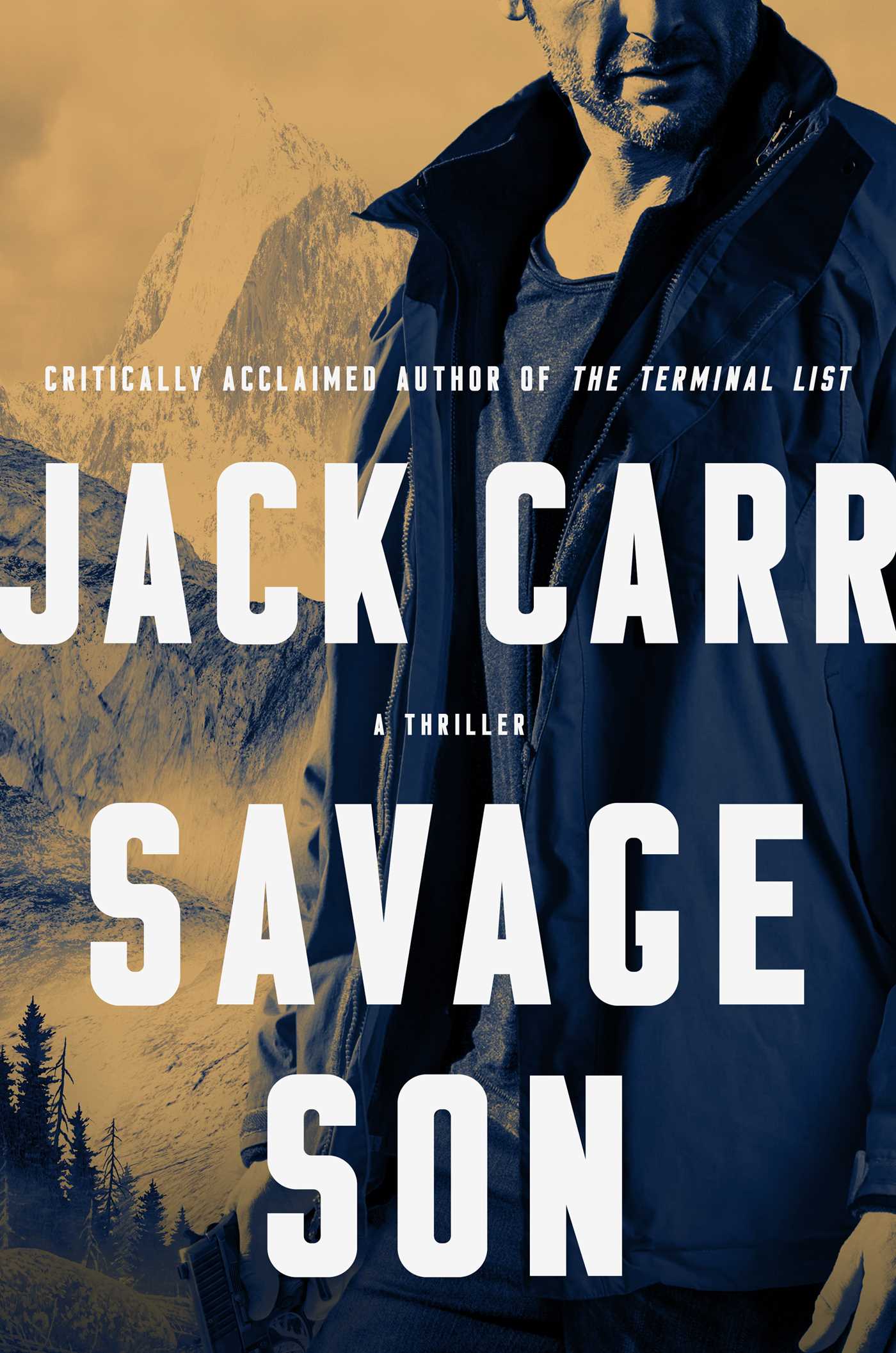
In this third high-octane thriller in the “seriously good” (Lee Child, #1 New York Times bestselling author of Past Tense) Terminal List series, former Navy SEAL James Reece must infiltrate the Russian mafia and turn the hunters into the hunted. Deep in the wilds of Siberia, a woman is on the run, pursued by a man harboring secrets—a man intent on killing her. A traitorous CIA officer has found refuge with the Russian mafia with designs on ensuring a certain former Navy SEAL sniper is put in the ground. Half a world away, James Reece is recovering from brain surgery in the Montana wilderness, slowly putting his life back together with the help of investigative journalist Katie Buranek and his longtime friend and SEAL teammate Raife Hastings. Unbeknownst to them, the Russian mafia has set their sights on Reece in a deadly game of cat and mouse. In his most visceral and heart-pounding thriller yet, Jack Carr explores the darkest instincts of humanity through the eyes of a man who has seen both the best and the worst of it.

The Immortality Key: Uncovering the Secret History of the Religion with No Name
by Brian C. Muraresku
Rating: 4.2 ⭐
• 7 recommendations ❤️
A groundbreaking, controversial dive into the role psychedelics have played in the human experience of the Divine throughout Western history, and the answer to a 2,000 year old mystery that could shake the Church to its foundations.The Immortality Key connects the lost, psychedelic sacrament of Greek religion to early Christianity—exposing the true origins of Western Civilization. In the tradition of unsolved historical mysteries like David Grann's Killers of the Flower Moon and Douglas Preston's The Lost City of the Monkey God, Brian Muraresku’s 10-year investigation takes the reader through Greece, Germany, Spain, France and Italy, offering unprecedented access to the hidden archives of the Louvre and the Vatican along the way.In The Immortality Key, Muraresku explores a little-known connection between the best-kept secret in Ancient Greece and Christianity. This is the real story of the most famous human being who ever lived (Jesus) and the biggest religion the world has ever known. Today, 2.4 billion people are Christian. That's one third of the planet. But do any of them really know how it all started?Before Jerusalem, before Rome, before Mecca—there was Eleusis: the spiritual capital of the ancient world. It promised immortality to Plato and the rest of Athens's greatest minds with a very simple formula: drink this potion, see God. Shrouded in secrecy for millennia, the Ancient Greek sacrament was buried when the newly Christianized Roman Empire obliterated Eleusis in the fourth century AD.Renegade scholars in the 1970s claimed the Greek potion was psychedelic, just like the original Christian Eucharist that replaced it. In recent years, vindication for the disgraced theory has been quietly mounting in the laboratory. The rapidly growing field of archaeological chemistry has proven the ancient use of visionary drugs. And with a single dose of psilocybin, the psycho-pharmacologists at Johns Hopkins and NYU are now turning self-proclaimed atheists into instant believers. No one has ever found hard, scientific evidence of drugs connected to Eleusis, let alone early Christianity. Until now.Armed with key documents never before translated into English, convincing analysis, and a captivating spirit of quest, Muraresku mines science, classical literature, biblical scholarship and art to deliver the hidden key to eternal life, bringing us to what clinical psychologist William Richards calls "the edge of an awesomely vast frontier."Featuring a Foreword by Graham Hancock, the New York Times bestselling author of America Before: The Key to Earth's Lost Civilization.

Industrial-Strength Denial: Eight Stories of Corporations Defending the Indefensible, from the Slave Trade to Climate Change
by Barbara Freese
Rating: 4.2 ⭐
• 2 recommendations ❤️
Corporations faced with proof that they are hurting people or the planet have a long history of denying evidence, blaming victims, complaining of witch hunts, attacking their critics’ motives, and otherwise rationalizing their harmful activities. Denial campaigns have let corporations continue dangerous practices that cause widespread suffering, death, and environmental destruction. And, by undermining social trust in science and government, corporate denial has made it harder for our democracy to function. Barbara Freese, an environmental attorney, confronted corporate denial years ago when cross-examining coal industry witnesses who were disputing the science of climate change. She set out to discover how far from reality corporate denial had led society in the past and what damage it had done. Her resulting, deeply-researched book is an epic tour through eight campaigns of denial waged by industries defending the slave trade, radium consumption, unsafe cars, leaded gasoline, ozone-destroying chemicals, tobacco, the investment products that caused the financial crisis, and the fossil fuels destabilizing our climate. Some of the denials are appalling (slave ships are festive). Some are absurd (nicotine is not addictive). Some are dangerously comforting (natural systems prevent ozone depletion). Together they reveal much about the group dynamics of delusion and deception. Industrial-Strength Denial delves into the larger social dramas surrounding these denials, including how people outside the industries fought back using evidence and the tools of democracy. It also explores what it is about the corporation itself that reliably promotes such denial, drawing on psychological research into how cognition and morality are altered by tribalism, power, conflict, anonymity, social norms, market ideology, and of course, money. Industrial-Strength Denial warns that the corporate form gives people tremendous power to inadvertently cause harm while making it especially hard for them to recognize and feel responsible for that harm.

A Hunter-Gatherer's Guide to the 21st Century: Evolution and the Challenges of Modern Life
by Heather E. Heying
Rating: 3.9 ⭐
• 2 recommendations ❤️
A bold, provocative exploration of the tension between our evolutionary history and our modern woes - and what we can do about itWe are living through the most prosperous age in all of human history, yet we are listless, divided and miserable. Wealth and comfort are unparalleled, but our political landscape is unmoored, and rates of suicide, loneliness and chronic illness continue to skyrocket. How do we explain the gap between these truths? And how should we respond?For evolutionary biologists Heather Heying and Bret Weinstein, the cause of our woes is clear: the modern world is out of sync with our ancient brains and bodies. We evolved to live in clans, but today many people don't even know their neighbours' names. Survival in our earliest societies depended on living in harmony with nature, but today the food we eat, the work we do - even the light we absorb - is radically different from what our minds and bodies evolved to expect. In this book, Heying and Weinstein draw on decades of their work teaching in college classrooms and exploring earth's most biodiverse ecosystems to confront today's pressing social ills - from widespread sleep deprivation and dangerous diets to damaging parenting styles and backward education practices. A Hunter-Gatherer's Guide to the 21st Century outlines a science-based worldview that will empower you to live a better, wiser life.

Scars and Stripes: An Unapologetically American Story of Fighting the Taliban, UFC Warriors, and Myself
by Tim Kennedy
Rating: 4.4 ⭐
• 4 recommendations ❤️
INSTANT NEW YORK TIMES BESTSELLERFrom decorated Green Beret sniper, UFC headliner, and all around badass, Tim Kennedy, a rollicking, inspirational memoir offering lessons in how to embrace failure and weather storms, in order to unlock the strongest version of yourself.Tim Kennedy has a problem; he only feels alive right before he’s about to die. Kennedy, a Green Beret, decorated Army sniper, and UFC headliner, has tackled a bull with his bare hands, jumped out of airplanes, dove to the depths of the ocean, and traveled the world hunting poachers, human traffickers, and the Taliban.But he’s also the same man who got kicked out of the police department, fire department, and as an EMT, before getting two women pregnant four days apart, and finally, been beaten up by his Special Forces colleagues for, quite simply, “being a selfish asshole.”In Scars and Stripes , Kennedy describes how these failures shaped him into the successful businessman and devoted husband and father he is today. Through unbelievably vivid, wild anecdotes Kennedy reveals all the dumb, violent, embarrassing, and undeniably heroic things he’s done in his life, including multiple combat missions in Afghanistan, building a school in Texas for elementary kids, and creating two-multimillion-dollar businesses. You will learn that failure isn’t the end—rather it’s the first step towards unearthing the best version of yourself and finding success, no matter how overwhelming the setbacks may feel.