
Jocko Willink Recommended Books
American author
93 Books Recommended

The Rape of Nanking: The Forgotten Holocaust of World War II
by Iris Chang
Rating: 4.4 ⭐
• 4 recommendations ❤️
The New York Times bestselling account of one of history's most brutal—and forgotten—massacres, when the Japanese army destroyed China's capital city on the eve of World War II, "piecing together the abundant eyewitness reports into an undeniable tapestry of horror". (Adam Hochschild, Salon)In December 1937, one of the most horrific atrocities in the long annals of wartime barbarity occurred. The Japanese army swept into the ancient city of Nanking (what was then the capital of China), and within weeks, more than 300,000 Chinese civilians and soldiers were systematically raped, tortured, and murdered. In this seminal work, Iris Chang, whose own grandparents barely escaped the massacre, tells this history from three that of the Japanese soldiers, that of the Chinese, and that of a group of Westerners who refused to abandon the city and created a safety zone, which saved almost 300,000 Chinese.Drawing on extensive interviews with survivors and documents brought to light for the first time, Iris Chang's classic book is the definitive history of this horrifying episode.

Robert Timberg weaves together the lives of Annapolis graduates John McCain, James Webb, Oliver North, Robert McFarlane, and John Poindexter to reveal how the Vietnam War continues to haunt America. Casting all five men as metaphors for a legion of well-meaning if ill-starred warriors, Timberg probes the fault line between those who fought the war and those who used money, wit, and connections to avoid battle. A riveting tale that illuminates the flip side of the fabled Vietnam generation -- those who went.

“The best damned book from the point of view of the infantrymen who fought there.”― Army Times Among the best books ever written about men in combat, The Killing Zone tells the story of the platoon of Delta One-six, capturing what it meant to face lethal danger, to follow orders, and to search for the conviction and then the hope that this war was worth the sacrifice. The book includes a new chapter on what happened to the platoon members when they came home.

Fortunate Son: The Healing of a Vietnam Vet
by Lewis B. Puller Jr.
Rating: 4.2 ⭐
• 2 recommendations ❤️
Winner of the Pulitzer Prize, Lewis B. Puller, Jr.'s memoir is a moving story of a man born into a proud military legacy who struggles to rebuild his world after the Vietnam War has shattered his body and his ideals. Raised in the shadow of his father, Marine General Lewis B. "Chesty" Puller, a hero of five wars, young Lewis went to Southeast Asia at the height of the Vietnam War and served with distinction as an officer in his father's beloved Corps. But when he tripped a booby-trapped howitzer round, triggering an explosion that would cost him his legs, his career as a soldier ended, and the battle to reclaim his life began.

Company Commander: The Classic Infantry Memoir of World War II
by Charles B. MacDonald
Rating: 4.2 ⭐
• 2 recommendations ❤️
As a newly commisioned Captain of a veteran Army regiment, MacDonald's first combat was war at its most hellish--the Battle of the Bulge. In this plain-spoken but eloquent narrative, we live each minute at MacDonald's side, sharing in all of combat's misery, terror, and drama. How this green commander gains his men's loyalty in the snows of war-torn Europe is one of the great, true, unforgettable war stories of all time.

During the spring of 1994, in a tiny country called Rwanda, some 800,000 people were hacked to death, one by one, by their neighbors in a gruesome civil war. Several years later, journalist Jean Hatzfeld traveled to Rwanda to interview ten participants in the killings, eliciting extraordinary testimony from these men about the genocide they perpetrated. As Susan Sontag wrote in the preface, Machete Season is a document that "everyone should read . . . [because making] the effort to understand what happened in Rwanda . . . is part of being a moral adult."

From commanding the Horse Marines in Peking to leading the Inchon landing, Puller became a legend in his own time. Now, Davis offers a no-holds-barred biography of this courageous hero--the only marine in history ever to win five Navy Crosses.

The memoir widely viewed as the best account ever written of fighting in WW1A memoir of astonishing power, savagery, and ashen lyricism, Storm of Steel illuminates not only the horrors but also the fascination of total war, seen through the eyes of an ordinary German soldier. Young, tough, patriotic, but also disturbingly self-aware, Jünger exulted in the Great War, which he saw not just as a great national conflict but—more importantly—as a unique personal struggle. Leading raiding parties, defending trenches against murderous British incursions, simply enduring as shells tore his comrades apart, Jünger kept testing himself, braced for the death that will mark his failure. Published shortly after the war’s end, Storm of Steel was a worldwide bestseller and can now be rediscovered through Michael Hofmann’s brilliant new translation.For more than sixty-five years, Penguin has been the leading publisher of classic literature in the English-speaking world. With more than 1,500 titles, Penguin Classics represents a global bookshelf of the best works throughout history and across genres and disciplines. Readers trust the series to provide authoritative texts enhanced by introductions and notes by distinguished scholars and contemporary authors, as well as up-to-date translations by award-winning translators.

About Face: The Odyssey Of An American Warrior
by David H. Hackworth
Rating: 4.5 ⭐
• 2 recommendations ❤️
Called “everything a twentieth century war memoir could possibly be” by The New York Times, this national bestseller by Colonel David H. Hackworth presents a vivid and powerful portrait of a life of patriotism.From age fifteen to forty David Hackworth devoted himself to the US Army and fast became a living legend. In 1971, however, he appeared on television to decry the doomed war effort in Vietnam. With About Face, he has written what many Vietnam veterans have called the most important book of their generation.From Korea to Berlin, from the Cuban missile crisis to Vietnam, Hackworth’s story is that of an exemplary patriot, played out against the backdrop of the changing fortunes of America and the American military. It is also a stunning indictment of the Pentagon’s fundamental misunderstanding of the Vietnam conflict and of the bureaucracy of self-interest that fueled the war.

Steel My Soldiers' Hearts: The Hopeless to Hardcore Transformation of U.S. Army, 4th Battalion, 39th Infantry, Vietnam
by David H. Hackworth
Rating: 4.3 ⭐
• 2 recommendations ❤️
In January 1969, one of the most promising young lieutenant colonels the US Army had ever seen touched down in Vietnam for his second tour of duty, which would turn out to be his most daring and legendary.David H. Hackworth had just completed the writing of a tactical handbook for the Pentagon, and now he had been ordered to put his counterguerilla-fighting theories into action. He was given the morale-drained 4/39th—a battalion of poorly led draftees suffering the Army's highest casualty rate and considered its worst fighting battalion. Hackworth's hard-nosed, inventive and inspired leadership quickly turned the 4/39th into Vietnam's valiant and ferocious Hardcore Recondos.Drawing on interviews with soldiers from the Hardcore Battalion conducted over the past decade by his partner and coauthor, Eilhys England, Hackworth takes readers along on their sniper missions, ambush actions, helicopter strikes and inside the quagmire of command politics. With Steel My Soldiers' Hearts, Hackworth places the brotherhood of the 4/39th into the pantheon of our nation's most heroic warriors.

Europe was in the throes of World War II, and when America joined the fighting, Ernie Pyle went along. Long before television beamed daily images of combat into our living rooms, Pyle’s on-the-spot reporting gave the American public a firsthand view of what war was like for the boys on the front. Pyle followed the soldiers into the trenches, battlefields, field hospitals, and beleaguered cities of Europe. What he witnessed he described with a clarity, sympathy, and grit that gave the public back home an immediate sense of the foot soldier’s experience. There were really two wars, John Steinbeck wrote in Time one of maps and logistics, campaigns, ballistics, divisions, and regiments and the other a "war of the homesick, weary, funny, violent, common men who wash their socks in their helmets, complain about the food, whistle at Arab girls, or any girls for that matter, and bring themselves through as dirty a business as the world has ever seen and do it with humor and dignity and courage—and that is Ernie Pyle’s war." This collection of Pyle’s columns detailing the fighting in Europe in 1943–44 brings that war—and the living, and dying, moments of history—home to us once again.

For eight years, far beyond the battlefields of Vietnam and the glare of media distortions, American Green Berets fought a deadly secret war in Laos and Cambodia under the aegis of the top secret Military Assistance Command Vietnam – Studies and Observations Group, or SOG.Go deep into the jungle with five SOG warriors surrounded by 10,000 enemy troops as they stack up the dead to build a human buttress for protection. Witness a Green Beret, shot in the back four times and left for dead, who survives to fight savagely against incredible odds to complete his missions. Shudder as an enemy soldier touches a Green Beret’s boot in the dark of night. Cringe as a Sergeant on SOG Spike Team Louisiana calls in an air strike on his team to break an enemy’s wave attack. A team member dies instantly, and a Green Beret has an out-of-body experience as he watches his leg get blown off. “As the commander of SOG, I can say that “Across the Fence” accurately reflects why the secret war was hazardous for our troops and so deadly for the enemy. – Major General John K. Singlaub (U. S. Army Ret.)Black Ops told with the terrifying clarity that only one who was there can tell it.– W.E.B. Griffin & William E. Butterworth IV

The classic samurai novel about the real exploits of the most famous swordsman. Miyamoto Musashi was the child of an era when Japan was emerging from decades of civil strife. Lured to the great Battle of Sekigahara in 1600 by the hope of becoming a samurai-without really knowing what it meant-he regains consciousness after the battle to find himself lying defeated, dazed and wounded among thousands of the dead and dying. On his way home, he commits a rash act, becomes a fugitive and brings life in his own village to a standstill-until he is captured by a weaponless Zen monk. The lovely Otsu, seeing in Musashi her ideal of manliness, frees him from his tortuous punishment, but he is recaptured and imprisoned. During three years of solitary confinement, he delves into the classics of Japan and China. When he is set free again, he rejects the position of samurai and for the next several years pursues his goal relentlessly, looking neither to left nor to right. Ever so slowly it dawns on him that following the Way of the Sword is not simply a matter of finding a target for his brute strength. Continually striving to perfect his technique, which leads him to a unique style of fighting with two swords simultaneously, he travels far and wide, challenging fighters of many disciplines, taking nature to be his ultimate and severest teacher and undergoing the rigorous training of those who follow the Way. He is supremely successful in his encounters, but in the Art of War he perceives the way of peaceful and prosperous governance and disciplines himself to be a real human being. He becomes a reluctant hero to a host of people whose lives he has touched and been touched by. And, inevitably, he has to pit his skill against the naked blade of his greatest rival.
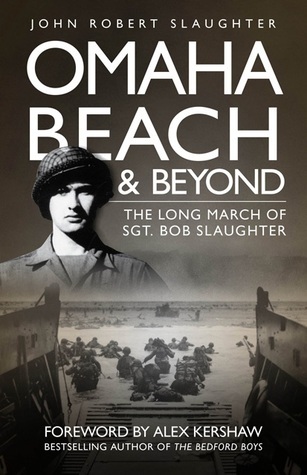
Omaha Beach and Beyond: The Long March of Sergeant Bob Slaughter
by John Robert Slaughter
Rating: 4.3 ⭐
• 2 recommendations ❤️
"Slaughter vividly conveys the reality of combat during World War II in his book with sweeping passages that literally place his reader on the battlefield beside him." Belvoir EagleBefore D-Day, regular army soldiers called the National Guardsmen of Virginia's 116th Infantry Regiment "Home Nannies" and "Weekend Warriors" and worse. On June 6, 1944, on Omaha Beach, however, these proud Virginians who carried the legacy of the famed Stonewall Brigade showed the regular army and the world what true valor really was. In this moving World War II memoir, the author captures the life of GI Joe from pre-Pearl Harbor days through training, deployment overseas, and more training. All leads up to D-Day and Normandy on June 6, 1944, when Sergeant Bob Slaughter came across Omaha Beach with Company D of the 116th Infantry and the Bedford Boys.

'I'm No Hero' is the story of Charlie Plumb, but it is also the story of all POWs who faced an isolated world of degradation, loneliness, tedium, hunger, and pain.It is no pretty story. It tells of the torture room with walls built to muffle human screams, of the 'rope trick' and 'fanbelt' techniques designed to make a man talk, of illness, of insanity. But it also tells of the ingenuity and creativity which allowed the men to outsmart their guards and to set up communication systems, classes, escape plans, and to maintain their chain of command.It is a revealing story. It pictures men who are reduced to the basics physically, mentally, emotionally, and spiritually. It shows how these situations can be survived with individual integrity and pride intact.It tells of growing relationships with God which came as a result of desperate need. It outlines a closed society's methods of developing rules which allow members to live together in harmony.It is a story of hope, for it suggests that the techniques used by POWs to survive their conditions can be used by others to overcome similar situations faced in day-to-day living.
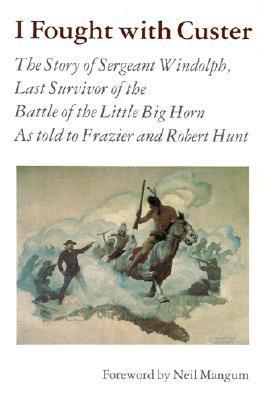
I Fought with Custer: The Story of Sergeant Windolph, last survivor of the Battle of the Little Big Horn
by Charles Windolph
Rating: 3.9 ⭐
• 2 recommendations ❤️
Sergeant Charles Windolph was the last white survivor of the Battle of the Little Big Horn when he described it nearly seventy years later. A six-year veteran of the Seventh Cavalry, Windolph fought in Benteen’s troop on that fatal Sunday and recalls in vivid detail the battle that wiped out Custer’s command. Equally vivid is the evidence marshaled by Frazier and Robert Hunt on events leading up to the battle and on the investigation that followed.

Uncovering the secrets behind the 1968 My Lai massacre in Vietnam, this is “a brutal, cautionary tale that serves as a painful reminder of the worst that can happen in war.”—Chicago Tribune.

Beyond Band of Brothers: The War Memoirs of Major Dick Winters
by Dick Winters
Rating: 4.4 ⭐
• 2 recommendations ❤️
“Tells the tales left untold by Stephen Ambrose, whose Band of Brothers was the inspiration for the HBO miniseries...laced with Winters’s soldierly exaltations of pride in his comrades’ bravery.”— Publishers WeeklyLook for the Band of Brothers miniseries, now available to stream on Netflix! They were called Easy Company—but their mission was never easy. Immortalized as the Band of Brothers, they suffered 150% casualties while liberating Europe—an unparalleled record of bravery under fire. Winner of the Distinguished Service Cross, Dick Winters was their legendary commander. This is his story—told in his own words for the first time. On D-Day, Winters assumed leadership of the Band of Brothers when its commander was killed and led them through the Battle of the Bulge and into Germany—by which time each member had been wounded. Based on Winters’s wartime diary, Beyond Band of Brothers also includes his comrades’ untold stories. Virtually none of this material appeared in Stephen Ambrose’s Band of Brothers . Neither a protest against nor a glamorization of war, this is a moving memoir by the man who earned the love and respect of the men of Easy Company—and who is a hero to new generations worldwide. Includes photos
Why have people from different cultures and eras formulated myths and stories with similar structures? What does this similarity tell us about the mind, morality, and structure of the world itself? Jordan Peterson offers a provocative new hypothesis that explores the connection between what modern neuropsychology tells us about the brain and what rituals, myths, and religious stories have long narrated. A cutting-edge work that brings together neuropsychology, cognitive science, and Freudian and Jungian approaches to mythology and narrative, Maps of Meaning presents a rich theory that makes the wisdom and meaning of myth accessible to the critical modern mind.
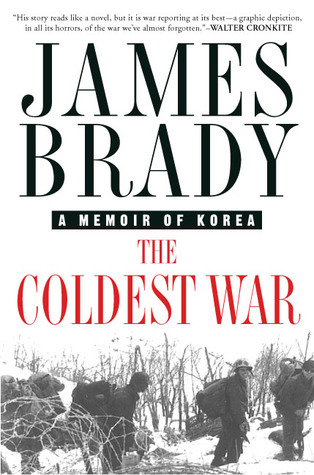
James Brady's The Coldest War is a powerful and moving memoir of the Korean War.America's "forgotten war" lasted just thirty-seven months, yet 54,246 Americans died in that time -- nearly as many as died in ten years in Vietnam. On the fiftieth anniversary of this devastating conflict, James Brady tells the story of his life as a young marine lieutenant in Korea.In 1947, seeking to avoid the draft, nineteen-year-old Jim Brady volunteered for a Marine Corps program that made him a lieutenant in the reserves on the day he graduated college. He didn't plan to find himself in command of a rifle platoon three years later facing a real enemy, but that is exactly what happened after the Chinese turned a so-called police action into a war.The Coldest War vividly describes Brady's rapid education in the realities of war and the pressures of command. Opportunities for bold offensives sink in the miasma of trench warfare; death comes in fits and starts as too-accurate artillery on both sides seeks out men in their bunkers; constant alertness is crucial for survival, while brutal cold and a seductive silence conspire to lull soldiers into an often fatal stupor.The Korean War affected the lives of all Americans, yet is little known beyond the antics of "M*A*S*H." Here is the inside story that deserves to be told, and James Brady is a powerful witness to a vital chapter of our history.

Maurice's Strategikon: Handbook of Byzantine Military Strategy
by Maurice
Rating: 4.4 ⭐
• 2 recommendations ❤️
As a veteran campaigner, the Byzantine emperor Maurice (582-602) compiled a unique and influential handbook intended for the field commander. In this first complete English translation, the Strategikon is an invaluable source not only for early Byzantine history but for the general history of the art of war. Describing in detail weaponry and armor, daily life on the march or in camp, clothing, food, medical care, military law, and titles of the Byzantine army of the seventh century, the Strategikon offers insights into the Byzantine military ethos. In language contemporary, down-to-earth, and practical, the text also provides important data for the historian, and even the ethnologist, including eyewitness accounts of the Persians, Slavs, Lombards, and Avars at the frontier of the Empire.

Ordinary Men: Reserve Police Battalion 101 and the Final Solution in Poland
by Christopher R. Browning
Rating: 4.1 ⭐
• 4 recommendations ❤️
Christopher R. Browning’s shocking account of how a unit of average middle-aged Germans became the cold-blooded murderers of tens of thousands of Jews—now with a new afterword and additional photographs. Ordinary Men is the true story of Reserve Police Battalion 101 of the German Order Police, which was responsible for mass shootings as well as round-ups of Jewish people for deportation to Nazi death camps in Poland in 1942. Browning argues that most of the men of RPB 101 were not fanatical Nazis but, rather, ordinary middle-aged, working-class men who committed these atrocities out of a mixture of motives, including the group dynamics of conformity, deference to authority, role adaptation, and the altering of moral norms to justify their actions. Very quickly three groups emerged within the battalion: a core of eager killers, a plurality who carried out their duties reliably but without initiative, and a small minority who evaded participation in the acts of killing without diminishing the murderous efficiency of the battalion whatsoever.While this book discusses a specific Reserve Unit during WWII, the general argument Browning makes is that most people succumb to the pressures of a group setting and commit actions they would never do of their own volition. Ordinary Men is a powerful, chilling, and important work, with themes and arguments that continue to resonate today.


"Eugene Sledge became more than a legend with his memoir, With The Old Breed. He became a chronicler, a historian, a storyteller who turns the extremes of the war in the Pacific--the terror, the camaraderie, the banal and the extraordinary--into terms we mortals can grasp."--Tom HanksNEW YORK TIMES BESTSELLERIn The Wall Street Journal, Victor Davis Hanson named With the Old Breed one of the top five books on epic twentieth-century battles. Studs Terkel interviewed the author for his definitive oral history, The Good War. Now E. B. Sledge's acclaimed first-person account of fighting at Peleliu and Okinawa returns to thrill, edify, and inspire a new generation.An Alabama boy steeped in American history and enamored of such heroes as George Washington and Daniel Boone, Eugene B. Sledge became part of the war's famous 1st Marine Division--3rd Battalion, 5th Marines. Even after intense training, he was shocked to be thrown into the battle of Peleliu, where "the world was a nightmare of flashes, explosions, and snapping bullets." By the time Sledge hit the hell of Okinawa, he was a combat vet, still filled with fear but no longer with panic.Based on notes Sledge secretly kept in a copy of the New Testament, With the Old Breed captures with utter simplicity and searing honesty the experience of a soldier in the fierce Pacific Theater. Here is what saved, threatened, and changed his life. Here, too, is the story of how he learned to hate and kill--and came to love--his fellow man."In all the literature on the Second World War, there is not a more honest, realistic or moving memoir than Eugene Sledge's. This is the real deal, the real war: unvarnished, brutal, without a shred of sentimentality or false patriotism, a profound primer on what it actually was like to be in that war. It is a classic that will outlive all the armchair generals' safe accounts of--not the 'good war'--but the worst war ever."--Ken Burns
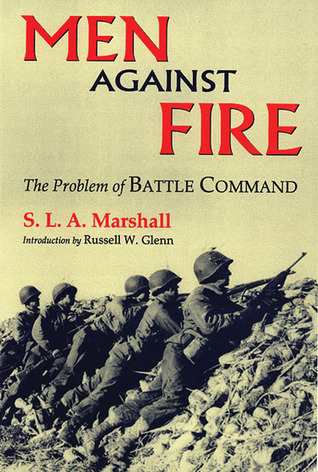
Men Against Fire: The Problem of Battle Command
by S.L.A. Marshall
Rating: 3.9 ⭐
• 2 recommendations ❤️
S.L.A. "Slam" Marshall was a veteran of World War I and a combat historian during World War II. He startled the military and civilian world in 1947 by announcing that, in an average infantry company, no more than one in four soldiers actually fired their weapons while in contact with the enemy. His contention was based on interviews he conducted immediately after combat in both the European and Pacific theaters of World War II.To remedy the gunfire imbalance he proposed changes to infantry training designed to ensure that American soldiers in future wars brought more fire upon the enemy. His studies during the Korean War showed that the ratio of fire and more than doubled since World War II.

Colder Than Hell: A Marine Rifle Company at Chosin Reservoir
by Joseph R. Owen
Rating: 4.3 ⭐
• 2 recommendations ❤️
"A MUST READ . . . This book [is] one of the best on that war in Korea. . . . A wonderful account of common, decent men in desperate action."--LeatherneckDuring the early, uncertain days of the Korean War, World War II veteran and company lieutenant Joe Owen saw firsthand how the hastily assembled mix of some two hundred regulars and raw reservists hardened into a superb Marine rifle company known as Baker-One-Seven.As comrades fell wounded and dead around them on the frozen slopes above Korea's infamous Chosin Reservoir, Baker-One-Seven's Marines triumphed against the relentless human-wave assaults of Chinese regulars and took part in the breakout that destroyed six to eight divisions of Chinese regulars. COLDER THAN HELL paints a vivid, frightening portrait of one of the most horrific infantry battles ever waged."Thoroughly gripping . . . The Chosin action is justly called epical; Lieutenant Owen tells the tale of the men who made it so."--Booklist

A detailed memoir and self-analysis by a mass murderer. Panzram was born in 1891 on a Minnesota farm and died in 1930 on the gallows at the U.S.Penitentiary, Fort Leavenworth, Kansas. Imprisoned for most of his life from the age of twelve and brutally punished, Panzram's keen insight into the arbitrary cruelty of his fellow human being is graphically illustrated with a litany of prison abuses, as well as the details of his own sordid, tragic life. Panzram arrives as a gripping warning from America's past to new prison-industrial complex era. The authors add an historical and sociological framework for Panzram's words.

Originally published in 1958, this classic of modern military history tells the exciting true story of the fall of St. LO, the first major objective of the invading American armies in Normandy in June of 1944. Although St. LO was intended to be taken within days of the landing, stubborn German resistance postponed the town's fall until July 18. The author describes the bloody action that took place in the thirty days in between as he led his battalion dubbed "The Indestructible Clay Pigeons" through the daunting combat.

The book is written in the context of China's guerrilla war against Japanese occupiers; this conflict is mentioned often by Mao. In this book Mao discusses the differences between guerrilla and "orthodox" military forces, as well as how such forces can work together for a common goal. Other topics covered include propaganda and political concerns, the formation of guerrilla units, the qualities of a good guerrilla officer, discipline in a guerrilla army, and guerrilla bases. English (translation) Original Chinese

Mind Over Muscle: Writings from the Founder of Judo
by Jigoro Kano
Rating: 4.6 ⭐
• 2 recommendations ❤️
In 1882 Jigoro Kano (1860-1938) founded Kodokan Judo at Eishoji Temple in Tokyo. It was the culmination of a lifelong devotion to the jujutsu of the past, which he reorganized while taking great care to retain its classical traditions. Historically, martial arts were practiced only by the elite in Japan. Kano, a renowned educator as well as a sportsman, is credited with popularizing the martial arts, and in particular, judo, among people in all levels of society.When he was young, Kano studied jujutsu, a martial art practiced in Japan since feudal times, which involved throwing, hitting, kicking, stabbing, slashing, choking, bending and twisting limbs—and defenses against these attacks. After years of studying, he realized that although many different jujutsu techniques were taught, there was no one core value holding them together. Kano identified an all-pervasive principle—to make the most efficient use of mental and physical energy—and combined only those techniques in which this principle was correctly applied into modern judo. "Ju" means gentleness or giving way. "Do" means principle or the way. Judo, therefore is the Way of Gentleness, which implies that first giving way leads to ultimate victory. The Kodokan is literally, "the school for studying the Way."This book is a collection of Kano’s essential teachings, selected and compiled from his wealth of writings and lectures spanning a period of fifty-one years. Today the International Judo Federation has 187 member countries and regions. As an official sport of the Olympic Games, judo has inspired young people of all nationalities, and Kodokan is universally recognized as the Mecca of Judo.

Blood Meridian: Or the Evening Redness in the West
by Cormac McCarthy
Rating: 4.2 ⭐
• 6 recommendations ❤️
Blood Meridian is an epic novel of the violence and depravity that attended America's westward expansion, brilliantly subverting the conventions of the Western novel and the mythology of the Wild West. Based on historical events that took place on the Texas-Mexico border in the 1850s, it traces the fortunes of the Kid, a fourteen-year-old Tennesseean who stumbles into a nightmarish world where Indians are being murdered and the market for their scalps is thriving.

Platoon Leader: A Memoir of Command in Combat
by James R. McDonough
Rating: 4.2 ⭐
• 2 recommendations ❤️
A remarkable memoir of small-unit leadership and the coming of age of a young soldier in combat in Vietnam.'"Using a lean style and a sense of pacing drawn from the tautest of novels, McDonough has produced a gripping account of his first command, a U.S. platoon taking part in the 'strategic hamlet' program. . . . Rather than present a potpourri of combat yarns. . . McDonough has focused a seasoned storyteller’s eye on the details, people, and incidents that best communicate a visceral feel of command under fire. . . . For the author’s honesty and literary craftsmanship, Platoon Leader seems destined to be read for a long time by second lieutenants trying to prepare for the future, veterans trying to remember the past, and civilians trying to understand what the profession of arms is all about.”– Army Times

Helmet for My Pillow: From Parris Island to the Pacific
by Robert Leckie
Rating: 4.2 ⭐
• 2 recommendations ❤️
Here is one of the most riveting first-person accounts ever to come out of World War II. Robert Leckie enlisted in the United States Marine Corps in January 1942, shortly after the Japanese attack on Pearl Harbor. In Helmet for My Pillow we follow his odyssey, from basic training on Parris Island, South Carolina, all the way to the raging battles in the Pacific, where some of the war’s fiercest fighting took place. Recounting his service with the 1st Marine Division and the brutal action on Guadalcanal, New Britain, and Peleliu, Leckie spares no detail of the horrors and sacrifices of war, painting an unvarnished portrait of how real warriors are made, fight, and often die in the defense of their country. From the live-for-today rowdiness of marines on leave to the terrors of jungle warfare against an enemy determined to fight to the last man, Leckie describes what war is really like when victory can only be measured inch by bloody inch. Woven throughout are Leckie’s hard-won, eloquent, and thoroughly unsentimental meditations on the meaning of war and why we fight. Unparalleled in its immediacy and accuracy, Helmet for My Pillow will leave no reader untouched. This is a book that brings you as close to the mud, the blood, and the experience of war as it is safe to come.Now producers Tom Hanks, Steven Spielberg, and Gary Goetzman, the men behind Band of Brothers, have adapted material from Helmet for My Pillow for HBO’s epic miniseries The Pacific, which will thrill and edify a whole new generation.

Excursion to Hell: Mount Longdon : A Universal Story of Battle
by Vincent Bramley
Rating: 4.4 ⭐
• 2 recommendations ❤️
Excellent Book

Miyamoto Musashi's Go Rin no Sho or the book of five rings, is considered a classic treatise on military strategy, much like Sun Tzu's The Art of War and Chanakya's Arthashastra. The five "books" refer to the idea that there are different elements of battle, just as there are different physical elements in life, as described by Buddhism, Shinto, and other Eastern religions. Through the book Musashi defends his thesis: a man who conquers himself is ready to take it on on the world, should need arise.

De Re Militari (Concerning Military Affairs): the Classic Treatise on Warfare at the Pinnacle of the Roman Empire's Power
by Vegetius
Rating: 4.0 ⭐
• 2 recommendations ❤️
A classic of the ancient world of warfare De Re Militari (Concerning Military Affairs), written in the 5th century by Vegetius and translated from the original Latin, is a treatise on warfare in the Roman world and is vital reading for any modern student of the subject as it clearly outlines the methods and practices of the type of warfare waged by the Roman Empire at the height of its power. So influential was Vegetius' book that it was considered as an essential field-guide well into the age of gunpowder. The author covers a broad range of military topics including the selection of personnel suitable for military service, training, logistics and supply, the qualities of leadership and command as well as tactical and strategic matters. Leonaur editions are newly typeset and are not facsimiles; each title is available in softcover and hardback with dustjacket; our hardbacks are cloth bound and feature gold foil lettering on their spines and fabric head and tail bands.

This scarce antiquarian book is a facsimile reprint of the original. Due to its age, it may contain imperfections such as marks, notations, marginalia and flawed pages. Because we believe this work is culturally important, we have made it available as part of our commitment for protecting, preserving, and promoting the world's literature in affordable, high quality, modern editions that are true to the original work.


Originally published in 1978, Webb's classic novel of the Vietnam War follows three soldiers from different worlds who are plunged into a white-hot murderous realm of jungle warfare as it was fought by one Marine platoon in the An Hoa Basin in 1969.'They each had their reasons for being a soldier. They each had their illusions. Goodrich came from Harvard. Snake got the tattoo — Death Before Dishonor — before he got the uniform. And Hodges was haunted by the ghosts of family heroes.They had no way of knowing what awaited them. Nothing could have prepared them for the madness to come. And in the heat and horror of battle they took on new identities, took on each other, and were each reborn in fields of fire....Fields of Fire is James Webb’s classic, searing novel of the Vietnam War, a novel of poetic power, razor-sharp observation, and agonizing human truths seen through the prism of nonstop combat. Weaving together a cast of vivid characters, Fields of Fire captures the journey of unformed men through a man-made hell — until each man finds his fate.'
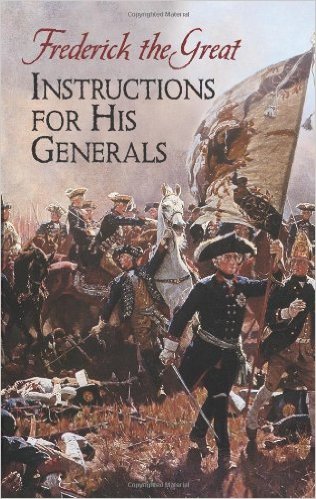
The king of Prussia from 1740 to 1786, Frederick the Great ranks among eighteenth-century Europe's most enlightened rulers. In addition to abolishing serfdom in his domains and promoting religious tolerance, he was an ardent patron of the arts and an accomplished musician. "Diplomacy without arms," he observed, "is like music without instruments." Frederick's expertise at military matters is reflected in his successful defense of his territory during the Seven Years' War, in which he fought all the great powers of Europe. His brilliant theories on strategy, tactics, and discipline are all explained in this vital text."War is not an affair of chance," Frederick asserted, adding that "a great deal of knowledge, study, and meditation is necessary to conduct it well." In this book, he presents the fundamentals of warfare, discussing such timeless considerations as leadership qualities, the value of surprise, and ways to conquer an enemy who possesses superior forces. The soundness of his advice was endorsed by Napoleon himself, who once advised, "Read and re-read the campaigns of Alexander, Hannibal, Caesar . . . and Frederick. This is the only way to become a great captain and to master the secrets of the art of war."

In the fall of 1944, Allied commanders planned to land airborne divisions in an attempt to capture a series of bridges behind German lines, including the "bridge too far" at Arnhem. Geoffrey Powell, himself a veteran of the Arnhem operation, drew on conversations with many other survivors of the battle to write one of the most dramatic of all accounts of the battleWhen the book was first published in 1976 under a pseudonym, it was at once recognized as one of the finest evocations of an infantryman's war ever written.

One Soldier’s War is a visceral and unflinching memoir of a young Russian soldier’s experience in the Chechen wars that brilliantly captures the fear, drudgery, chaos, and brutality of modern combat. An excerpt of the book was hailed by Tibor Fisher in the Guardian as “right up there with Catch-22 and Michael Herr’s Dispatches,” and the book won Russia’s inaugural Debut Prize, which recognizes authors who write “despite, not because of, their life circumstances.” In 1995, Arkady Babchenko was an eighteen-year-old law student in Moscow when he was drafted into the Russian army and sent to Chechnya. It was the beginning of a torturous journey from naïve conscript to hardened soldier that took Babchenko from the front lines of the first Chechen War in 1995 to the second in 1999. He fought in major cities and tiny hamlets, from the bombed-out streets of Grozny to anonymous mountain villages. Babchenko takes the raw and mundane realities of war—the constant cold, hunger, exhaustion, filth, and terror—and twists it into compelling, haunting, and eerily elegant prose. Acclaimed by reviewers around the world, this is a devastating first-person account of war by an extraordinary storyteller.
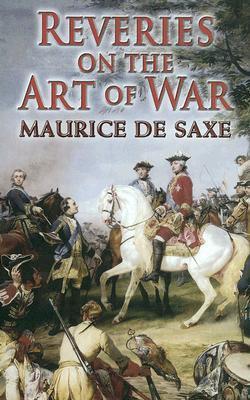
At the age of twelve, Dresden-born Maurice de Saxe (1696–1750) entered the Saxon army, beginning a long and successful military career that culminated in his promotion to Marshal of France, where he retained full command of the main army in Flanders directly under Louis XV. Again and again, de Saxe achieved enormous victories over his enemies, becoming one of the greatest military leaders of the eighteenth century. Combining his memoirs and general observations with brilliant military thinking, Reveries on the Art of War was written in a mere thirteen days. Introducing revolutionary approaches to battles and campaigning at a time of changing military tactics and leadership styles, it stands as a classic of early modern military theory.De Saxe's Reveries offered numerous procedural innovations for raising and training troops. His descriptions for establishing field camps were soon standard procedure. His ideas advanced weapon technology, including the invention of a gun specially designed for infantrymen and the acceptance of breech-loading muskets and cannons. De Saxe heightened existing battle formations by introducing a specific attack column that required less training, and he rediscovered a military practice lost since the ancient Romans — the art of marching in cadence. He even delved into the minds and emotions of soldiers on the battlefield, obtaining a deeper understanding of their daily motivations.Written by a military officer of great acumen, Reveries on the Art of War has deeply impacted modern military tactics. Enduringly relevant, this landmark work belongs in the library of anyone interested in the history, tactics, and weapons of European warfare.

Twenty-Five Hundred years ago, Sun Tzu wrote this classic book of military strategy based on Chinese warfare and military thought. Since that time, all levels of military have used the teaching on Sun Tzu to warfare and civilization have adapted these teachings for use in politics, business and everyday life. The Art of War is a book which should be used to gain advantage of opponents in the boardroom and battlefield alike.

Battle Studies: Ancient and Modern Battle
by Charles Jean Jacques Joseph Ardant du Picq
Rating: 3.5 ⭐
• 2 recommendations ❤️
BATTLE STUDIES: ANCIENT AND MODERN BATTLE By Colonel Ardant du Picq Excerpt from Preface In presenting to the American reading public a translation of a volume written by an obscure French colonel, belonging to a defeated army, who fell on the eve of a battle which not alone gave France over to the enemy but disclosed a leadership so inapt as to awaken the suspicion of treason, one is faced by the inevitable interrogation - "Why?" Yet the answer is simple. The value of the book of Ardant du Picq lies precisely in the fact that it contains not alone the unmistakable forecast of the defeat, itself, but a luminous statement of those fundamental principles, the neglect of which led to Gravelotte and Sedan. Napoleon has said that in war the moral element is to all others as three is to one. Moreover, as du Picq impressively demonstrates, while all other circumstances change with time, the human element remains the same, capable of just so much endurance, sacrifice, effort, and no more. Thus, from Caesar to Foch, the essential factor in war endures unmodified. . . Contents Frontispiece - Portrait of Colonel Ardant du Picq Foreword Preface Translator's Note Introduction A Military Thinker Record of Military Service of Colonel Ardant du Picq Extract from the History of the 10th Infantry Regiment PART ONE: ANCIENT BATTLE Introduction I. Man in Primitive and Ancient Combat II. Knowledge of Man Made Roman Tactics; the Successes of Hannibal; Those of Caesar III. Analysis of the Battle of Cannae IV. Analysis of the Battle of Pharsalus and Some Characteristic Examples V. Morale in Ancient Battle VI. How Real Combatants Are Obtained and How the Fighting of To-Day Requires Them to Be More Dependable Than in Ancient Battle VII. Purpose of This Study and What Is Necessary to Complete It PART TWO: MODERN BATTLE I. General Discussion 1. Ancient and Modern Battle 2. Moral Elements in Battle 3. Material and Moral Effect 4. The Theory of Strong Battalions 5. Combat Methods II. Infantry 1. Masses - Deep Columns 2. Skirmishers - Supports - Reserves - Squares 3. Firing 4. Marches - Camps - Night Attacks III. Cavalry 1. Cavalry and Modern Appliances 2. Cavalry Against Cavalry 3. Cavalry Against Infantry 4. Armor and Armament IV. Artillery V. Command, General Staff and Administration VI. Social and Military Institutions; National Characteristics ------------------------------------------------------------------------------------------------------------------------------------------ Windham Press is committed to bringing the lost cultural heritage of ages past into the 21st century through high-quality reproductions of original, classic printed works at affordable prices. This book has been carefully crafted to utilize the original images of antique books rather than error-prone OCR text. This also preserves the work of the original typesetters of these classics, unknown craftsmen who laid out the text, often by hand, of each and every page you will read. Their subtle art involving judgment and interaction with the text is in many ways superior and more human than the mechanical methods utilized today, and gave each book a unique, hand-crafted feel in its text that connected the reader organically to the art of bindery and book-making. We think these benefits are worth the occasional imperfection resulting from the age of these books at the time of scanning, and their vintage feel provides a connection to the past that goes beyond the mere words of the text.

The searing, post-apocalyptic novel about a father and son’s fight to survive.A father and his son walk alone through burned America. Nothing moves in the ravaged landscape save the ash on the wind. It is cold enough to crack stones, and when the snow falls it is gray. The sky is dark. Their destination is the coast, although they don’t know what, if anything, awaits them there. They have nothing; just a pistol to defend themselves against the lawless bands that stalk the road, the clothes they are wearing, a cart of scavenged food—and each other.The Road is the profoundly moving story of a journey. It boldly imagines a future in which no hope remains, but in which the father and his son, “each the other’s world entire,” are sustained by love. Awesome in the totality of its vision, it is an unflinching meditation on the worst and the best that we are capable of: ultimate destructiveness, desperate tenacity, and the tenderness that keeps two people alive in the face of total devastation.

Man's Search for Meaning has riveted generations of readers with its descriptions of life in Nazi death camps and its lessons for spiritual survival. Between 1942 and 1945 psychiatrist Viktor Frankl labored in four different camps, including Auschwitz, while his parents, brother, and pregnant wife perished. Based on his own experience and the stories of his many patients, Frankl argues that we cannot avoid suffering but we can choose how to cope with it, find meaning in it, and move forward with renewed purpose. Frankl's theory—known as logotherapy, from the Greek word logos ("meaning")—holds that our primary drive in life is not pleasure, as Freud maintained, but the discovery and pursuit of what we personally find meaningful. In the decades since its first publication in 1959, Man's Search for Meaning has become a classic, with more than twelve million copies in print around the world. A 1991 Library of Congress survey that asked readers to name a "book that made a difference in your life" found Man's Search for Meaning among the ten most influential books in America. At once a memoir, a meditation, a treatise, and a history, it continues to inspire us all to find significance in the very act of living.(back cover)

I Said No! A Kid-To-Kid Guide to Keeping Your Private Parts Private
by Kimberly King
Rating: 4.3 ⭐
• 2 recommendations ❤️
Helping kids set healthy boundaries for their private parts can be a daunting and awkward task for parents, counselors and educators. Written from a kid's point of view, I Said No! makes this task a lot easier. To help Zack cope with a real-life experience he had with a friend, he and his mom wrote a book to help prepare other kids to deal with a range of problematic situations. I Said No! uses kid-friendly language and illustrations to help parents and concerned adults give kids guidance they can understand, practice and use. Using a simple, direct, decidedly non-icky approach that doesn't dumb down the issues involved, as well as an easy-to-use system to help kids rehearse and remember appropriate responses to help keep them safe, I Said No! covers a variety of topics, including: * What's appropriate and with whom. * How to deal with inappropriate behavior, bribes and threats. * When and where to go for help, and what to do if the people you are turning to for help don't listen. * Dealing with feelings of guilt and shame.

An eye-opening account of life inside North Korea--a closed world of increasing global importance--hailed as a "tour de force of meticulous reporting" (The New York Review of Books)NATIONAL BOOK AWARD FINALIST - NATIONAL BOOK CRITICS CIRCLE AWARD FINALIST In this landmark addition to the literature of totalitarianism, award-winning journalist Barbara Demick follows the lives of six North Korean citizens over fifteen years--a chaotic period that saw the death of Kim Il-sung, the rise to power of his son Kim Jong-il (the father of Kim Jong-un), and a devastating famine that killed one-fifth of the population.Demick brings to life what it means to be living under the most repressive regime today--an Orwellian world that is by choice not connected to the Internet, where displays of affection are punished, informants are rewarded, and an offhand remark can send a person to the gulag for life. She takes us deep inside the country, beyond the reach of government censors, and through meticulous and sensitive reporting we see her subjects fall in love, raise families, nurture ambitions, and struggle for survival. One by one, we witness their profound, life-altering disillusionment with the government and their realization that, rather than providing them with lives of abundance, their country has betrayed them.Praise for Nothing to Envy"Provocative . . . offers extensive evidence of the author's deep knowledge of this country while keeping its sights firmly on individual stories and human details."--The New York Times"Deeply moving . . . The personal stories are related with novelistic detail."--The Wall Street Journal"A tour de force of meticulous reporting."--The New York Review of Books"Excellent . . . humanizes a downtrodden, long-suffering people whose individual lives, hopes and dreams are so little known abroad."--San Francisco Chronicle"The narrow boundaries of our knowledge have expanded radically with the publication of Nothing to Envy. . . . Elegantly structured and written, [it] is a groundbreaking work of literary nonfiction."--John Delury, Slate"At times a page-turner, at others an intimate study in totalitarian psychology."--The Philadelphia Inquirer

A hard-fighting soldier's story-from the trenches of America's first battle in the Cold War.From the devastating counterattack at Unsan to the thirty-four months he spent in captivity-a period of years in which giving up surely meant dying-Col. Bill Richardson's instinct for leadership and stubborn will to survive saw him through one valley of death after the next. Valleys of Death is a stirring story of survival and determination that offers a fascinating, intimate look at the soldiers who fought America's first battle of the Cold War in the unvarnished words of one of their own. Richardson endured many long months of starvation, torture, sleep deprivation, and Chinese attempts at indoctrination, yet maintained defiance under conditions designed to break the mind, body, and spirit of men.

Heart for the Fight: A Marine Hero's Journey from the Battlefields of Iraq to Mixed Martial Arts Champion
by Brian Stann
Rating: 4.1 ⭐
• 2 recommendations ❤️
This is the story of a kid from the wrong side of Scranton who made it to the Naval Academy, played linebacker for the Navy football team for four years, became a Marine officer, graduated first in his infantry officer class, led his men in two intense combat tours in the Anbar Province, received the Silver Star for gallantry, and now has emerged as one of the most interesting figures on the mixed martial arts (MMA) professional circuit.

The Forgotten Highlander: An Incredible WWII Story of Survival in the Pacific
by Alistair Urquhart
Rating: 4.6 ⭐
• 2 recommendations ❤️
Alistair Urquhart was among the Gordon Highlanders captured by the Japanese in Singapore during World War II. He not only survived 750 days in the jungle working as a slave on the notorious “death railway” and the bridge on the River Kwai, but he was subsequently taken prisoner on one of the Japanese “hellships” which was later torpedoed, killing nearly everyone on board—but not Urquhart. He spent five days adrift on a raft in the South China Sea before being rescued by a Japanese whaling ship. He was then taken to Japan and forced to work in a mine near Nagasaki. Two months later he was struck by the blast from the atomic bomb—dropped just ten miles away. In late August 1945, now a barely-living skeleton, he was freed by the American Navy and was able to bathe for the first time in three and a half years.This is the extraordinary story of a young man, conscripted at nineteen, who survived not just one but three separate encounters with death—encounters which killed nearly all his comrades. Silent for over fifty years, this is Urquhart’s extraordinary, moving, and inspirational tale as an ex-POW.

The poignant story of the life and death of world-famous author and historian Iris Chang, as told by her mother. Iris Chang's best-selling book The Rape of Nanking forever changed the way we view the Second World War in Asia. It all began with a photo of a river choked with the bodies of hundreds of Chinese civilians that shook Iris to her core. Who were these people? Why had this happened and how could their story have been lost to history? She could not shake that image from her head. She could not forget what she had seen.A few short years later, Chang revealed this "second Holocaust" to the world. The Japanese atrocities against the people of Nanking were so extreme that a Nazi party leader based in China actually petitioned Hitler to ask the Japanese government to stop the massacre. But who was this woman that single-handedly swept away years of silence, secrecy and shame?Her mother, Ying-Ying, provides an enlightened and nuanced look at her daughter, from Iris' home-made childhood newspaper, to her early years as a journalist and later, as a promising young historian, her struggles with her son's autism and her tragic suicide.The Woman Who Could Not Forget cements Iris' legacy as one of the most extraordinary minds of her generation and reveals the depth and beauty of the bond between a mother and daughter.16 pages of black & white photographs

FINALIST FOR THE PULITZER PRIZE For most living Americans, September 11, 2001, is the darkest date in the nation’s history. But what exactly happened on 9/11? Could it have been prevented? And what remains unresolved? Here is the first panoramic, authoritative account of that tragic day—from the first brutal actions of the hijackers to our government’s flawed response; from the untruths told afterward by U.S. officials to the “elephant in the room” of the 9/11 Commission’s report—the clues that point to foreign involvement. New York Times bestselling authors Anthony Summers and Robbyn Swan write with access to thousands of recently released official documents, raw transcripts, fresh interviews, and the perspective that can come only from a decade of research and evaluation. Riveting, revelatory, and thoroughly sourced, The Eleventh Day is updated for this edition—with new reporting on a development that the former cochairman of Congress’s 9/11 probe calls the most important in years. This is the essential one-volume work, required reading for us all. “Essential.”—The Wall Street Journal “Meticulous, comprehensive . . . an extraordinary synthesis.”—John Farmer, 9/11 Commission senior counsel “This wide-angle look . . . examines the personalities behind the terror plot, U.S. intelligence blunders, the toxic environmental impact on first responders, the march to war, [and] gray areas in the 9/11 Commission Report.”—The Washington Post “The best available general account of 9/11—soberly written, judiciously weighed, meticulously sourced.”—The Sunday Times

Outlaw Platoon: Heroes, Renegades, Infidels, and the Brotherhood of War in Afghanistan
by John R. Bruning
Rating: 4.5 ⭐
• 2 recommendations ❤️
A riveting story of American fighting men, Outlaw Platoon is Lieutenant Sean Parnell’s stunning personal account of the legendary U.S. Army’s 10th Mountain Division’s heroic stand in the mountains of Afghanistan.Acclaimed for its vivid, poignant, and honest recreation of sixteen brutal months of nearly continuous battle in the deadly Hindu Kesh, Outlaw Platoon is a Band of Brothers or We Were Soldiers Once and Young for the early 21st century—an action-packed, highly emotional true story of enormous sacrifice and bravery.A magnificent account of heroes, renegades, infidels, and brothers, it stands with Sebastian Junger’s War as one of the most important books to yet emerge from the heat, smoke, and fire of America’s War in Afghanistan.

Red Blood, Black Sand: Fighting Alongside John Basilone from Boot Camp to Iwo Jima
by Chuck Tatum
Rating: 4.3 ⭐
• 2 recommendations ❤️
A story of heroism, friendship, and courage in World War 2—as seen in the award-winning HBO miniseries The Pacific .In 1944, the U.S. Marines were building the 5th Marine Division—also known as “The Spearhead”—in preparation for the invasion of the small, Japanese-held island of Iwo Jima...When Chuck Tatum began Marine boot camp, he was just a smart-aleck teenager eager to serve his country. Little did he know that he would be training under a living legend of the Corps—Medal of Honor recipient John Basilone, who had almost single-handedly fought off a Japanese force of three thousand on Guadalcanal.It was from Basilone and other sergeants that Tatum would learn how to fight like a Marine and act like a man—skills he would need when he hit the black sand of Iwo Jima with thirty thousand other Marines.Red Blood, Black Sand is the story of Chuck’s two weeks in hell, where he would watch his hero, Basilone, fall, where the enemy stalked the night, where snipers haunted the day, and where Chuck would see his friends whittled away in an eardrum-shattering, earth-shaking, meat grinder of a battle. This is the island, the heroes, and the tragedy of Iwo Jima—through the eyes of one who survived it.

Into the Fire: A Firsthand Account of the Most Extraordinary Battle in the Afghan War
by Dakota Meyer
Rating: 4.4 ⭐
• 2 recommendations ❤️
“The story of what Dakota did . . . will be told for generations.”—President Barack Obama, from remarks given at Meyer’s Medal of Honor ceremonyIn the fall of 2009, Taliban insurgents ambushed a patrol of Afghan soldiers and Marine advisors in a mountain village called Ganjigal. Firing from entrenched positions, the enemy was positioned to wipe out one hundred men who were pinned down and were repeatedly refused artillery support. Ordered to remain behind with the vehicles, twenty-one year-old Marine corporal Dakota Meyer disobeyed orders and attacked to rescue his comrades. With a brave driver at the wheel, Meyer stood in the gun turret exposed to withering fire, rallying Afghan troops to follow. Over the course of the five hours, he charged into the valley time and again. Employing a variety of machine guns, rifles, grenade launchers, and even a rock, Meyer repeatedly repulsed enemy attackers, carried wounded Afghan soldiers to safety, and provided cover for dozens of others to escape—supreme acts of valor and determination. In the end, Meyer and four stalwart comrades—an Army captain, an Afghan sergeant major, and two Marines—cleared the battlefield and came to grips with a tragedy they knew could have been avoided. For his actions on that day, Meyer became the first living Marine in three decades to be awarded the Medal of Honor. Into the Fire tells the full story of the chaotic battle of Ganjigal for the first time, in a compelling, human way that reveals it as a microcosm of our recent wars. Meyer takes us from his upbringing on a farm in Kentucky, through his Marine and sniper training, onto the battlefield, and into the vexed aftermath of his harrowing exploits in a battle that has become the stuff of legend. Investigations ensued, even as he was pitched back into battle alongside U.S. Army soldiers who embraced him as a fellow grunt. When it was over, he returned to the States to confront living with the loss of his closest friends. This is a tale of American values and upbringing, of stunning heroism, and of adjusting to loss and to civilian life. We see it all through Meyer’s eyes, bullet by bullet, with raw honesty in telling of both the errors that resulted in tragedy and the resolve of American soldiers, U.S. Marines, and Afghan soldiers who’d been abandoned and faced certain death. Meticulously researched and thrillingly told, with nonstop pace and vivid detail, Into the Fire is the unvarnished story of a modern American hero.Praise for Into the Fire “A story of men at their best and at their worst . . . leaves you gaping in admiration at Medal of Honor winner Dakota Meyer’s courage.”— National Review “Meyer’s dazzling bravery wasn’t momentary or impulsive but deliberate and sustained.”— The Wall Street Journal “[A] cathartic, heartfelt account . . . Combat memoirs don’t get any more personal.”— Kirkus Reviews “A great contribution to the discussion of an agonizingly complex subject.”— The Virginian-Pilot “ Black Hawk Down meets Lone Survivor. ”— Library Journal

"I was phenomenally lucky, so I will tell our story, will try to tell you something of what happened over there. There have been war books written by other men who were better writers than I-more fitted to place what they saw upon the printed page. But I don't believe a book about America's participation in the war has been written by a man who spent days, weeks and months in intensive fighting at or in front of the front, as my comrades and I did. There is nothing beautiful or particularly glorious about this story. I have told it as well as I could, but have been able to give you only a faint idea of the conditions we encountered during the five worst days any unit of the American army experienced in France-the five days of our battle of Fismette. You could fully appreciate its horrors only if you were there. Never was a group of men harder pressed by superior forces of the enemy, or more ill equipped to fight off those attacks than were we. No artillery support during most of the fighting, no trench mortars, no hand or rifle grenades, just a moderate amount of pistol, rifle and machine gun ammunition. No food, proper medical attention, or the opportunity to bury the dead. Our men in that battle, the handful who held the front of the front lines, covered themselves with undying glory. The telling of this story will give a better idea of what we did in France than have other war books I have seen. It tells the unvarnished truth about how we lived, slept, hiked, fought and died over there. There is another generation of men since those distant days of 1918. If this book does its part in showing them the folly, the uselessness, the tragedy of war, I'll feel well repaid for the time I spent in writing it." -Bob Hoffman This is a 6" by 9" original version, restored and re-formatted edition of Bob Hoffman's 1940 classic. The text remains exactly as written. Visit our website and see our many books at PhysicalCultureBooks.com

"Part of the success of my work, I believe, has been the result of my willingness to make of myself a human guinea pig, in order to prove on my own body the practicability and truth of the training system and methods of living I advocate. On several occasions in the past I have trained intensively for a period, to prove one of my theories. My special twenty weeks' training which took place in my thirty-fifth year, culminating in the winning of the professional heavyweight lifting championship of America, with an improvement in strength and physique which represented a world's record for physical gains, was convincing proof to many. Throughout my entire amateur and professional career I have always practised what I preached and have obtained splendid results with the methods I offer to others. Most men who are interested in physical betterment only wish to feel well and to look well. Many thousands of this class have obtained their physical desires with the training system I offer. They and the men who desired and have obtained a symmetrical physique or great strength, have told others. They in turn have told still others until I have become, by a very great margin, the world's leading physical director." -Bob Hoffman This is a 6" by 9" original version, restored and re-formatted edition of Bob Hoffman's 1938 classic. The text remains exactly as written. This book has many pages with old photographs and illustrations. This is a must have book for your physical culture library. Visit our website and see our many books at PhysicalCultureBooks.com

Trident K9 Warriors: My Tale from the Training Ground to the Battlefield with Elite Navy SEAL Canines
by Mike Ritland
Rating: 4.0 ⭐
• 2 recommendations ❤️
Discover how man's best friend can also be our country's greatest weapon in this enthralling account of some of the most skilled working animals on the planet.As a SEAL during a combat deployment in Iraq, Mike Ritland saw a military working dog in action and instantly knew he had found his true calling. He started his own company training and supplying dogs for the SEAL teams, U.S. government, and Department of Defense. Today, Ritland's highly trained dogs are capable of handling both detection and apprehension work in the most extreme environments and battlefield conditions. With this first-of-its-kind book, readers are offered an inside look at these elite K9 warriors―unwavering in their devotion to duty, tough enough to protect our country against all enemies―and the extreme missions they undertake to save countless lives."After a stellar career in the Teams, Mike Ritland has gone on to train working K9s for some of the most elite units in the U.S. Special Operations community. If you want to learn about these amazing animals, the sacrifices they've made, and their effectiveness in combat, then read TRIDENT K9 WARRIORS ."―Brandon Webb, Former Navy SEAL and New York Times bestselling author of The Red CircleThis edition of the book is the deluxe, tall rack mass market paperback.

Navy SEAL Dogs: My Tale of Training Canines for Combat
by Mike Ritland
Rating: 4.0 ⭐
• 2 recommendations ❤️
Trident K9 Warriors gave readers an inside look at the SEAL teams' elite K9 warriors—who they are, how they are trained, and the extreme missions they undertake to save lives. From detecting explosives to eliminating the bad guys, these powerful dogs are also some of the smartest and highest skilled working animals on the planet. Mike Ritland's job is to train them.This special edition re-telling presents the dramatic tale of how Ritland discovered his passion and grew up to become the trainer of the nation's most elite military working dogs. Ritland was a smaller-than-average kid who was often picked-on at school—which led him to spend more time with dogs at a young age. After graduating BUD/S training—the toughest military training in the world—to become a SEAL, he was on combat deployment in Iraq when he saw a military working dog in action and instantly knew he'd found his true calling.Ritland started his own company to train and supply working and protection dogs for the U.S. Government, Department of Defense, and other clients. He also started the Warrior Dog Foundation to help retired Special Operations dogs live long and happy lives after their service.This is the true story of how Mike Ritland grew from a skinny, bullied child, to a member of our nation's most elite SEAL Teams, to the trainer of the world's most highly skilled K9 warriors.

The Trident: The Forging and Reforging of a Navy SEAL Leader
by Jason Redman
Rating: 4.5 ⭐
• 2 recommendations ❤️
A Navy SEAL’s highly-charged account of combat, his growth as a leader, his near fatal wounds, and his remarkable recovery—a wounded warrior whose strength and fortitude have made him a national symbol Decorated Navy SEAL Lieutenant Jason Redman served his country in Columbia, Peru, Afghanistan and Iraq, where he commanded mobility and assault forces. In western Iraq alone, he conducted over forty capture-kill missions with his men, successfully locating more than 120 Al Qaida insurgents. In September 2007, while leading a mission against a key senior Al Qaida commander, his team was ambushed and he was critically wounded by machine-gun fire at point blank range.During the intense recovery that followed—a years-long process that included 37 surgeries—Redman gained national media attention when he posted a sign on his door at Bethesda Naval Medical Center, warning all who entered not to “feel sorry for my wounds.” Redman’s sign became both a statement and a symbol for wounded warriors everywhere.The Trident is an unforgettable story of one man’s determination to overcome adversity. Redman recounts his story, from his grueling SEAL training to how he found the balance between arrogance and humility all while fighting America’s enemies on far flung battlefields. He speaks candidly of the grit that helped him carry on despite grievous wounds, and of the extraordinary love and devotion of his wife, Erica, and family, without whom he would not have survived.Vivid and powerful, emotionally resonant and illuminating, filled with sixteen pages of photos, The Trident traces the evolution of a modern warrior, husband, and father—a man who has come to embody the never-say-die spirit that defines America’s elite fighting force.

Brothers Forever: The Enduring Bond between a Marine and a Navy SEAL that Transcended Their Ultimate Sacrifice
by Tom Manion
Rating: 4.2 ⭐
• 2 recommendations ❤️
Recounts the personal story of how two Naval academy roommates--US Marine Travis Manion and US Navy SEAL Brendan Looney--defined a generation's sacrifice after 9/11, and how their loved ones carry on in their memoryFour weeks after Navy SEALs had killed Osama bin Laden, the President of the United States stood in Arlington National Cemetery. In his Memorial Day address, he extolled the courage and sacrifice of the two young men buried side by side in the graves before Travis Manion, a fallen US Marine, and Brendan Looney, a fallen US Navy SEAL. Although they were killed three years apart, one in Iraq and one in Afghanistan, these two best friends and former roommates were now buried together--"brothers forever."Award-winning journalist Tom Sileo and Travis's father, former Marine colonel Tom Manion, come together to tell thisd intimate story, from Travis's incredible heroism on the streets of Fallujah to Brendan's anguished Navy SEAL training in the wake of his friend's death and his own heroism in the mountains of Afghanistan. Brothers Forever is a remarkable story of friendship, family, and war.

Dorset , 1803. A shepherd’s son is enlisted as a soldier of the Army of Reserve. His name is Benjamin Randell Harris, private of the 95th Regiment of Foot. The Recollections of Benjamin Harris are the classic memoirs of a foot soldier during the Napoleonic Wars, originally published in 1848. With personal anecdotes, quick wit and vivid descriptions, The Recollections of Benjamin Harris is one of the few surviving accounts of military service from the Napoleonic era. The memoir charts Harris’s years of active service from joining the 95th Rifles in Ireland, to the Peninsular Wars of Northern Spain. Harris recollects the gripping campaign at Copenhagen, the engagement at the Battle of Rolica, the gruelling march to Salamanca and, finally, culminates with the Battle of Corunna. The Recollections of Benjamin Harris is a personal military account from the eyes of a foot soldier, and offers military history fans a unique insight into the Napoleonic wars. Praise for The Recollections of Benjamin “Wonderful memoirs... A piercing eye, a talent for description, and a constant good humour” – Bernard Cornwell Endeavour Press is the UK's leading independent publisher of digital books.

During the Vietnam War, a "secret war" was fought across the fence in Laos, Cambodia and North Vietnam, unknown to the media or the public, under the aegis of the Military Assistance Command Vietnam's top secret Studies and Observation Group. SOG's chain of command for missions and after-action reports extended to the White House and the Joint Chiefs of Staff.

The Armed Forces Officer: Edition of 1950
by U.S. Department of Defense
Rating: 4.5 ⭐
• 2 recommendations ❤️
"The Armed Forces Officer" is much more than a how-to guide for military officers. It is a series of candid, timeless essays on the nature of the people who occupy the ranks of the military services. "The Armed Forces Officer" highlights that our military is not just a collection of machines, processes, and regulations, but a very human endeavor whose proper understanding requires acknowledging that humans are what make our military the complex, potent, and wonderful organization that it is—a truth that can be applied to any organization, military or civilian, composed of people and all their mysterious complexities. This is a republication of the 1950 edition of "The Armed Forces Officer." This edition includes an introduction and notes by Colonel Robert E. Davis, USMC (Ret).

Conversations with Major Dick Winters: Life Lessons from the Commander of the Band of Brothers
by Cole C. Kingseed
Rating: 4.2 ⭐
• 2 recommendations ❤️
On the hellish battlefields of World War II Europe, Major Dick Winters led his Easy Company—the now-legendary Band of Brothers—from the confusion and chaos of the D-Day invasion to the final capture of Hitler’s Eagle’s Nest. Winters was a quiet, reluctant hero whose modesty and strength drew the admiration of not only his men, but millions worldwide. Now comes the story of his last years as witnessed and experienced by his good friend Cole C. Kingseed. Kingseed shares the formative experiences that made Winters such an effective leader. He addresses Winters’s experiences and leadership during the war, his intense, unbreakable devotion to his men, his search for peace both without and within after the war, and how fame forced him to make adjustments to an international audience of well-wishers and admirers, even as he attempted to leave a lasting legacy before joining his fallen comrades. Following Winters’s death on January 2, 2011, the outpouring of grief and adulation for one of this nation’s preeminent leaders of character, courage, and competence showed just how much of an impact Dick Winters left on the world.INCLUDES PHOTOS

Team Dog: How to Train Your Dog--the Navy SEAL Way
by Mike Ritland
Rating: 4.2 ⭐
• 2 recommendations ❤️
The New York Times–bestselling book by former Navy SEAL Mike Ritland that teaches all dog owners how to have the close relationship and exceptional training of combat dogs. In Team Dog, Ritland taps into fifteen years’ worth of experience and shares, explaining in accessible and direct language, the science behind the importance of gaining a dog’s trust and then offering invaluable steps for how to achieve any level of obedience. His unique approach uses entertaining examples and anecdotes from his work with dogs on and off the battlefield and direct tips from the Navy SEAL guidebook to teach dog owners how to: choose the perfect dog for their household, establish themselves as the “team leader,” master “command and control,” employ “situational awareness,” and to solidify their dog’s position as the family’s ultimate best friend. Team Dog introduces pet owners everywhere to the new and distinctive authority on how to train your dog . . . the Navy SEAL way.

Elite sniper Jody Mitic loved being a soldier. His raw, candid, and engrossing memoir follows his personal journey into the Canadian military, through sniper training, and firefights in Afghanistan, culminating on the fateful night when he stepped on a landmine and lost both of his legs below the knees.Afghanistan, 2007. I was a Master Corporal, part of an elite sniper team sent on a mission to flush out Taliban in an Afghan village. I had just turned thirty, after three tours of duty overseas. I’d been shot at by mortars, eyed the enemy through my scope, survived through stealth and stamina. I’d been training for war my entire adult life. But nothing prepared me for what happened next.A twenty-year veteran of the Canadian Armed Forces, Jody Mitic served as a Master Corporal and Sniper Team Leader on three active tours of duty over the course of seven years. Known for his deadly marksmanship, his fearlessness in the face of danger, and his “never quit” attitude, he was a key player on the front in Afghanistan. As a sniper, he secured strongholds from rooftops, engaged in perilous ground combat, and joined classified night operations to sniff out the enemy.One day in 2007, when he was on a mission in a small Afghan village, he stepped on a landmine and the course of his life was forever changed. After losing both of his legs below the knees, Jody was forced to confront the loss of the only identity he had ever known—that of a soldier.Determined to be of service to his family and to his country, he refused to let injury defeat him. Within three years after the explosion, he was not only walking again, he was running. By 2013, he was a star on the blockbuster reality TV show Amazing Race . In 2014, Jody reinvented himself yet again, winning a seat as a city councillor for Ottawa.Unflinching is a powerful chronicle of the honour and sacrifice of an ordinary Canadian fighting for his country, and an authentic portrait of military life. It’s also an inspirational memoir about living your dreams, even in the face of overwhelming adversity, and having the courage to soldier on.

Thousands have been wounded in the wars in Iraq and Afghanistan. Five have survived quadruple amputee injuries. This is one soldier's story. Thousands of soldiers die every year to defend their country. United States Army Staff Sergeant Travis Mills was sure that he would become another statistic when, during his third tour of duty in Afghanistan, he was caught in an IED blast four days before his twenty-fifth birthday. Against the odds, he lived, but at a severe cost—Travis became one of only five soldiers from the wars in Afghanistan and Iraq to survive a quadruple amputation. Suddenly forced to reconcile with the fact that he no longer had arms or legs, Travis was faced with a future drastically different from the one he had imagined for himself. He would never again be able to lead his squad, stroke his fingers against his wife’s cheek, or pick up his infant daughter. Travis struggled through the painful and anxious days of rehabilitation so that he could regain the strength to live his life to the fullest. With enormous willpower and endurance, the unconditional love of his family, and a generous amount of faith, Travis shocked everyone with his remarkable recovery. Even without limbs, he still swims, dances with his wife, rides mountain bikes, and drives his daughter to school. Travis inspires thousands every day with his remarkable journey. He doesn’t want to be thought of as wounded. “I'm just a man with scars,” he says, “living life to the fullest and best I know how.”

By Honor Bound: Two Navy SEALs, the Medal of Honor, and a Story of Extraordinary Courage
by Tom Norris
Rating: 4.7 ⭐
• 2 recommendations ❤️
By Honor Bound is the powerful and moving story of two Medal of Honor recipients, written by New York Times bestselling author Dick Couch.“Delivers cracking-good minute-by-minute descriptions of two SEAL missions rich in suspense, with technically accurate fireworks and undeniable heroism.” ―HistoryNetIn April of 1972, near the end of the Vietnam War, SEAL Lieutenant Tom Norris performed an unprecedented ground rescue of two American airmen who were shot down behind enemy lines in North Vietnam, a feat for which he would be awarded the Medal of Honor. Just six months later, Norris was sent on a dangerous special reconnaissance mission that would take his team deep into enemy territory. In the running gun battle that ensued, Lieutenant Norris was severely wounded; a bullet entered his left eye and exited the left side of his head. SEAL Petty Officer Mike Thornton, under heavy fire, fought his way back onto a North Vietnamese beach to rescue his officer―an act of heroism that earned him the Medal of Honor as well.This is the true story of two living American legends who entered military service and the Navy SEAL teams for vastly different reasons―and were thrown together for a single combat mission that would define their lives.

Psychology For The Fighting Man: What You Should Know About Yourself And Others
by Committee Of The National Research Counc
Rating: 4.3 ⭐
• 2 recommendations ❤️
Psychology For The Fighting What You Should Know About Yourself And Others is a comprehensive guidebook written by the Committee of the National Research Council. The book aims to provide soldiers and military personnel with an understanding of the principles of psychology and how they can be applied to their daily lives. The book covers a wide range of topics including motivation, perception, learning, memory, emotions, and social behavior. It also delves into the effects of stress, fatigue, and combat on the human psyche. The authors use real-life examples and case studies to illustrate their points, making the book both informative and engaging. They also provide practical advice on how soldiers can use psychological principles to improve their performance on the battlefield and in their personal lives. Overall, Psychology For The Fighting Man is an essential read for anyone in the military or interested in the psychology of combat. It provides valuable insights into the human mind and how it functions under extreme conditions, making it a valuable resource for soldiers, psychologists, and military leaders alike.This scarce antiquarian book is a facsimile reprint of the old original and may contain some imperfections such as library marks and notations. Because we believe this work is culturally important, we have made it available as part of our commitment for protecting, preserving, and promoting the world's literature in affordable, high quality, modern editions, that are true to their original work.

Through the Valley is the captivating memoir of the last U.S. Army soldier taken prisoner during the Vietnam War. A narrative of courage, hope, and survival, Through the Valley is more than just a war story. It also portrays the thrill and horror of combat, the fear and anxiety of captivity, and the stories of friendships forged and friends lost.In 1971 William Reeder was a senior captain on his second tour in Vietnam. He had flown armed, fixed-wing OV-1 Mohawks on secret missions deep into enemy territory in Laos, Cambodia, and North Vietnam on his first tour. He returned as a helicopter pilot eager to experience a whole new perspective as a Cobra gunship pilot. Believing that Nixon's Vietnamization would soon end the war, Reeder was anxious to see combat action. To him, it appeared that the Americans had prevailed, beaten the Viet Cong, and were passing everything over to the South Vietnamese Army so that Americans could leave.Less than a year later, while providing support to forces at the besieged base of Ben Het, Reeder's chopper went down in a flaming corkscrew. Though Reeder survived the crash, he was captured after evading the enemy for three days. He was held for weeks in jungle cages before enduring a grueling forced march on the Ho Chi Minh Trail, costing the lives of seven of his group of twenty-seven POWs. Imprisoned in the notorious prisons of Hanoi, Reeder's tenacity in the face of unimaginable hardship is not only a captivating story, but serves as an inspiration to all.In Through the Valley William Reeder shares the torment and pain of his ordeal, but does so in the light of the hope that he never lost. His memoir reinforces the themes of courage and sacrifice, undying faith, strength of family, love of country, loyalty among comrades, and a realization of how precious is the freedom all too often taken for granted. Sure to resonate with those serving in the armed forces who continue to face the demands of combat, Through the Valley will also appeal especially to readers looking for a powerful, riveting story.

Serve to Lead: The British Army's Anthology on Leadership
by Winston S. Churchill
Rating: 4.3 ⭐
• 2 recommendations ❤️
The original British Army anthology on leadership, used to train generations of officers, brings together the collected wisdom of great military leaders, tacticians and historians with the authentic voices of unknown soldiers. Moving, inspiring, amusing and thought-provoking, it teaches lessons about motivation, leadership and morale that are every bit as valuable to today's leaders and managers. Complete with a new introduction by Robin Matthews, who commanded the Light Dragoons in Iraq, on the background to Serve to Lead and its relevance to his own career and experiences from Sierra Leone to Afghanistan.

Harley Flanagan provides a fascinating a child prodigy and family friend of Andy Warhol and Allen Ginsberg, at a young age he became close to many stars of the early punk rock scene like Joe Strummer of The Clash and was taught to play bass by members of the famed black punk band Bad Brains. He started playing drums for the New York punk band the Stimulators when he was 11 years old; playing at places like Max's Kansas City with some of the most notable names of the punk scene. He then went on to start the notorious hardcore band Cro-Mags.From the memoir's introduction by American Hardcore 's Steven "Harley Flanagan is not like you or me. Most of us grew up in relative safety and security. Harley came up like a feral animal, fending for himself in the '70s Lower East Side jungle of crime, drugs, abuse and poverty. By age 10 he was a downtown star at Max's Kansas City and CBGB, drumming in his aunt's punk band The Stimulators, and socializing with Blondie's Debbie Harry and Cleveland's Dead Boys. Everyone thought it was so cute, but it wasn't."Currently a black belt and an instructor for the famed Renzo Gracie Jiu-Jitsu Academy in New York, Harley was never making friends with important figures like Lemmy Kilmister of Motörhead, defending himself in street battles, and finding media play and court battles after former band members betrayed their one-time friend and bandmate.Of his much anticipated memoir, famed author and celebrity chef Anthony Bourdain "Don't even pretend to talk about New York... if you don't read this." "This book is the punch in the face you want and need."

What does everyone in the modern world need to know? Renowned psychologist Jordan B. Peterson's answer to this most difficult of questions uniquely combines the hard-won truths of ancient tradition with the stunning revelations of cutting-edge scientific research.Humorous, surprising, and informative, Dr. Peterson tells us why skateboarding boys and girls must be left alone, what terrible fate awaits those who criticize too easily, and why you should always pet a cat when you meet one on the street.What does the nervous system of the lowly lobster have to tell us about standing up straight (with our shoulders back) and about success in life? Why did ancient Egyptians worship the capacity to pay careful attention as the highest of gods? What dreadful paths do people tread when they become resentful, arrogant, and vengeful? Dr. Peterson journeys broadly, discussing discipline, freedom, adventure, and responsibility, distilling the world's wisdom into 12 practical and profound rules for life. 12 Rules for Life shatters the modern commonplaces of science, faith, and human nature while transforming and ennobling the mind and spirit of its listeners.

Told with vigor and insight, this is the memorable story of Wooden Leg (1858–1940), one of sixteen hundred warriors of the Northern Cheyennes who fought with the Lakotas against Custer at the Battle of the Little Bighorn. Wooden Leg remembers the world of the Cheyennes before they were forced onto reservations. He tells of growing up on the Great Plains and learning how to be a Cheyenne man. We hear from him about Cheyenne courtship, camp life, spirituality, and hunting; of skirmishes with Crows, Pawnees, and Shoshones; and of the Cheyennes’ valiant but doomed resistance against the army of the United States. In particular, Wooden Leg recalls the fight against Custer at the Little Bighorn, a controversial and arresting recollection that stands as the first published Native account of that battle. As an old man in his seventies, Wooden Leg related the story of his life and the Little Bighorn battle in interviews with Thomas B. Marquis (1869–1935), formerly an agency physician for the Northern Cheyennes. Marquis checked and corroborated or corrected all points of importance with other Cheyennes. This edition features a new introduction by Richard Littlebear, president of Chief Dull Knife College and an enrolled member of the Northern Cheyenne Nation of Montana.
The latest groundbreaking book from Tim Ferriss, the #1 New York Times best-selling author of The 4-Hour Workweek. From the author: “For the last two years, I’ve interviewed nearly two hundred world-class performers for my podcast, The Tim Ferriss Show. The guests range from super celebs (Jamie Foxx, Arnold Schwarzenegger, etc.) and athletes (icons of powerlifting, gymnastics, surfing, etc.) to legendary Special Operations commanders and black-market biochemists. For most of my guests, it’s the first time they’ve agreed to a two-to-three-hour interview, and the show is on the cusp of passing 100 million downloads. “This book contains the distilled tools, tactics, and ‘inside baseball’ you won’t find anywhere else. It also includes new tips from past guests, and life lessons from new ‘guests’ you haven’t met. “What makes the show different is a relentless focus on actionable details. This is reflected in the questions. For example: What do these people do in the first sixty minutes of each morning? What do their workout routines look like, and why? What books have they gifted most to other people? What are the biggest wastes of time for novices in their field? What supplements do they take on a daily basis? “I don’t view myself as an interviewer. I view myself as an experimenter. If I can’t test something and replicate results in the messy reality of everyday life, I’m not interested. “Everything within these pages has been vetted, explored, and applied to my own life in some fashion. I’ve used dozens of the tactics and philosophies in high-stakes negotiations, high-risk environments, or large business dealings. The lessons have made me millions of dollars and saved me years of wasted effort and frustration. “I created this book, my ultimate notebook of high-leverage tools, for myself. It’s changed my life, and I hope the same for you.”

Everyday Heroes: Inspirational Stories from Men and Women in the Canadian Armed Forces
by Jody Mitic
Rating: 4.3 ⭐
• 2 recommendations ❤️
In this moving collection of first-person accounts, the men and women of the Canadian Armed Forces take us inside life in the military and share their personal stories of courage, perseverance, and sacrifice.What does it mean to serve? Bestselling author Jody Mitic brings together veterans and active military personnel from across Canada to tell us, in their own words, what it means to answer the call of duty.Meet the World War II bomb aimer whose plane engines failed over Hamburg during a raid, the naval signalman who patrolled heavily bombarded waters in Southeast Asia during the Korean War, and the unarmed peacekeeper who found himself standing on a road riddled with mines in Rwanda. From the young recruit who marched over thirty kilometres on what turned out to be a broken leg to prove her mettle, to the three brothers in arms who endured a summer of relentless fighting in Afghanistan, this collection captures the pain and sacrifice, the risks and rewards of standing on guard for Canada.Featuring stories of courageous rescues, bravery in the face of conflict, and camaraderie at home and overseas, Everyday Heroes is an authentic and stirring look inside the hearts and minds of the men and women in the Canadian Armed Forces. These stories will make you proud to be a Canadian.

Hal Moore led his life by a set of principles – a code developed through years of experience, trial-and-error, and the study of leaders of every stripe. In a career spanning more than thirty years, Moore’s life touched upon many historical events: the Occupation of Japan, the Korean War, Vietnam, and the refashioning of the US Army into an all-volunteer force. At each juncture, he learned critical lessons and had opportunities to affect change through measured responses. Hal Moore on Leadership offers a comprehensive guide to the principles that helped shape Moore’s success both on and off the battlefield. They are strategies for the outnumbered, outgunned, and seemingly hopeless. They apply to any leader in any organization – business or military. These lessons and principles are nothing theoretical or scientific. They are simply rules of thumb learned and practiced by a man who spent his entire adult life leading others and perfecting his art of leadership.

A book by a veteran Samurai to young warriors who had not tasted battle. The man known as a sword saint, Tsukahara Bokuden 1489-1571, composed this work seventy-five years before Miyamoto Musashi's Book of Five Rings. Bokuden studied Tenshin Shoden Katori Shinto School and later founded the Kashima Shinto School of sword fighting. This book, which consists of a hundred songs, was transmitted to Samurai who had not yet fought in battle. In the early 1600s a forward was written by the Zen Priest Takuan Soho. Later the eighth Tokugawa Shogun Yoshimune added an introduction. This is the first English translation of this work and it is presented beside the original Japanese brush script. The English will be on the facing page. According to the afterward, for several generations this document was only transmitted to only one other person.

From 1964 to 1972, far beyond the battlefields of Vietnam and the glare of media distortions, American Green Berets and their indigenous troops fought a deadly secret war in Laos, Cambodia and North Vietnam under the aegis of the top secret Military Assistance Command Vietnam — Studies and Observations Group, or simply SOG. The inaugural edition of 'SOG Chronicles Volume One' will be the first in a series of books focusing on the many untold stories from that eight-year secret war where Green Berets went deep behind enemy lines without conventional support from artillery, tanks, or ground support troops where communist forces massed 50,000-100,000 troops to combat them while keeping the Ho Chi Minh Trail supply lines open. The centerpiece of 'SOG Chronicles Volume One' is the 1970 story of Operation Tailwind, features a SOG element of 16 Green Berets and 120 indigenous soldiers that went deeper into Laos than any operation during the secret war. Every Green Beret received at least one Purple Heart, including the sole medic, Gary Mike Rose. He is slated to receive the Medal of Honor from President Donald J. Trump in October 2017 for his valor and medical skills tending to more than 60 wounded troops during that four-day mission. “John Meyer’s story about Operation Tailwind does justice to the valor and heroism of the men involved in the four-day battle. Meyer writes about this historic SOG mission with clarity and attention to detail that is long overdue in regards to this top secret mission. 'SOG Chronicles Volume One' is mandatory reading for anyone remotely interested in SOG history or simply in how the Green Berets operate deep behind enemy lines.” —Billy Waugh, SOG/CIA operative

Harry Farr was born in north London in December 1890. His life ended while tied to a post, without a blindfold, shot to death by his fellow soldiers at the height of the First World War.In between, he served two years as a regular soldier before the war, fell in love, got married and became a father to baby Gertie, before spending two years on the Western Front with the West Yorkshire Regiment.Yet his service to his country was to end in disgrace when he was officially branded a coward and condemned to death despite showing signs of shell shock in what was to become the most infamous miscarriage of justice of the Great War.For years his tragic demise was kept quiet by his relatives, the shame of the circumstances echoing down the generations until his granddaughter Janet Booth discovered his fate in the 1980s.The shocking family secret, shared by Harry’s wife Gertrude and confirmed by her mother Gertie, proved to be a catalyst for an extraordinary and ultimately successful campaign to pardon 306 British Empire soldiers who were executed for military offences in the First World War.The Shot At Dawn campaign — led in parliament by Labour MP Andrew MacKinlay but supported by hundreds of relatives, volunteers and enthusiasts — took almost 15 years to come to fruition.And it was Harry’s case, taken by Gertie and Janet to the High Court, that proved to be the key to forcing a reluctant government and a hostile establishment into officially pardoning those who were executed for cowardice, desertion and throwing down of arms.The recognition that the Armed Forces had acted erratically and at times illegally in how cases were pursued and sentences handed down was a defining moment in the lives of Gertie and Janet.As direct descendants of the unfortunate private they felt as if a cloud had been removed — and the hurt of the untimely death of a good and kindly man could finally be allowed to recede.Here for the first time is the story of Harry’s life, military service, trial and execution brought to life alongside the history of his descendants’ fight for justice, featuring interviews with many key men and women in what was to be a drama played out in the national media.He Was No Coward: The Harry Farr Story reveals the reality of when ordinary people become part of something extraordinary — and how British history was changed forever.

In 2006, Sgt. Braxton McCoy (Ret.) was severely wounded by a suicide bomber in Ramadi, Iraq, and later told he may never walk again. After nearly a decade of physical therapy and rehabilitation Braxton has not only regained the majority of his strength, but he has now climbed mountains and competed in endurance races. This book follows his story from the day he was wounded through his nearly decade long rehabilitation. Along the way he finds himself trying to adapt to the world with a mind and body he no longer understands. Braxton battles not just physical and mental trauma, but a host of other issues such as nihilism, opioid and alcohol addiction, suicide and a Traumatic Brain Injury. In the end, he is able to work through all of these challenges, but like Odysseus, he and those who read his story are changed forever.

Eric Steele is the best of the best—an Alpha—an elite clandestine operative assigned to a US intelligence unit known simply as the "Program." A superbly trained Special Forces soldier who served several tours fighting radical Islamic militants in Afghanistan, Steele now operates under the radar, using a deadly combination of espionage and brute strength to root out his enemies and neutralize them.But when a man from Steele’s past attacks a military convoy and steals a nuclear weapon, Steele and his superiors at the White House are blindsided. Moving from Washington, DC, to the Middle East, Europe, and Africa, Steele must use his considerable skills to hunt this rogue agent, a former brother-in-arms who might have been a friend, and find the WMD before it can reach the United States—and the world is forever changed.

Unit 731 - Laboratory of the Devil: Auschwitz of the East: Japanese Biological Warfare in China 1933-45
by Yan-jun Yang
Rating: 3.6 ⭐
• 2 recommendations ❤️
This book exposes Unit 731 as being the largest bacterial warfare force in the history of the Second World War. Manufacture and the use of biological weapons, the entire process of preparation and implementation of germ warfare, with the reflection on war and human nature, medical and ethical issues, is given by the testimony of the veterans of Unit 731. This evidence is provided by the surviving Chinese labourers and the families of the victims. The book focuses on five aspects: first, the inhuman medical crimes of Unit 731 weapons, the biological combats, and human experiments; secondly, the war damage and the postwar effects of biological war by Unit 731 brought to China and other Asian countries; thirdly, the survey and cover-up at the Khabarovsk War Crime Trials; fourthly the protection status of the site with development status of the exhibition and international exchanges of the Unit 731 Museum; fifthly and finally, there is a separate chapter discussing Japanese chemical warfare.

Hell Yes, I'd Do It Again by T. Fred Harvey is an emotional and fascinating wild ride with a man who has experienced more adventures than most of us can even imagine. This Revised Edition having the sky blue cover is expanded with new chapters on his life not included in the earlier book. It also contains many more photos and updates on stories from his earlier memoir.About the T. Fred Harvey is a native Texan born in a tent alongside the RR tracks of the Texas Panhandle town of Memphis. Most of his hardscrabble youth was spent in Odessa from where he enlisted in the U.S. Marines in 1942 after quitting high school. He became a Paramarine in the 1st Parachute Battalion in some of the early Pacific Campaigns before transferring into a 5th Marine Division Assault Squad on Iwo Jima. His buddies referred to him as a "3 Grenade Marine" surviving months in a full body cast. After Medical Discharge he would earn a Masters Degree from West Texas State University in 1951 but only receive a high school diploma over 65 years later when the Odessa Superintendent of Schools read a copy of his book. Following a career coaching football and teaching around the world in Texas, Colorado, Mississippi, Korea, Turkey, Okinawa, and even Italy he became an author.
In acclaimed author Jack Carr’s follow-up to The Terminal List, former Navy SEAL James Reece’s skill, cunning, and heroism put the US government back in his debt and set him on another path of revenge. When a string of horrific terrorist attacks plagues the Western world during the holiday season, the broader markets fall into a tailspin. The attacks are being coordinated by a shadowy former Iraqi commando who has disappeared into Europe’s underground. The United States government has an asset who can turn the Iraqi against his masters: James Reece, the most-wanted domestic terrorist alive. After avenging the deaths of his family and team members, Reece emerges deep in the wilds of Mozambique, protected by the family of his estranged best friend and former SEAL Team member. When a series of events uncovers his whereabouts, the CIA recruits him, using a Presidential pardon for Reece and immunity for the friends who helped him in his mission of vengeance. Now a reluctant tool of the United States government, Reece travels the globe, targeting terrorist leaders and unraveling a geopolitical conspiracy that exposes a traitorous CIA officer and uncovers a sinister assassination plot with worldwide repercussions. A high-intensity roller-coaster ride, True Believer explodes with action and authenticity that cements Jack Carr as the new leader in political thrillers.

“Eric Steele and author Sean Parnell are the real deal.”— Lee ChildSpecial operative Eric Steele, introduced in Man of War, is on the hunt for a formidable Russian terrorist in this high-intensity tale of international intrigue from the author of the New York Times bestselling memoir Outlaw Platoon.Badly injured while stopping a rogue agent from obtaining weapons of mass destruction, elite warrior Eric Steele is drawn back into service before he’s ready when unknown assailants break into his home near Pittsburgh, injuring his mother and stealing his father’s pistol.An Alpha—an elite soldier under the direct command of the president of the United States—Steele is hell-bent on finding the attackers and bringing them to justice. While tracking his foe, Steele discovers he’s become entangled in a far more sinister plan that’s already been set in motion.A terrorist named Zakayev, once locked away in a maximum-security prison in Russia, has escaped and joined forces with Hassan Sitta, a man who’s shown his prowess and ingenuity with a spectacular bomb planted somewhere in the Middle East that hasn’t been ignited—and no one can find. But that is only the beginning of a horrifying plan that, if it succeeds, will shatter international alliances and bring the world to the brink of war.Now, the hunted must turn the tables on the hunter—Steele must find a way to stay alive and stop Zakayev before innocent lives are lost.
Unit 731 Testimony: Japan's Wartime Human Experimentation Program
by Hal Gold
Rating: 3.8 ⭐
• 2 recommendations ❤️
This is a riveting and disturbing account of the medical atrocities performed in and around Japan during WWII. Some of the cruelest deeds of Japan's war in Asia did not occur on the battlefield, but in quiet, antiseptic medical wards in obscure parts of the continent. Far from front lines and prying eyes, Japanese doctors and their assistants subjected human guinea pigs to gruesome medical experiments. In the first part of Unit 731: Testimony author Hal Gold draws upon a painstakingly accumulated reservoir of sources to construct a portrait of the Imperial Japanese Army's most notorious medical unit, giving an overview of its history and detailing its most shocking activities. The second half of the book consists almost entirely of the worlds of former unit members themselves, taken from remarks they made at a traveling Unit 731 exhibition held around Japan in 1994–95. These people recount their vivid first–hand memories of what it was like to cut open pregnant women as they lay awake on the vivisection table, inject plague germs into healthy farmers, and carry buckets of fresh blood and organs through corridors to their appropriate destinations. Unit 731: Testimony represents an essential addition to the growing body of literature on the still unfolding story of one of the most infamous "military" outfits in modern history. By showing how the ethics of normal men and women, and even an entire profession, can be warped by the fire of war, this important book offers a window on a time of human madness, in the hope that such days will never come again.

The Knock at the Door: Three Gold Star Families Bonded by Grief and Purpose
by Ryan Manion
Rating: 4.5 ⭐
• 2 recommendations ❤️
Three Gold Star women, linked forever by unimaginable loss, share their inspiring, unlikely journey that began on the worst day of their lives.What happens when tragedy knocks on your front door?For us, it was a literal knock, with two men standing in crisply pressed uniforms. They had news. News that gutted us to the core -- the death of our loved ones, a brother and two husbands -- in combat zones. The thing about those moments is that it's almost inconceivable that they can happen to you. That is, until they do.This book is for anyone who has ever received a knock at the door. And if you live long enough and have the courage to love others, you will. Maybe it's a cancer diagnosis. Maybe it's the death of your best friend. The betrayal of a spouse. The loss of a child. The implosion of a professional career. Or any tragedy that takes the person we love the most away from us too soon. Life is not without its challenges. The key is how you respond.This is our story. The story of three women, bonded by grief and purpose. Grief because we lost our best friends in war. Purpose because we resolved -- together -- to do something about it. To turn loss into inspiration for others and to channel the love that we had for the men in our lives into love for others through service. It was the only way we could escape the trap of despair and inaction, and we believe it offers a roadmap for anyone else who has ever had to answer a knock at the door.

Scars and Stripes: An Unapologetically American Story of Fighting the Taliban, UFC Warriors, and Myself
by Tim Kennedy
Rating: 4.4 ⭐
• 4 recommendations ❤️
INSTANT NEW YORK TIMES BESTSELLERFrom decorated Green Beret sniper, UFC headliner, and all around badass, Tim Kennedy, a rollicking, inspirational memoir offering lessons in how to embrace failure and weather storms, in order to unlock the strongest version of yourself.Tim Kennedy has a problem; he only feels alive right before he’s about to die. Kennedy, a Green Beret, decorated Army sniper, and UFC headliner, has tackled a bull with his bare hands, jumped out of airplanes, dove to the depths of the ocean, and traveled the world hunting poachers, human traffickers, and the Taliban.But he’s also the same man who got kicked out of the police department, fire department, and as an EMT, before getting two women pregnant four days apart, and finally, been beaten up by his Special Forces colleagues for, quite simply, “being a selfish asshole.”In Scars and Stripes , Kennedy describes how these failures shaped him into the successful businessman and devoted husband and father he is today. Through unbelievably vivid, wild anecdotes Kennedy reveals all the dumb, violent, embarrassing, and undeniably heroic things he’s done in his life, including multiple combat missions in Afghanistan, building a school in Texas for elementary kids, and creating two-multimillion-dollar businesses. You will learn that failure isn’t the end—rather it’s the first step towards unearthing the best version of yourself and finding success, no matter how overwhelming the setbacks may feel.

STALINGRAD Memories of Hell
by Joachim and Heinrich Graf von Einsiedel (Hrsg); Helmut Bogler (transl.) Wieder
Rating: 5.0 ⭐
• 2 recommendations ❤️