10 Books Recommended

In the early 1900s, teenaged Sunja, the adored daughter of a crippled fisherman, falls for a wealthy stranger at the seashore near her home in Korea. He promises her the world, but when she discovers she is pregnant--and that her lover is married--she refuses to be bought. Instead, she accepts an offer of marriage from a gentle, sickly minister passing through on his way to Japan. But her decision to abandon her home, and to reject her son's powerful father, sets off a dramatic saga that will echo down through the generations. Richly told and profoundly moving, Pachinko is a story of love, sacrifice, ambition, and loyalty. From bustling street markets to the halls of Japan's finest universities to the pachinko parlors of the criminal underworld, Lee's complex and passionate characters--strong, stubborn women, devoted sisters and sons, fathers shaken by moral crisis--survive and thrive against the indifferent arc of history.

The Third Rainbow Girl: The Long Life of a Double Murder in Appalachia
by Emma Copley Eisenberg
Rating: 3.1 ⭐
• 2 recommendations ❤️
In the early evening of June 25, 1980 in Pocahontas County, West Virginia, two middle-class outsiders named Vicki Durian, 26, and Nancy Santomero, 19, were murdered in an isolated clearing. They were hitchhiking to a festival known as the Rainbow Gathering but never arrived. For thirteen years, no one was prosecuted for the “Rainbow Murders” though deep suspicion was cast on a succession of local residents in the community, depicted as poor, dangerous, and backward. In 1993, a local farmer was convicted, only to be released when a known serial killer and diagnosed schizophrenic named Joseph Paul Franklin claimed responsibility. As time passed, the truth seemed to slip away, and the investigation itself inflicted its own traumas—-turning neighbor against neighbor and confirming the fears of violence outsiders have done to this region for centuries. In The Third Rainbow Girl, Emma Copley Eisenberg uses the Rainbow Murders case as a starting point for a thought-provoking tale of an Appalachian community bound by the false stories that have been told about.Weaving in experiences from her own years spent living in Pocahontas County, she follows the threads of this crime through the complex history of Appalachia, revealing how this mysterious murder has loomed over all those affected for generations, shaping their fears, fates, and desires.

Everything you have been told about creativity is wrongFrom line managers, corporate CEOs, urban designers, teachers, politicians, mayors, advertisers and even our friends and family, the message is “be creative’. Creativity is heralded as the driving force of our contemporary society, celebrated as agile, progressive and liberating. It is the spring of the knowledge economy and shapes the cities we inhabit. It even defines our politics. What could possibly be wrong with this?In this brilliant, counter-intuitive blast, Oli Mould demands that we rethink the story we are being sold. Behind the novelty, he shows that creativity is a barely hidden form of neoliberal appropriation. It is a regime that prioritises individual success over collective flourishing. It refuses to recognise anything—job, place, person—that is not profitable. And it impacts on everything around us: the places where we work, the way we are managed, how we spend our leisure time.Is there an alternative? Mould offers a radical redefinition of creativity, one embedded in the idea of collective flourishing, outside the tyranny of profit. Bold, passionate and refreshing, Against Creativity, is a timely correction to the doctrine of our times.

A previously published cover of this ISBN can be found here.Fifteen years after the events of The Handmaid’s Tale, the theocratic regime of the Republic of Gilead maintains its grip on power, but there are signs it is beginning to rot from within. At this crucial moment, the lives of three radically different women converge, with potentially explosive results. Two have grown up on opposite sides of the border: one in Gilead as the privileged daughter of an important Commander, and one in Canada, where she marches in anti-Gilead protests and watches news of its horrors on TV. The testimonies of these two young women, part of the first generation to come of age in the new order, are braided with a third voice: that of one of the regime's enforcers, a woman who wields power through the ruthless accumulation and deployment of secrets. Long-buried secrets are what finally bring these three together, forcing each of them to come to terms with who she is and how far she will go for what she believes. As Atwood unfolds the stories of the women of The Testaments, she opens up our view of the innermost workings of Gilead in a triumphant blend of riveting suspense, blazing wit, and virtuosic world-building.

An Entertainment Weekly, The Millions, and LitHub Most Anticipated Book of 2020This unforgettable memoir from a prize-winning poet about growing up undocumented in the United States recounts the sorrows and joys of a family torn apart by draconian policies and chronicles one young man’s attempt to build a future in a nation that denies his existence. “You were not a ghost even though an entire country was scared of you. No one in this story was a ghost. This was not a story.”When Marcelo Hernandez Castillo was five years old and his family was preparing to cross the border between Mexico and the United States, he suffered temporary, stress-induced blindness. Castillo regained his vision, but quickly understood that he had to move into a threshold of invisibility before settling in California with his parents and siblings. Thus began a new life of hiding in plain sight and of paying extraordinarily careful attention at all times for fear of being truly seen. Before Castillo was one of the most celebrated poets of a generation, he was a boy who perfected his English in the hopes that he might never seem extraordinary.With beauty, grace, and honesty, Castillo recounts his and his family’s encounters with a system that treats them as criminals for seeking safe, ordinary lives. He writes of the Sunday afternoon when he opened the door to an ICE officer who had one hand on his holster, of the hours he spent making a fake social security card so that he could work to support his family, of his father’s deportation and the decade that he spent waiting to return to his wife and children only to be denied reentry, and of his mother’s heartbreaking decision to leave her children and grandchildren so that she could be reunited with her estranged husband and retire from a life of hard labor.Children of the Land distills the trauma of displacement, illuminates the human lives behind the headlines and serves as a stunning meditation on what it means to be a man and a citizen.

“ The Gimmicks is a gorgeous epic that astounds with its scope and beauty. With empathy and humor, McCormick unravels the ties between brotherhood and betrayal, love and abandonment, and the fictions we create to live with the pain of the past. This novel will blow you away.” —Brit Bennett, New York Times bestselling author of The Mothers Set in the waning years of the Cold War, a stunning debut novel about a trio of young Armenians that moves from the Soviet Union, across Europe, to Southern California, and at its center, one of the most tragic cataclysms in twentieth-century history—the Armenian Genocide—whose traumatic reverberations will have unexpected consequences on all three lives. This exuberant, wholly original novel begins in Kirovakan, Armenia, in 1971. Ruben Petrosian is a serious, solitary young man who cares about two things: mastering the game of backgammon to beat his archrival, Mina, and studying the history of his ancestors. Ruben grieves the victims of the 1915 Armenian Genocide, a crime still denied by the descendants of its perpetrators, and dreams of vengeance. When his orphaned cousin, Avo, comes to live with his family, Ruben’s life is transformed. Gregarious and physically enormous, with a distinct unibrow that becomes his signature, Avo is instantly beloved. He is everything Ruben is not, yet the two form a bond they swear never to break. But their paths diverge when Ruben vanishes—drafted into an extremist group that will stop at nothing to make Turkey acknowledge the genocide. Unmoored by Ruben’s disappearance, Avo and Mina grow close in his absence. But fate brings the cousins together once more, when Ruben secretly contacts Avo, convincing him to leave Mina and join the extremists—a choice that will dramatically alter the course of their lives. Left to unravel the threads of this story is Terry “Angel Hair” Krill, a veteran of both the US Navy and the funhouse world of professional wrestling, whose life intersects with Avo, Ruben, and Mina’s in surprising and devastating ways. Told through alternating perspectives, The Gimmicks is a masterpiece of storytelling. Chris McCormick brilliantly illuminates the impact of history and injustice on ordinary lives and challenges us to confront the spectacle of violence and the specter of its aftermath.
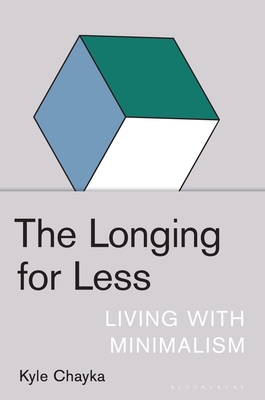
"More than just a story of an abiding cultural preoccupation, The Longing For Less peels back the commodified husk of minimalism to reveal something surprising and thoroughly alive." -Jenny Odell, author of How to Do Nothing "Thoughtful and absorbing . . . A superb outing from a gifted young critic that will spark joy in many readers." - Kirkus Reviews, starred review“Less is more”: Everywhere we hear the mantra. Marie Kondo and other decluttering gurus promise that shedding our stuff will solve our problems. We commit to cleanse diets and strive for inbox zero. Amid the frantic pace and distraction of everyday life, we covet silence-and airy, Instagrammable spaces in which to enjoy it. The popular term for this brand of upscale austerity, “minimalism,” has mostly come to stand for things to buy and consume. But minimalism has richer, deeper, and altogether more valuable gifts to offer.Kyle Chayka is one of our sharpest cultural observers. After spending years covering minimalist trends for leading publications, he now delves beneath this lifestyle's glossy surface, seeking better ways to claim the time and space we crave. He shows that our longing for less goes back further than we realize. His search leads him to the philosophical and spiritual origins of minimalism, and to the stories of artists such as Agnes Martin and Donald Judd; composers such as John Cage and Julius Eastman; architects and designers; visionaries and misfits. As Chayka looks anew at their extraordinary lives and explores the places where they worked-from Manhattan lofts to the Texas high desert and the back alleys of Kyoto-he reminds us that what we most require is presence, not absence. The result is an elegant new synthesis of our minimalist desires and our profound emotional needs.

The prescient, page-turning account of a journey in Silicon Valley: a defining memoir of our digital ageIn her mid-twenties, at the height of tech industry idealism, Anna Wiener—stuck, broke, and looking for meaning in her work, like any good millennial—left a job in book publishing for the promise of the new digital economy. She moved from New York to San Francisco, where she landed at a big-data startup in the heart of the Silicon Valley bubble: a world of surreal extravagance, dubious success, and fresh-faced entrepreneurs hell-bent on domination, glory, and, of course, progress.Anna arrived during a massive cultural shift, as the tech industry rapidly transformed into a locus of wealth and power rivaling Wall Street. But amid the company ski vacations and in-office speakeasies, boyish camaraderie and ride-or-die corporate fealty, a new Silicon Valley began to emerge: one in far over its head, one that enriched itself at the expense of the idyllic future it claimed to be building.Part coming-of-age-story, part portrait of an already bygone era, Anna Wiener's memoir, Uncanny Valley, is a rare first-person glimpse into high-flying, reckless startup culture at a time of unchecked ambition, unregulated surveillance, wild fortune, and accelerating political power. With wit, candor, and heart, Anna deftly charts the tech industry's shift from self-appointed world savior to democracy-endangering liability, alongside a personal narrative of aspiration, ambivalence, and disillusionment.
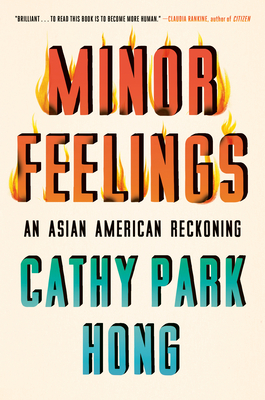
Poet and essayist Cathy Park Hong blends memoir, cultural criticism, and history to expose the truth of racialized consciousness in America. Binding these essays together is Hong's theory of "minor feelings." As the daughter of Korean immigrants, Cathy Park Hong grew up steeped in shame, suspicion, and melancholy. She would later understand that these "minor feelings" occur when American optimism contradicts your own reality—when you believe the lies you're told about your own racial identity.Hong uses her own story as a portal into a deeper examination of racial consciousness in America today. This book traces her relationship to the English language, to shame and depression, to poetry and artmaking, and to family and female friendship in a search to both uncover and speak the truth.

SHE WAS KNOWN TO THE WORLD AS Emily Doe when she stunned millions with a letter. Brock Turner had been sentenced to just six months in county jail after he was found sexually assaulting her on Stanford’s campus. Her victim impact statement was posted on BuzzFeed, where it instantly went viral—viewed by eleven million people within four days, it was translated globally and read on the floor of Congress; it inspired changes in California law and the recall of the judge in the case. Thousands wrote to say that she had given them the courage to share their own experiences of assault for the first time.Now she reclaims her identity to tell her story of trauma, transcendence, and the power of words. It was the perfect case, in many ways—there were eyewitnesses, Turner ran away, physical evidence was immediately secured. But her struggles with isolation and shame during the aftermath and the trial reveal the oppression victims face in even the best-case scenarios. Her story illuminates a culture biased to protect perpetrators, indicts a criminal justice system designed to fail the most vulnerable, and, ultimately, shines with the courage required to move through suffering and live a full and beautiful life.Know My Name will forever transform the way we think about sexual assault, challenging our beliefs about what is acceptable and speaking truth to the tumultuous reality of healing. It also introduces readers to an extraordinary writer, one whose words have already changed our world. Entwining pain, resilience, and humor, this memoir will stand as a modern classic.A NOTE ON THE JACKETThe gold veins on the cover represent the Japanese art of kintsugi, "golden repair," in which pieces of broken pottery are mended with powdered gold and lacquer, rather than treating the breaks as blemishes to conceal. The technique shows us that although an object cannot be returned to its original state, fragments can be made whole again.