
Jeff Bezos Recommended Books
American business magnate (born 1964)
12 Books Recommended

The Blind Watchmaker: Why the Evidence of Evolution Reveals a Universe without Design
by Richard Dawkins
Rating: 4.2 ⭐
• 9 recommendations ❤️
Richard Dawkins’s classic remains the definitive argument for our modern understanding of evolution.The Blind Watchmaker is the seminal text for understanding evolution today. In the eighteenth century, theologian William Paley developed a famous metaphor for creationism: that of the skilled watchmaker. In The Blind Watchmaker, Richard Dawkins crafts an elegant riposte to show that the complex process of Darwinian natural selection is unconscious and automatic. If natural selection can be said to play the role of a watchmaker in nature, it is a blind one—working without foresight or purpose.In an eloquent, uniquely persuasive account of the theory of natural selection, Dawkins illustrates how simple organisms slowly change over time to create a world of enormous complexity, diversity, and beauty.
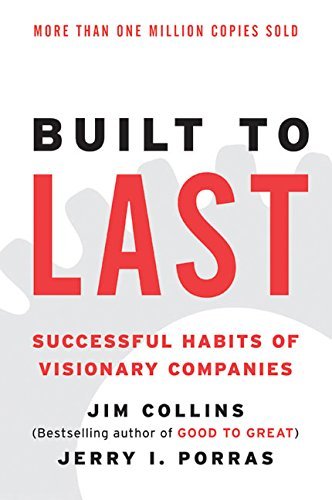
Built to Last: Successful Habits of Visionary Companies
by Jim Collins
Rating: 4.1 ⭐
• 12 recommendations ❤️
Drawing upon a six-year research project at the Stanford University Graduate School of Business, James C. Collins and Jerry I. Porras took eighteen truly exceptional and long-lasting companies and studied each in direct comparison to one of its top competitors. They examined the companies from their very beginnings to the present day -- as start-ups, as midsize companies, and as large corporations. Throughout, the authors asked: "What makes the truly exceptional companies different from the comparison companies and what were the common practices these enduringly great companies followed throughout their history?" Filled with hundreds of specific examples and organized into a coherent framework of practical concepts that can be applied by managers and entrepreneurs at all levels, Built to Last provides a master blueprint for building organizations that will prosper long into the 21st century and beyond.

Lean Thinking: Banish Waste and Create Wealth in Your Corporation
by James P. Womack
Rating: 3.9 ⭐
• 2 recommendations ❤️
Expanded, updated, and more relevant than ever, this bestselling business classic by two internationally renowned management analysts describes a business system for the twenty-first century that supersedes the mass production system of Ford, the financial control system of Sloan, and the strategic system of Welch and GE. It is based on the Toyota (lean) model, which combines operational excellence with value-based strategies to produce steady growth through a wide range of economic conditions. In contrast with the crash-and-burn performance of companies trumpeted by business gurus in the 1990s, the firms profiled in Lean Thinking -- from tiny Lantech to midsized Wiremold to niche producer Porsche to gigantic Pratt & Whitney -- have kept on keeping on, largely unnoticed, along a steady upward path through the market turbulence and crushed dreams of the early twenty-first century. Meanwhile, the leader in lean thinking -- Toyota -- has set its sights on leadership of the global motor vehicle industry in this decade. Instead of constantly reinventing business models, lean thinkers go back to basics by asking what the customer really perceives as value. (It's often not at all what existing organizations and assets would suggest.) The next step is to line up value-creating activities for a specific product along a value stream while eliminating activities (usually the majority) that don't add value. Then the lean thinker creates a flow condition in which the design and the product advance smoothly and rapidly at the pull of the customer (rather than the push of the producer). Finally, as flow and pull are implemented, the lean thinker speeds up the cycle of improvement in pursuit of perfection. The first part of this book describes each of these concepts and makes them come alive with striking examples. Lean Thinking clearly demonstrates that these simple ideas can breathe new life into any company in any industry in any country. But most managers need guidance on how to make the lean leap in their firm. Part II provides a step-by-step action plan, based on in-depth studies of more than fifty lean companies in a wide range of industries across the world. Even those readers who believe they have embraced lean thinking will discover in Part III that another dramatic leap is possible by creating an extended lean enterprise for each of their product families that tightly links value-creating activities from raw materials to customer. In Part IV, an epilogue to the original edition, the story of lean thinking is brought up-to-date with an enhanced action plan based on the experiences of a range of lean firms since the original publication of Lean Thinking. Lean Thinking does not provide a new management "program" for the one-minute manager. Instead, it offers a new method of thinking, of being, and, above all, of doing for the serious long-term manager -- a method that is changing the world.

The Goal: 40th Anniversary Edition: A Process of Ongoing Improvement
by Eliyahu M. Goldratt
Rating: 4.1 ⭐
• 9 recommendations ❤️
*A Graphic Novel version of this title is now available: "The Goal: A Business Graphic Novel"30th Anniversary Edition. Written in a fast-paced thriller style, The Goal, a gripping novel, is transforming management thinking throughout the world. It is a book to recommend to your friends in industry - even to your bosses - but not to your competitors. Alex Rogo is a harried plant manager working ever more desperately to try improve performance. His factory is rapidly heading for disaster. So is his marriage. He has ninety days to save his plant - or it will be closed by corporate HQ, with hundreds of job losses. It takes a chance meeting with a professor from student days - Jonah - to help him break out of conventional ways of thinking to see what needs to be done. The story of Alex's fight to save his plant is more than compulsive reading. It contains a serious message for all managers in industry and explains the ideas, which underline the Theory of Constraints (TOC), developed by Eli Goldratt.One of Eli Goldratt s convictions was that the goal of an individual or an organization should not be defined in absolute terms. A good definition of a goal is one that sets us on a path of ongoing improvement.Pursuing such a goal necessitates more than one breakthrough. In fact it requires many. To be in a position to identify these breakthroughs we should have a deep understanding of the underlying rules of our environment. Twenty-five years after writing The Goal, Dr. Goldratt wrote Standing on the Shoulders of Giants. In this article he provided the underlying rules of operations. This article appears at the end of this book.Like Mrs. Fields and her cookies,The Goal was too tasty to remain obscure. Companies began buying big batches and management schools included it in their curriculums. Fortune MagazineA survey of the reading habits of managers found that though they buy books by the likes of Tom Peters for display purposes, the one management book they have actually read from cover to cover is The Goal. The Economist"Goal readers are now doing the best work of their lives. Success MagazineA factory may be an unlikely setting for a novel, but the book has been wildly effective.: Tom PetersRequired reading for Amazon's Management.

Good to Great: Why Some Companies Make the Leap... and Others Don't
by Jim Collins
Rating: 4.1 ⭐
• 28 recommendations ❤️
sach hay ve ky nang - bi quyet thanh cong - hinh thanh tu duy tich cuc

The Innovator's Dilemma: When New Technologies Cause Great Firms to Fail
by Clayton M. Christensen
Rating: 4.1 ⭐
• 39 recommendations ❤️
The bestselling classic on disruptive innovation, by renowned author Clayton M. Christensen. His work is cited by the world’s best-known thought leaders, from Steve Jobs to Malcolm Gladwell. In this classic bestseller—one of the most influential business books of all time—innovation expert Clayton Christensen shows how even the most outstanding companies can do everything right—yet still lose market leadership. Christensen explains why most companies miss out on new waves of innovation. No matter the industry, he says, a successful company with established products will get pushed aside unless managers know how and when to abandon traditional business practices. Offering both successes and failures from leading companies as a guide, The Innovator’s Dilemma gives you a set of rules for capitalizing on the phenomenon of disruptive innovation. Sharp, cogent, and provocative—and consistently noted as one of the most valuable business ideas of all time—The Innovator’s Dilemma is the book no manager, leader, or entrepreneur should be without.
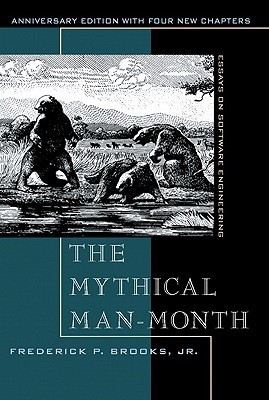
The Mythical Man-Month: Essays on Software Engineering
by Frederick P. Brooks Jr.
Rating: 4.0 ⭐
• 10 recommendations ❤️
Few books on software project management have been as influential and timeless as The Mythical Man-Month. With a blend of software engineering facts and thought-provoking opinions, Fred Brooks offers insight for anyone managing complex projects. These essays draw from his experience as project manager for the IBM System/360 computer family and then for OS/360, its massive software system. Now, 45 years after the initial publication of his book, Brooks has revisited his original ideas and added new thoughts and advice, both for readers already familiar with his work and for readers discovering it for the first time.The added chapters contain (1) a crisp condensation of all the propositions asserted in the original book, including Brooks' central argument in The Mythical Man-Month: that large programming projects suffer management problems different from small ones due to the division of labor; that the conceptual integrity of the product is therefore critical; and that it is difficult but possible to achieve this unity; (2) Brooks' view of these propositions a generation later; (3) a reprint of his classic 1986 paper "No Silver Bullet"; and (4) today's thoughts on the 1986 assertion, "There will be no silver bullet within ten years."

The Black Swan: The Impact of the Highly Improbable
by Nassim Nicholas Taleb
Rating: 4.0 ⭐
• 19 recommendations ❤️
A black swan is an event, positive or negative, that is deemed improbable yet causes massive consequences. In this groundbreaking and prophetic book, Taleb shows in a playful way that Black Swan events explain almost everything about our world, and yet we—especially the experts—are blind to them. In this second edition, Taleb has added a new essay, On Robustness and Fragility, which offers tools to navigate and exploit a Black Swan world.*2nd Edition, With a new essay: "On Robustness and Fragility"

Mankind now has within its grasp the power to synthesize true artificial life, playing out Dr Frankenstein's dream in both cyberspace and the real world. In this book, Steve Grand, a leading exponent of artificial life, provides the first authoritative and comprehensive tour of the frontiers of this burgeoning new creation. He surveys what has been achieved so far and looks at future possibilities for generating autonomous, intelligent, even conscious living things. The fundamental questions he tackles range what is life? What should the minds, brains and bodies of these new life forms be like? What philosophical guidelines and computational frameworks are necessary? At the heart of this brilliantly accessible and thought-provoking book is the author's unique imaginative vision - a vision based on his experience of making some of the most advanced artificial life currently available.

Most business books give you the same old advice: Write a business plan, study the competition, seek investors, yadda yadda. If you're looking for a book like that, put this one back on the shelf.Rework shows you a better, faster, easier way to succeed in business. Read it and you'll know why plans are actually harmful, why you don't need outside investors, and why you're better off ignoring the competition. The truth is, you need less than you think. You don't need to be a workaholic. You don't need to staff up. You don't need to waste time on paperwork or meetings. You don't even need an office. Those are all just excuses. What you really need to do is stop talking and start working. This book shows you the way. You'll learn how to be more productive, how to get exposure without breaking the bank, and tons more counterintuitive ideas that will inspire and provoke you.With its straightforward language and easy-is-better approach, Rework is the perfect playbook for anyone who’s ever dreamed of doing it on their own. Hardcore entrepreneurs, small-business owners, people stuck in day jobs they hate, victims of "downsizing," and artists who don’t want to starve anymore will all find valuable guidance in these pages.
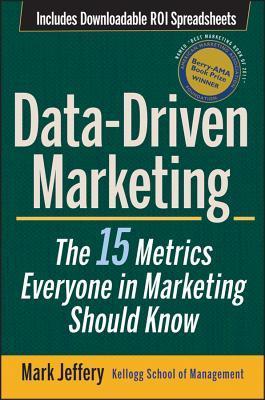
Data-Driven Marketing: The 15 Metrics Everyone in Marketing Should Know
by Mark Jeffery
Rating: 3.9 ⭐
• 2 recommendations ❤️
NAMED BEST MARKETING BOOK OF 2011 BY THE AMERICAN MARKETING ASSOCIATION How organizations can deliver significant performance gains through strategic investment in marketingIn the new era of tight marketing budgets, no organization can continue to spend on marketing without knowing what's working and what's wasted. Data-driven marketing improves efficiency and effectiveness of marketing expenditures across the spectrum of marketing activities from branding and awareness, trail and loyalty, to new product launch and Internet marketing. Based on new research from the Kellogg School of Management, this book is a clear and convincing guide to using a more rigorous, data-driven strategic approach to deliver significant performance gains from your marketing.Explains how to use data-driven marketing to deliver return on marketing investment (ROMI) in any organization In-depth discussion of the fifteen key metrics every marketer should know Based on original research from America's leading marketing business school, complemented by experience teaching ROMI to executives at Microsoft, DuPont, Nisan, Philips, Sony and many other firms Uses data from a rigorous survey on strategic marketing performance management of 252 Fortune 1000 firms, capturing $53 billion of annual marketing spending In-depth examples of how to apply the principles in small and large organizations Free downloadable ROMI templates for all examples given in the book With every department under the microscope looking for results, those who properly use data to optimize their marketing are going to come out on top every time.

Lights Out: Pride, Delusion, and the Fall of General Electric
by Thomas Gryta
Rating: 4.0 ⭐
• 6 recommendations ❤️
A WALL STREET JOURNAL BESTSELLER"If you’re in any kind of leadership role—whether at a company, a non-profit, or somewhere else—there’s a lot you can learn here."—Bill Gates, Gates NotesHow could General Electric—perhaps America’s most iconic corporation—suffer such a swift and sudden fall from grace?This is the definitive history of General Electric’s epic decline, as told by the two Wall Street Journal reporters who covered its fall.Since its founding in 1892, GE has been more than just a corporation. For generations, it was job security, a solidly safe investment, and an elite business education for top managers.GE electrified America, powering everything from lightbulbs to turbines, and became fully integrated into the American societal mindset as few companies ever had. And after two decades of leadership under legendary CEO Jack Welch, GE entered the twenty-first century as America’s most valuable corporation. Yet, fewer than two decades later, the GE of old was gone. Lights Out examines how Welch’s handpicked successor, Jeff Immelt, tried to fix flaws in Welch’s profit machine, while stumbling headlong into mistakes of his own. In the end, GE’s traditional win-at-all-costs driven culture seemed to lose its direction, which ultimately caused the company’s decline on both a personal and organizational scale. Lights Out details how one of America’s all-time great companies has been reduced to a cautionary tale for our times.