
4 Books Recommended

Que faire lorsqu'on se retrouve seul, totalement isolé, en haut de l'Himalaya, accroché à un buisson au-dessus du vide... ?" Je ne pouvais me résoudre à couper mon téléphone sans envoyer un dernier message. Celui-là serait pour ma fille. Mais que lui dire ? Je ne voulais pas l'alerter, je ne voulais pas l'inquiéter. Je ne voulais pas non plus lui mentir, ni entamer une conversation comme si de rien n'était. Je me suis alors posé une question à laquelle je n'aurais jamais pensé être confronté : qu'est-ce qu'on écrit lorsque c'est peut-être pour la dernière fois ? Que dit-on dans un ultime SMS ? En fait, la réponse était évidente, je n'ai pas cherché longtemps.Moi, à Rébecca :Je t'aimeCette fois, en toutes lettres.Et j'ai coupé mon téléphone. "JeanDavid Blanc sort miraculeusement indemne d'un crash en paramoteur dans l'Himalaya. Mais il est seul, à 3000 mètres d'altitude, en plein hiver, sans équipement et avec trois carrés de chocolat pour tout ravitaillement. Comment affronter une telle situation quand on n'y a jamais été préparé ? Minute par minute, il raconte son périple au cœur d'une nature sauvage et magnifique, et le parcours qui lui fera traverser toutes les étapes, de l'espoir au désespoir, avant de trouver finalement l'issue en lui-même." Un récit impressionnant par son sujet, sa force, son souffle, un livre qui marque longtemps. " David Foenkinos

The Hard Thing About Hard Things: Building a Business When There Are No Easy Answers―Straight Talk on the Challenges of Entrepreneurship
by Ben Horowitz
Rating: 4.2 ⭐
• 60 recommendations ❤️
A lot of people talk about how great it is to start a business, but only Ben Horowitz is brutally honest about how hard it is to run one.In The Hard Thing About Hard Things, Ben Horowitz, cofounder of Andreessen Horowitz and one of Silicon Valley's most respected and experienced entrepreneurs, draws on his own story of founding, running, selling, buying, managing, and investing in technology companies to offer essential advice and practical wisdom for navigating the toughest problems business schools don't cover. His blog has garnered a devoted following of millions of readers who have come to rely on him to help them run their businesses. A lifelong rap fan, Horowitz amplifies business lessons with lyrics from his favorite songs and tells it straight about everything from firing friends to poaching competitors, from cultivating and sustaining a CEO mentality to knowing the right time to cash in.His advice is grounded in anecdotes from his own hard-earned rise—from cofounding the early cloud service provider Loudcloud to building the phenomenally successful Andreessen Horowitz venture capital firm, both with fellow tech superstar Marc Andreessen (inventor of Mosaic, the Internet's first popular Web browser). This is no polished victory lap; he analyzes issues with no easy answers through his trials, including demoting (or firing) a loyal friend;whether you should incorporate titles and promotions, and how to handle them;if it's OK to hire people from your friend's company; how to manage your own psychology, while the whole company is relying on you; what to do when smart people are bad employees; why Andreessen Horowitz prefers founder CEOs, and how to become one; whether you should sell your company, and how to do it.Filled with Horowitz's trademark humor and straight talk, and drawing from his personal and often humbling experiences, The Hard Thing About Hard Things is invaluable for veteran entrepreneurs as well as those aspiring to their own new ventures.
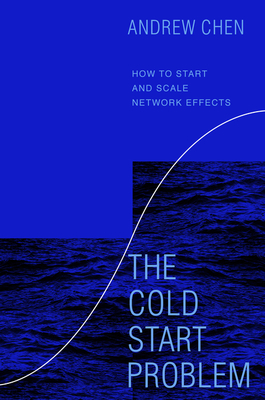
The Cold Start Problem: How to Start and Scale Network Effects
by Andrew Chen
Rating: 4.2 ⭐
• 3 recommendations ❤️
A venture capitalist draws on expertise developed at the premier venture capital firm, Andreessen Horowitz, and as an executive at Uber to address how tech’s most successful products have solved the dreaded "cold start problem”—by leveraging networks effects to launch and scale towards billions of users. Although software has become easier to build, launching and scaling new products and services remains difficult. Startups face daunting challenges entering the technology ecosystem, including stiff competition, copycats, and ineffective marketing channels. Teams launching new products must consider the advantages of “the network effect,” where a product or service’s value increases as more users engage with it. Apple, Google, Microsoft, and other tech giants utilize network effects, and most tech products incorporate them, whether they’re messaging apps, workplace collaboration tools, or marketplaces. Network effects provide a path for fledgling products to break through, attracting new users through viral growth and word of mouth.Yet most entrepreneurs lack the vocabulary and context to describe them—much less understand the fundamental principles that drive the effect. What exactly are network effects? How do teams create and build them into their products? How do products compete in a market where every player has them? Andrew Chen draws on his experience and on interviews with the CEOs and founding teams of LinkedIn, Twitch, Zoom, Dropbox, Tinder, Uber, Airbnb, Pinterest — to provide unique insights in answering these questions. Chen also provides practical frameworks and principles that can be applied across products and industries. The Cold Start Problem reveals what makes winning networks successful, why some startups fail to successfully scale, and most crucially, why products that create and compete using the network effect are vitally important today.

En 1999 débutait le casting pour trouver le jeune garçon qui interpréterait Harry Potter et qui, par là-même, deviendrait mondialement célèbre. Des centaines d'acteurs furent auditionnés. Finalement, il n'en resta plus que deux.Ce roman raconte l'histoire de celui qui n'a pas été choisi.Martin Hill, héros ou anti-héros (fictif ) de ce roman, naît en 1989 à Londres, dans la même clinique et la même année que le futur interprète d'Harry Potter au cinéma. Martin est le fils d'une journaliste française, Jeanne, et d'un accessoiriste de plateau, John, inventeur saugrenu (notamment d'une cravate parapluie qu'il ne réussira pas à commercialiser). Il est encore enfant quand ses parents divorcent et il grandit entre Londres et Paris, où s'est installée sa mère. Tout à fait par hasard, alors qu'il a suivi son père sur un plateau de tournage, Martin est repéré par un producteur qui est en train de mettre sur pied le premier film de la série des Harry Potter. Martin passe un casting, réussit plusieurs sélections, mais lors de l'ultime séance, l'autre finaliste se montre plus convaincant. Tous les espoirs que Martin avait formés s'écroulent et désormais il se sentira sans cesse confronté au triomphe omniprésent de son rival. Comment se remettre de cet échec alors que les aventures du jeune sorcier et leurs adaptations cinématographiques s'enchainent avec tant de succès ?Serait-il passé à côté de sa vie ? Et comment reprendre la main ?Ce nouveau roman de David Foenkinos, drôle et insolite, n'est pas le récit d'un échec. Martin a presque réussi, il est passé juste à côté du succès et cette place est sans nul doute la plus insupportable. Une fantaisie mélancolique parcourt ce roman, qui saisit avec justesse et légèreté le désarroi d'un jeune homme sans cesse confronté à ce qu'il aurait pu vivre.