14 Books Recommended

Maverick: The Success Story Behind the World's Most Unusual Workplace
by Ricardo Semler
Rating: 4.3 ⭐
• 10 recommendations ❤️
Semler turned his family's business, the aging Semco corporation of Brazil, into the most revolutionary business success story of our time. By eliminating uneeded layers of management and allowing employees unprecedented democracy in the workplace, he created a company that challenged the old ways and blazed a path to success in an uncertain economy.

This remarkable little book, intended as a supplement for any course that requires writing, models a clear, step-by-step system for creating straight-forward, concise, intelligible and readable prose.

环境的极致,信念的极致,生命的极致,你能熬过去吗?700天冰海历劫,20世纪最伟大的南极探险故事!弃船的命令下午5时发出。然而,对于大多数船员来说,其实已经没必要了,因为人人都知道这船彻底完了,是该放弃了。没有人表现出恐惧甚或忧虑。他们已经一刻不停地奋战了整整三天,但最终还是功败垂成。对于逃离沉船后的那种普遍的解脱感,有个人是不认可的。他的名字是欧内斯特·沙克尔顿爵士,就是他率领了这支大英帝国穿越南极探险队。这一天是1915年10月27日。探险船的名字叫“坚忍号”。目前的坐标是南纬69.5度,西经51.3度,处于南极诡秘莫测的威德尔海千里冰原深处,正好在南极点与离得最近的人类居住点之间,居住点距此有1200英里。自从最后一次同现代文明接触之后,已经过去了将近一年时间。外界根本就没有人知道他们遇到了麻烦。当时,他们没有无线电发报机,而且,就算用无线电发出了紧急求救信号, 最后能否有人及时赶来救援还是问题。那是1915年,没有直升机,没有小型登陆车,没有履带式雪地车,也没有合用的救援飞机。已知离得最近的能让他们找到食物和住所的地方,就只有小小的保利特岛。1903年,就在这个小岛上,被威德尔海的坚冰撞坏的瑞典船“南极号”的船员度过了整个冬天。该船最终获救,撤离时船员们将船上的给养留在了保利特岛上,以备日后任何遭遇海难者的不时之需。饶有意味的是,当年正是沙克尔顿受命购买了这些给养,而现在,整整十二年之后,这恰恰是他自己最需要的。

Where the Suckers Moon: The Life and Death of an Advertising Campaign
by Randall Rothenberg
Rating: 4.0 ⭐
• 2 recommendations ❤️
"For all the right reasons." "Cars that can." "What to Drive." "The perfect Car for an Imperfect World." Only one of these slogans would be chosen by Subaru of America to sell its cars in the recession year of 1991. As six advertising agencies scrambled for the account and the winner tried to churn out the Big Idea that would install Subaru in the collective national unconscious, Randall Rothenberg was there, observing every nuance of the chaos, comedy, creativity, and egotism that made up an ad campaign.One can read Rothenberg's book as the behind-the-scenes chronicle of the brief and very troubled marriage between a beleaguered automobile company and Wieden & Kennedy, an aggressively hip ad agency whose creative director despised cars. One can read it as a history of advertising's journey from the conventionally upbeat slogan "Helps Build Strong Bodies 12 Ways" to the supercool nineties minimalism of "Bo Knows." Either way, Where the Suckers Moon is a face-paced, insightful, and occasionally appalling look at an industry whose obsession with image has affected our entireculture.

Peter Bevelin begins his fascinating book with Confucius' great "A man who has committed a mistake and doesn't correct it, is committing another mistake." Seeking Wisdom is the result of Bevelin's learning about attaining wisdom. His quest for wisdom originated partly from making mistakes himself and observing those of others but also from the philosophy of super-investor and Berkshire Hathaway Vice Chairman Charles Munger. A man whose simplicity and clarity of thought was unequal to anything Bevelin had seen. In addition to naturalist Charles Darwin and Munger, Bevelin cites an encyclopedic range of from first-century BCE Roman poet Publius Terentius to Mark Twain—from Albert Einstein to Richard Feynman—from 16th Century French essayist Michel de Montaigne to Berkshire Hathaway Chairman Warren Buffett. In the book, he describes ideas and research findings from many different fields. This book is for those who love the constant search for knowledge. It is in the spirit of Charles Munger, who says, "All I want to know is where I'm going to die so I'll never go there." There are roads that lead to unhappiness. An understanding of how and why we can "die" should help us avoid them. We can't eliminate mistakes, but we can prevent those that can really hurt us. Using exemplars of clear thinking and attained wisdom, Bevelin focuses on how our thoughts are influenced, why we make misjudgments and tools to improve our thinking. Bevelin tackles such eternal questions Why do we behave like we do? What do we want out of life? What interferes with our goals? Read and study this wonderful multidisciplinary exploration of wisdom. It may change the way you think and act in business and in life.

A Guide to the Good Life: The Ancient Art of Stoic Joy
by William B. Irvine
Rating: 4.2 ⭐
• 18 recommendations ❤️
One of the great fears many of us face is that despite all our effort and striving, we will discover at the end that we have wasted our life. In A Guide to the Good Life, William B. Irvine plumbs the wisdom of Stoic philosophy, one of the most popular and successful schools of thought in ancient Rome, and shows how its insight and advice are still remarkably applicable to modern lives. In A Guide to the Good Life, Irvine offers a refreshing presentation of Stoicism, showing how this ancient philosophy can still direct us toward a better life. Using the psychological insights and the practical techniques of the Stoics, Irvine offers a roadmap for anyone seeking to avoid the feelings of chronic dissatisfaction that plague so many of us. Irvine looks at various Stoic techniques for attaining tranquility and shows how to put these techniques to work in our own life. As he does so, he describes his own experiences practicing Stoicism and offers valuable first-hand advice for anyone wishing to live better by following in the footsteps of these ancient philosophers. Readers learn how to minimize worry, how to let go of the past and focus our efforts on the things we can control, and how to deal with insults, grief, old age, and the distracting temptations of fame and fortune. We learn from Marcus Aurelius the importance of prizing only things of true value, and from Epictetus we learn how to be more content with what we have. Finally, A Guide to the Good Life shows readers how to become thoughtful observers of their own life. If we watch ourselves as we go about our daily business and later reflect on what we saw, we can better identify the sources of distress and eventually avoid that pain in our life. By doing this, the Stoics thought, we can hope to attain a truly joyful life.
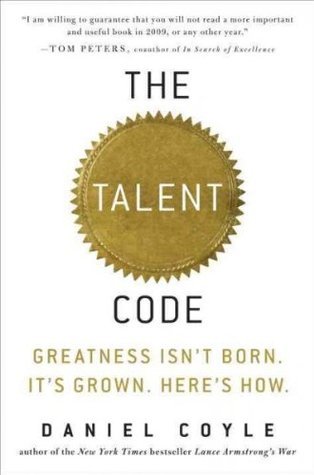
The Talent Code: Greatness Isn't Born. It's Grown. Here's How.
by Daniel Coyle
Rating: 4.2 ⭐
• 14 recommendations ❤️
What is the secret of talent? How do we unlock it? In this groundbreaking work, journalist and New York Times bestselling author Daniel Coyle provides parents, teachers, coaches, businesspeople—and everyone else—with tools they can use to maximize potential in themselves and others.Whether you’re coaching soccer or teaching a child to play the piano, writing a novel or trying to improve your golf swing, this revolutionary book shows you how to grow talent by tapping into a newly discovered brain mechanism.Drawing on cutting-edge neurology and firsthand research gathered on journeys to nine of the world’s talent hotbeds—from the baseball fields of the Caribbean to a classical-music academy in upstate New York—Coyle identifies the three key elements that will allow you to develop your gifts and optimize your performance in sports, art, music, math, or just about anything. • Deep Practice Everyone knows that practice is a key to success. What everyone doesn’t know is that specific kinds of practice can increase skill up to ten times faster than conventional practice.• Ignition We all need a little motivation to get started. But what separates truly high achievers from the rest of the pack? A higher level of commitment—call it passion—born out of our deepest unconscious desires and triggered by certain primal cues. Understanding how these signals work can help you ignite passion and catalyze skill development.• Master Coaching What are the secrets of the world’s most effective teachers, trainers, and coaches? Discover the four virtues that enable these “talent whisperers” to fuel passion, inspire deep practice, and bring out the best in their students.These three elements work together within your brain to form myelin, a microscopic neural substance that adds vast amounts of speed and accuracy to your movements and thoughts. Scientists have discovered that myelin might just be the holy grail: the foundation of all forms of greatness, from Michelangelo’s to Michael Jordan’s. The good news about myelin is that it isn’t fixed at birth; to the contrary, it grows, and like anything that grows, it can be cultivated and nourished. Combining revelatory analysis with illuminating examples of regular people who have achieved greatness, this book will not only change the way you think about talent, but equip you to reach your own highest potential.From the Hardcover edition.

Quiet: The Power of Introverts in a World That Can't Stop Talking
by Susan Cain
Rating: 4.2 ⭐
• 14 recommendations ❤️
The book that started the Quiet RevolutionAt least one-third of the people we know are introverts. They are the ones who prefer listening to speaking; who innovate and create but dislike self-promotion; who favor working on their own over working in teams. It is to introverts—Rosa Parks, Chopin, Dr. Seuss, Steve Wozniak—that we owe many of the great contributions to society. In Quiet, Susan Cain argues that we dramatically undervalue introverts and shows how much we lose in doing so. She charts the rise of the Extrovert Ideal throughout the twentieth century and explores how deeply it has come to permeate our culture. She also introduces us to successful introverts—from a witty, high-octane public speaker who recharges in solitude after his talks, to a record-breaking salesman who quietly taps into the power of questions. Passionately argued, superbly researched, and filled with indelible stories of real people, Quiet has the power to permanently change how we see introverts and, equally important, how they see themselves.Now with Extra Libris material, including a reader’s guide and bonus content.
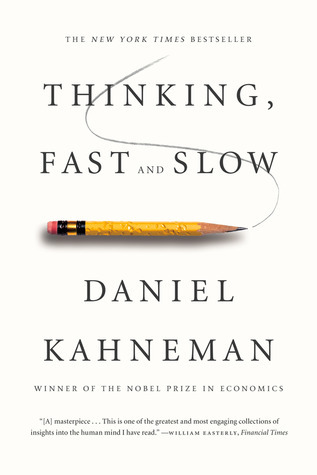
Major New York Times bestsellerWinner of the National Academy of Sciences Best Book Award in 2012Selected by the New York Times Book Review as one of the best books of 2011A Globe and Mail Best Books of the Year 2011 TitleOne of The Economist's 2011 Books of the Year One of The Wall Street Journal's Best Nonfiction Books of the Year 20112013 Presidential Medal of Freedom RecipientIn the international bestseller, Thinking, Fast and Slow, Daniel Kahneman, the renowned psychologist and winner of the Nobel Prize in Economics, takes us on a groundbreaking tour of the mind and explains the two systems that drive the way we think. System 1 is fast, intuitive, and emotional; System 2 is slower, more deliberative, and more logical. The impact of overconfidence on corporate strategies, the difficulties of predicting what will make us happy in the future, the profound effect of cognitive biases on everything from playing the stock market to planning our next vacation—each of these can be understood only by knowing how the two systems shape our judgments and decisions. Engaging the reader in a lively conversation about how we think, Kahneman reveals where we can and cannot trust our intuitions and how we can tap into the benefits of slow thinking. He offers practical and enlightening insights into how choices are made in both our business and our personal lives—and how we can use different techniques to guard against the mental glitches that often get us into trouble. Winner of the National Academy of Sciences Best Book Award and the Los Angeles Times Book Prize and selected by The New York Times Book Review as one of the ten best books of 2011, Thinking, Fast and Slow is destined to be a classic.
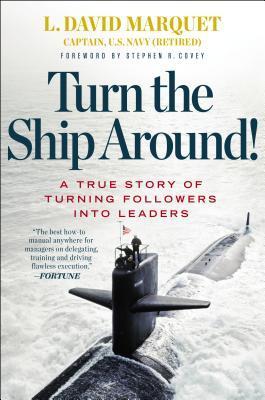
Turn the Ship Around!: A True Story of Turning Followers into Leaders
by L. David Marquet
Rating: 4.2 ⭐
• 8 recommendations ❤️
"David Marquet is the kind of leader who comes around only once in a generation ... his ideas and lessons are invaluable" — Simon Sinek, author of Start With WhyCaptain David Marquet was used to giving orders. In the high-stress environment of the USS Santa Fe, a nuclear-powered submarine, it was crucial his men did their job well. But the ship was dogged by poor morale, poor performance and the worst retention in the fleet.One day, Marquet unknowingly gave an impossible order, and his crew tried to follow it anyway. He realized he was leading in a culture of followers, and they were all in danger unless they fundamentally changed the way they did things. Marquet took matters into his own hands and pushed for leadership at every level. Before long, his crew became fully engaged and the Santa Fe skyrocketed from worst to first in the fleet.No matter your business or position, you can apply Marquet's approach to create a workplace where everyone takes responsibility for their actions, people are healthier and happier — and everyone is a leader.

Why We Sleep: Unlocking the Power of Sleep and Dreams
by Matthew Walker
Rating: 4.4 ⭐
• 16 recommendations ❤️
“Why We Sleep is an important and fascinating book…Walker taught me a lot about this basic activity that every person on Earth needs. I suspect his book will do the same for you.” —Bill Gates A New York Times bestseller and international sensation, this “stimulating and important book” (Financial Times) is a fascinating dive into the purpose and power of slumber.With two appearances on CBS This Morning and Fresh Air's most popular interview of 2017, Matthew Walker has made abundantly clear that sleep is one of the most important but least understood aspects of our life. Until very recently, science had no answer to the question of why we sleep, or what good it served, or why we suffer such devastating health consequences when it is absent. Compared to the other basic drives in life—eating, drinking, and reproducing—the purpose of sleep remains more elusive. Within the brain, sleep enriches a diversity of functions, including our ability to learn, memorize, and make logical decisions. It recalibrates our emotions, restocks our immune system, fine-tunes our metabolism, and regulates our appetite. Dreaming creates a virtual reality space in which the brain melds past and present knowledge, inspiring creativity. In this “compelling and utterly convincing” (The Sunday Times) book, preeminent neuroscientist and sleep expert Matthew Walker provides a revolutionary exploration of sleep, examining how it affects every aspect of our physical and mental well-being. Charting the most cutting-edge scientific breakthroughs, and marshalling his decades of research and clinical practice, Walker explains how we can harness sleep to improve learning, mood and energy levels, regulate hormones, prevent cancer, Alzheimer’s and diabetes, slow the effects of aging, and increase longevity. He also provides actionable steps towards getting a better night’s sleep every night. Clear-eyed, fascinating, and accessible, Why We Sleep is a crucial and illuminating book. Written with the precision of Atul Gawande, Andrew Solomon, and Sherwin Nuland, it is “recommended for night-table reading in the most pragmatic sense” (The New York Times Book Review).

Thinking in Bets: Making Smarter Decisions When You Don't Have All the Facts
by Annie Duke
Rating: 3.8 ⭐
• 19 recommendations ❤️
In Super Bowl XLIX, Seahawks coach Pete Carroll made one of the most controversial calls in football history: With 26 seconds remaining, and trailing by four at the Patriots' one-yard line, he called for a pass instead of a hand off to his star running back. The pass was intercepted and the Seahawks lost. Critics called it the dumbest play in history. But was the call really that bad? Or did Carroll actually make a great move that was ruined by bad luck?Even the best decision doesn't yield the best outcome every time. There's always an element of luck that you can't control, and there is always information that is hidden from view. So the key to long-term success (and avoiding worrying yourself to death) is to think in bets: How sure am I? What are the possible ways things could turn out? What decision has the highest odds of success? Did I land in the unlucky 10% on the strategy that works 90% of the time? Or is my success attributable to dumb luck rather than great decision making?Annie Duke, a former World Series of Poker champion turned business consultant, draws on examples from business, sports, politics, and (of course) poker to share tools anyone can use to embrace uncertainty and make better decisions. For most people, it's difficult to say "I'm not sure" in a world that values and, even, rewards the appearance of certainty. But professional poker players are comfortable with the fact that great decisions don't always lead to great outcomes and bad decisions don't always lead to bad outcomes.By shifting your thinking from a need for certainty to a goal of accurately assessing what you know and what you don't, you'll be less vulnerable to reactive emotions, knee-jerk biases, and destructive habits in your decision making. You'll become more confident, calm, compassionate and successful in the long run.
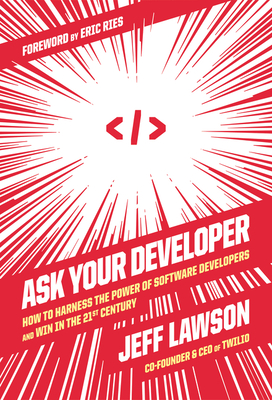
Ask Your Developer: How to Harness the Power of Software Developers and Win in the 21st Century
by Jeff Lawson
Rating: 4.2 ⭐
• 6 recommendations ❤️
Jeff Lawson, software developer turned CEO of Twilio, creates a new playbook for unleashing the full potential of software developers in any organization, showing how to help management utilize this coveted and valuable workforce to enable growth, solve a wide range of business problems and drive digital transformation.From banking and retail to insurance and finance, every industry is turning digital, and every company needs the best software to win the hearts and minds of customers. The landscape has shifted from the classic build vs. buy question, to one of build vs. die. Companies have to get this right to survive. But how do they make this transition?Software developers are sought after, highly paid, and desperately needed to compete in the modern, digital economy. Yet most companies treat them like digital factory workers without really understanding how to unleash their full potential. Lawson argues that developers are the creative workforce who can solve major business problems and create hit products for customers—not just grind through rote tasks. From Google and Amazon, to one-person online software companies—companies that bring software developers in as partners are winning. Lawson shows how leaders who build industry changing software products consistently do three things well. First, they understand why software developers matter more than ever. Second, they understand developers and know how to motivate them. And third, they invest in their developers' success.As a software developer and public company CEO, Lawson uses his unique position to bridge the language and tools executives use with the unique culture of high performing, creative software developers. Ask Your Developer is a toolkit to help business leaders, product managers, technical leaders, software developers, and executives achieve their common goal—building great digital products and experiences.How to compete in the digital economy? In short: Ask Your Developer.

The Minimalist Entrepreneur: How Great Founders Do More with Less
by Sahil Lavingia
Rating: 4.2 ⭐
• 2 recommendations ❤️
“Pay attention.”—Jason FriedA revolutionary roadmap for building startups that go the distance Now more than ever, you don’t need a fancy office, Ivy League degree, or millions of dollars in venture capital to launch a business that matters for the communities you care most about. Software, the internet, and remote work have made it possible for entrepreneurs to start for free, make a customer of anyone, and grow a profitable, sustainable company from anywhere. Packed with hard-won, battle-tested lessons from Lavingia’s own journey of building Gumroad, a platform for creators to sell their work, The Minimalist Entrepreneur teaches founders how • start then learn • build a community, then solve a problem for them • charge for something even before you’ve built anything • avoid running out of money and, more importantly, energy • run a tight ship amid the rise of the gig economy and remote work • own a business without it owning you back. The Minimalist Entrepreneur is the manifesto for a new generation of founders who would rather build great companies than big ones. This is essential knowledge for every founder aspiring to build a business worth building.