
26 Books Recommended

Lincoln at Gettysburg: The Words That Remade America
by Garry Wills
Rating: 4.2 ⭐
• 2 recommendations ❤️
In a masterly work, Garry Wills shows how Lincoln reached back to the Declaration of Independence to write the greatest speech in the nation’s history.The power of words has rarely been given a more compelling demonstration than in the Gettysburg Address. Lincoln was asked to memorialize the gruesome battle. Instead he gave the whole nation “a new birth of freedom” in the space of a mere 272 words. His entire life and previous training and his deep political experience went into this, his revolutionary masterpiece.By examining both the address and Lincoln in their historical moment and cultural frame, Wills breathes new life into words we thought we knew, and reveals much about a president so mythologized but often misunderstood. Wills shows how Lincoln came to change the world and to effect an intellectual revolution, how his words had to and did complete the work of the guns, and how Lincoln wove a spell that has not yet been broken.

An alternative cover edition for this ISBN can be found hereThis classic biography is the story of seven men—a naturalist, a writer, a lover, a hunter, a ranchman, a soldier, and a politician—who merged at age forty-two to become the youngest President in history.The Rise of Theodore Roosevelt begins at the apex of his international prestige. That was on New Year’s Day, 1907, when TR, who had just won the Nobel Peace Prize, threw open the doors of the White House to the American people and shook 8,150 hands. One visitor remarked afterward, “You go to the White House, you shake hands with Roosevelt and hear him talk—and then you go home to wring the personality out of your clothes.”The rest of this book tells the story of TR’s irresistible rise to power. During the years 1858–1901, Theodore Roosevelt transformed himself from a frail, asthmatic boy into a full-blooded man. Fresh out of Harvard, he simultaneously published a distinguished work of naval history and became the fist-swinging leader of a Republican insurgency in the New York State Assembly. He chased thieves across the Badlands of North Dakota with a copy of Anna Karenina in one hand and a Winchester rifle in the other. Married to his childhood sweetheart in 1886, he became the country squire of Sagamore Hill on Long Island, a flamboyant civil service reformer in Washington, D.C., and a night-stalking police commissioner in New York City. As assistant secretary of the navy, he almost single-handedly brought about the Spanish-American War. After leading “Roosevelt’s Rough Riders” in the famous charge up San Juan Hill, Cuba, he returned home a military hero, and was rewarded with the governorship of New York. In what he called his “spare hours” he fathered six children and wrote fourteen books. By 1901, the man Senator Mark Hanna called “that damned cowboy” was vice president. Seven months later, an assassin’s bullet gave TR the national leadership he had always craved.His is a story so prodigal in its variety, so surprising in its turns of fate, that previous biographers have treated it as a series of haphazard episodes. This book, the only full study of TR’s pre-presidential years, shows that he was an inevitable chief executive. “It was as if he were subconsciously aware that he was a man of many selves,” the author writes, “and set about developing each one in turn, knowing that one day he would be President of all the people.”

Undaunted Courage: Meriwether Lewis, Thomas Jefferson, and the Opening of the American West
by Stephen E. Ambrose
Rating: 4.2 ⭐
• 2 recommendations ❤️
In this sweeping adventure story, Stephen E. Ambrose, the bestselling author of D-Day, presents the definitive account of one of the most momentous journeys in American history. Ambrose follows the Lewis and Clark Expedition from Thomas Jefferson's hope of finding a waterway to the Pacific, through the heart-stopping moments of the actual trip, to Lewis's lonely demise on the Natchez Trace. Along the way, Ambrose shows us the American West as Lewis saw it -- wild, awsome, and pristinely beautiful. Undaunted Courage is a stunningly told action tale that will delight readers for generations.

More than one million hardcovers soldNow available for the first time in paperback!The Classic Text Annotated to Update Graham's Timeless Wisdom for Today's Market ConditionsThe greatest investment advisor of the twentieth century, Benjamin Graham taught and inspired people worldwide. Graham's philosophy of "value investing" -- which shields investors from substantial error and teaches them to develop long-term strategies -- has made The Intelligent Investor the stock market bible ever since its original publication in 1949.Over the years, market developments have proven the wisdom of Graham's strategies. While preserving the integrity of Graham's original text, this revised edition includes updated commentary by noted financial journalist Jason Zweig, whose perspective incorporates the realities of today's market, draws parallels between Graham's examples and today's financial headlines, and gives readers a more thorough understanding of how to apply Graham's principles.Vital and indispensable, this HarperBusiness Essentials edition of The Intelligent Investor is the most important book you will ever read on how to reach your financial goals.
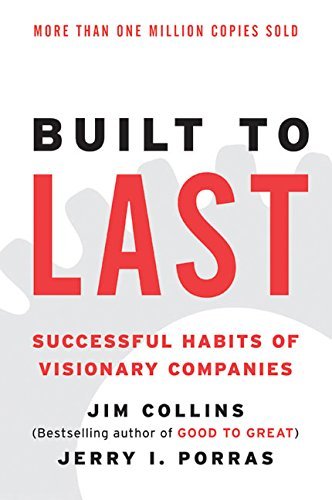
Built to Last: Successful Habits of Visionary Companies
by Jim Collins
Rating: 4.1 ⭐
• 12 recommendations ❤️
Drawing upon a six-year research project at the Stanford University Graduate School of Business, James C. Collins and Jerry I. Porras took eighteen truly exceptional and long-lasting companies and studied each in direct comparison to one of its top competitors. They examined the companies from their very beginnings to the present day -- as start-ups, as midsize companies, and as large corporations. Throughout, the authors asked: "What makes the truly exceptional companies different from the comparison companies and what were the common practices these enduringly great companies followed throughout their history?" Filled with hundreds of specific examples and organized into a coherent framework of practical concepts that can be applied by managers and entrepreneurs at all levels, Built to Last provides a master blueprint for building organizations that will prosper long into the 21st century and beyond.

"A road map for investing that I have now been following for 57 years."--From the Foreword by Warren E. BuffettFirst published in 1934, "Security Analysis" is one of the most influential financial books ever written. Selling more than one million copies through five editions, it has provided generations of investors with the timeless value investing philosophy and techniques of Benjamin Graham and David L. Dodd.As relevant today as when they first appeared nearly 75 years ago, the teachings of Benjamin Graham, the father of value investing, have withstood the test of time across a wide diversity of market conditions, countries, and asset classes.This new sixth edition, based on the classic 1940 version, is enhanced with 200 additional pages of commentary from some of today s leading Wall Street money managers. These masters of value investing explain why the principles and techniques of Graham and Dodd are still highly relevant even in today s vastly different markets. The contributor list includes: Seth A. Klarman, president of The Baupost Group, L.L.C. and author of "Margin of Safety" James Grant, founder of "Grant's Interest Rate Observer," general partner of Nippon Partners Jeffrey M. Laderman, twenty-five year veteran of "BusinessWeek" Roger Lowenstein, author of "Buffett: The Making of an American Capitalist" and "When America Aged" and Outside Director, Sequoia Fund Howard S. Marks, CFA, Chairman and Co-Founder, Oaktree Capital Management L.P. J. Ezra Merkin, Managing Partner, Gabriel Capital Group . Bruce Berkowitz, Founder, Fairholme Capital Management. Glenn H. Greenberg, Co-Founder and Managing Director, Chieftain Capital Management Bruce Greenwald, Robert Heilbrunn Professor of Finance and Asset Management, Columbia Business School David Abrams, Managing Member, Abrams CapitalFeaturing a foreword by Warren E. Buffett (in which he reveals that he has read the 1940 masterwork at least four times ), this new edition of "Security Analysis" will reacquaint you with the foundations of value investing more relevant than ever in the tumultuous 21st century markets."

The Wealth and Poverty of Nations: Why Some Are So Rich and Some So Poor
by David S. Landes
Rating: 4.0 ⭐
• 6 recommendations ❤️
The Wealth and Poverty of Nations is David S. Landes's acclaimed, best-selling exploration of one of the most contentious and hotly debated questions of our time: Why do some nations achieve economic success while others remain mired in poverty? The answer, as Landes definitively illustrates, is a complex interplay of cultural mores and historical circumstance. Rich with anecdotal evidence, piercing analysis, and a truly astonishing range of erudition, The Wealth and Poverty of Nations is a "picture of enormous sweep and brilliant insight" (Kenneth Arrow) as well as one of the most audaciously ambitious works of history in decades.For the paperback edition, Landes has written a new epilogue, in which he takes account of Asian financial crisises and the international tension between overconfidence and reality.

After more than two decades, this dramatic and concise single-volume distillation of James Thomas Flexner's definitive four-volume biography "George Washington," which received a Pulitzer Prize citation and a National Book Award for the fourth volume, has itself become an American classic. Now in a new trade paperback edition, this masterful work explores the Father of Our Country - sometimes an unpopular hero, a man of great contradictions, but always a towering historical figure, who remains, as Flexner writes in these pages, "a fallible human being made of flesh and blood and spirit - not a statue of marble and wood... a great and good man." The author unflinchingly paints a portrait of Washington: slave owner, brave leader, man of passion, reluctant politician, and fierce general. His complex character and career are neither glorified nor vilified here; rather, Flexner sets up a brilliant counterpoint between Washington's public and private lives and gives us a challenging look at the man who has become as much a national symbol as the American flag.

"An excellent primer for anyone struggling to keep profits ahead of costs. . . . Double Your Profits ' 'take no prisoners' approach is refreshing." - William Byham, bestselling coauthor of Zapp! One of the nation's foremost management consultants shares seventy-eight proven ways to cut costs dramatically, send sales through the roof, and double profits in just six months. This timeless profit-boosting guide, considered a top management resource by business powerhouse Jack Welch, presents insights that are notable for their aggressive approach and contrarian perspective. Bob Fifer, former chairman and CEO of Kaiser Associates, shows us how to turn the tables on hardball-playing suppliers and competitors. He also challenges outmoded assumptions and explains Whether you're a mid-level manager, senior executive, or Fortune 500 CEO, you'll find this book is required reading for growing your company and improving your bottom line.
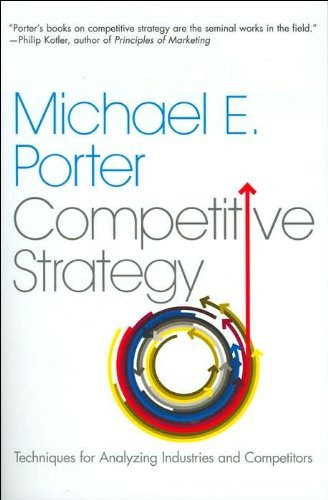
Competitive Strategy Techniques for Analyzing Industries and Competitors
by michael-e-porter
Rating: 4.1 ⭐
• 4 recommendations ❤️
Electrifying in its simplicity - like all great breakthroughs - COMPETITIVE STRATEGY captures the complexity of industry competition in five underlying forces. Author Michael Porter introduces one of the most powerful competitive tools yet developed: his three generic strategies - lowest cost, differentiation, and focus - which bring structure to the task of strategic positioning. He shows how competitive advantage can be defined in terms of relative cost and relative prices, thus linking it directly to profitability, and presents a whole new perspective on how profit is created and divided. More than a million managers in both large and small companies, investment analysts, consultants, students, and scholars throughout the world have internalised Porter's ideas and applied them to assess industries, understand competitors and choose competitive positions. COMPETITIVE STRATEGY has filled a void in management thinking. It provides an enduring foundation and grounding point on which all subsequent work can be built. Porter's rich frameworks and deep insights comprise a sophisticated view of competition unsurpassed in the last quarter-century.Additional Information:

The Clash of Civilizations and the Remaking of World Order
by Samuel P. Huntington
Rating: 3.5 ⭐
• 6 recommendations ❤️
Since its initial publication nearly fifteen years ago The Clash of Civilizations and the Remaking of World Order has become a classic work of international relations and one of the most influential books ever written about foreign affairs. An insightful and powerful analysis of the forces driving global politics, it is as indispensable to our understanding of American foreign policy today as the day it was published. As former National Security Adviser Zbigniew Brzezinski says in his new foreword to the book, it “has earned a place on the shelf of only about a dozen or so truly enduring works that provide the quintessential insights necessary for a broad understanding of world affairs in our time.”Samuel Huntington explains how clashes between civilizations are the greatest threat to world peace but also how an international order based on civilizations is the best safeguard against war. Events since the publication of the book have proved the wisdom of that analysis. The 9/11 attacks and wars in Iraq and Afghanistan have demonstrated the threat of civilizations but have also shown how vital international cross-civilization cooperation is to restoring peace. As ideological distinctions among nations have been replaced by cultural differences, world politics has been reconfigured. Across the globe, new conflicts—and new cooperation—have replaced the old order of the Cold War era.The Clash of Civilizations and the Remaking of World Order explains how the population explosion in Muslim countries and the economic rise of East Asia are changing global politics. These developments challenge Western dominance, promote opposition to supposedly “universal” Western ideals, and intensify intercivilization conflict over such issues as nuclear proliferation, immigration, human rights, and democracy. The Muslim population surge has led to many small wars throughout Eurasia, and the rise of China could lead to a global war of civilizations. Huntington offers a strategy for the West to preserve its unique culture and emphasizes the need for people everywhere to learn to coexist in a complex, multipolar, muliticivilizational world.

Stephen E. Ambrose draws upon extensive sources, an unprecedented degree of scholarship, and numerous interviews with Eisenhower himself to offer the fullest, richest, most objective rendering yet of the soldier who became president. He gives us a masterly account of the European war theater and Eisenhower's magnificent leadership as Allied Supreme Commander. Ambrose's recounting of Eisenhower's presidency, the first of the Cold War, brings to life a man and a country struggling with issues as diverse as civil rights, atomic weapons, communism, and a new global role. Along the way, Ambrose follows the 34th President's relations with the people closest to him, most of all Mamie, his son John, and Kay Summersby, as well as Franklin D. Roosevelt, Winston Churchill, Charles de Gaulle, Harry Truman, Nixon, Dulles, Khrushchev, Joe McCarthy, and indeed, all the American and world leaders of his time. This superb interpretation of Eisenhower's life confirms Stephen Ambrose's position as one of our finest historians.
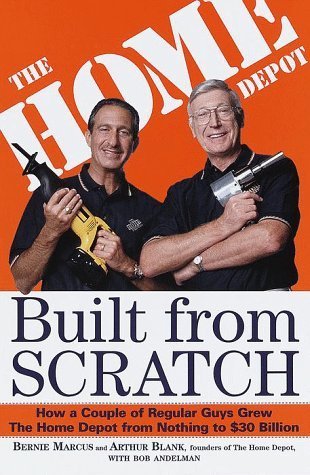
Built from Scratch: How a Couple of Regular Guys Grew The Home Depot from Nothing to $30 Billion
by Bernie Marcus
Rating: 4.0 ⭐
• 4 recommendations ❤️
When a friend told Bernie Marcus and Arthur Blank that, "You've just been hit in the ass by a golden horseshoe," they thought he was crazy. After all, both had just been fired. What the friend, Ken Langone, meant was that they now had the opportunity to create the kind of wide-open warehouse store that would help spark a consumer revolution through low prices, excellent customer service, and wide availability of products.Built from Scratch is the story of how two incredibly determined and creative people-and their associates-built a business from nothing to 761 stores and $30 billion in sales in a mere twenty years.Built from Scratch tells many colorful stories associated with The Home Depot's founding and meteoric rise; shows that a company can be a tough, growth-oriented competitor and still maintain a high sense of responsibility to the community; and provides great lessons useful to people in any business, from start-ups to the Fortune 500. Great Stories "Ming the Merciless": The inside account of the man who fired Arthur Blank and Bernie Marcus "My people don't drive Cadillacs!" How Ross Perot almost got involved with The Home Depot "Take this job and shove it!" The banker who put his career on the line to get The Home Depot the loan that enabled it to survive "Folks, I tell ya, if these Atlanta stores were any bigger, we'd be paying Alabama sales tax." Home Depot's first good ol' southern advertising campaign A Company with a Conscience When disasters like the Oklahoma City bombing or Hurricane Andrew happen, Home Depot associates don't ask for permission to respond. They react from their hearts-whether that means keeping their store open all night or being on the scene with volunteers and relief supplies. The Home Depot doesn't just contribute money to organizations like Habitat for Humanity and Christmas in April, but also provides its people to help lead and grow these community efforts. Great Lessons Know your customer: In The Home Depot's case, customers don't pay for wider aisles and a pretty store, but for a wide assortment and low prices Why everyday low prices mean more sales overall: The marketing philosophy The Home Depot learned from talking with Sam Walton Market leadership: Why The Home Depot never goes to a major new market with plans to open just a few stores The strategy for profitable growth: How The Home Depot redefined its U.S. market from its $135 billion traditional "do-it-yourself" base to a much larger pond of $365 billion How to change the rules of the game: How The Home Depot bypassed almost all middlemen, allowing it to pass on huge savings to customers Built from Scratch is the firsthand account of how two regular guys created one of the greatest entrepreneurial successes of the last twenty years.Bernie Marcus is a cofounder of The Home Depot and currently serves as chairman of the board. From the company's inception until 1997, he served as CEO. With his wife, Billie Marcus, he founded the Marcus Developmental Resource Center, which provides support services for mentally impaired children and their parents. He sits on many boards of directors, including the New York Stock Exchange, and participates in many civic organizations, including the City of Hope, a cancer research center.Arthur Blank is a cofounder of The Home Depot and is the company's president and CEO. He serves on the board of trustees of several organizations, including the North Carolina Outward Bound School, the Carter Center, Emory University, and the National Conference of Christians and Jews. He was inducted into the Babson College Academy of Distinguished Entrepreneurs and was honored by the City of Hope for his fund-raising leadership.Bob Andelman lives with his wife and daughter in St. Petersburg, Florida, and has collaborated on many bestselling business books, including Mean Business and The Profit Zone.

The Autobiography of Benjamin Franklin

Only the Paranoid Survive: How to Exploit the Crisis Points That Challenge Every Company
by Andrew S. Grove
Rating: 4.0 ⭐
• 17 recommendations ❤️
Andy Grove, founder and former CEO of Intel shares his strategy for success as he takes the reader deep inside the workings of a major company in Only the Paranoid Survive .Under Andy Grove's leadership, Intel became the world's largest chip maker and one of the most admired companies in the world. In Only the Paranoid Survive , Grove reveals his strategy for measuring the nightmare moment every leader dreads--when massive change occurs and a company must, virtually overnight, adapt or fall by the wayside--in a new way.Grove calls such a moment a Strategic Inflection Point, which can be set off by almost mega-competition, a change in regulations, or a seemingly modest change in technology. When a Strategic Inflection Point hits, the ordinary rules of business go out the window. Yet, managed right, a Strategic Inflection Point can be an opportunity to win in the marketplace and emerge stronger than ever.Grove underscores his message by examining his own record of success and failure, including how he navigated the events of the Pentium flaw, which threatened Intel's reputation in 1994, and how he has dealt with the explosions in growth of the Internet. The work of a lifetime, Only the Paranoid Survive is a classic of managerial and leadership skills.

The World Is Flat: A Brief History of the Twenty-First Century
by Thomas L. Friedman
Rating: 3.6 ⭐
• 8 recommendations ❤️
A New Edition of the Phenomenal #1 Bestseller"One mark of a great book is that it makes you see things in a new way, and Mr. Friedman certainly succeeds in that goal," the Nobel laureate Joseph E. Stiglitz wrote in The New York Times reviewing The World Is Flat in 2005. In this new edition, Thomas L. Friedman includes fresh stories and insights to help us understand the flattening of the world. Weaving new information into his overall thesis, and answering the questions he has been most frequently asked by parents across the country, this third edition also includes two new chapters—on how to be a political activist and social entrepreneur in a flat world; and on the more troubling question of how to manage our reputations and privacy in a world where we are all becoming publishers and public figures.The World Is Flat 3.0 is an essential update on globalization, its opportunities for individual empowerment, its achievements at lifting millions out of poverty, and its drawbacks—environmental, social, and political, powerfully illuminated by the Pulitzer Prize—winning author of The Lexus and the Olive Tree.

A History of Knowledge: Past, Present, and Future
by Charles van Doren
Rating: 3.9 ⭐
• 2 recommendations ❤️
A one-volume reference to the history of ideas that is a compendium of everything that humankind has thought, invented, created, considered, and perfected from the beginning of civilization into the twenty-first century. Massive in its scope, and yet totally accessible, A HISTORY OF KNOWLEDGE covers not only all the great theories and discoveries of the human race, but also explores the social conditions, political climates, and individual men and women of genius that brought ideas to fruition throughout history."Crystal clear and concise...Explains how humankind got to know what it knows."Clifton FadimanSelected by the Book-of-the-Month Club and the History Book Club

Founding Brothers: The Revolutionary Generation
by Joseph J. Ellis
Rating: 4.0 ⭐
• 2 recommendations ❤️
In retrospect, it seems as if the American Revolution was inevitable. But was it? In Founding Brothers, Joseph J. Ellis reveals that many of those truths we hold to be self-evident were actually fiercely contested in the early days of the republic. Ellis focuses on six crucial moments in the life of the new nation, including a secret dinner at which the seat of the nation's capital was determined--in exchange for support of Hamilton's financial plan; Washington's precedent-setting Farewell Address; and the Hamilton and Burr duel. Most interesting, perhaps, is the debate (still dividing scholars today) over the meaning of the Revolution. In a fascinating chapter on the renewed friendship between John Adams and Thomas Jefferson at the end of their lives, Ellis points out the fundamental differences between the Republicans, who saw the Revolution as a liberating act and hold the Declaration of Independence most sacred, and the Federalists, who saw the revolution as a step in the building of American nationhood and hold the Constitution most dear. Throughout the text, Ellis explains the personal, face-to-face nature of early American politics--and notes that the members of the revolutionary generation were conscious of the fact that they were establishing precedents on which future generations would rely. In Founding Brothers, Ellis (whose American Sphinx won the National Book Award for nonfiction in 1997) has written an elegant and engaging narrative, sure to become a classic. Highly recommended. --Sunny Delaney

"Execution may very well be the best business book of the year, and one of the most useful to have come around in a long time. This smart and pithy book focuses on a simple though vexing challenge: How can the leaders of an organization exhort their people to deliver on the most important goals?....It's rare to find a book like this that blends smart practice with intelligent articulation of how to get things done. Do yourself a favor. Buy it." --The Boston Globe"Making all of the moving parts of an organization function smoothly together is just plain hard work. By describing how he has done it, Mr. Bossidy has come up with a valuable and practical management guide that is must-reading for everyone who cares about business." --The New York Times"If you want to be a CEO--or if you are a CEO and want to keep your job--read Execution and put its principles to work." --Michael Dell, chairman and CEO, Dell Computer Corp."A how-to book for the can-do boss....If even half the corporations in America pondered their suggestions, the economy would be in much better shape. Moreover, Bossidy and Charan boast an impressive enough track record that anyone who wants to stay sharp at the helm will welcome their assistance." --BusinessWeek"Sound, practical advice on how to make things happen." --Ralph S. Larsen, chairman and CEO, Johnson & Johnson"Here's the real deal.... This is no-nonsense stuff.... The leaders who sweat the small stuff, hire the right people, make the tough decisions and stick around to see that they're carried out are the real winners.... Forget the swarmy memoirs, cheesy parables, advice for idiots, and leadership secrets of despots and barbarians. Getting it done is, according to Bossidy and Charan, the only way to grow." --The Miami Herald"Captures a lifetime of building winning formulas and puts them in a simple, practical context for executives at any level." --Ivan Seidenberg, president and CEO, Verizon


Guns, Germs, and Steel: The Fates of Human Societies
by Jared Diamond
Rating: 4.1 ⭐
• 24 recommendations ❤️
Winner of the Pulitzer Prize • New York Times Bestseller • Over Two Million Copies Sold“One of the most significant projects embarked upon by any intellectual of our generation” (Gregg Easterbrook, New York Times), Guns, Germs, and Steel presents a groundbreaking, unified narrative of human history.Why did Eurasians conquer, displace, or decimate Native Americans, Australians, and Africans, instead of the reverse? In this “artful, informative, and delightful” (William H. McNeill, New York Review of Books) book, a classic of our time, evolutionary biologist Jared Diamond dismantles racist theories of human history by revealing the environmental factors actually responsible for its broadest patterns.The story begins 13,000 years ago, when Stone Age hunter-gatherers constituted the entire human population. Around that time, the developmental paths of human societies on different continents began to diverge greatly. Early domestication of wild plants and animals in the Fertile Crescent, China, Mesoamerica, the Andes, and other areas gave peoples of those regions a head start at a new way of life. But the localized origins of farming and herding proved to be only part of the explanation for their differing fates. The unequal rates at which food production spread from those initial centers were influenced by other features of climate and geography, including the disparate sizes, locations, and even shapes of the continents. Only societies that moved away from the hunter-gatherer stage went on to develop writing, technology, government, and organized religions as well as deadly germs and potent weapons of war. It was those societies, adventuring on sea and land, that invaded others, decimating native inhabitants through slaughter and the spread of disease.A major landmark in our understanding of human societies, Guns, Germs, and Steel chronicles the way in which the modern world, and its inequalities, came to be.

Bill Bryson describes himself as a reluctant traveller, but even when he stays safely at home he can't contain his curiosity about the world around him. "A Short History of Nearly Everything" is his quest to understand everything that has happened from the Big Bang to the rise of civilisation - how we got from there, being nothing at all, to here, being us. The ultimate eye-opening journey through time and space, revealing the world in a way most of us have never seen it before.

The Personal Memoirs of Ulysses S. Grant: The Complete Annotated Edition
by Ulysses S. Grant
Rating: 4.5 ⭐
• 4 recommendations ❤️
President Ulysses S. Grant (1822-1885) was one of the most esteemed individuals of the nineteenth century. His two-volume memoirs, sold door-to-door by former Union soldiers, have never gone out of print and were once as ubiquitous in American households as the Bible. Mark Twain, Gertrude Stein, Matthew Arnold, Henry James, and Edmund Wilson hailed these works as great literature, and Presidents Bill Clinton and George W. Bush both credit Grant with influencing their own writing. Yet a judiciously annotated clarifying edition of these memoirs has never been produced until now.The Personal Memoirs of Ulysses S. Grant is the first comprehensively annotated edition of Grant's memoirs, fully representing the great military leader's thoughts on his life and times through the end of the Civil War and his invaluable perspective on battlefield decision making. An introduction contextualizes Grant's life and significance, and lucid editorial commentary allows the president's voice and narrative to shine through. With annotations compiled by the editors of the Ulysses S. Grant Association's Presidential Library, this definitive edition enriches our understanding of the antebellum era, the Mexican War, and the Civil War. Grant provides insight into how rigorously these events tested America's democratic institutions and the cohesion of its social order.The Personal Memoirs of Ulysses S. Grant preserves and extends a work of profound political, historical, and literary significance and serves as the gateway for modern readers of all backgrounds to an American classic.

Trailblazer: The Power of Business as the Greatest Platform for Change
by Marc Benioff
Rating: 4.0 ⭐
• 10 recommendations ❤️
NEW YORK TIMES BESTSELLER • The founder and co-CEO of Salesforce delivers a n inspiring vision for successful companies of the future—in which changing the world is everyone’s business.“The gold standard on how to use business as a platform for change at this urgent time.”— Ray Dalio, founder of Bridgewater Associates and author of Principles: Life and WorkWhat’s the secret to business growth and innovation and a purpose-driven career in a world that is becoming vastly more complicated by the day? According to Marc Benioff, the answer is embracing a culture in which your values permeate everything you do.In Trailblazer, Benioff gives readers a rare behind-the-scenes look at the inner workings of one of the world’s most admired companies. He reveals how Salesforce’s core values—trust, customer success, innovation, and equality—and commitment to giving back have become the company’s greatest competitive advantage and the most powerful engine of its success. Because no matter what business you’re in, Benioff says, values are the bedrock of a resilient company culture that inspires all employees, at every level, to do the best work of their lives. Along the way, he shares insights and best practices for anyone who wants to cultivate a company culture positioned to thrive in the face of the inevitable disruption ahead.None of us in the business world can afford to sit on the sidelines and ignore what’s going on outside the walls of our workplaces. In the future, profits and progress will no longer be sustainable unless they serve the greater good. Whether you run a company, lead a small team, or have just draped an ID badge around your neck for the first time, Trailblazer reveals how anyone can become an agent of change.Praise for Trailblazer“A guide for what every business and organization must do to thrive in this period of profound political and economic change.” —Jamie Dimon, chairman and CEO of JPMorgan Chase“In Trailblazer, Benioff explores how companies can nurture a values-based culture to become powerful platforms for change.” —Susan Wojcicki, CEO of YouTube

Trade Is Not a Four-Letter Word: How Six Everyday Products Make the Case for Trade
by Fred P. Hochberg
Rating: 4.0 ⭐
• 6 recommendations ❤️
From former Chairman and President of the Export-Import Bank of the United States Fred P. Hochberg comes an illuminating and engaging tutorial on the basics of modern trade. Trade—the exchange that powers the world—allows us to sell what we produce at home and purchase what we don’t. In the age of globalization, trade has joined together more people than ever before, providing access to major new markets and countless new products that have revolutionized our lives. However, for millions of people, global trade has become a popular target for blame and the frustrations of modern life. Much of the public only connects trade with unfathomable, high-level deals causing the fundamental principles to often seem inaccessible and confusing. Through the lens of six quintessential American goods, Fred P. Hochberg breaks down colorful and compelling real-world examples to dispel the widespread myths and confusions surrounding trade. By using six widely consumed American goods—the taco salad, the minivan, the banana, the iPhone, the college degree, and the HBO series Game of Thrones—Hochberg highlights the story of America’s most surprising trade relationships while sharing the essentials of trade that everyone should know.
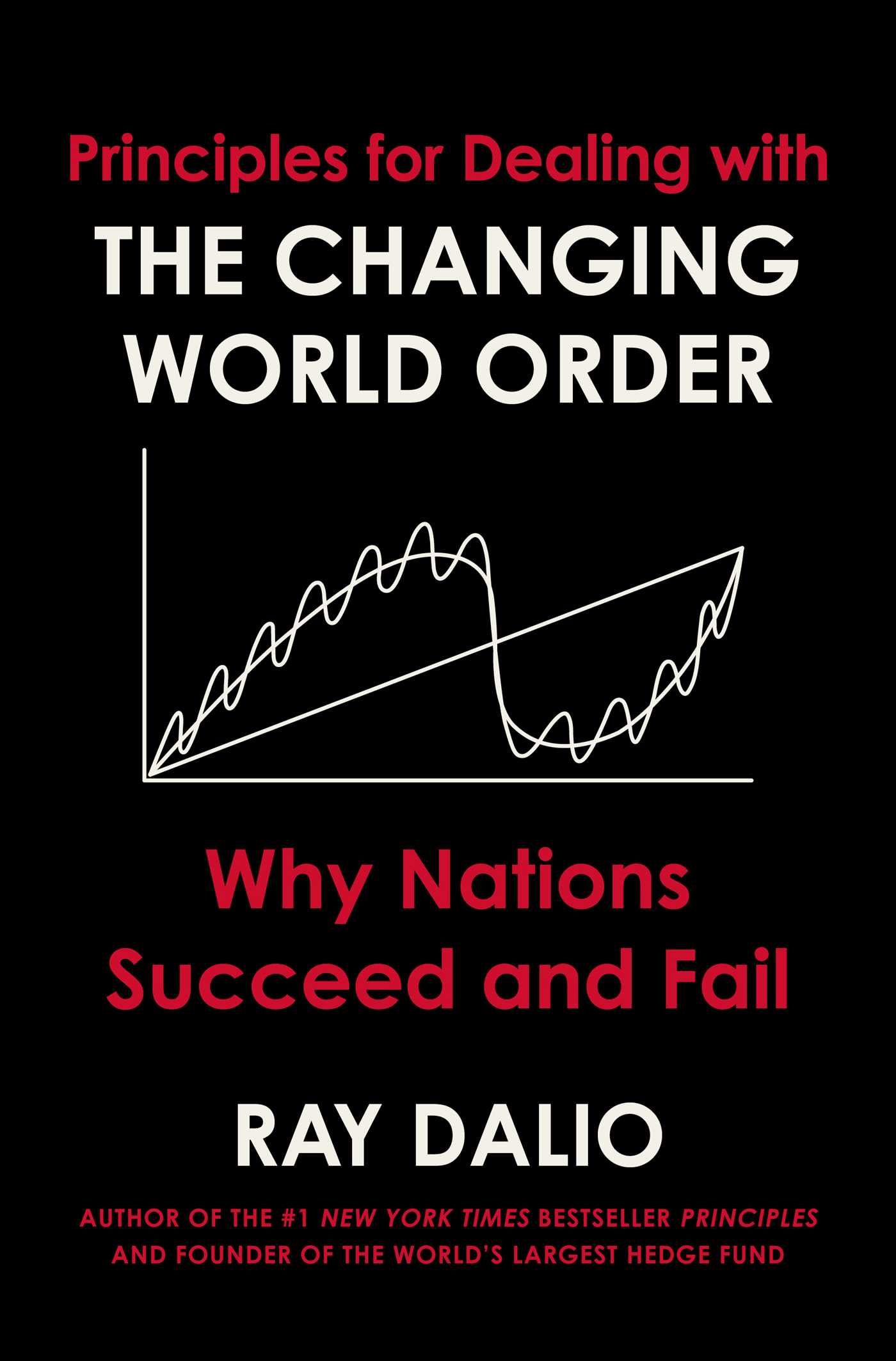
Principles for Dealing with the Changing World Order: Why Nations Succeed and Fail
by Ray Dalio
Rating: 4.3 ⭐
• 21 recommendations ❤️
From legendary investor Ray Dalio, author of the #1 New York Times bestseller Principles, who has spent half a century studying global economies and markets, Principles for Dealing with the Changing World Order examines history’s most turbulent economic and political periods to reveal why the times ahead will likely be radically different from those we’ve experienced in our lifetimes—and to offer practical advice on how to navigate them well.A few years ago, Ray Dalio noticed a confluence of political and economic conditions he hadn’t encountered before. They included huge debts and zero or near-zero interest rates that led to massive printing of money in the world’s three major reserve currencies; big political and social conflicts within countries, especially the US, due to the largest wealth, political, and values disparities in more than 100 years; and the rising of a world power (China) to challenge the existing world power (US) and the existing world order. The last time that this confluence occurred was between 1930 and 1945. This realization sent Dalio on a search for the repeating patterns and cause/effect relationships underlying all major changes in wealth and power over the last 500 years.In this remarkable and timely addition to his Principles series, Dalio brings readers along for his study of the major empires—including the Dutch, the British, and the American—putting into perspective the “Big Cycle” that has driven the successes and failures of all the world’s major countries throughout history. He reveals the timeless and universal forces behind these shifts and uses them to look into the future, offering practical principles for positioning oneself for what’s ahead.