
James Clear Recommended Books
American author and speaker
29 Books Recommended

Influence, the classic book on persuasion, explains the psychology of why people say "yes"—and how to apply these understandings. Dr. Robert Cialdini is the seminal expert in the rapidly expanding field of influence and persuasion. His thirty-five years of rigorous, evidence-based research along with a three-year program of study on what moves people to change behavior has resulted in this highly acclaimed book.You'll learn the six universal principles, how to use them to become a skilled persuader—and how to defend yourself against them. Perfect for people in all walks of life, the principles of Influence will move you toward profound personal change and act as a driving force for your success.

In this landmark work Keith Johnstone provides a revelatory guide to rediscovering and unlocking the imagination. Admired for its clarity and zest, Impro lays bare the techniques and exercises used to foster spontaneity and narrative skill for actors. These techniques and exercises were evolved in the actors' studio, when he was Associate Director of the Royal Court and then in demonstrations to schools and colleges and ultimately in the founding of a company of performers called The Theatre Machine.Divided into four sections, 'Status', 'Spontaneity', 'Narrative Skills' and 'Masks and Trance', arranged more or less in the order a group might approach them, the book sets out the specific approaches which Johnstone has himself found most useful and most stimulating. The result is a fascinating exploration of the nature of spontaneous creativity.

"Surely You're Joking, Mr. Feynman!": Adventures of a Curious Character
by
Rating: 4.3 ⭐
• 25 recommendations ❤️
A New York Times bestseller—the outrageous exploits of one of this century's greatest scientific minds and a legendary American original.Richard Feynman, winner of the Nobel Prize in physics, thrived on outrageous adventures. Here he recounts in his inimitable voice his experience trading ideas on atomic physics with Einstein and Bohr and ideas on gambling with Nick the Greek; cracking the uncrackable safes guarding the most deeply held nuclear secrets; accompanying a ballet on his bongo drums; painting a naked female toreador. In short, here is Feynman's life in all its eccentric—a combustible mixture of high intelligence, unlimited curiosity, and raging chutzpah.
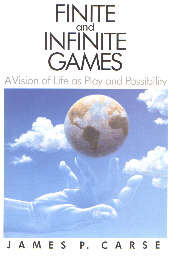
Finite and Infinite Games: A Vision of Life as Play and Possibility
by James P. Carse
Rating: 3.9 ⭐
• 2 recommendations ❤️
Reflection on life in terms of competition, Professor Carse compares two types of games manifested in human life--finite games, the familiar games of daily life that are bounded by space and time and infinite games, unbounded, unfettered, creative expressions of the human spirit

The War of Art: Break Through the Blocks and Win Your Inner Creative Battles
by Steven Pressfield
Rating: 4.1 ⭐
• 38 recommendations ❤️
The Art of War meets "The Artist's Way" in this no-nonsense, profoundly inspiring guide to overcoming creative blocks of every kind.

The Power of Now: A Guide to Spiritual Enlightenment
by Eckhart Tolle
Rating: 4.2 ⭐
• 17 recommendations ❤️
An alternative cover edition for this ISBN can be found here.To make the journey into the Now we will need to leave our analytical mind and its false created self, the ego, behind. From the very first page of Eckhart Tolle's extraordinary book, we move rapidly into a significantly higher altitude where we breathe a lighter air. We become connected to the indestructible essence of our Being, “The eternal, ever present One Life beyond the myriad forms of life that are subject to birth and death.” Although the journey is challenging, Eckhart Tolle uses simple language and an easy question-and-answer format to guide us.A word-of-mouth phenomenon since its first publication, The Power of Now is one of those rare books with the power to create an experience in readers, one that can radically change their lives for the better.

"This book is written with the sole objective of helping the reader achieve a happy, satisfying, and worthwhile life." -- Norman Vincent PealeThe Power of Positive Thinking has helped millions of men and women to achieve fulfillment in their lives. In this phenomenal bestseller, Dr. Peale demonstrates the power of faith in action. With the practical techniques outlined in this book, you can energize your life -- and give yourself the initiative needed to carry out your ambitions and hopes. You'll learn how to: believe in yourself and in everything you do build new power and determination develop the power to reach your goals break the worry habit and achieve a relaxed life improve your personal and professional relationships assume control over your circumstances be kind to yourself

A spellbinding amalgam of murder mystery, family saga, love story, and financial intrigue.It's about the disappearance forty years ago of Harriet Vanger, a young scion of one of the wealthiest families in Sweden...and about her octogenarian uncle, determined to know the truth about what he believes was her murder.It's about Mikael Blomkvist, a crusading journalist recently at the wrong end of a libel case, hired to get to the bottom of Harriet's disappearance...and about Lisbeth Salander, a twenty-four-year old pierced and tattooed genius hacker possessed of the hard-earned wisdom of someone twice her age, who assists Blomkvist with the investigation. This unlikely team discovers a vein of nearly unfathomable iniquity running through the Vanger family, astonishing corruption in the highest echelons of Swedish industrialism, and an unexpected connection between themselves.(front flap)

Into Thin Air: A Personal Account of the Mount Everest Disaster
by Jon Krakauer
Rating: 4.4 ⭐
• 4 recommendations ❤️
Jon Krakauer's Into Thin Air is the true story of a 24-hour period on Everest, when members of three separate expeditions were caught in a storm and faced a battle against hurricane-force winds, exposure, and the effects of altitude, which ended in the worst single-season death toll in the peak's history.In March 1996, Outside magazine sent veteran journalist and seasoned climber Jon Krakauer on an expedition led by celebrated Everest guide Rob Hall. Despite the expertise of Hall and the other leaders, by the end of summit day, eight people were dead. Krakauer's book is at once the story of the ill-fated adventure and an analysis of the factors leading up to its tragic end. Written within months of the events it chronicles, Into Thin Air clearly evokes the majestic Everest landscape.As the journey up the mountain progresses, Krakauer puts it in context by recalling the triumphs and perils of other Everest trips throughout history. The author's own anguish over what happened on the mountain is palpable as he leads readers to ponder timeless questions.
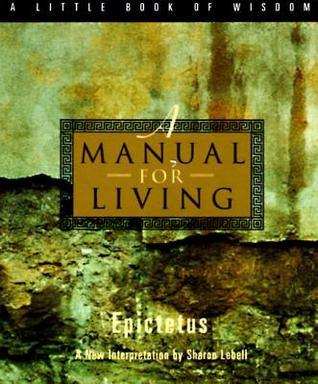
The essence of perennial Stoic wisdom in aphorisms of stunning insight and simplicity. The West's first and best little instruction book offers thoroughly contemporary and pragmatic reflections on how best to live with serenity and joy.

Guns, Germs, and Steel: The Fates of Human Societies
by Jared Diamond
Rating: 4.1 ⭐
• 24 recommendations ❤️
Winner of the Pulitzer Prize • New York Times Bestseller • Over Two Million Copies Sold“One of the most significant projects embarked upon by any intellectual of our generation” (Gregg Easterbrook, New York Times), Guns, Germs, and Steel presents a groundbreaking, unified narrative of human history.Why did Eurasians conquer, displace, or decimate Native Americans, Australians, and Africans, instead of the reverse? In this “artful, informative, and delightful” (William H. McNeill, New York Review of Books) book, a classic of our time, evolutionary biologist Jared Diamond dismantles racist theories of human history by revealing the environmental factors actually responsible for its broadest patterns.The story begins 13,000 years ago, when Stone Age hunter-gatherers constituted the entire human population. Around that time, the developmental paths of human societies on different continents began to diverge greatly. Early domestication of wild plants and animals in the Fertile Crescent, China, Mesoamerica, the Andes, and other areas gave peoples of those regions a head start at a new way of life. But the localized origins of farming and herding proved to be only part of the explanation for their differing fates. The unequal rates at which food production spread from those initial centers were influenced by other features of climate and geography, including the disparate sizes, locations, and even shapes of the continents. Only societies that moved away from the hunter-gatherer stage went on to develop writing, technology, government, and organized religions as well as deadly germs and potent weapons of war. It was those societies, adventuring on sea and land, that invaded others, decimating native inhabitants through slaughter and the spread of disease.A major landmark in our understanding of human societies, Guns, Germs, and Steel chronicles the way in which the modern world, and its inequalities, came to be.

One of the most published and translated books in the world, The Little Prince fascinates the reader with its story of a pilot marooned in the Sahara after something goes wrong with his plane, and a little man with golden hair who has ‘fallen’ to earth by chance. As the pilot tries to repair his plane, the little man requests him to draw a sheep as well as a box to keep the sheep in, so that it may not harm a flower he cares for—and therein begins a friendship that leads us to re-examine the many things we take for granted in our everyday life. Part fantasy, part fable, this is written as much for children as for adults, bringing home the message ‘what is essential, is invisible to the eye’.

A concise survey of the culture and civilization of mankind, The Lessons of History is the result of a lifetime of research from Pulitzer Prize–winning historians Will and Ariel Durant.With their accessible compendium of philosophy and social progress, the Durants take us on a journey through history, exploring the possibilities and limitations of humanity over time. Juxtaposing the great lives, ideas, and accomplishments with cycles of war and conquest, the Durants reveal the towering themes of history and give meaning to our own.

Candide is the story of a gentle man who, though pummeled and slapped in every direction by fate, clings desperately to the belief that he lives in "the best of all possible worlds." On the surface a witty, bantering tale, this eighteenth-century classic is actually a savage, satiric thrust at the philosophical optimism that proclaims that all disaster and human suffering is part of a benevolent cosmic plan. Fast, funny, often outrageous, the French philosopher's immortal narrative takes Candide around the world to discover that — contrary to the teachings of his distinguished tutor Dr. Pangloss — all is not always for the best. Alive with wit, brilliance, and graceful storytelling, Candide has become Voltaire's most celebrated work.
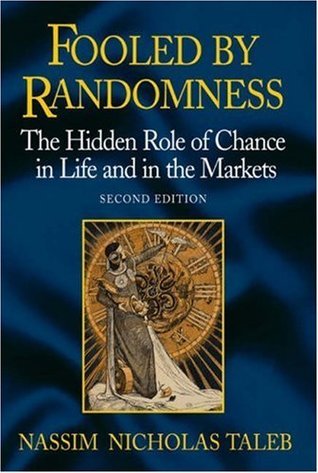
Fooled by Randomness: The Hidden Role of Chance in Life and in the Markets
by Nassim Nicholas Taleb
Rating: 4.0 ⭐
• 14 recommendations ❤️
Selected by Amazon.com and the Financial Times as one of the best business books of the year, Fooled by Randomness is an instant classic. It's uniqueness has drawn to it a wide following - from the New Yorker to the Pentagon. Already published in 14 languages, this new edition, expanded by over 80 pages, includes up-to-date advances from behavioral finance and cognitive science This book is about luck ? or more precisely how we perceive and deal with luck in life and business. It is already a landmark work and its title has entered our vocabulary. In its second edition, Fooled by Randomness is now a cornerstone for anyone interested in random outcomes. Set against the backdrop of the most conspicuous forum in which luck is mistaken for skill ? the world of trading ? Fooled by Randomness is a captivating insight into one of the least understood factors of all our lives. Writting in an entertaining and narrative style, the author succeeds in tackling three major intellectual the problem of induction, the survivorship biases, and our genetic unfitness to the modern word. In this second edition, Taleb manages to use stories and anecdotes to illustrate our overestimation of causality and the heuristics that make us view the world as far more explainable than it actually is. But no one can replicate what is obtained by chance. Are we capable of distinguishing the fortunate charlatan from the genuine visionary? Must we always try to uncover nonexistent messages in random events? It may be impossible to guard ourselves against the vagaries of the Goddess Fortuna, but after reading Fooled by Randomness we can be a little better prepared.
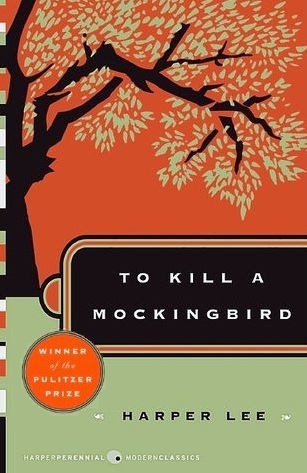
"Shoot all the bluejays you want, if you can hit 'em, but remember it's a sin to kill a mockingbird."A lawyer's advice to his children as he defends the real mockingbird of Harper Lee's classic novel - a black man charged with the rape of a white girl. Through the young eyes of Scout and Jem Finch, Harper Lee explores with exuberant humour the irrationality of adult attitudes to race and class in the Deep South of the 1930s. The conscience of a town steeped in prejudice, violence and hypocrisy is pricked by the stamina of one man's struggle for justice. But the weight of history will only tolerate so much."To Kill A Mockingbird" became both an instant bestseller and a critical success when it was first published in 1960. It went on to win the Pulitzer Prize in 1961 and was later made into an Academy Award-winning film.

Explode the myth that you need to earn a high income to become richChallenge the belief that your house is an assetShow parents why they can't rely on the school system to teach their kids about moneyDefine once and for all an asset and a liabilityTeach you what to teach your kids about money for their future financial success

Combining magic, mysticism, wisdom, and wonder into an inspiring tale of self-discovery, The Alchemist has become a modern classic, selling millions of copies around the world and transforming the lives of countless readers across generations.Paulo Coelho's masterpiece tells the mystical story of Santiago, an Andalusian shepherd boy who yearns to travel in search of a worldly treasure. His quest will lead him to riches far different—and far more satisfying—than he ever imagined. Santiago's journey teaches us about the essential wisdom of listening to our hearts, recognizing opportunity and learning to read the omens strewn along life's path, and, most importantly, following our dreams.

Siddhartha : An Indian TaleHermann HESSE (1877 - 1962),Translator: Gunther Olesch, Anke Dreher, Amy Coulter, Stefan Langer and Semyon ChaichenetsSiddhartha is one of the great philosophical novels. Profoundly insightful, it is also a beautifully written story that begins as Siddhartha, son of an Indian Brahman, leaves his family and begins a lifelong journey towards Enlightenment. On the way he faces the entire range of human experience and emotion: he lives with ascetics, meets Gotama the Buddha, learns the art of love from Kamala the courtesan, and is transformed by the simple philosophy of the ferryman Vasudeva whose wisdom comes not from learned teachings but from observing the River. Herman Hesse (1877-1962) was a German-Swiss novelist, poet, and painter. He was awarded the Nobel Prize in Literature in 1946.

This Is Water: Some Thoughts, Delivered on a Significant Occasion, about Living a Compassionate Life
by David Foster Wallace
Rating: 4.5 ⭐
• 9 recommendations ❤️
Only once did David Foster Wallace give a public talk on his views on life, during a commencement address given in 2005 at Kenyon College. The speech is reprinted for the first time in book form in THIS IS WATER. How does one keep from going through their comfortable, prosperous adult life unconsciously? How do we get ourselves out of the foreground of our thoughts and achieve compassion? The speech captures Wallace's electric intellect as well as his grace in attention to others. After his death, it became a treasured piece of writing reprinted in The Wall Street Journal and the London Times, commented on endlessly in blogs, and emailed from friend to friend.Writing with his one-of-a-kind blend of causal humor, exacting intellect, and practical philosophy, David Foster Wallace probes the challenges of daily living and offers advice that renews us with every reading.

The Power of Habit: Why We Do What We Do in Life and Business
by Charles Duhigg
Rating: 4.3 ⭐
• 21 recommendations ❤️
NEW YORK TIMES BESTSELLER • This instant classic explores how we can change our lives by changing our habits.NAMED ONE OF THE BEST BOOKS OF THE YEAR BY The Wall Street Journal • Financial TimesIn The Power of Habit, award-winning business reporter Charles Duhigg takes us to the thrilling edge of scientific discoveries that explain why habits exist and how they can be changed. Distilling vast amounts of information into engrossing narratives that take us from the boardrooms of Procter & Gamble to the sidelines of the NFL to the front lines of the civil rights movement, Duhigg presents a whole new understanding of human nature and its potential. At its core, The Power of Habit contains an exhilarating argument: The key to exercising regularly, losing weight, being more productive, and achieving success is understanding how habits work. As Duhigg shows, by harnessing this new science, we can transform our businesses, our communities, and our lives.With a new Afterword by the author “Sharp, provocative, and useful.” —Jim Collins “Few [books] become essential manuals for business and living. The Power of Habit is an exception. Charles Duhigg not only explains how habits are formed but how to kick bad ones and hang on to the good.” — Financial Times “A flat-out great read.” —David Allen, bestselling author of Getting Things Done: The Art of Stress-Free Productivity“You’ll never look at yourself, your organization, or your world quite the same way.” —Daniel H. Pink, bestselling author of Drive and A Whole New Mind“Entertaining . . . enjoyable . . . fascinating . . . a serious look at the science of habit formation and change.” — The New York Times Book Review

A Summer Reading Pick for President Barack Obama, Bill Gates, and Mark Zuckerberg From a renowned historian comes a groundbreaking narrative of humanity’s creation and evolution—a #1 international bestseller—that explores the ways in which biology and history have defined us and enhanced our understanding of what it means to be “human.”One hundred thousand years ago, at least six different species of humans inhabited Earth. Yet today there is only one—homo sapiens. What happened to the others? And what may happen to us?Most books about the history of humanity pursue either a historical or a biological approach, but Dr. Yuval Noah Harari breaks the mold with this highly original book that begins about 70,000 years ago with the appearance of modern cognition. From examining the role evolving humans have played in the global ecosystem to charting the rise of empires, Sapiens integrates history and science to reconsider accepted narratives, connect past developments with contemporary concerns, and examine specific events within the context of larger ideas.Dr. Harari also compels us to look ahead, because over the last few decades humans have begun to bend laws of natural selection that have governed life for the past four billion years. We are acquiring the ability to design not only the world around us, but also ourselves. Where is this leading us, and what do we want to become?Featuring 27 photographs, 6 maps, and 25 illustrations/diagrams.

The Life-Changing Magic of Tidying Up: The Japanese Art of Decluttering and Organizing
by Marie Kondō
Rating: 3.9 ⭐
• 4 recommendations ❤️
Despite constant efforts to declutter your home, do papers still accumulate like snowdrifts and clothes pile up like a tangled mess of noodles?Japanese cleaning consultant Marie Kondo takes tidying to a whole new level, promising that if you properly simplify and organize your home once, you'll never have to do it again. Most methods advocate a room-by-room or little-by-little approach, which doom you to pick away at your piles of stuff forever. The KonMari Method, with its revolutionary category-by-category system, leads to lasting results. In fact, none of Kondo's clients have lapsed (and she still has a three-month waiting list).With detailed guidance for determining which items in your house "spark joy" (and which don't), this international best seller featuring Tokyo's newest lifestyle phenomenon will help you clear your clutter and enjoy the unique magic of a tidy home - and the calm, motivated mindset it can inspire.

#1 NEW YORK TIMES BESTSELLER • PULITZER PRIZE FINALIST • OVER TWO MILLION COPIES SOLDThis inspiring, exquisitely observed memoir finds hope and beauty in the face of insurmountable odds as an idealistic young neurosurgeon attempts to answer the question, What makes a life worth living?“Unmissable . . . Finishing this book and then forgetting about it is simply not an option.”—Janet Maslin, The New York TimesONE OF THE BEST BOOKS OF THE YEAR: The New York Times Book Review, People, NPR, The Washington Post, Slate, Harper’s Bazaar, Time Out New York, Publishers Weekly, BookPageAn Oprah Daily Best Nonfiction Book of the Past Two Decades • A Kirkus Reviews Best Nonfiction Book of the CenturyAt the age of thirty-six, on the verge of completing a decade’s worth of training as a neurosurgeon, Paul Kalanithi was diagnosed with stage IV lung cancer. One day he was a doctor treating the dying, and the next he was a patient struggling to live. And just like that, the future he and his wife had imagined evaporated. When Breath Becomes Air chronicles Kalanithi’s transformation from a naïve medical student “possessed,” as he wrote, “by the question of what, given that all organisms die, makes a virtuous and meaningful life” into a neurosurgeon at Stanford working in the brain, the most critical place for human identity, and finally into a patient and new father confronting his own mortality.What makes life worth living in the face of death? What do you do when the future, no longer a ladder toward your goals in life, flattens out into a perpetual present? What does it mean to have a child, to nurture a new life as another fades away? These are some of the questions Kalanithi wrestles with in this profoundly moving, exquisitely observed memoir.Paul Kalanithi died in March 2015, while working on this book, yet his words live on as a guide and a gift to us all. “I began to realize that coming face to face with my own mortality, in a sense, had changed nothing and everything,” he wrote. “Seven words from Samuel Beckett began to repeat in my head: ‘I can’t go on. I’ll go on.’” When Breath Becomes Air is an unforgettable, life-affirming reflection on the challenge of facing death and on the relationship between doctor and patient, from a brilliant writer who became both.Finalist for the PEN Center USA Literary Award in Creative Nonfiction and the Books for a Better Life Award in Inspirational Memoir

Deep Work: Rules for Focused Success in a Distracted World
by Cal Newport
Rating: 4.2 ⭐
• 9 recommendations ❤️
One of the most valuable skills in our economy is becoming increasingly rare. If you master this skill, you'll achieve extraordinary results.Deep work is the ability to focus without distraction on a cognitively demanding task. It's a skill that allows you to quickly master complicated information and produce better results in less time. Deep work will make you better at what you do and provide the sense of true fulfillment that comes from craftsmanship. In short, deep work is like a super power in our increasingly competitive twenty-first century economy. And yet, most people have lost the ability to go deep-spending their days instead in a frantic blur of e-mail and social media, not even realizing there's a better way.In Deep Work, author and professor Cal Newport flips the narrative on impact in a connected age. Instead of arguing distraction is bad, he instead celebrates the power of its opposite. Dividing this book into two parts, he first makes the case that in almost any profession, cultivating a deep work ethic will produce massive benefits. He then presents a rigorous training regimen, presented as a series of four "rules," for transforming your mind and habits to support this skill.A mix of cultural criticism and actionable advice, Deep Work takes the reader on a journey through memorable stories-from Carl Jung building a stone tower in the woods to focus his mind, to a social media pioneer buying a round-trip business class ticket to Tokyo to write a book free from distraction in the air-and no-nonsense advice, such as the claim that most serious professionals should quit social media and that you should practice being bored. Deep Work is an indispensable guide to anyone seeking focused success in a distracted world.

The Subtle Art of Not Giving a F*ck: A Counterintuitive Approach to Living a Good Life
by Mark Manson
Rating: 3.9 ⭐
• 3 recommendations ❤️
New York Times BestsellerIn this generation-defining self-help guide, a superstar blogger cuts through the crap to show us how to stop trying to be "positive" all the time so that we can truly become better, happier people.For decades, we’ve been told that positive thinking is the key to a happy, rich life. "F**k positivity," Mark Manson says. "Let’s be honest, shit is f**ked and we have to live with it." In his wildly popular Internet blog, Manson doesn’t sugarcoat or equivocate. He tells it like it is—a dose of raw, refreshing, honest truth that is sorely lacking today. The Subtle Art of Not Giving a F**k is his antidote to the coddling, let’s-all-feel-good mindset that has infected modern society and spoiled a generation, rewarding them with gold medals just for showing up.Manson makes the argument, backed both by academic research and well-timed poop jokes, that improving our lives hinges not on our ability to turn lemons into lemonade, but on learning to stomach lemons better. Human beings are flawed and limited—"not everybody can be extraordinary, there are winners and losers in society, and some of it is not fair or your fault." Manson advises us to get to know our limitations and accept them. Once we embrace our fears, faults, and uncertainties, once we stop running and avoiding and start confronting painful truths, we can begin to find the courage, perseverance, honesty, responsibility, curiosity, and forgiveness we seek.There are only so many things we can give a f**k about so we need to figure out which ones really matter, Manson makes clear. While money is nice, caring about what you do with your life is better, because true wealth is about experience. A much-needed grab-you-by-the-shoulders-and-look-you-in-the-eye moment of real-talk, filled with entertaining stories and profane, ruthless humor, The Subtle Art of Not Giving a F**k is a refreshing slap for a generation to help them lead contented, grounded lives.

Ray Dalio, one of the world’s most successful investors and entrepreneurs, shares the unconventional principles that he’s developed, refined, and used over the past forty years to create unique results in both life and business—and which any person or organization can adopt to help achieve their goals.In 1975, Ray Dalio founded an investment firm, Bridgewater Associates, out of his two-bedroom apartment in New York City. Forty years later, Bridgewater has made more money for its clients than any other hedge fund in history and grown into the fifth most important private company in the United States, according to Fortune magazine. Dalio himself has been named to Time magazine’s list of the 100 most influential people in the world. Along the way, Dalio discovered a set of unique principles that have led to Bridgewater’s exceptionally effective culture, which he describes as “an idea meritocracy that strives to achieve meaningful work and meaningful relationships through radical transparency.” It is these principles, and not anything special about Dalio—who grew up an ordinary kid in a middle-class Long Island neighborhood—that he believes are the reason behind his success.In Principles, Dalio shares what he’s learned over the course of his remarkable career. He argues that life, management, economics, and investing can all be systemized into rules and understood like machines. The book’s hundreds of practical lessons, which are built around his cornerstones of “radical truth” and “radical transparency,” include Dalio laying out the most effective ways for individuals and organizations to make decisions, approach challenges, and build strong teams. He also describes the innovative tools the firm uses to bring an idea meritocracy to life, such as creating “baseball cards” for all employees that distill their strengths and weaknesses, and employing computerized decision-making systems to make believability-weighted decisions. While the book brims with novel ideas for organizations and institutions, Principles also offers a clear, straightforward approach to decision-making that Dalio believes anyone can apply, no matter what they’re seeking to achieve.Here is a rare opportunity to gain proven advice unlike anything you’ll find in the conventional business press.

Atomic Habits: An Easy & Proven Way to Build Good Habits & Break Bad Ones
by James Clear
Rating: 4.4 ⭐
• 9 recommendations ❤️
The instant New York Times bestseller. Over 1 million copies sold! Tiny Changes, Remarkable Results No matter your goals, Atomic Habits offers a proven framework for improving--every day. James Clear, one of the world's leading experts on habit formation, reveals practical strategies that will teach you exactly how to form good habits, break bad ones, and master the tiny behaviors that lead to remarkable results.If you're having trouble changing your habits, the problem isn't you. The problem is your system. Bad habits repeat themselves again and again not because you don't want to change, but because you have the wrong system for change. You do not rise to the level of your goals. You fall to the level of your systems. Here, you'll get a proven system that can take you to new heights.Clear is known for his ability to distill complex topics into simple behaviors that can be easily applied to daily life and work. Here, he draws on the most proven ideas from biology, psychology, and neuroscience to create an easy-to-understand guide for making good habits inevitable and bad habits impossible. Along the way, readers will be inspired and entertained with true stories from Olympic gold medalists, award-winning artists, business leaders, life-saving physicians, and star comedians who have used the science of small habits to master their craft and vault to the top of their field.Learn how to: - make time for new habits (even when life gets crazy); - overcome a lack of motivation and willpower; - design your environment to make success easier; - get back on track when you fall off course;...and much more.Atomic Habits will reshape the way you think about progress and success, and give you the tools and strategies you need to transform your habits--whether you are a team looking to win a championship, an organization hoping to redefine an industry, or simply an individual who wishes to quit smoking, lose weight, reduce stress, or achieve any other goal.
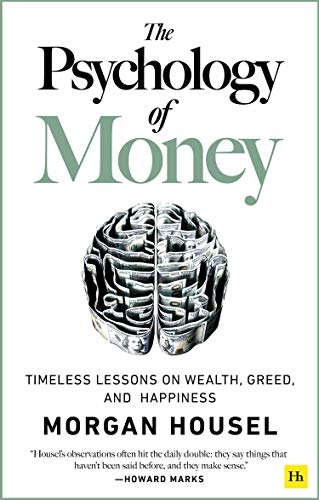
Doing well with money isn't necessarily about what you know. It's about how you behave. And behavior is hard to teach, even to really smart people. Money--investing, personal finance, and business decisions--is typically taught as a math-based field, where data and formulas tell us exactly what to do. But in the real world people don't make financial decisions on a spreadsheet. They make them at the dinner table, or in a meeting room, where personal history, your own unique view of the world, ego, pride, marketing, and odd incentives are scrambled together. In The Psychology of Money, award-winning author Morgan Housel shares 19 short stories exploring the strange ways people think about money and teaches you how to make better sense of one of life's most important topics.