
Hugh Hewitt Recommended Books
American political pundit (1956-)
16 Books Recommended

The Great Influenza: The Story of the Deadliest Pandemic in History
by John M. Barry
Rating: 4.0 ⭐
• 7 recommendations ❤️
At the height of WWI, history’s most lethal influenza virus erupted in an army camp in Kansas, moved east with American troops, then exploded, killing as many as 100 million people worldwide. It killed more people in twenty-four months than AIDS killed in twenty-four years, more in a year than the Black Death killed in a century. But this was not the Middle Ages, and 1918 marked the first collision of science and epidemic disease. Magisterial in its breadth of perspective and depth of research and now revised to reflect the growing danger of the avian flu, The Great Influenza is ultimately a tale of triumph amid tragedy, which provides us with a precise and sobering model as we confront the epidemics looming on our own horizon. John M. Barry has written a new afterword for this edition that brings us up to speed on the terrible threat of the avian flu and suggest ways in which we might head off another flu pandemic.

Extraordinary, Ordinary People: A Memoir of Family
by Condoleezza Rice
Rating: 4.0 ⭐
• 2 recommendations ❤️
Condoleezza Rice has excelled as a diplomat, political scientist, and concert pianist. Her achievements run the gamut from helping to oversee the collapse of communism in Europe and the decline of the Soviet Union, to working to protect the country in the aftermath of 9-11, to becoming only the second woman - and the first black woman ever -- to serve as Secretary of State. But until she was 25 she never learned to swim. Not because she wouldn't have loved to, but because when she was a little girl in Birmingham, Alabama, Commissioner of Public Safety Bull Connor decided he'd rather shut down the city's pools than give black citizens access. Throughout the 1950's, Birmingham's black middle class largely succeeded in insulating their children from the most corrosive effects of racism, providing multiple support systems to ensure the next generation would live better than the last. But by 1963, when Rice was applying herself to her fourth grader's lessons, the situation had grown intolerable. Birmingham was an environment where blacks were expected to keep their head down and do what they were told -- or face violent consequences. That spring two bombs exploded in Rice’s neighborhood amid a series of chilling Klu Klux Klan attacks. Months later, four young girls lost their lives in a particularly vicious bombing. So how was Rice able to achieve what she ultimately did? Her father, John, a minister and educator, instilled a love of sports and politics. Her mother, a teacher, developed Condoleezza’s passion for piano and exposed her to the fine arts. From both, Rice learned the value of faith in the face of hardship and the importance of giving back to the community. Her parents’ fierce unwillingness to set limits propelled her to the venerable halls of Stanford University, where she quickly rose through the ranks to become the university’s second-in-command. An expert in Soviet and Eastern European Affairs, she played a leading role in U.S. policy as the Iron Curtain fell and the Soviet Union disintegrated. Less than a decade later, at the apex of the hotly contested 2000 presidential election, she received the exciting news – just shortly before her father’s death – that she would go on to the White House as the first female National Security Advisor. As comfortable describing lighthearted family moments as she is recalling the poignancy of her mother’s cancer battle and the heady challenge of going toe-to-toe with Soviet leaders, Rice holds nothing back in this remarkably candid telling. This is the story of Condoleezza Rice that has never been told, not that of an ultra-accomplished world leader, but of a little girl – and a young woman -- trying to find her place in a sometimes hostile world and of two exceptional parents, and an extended family and community, that made all the difference.

Let There Be Water: Israel’s Solution for a Water-Starved World
by Seth M. Siegel
Rating: 4.2 ⭐
• 2 recommendations ❤️
As every day brings urgent reports of growing water shortages around the world, there is no time to lose in the search for solutions.The U.S. government predicts that forty of our fifty states—and 60 percent of the earth's land surface—will soon face alarming gaps between available water and the growing demand for it. Without action, food prices will rise, economic growth will slow, and political instability is likely to follow.Let There Be Water illustrates how Israel can serve as a model for the United States and countries everywhere by showing how to blunt the worst of the coming water calamities. Even with 60 percent of its country made of desert, Israel has not only solved its water problem; it also had an abundance of water. Israel even supplies water to its neighbors—the Palestinians and the Kingdom of Jordan—every day.Based on meticulous research and hundreds of interviews, Let There Be Water reveals the methods and techniques of the often offbeat inventors who enabled Israel to lead the world in cutting-edge water technology.Let There Be Water also tells unknown stories of how cooperation on water systems can forge diplomatic ties and promote unity. Remarkably, not long ago, now-hostile Iran relied on Israel to manage its water systems, and access to Israel's water know-how helped to warm China's frosty relations with Israel.Beautifully written, Let There Be Water is an inspiring account of the vision and sacrifice by a nation and people that have long made water security a top priority. Despite scant natural water resources, a rapidly growing population and economy, and often hostile neighbors, Israel has consistently jumped ahead of the water innovation-curve to assure a dynamic, vital future for itself. Every town, every country, and every reader can benefit from learning what Israel did to overcome daunting challenges and transform itself from a parched land into a water superpower.

The Way Back: How Christians Blew Our Credibility and How We Get It Back
by Phil Cooke
Rating: 4.5 ⭐
• 2 recommendations ❤️
"This book is both timely and needed. Provocative, yes, because the message is essential at this decisive 'hinge moment' in time." -- Philip Yancey, Author, Vanishing Grace" The Way Back is the way forward." -- Erwin Raphael McManus, Founder of Mosaic, and Author, The Last ArrowOn a dusty hilltop, Jesus once kickstarted His church with a ragtag group of fishermen who called themselves "The Way." Truth be told, the builders of Christianity were a bunch of nobodies. Like us, they were powerless and flawed and sometimes petty. But they were committed. They were all-in. Within a remarkably short time, The Way became the world's most influential religious faith -- a force in culture, politics, literature, science, philanthropy, and the arts. Against impossible odds, that group of nobodies astonished the world.Two thousand years later -- by any measure -- Christianity is retreating on all fronts. The Way has lost its way.In The Way Back , media and marketing experts Phil Cooke and Jonathan Bock take a hard look at Christians today and reveal that we, as a salesforce, have lost our faith in our product. Where's the passion, the excitement, and the commitment that two thousand years ago made such improbable and staggering growth possible?The Way Back will inspire and equip you to learn from that wonderful group of nobodies, so that you too can astonish the world once more.

The #1 New York Times bestseller and New York Times Book Review 10 Best Books of 2017“Eminently readable but thick with import . . . Grant hits like a Mack truck of knowledge.” — Ta-Nehisi Coates , The AtlanticPulitzer Prize winner Ron Chernow returns with a sweeping and dramatic portrait of one of our most compelling generals and presidents, Ulysses S. Grant. Ulysses S. Grant's life has typically been misunderstood. All too often he is caricatured as a chronic loser and an inept businessman, or as the triumphant but brutal Union general of the Civil War. But these stereotypes don't come close to capturing him, as Chernow shows in his masterful biography, the first to provide a complete understanding of the general and president whose fortunes rose and fell with dizzying speed and frequency. Before the Civil War, Grant was flailing. His business ventures had ended dismally, and despite distinguished service in the Mexican War he ended up resigning from the army in disgrace amid recurring accusations of drunkenness. But in war, Grant began to realize his remarkable potential, soaring through the ranks of the Union army, prevailing at the battle of Shiloh and in the Vicksburg campaign, and ultimately defeating the legendary Confederate general Robert E. Lee. Along the way, Grant endeared himself to President Lincoln and became his most trusted general and the strategic genius of the war effort. Grant’s military fame translated into a two-term presidency, but one plagued by corruption scandals involving his closest staff members.More important, he sought freedom and justice for black Americans, working to crush the Ku Klux Klan and earning the admiration of Frederick Douglass, who called him “the vigilant, firm, impartial, and wise protector of my race.” After his presidency, he was again brought low by a dashing young swindler on Wall Street, only to resuscitate his image by working with Mark Twain to publish his memoirs, which are recognized as a masterpiece of the genre. With lucidity, breadth, and meticulousness, Chernow finds the threads that bind these disparate stories together, shedding new light on the man whom Walt Whitman described as “nothing heroic... and yet the greatest hero.” Chernow’s probing portrait of Grant's lifelong struggle with alcoholism transforms our understanding of the man at the deepest level. This is America's greatest biographer, bringing movingly to life one of our finest but most underappreciated presidents. The definitive biography, Grant is a grand synthesis of painstaking research and literary brilliance that makes sense of all sides of Grant's life, explaining how this simple Midwesterner could at once be so ordinary and so extraordinary.Named one of the best books of the year by Goodreads • Amazon • The New York Times • Newsday • BookPage • Barnes and Noble • Wall Street Journal

Tell Your Children: The Truth About Marijuana, Mental Illness, and Violence
by Alex Berenson
Rating: 4.3 ⭐
• 2 recommendations ❤️
In “a brilliant antidote to all the…false narratives about pot” (American Thinker), an award-winning author and former New York Times reporter reveals the link between teenage marijuana use and mental illness, and a hidden epidemic of violence caused by the drug—facts the media have ignored as the United States rushes to legalize cannabis.Recreational marijuana is now legal in nine states. Advocates argue cannabis can help everyone from veterans to cancer sufferers. But legalization has been built on myths—that marijuana arrests fill prisons; that most doctors want to use cannabis as medicine; that it can somehow stem the opiate epidemic; that it is beneficial for mental health. In this meticulously reported book, Alex Berenson, a former New York Times reporter, explodes those myths, explaining that almost no one is in prison for marijuana; a tiny fraction of doctors write most authorizations for medical marijuana, mostly for people who have already used; and marijuana use is linked to opiate and cocaine use. Most of all, THC—the chemical in marijuana responsible for the drug’s high—can cause psychotic episodes. “Alex Berenson has a reporter’s tenacity, a novelist’s imagination, and an outsider’s knack for asking intemperate questions” (Malcolm Gladwell, The New Yorker), as he ranges from the London institute that is home to the scientists who helped prove the cannabis-psychosis link to the Colorado prison where a man now serves a thirty-year sentence after eating a THC-laced candy bar and killing his wife. He sticks to the facts, and they are devastating. With the US already gripped by one drug epidemic, Tell Your Children is a “well-written treatise” (Publishers Weekly) that “takes a sledgehammer to the promised benefits of marijuana legalization, and cannabis enthusiasts are not going to like it one bit” (Mother Jones).

Dominion: How the Christian Revolution Remade the World
by Tom Holland
Rating: 4.3 ⭐
• 6 recommendations ❤️
A "marvelous" (Economist) account of how the Christian Revolution forged the Western imagination.Crucifixion, the Romans believed, was the worst fate imaginable, a punishment reserved for slaves. How astonishing it was, then, that people should have come to believe that one particular victim of crucifixion-an obscure provincial by the name of Jesus-was to be worshipped as a god. Dominion explores the implications of this shocking conviction as they have reverberated throughout history. Today, the West remains utterly saturated by Christian assumptions. As Tom Holland demonstrates, our morals and ethics are not universal but are instead the fruits of a very distinctive civilization. Concepts such as secularism, liberalism, science, and homosexuality are deeply rooted in a Christian seedbed. From Babylon to the Beatles, Saint Michael to #MeToo, Dominion tells the story of how Christianity transformed the modern world.
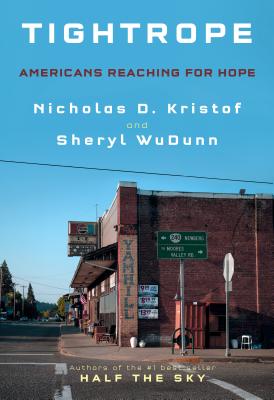
With stark poignancy and political dispassion, Tightrope draws us deep into an "other America." The authors tell this story, in part, through the lives of some of the children with whom Kristof grew up, in rural Yamhill, Oregon, an area that prospered for much of the twentieth century but has been devastated in the last few decades as blue-collar jobs disappeared. About one-quarter of the children on Kristof's old school bus died in adulthood from drugs, alcohol, suicide, or reckless accidents. And while these particular stories unfolded in one corner of the country, they are representative of many places the authors write about, ranging from the Dakotas and Oklahoma to New York and Virginia. But here too are stories about resurgence, among them: Annette Dove, who has devoted her life to helping the teenagers of Pine Bluff, Arkansas, as they navigate the chaotic reality of growing up poor; Daniel McDowell, of Baltimore, whose tale of opioid addiction and recovery suggests that there are viable ways to solve our nation's drug epidemic. Taken together, these accounts provide a picture of working-class families needlessly but profoundly damaged as a result of decades of policy mistakes. With their superb, nuanced reportage, Kristof and WuDunn have given us a book that is both riveting and impossible to ignore.

Begin Again: James Baldwin's America and Its Urgent Lessons for Our Own
by Eddie S. Glaude Jr.
Rating: 4.4 ⭐
• 8 recommendations ❤️
We live, according to Eddie S. Glaude Jr., in a moment when the struggles of Black Lives Matter and the attempt to achieve a new America have been challenged by the election of Donald Trump, a president whose victory represents yet another failure of America to face the lies it tells itself about race. From Charlottesville to the policies of child separation at the border, his administration turned its back on the promise of Obama's presidency and refused to embrace a vision of the country shorn of the insidious belief that white people matter more than others.We have been here before: For James Baldwin, these after times came in the wake of the civil rights movement, when a similar attempt to compel a national confrontation with the truth was answered with the murders of Medgar Evers, Malcolm X, and Martin Luther King, Jr. In these years, spanning from the publication of The Fire Next Time in 1963 to that of No Name in the Street in 1972, Baldwin transformed into a more overtly political writer, a change that came at great professional and personal cost. But from that journey, Baldwin emerged with a sense of renewed purpose about the necessity of pushing forward in the face of disillusionment and despair.In the story of Baldwin's crucible, Glaude suggests, we can find hope and guidance through our own after times, this Trumpian era of shattered promises and white retrenchment. Mixing biography--drawn partially from newly uncovered interviews--with history, memoir, and trenchant analysis of our current moment, Begin Again is Glaude's endeavor, following Baldwin, to bear witness to the difficult truth of race in America today. It is at once a searing exploration that lays bare the tangled web of race, trauma, and memory, and a powerful interrogation of what we all must ask of ourselves in order to call forth a new America.
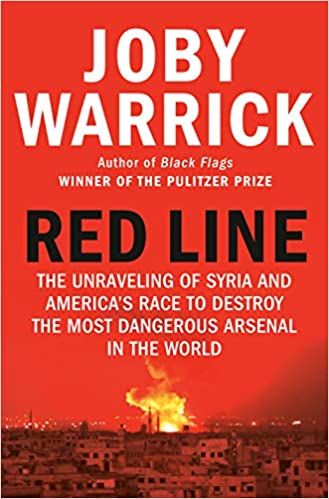
Red Line: The Unraveling of Syria and America's Race to Destroy the Most Dangerous Arsenal in the World
by Joby Warrick
Rating: 4.3 ⭐
• 2 recommendations ❤️
From the Pulitzer Prize–winning author of Black Flags comes the thrilling unknown story of America’s mission in to find and destroy Syria’s chemical weapons and keep them out of the hands of the Islamic State In August 2012, Syrian president Bashar al-Assad was clinging to power in a vicious civil war. When secret intelligence revealed that the dictator might resort to using chemical weapons, President Obama warned that doing so would cross “a red line.” Assad did it anyway, bombing the Damascus suburb of Ghouta with sarin gas, killing hundreds of civilians and forcing Obama to decide if he would mire America in another unpopular Middle Eastern war. When Russia offered to broker the removal of Syria’s chemical weapons, Obama leapt at the out.So begins an electrifying race to find, remove, and destroy 1,300 tons of chemical weapons in the midst of a raging civil war. The extraordinary little-known effort is a triumph for the Americans, but soon Russia’s long game becomes it will do anything to preserve Assad’s rule. As America’s ability to control events in Syria shrinks, the White House learns that ISIS, building its caliphate in Syria’s war-tossed territory, is seeking chemical weapons for itself, with an eye to attacking the West.Red Line is a classic Joby Warrick true-life a character-driven narrative with a cast of heroes and villains, including weapons hunters, politicians, doctors, diplomats, and spies. Drawing on astonishing original reporting, Warrick reveals how the United States embarked on a bold adventure to prevent one catastrophe but could not avoid a tragic chain of events that empowered America’s enemies.

The Essential Scalia: On the Constitution, the Courts, and the Rule of Law
by Antonin Scalia
Rating: 4.4 ⭐
• 2 recommendations ❤️
Supreme Court Justice Antonin Scalia in his own the definitive collection of his opinions, speeches, and articles on the most essential and vexing legal questions, with an intimate foreword by Justice Elena Kagan“[Scalia’s writings] are as readable today as they were when they first appeared. . . . Especially illuminating to anyone who wants to unlock the mystery of why Ginsburg admired Scalia—or who wants to get a sense of where the Supreme Court may be headed.”— The Wall Street JournalA justice on the United States Supreme Court for three decades, Antonin Scalia transformed the way that judges, lawyers, and citizens think about the law. The Essential Scalia presents Justice Scalia on his own terms, allowing readers to understand the reasoning and insights that made him one of the most consequential jurists in American history.Known for his forceful intellect and remarkable wit, Scalia mastered the art of writing in a way that both educated and entertained. This comprehensive collection draws from the best of Scalia’s opinions, essays, speeches, and testimony to paint a complete and nuanced portrait of his jurisprudence. This compendium addresses the hot-button issues of the times, from abortion and the right to bear arms to marriage, free speech, religious liberty, and so much more. It also presents the justice’s wise insights on perennial debates over the structure of government created by our Constitution and the proper methods for interpreting our laws.Brilliant and passionately argued, The Essential Scalia is an indispensable resource for anyone who wants to understand our Constitution, the American legal system, and one of our nation’s most influential and highly regarded jurists and thinkers.

Wyoming game warden Joe Pickett must accompany a Silicon Valley CEO on a hunting trip--but soon learns that he himself may be the hunted--in the thrilling new novel from #1 New York Times bestselling author C. J. Box.When the governor of Wyoming gives Joe Pickett the thankless task of taking a tech baron on an elk hunting trip, Joe reluctantly treks into the wilderness with his high-profile charge. But as they venture into the woods, a man-hunter is hot on their heels, driven by a desire for revenge. Finding himself without a weapon, a horse, or a way to communicate, Joe must rely on his wits and his knowledge of the outdoors to protect himself and his companion.Meanwhile, Joe's closest friend, Nate Romanowski, and his own daughter Sheridan learn of the threat to Joe's life and follow him into the woods. In a stunning final showdown, the three of them come up against the worst that nature--and man--have to offer.

From #1 New York Times bestselling author and Edgar Award winner Alex Berenson comes a supercharged thriller about marriage and the dangerous secrets spouses keep.Rebecca and Brian Unsworth appear to have it all. A nice house in the suburbs of Washington, DC. Two well-behaved, healthy teenage children. Important government jobs—Rebecca working in counterterrorism for the Federal Bureau of Investigation, Brian serving as a coder for the National Security Agency. Their lives stand to improve even more as Brian, in his off-hours, has just developed and sold a highly profitable app.However, the Unsworths’ marriage isn’t as perfect as it seems. After two decades together, they’ve drifted apart, talking little and having sex even less. Seeking to revive their strained relationship, they decide for their twentieth wedding anniversary to take their two kids, Kira and Tony, on a European getaway.They have a blast…until one night in Barcelona when Kira doesn’t come home from a dance club. She’s gone. Abducted. Over the course of a single weekend, the Unsworths will do everything possible to find her—as Kira herself discovers just how far she’ll go to break free of the trap that’s been set for her. And even as Rebecca and Brian come together for Kira, they realize their marriage is more tenuous than they realized.The Power Couple is both a fast-paced, globe-trotting espionage novel full of surprising twists and a nuanced look at modern marriage—the challenges of balancing career, parenthood, sex, and love.

Chaos Under Heaven: Trump, Xi, and the Battle for the Twenty-First Century
by Josh Rogin
Rating: 4.1 ⭐
• 2 recommendations ❤️
The explosive, behind-the-scenes story of Donald Trump’s high-stakes confrontation with Beijing, from an award-winning Washington Post columnist and peerless observer of the U.S.–China relationshipThere was no calm before the storm. Donald Trump’s surprise electoral victory shattered the fragile understanding between Washington and Beijing, putting the most important relationship of the twenty-first century in the hands of a novice who had bitterly attacked China from the campaign trail. Almost as soon as he entered office, Trump brought to a boil the long-simmering rivalry between the two countries, while also striking up a “friendship” with Chinese president Xi Jinping — whose manipulations of his American counterpart would undermine the White House’s already disjointed response to the historic challenge of a rising China. All the while, Trump’s own officials fought to steer U.S. policy from within.By the time the COVID-19 pandemic erupted in Wuhan, Trump’s love-hate relationship with Xi had sparked a trade war, while Xi’s aggression had pushed the world to the brink of a new Cold War. But their quarrel had also forced a long-overdue reckoning within the United States over China’s audacious foreign-influence operations, horrific human rights abuses, and creeping digital despotism. Ironically, this awakening was one of the biggest foreign-policy victories of Trump’s fractious term in office.Filled with shocking revelations drawn from Josh Rogin’s unparalleled access to top U.S. officials from the White House and deep within the country’s foreign policy machine, Chaos Under Heaven reveals an administration at war with itself during perhaps our most urgent hour.

All disasters are in some sense man-made. Setting the annus horribilis of 2020 in historical perspective, Niall Ferguson explains why we are getting worse, not better, at handling disasters.Disasters are inherently hard to predict. Pandemics, like earthquakes, wildfires, financial crises. and wars, are not normally distributed; there is no cycle of history to help us anticipate the next catastrophe. But when disaster strikes, we ought to be better prepared than the Romans were when Vesuvius erupted, or medieval Italians when the Black Death struck. We have science on our side, after all.Yet in 2020 the responses of many developed countries, including the United States, to a new virus from China were badly bungled. Why? Why did only a few Asian countries learn the right lessons from SARS and MERS? While populist leaders certainly performed poorly in the face of the COVID-19 pandemic, Niall Ferguson argues that more profound pathologies were at work--pathologies already visible in our responses to earlier disasters.In books going back nearly twenty years, including Colossus, The Great Degeneration, and The Square and the Tower, Ferguson has studied the foibles of modern America, from imperial hubris to bureaucratic sclerosis and online fragmentation.Drawing from multiple disciplines, including economics, cliodynamics, and network science, Doom offers not just a history but a general theory of disasters, showing why our ever more bureaucratic and complex systems are getting worse at handing them.Doom is the lesson of history that this country--indeed the West as a whole--urgently needs to learn, if we want to handle the next crisis better, and to avoid the ultimate doom of irreversible decline.

To Provide and Maintain a Navy: Why Naval Primacy Is America's First, Best Strategy
by Henry J Hendrix
Rating: 4.4 ⭐
• 2 recommendations ❤️
The national conversation regarding the United States Navy has, for far too long, been focused on the popular question of how many ships does the service need? "To Provide and Maintain a Navy," a succinct but encompassing treatise on sea power by Dr. Henry J "Jerry" Hendrix, goes beyond the numbers to reveal the crucial importance of Mare Liberum (Free Sea) to the development of the Western thought and the rules based order that presently governs the global commons that is the high seas. Proceeding from this philosophical basis, Hendrix explores how a "free sea" gave way to free trade and the central role sea borne commercial trade has played in the overall rise in global living standards. This is followed by analysis of how the relative naval balance of power has played out in terms of naval battles and wars over the centuries and how the dominance of the United States Navy following World War II has resulted in seven decades of unprecedented peace on the world's oceans. He further considers how, in the years that followed the demise of the Soviet Union, both China and Russia began laying the groundwork to challenge the United States maritime leadership and upend five centuries of naval precedents in order to establish a new approach to sovereignty over the world's seas. It is only at this point that Dr. Hendrix approaches the question of the number of ships required for the United States Navy, the industrial base required to build them, and the importance of once again aligning the nation's strategic outlook to that of a "seapower" in order to effectively and efficiently address the rising threat. "To Provide and Maintain a Navy" is brief enough to be read in a weekend but deep enough to inform the reader as to the numerous complexities surrounding what promises to be the most important strategic conversation facing the United States as it enters a new age of great power competition with not one, but two nations who seek nothing less than to close and control the world's seas.