Graham Duncan Recommended Books
association football player (born 1969)
14 Books Recommended
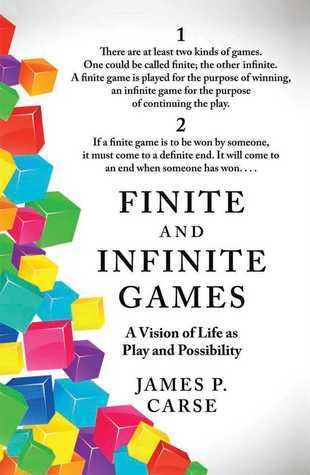
“There are at least two kinds of games,” states James P. Carse as he begins this extraordinary book. “One could be called finite; the other infinite. A finite game is played for the purpose of winning, an infinite game for the purpose of continuing the play.”Finite games are the familiar contests of everyday life; they are played in order to be won, which is when they end. But infinite games are more mysterious. Their object is not winning, but ensuring the continuation of play. The rules may change, the boundaries may change, even the participants may change—as long as the game is never allowed to come to an end.What are infinite games? How do they affect the ways we play our finite games? What are we doing when we play—finitely or infinitely? And how can infinite games affect the ways in which we live our lives?Carse explores these questions with stunning elegance, teasing out of his distinctions a universe of observation and insight, noting where and why and how we play, finitely and infinitely. He surveys our world—from the finite games of the playing field and playing board to the infinite games found in culture and religion—leaving all we think we know illuminated and transformed. Along the way, Carse finds new ways of understanding everything, from how an actress portrays a role to how we engage in sex, from the nature of evil to the nature of science. Finite games, he shows, may offer wealth and status, power and glory, but infinite games offer something far more subtle and far grander.Carse has written a book rich in insight and aphorism. Already an international literary event, Finite and Infinite Games is certain to be argued about and celebrated for years to come. Reading it is the first step in learning to play the infinite game.

In Over Our Heads: The Mental Demands of Modern Life
by Robert Kegan
Rating: 4.2 ⭐
• 4 recommendations ❤️
If contemporary culture were a school, with all the tasks and expectations meted out by modern life as its curriculum, would anyone graduate? In the spirit of a sympathetic teacher, Robert Kegan guides us through this tricky curriculum, assessing the fit between its complex demands and our mental capacities, and showing what happens when we find ourselves, as we so often do, in over our heads. In this dazzling intellectual tour, he completely reintroduces us to the psychological landscape of our private and public lives. A decade ago in The Evolving Self, Kegan presented a dynamic view of the development of human consciousness. Here he applies this widely acclaimed theory to the mental complexity of adulthood. As parents and partners, employees and bosses, citizens and leaders, we constantly confront a bewildering array of expectations, prescriptions, claims, and demands, as well as an equally confusing assortment of expert opinions that tell us what each of these roles entails. Surveying the disparate expert "literatures, " which normally take no account of each other, Kegan brings them together to reveal, for the first time, what these many demands have in common. Our frequent frustration in trying to meet these complex and often conflicting claims results, he shows us, from a mismatch between the way we ordinarily know the world and the way we are unwittingly expected to understand it. In Over Our Heads provides us entirely fresh perspectives on a number of cultural controversies - the "abstinence vs. safe sex" debate, the diversity movement, communication across genders, the meaning of postmodernism. What emerges in these pages is a theory of evolving ways of knowing that allows usto view adult development much as we view child development, as an open-ended process born of the dynamic interaction of cultural demands and emerging mental capabilities. If our culture is to be a good "school, " as Kegan suggests, it must offer, along with a challenging curriculu

The Highly Sensitive Person: How to Thrive When the World Overwhelms You
by Elaine N. Aron
Rating: 3.8 ⭐
• 4 recommendations ❤️
Do you have a keen imagination and vivid dreams? Is time alone each day as essential to you as food and water? Are you "too shy" or "too sensitive" according to others? Do noise and confusion quickly overwhelm you? If your answers are yes, you may be a Highly Sensitive Person (HSP).Most of us feel overstimulated every once in a while, but for the HSP, it's a way of life. In this groundbreaking book, Dr. Elaine Aron, a clinical psychologist, workshop leader, and an HSP herself, shows you how to identify this trait in yourself and make the most of it in everyday situations. Drawing on her many years of research and hundreds of interviews, she shows how you can better understand yourself and your trait to create a fuller, richer life.

Discover Your Inner Economist: Use Incentives to Fall in Love, Survive Your Next Meeting, and Motivate Your Dentist
by Tyler Cowen
Rating: 3.4 ⭐
• 2 recommendations ❤️
In Discover Your Inner Economist one of America’s most respected economists presents a quirky, incisive romp through everyday life that reveals how you can turn economic reasoning to your advantage—often when you least expect it to be relevant. Like no other economist, Tyler Cowen shows how economic notions--such as incentives, signals, and markets--apply far more widely than merely to the decisions of social planners, governments, and big business. What does economic theory say about ordering from a menu? Or attracting the right mate? Or controlling people who talk too much in meetings? Or dealing with your dentist? With a wryly amusing voice, in chapters such as “How to Control the World, The Basics” and “How to Control the World, Knowing When to Stop” Cowen reveals the hidden economic patterns behind everyday situations so you can get more of what you really want. Readers will also gain less selfish insights into how to be a good partner, neighbor and even citizen of the world. For instance, what is the best way to give to charity? The chapter title “How to Save the World—More Christmas Presents Won’t Help” makes a point that is every bit as personal as it is global. Incentives are at the core of an economic approach to the world, but they don’t just come in cash. In fact, money can be a disincentive. Cowen shows why, for example, it doesn’t work to pay your kids to do the dishes. Other kinds of incentives--like making sure family members know they will be admired if they respect you--can work. Another non- monetary incentive? Try having everyone stand up in your next meeting if you don’t want anyone to drone on. Deeply felt incentives like pride in one’s work or a passing smile from a loved one, can be the most powerful of all, even while they operate alongside more mundane rewards such as money and free food. Discover Your Inner Economist is an introduction to the science of economics that shows it to be built on notions that are already within all of us. While the implications of those ideas lead to Cowen’s often counterintuitive advice, their wisdom is presented in ordinary examples taken from home life, work life, and even vacation life… How do you get a good guide in a Moroccan bazaar?

Breakfast at the Victory: The Mysticism of Ordinary Experience
by James P. Carse
Rating: 4.0 ⭐
• 2 recommendations ❤️
"This was true mystical vision. This I could never have anticipated. But I knew that we were both on the same galactic journey into the great void that contains us all. I was standing before a boundlessness that could swallow the stars in a heartbeat."--from Breakfast at the Victory
Tribal Leadership: Leveraging Natural Groups to Build a Thriving Organization
by Dave Logan
Rating: 4.0 ⭐
• 12 recommendations ❤️
It's a fact of birds flock, fish school, people "tribe." Every company, indeed every organization, is a tribe, or if it's large enough, a network of tribes—groups of 20 to 150 people in which everyone knows everyone else, or at least knows of everyone else. Tribes are more powerful than teams, companies, or even CEOs, and yet their key leverage points have not been mapped—until now. In Tribal Leadership , Dave Logan, John King, and Halee Fischer-Wright show leaders how to assess their organization's tribal culture on a scale from one to five and then implement specific tools to elevate the stage to the next. The result is unprecedented success. In a rigorous eight-year study of approximately 24,000 people in over two dozen corporations, Logan, King, and Fischer-Wright refine and define a common the success of a company depends on its tribes, the strength of its tribes is determined by the tribal culture, and a thriving corporate culture can be established by an effective tribal leader. Tribal Leadership will show leaders how to employ their companies' tribes to maximize productivity and the authors' research, backed up with interviews ranging from Brian France (CEO of NASCAR) to "Dilbert" creator Scott Adams, shows that over three quarters of the organizations they've studied have tribal cultures that are merely adequate, no better than the third of five tribal stages. Leaders, managers, and organizations that fail to understand, motivate, and grow their tribes will find it impossible to succeed in an increasingly fragmented world of business. The often counterintuitive findings of Tribal Leadership will help leaders at today's major corporations, small businesses, and nonprofits learn how to take the people in their organization from adequate to outstanding, to discover the secrets that have led the highest-level tribes (like the team at Apple that designed the iPod) to remarkable heights, and to find new ways to succeed where others have failed.

The Whole-Brain Child: 12 Revolutionary Strategies to Nurture Your Child's Developing Mind
by Daniel J. Siegel
Rating: 4.4 ⭐
• 2 recommendations ❤️
NEW YORK TIMES BESTSELLER • The authors of No-Drama Discipline and The Yes Brain explain the new science of how a child’s brain is wired and how it matures in this pioneering, practical book.“Simple, smart, and effective solutions to your child’s struggles.”—Harvey Karp, M.D.In this pioneering, practical book, Daniel J. Siegel, neuropsychiatrist and author of the bestselling Mindsight , and parenting expert Tina Payne Bryson offer a revolutionary approach to child rearing with twelve key strategies that foster healthy brain development, leading to calmer, happier children. The authors explain—and make accessible—the new science of how a child’s brain is wired and how it matures. The “upstairs brain,” which makes decisions and balances emotions, is under construction until the mid-twenties. And especially in young children, the right brain and its emotions tend to rule over the logic of the left brain. No wonder kids throw tantrums, fight, or sulk in silence. By applying these discoveries to everyday parenting, you can turn any outburst, argument, or fear into a chance to integrate your child’s brain and foster vital growth.Complete with age-appropriate strategies for dealing with day-to-day struggles and illustrations that will help you explain these concepts to your child, The Whole-Brain Child shows you how to cultivate healthy emotional and intellectual development so that your children can lead balanced, meaningful, and connected lives.“[A] useful child-rearing resource for the entire family . . . The authors include a fair amount of brain science, but they present it for both adult and child audiences.” —Kirkus Reviews“Strategies for getting a youngster to chill out [with] compassion.” —The Washington Post“This erudite, tender, and funny book is filled with fresh ideas based on the latest neuroscience research. I urge all parents who want kind, happy, and emotionally healthy kids to read The Whole-Brain Child . This is my new baby gift.”—Mary Pipher, Ph.D., author of Reviving Ophelia and The Shelter of Each Other“Gives parents and teachers ideas to get all parts of a healthy child’s brain working together.” —Parent to Parent
The Advantage: Why Organizational Health Trumps Everything Else In Business
by Patrick Lencioni
Rating: 4.1 ⭐
• 5 recommendations ❤️
There is a competitive advantage out there, arguably more powerful than any other. Is it superior strategy? Faster innovation? Smarter employees? No, New York Times best-selling author, Patrick Lencioni, argues that the seminal difference between successful companies and mediocre ones has little to do with what they know and how smart they are and more to do with how healthy they are. In this book, Lencioni brings together his vast experience and many of the themes cultivated in his other best-selling books and delivers a first: a cohesive and comprehensive exploration of the unique advantage organizational health provides. Simply put, an organization is healthy when it is whole, consistent and complete, when its management, operations and culture are unified. Healthy organizations outperform their counterparts, are free of politics and confusion and provide an environment where star performers never want to leave. Lencioni’s first non-fiction book provides leaders with a groundbreaking, approachable model for achieving organizational health―complete with stories, tips and anecdotes from his experiences consulting to some of the nation’s leading organizations. In this age of informational ubiquity and nano-second change, it is no longer enough to build a competitive advantage based on intelligence alone. The Advantage provides a foundational construct for conducting business in a new way―one that maximizes human potential and aligns the organization around a common set of principles.

Changing on the Job: Developing Leaders for a Complex World
by Jennifer Garvey Berger
Rating: 4.6 ⭐
• 2 recommendations ❤️
Listen to people in every field and you'll hear a call for more sophisticated leadership—for leaders who can solve more complex problems than the human race has ever faced. But these leaders won't simply come to the fore; we have to develop them, and we must cultivate them as quickly as is humanly possible. Changing on the Job is a means to this end. As opposed to showing readers how to play the role of a leader in a "paint by numbers" fashion, Changing on the Job builds on theories of adult growth and development to help readers become more thoughtful individuals, capable of leading in any scenario. Moving from the theoretical to the practical, and employing real-world examples, author Jennifer Garvey Berger offers a set of building blocks to help cultivate an agile workforce while improving performance. Coaches, HR professionals, thoughtful leaders, and anyone who wants to flourish on the job will find this book a vital resource for developing their own capacities and those of the talent that they support.

The Tools: 5 Tools to Help You Find Courage, Creativity, and Willpower--and Inspire You to Live Life in Forward Motion
by Phil Stutz
Rating: 3.8 ⭐
• 4 recommendations ❤️
5 unique Tools ... 3 seconds each to use ... A lifetime of fulfilmentCan you imagine what your life would be like if you could tap into a new source of power – one that has been inside you all along – to solve your own problems and become the master of your life?The Tools is an extraordinary psychological model based on the proven methods of Hollywood's greatest psychotherapists. Phil Stutz and Barry Michels have over 60 years of psychotherapeutic experience between them. Together they have helped their A-list clients work through whatever has held them back – be it insecurity, trauma, anger, lack of willpower, negativity or avoidance – to achieve their greatest work and find a deep level of fulfilment.Now, at last, the acclaimed clinicians are sharing their methods in this eye-opening and empowering book. Introducing their five simple techniques, namely The Reversal of Desire, Active Love, Inner Authority, The Grateful Flow and Jeopardy, the authors clearly explain what they are plus how and when to use them. Astonishingly effective and beautifully simple – once you've learned a tool it takes only three to five seconds to use it – this book will give you everything you need to propel yourself forward to achieve your ambitions and be who you were born to be.

The Aspirational Investor: Taming the Markets to Achieve Your Life's Goals
by Ashvin B. Chhabra
Rating: 3.5 ⭐
• 4 recommendations ❤️
The Chief Investment Officer of Merrill Lynch Wealth Management explains why goals, not markets, should be the primary focus of your investment strategy—and offers a practical, innovative framework for making smarter choices about aligning your goals to your investment strategy. Today all of us bear the burden of investing wisely, but too many of us are preoccupied with the wrong priorities—increasing returns at all costs, finding the next star fund manager, or beating “the market.” Unfortunately conventional portfolio theory and the grand debates in finance have offered investors only incomplete solutions. What is needed, argues Ashvin B. Chhabra, is a framework that shifts the focus of investment strategy from portfolios and markets to individuals and the objectives that really things like protecting against unexpected financial crises, paying for education or retirement, and financing philanthropy and entrepreneurship. The Aspirational Investor is a practical, innovative approach to managing wealth based on key goals and the careful allocation of risks rather than responding to the whims of the financial markets. Chhabra introduces his “Wealth Allocation Framework,” which accommodates the three seemingly incompatible objectives that must underpin every sound wealth management the need for financial security in the face of known and unknowable risks; the need to maintain current living standards over time despite inflation; and the need to pursue aspirational goals for wealth creation. Chhabra reveals some surprising facts about wealth creation, reinterprets the success formulas of investing greats like Warren Buffett, and closes the gap between theory and practice by simplifying our understanding of key asset classes and laying out a concise roadmap for identifying, prioritizing, and quantifying financial goals. Raising the bar for what we should expect from our investment portfolios—and our financial advisors— The Aspirational Investor sets us on a path to more confident and fulfilling financial lives.
The Culture Code: The Secrets of Highly Successful Groups
by Daniel Coyle
Rating: 4.2 ⭐
• 7 recommendations ❤️
What do Pixar, Google and the San Antonio Spurs basketball team have in common?The answer is that they all owe their extraordinary success to their team-building skills. In The Culture Code, Daniel Coyle goes inside some of the most effective organisations in the world and reveals their secrets. He not only explains what makes such groups tick, but also identifies the key factors that can generate team cohesion in any walk of life. He examines the verbal and physical cues that bring people together. He determines specific strategies that encourage collaboration and build trust. And he offers cautionary tales of toxic cultures and advises how to reform them, above all demonstrating the extraordinary achievements that result when we know how to cooperate effectively.

Making Sense of People: The Science of Personality Differences
by Samuel Barondes
Rating: 4.0 ⭐
• 2 recommendations ❤️
A NEW, MORE PRACTICAL EDITION OF THE POPULAR SCIENTIFIC GUIDE TO UNDERSTANDING OTHER PEOPLE What really bothers you about your boss—or your daughter’s boyfriend? Why are you so attracted to the person you’re dating? Can you rely on your intuition about people? This book will help you find out. Drawing on extensive research, renowned psychiatrist and neuroscientist Samuel Barondes gives you powerful tools for understanding what people are really like and how they got that way. Now improved with easy, step-by-step “practical summaries,” these tools will help you quickly assess anyone’s tendencies, patterns, character, and sense of identity. You’ll learn how to combine these into a unified picture of who that person is. With these insights, you can choose more satisfying relationships, recognize telltale signs of dysfunction and danger, and savor the complexity and uniqueness of everyone you meet. A quick, easy system for understanding anyone!

A Mind at Home with Itself: How Asking Four Questions Can Free Your Mind, Open Your Heart, and Turn Your World Around
by Byron Katie
Rating: 4.3 ⭐
• 4 recommendations ❤️
Internationally-bestselling author and beloved spiritual teacher Byron Katie’s most anticipated work since Loving What IsIn A Mind at Home with Itself, Byron Katie illuminates one of the most profound ancient Buddhist texts, The Diamond Sutra (newly translated in these pages by distinguished scholar Stephen Mitchell) to reveal the nature of the mind and to liberate us from painful thoughts, using her revolutionary system of self-inquiry called “The Work.” Byron Katie doesn’t merely describe the awakened mind; she empowers us to see it and feel it, in action. At once startlingly fresh and powerfully enlightening, A Mind at Home with Itself offers us a transformative new perspective on life and death and is certain to become a classic.In the midst of a normal American life, Byron Katie became increasingly depressed and over a ten-year period sank further into despair and suicidal thoughts. Then one morning in 1986 she woke up in a state of absolute joy, filled with the realization of how her own suffering had ended. The freedom of that realization has never left her. Its direct result, The Work, has helped millions of people all over the world to question their stressful thoughts and set themselves free from suffering.