
Evan Williams Recommended Books
American technology entrepreneur
103 Books Recommended

From the inventor of the PalmPilot comes a new and compelling theory of intelligence, brain function, and the future of intelligent machinesJeff Hawkins, the man who created the PalmPilot, Treo smart phone, and other handheld devices, has reshaped our relationship to computers. Now he stands ready to revolutionize both neuroscience and computing in one stroke, with a new understanding of intelligence itself.Hawkins develops a powerful theory of how the human brain works, explaining why computers are not intelligent and how, based on this new theory, we can finally build intelligent machines.The brain is not a computer, but a memory system that stores experiences in a way that reflects the true structure of the world, remembering sequences of events and their nested relationships and making predictions based on those memories. It is this memory-prediction system that forms the basis of intelligence, perception, creativity, and even consciousness.In an engaging style that will captivate audiences from the merely curious to the professional scientist, Hawkins shows how a clear understanding of how the brain works will make it possible for us to build intelligent machines, in silicon, that will exceed our human ability in surprising ways.Written with acclaimed science writer Sandra Blakeslee, On Intelligence promises to completely transfigure the possibilities of the technology age. It is a landmark book in its scope and clarity.

The first book from the Chicago author of the “stunning” Building Stories ( The New York Times ) is a pleasantly-decorated view at a lonely and emotionally impaired "everyman," who is provided, at age 36, the opportunity to meet his father for the first time. “This haunting and unshakable book will change the way you look at your world.” — Time magazine“There’s no writer alive whose work I love more than Chris Ware.” —Zadie Smith, New York Times bestselling author of Swing Time An improvisatory romance which gingerly deports itself between 1890's Chicago and 1980's small town Michigan, the reader is helped along by thousands of colored illustrations and diagrams, which, when read rapidly in sequence, provide a convincing illusion of life and movement. The bulk of the work is supported by fold-out instructions, an index, paper cut-outs, and a brief apology, all of which concrete to form a rich portrait of a man stunted by a paralyzing fear of being disliked.

Freakonomics: A Rogue Economist Explores the Hidden Side of Everything
by Steven D. Levitt
Rating: 4.0 ⭐
• 6 recommendations ❤️
Which is more dangerous, a gun or a swimming pool? What do schoolteachers and sumo wrestlers have in common? How much do parents really matter? These may not sound like typical questions for an economist to ask. But Steven D. Levitt is not a typical economist. He studies the riddles of everyday life—from cheating and crime to parenting and sports—and reaches conclusions that turn conventional wisdom on its head.Freakonomics is a groundbreaking collaboration between Levitt and Stephen J. Dubner, an award-winning author and journalist. They set out to explore the inner workings of a crack gang, the truth about real estate agents, the secrets of the Ku Klux Klan, and much more.Through forceful storytelling and wry insight, they show that economics is, at root, the study of incentives—how people get what they want or need, especially when other people want or need the same thing.
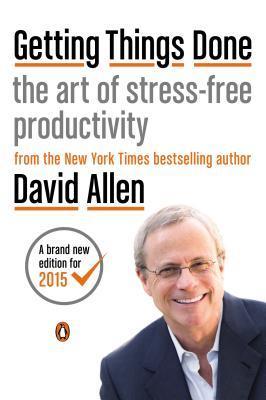
Getting Things Done: The Art of Stress-Free Productivity
by David Allen
Rating: 4.1 ⭐
• 14 recommendations ❤️
A completely revised and updated edition of the blockbuster bestseller from the personal productivity guru. (Fast Company) Since it was first published almost fifteen years ago, David Allen's Getting Things Done has become one of the most influential business books of its era, and the ultimate book on personal organization. GTD is now shorthand for an entire way of approaching professional and personal tasks, and has spawned an entire culture of websites, organizational tools, seminars, and offshoots. Allen has rewritten the book from start to finish, tweaking his classic text with important perspectives on the new workplace, and adding material that will make the book fresh and relevant for years to come. This new edition of Getting Things Done will be welcomed not only by its hundreds of thousands of existing fans but also by a whole new generation eager to adopt its proven principles.

In Search of Excellence: Lessons from America's Best-Run Companies
by Thomas J. Peters
Rating: 3.8 ⭐
• 3 recommendations ❤️
The "Greatest Business Book of All Time" (Bloomsbury UK), In Search of Excellence has long been a must-have for the boardroom, business school, and bedside table.Based on a study of forty-three of America's best-run companies from a diverse array of business sectors, In Search of Excellence describes eight basic principles of management -- action-stimulating, people-oriented, profit-maximizing practices -- that made these organizations successful.
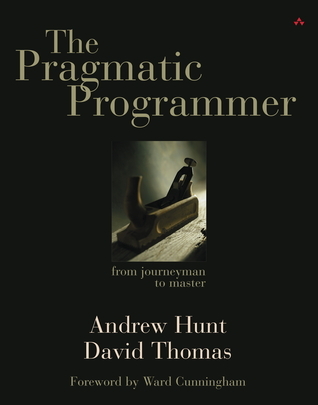
Straight from the programming trenches, The Pragmatic Programmer cuts through the increasing specialization and technicalities of modern software development to examine the core process--taking a requirement and producing working, maintainable code that delights its users. It covers topics ranging from personal responsibility and career development to architectural techniques for keeping your code flexible and easy to adapt and reuse. Read this book, and you'll learn how toFight software rot; Avoid the trap of duplicating knowledge; Write flexible, dynamic, and adaptable code; Avoid programming by coincidence; Bullet-proof your code with contracts, assertions, and exceptions; Capture real requirements; Test ruthlessly and effectively; Delight your users; Build teams of pragmatic programmers; and Make your developments more precise with automation. Written as a series of self-contained sections and filled with entertaining anecdotes, thoughtful examples, and interesting analogies, The Pragmatic Programmer illustrates the best practices and major pitfalls of many different aspects of software development. Whether you're a new coder, an experienced programmer, or a manager responsible for software projects, use these lessons daily, and you'll quickly see improvements in personal productivity, accuracy, and job satisfaction. You'll learn skills and develop habits and attitudes that form the foundation for long-term success in your career. You'll become a Pragmatic Programmer.

Mindfulness for Beginners: Reclaiming the Present Moment and Your Life
by Jon Kabat-Zinn
Rating: 4.0 ⭐
• 2 recommendations ❤️
Now in paperback, the perfect starting place to learn mindfulness meditation and return ourselves to wholeness and presence. With Mindfulness for Beginners, Jon Kabat-Zinn guides readers through the simple steps for transforming our relationship to the way we think, feel, love, work, and play, to more fully embody who we really are. Here, the teacher, scientist, and clinician who first demonstrated the benefits of mindfulness within mainstream Western medicine shares the key perspectives and practices that he s found most useful with his students and patients. Mindfulness for Beginners provides welcome answers, insights, and instruction to help us make the shift, moment by moment, into a more spacious, clear, reliable, and loving connection with ourselves and the world. Includes a CD of five guided mindfulness meditations by the author. "

The coauthor of The 22 Immutable Laws of Marketing shares practical advice on how companies can increase profitability and competitiveness by focusing on core products and eliminating extraneous areas. $50,000 ad/promo. Tour.

Mind Wide Open: Your Brain and the Neuroscience of Everyday Life
by Steven Johnson
Rating: 3.9 ⭐
• 2 recommendations ❤️
In this nationally bestselling, compulsively readable account of what makes brain science a vital component of people's quest to know themselves, acclaimed science writer Steven Johnson subjects his own brain to a battery of tests to find out what's really going on inside. He asks:

Interface Culture: How New Technology Transforms the Way We Create and Communicate
by Steven Johnson
Rating: 3.6 ⭐
• 2 recommendations ❤️
Drawing on his own expertise in the humanities and on the Web, Steven Johnson not only demonstrates how interfaces - those buttons, graphics, and words on the computer screen through which we control information - influence our daily lives, but also tracks their roots back to Victorian novels, early cinema, and even medieval urban planning. The result is a lush cultural and historical tableau in which today's interfaces take their rightful place in the lineage of artistic innovation. With a distinctively accessible style, Interface Culture brings new intellectual depth to the vital discussion of how technology has transformed society, and is sure to provoke wide debate in both literary and technological circles.

The Art of the Start: The Time-Tested, Battle-Hardened Guide for Anyone Starting Anything
by Guy Kawasaki
Rating: 3.9 ⭐
• 4 recommendations ❤️
A new product, a new service, a new company, a new division, a new organization, a new anything—where there’s a will, here’s the way. It begins with a dream that just won’t quit, the once-in-a-lifetime thunderbolt of pure inspiration, the obsession, the world-beater, the killer app, the next big thing. Everyone who wants to make the world a better place becomes possessed by a grand idea.But what does it take to turn your idea into action? Whether you are an entrepreneur, intrapreneur, or not-for-profit crusader, there’s no shortage of advice available on issues such as writing a business plan, recruiting, raising capital, and branding. In fact, there are so many books, articles, and Web sites that many startups get bogged down to the point of paralysis. Or else they focus on the wrong priorities and go broke before they discover their mistakes. In The Art of the Start, Guy Kawasaki brings two decades of experience as one of business’s most original and irreverent strategists to offer the essential guide for anyone starting anything, from a multinational corporation to a church group. At Apple in the 1980s, he helped lead one of the great companies of the century, turning ordinary consumers into evangelists. As founder and CEO of Garage Technology Ventures, a venture capital firm, he has field-tested his ideas with dozens of newly hatched companies. And as the author of bestselling business books and articles, he has advised thousands of people who are making their startup dreams real. From raising money to hiring the right people, from defining your positioning to creating a brand, from creating buzz to buzzing the competition, from managing a board to fostering a community, this book will guide you through an adventure that’s more art than science—the art of the start.

Всемирно известный психолог Кэрол Дуэк, не одно десятилетие изучающая проблематику успехов и достижений, открыла и научно доказала влияние внутренних установок на личность. Из этой книги вы узнаете, как установка на данность обрекает людей на провал, а установка на рост — открывает путь к самореализации, выстраиванию успешной карьеры и налаживанию счастливых взаимоотношений с окружающими в любом возрасте. А еще — как можно привить такую установку и себе, и другим.Книга будет интересна не только родителям, преподавателям и тренерам, но и всем, кто занимается управлением людьми или нацелен на личностный рост.

Gates: How Microsoft's Mogul Reinvented an Industry--and Made Himself the Richest Man in America
by Stephen Manes
Rating: 4.0 ⭐
• 2 recommendations ❤️
The Washington Post called this book "impressive" and "meticulously researched," with "much of the drama and suspense of a novel." The New York Times and USA Today found it "definitive." The Seattle Times said Gates "should be required reading for any new hire in the personal computer industry." Since its publication, Gates has been cited and used as a source by dozens of books and articles.Bill Gates is an American icon, the ultimate revenge of the nerd. The youngest self-made billionaire in history was for many years the most powerful person in the computer industry. His tantrums, his odd rocking tic, and his lavish philanthropy have become the stuff of legend. Gates is the one book that truly illuminates the early years of the man and his company.In high school he organized computer enterprises for profit. At Harvard he co-wrote Microsoft BASIC, the first commercial personal computer software, then dropped out and made it a global standard. At 25, he offered IBM a program he did not yet own--a program called DOS that would become the essential operating system for more than 100 million personal computers and the foundation of the Gates empire. As Microsoft's dominance extended around the globe, Bill Gates became idolized, hated, and feared.In this riveting independent biography, veteran computer journalists Stephen Manes and Paul Andrews draw on a dozen sessions with Gates himself and nearly a thousand hours of interviews with his friends, family, employees, and competitors to debunk the myths and paint the definitive picture of the real Bill Gates, "bugs" and all.Here is the shy but fearless competitor with the guts and brass to try anything once--on a computer, at a negotiation, or on water skis. Here is the cocky 23-year-old who calmly spurned an enormous buyout offer from Ross Perot. Here is the supersalesman who motivated his Smart Guys, fought bitter battles with giant IBM, and locked horns with Apple's Steve Jobs--and usually won.Here, too, is the workaholic pessimist who presided over Microsoft's meteoric rise while most other personal computer pioneers fell by the wayside. Gates extended his vision of software to art, entertainment, education, and even biotechnology, and made good on much of his promise to put his software "on every desk and in every home."Gates is a bracing, comprehensive portrait of the microcomputer industry, one of its leading companies, and the man who helped create a world where software is everything.
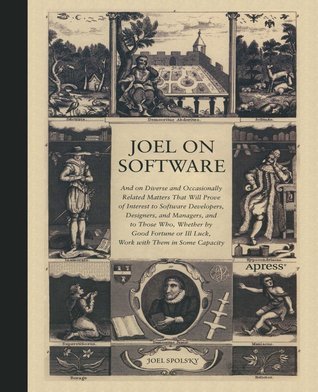
Someone once said that the task of a writer is to "make the familiar new and the new familiar". For years, Joel Spolsky has done exactly this at www.joelonsoftware.com. Now, for the first time, you can own a collection of the most important essays from his site in one book, with exclusive commentary and new insights from joel.
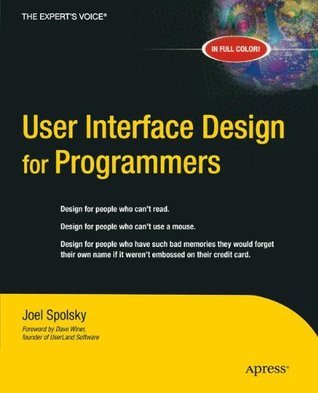
Most programmers' fear of user interface (UI) programming comes from their fear of doing UI design. They think that UI design is like graphic design―the mysterious process by which creative, latte-drinking, all-black-wearing people produce cool-looking, artistic pieces. Most programmers see themselves as analytic, logical thinkers instead―strong at reasoning, weak on artistic judgment, and incapable of doing UI design. In this brilliantly readable book, author Joel Spolsky proposes simple, logical rules that can be applied without any artistic talent to improve any user interface, from traditional GUI applications to websites to consumer electronics. Spolsky's primary axiom, the importance of bringing the program model in line with the user model, is both rational and simple. In a fun and entertaining way, Spolky makes user interface design easy for programmers to grasp. After reading User Interface Design for Programmers , you'll know how to design interfaces with the user in mind. You'll learn the important principles that underlie all good UI design, and you'll learn how to perform usability testing that works.
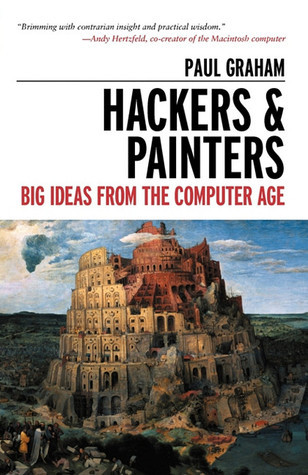
Hackers & Painters: Big Ideas from the Computer Age
by Paul Graham
Rating: 4.2 ⭐
• 14 recommendations ❤️
"The computer world is like an intellectual Wild West, in which you can shoot anyone you wish with your ideas, if you're willing to risk the consequences. " --from Hackers & Big Ideas from the Computer Age , by Paul Graham We are living in the computer age, in a world increasingly designed and engineered by computer programmers and software designers, by people who call themselves hackers. Who are these people, what motivates them, and why should you care? Consider these Everything around us is turning into computers. Your typewriter is gone, replaced by a computer. Your phone has turned into a computer. So has your camera. Soon your TV will. Your car was not only designed on computers, but has more processing power in it than a room-sized mainframe did in 1970. Letters, encyclopedias, newspapers, and even your local store are being replaced by the Internet. Hackers & Big Ideas from the Computer Age , by Paul Graham, explains this world and the motivations of the people who occupy it. In clear, thoughtful prose that draws on illuminating historical examples, Graham takes readers on an unflinching exploration into what he calls "an intellectual Wild West." The ideas discussed in this book will have a powerful and lasting impact on how we think, how we work, how we develop technology, and how we live. Topics include the importance of beauty in software design, how to make wealth, heresy and free speech, the programming language renaissance, the open-source movement, digital design, internet startups, and more.

A book that redefines both family and narrative for the twenty-first century. A Heartbreaking Work of Staggering Genius is the moving memoir of a college senior who, in the space of five weeks, loses both of his parents to cancer and inherits his eight-year-old brother. Here is an exhilarating debut that manages to be simultaneously hilarious and wildly inventive as well as a deeply heartfelt story of the love that holds a family together.A Heartbreaking Work of Staggering Genius is an instant classic that will be read for decades to come.

The Effective Executive: The Definitive Guide to Getting the Right Things Done
by Peter F. Drucker
Rating: 4.1 ⭐
• 12 recommendations ❤️
What makes an effective executive? The measure of the executive, Peter F. Drucker reminds us, is the ability to "get the right things done." This usually involves doing what other people have overlooked as well as avoiding what is unproductive. Intelligence, imagination, and knowledge may all be wasted in an executive job without the acquired habits of mind that mold them into results. Drucker identifies five practices essential to business effectiveness that can, and must, be learned: Ranging widely through the annals of business and government, Peter F. Drucker demonstrates the distinctive skill of the executive and offers fresh insights into old and seemingly obvious business situations.

The Victorian Internet: The Remarkable Story of the Telegraph and the Nineteenth Century's On-Line Pioneers
by Tom Standage
Rating: 3.9 ⭐
• 2 recommendations ❤️
Offers a historical review of the telegraph network, from its invention by Samuel Morse in the nineteenth century to the present day, exploring the social and political effects it has had on the world throughout its existence.

Crossing the Chasm: Marketing and Selling High-Tech Products to Mainstream Customers
by Geoffrey A. Moore
Rating: 4.0 ⭐
• 22 recommendations ❤️
Here is the bestselling guide that created a new game plan for marketing in high-tech industries. Crossing the Chasm has become the bible for bringing cutting-edge products to progressively larger markets. This edition provides new insights into the realities of high-tech marketing, with special emphasis on the Internet. It's essential reading for anyone with a stake in the world's most exciting marketplace.

Mastery: The Keys to Success and Long-Term Fulfillment
by George Leonard
Rating: 4.1 ⭐
• 8 recommendations ❤️
"The pracitcal wisdom in George Leonard's book will have a great influence for many years to come." —Michael Murphy, author of Golf in the Kingdom and The Future of the BodyDrawing on Zen philosophy and his expertise in the martial art of aikido, bestselling author Gorge Leonard shows how the process of mastery can help us attain a higher level of excellence and a deeper sense of satisfaction and fulfillment in our daily lives. Whether you're seeking to improve your career or your intimate relationships, increase self-esteem or create harmony within yourself, this inspiring prescriptive guide will help you master anything you choose and achive success in all areas of your life.In Mastery, you'll discover:The 5 Essential Keys to MasteryTools for MasteryHow to Master Your Athletic PotentialThe 3 Personality Types That Are Obstacles to MasteryHow to Avoid Pitfalls Along the Path. . . and more
The practice of building software is a “new kid on the block” technology. Though it may not seem this way for those who have been in the field for most of their careers, in the overall scheme of professions, software builders are relative “newbies.” In the short history of the software field, a lot of facts have been identified, and a lot of fallacies promulgated. Those facts and fallacies are what this book is about. There’s a problem with those facts–and, as you might imagine, those fallacies. Many of these fundamentally important facts are learned by a software engineer, but over the short lifespan of the software field, all too many of them have been forgotten. While reading Facts and Fallacies of Software Engineering , you may experience moments of “Oh, yes, I had forgotten that,” alongside some “Is that really true?” thoughts. The author of this book doesn’t shy away from controversy. In fact, each of the facts and fallacies is accompanied by a discussion of whatever controversy envelops it. You may find yourself agreeing with a lot of the facts and fallacies, yet emotionally disturbed by a few of them! Whether you agree or disagree, you will learn why the author has been called “the premier curmudgeon of software practice.” These facts and fallacies are fundamental to the software building field–forget or neglect them at your peril!

Founders at Work: Stories of Startups' Early Days
by Jessica Livingston
Rating: 4.1 ⭐
• 10 recommendations ❤️
Now available in paperback―with a new preface and interview with Jessica Livingston about Y Combinator! Founders at Work: Stories of Startups' Early Days is a collection of interviews with founders of famous technology companies about what happened in the very earliest days. These people are celebrities now. What was it like when they were just a couple friends with an idea? Founders like Steve Wozniak (Apple), Caterina Fake (Flickr), Mitch Kapor (Lotus), Max Levchin (PayPal), and Sabeer Bhatia (Hotmail) tell you in their own words about their surprising and often very funny discoveries as they learned how to build a company. Where did they get the ideas that made them rich? How did they convince investors to back them? What went wrong, and how did they recover? Nearly all technical people have thought of one day starting or working for a startup. For them, this book is the closest you can come to being a fly on the wall at a successful startup, to learn how it's done. But ultimately these interviews are required reading for anyone who wants to understand business, because startups are business reduced to its essence. The reason their founders become rich is that startups do what businesses do―create value―more intensively than almost any other part of the economy. How? What are the secrets that make successful startups so insanely productive? Read this book, and let the founders themselves tell you.

The Tao Te Ching, the esoteric but infinitely practical book written most probably in the sixth century B.C. by Lao Tsu, has been translated more frequently than any work except the Bible. This translation of the Chinese classic, which was first published twenty-five years ago, has sold more copies than any of the others. It offers the essence of each word and makes Lao Tsu's teaching immediate and alive.The philosophy of Lao Tsu is simple: Accept what is in front of you without wanting the situation to be other than it is. Study the natural order of things and work with it rather than against it, for to try to change what is only sets up resistance. Nature provides everything without requiring payment or thanks, and also provides for all without discrimination—therefore let us present the same face to everyone and treat all men as equals, however they may behave. If we watch carefully, we will see that work proceeds more quickly and easily if we stop "trying," if we stop putting in so much extra effort, if we stop looking for results. In the clarity of a still and open mind, truth will be reflected. We will come to appreciate the original meaning of the word "understand," which means "to stand under." We serve whatever or whoever stands before us, without any thought for ourselves. Te—which may be translated as "virtue" or "strength"—lies always in Tao, or" natural law. In other words: Simply be.

In this “informative and delightful” ( American Scientist ) biography, Margaret Cheney explores the brilliant and prescient mind of Nikola Tesla, one of the twentieth century’s greatest scientists and inventors.In Man Out of Time, Margaret Cheney explores the brilliant and prescient mind of one of the twentieth century's greatest scientists and inventors. Called a madman by his enemies, a genius by others, and an enigma by nearly everyone, Nikola Tesla was, without a doubt, a trailblazing inventor who created astonishing, sometimes world-transforming devices that were virtually without theoretical precedent. Tesla not only discovered the rotating magnetic field -- the basis of most alternating-current machinery -- but also introduced us to the fundamentals of robotics, computers, and missile science. Almost supernaturally gifted, unfailingly flamboyant and neurotic, Tesla was troubled by an array of compulsions and phobias and was fond of extravagant, visionary experimentations. He was also a popular man-about-town, admired by men as diverse as Mark Twain and George Westinghouse, and adored by scores of society beauties.From Tesla's childhood in Yugoslavia to his death in New York in the 1940s, Cheney paints a compelling human portrait and chronicles a lifetime of discoveries that radically altered -- and continue to alter -- the world in which we live. Man Out of Time is an in-depth look at the seminal accomplishments of a scientific wizard and a thoughtful examination of the obsessions and eccentricities of the man behind the science.

The Halo Effect: ... and the Eight Other Business Delusions That Deceive Managers
by Philip M. Rosenzweig
Rating: 3.9 ⭐
• 4 recommendations ❤️
Much of our business thinking is shaped by delusions -- errors of logic and flawed judgments that distort our understanding of the real reasons for a company's performance. In a brilliant and unconventional book, Phil Rosenzweig unmasks the delusions that are commonly found in the corporate world. These delusions affect the business press and academic research, as well as many bestselling books that promise to reveal the secrets of success or the path to greatness. Such books claim to be based on rigorous thinking, but operate mainly at the level of storytelling. They provide comfort and inspiration, but deceive managers about the true nature of business success.The most pervasive delusion is the Halo Effect. When a company's sales and profits are up, people often conclude that it has a brilliant strategy, a visionary leader, capable employees, and a superb corporate culture. When performance falters, they conclude that the strategy was wrong, the leader became arrogant, the people were complacent, and the culture was stagnant. In fact, little may have changed -- company performance creates a Halo that shapes the way we perceive strategy, leadership, people, culture, and more.Drawing on examples from leading companies including Cisco Systems, IBM, Nokia, and ABB, Rosenzweig shows how the Halo Effect is widespread, undermining the usefulness of business bestsellers from "In Search of Excellence" to "Built to Last" and "Good to Great."Rosenzweig identifies nine popular business delusions. Among them:"The Delusion of Absolute Performance: " Company performance is relative to competition, not absolute, which is why following a formula can never guarantee results. Success comes from doing things better than rivals, which means that managers have to take risks."The Delusion of Rigorous Research: " Many bestselling authors praise themselves for the vast amount of data they have gathered, but forget that if the data aren't valid, it doesn't matter how much was gathered or how sophisticated the research methods appear to be. They trick the reader by substituting sizzle for substance."The Delusion of Single Explanations: " Many studies show that a particular factor, such as corporate culture or social responsibility or customer focus, leads to improved performance. But since many of these factors are highly correlated, the effect of each one is usually less than suggested.In what promises to be a landmark book, "The Halo Effect" replaces mistaken thinking with a sharper understanding of what drives business success and failure. "The Halo Effect" is a guide for the thinking manager, a way to detect errors in business research and to reach a clearer understanding of what drives business success and failure.Skeptical, brilliant, iconoclastic, and mercifully free of business jargon, Rosenzweig's book is nevertheless dead serious, making his arguments about important issues in an unsparing and direct way that will appeal to a broad business audience. For managers who want to separate fact from fiction in the world of business, "The Halo Effect" is essential reading -- witty, often funny, and sharply argued, it's an antidote to so much of the conventional thinking that clutters business bookshelves.
Built to Last: Successful Habits of Visionary Companies
by Jim Collins
Rating: 4.1 ⭐
• 12 recommendations ❤️
Drawing upon a six-year research project at the Stanford University Graduate School of Business, James C. Collins and Jerry I. Porras took eighteen truly exceptional and long-lasting companies and studied each in direct comparison to one of its top competitors. They examined the companies from their very beginnings to the present day -- as start-ups, as midsize companies, and as large corporations. Throughout, the authors asked: "What makes the truly exceptional companies different from the comparison companies and what were the common practices these enduringly great companies followed throughout their history?" Filled with hundreds of specific examples and organized into a coherent framework of practical concepts that can be applied by managers and entrepreneurs at all levels, Built to Last provides a master blueprint for building organizations that will prosper long into the 21st century and beyond.

• Why are lovers quicker to forgive their partners for infidelity than for leaving dirty dishes in the sink? • Why will sighted people pay more to avoid going blind than blind people will pay to regain their sight? • Why do dining companions insist on ordering different meals instead of getting what they really want? • Why do pigeons seem to have such excellent aim; why can’t we remember one song while listening to another; and why does the line at the grocery store always slow down the moment we join it? In this brilliant, witty, and accessible book, renowned Harvard psychologist Daniel Gilbert describes the foibles of imagination and illusions of foresight that cause each of us to mis-conceive our tomorrows and mis-estimate our satisfactions. Vividly bringing to life the latest scientific research in psychology, cognitive neuroscience, philosophy, and behavioral economics, Gilbert reveals what scientists have discovered about the uniquely human ability to imagine the future, and about our capacity to predict how much we will like it when we get there. With penetrating insight and sparkling prose, Gilbert explains why we seem to know so little about the hearts and minds of the people we are about to become.
Zen and the Art of Motorcycle Maintenance: An Inquiry Into Values
by Robert M. Pirsig
Rating: 3.8 ⭐
• 1 recommendation ❤️
Robert M. Pirsig's Zen & the Art of Motorcycle Maintenance is an examination of how we live, a meditation on how to live better set around the narration of a summer motorcycle trip across America's Northwest, undertaken by a father & his young son.
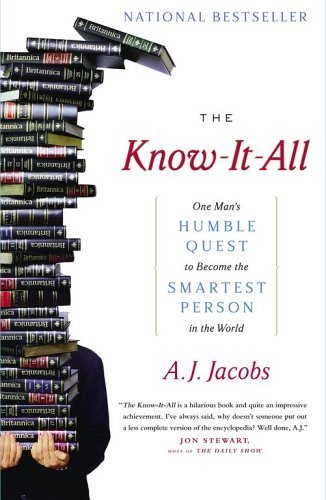
33,000 Pages44 Million Words10 Billion Years Of History1 Obsessed ManPart memoir and part education (or lack thereof), "The Know-It-All" chronicles NPR contributor A.J. Jacobs's hilarious, enlightening, and seemingly impossible quest to read the Encyclopaedia Britannica from A to Z. To fill the ever-widening gaps in his Ivy League education, A.J. Jacobs sets for himself the daunting task of reading all thirty-two volumes of the Encyclopaedia Britannica. His wife, Julie, tells him it's a waste of time, his friends believe he is losing his mind, and his father, a brilliant attorney who had once attempted the same feat and quit somewhere around Borneo, is encouraging but unconvinced. With self-deprecating wit and a disarming frankness, "The Know-It-All" recounts the unexpected and comically disruptive effects Operation Encyclopedia has on every part of Jacobs's life - from his newly minted marriage to his complicated relationship with his father and the rest of his charmingly eccentric New York family to his day job as an editor at "Esquire." Jacobs's project tests the outer limits of his stamina and forces him to explore the real meaning of intelligence as he endeavours to join Mensa, win a spot on Jeopardy!, and absorb 33,000 pages of learning. On his journey, he stumbles upon some of the strangest, funniest, and most profound facts about every topic under the sun, all while battling fatigue, ridicule, and the paralysing fear that attends his first real-life responsibility - the impending birth of his first child. "The Know-It-All" is an ingenious, mightily entertaining memoir of one man's intellect, neuroses, and obsessions, and a struggle between the all-consuming quest for factual knowledge and the undeniable gift of hard-won wisdom.

If human beings disappeared instantaneously from the earth, what would happen? How would the planet reclaim its surface? What creatures would emerge from the dark and swarm? How would our treasured structures -- our tunnels, our bridges, our homes, our monuments -- survive the unmitigated impact of a planet without our intervention? In his revelatory, bestselling account, Alan Weisman draws on every field of science to present an environmental assessment like no other, the most affecting portrait yet of humankind's place on this planet.

Bill & Dave: How Hewlett and Packard Built the World's Greatest Company
by Michael S. Malone
Rating: 4.2 ⭐
• 2 recommendations ❤️
The definitive history of Hewlett-Packard and its legendary founders, based on unprecedented access to private archives This is the most authoritative version ever of the most famous start-up story in business history. In 1938, working out of a small garage in Palo Alto, California, two young Stanford graduates named Bill Hewlett and Dave Packard built their first product, an audio oscillator. It was the start not only of a legendary company but of an entire way of life in Silicon Valley—and, ultimately, our modern digital age. Others have written about the rise of Hewlett-Packard, including Packard himself in a bestselling memoir. But acclaimed journalist Michael S. Malone is the first to get the full story, based on unlimited and exclusive access to corporate and private archives, along with hundreds of employee interviews. Malone draws on his new material to show how some of the most influential products of our time were invented, and how a culture of innovation led HP to unparalleled success for decades. He also shows what was really behind the groundbreaking management philosophy—“the HP Way”—that put people ahead of products or profits. There have been attempts in recent years to discredit the HP Way as soft and outdated. But Malone argues that the HP Way was a hard-nosed business philosophy that combined simple objectives, trust in employees to make the right choices, and ruthless self-appraisal. It created an innovative and ferociously competitive company—arguably the world’s greatest company. This business adventure story will be perfect for entrepreneurs, young managers, and students, not to mention the tens of thousands of current and former HP employees.
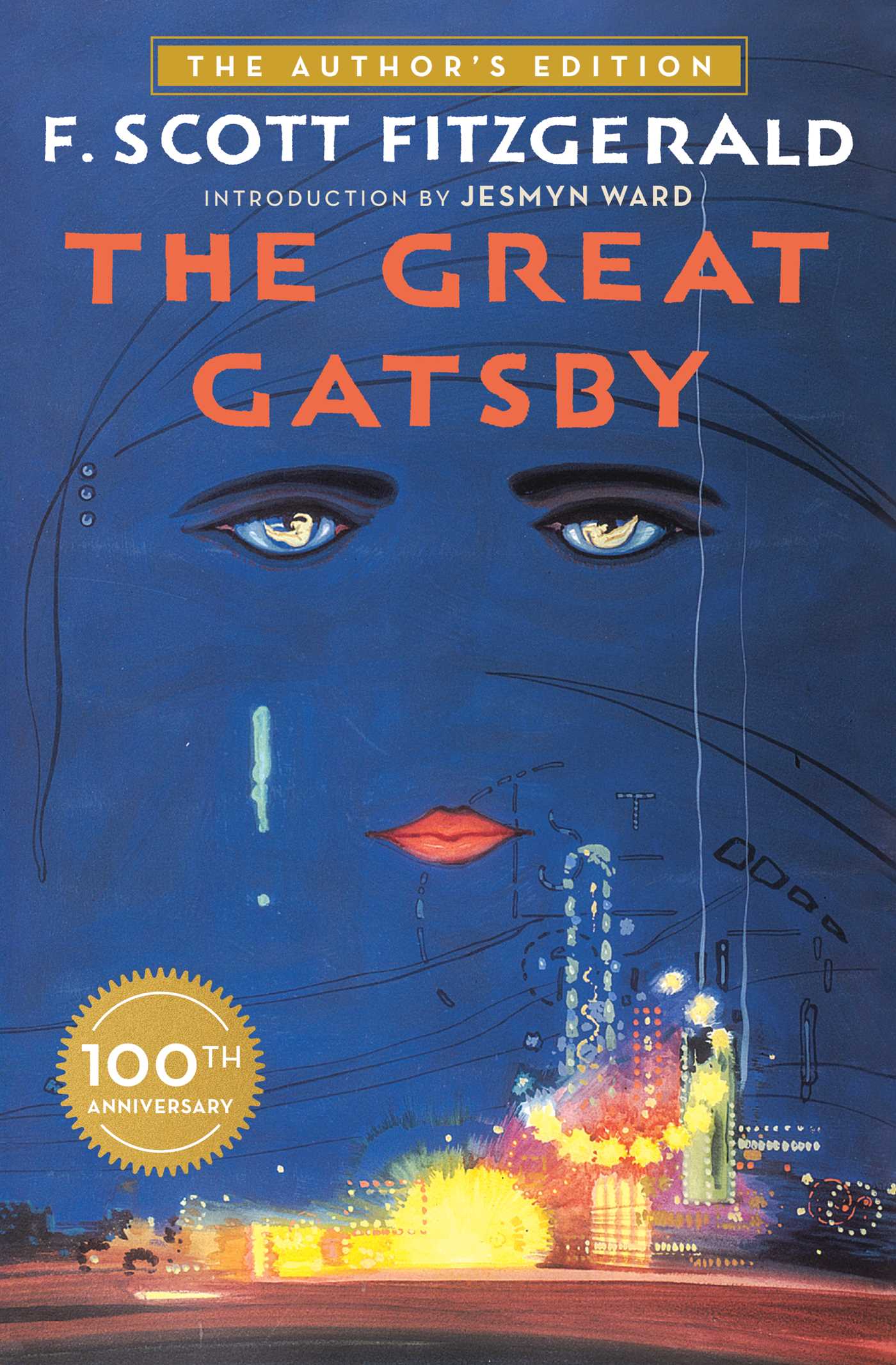
The only edition of the beloved classic that is authorized by Fitzgerald’s family and from his lifelong publisher.This edition is the enduring original text, updated with the author’s own revisions, a foreword by his granddaughter, and with a new introduction by National Book Award winner Jesmyn Ward.The Great Gatsby, F. Scott Fitzgerald’s third book, stands as the supreme achievement of his career. First published by Scribner in 1925, this quintessential novel of the Jazz Age has been acclaimed by generations of readers. The story of the mysteriously wealthy Jay Gatsby and his love for the beautiful Daisy Buchanan is an exquisitely crafted tale of America in the 1920s.

“My happiness is not the means to any end. It is the end. It is its own goal. It is its own purpose.” ― Ayn Rand, AnthemAnthem has long been hailed as one of Ayn Rand's classic novels, and a clear predecessor to her later masterpieces, The Fountainhead and Atlas Shrugged. In Anthem, Rand examines a frightening future in which individuals have no name, no independence, and no values. Equality 7-2521 lives in the dark ages of the future where all decisions are made by committee, all people live in collectives, and all traces of individualism have been wiped out.Despite such a restrictive environment, the spark of individual thought and freedom still burns in him--a passion which he has been taught to call sinful. In a purely egalitarian world, Equality 7-2521 dares to stand apart from the herd--to think and choose for himself, to discover electricity, and to love the woman of his choice.Now he has been marked for death for committing the ultimate sin. In a world where the great "we" reign supreme, he has rediscovered the lost and holy word--"I."A True Classic that Belongs on Every Bookshelf!

When Pierre Omidyar launched a clunky website from a spare bedroom over Labor Day weekend of 1995, he wanted to see if he could use the Internet to create a perfect market. He never guessed his old-computer-parts and Beanie Baby exchange would revolutionize the world of commerce.Now, Adam Cohen, the only journalist ever to get full access to the company, tells the remarkable story of eBay's rise. He describes how eBay built the most passionate community ever to form in cyberspace and forged a business that triumphed over larger, better-funded rivals. And he explores the ever-widening array of enlistees in the eBay revolution, from a stay-at-home mom who had to rent a warehouse for her thriving business selling bubble-wrap on eBay to the young MBA who started eBay Motors (which within months of its launch was on track to sell $1 billion in cars a year), to collectors nervously bidding thousands of dollars on antique clothing-irons.Adam Cohen's fascinating look inside eBay is essential reading for anyone trying to figure out what's next. If you want to truly understand the Internet economy, "The Perfect Store" is indispensable.

The Dip: A Little Book That Teaches You When to Quit
by Seth Godin
Rating: 3.8 ⭐
• 7 recommendations ❤️
A New York Times , USA Today , and Wall Street Journal bestsellerIn this iconic bestseller, popular business blogger and bestselling author Seth Godin proves that winners are really just the best quitters. Godin shows that winners quit fast, quit often, and quit without guilt—until they commit to beating the right Dip.Every new project (or job, or hobby, or company) starts out fun…then gets really hard, and not much fun at all. You might be in a Dip—a temporary setback that will get better if you keep pushing. But maybe it’s really a Cul-de-Sac—a total dead end. What really sets superstars apart is the ability to tell the two apart.Winners seek out the Dip. They realize that the bigger the barrier, the bigger the reward for getting past it. If you can beat the Dip to be the best, you’ll earn profits, glory, and long-term security.Whether you’re an intern or a CEO, this fun little book will help you figure out if you’re in a Dip that’s worthy of your time, effort, and talents. The old saying is wrong—winners do quit, and quitters do win.

"Surely You're Joking, Mr. Feynman!": Adventures of a Curious Character
by
Rating: 4.3 ⭐
• 25 recommendations ❤️
A New York Times bestseller—the outrageous exploits of one of this century's greatest scientific minds and a legendary American original.Richard Feynman, winner of the Nobel Prize in physics, thrived on outrageous adventures. Here he recounts in his inimitable voice his experience trading ideas on atomic physics with Einstein and Bohr and ideas on gambling with Nick the Greek; cracking the uncrackable safes guarding the most deeply held nuclear secrets; accompanying a ballet on his bongo drums; painting a naked female toreador. In short, here is Feynman's life in all its eccentric—a combustible mixture of high intelligence, unlimited curiosity, and raging chutzpah.

Billy Beane, general manager of MLB's Oakland A's and protagonist of Michael Lewis's Moneyball, had a problem: how to win in the Major Leagues with a budget that's smaller than that of nearly every other team. Conventional wisdom long held that big name, highly athletic hitters and young pitchers with rocket arms were the ticket to success. But Beane and his staff, buoyed by massive amounts of carefully interpreted statistical data, believed that wins could be had by more affordable methods such as hitters with high on-base percentage and pitchers who get lots of ground outs. Given this information and a tight budget, Beane defied tradition and his own scouting department to build winning teams of young affordable players and inexpensive castoff veterans. Lewis was in the room with the A's top management as they spent the summer of 2002 adding and subtracting players and he provides outstanding play-by-play. In the June player draft, Beane acquired nearly every prospect he coveted (few of whom were coveted by other teams) and at the July trading deadline he engaged in a tense battle of nerves to acquire a lefty reliever. Besides being one of the most insider accounts ever written about baseball, Moneyball is populated with fascinating characters. We meet Jeremy Brown, an overweight college catcher who most teams project to be a 15th round draft pick (Beane takes him in the first). Sidearm pitcher Chad Bradford is plucked from the White Sox triple-A club to be a key set-up man and catcher Scott Hatteberg is rebuilt as a first baseman. But the most interesting character is Beane himself. A speedy athletic can't-miss prospect who somehow missed, Beane reinvents himself as a front-office guru, relying on players completely unlike, say, Billy Beane. Lewis, one of the top nonfiction writers of his era (Liar's Poker, The New New Thing), offers highly accessible explanations of baseball stats and his roadmap of Beane's economic approach makes Moneyball an appealing reading experience for business people and sports fans alike. --John Moe

Everything Bad is Good for You: How Today's Popular Culture is Actually Making Us Smarter
by Steven Johnson
Rating: 3.5 ⭐
• 2 recommendations ❤️
From the New York Times bestselling author of How We Got To Now and FarsightedForget everything you’ve ever read about the age of dumbed-down, instant-gratification culture. In this provocative, unfailingly intelligent, thoroughly researched, and surprisingly convincing big idea book, Steven Johnson draws from fields as diverse as neuroscience, economics, and media theory to argue that the pop culture we soak in every day—from Lord of the Rings to Grand Theft Auto to The Simpsons —has been growing more sophisticated with each passing year, and, far from rotting our brains, is actually posing new cognitive challenges that are actually making our minds measurably sharper. After reading Everything Bad is Good for You , you will never regard the glow of the video game or television screen the same way again. With a new afterword by the author.

In reality, Hiro Protagonist delivers pizza for Uncle Enzo's CosoNostra Pizza Inc., but in the Metaverse he's a warrior prince. Plunging headlong into the enigma of a new computer virus that's striking down hackers everywhere, he races along the neon-lit streets on a search-and-destroy mission for the shadowy virtual villain threatening to bring about infocalypse. Snow Crash is a mind-altering romp through a future America so bizarre, so outrageous… you'll recognize it immediately.

John Crowley's masterful Little, Big is the epic story of Smoky Barnable, an anonymous young man who travels by foot from the City to a place called Edgewood—not found on any map—to marry Daily Alice Drinkwater, as was prophesied. It is the story of four generations of a singular family, living in a house that is many houses on the magical border of an otherworld. It is a story of fantastic love and heartrending loss; of impossible things and unshakable destinies; and of the great Tale that envelops us all. It is a wonder.
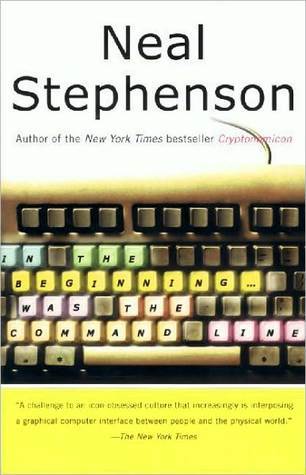
This is "the Word" -- one man's word, certainly -- about the art (and artifice) of the state of our computer-centric existence. And considering that the "one man" is Neal Stephenson, "the hacker Hemingway" (Newsweek) -- acclaimed novelist, pragmatist, seer, nerd-friendly philosopher, and nationally bestselling author of groundbreaking literary works (Snow Crash, Cryptonomicon, etc., etc.) -- the word is well worth hearing. Mostly well-reasoned examination and partial rant, Stephenson's In the Beginning... was the Command Line is a thoughtful, irreverent, hilarious treatise on the cyber-culture past and present; on operating system tyrannies and downloaded popular revolutions; on the Internet, Disney World, Big Bangs, not to mention the meaning of life itself.

Bu kitabı okudum ve hayatımı değiştirmeye karar verdim.”– Demir SABANCI –Beslenme konusunda şu ana kadar yapılmış en kapsamlı araştırma…Bu kitap hayatınızı kurtarabilir Kanser, Kalp hastalıkları, diyabet ve obeziteye karşı kendinizi koruyabilmenin en etkili yöntemi: ÇİN MUCİZESİ…“Colin Campbell'in Çin Mucize'si önemli ve ziyadesiyle okumaya değer bir kitap. Oğlu Tom'la birlikte Colin, beslenme ve hastalık arasındaki bağlantıyı araştırıyor ve buldukları sonuçlar çok ürkütücü. Çin Mucizesi duyulması elzem bir öyküdür.”ROBERT C. RICHARDSONNobel ödüllü Fizik Profesörü ve Araştırma Dekan Yardımcısı, Cornell Üniversitesi“Çin Mucizesi beslenme vasıtasıyla kalp hastalıkları, kanser ve diğer Batılı hastalıkları önlemenin şimdiye dek bulunmuş en ikna edici kanıtlarını sunuyor. Hem ekonomik olarak gelişmiş hem de hızlı bir ekonomik değişimden geçen ve yaşam biçimleri değişen ülkeler için de önemli bir kitap.”JUNSHI CHEN, Araştırma Profesörü,Beslenme ve Gıda Güvenliği Enstitüsü Çin Hastalık Kontrol ve Önleme MerkeziBİLİMSEL DOĞRULAR KESİNDİR. SONUÇLARDA HATA PAYI YOKTUR. BESLENME ALIŞKANLIKLARINIZI DEĞİŞTİRİN, KANSER, KALP HASTALIKLARI, DİYABET VE OBEZİTE RİSKİNİZİ AZALTIN.Ne açıdan bakarsak bakalım, dünyadaki insanların sağlığı gün geçtikçe kötüleşiyor ve bireyler olarak sağlık gelirlerimiz de bu durumla doğru olantılı olarak artıyor. Artık nüfusun büyük bir çoğunluğu obez ve milyonlarcası da diyabet hastalığına yakalanmış durumda veya bugün, otuz yıl önce kalp hastalığına yakalanma oranımızdan çok daha fazla. 1970'ler ortasında kansere karşı açılan savaş büyük bir hüsranla sonuçlanmaktan öteye gidemedi ve sözkonusu insanlar-yani rahatsızlığı olan insanlar-haftanın belirli günleri ya da tüm günleri reçeteli ilaçlar kullanmak zorunda. Bunlara ek olarak dörtte üçümüz yüksek kolestrol sahibiyiz.Daha da kötü noktalardan bahsetmek gerekirse, gelecek nesilleri yani çocuklarımızı ufacık yaşta hastalıklarla karşı karşıya bırakmak durumda kalıyoruz. Artık çocuklarımızın çoğu obez veya obez olma yolunda ya da daha önce çocukların nadiren yakalandığı diyabet, artık onların da korkulu rüyası haline gelmiş durumda. Hem de çok daha sinsice.Ve çocuklarımız da düzenli ilaçlar kullanmak zorunda kalıyor.Yukarıda anlattıklarımız üç ana başlıkta birleşiyor: Kahvaltı, öğle yemeği ve akşam yemeği.
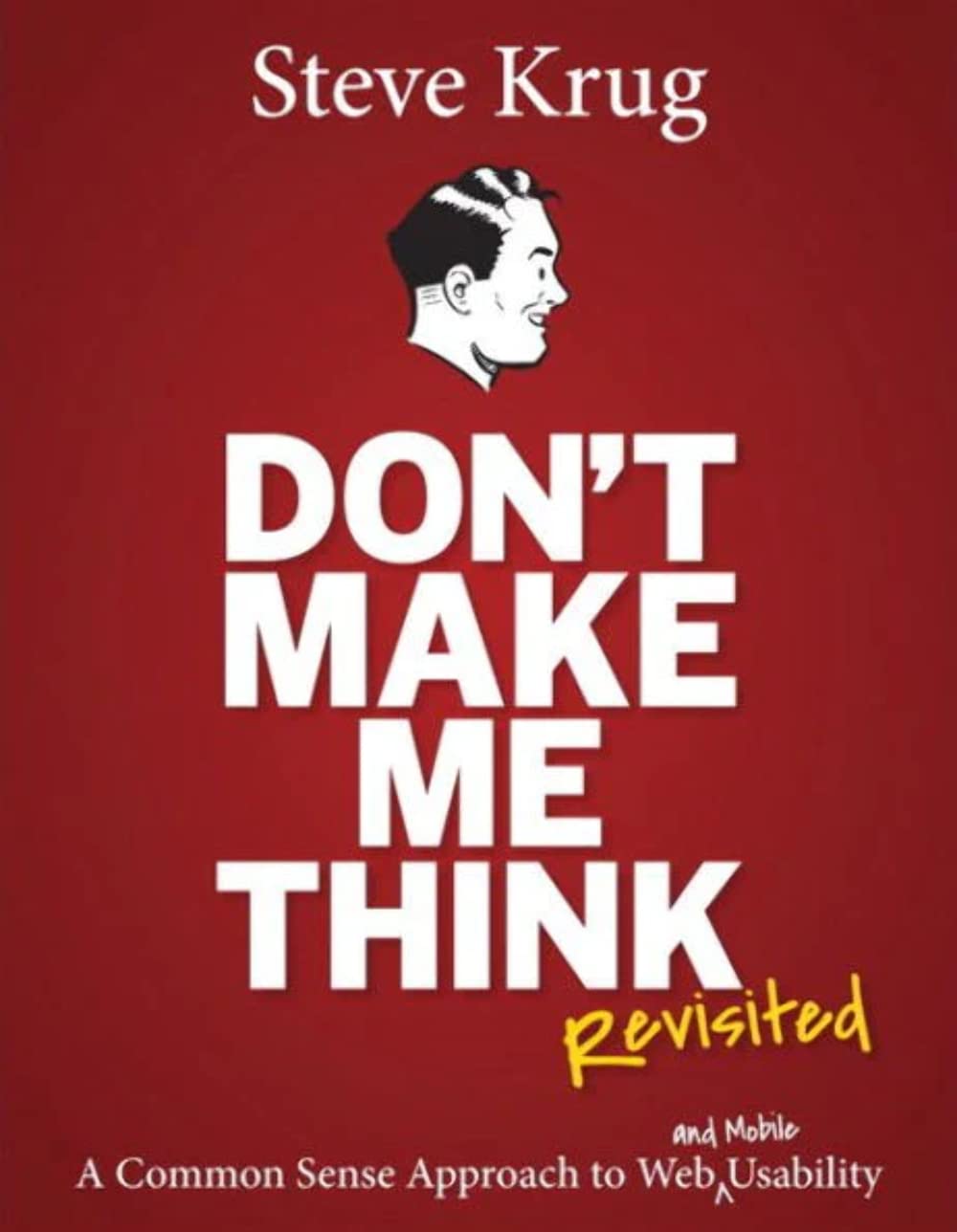
Don't Make Me Think, Revisited: A Common Sense Approach to Web Usability
by Steve Krug
Rating: 4.2 ⭐
• 8 recommendations ❤️
Since Don’t Make Me Think was first published in 2000, over 400,000 Web designers and developers have relied on Steve Krug’s guide to help them understand the principles of intuitive navigation and information design.In this 3rd edition, Steve returns with fresh perspective to reexamine the principles that made Don’t Make Me Think a classic-–with updated examples and a new chapter on mobile usability. And it’s still short, profusely illustrated…and best of all–fun to read.If you’ve read it before, you’ll rediscover what made Don’t Make Me Think so essential to Web designers and developers around the world. If you’ve never read it, you’ll see why so many people have said it should be required reading for anyone working on Web sites.

A candid and indispensable primer on all aspects of advertising from the man Time has called "the most sought after wizard in the business."Told with brutal candor and prodigal generosity, David Ogilvy • How to get a job in advertising• How to choose an agency for your product• The secrets behind advertising that works• How to write successful copy—and get people to read it• Eighteen miracles of research• What advertising can do for charitiesAnd much, much more.

Why Most Things Fail: Evolution, Extinction and Economics
by Paul Ormerod
Rating: 3.5 ⭐
• 2 recommendations ❤️
Failure is the most fundamental feature of biological, social and economic systems. Just as species fail—and become extinct—so do companies, brands and public policies. And while failure may be hard to handle, understanding the pervasive nature of failure in the world of human societies and economies is essential for those looking to succeed.Linking economic models with models of biological evolution, Why Most Things Fail identifies the subtle patterns that comprise the apparent disorder of failure and analyzes why failure arises. Throughout the book, author Paul Ormerod exposes the flaws in some of today's most basic economic assumptions, and examines how professionals in both business and government can help their organizations survive and thrive in a world that has become too complex. Along the way, Ormerod discusses how the Iron Law of Failure applies to business and government, and reveals how you can achieve optimal social and economic outcomes by properly adapting to a world characterized by constant change, evolution and disequilibrium. Filled with in-depth insight, expert advice and illustrative examples, Why Most Things Fail will show you why failure is so common and what you can do to become one of the few who succeed.

When we first meet Michael Oher, he is one of thirteen children by a mother addicted to crack; he does not know his real name, his father, his birthday, or how to read or write. He takes up football and school after a rich, white, Evangelical family plucks him from the streets. Then two great forces alter Oher: the family's love and the evolution of professional football itself into a game in which the quarterback must be protected at any cost. Our protagonist becomes the priceless package of size, speed, and agility necessary to guard the quarterback's greatest vulnerability: his blind side.
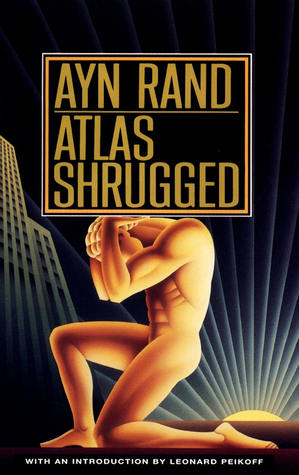
This is the story of a man who said that he would stop the motor of the world and did. Was he a destroyer or the greatest of liberators?Why did he have to fight his battle, not against his enemies, but against those who needed him most, and his hardest battle against the woman he loved? What is the world’s motor — and the motive power of every man? You will know the answer to these questions when you discover the reason behind the baffling events that play havoc with the lives of the characters in this story. Tremendous in its scope, this novel presents an astounding panorama of human life — from the productive genius who becomes a worthless playboy — to the great steel industrialist who does not know that he is working for his own destruction — to the philosopher who becomes a pirate — to the composer who gives up his career on the night of his triumph — to the woman who runs a transcontinental railroad — to the lowest track worker in her Terminal tunnels. You must be prepared, when you read this novel, to check every premise at the root of your convictions.This is a mystery story, not about the murder — and rebirth — of man’s spirit. It is a philosophical revolution, told in the form of an action thriller of violent events, a ruthlessly brilliant plot structure and an irresistible suspense. Do you say this is impossible? Well, that is the first of your premises to check.

In his bestselling The Moral Animal , Robert Wright applied the principles of evolutionary biology to the study of the human mind. Now Wright attempts something even more explaining the direction of evolution and human history–and discerning where history will lead us next.In The Logic of Human Destiny , Wright asserts that, ever since the primordial ooze, life has followed a basic pattern. Organisms and human societies alike have grown more complex by mastering the challenges of internal cooperation. Wright's narrative ranges from fossilized bacteria to vampire bats, from stone-age villages to the World Trade Organization, uncovering such surprises as the benefits of barbarian hordes and the useful stability of feudalism. Here is history endowed with moral significance–a way of looking at our biological and cultural evolution that suggests, refreshingly, that human morality has improved over time, and that our instinct to discover meaning may itself serve a higher purpose. Insightful, witty, profound, Nonzero offers breathtaking implications for what we believe and how we adapt to technology's ongoing transformation of the world.

The Monk and the Riddle: The Art of Creating a Life While Making a Living
by Randy Komisar
Rating: 3.8 ⭐
• 4 recommendations ❤️
What would you be willing to do for the rest of your life? It's a question most of us consider only hypothetically, opting instead to "do what we have to do" to earn a living. But in the critically acclaimed bestseller The Monk and the Riddle, entrepreneurial sage Randy Komisar asks us to answer it for real. The book's timeless advice - to make work pay not just in cash, but in experience, satisfaction, and joy - will be embraced by anyone who wants success to come, not just from what they do, but from who they are. At once a fictional tale of Komisar's encounters with a would-be entrepreneur, and a personal account of how Komisar found meaning not in work's rewards but in work itself, the book illustrates what's wrong with the mainstream thinking that we should sacrifice our lives to make a living. Described by Fortune.com as "part personal essay, part fictional narrative, and part meditation on the nature of work and life," The Monk and the Riddle is essential reading on the art of creating a life while making a living.
Get Back in the Box: How Being Great at What You Do Is Great for Business
by Douglas Rushkoff
Rating: 4.1 ⭐
• 4 recommendations ❤️
Douglas Rushkoff was one of the first social commentators to identify the new culture around the internet. He has spent nearly a decade advising companies on the ways they can re-orient their businesses to the transformations the internet has caused. Through his speaking and consulting, Rushkoff has discovered an important and unrecognized shift in American business. Too many companies are panicked and operating in survival mode when the worst of the crisis has already passed. Likening the internet transformation to the intellectual and technological ferment of the Enlightment, Rushkoff suggests we have a remarkable opportunity to re-integrate our new perspective with the work we actually do. Instead of running around trying to "think out of the box," Rushkoff demonstrates, now is the time to "get back in the box" and improve the way we do our jobs, run our operations and drive innovation from the ground up. Combining stories gleaned from his consulting with a thrilling tour of history's dramatic moments and clever readings of cultural shift we've just experienced, Rushkoff offers a compelling vision of the simple and effective ways businesses can re-invigorate themselves.

Emergence: The Connected Lives of Ants, Brains, Cities, and Software
by Steven Johnson
Rating: 4.0 ⭐
• 2 recommendations ❤️
In the tradition of Being Digital and The Tipping Point, Steven Johnson, acclaimed as a "cultural critic with a poet's heart" (The Village Voice), takes readers on an eye-opening journey through emergence theory and its applications. Explaining why the whole is sometimes smarter than the sum of its parts, Johnson presents surprising examples of feedback, self-organization, and adaptive learning. How does a lively neighborhood evolve out of a disconnected group of shopkeepers, bartenders, and real estate developers? How does a media event take on a life of its own? How will new software programs create an intelligent World Wide Web? In the coming years, the power of self-organization -- coupled with the connective technology of the Internet -- will usher in a revolution every bit as significant as the introduction of electricity. Provocative and engaging, Emergence puts you on the front lines of this exciting upheaval in science and thought.

David Sedaris's new collection, Me Talk Pretty One Day, tells a most unconventional life story. It begins with a North Carolina childhood filled with speech-therapy classes ("There was the lisp, of course, but more troubling than that was my voice itself, with its excitable tone and high, girlish pitch") and unwanted guitar lessons taught by a midget. From budding performance artist ("the only crimp in my plan was that I seemed to have no talent whatsoever") to "clearly unqualified" writing teacher in Chicago, Sedaris's career leads him to New York (the sky's-the-limit field of furniture moving) and eventually, of all places, France.Sedaris's move to Paris poses a number of challenges, chief among them his inability to speak the language. Arriving a "spooky man-child" capable of communicating only through nouns, he undertakes language instruction that leads him ever deeper into cultural confusion. Whether describint the Easter Bunny to puzzled classmates, savoring movies in translation (It Is Necessary to Save the Soldier Ryan), or watching a group of men play soccer with a cow, Sedaris brings a view and a voice like no other--"Original, acid, and wild," said the Los Angeles Times--to every unforgettable encounter.--jacket

The Psychology of Sex, Gender, and Jobs: Issues and Solutions
by
Rating: 3.7 ⭐
• 18 recommendations ❤️
Employers often ascribe values to gender and sexual orientation that override truly relevant personal characteristics including ability, intelligence and dedication. Policy makers and business leaders need to be informed and involved in creating a workplace climate that openly accepts all people. This volume highlights concerns such as gender barriers to occupational advancement, sexual harassment and female vulnerability, and heterosexual men as targets of sexual harassment.Diamant and Lee discuss the origins and development of sexual stereotypes that form the basis for discrimination. Busines leaders must educate themselves and their employees to understand the wide range of differences that exist in the workforce. The Psychology of Sex, Gender, and Jobs offers solutions to managing the workforce of today.
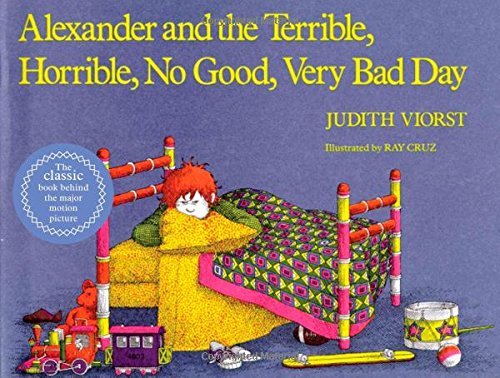
Alexander and the Terrible, Horrible, No Good, Very Bad Day
by Judith Viorst
Rating: 4.2 ⭐
• 2 recommendations ❤️
Alexander knew it was going to be a terrible day when he woke up with gum in this hair.And it got worse...His best friend deserted him. There was no dessert in his lunch bag. And, on top of all that, there were lima beans for dinner and kissing on TV!

Good to Great: Why Some Companies Make the Leap... and Others Don't
by Jim Collins
Rating: 4.1 ⭐
• 28 recommendations ❤️
sach hay ve ky nang - bi quyet thanh cong - hinh thanh tu duy tich cuc

Jitterbug Perfumeis an epic.Which is to say, it begins in the forests of ancient Bohemia and doesn’t conclude until nine o’clock tonight (Paris time).It is a saga, as well. A saga must have a hero, and the hero of this one is a janitor with a missing bottle.The bottle is blue, very, very old, and embossed with the image of a goat-horned god.If the liquid in the bottle actually is the secret essence of the universe, as some folks seem to think, it had better be discovered soon because it is leaking and there is only a drop or two left.

With this extraordinary first volume in an epoch-making masterpiece, Neal Stephenson hacks into the secret histories of nations and the private obsessions of men, decrypting with dazzling virtuosity the forces that shaped this century. In 1942, Lawrence Pritchard Waterhouse—mathematical genius and young Captain in the U.S. Navy—is assigned to detachment 2702. It is an outfit so secret that only a handful of people know it exists, and some of those people have names like Churchill and Roosevelt. The mission of Waterhouse and Detachment 2702—commanded by Marine Raider Bobby Shaftoe-is to keep the Nazis ignorant of the fact that Allied Intelligence has cracked the enemy's fabled Enigma code. It is a game, a cryptographic chess match between Waterhouse and his German counterpart, translated into action by the gung-ho Shaftoe and his forces. Fast-forward to the present, where Waterhouse's crypto-hacker grandson, Randy, is attempting to create a "data haven" in Southeast Asia—a place where encrypted data can be stored and exchanged free of repression and scrutiny. As governments and multinationals attack the endeavor, Randy joins forces with Shaftoe's tough-as-nails granddaughter, Amy, to secretly salvage a sunken Nazi submarine that holds the key to keeping the dream of a data haven afloat. But soon their scheme brings to light a massive conspiracy with its roots in Detachment 2702 linked to an unbreakable Nazi code called Arethusa. And it will represent the path to unimaginable riches and a future of personal and digital liberty...or to universal totalitarianism reborn. A breathtaking tour de force, and Neal Stephenson's most accomplished and affecting work to date, Cryptonomicon is profound and prophetic, hypnotic and hyper-driven, as it leaps forward and back between World War II and the World Wide Web, hinting all the while at a dark day-after-tomorrow. It is a work of great art, thought and creative daring; the product of a truly iconoclastic imagination working with white-hot intensity.
Drawing on cutting-edge neuroscience and psychology and displaying all of the brilliance that made The Tipping Point a classic, Blink changes the way you'll understand every decision you make. Never again will you think about thinking the same way.Malcolm Gladwell redefined how we understand the world around us. Now, in Blink, he revolutionizes the way we understand the world within. Blink is a book about how we think without thinking, about choices that seem to be made in an instant - in the blink of an eye - that actually aren't as simple as they seem. Why are some people brilliant decision makers, while others are consistently inept? Why do some people follow their instincts and win, while others end up stumbling into error? How do our brains really work - in the office, in the classroom, in the kitchen, and in the bedroom? And why are the best decisions often those that are impossible to explain to others? In Blink we meet the psychologist who has learned to predict whether a marriage will last, based on a few minutes of observing a couple; the tennis coach who knows when a player will double-fault before the racket even makes contact with the ball; the antiquities experts who recognize a fake at a glance. Here, too, are great failures of "blink": the election of Warren Harding; "New Coke"; and the shooting of Amadou Diallo by police. Blink reveals that great decision makers aren't those who process the most information or spend the most time deliberating, but those who have perfected the art of "thin-slicing" - filtering the very few factors that matter from an overwhelming number of variables.

Winner of the 2006 National Book AwardThe Echo Maker is "a remarkable novel, from one of our greatest novelists, and a book that will change all who read it" (Booklist, starred review).On a winter night on a remote Nebraska road, twenty-seven-year-old Mark Schluter has a near-fatal car accident. His older sister, Karin, returns reluctantly to their hometown to nurse Mark back from a traumatic head injury. But when Mark emerges from a coma, he believes that this woman--who looks, acts, and sounds just like his sister--is really an imposter. When Karin contacts the famous cognitive neurologist Gerald Weber for help, he diagnoses Mark as having Capgras syndrome. The mysterious nature of the disease, combined with the strange circumstances surrounding Mark's accident, threatens to change all of their lives beyond recognition. In The Echo Maker, Richard Powers proves himself to be one of our boldest and most entertaining novelists.

The most famous and controversial novel from one of the greatest writers of the twentieth century tells the story of Humbert Humbert’s obsessive, devouring, and doomed passion for the nymphet Dolores Haze.Awe and exhilaration—along with heartbreak and mordant wit—abound in Lolita, which tells the story of the aging Humbert Humbert’s obsession for the nymphet Dolores Haze. Lolita is also the story of a hypercivilized European colliding with the cheerful barbarism of postwar America.Most of all, it is a meditation on love—love as outrage and hallucination, madness and transformation.
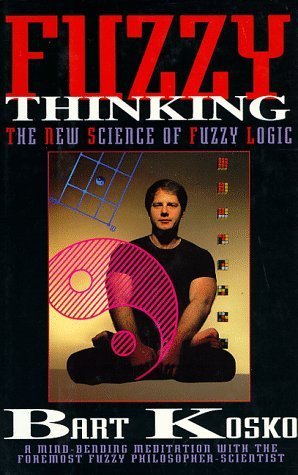
An authoritative introduction to "fuzzy logic" brings readers up to speed on the "smart" products and computers that will change all of our lives in the future.

Smart and Gets Things Done: Joel Spolsky's Concise Guide to Finding the Best Technical Talent 1st (first) by Spolsky, Joel (2007) Hardcover
by Spolsky
Rating: 4.0 ⭐
• 2 recommendations ❤️
A guide to attracting, recruiting, interviewing, and hiring the best technical talent.A comprehensive system for hiring top-notch technical employees Packed with useful information and specific advice written in a breezy, humorous style Learn how to find great people--and get them to work for you--in an afternoon!The top software developers are ten times more productive than average developers. Ten times. You can't afford not to hire them. But if you haven't been reading Joel Spolsky's books or blog, you probably don't know how to find them and make them want to work for you.In this brief book, Joel reveals all his secrets--from his years at Microsoft, and as the co-founder of Fog Creek Software--for recruiting the best developers in the world.If you've ever wondered what you should be looking for in a resume, if you've ever struggled to decide whether to hire someone at the end of an interview, or if you're wondering why you can't find great programmers, stop everything and read this book.

The Innovator's Dilemma: When New Technologies Cause Great Firms to Fail
by Clayton M. Christensen
Rating: 4.1 ⭐
• 39 recommendations ❤️
The bestselling classic on disruptive innovation, by renowned author Clayton M. Christensen. His work is cited by the world’s best-known thought leaders, from Steve Jobs to Malcolm Gladwell. In this classic bestseller—one of the most influential business books of all time—innovation expert Clayton Christensen shows how even the most outstanding companies can do everything right—yet still lose market leadership. Christensen explains why most companies miss out on new waves of innovation. No matter the industry, he says, a successful company with established products will get pushed aside unless managers know how and when to abandon traditional business practices. Offering both successes and failures from leading companies as a guide, The Innovator’s Dilemma gives you a set of rules for capitalizing on the phenomenon of disruptive innovation. Sharp, cogent, and provocative—and consistently noted as one of the most valuable business ideas of all time—The Innovator’s Dilemma is the book no manager, leader, or entrepreneur should be without.

Made to Stick: Why Some Ideas Survive and Others Die
by Chip Heath
Rating: 4.0 ⭐
• 10 recommendations ❤️
NEW YORK TIMES BESTSELLER - The instant classic about why some ideas thrive, why others die, and how to improve your idea's chances--essential reading in the "fake news" era.Mark Twain once observed, "A lie can get halfway around the world before the truth can even get its boots on." His observation rings true: Urban legends, conspiracy theories, and bogus news stories circulate effortlessly. Meanwhile, people with important ideas--entrepreneurs, teachers, politicians, and journalists--struggle to make them "stick."In Made to Stick, Chip and Dan Heath reveal the anatomy of ideas that stick and explain ways to make ideas stickier, such as applying the human scale principle, using the Velcro Theory of Memory, and creating curiosity gaps. Along the way, we discover that sticky messages of all kinds--from the infamous "kidney theft ring" hoax to a coach's lessons on sportsmanship to a vision for a new product at Sony--draw their power from the same six traits.Made to Stick will transform the way you communicate. It's a fast-paced tour of success stories (and failures): the Nobel Prize-winning scientist who drank a glass of bacteria to prove a point about stomach ulcers; the charities who make use of the Mother Teresa Effect; the elementary-school teacher whose simulation actually prevented racial prejudice.Provocative, eye-opening, and often surprisingly funny, Made to Stick shows us the vital principles of winning ideas--and tells us how we can apply these rules to making our own messages stick.

The Cluetrain Manifesto: The End of Business as Usual
by Rick Levine
Rating: 3.8 ⭐
• 2 recommendations ❤️
The Cluetrain Manifesto began as a Web site (cluetrain.com) in 1999 when the authors, who have worked variously at IBM, Sun Microsystems, the Linux Journal , and NPR, posted 95 theses about the new reality of the networked marketplace. Ten years after its original publication, their message remains more relevant than ever. For example, thesis no. 2: "Markets consist of human beings, not demographic sectors"; thesis no. 20: "Companies need to realize their markets are often laughing. At them." The book enlarges on these themes through dozens of stories and observations about business in America and how the Internet will continue to change it all.With a new introduction and chapters by the authors, and commentary by Jake McKee, JP Rangaswami, and Dan Gillmor, this book is essential reading for anybody interested in the Internet and e-commerce, and is especially vital for businesses navigating the topography of the wired marketplace.

Alternate cover for this ISBN can be found hereCat's Cradle, one of Vonnegut's most entertaining novels, is filled with scientists and G-men and even ordinary folks caught up in the game. These assorted characters chase each other around in search of the world's most important and dangerous substance, a new form of ice that freezes at room temperature. At one time, this novel could probably be found on the bookshelf of every college kid in America; it's still a fabulous read and a great place to start if you're young enough to have missed the first Vonnegut craze.

The narrator of this splendidly expansive novel of high intellect and grand passion is an American anthropologist at loose ends in the South African republic of Botswana. She has a noble and exacting mind, a good waist, and a busted thesis project. She also has a yen for Nelson Denoon, a charismatic intellectual who is rumored to have founded a secretive and unorthodox utopian society in a remote corner of the Kalahari—one in which he is virtually the only man. What ensues is both a quest and an exuberant comedy of manners, a book that explores the deepest canyons of eros even as it asks large questions about the good society, the geopolitics of poverty, and the baffling mystery of what men and women really want.

Here is a multidimensional playland of ideas from the world's most eccentric Nobel-Prize winning scientist. Kary Mullis is legendary for his invention of PCR, which redefined the world of DNA, genetics, and forensic science. He is also a surfer, a veteran of Berkeley in the sixties, and perhaps the only Nobel laureate to describe a possible encounter with aliens. A scientist of boundless curiosity, he refuses to accept any proposition based on secondhand or hearsay evidence, and always looks for the "money trail" when scientists make announcements.Mullis writes with passion and humor about a wide range of from global warming to the O. J. Simpson trial, from poisonous spiders to HIV, from scientific method to astrology. Dancing Naked in the Mind Field challenges us to question the authority of scientific dogma even as it reveals the workings of an uncannily original scientific mind.

Pulsating with the rhythms of fifties underground America, jazz, sex, illicit drugs, and the mystery and promise of the open road, Jack Kerouac's classic novel of freedom and longing defined what it meant to be "Beat," and has inspired every generation since its initial publication in 1957. Based on Kerouac's adventures with Neal Cassady, On the Road tells the story of two friends, whose four cross-country road trips are a quest for meaning and true experience. Written with a mixture of sad-eyed naivete and wild abandon, and imbued with Kerouac's love of America, his compassion for humanity, and his sense of language as jazz, One the Road is the quintessential American vision of freedom and hope-vibrant, compelling, and full of wonder.

Wear on edges of covers and spine. Bookstore stamp on first page.

The million copy international bestseller, critically acclaimed and translated into over 25 languages. As influential today as when it was first published, The Selfish Gene has become a classic exposition of evolutionary thought. Professor Dawkins articulates a gene's eye view of evolution - a view giving centre stage to these persistent units of information, and in which organisms can be seen as vehicles for their replication. This imaginative, powerful, and stylistically brilliant work not only brought the insights of Neo-Darwinism to a wide audience, but galvanized the biology community, generating much debate and stimulating whole new areas of research. Forty years later, its insights remain as relevant today as on the day it was published. This 40th anniversary edition includes a new epilogue from the author discussing the continuing relevance of these ideas in evolutionary biology today, as well as the original prefaces and foreword, and extracts from early reviews. Oxford Landmark Science books are 'must-read' classics of modern science writing which have crystallized big ideas, and shaped the way we think.

"The Electric Kool-Aid Acid Test" for our own age, the story of a dreamer who turned American media upside down-and suffered the consequences Louis Rossetto had no money, no home, no job. Five years later he owned the hottest magazine in America and was poised to become an international tycoon, with America's most powerful financiers by his side. Rossetto was the founder and editor of" Wired, " whose hyperactive Day-Glo pages proclaimed that every American institution was obsolete. Instantly, "Wired, " was everywhere-on television, passed around the halls of Congress, displayed in the office of the president of the United States. "Wired, "'s headquarters in San Francisco became a pilgrimage site for everybody who wanted to be at the white-hot center of the digital revolution. Not since the early days of Jann Wenner and" Rolling Stone" had anybody so brilliantly channeled the enthusiasms of his era. But this was only the beginning. Wired cast an uncanny spell, creating a feedback loop that grew stunningly out of control. "Wired, "'s online site, HotWired, designed and sold the first banner advertisements for the World Wide Web, unleashing a commercial frenzy. "Wired, " reached for empire, with a book-publishing company, a broadcast division, and foreign editions all over the globe. But as the market's enthusiasm outstripped the limits of reason, Rossetto faced a battle over the fate of Wired that would prove the ultimate test of his radical ideas. Gary Wolf, one of "Wired, "'s most popular writers, takes no prisoners in this insider's account, telling a story that is alternately thrilling, hilarious, heartbreaking, and absurd. Now that bumper stickers read-ing please god-just one more bubble have been sighted on the highways of California, "Wired-A Romance" goes beyond the dot.com clicheeacute;s and paints a deeply affecting portrait of the boom."From the Hardcover edition."

A modern classic, Einstein's Dreams is a fictional collage of stories dreamed by Albert Einstein in 1905, when he worked in a patent office in Switzerland. As the defiant but sensitive young genius is creating his theory of relativity, a new conception of time, he imagines many possible worlds. In one, time is circular, so that people are fated to repeat triumphs and failures over and over. In another, there is a place where time stands still, visited by lovers and parents clinging to their children. In another, time is a nightingale, sometimes trapped by a bell jar.Now translated into thirty languages, Einstein's Dreams has inspired playwrights, dancers, musicians, and painters all over the world. In poetic vignettes, it explores the connections between science and art, the process of creativity, and ultimately the fragility of human existence.
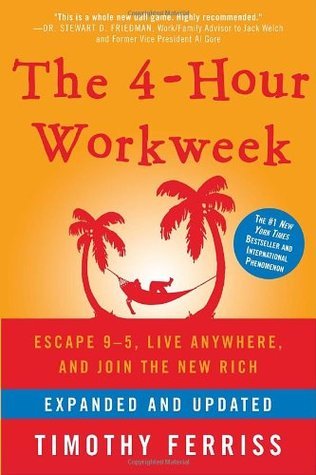
The 4-Hour Workweek: Escape 9-5, Live Anywhere, and Join the New Rich
by Timothy Ferriss
Rating: 3.9 ⭐
• 48 recommendations ❤️
sach ky nang

The Tipping Point: How Little Things Can Make a Big Difference
by Malcolm Gladwell
Rating: 4.0 ⭐
• 17 recommendations ❤️
From the bestselling author of The Bomber Mafia: discover Malcolm Gladwell's breakthrough debut and explore the science behind viral trends in business, marketing, and human behavior.The tipping point is that magic moment when an idea, trend, or social behavior crosses a threshold, tips, and spreads like wildfire. Just as a single sick person can start an epidemic of the flu, so too can a small but precisely targeted push cause a fashion trend, the popularity of a new product, or a drop in the crime rate. This widely acclaimed bestseller, in which Malcolm Gladwell explores and brilliantly illuminates the tipping point phenomenon, is already changing the way people throughout the world think about selling products and disseminating ideas.

The Black Swan: The Impact of the Highly Improbable
by Nassim Nicholas Taleb
Rating: 4.0 ⭐
• 19 recommendations ❤️
A black swan is an event, positive or negative, that is deemed improbable yet causes massive consequences. In this groundbreaking and prophetic book, Taleb shows in a playful way that Black Swan events explain almost everything about our world, and yet we—especially the experts—are blind to them. In this second edition, Taleb has added a new essay, On Robustness and Fragility, which offers tools to navigate and exploit a Black Swan world.*2nd Edition, With a new essay: "On Robustness and Fragility"

The Diamond Age: Or, a Young Lady's Illustrated Primer
by Neal Stephenson
Rating: 4.2 ⭐
• 10 recommendations ❤️
The Diamond Age: Or, a Young Lady's Illustrated Primer is a postcyberpunk novel by Neal Stephenson. It is to some extent a science fiction coming-of-age story, focused on a young girl named Nell, and set in a future world in which nanotechnology affects all aspects of life. The novel deals with themes of education, social class, ethnicity, and the nature of artificial intelligence.

Praised throughout the cartoon industry by such luminaries as Art Spiegelman, Matt Groening, and Will Eisner, this innovative comic book provides a detailed look at the history, meaning, and art of comics and cartooning.

It's Not About the Bike: My Journey Back to Life
by Lance Armstrong
Rating: 3.7 ⭐
• 2 recommendations ❤️
It is such an all-American story. A lanky kid from Plano, Texas, is raised by a feisty, single parent who sacrifices for her son, who becomes one of our country's greatest athletes. Given that background, it is understandable why Armstrong was able to channel his boundless energy toward athletic endeavors. By his senior year in high school, he was already a professional triathlete and was training with the U.S. Olympic cycling developmental team. In 1993, Armstrong secured a position in the ranks of world-class cyclists by winning the World Championship and a Tour de France stage, but in 1996, he was diagnosed with testicular cancer. Armstrong entered an unknown battlefield and challenged it as if climbing through the Alps: aggressive yet tactical. He beat the cancer and proceeded to stun all the pundits by winning the 1999 Tour de France. In this memoir, Armstrong covers his early years swiftly with a blunt matter-of-factness, but the main focus is on his battle with cancer. Readers will respond to the inspirational recovery story, and they will appreciate the behind-the-scenes cycling information. After he won the Tour, his mother was quoted as saying that her son's whole life has been a fight against the odds; we see here that she was not exaggerating. Brenda Barrera

In his first novel, Dave Eggers has written a moving and hilarious tale of two friends who fly around the world trying to give away a lot of money and free themselves from a profound loss. It reminds us once again what an important, necessary talent Dave Eggers is.

WINNER OF THE PULITZER PRIZE The beloved, award-winning The Amazing Adventures of Kavalier & Clay, a Michael Chabon masterwork, is the American epic of two boy geniuses named Joe Kavalier and Sammy Clay. Now with special bonus material by Michael Chabon. A “towering, swash-buckling thrill of a book” (Newsweek), hailed as Chabon’s “magnum opus” (The New York Review of Books), The Amazing Adventures of Kavalier & Clay is a triumph of originality, imagination, and storytelling, an exuberant, irresistible novel that begins in New York City in 1939. A young escape artist and budding magician named Joe Kavalier arrives on the doorstep of his cousin, Sammy Clay. While the long shadow of Hitler falls across Europe, America is happily in thrall to the Golden Age of comic books, and in a distant corner of Brooklyn, Sammy is looking for a way to cash in on the craze. He finds the ideal partner in the aloof, artistically gifted Joe, and together they embark on an adventure that takes them deep into the heart of Manhattan, and the heart of old-fashioned American ambition. From the shared fears, dreams, and desires of two teenage boys, they spin comic book tales of the heroic, fascist-fighting Escapist and the beautiful, mysterious Luna Moth, otherworldly mistress of the night. Climbing from the streets of Brooklyn to the top of the Empire State Building, Joe and Sammy carve out lives, and careers, as vivid as cyan and magenta ink. Spanning continents and eras, this superb book by one of America’s finest writers remains one of the defining novels of our modern American age. NEW YORK TIMES BESTSELLER Finalist for the PEN/Faulkner Award, National Book Critics Circle Award, and Los Angeles Times Book Prize Winner of the Bay Area Book Reviewers Award and the New York Society Library Book Award Named one of the 10 Best Books of the Decade by Entertainment Weekly

From A to Z, the Penguin Drop Caps series collects 26 unique hardcovers—featuring cover art by Jessica Hische It all begins with a letter. Fall in love with Penguin Drop Caps, a new series of twenty-six collectible and hardcover editions, each with a type cover showcasing a gorgeously illustrated letter of the alphabet. In a design collaboration between Jessica Hische and Penguin Art Director Paul Buckley, the series features unique cover art by Hische, a superstar in the world of type design and illustration, whose work has appeared everywhere from Tiffany & Co. to Wes Anderson's recent film Moonrise Kingdom to Penguin's own bestsellers Committed and Rules of Civility. With exclusive designs that have never before appeared on Hische's hugely popular Daily Drop Cap blog, the Penguin Drop Caps series launches with six perennial favorites to give as elegant gifts, or to showcase on your own shelves.G is for Golding. At the dawn of the next world war, a plane crashes on an uncharted island, stranding a group of schoolboys. At first, with no adult supervision, their freedom is something to celebrate; this far from civilization the boys can do anything they want. Anything. They attempt to forge their own society, failing, however, in the face of terror, sin and evil. And as order collapses, as strange howls echo in the night, as terror begins its reign, the hope of adventure seems as far from reality as the hope of being rescued. Labeled a parable, an allegory, a myth, a morality tale, a parody, a political treatise, even a vision of the apocalypse, Lord of the Flies is perhaps our most memorable tale about “the end of innocence, the darkness of man’s heart.”
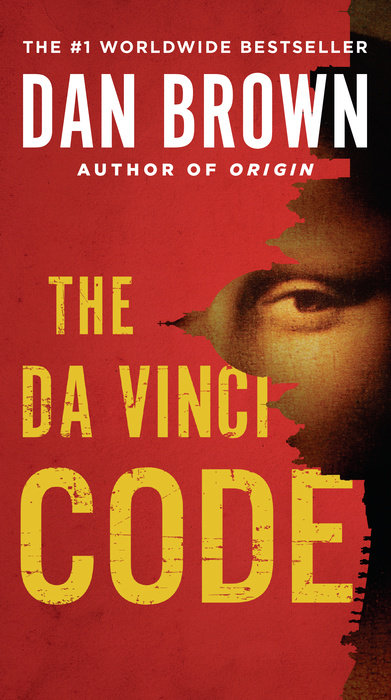
An ingenious code hidden in the works of Leonardo da Vinci.A desperate race through the cathedrals and castles of Europe.An astonishing truth concealed for centuries...unveiled at last.A fascinating and absorbing thriller -- perfect for history buffs, conspiracy nuts, puzzle lovers or anyone who appreciates a great, riveting story.While in Paris on business, Harvard symbologist Robert Langdon receives an urgent late-night phone call: the elderly curator of the Louvre has been murdered inside the museum. Near the body, police have found a baffling cipher. While working to solve the enigmatic riddle, Langdon is stunned to discover it leads to a trail of clues hidden in the works of Da Vinci -- clues visible for all to see -- yet ingeniously disguised by the painter. Langdon joins forces with a gifted French cryptologist, Sophie Neveu, and learns the late curator was involved in the Priory of Sion -- an actual secret society whose members included Sir Isaac Newton, Botticelli, Victor Hugo, and Da Vinci, among others.In a breathless race through Paris, London, and beyond, Langdon and Neveu match wits with a faceless powerbroker who seems to anticipate their every move. Unless Langdon and Neveu can decipher the labyrinthine puzzle in time, the Priory's ancient secret -- and an explosive historical truth -- will be lost forever. The Da Vinci Code heralds the arrival of a new breed of lightning-paced, intelligent thriller utterly unpredictable right up to its stunning conclusion.

The Starfish and the Spider: The Unstoppable Power of Leaderless Organizations
by Ori Brafman
Rating: 3.8 ⭐
• 4 recommendations ❤️
If you cut off a spider’s leg, it’s crippled; if you cut off its head, it dies. But if you cut off a starfish’s leg it grows a new one, and the old leg can grow into an entirely new starfish.What’s the hidden power behind the success of Wikipedia, Craigslist, and Skype? What do eBay and General Electric have in common with the abolitionist and women’s rights movements? What fundamental choice put General Motors and Toyota on vastly different paths? How could winning a Supreme Court case be the biggest mistake MGM could have made?After five years of ground-breaking research, Ori Brafman and Rod Beckstrom share some unexpected answers, gripping stories, and a tapestry of unlikely connections. The Starfish and the Spider argues that organizations fall into two categories: traditional “spiders,” which have a rigid hierarchy and top-down leadership, and revolutionary “starfish,” which rely on the power of peer relationships.The Starfish and the Spider explores what happens when starfish take on spiders (such as the music industry vs. Napster, Kazaa, and the P2P services that followed). It reveals how established companies and institutions, from IBM to Intuit to the US government, are also learning how to incorporate starfish principles to achieve success. The book explores:* How the Apaches fended off the powerful Spanish army for 200 years* The power of a simple circle* The importance of catalysts who have an uncanny ability to bring people together * How the Internet has become a breeding ground for leaderless organizations* How Alcoholics Anonymous has reached untold millions with only a shared ideology and without a leaderThe Starfish and the Spider is the rare book that will change how you understand the world around you.
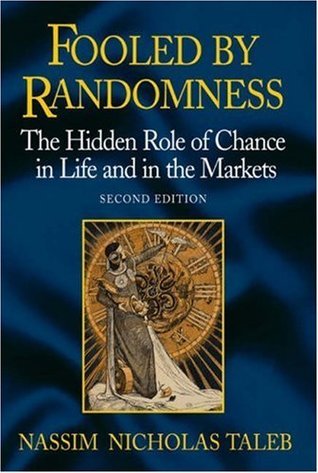
Fooled by Randomness: The Hidden Role of Chance in Life and in the Markets
by Nassim Nicholas Taleb
Rating: 4.0 ⭐
• 14 recommendations ❤️
Selected by Amazon.com and the Financial Times as one of the best business books of the year, Fooled by Randomness is an instant classic. It's uniqueness has drawn to it a wide following - from the New Yorker to the Pentagon. Already published in 14 languages, this new edition, expanded by over 80 pages, includes up-to-date advances from behavioral finance and cognitive science This book is about luck ? or more precisely how we perceive and deal with luck in life and business. It is already a landmark work and its title has entered our vocabulary. In its second edition, Fooled by Randomness is now a cornerstone for anyone interested in random outcomes. Set against the backdrop of the most conspicuous forum in which luck is mistaken for skill ? the world of trading ? Fooled by Randomness is a captivating insight into one of the least understood factors of all our lives. Writting in an entertaining and narrative style, the author succeeds in tackling three major intellectual the problem of induction, the survivorship biases, and our genetic unfitness to the modern word. In this second edition, Taleb manages to use stories and anecdotes to illustrate our overestimation of causality and the heuristics that make us view the world as far more explainable than it actually is. But no one can replicate what is obtained by chance. Are we capable of distinguishing the fortunate charlatan from the genuine visionary? Must we always try to uncover nonexistent messages in random events? It may be impossible to guard ourselves against the vagaries of the Goddess Fortuna, but after reading Fooled by Randomness we can be a little better prepared.

The Wisdom of Crowds: Why the Many Are Smarter Than the Few
by James Surowiecki
Rating: 3.7 ⭐
• 8 recommendations ❤️
In this fascinating book, New Yorker business columnist James Surowiecki explores a deceptively simple idea: Large groups of people are smarter than an elite few, no matter how brilliant -- better at solving problems, fostering innovation, coming to wise decisions, even predicting the future.With boundless erudition and in delightfully clear prose, Surowiecki ranges across fields as diverse as popular culture, psychology, ant biology, behavioral economics, artificial intelligence, military history, and politics to show how this simple idea offers important lessons for how we live our lives, select our leaders, run our companies, and think about our world.

Man's Search for Meaning has riveted generations of readers with its descriptions of life in Nazi death camps and its lessons for spiritual survival. Between 1942 and 1945 psychiatrist Viktor Frankl labored in four different camps, including Auschwitz, while his parents, brother, and pregnant wife perished. Based on his own experience and the stories of his many patients, Frankl argues that we cannot avoid suffering but we can choose how to cope with it, find meaning in it, and move forward with renewed purpose. Frankl's theory—known as logotherapy, from the Greek word logos ("meaning")—holds that our primary drive in life is not pleasure, as Freud maintained, but the discovery and pursuit of what we personally find meaningful. In the decades since its first publication in 1959, Man's Search for Meaning has become a classic, with more than twelve million copies in print around the world. A 1991 Library of Congress survey that asked readers to name a "book that made a difference in your life" found Man's Search for Meaning among the ten most influential books in America. At once a memoir, a meditation, a treatise, and a history, it continues to inspire us all to find significance in the very act of living.(back cover)
Christopher John Francis Boone knows all the countries of the world and their capitals and every prime number up to 7,057. He relates well to animals but has no understanding of human emotions. He cannot stand to be touched. And he detests the color yellow. This improbable story of Christopher’s quest to investigate the suspicious death of a neighborhood dog makes for one of the most captivating, unusual, and widely heralded novels in recent years.

International Bestseller • Winner of the Los Angeles Times Book Prize for Fiction “Far more than a conventional novel. It is a meditation on life, on the erotic, on the nature of men and women and love . . . full of telling details, truths large and small, to which just about every reader will respond.” — People In The Unbearable Lightness of Being , acclaimed author Milan Kundera tells the story of two couples, a young woman in love with a man torn between his love for her and his incorrigible womanizing, and one of his mistresses and her humbly faithful lover. In a world in which lives are shaped by irrevocable choices and by fortuitous events, a world in which everything occurs but once, existence seems to lose its substance, its weight. Hence, we feel "the unbearable lightness of being" not only as the consequence of our pristine actions but also in the public sphere, and the two inevitably intertwine. This magnificent novel, now available in a beautifully designed Harper Perennial Deluxe Edition with French flaps and deckle edged paper, is a story of passion and politics, infidelity and ideas, and encompasses the extremes of comedy and tragedy, illuminating all aspects of human existence.
Major New York Times bestsellerWinner of the National Academy of Sciences Best Book Award in 2012Selected by the New York Times Book Review as one of the best books of 2011A Globe and Mail Best Books of the Year 2011 TitleOne of The Economist's 2011 Books of the Year One of The Wall Street Journal's Best Nonfiction Books of the Year 20112013 Presidential Medal of Freedom RecipientIn the international bestseller, Thinking, Fast and Slow, Daniel Kahneman, the renowned psychologist and winner of the Nobel Prize in Economics, takes us on a groundbreaking tour of the mind and explains the two systems that drive the way we think. System 1 is fast, intuitive, and emotional; System 2 is slower, more deliberative, and more logical. The impact of overconfidence on corporate strategies, the difficulties of predicting what will make us happy in the future, the profound effect of cognitive biases on everything from playing the stock market to planning our next vacation—each of these can be understood only by knowing how the two systems shape our judgments and decisions. Engaging the reader in a lively conversation about how we think, Kahneman reveals where we can and cannot trust our intuitions and how we can tap into the benefits of slow thinking. He offers practical and enlightening insights into how choices are made in both our business and our personal lives—and how we can use different techniques to guard against the mental glitches that often get us into trouble. Winner of the National Academy of Sciences Best Book Award and the Los Angeles Times Book Prize and selected by The New York Times Book Review as one of the ten best books of 2011, Thinking, Fast and Slow is destined to be a classic.

Reinventing Fire: Bold Business Solutions for the New Energy Era
by Amory B. Lovins
Rating: 4.0 ⭐
• 4 recommendations ❤️
Imagine fuel without fear. No climate change. No oil spills, no dead coalminers, no dirty air, no devastated lands, no lost wildlife. No energy poverty. No oil-fed wars, tyrannies, or terrorists. No leaking nuclear wastes or spreading nuclear weapons. Nothing to run out. Nothing to cut off. Nothing to worry about. Just energy abundance, benign and affordable, for all, forever. That richer, fairer, cooler, safer world is possible, practical, even profitable-because saving and replacing fossil fuels now works better and costs no more than buying and burning them. iReinventing Fire/i shows how business-motivated by profit, supported by civil society, sped by smart policy-can get the US completely off oil and coal by 2050, and later beyond natural gas as well.Authored by a world leader on energy and innovation, the book maps a robust path for integrating real, here-and-now, comprehensive energy solutions in four industries-transportation, buildings, electricity, and manufacturing-melding radically efficient energy use with reliable, secure, renewable energy supplies. Popular in tone and rooted in applied hope, "Reinventing Fire" shows how smart businesses are creating a potent, global, market-driven, and explosively growing movement to defossilize fuels. It points readers to trillions in savings over the next 40 years, and trillions more in new business opportunities. Whether you care most about national security, or jobs and competitive advantage, or climate and environment, this major contribution by world leaders in energy innovation offers startling innovations will support your values, inspire your support, and transform your sense of possibility. Pragmatic citizens today are more interested in outcomes than motives. "Reinventing Fire" answers this trans-ideological call. Whether you care most about national security, or jobs and competitive advantage, or climate and environment, its startling innovations will support your values, inspire your support, and transform your sense of possibility.
Antifragile: Things That Gain from Disorder
by Nassim Nicholas Taleb
Rating: 4.2 ⭐
• 23 recommendations ❤️
Antifragile is a standalone book in Nassim Nicholas Taleb’s landmark Incerto series, an investigation of opacity, luck, uncertainty, probability, human error, risk, and decision-making in a world we don’t understand. The other books in the series are Fooled by Randomness, The Black Swan, Skin in the Game, and The Bed of Procrustes .Nassim Nicholas Taleb, the bestselling author of The Black Swan and one of the foremost thinkers of our time, reveals how to thrive in an uncertain world.Just as human bones get stronger when subjected to stress and tension, and rumors or riots intensify when someone tries to repress them, many things in life benefit from stress, disorder, volatility, and turmoil. What Taleb has identified and calls “antifragile” is that category of things that not only gain from chaos but need it in order to survive and flourish. In The Black Swan, Taleb showed us that highly improbable and unpredictable events underlie almost everything about our world. In Antifragile, Taleb stands uncertainty on its head, making it desirable, even necessary, and proposes that things be built in an antifragile manner. The antifragile is beyond the resilient or robust. The resilient resists shocks and stays the same; the antifragile gets better and better.Furthermore, the antifragile is immune to prediction errors and protected from adverse events. Why is the city-state better than the nation-state, why is debt bad for you, and why is what we call “efficient” not efficient at all? Why do government responses and social policies protect the strong and hurt the weak? Why should you write your resignation letter before even starting on the job? How did the sinking of the Titanic save lives? The book spans innovation by trial and error, life decisions, politics, urban planning, war, personal finance, economic systems, and medicine. And throughout, in addition to the street wisdom of Fat Tony of Brooklyn, the voices and recipes of ancient wisdom, from Roman, Greek, Semitic, and medieval sources, are loud and clear.Antifragile is a blueprint for living in a Black Swan world.Erudite, witty, and iconoclastic, Taleb’s message is revolutionary: The antifragile, and only the antifragile, will make it.Praise for Antifragile“Ambitious and thought-provoking . . . highly entertaining.” — The Economist“A bold book explaining how and why we should embrace uncertainty, randomness, and error . . . It may just change our lives.” — Newsweek

Six days ago, astronaut Mark Watney became one of the first people to walk on Mars. Now, he's sure he'll be the first person to die there. After a dust storm forces his crew to evacuate the planet while thinking him dead, Mark finds himself stranded on Mars's surface, with no way to signal Earth that he's alive. And even if he could get word out, his supplies would be gone years before a rescue could arrive. Chances are, though, Mark won't have time to starve to death. The damaged machinery, unforgiving environment or plain-old "human error" are much more likely to kill him first.Armed with nothing but his ingenuity, his engineering skills--and a gallows sense of humor that proves to be his greatest source of strength--Mark embarks on a dogged quest to stay alive. But will his resourcefulness be enough to overcome the impossible odds against him?--back cover

Why Greatness Cannot Be Planned: The Myth of the Objective
by Kenneth O. Stanley
Rating: 4.2 ⭐
• 1 recommendation ❤️
Why does modern life revolve around objectives? From how science is funded, to improving how children are educated -- and nearly everything in-between -- our society has become obsessed with a seductive that greatness results from doggedly measuring improvement in the relentless pursuit of an ambitious goal. In Why Greatness Cannot Be Planned , Stanley and Lehman begin with a surprising scientific discovery in artificial intelligence that leads ultimately to the conclusion that the objective obsession has gone too far. They make the case that great achievement can't be bottled up into mechanical metrics; that innovation is not driven by narrowly focused heroic effort; and that we would be wiser (and the outcomes better) if instead we whole-heartedly embraced serendipitous discovery and playful creativity. Controversial at its heart, yet refreshingly provocative, this book challenges readers to consider life without a destination and discovery without a compass.

" Cumulus is your new favorite surveillance-fueled dystopian novel. It's a future we can all recognize--and one that we should all be genuinely afraid of." - Ars TechnicaIn the not-so-distant future, economic inequality and persistent surveillance push Oakland to the brink of civil war.Lilly Miyamoto is a passionate analog photographer striving to pursue an ever more distant dream. Huian Li is preeminent among the Silicon Valley elite as the founder and CEO of the pervasive tech giant Cumulus. Graham Chandler is a frustrated intelligence agent forging a new path through the halls of techno-utopian royalty. But when Huian rescues Lilly from a run-in with private security forces, it sets off a chain of events that will change their lives and the world.The adventure accelerates into a mad dash of political intrigue, relentless ambition, and questionable salvation. Will they survive to find themselves and mend a broken system?

Thinking in Bets: Making Smarter Decisions When You Don't Have All the Facts
by Annie Duke
Rating: 3.8 ⭐
• 19 recommendations ❤️
In Super Bowl XLIX, Seahawks coach Pete Carroll made one of the most controversial calls in football history: With 26 seconds remaining, and trailing by four at the Patriots' one-yard line, he called for a pass instead of a hand off to his star running back. The pass was intercepted and the Seahawks lost. Critics called it the dumbest play in history. But was the call really that bad? Or did Carroll actually make a great move that was ruined by bad luck?Even the best decision doesn't yield the best outcome every time. There's always an element of luck that you can't control, and there is always information that is hidden from view. So the key to long-term success (and avoiding worrying yourself to death) is to think in bets: How sure am I? What are the possible ways things could turn out? What decision has the highest odds of success? Did I land in the unlucky 10% on the strategy that works 90% of the time? Or is my success attributable to dumb luck rather than great decision making?Annie Duke, a former World Series of Poker champion turned business consultant, draws on examples from business, sports, politics, and (of course) poker to share tools anyone can use to embrace uncertainty and make better decisions. For most people, it's difficult to say "I'm not sure" in a world that values and, even, rewards the appearance of certainty. But professional poker players are comfortable with the fact that great decisions don't always lead to great outcomes and bad decisions don't always lead to bad outcomes.By shifting your thinking from a need for certainty to a goal of accurately assessing what you know and what you don't, you'll be less vulnerable to reactive emotions, knee-jerk biases, and destructive habits in your decision making. You'll become more confident, calm, compassionate and successful in the long run.
The Making of a Manager: What to Do When Everyone Looks to You
by Julie Zhuo
Rating: 4.2 ⭐
• 14 recommendations ❤️
Instant Wall Street Journal Bestseller! Congratulations, you're a manager! After you pop the champagne, accept the shiny new title, and step into this thrilling next chapter of your career, the truth descends like a fog: you don't really know what you're doing.That's exactly how Julie Zhuo felt when she became a rookie manager at the age of 25. She stared at a long list of logistics--from hiring to firing, from meeting to messaging, from planning to pitching--and faced a thousand questions and uncertainties. How was she supposed to spin teamwork into value? How could she be a good steward of her reports' careers? What was the secret to leading with confidence in new and unexpected situations?Now, having managed dozens of teams spanning tens to hundreds of people, Julie knows the most important lesson of all: great managers are made, not born. If you care enough to be reading this, then you care enough to be a great manager.The Making of a Manager is a modern field guide packed everyday examples and transformative insights, including:* How to tell a great manager from an average manager (illustrations included) * When you should look past an awkward interview and hire someone anyway * How to build trust with your reports through not being a boss * Where to look when you lose faith and lack the answersWhether you're new to the job, a veteran leader, or looking to be promoted, this is the handbook you need to be the kind of manager you wish you had.

The Social Life of Information: Updated, with a New Preface
by John Seely Brown
Rating: 3.8 ⭐
• 2 recommendations ❤️
“Should be read by anyone interested in understanding the future,” The Times Literary Supplement raved about the original edition of The Social Life of Information. We’re now living in that future, and one of the seminal books of the Internet Age is more relevant than ever.The future was a place where technology was supposed to empower individuals and obliterate social organizations. Pundits predicted that information technology would obliterate the need for almost everything—from mass media to bureaucracies, universities, politics, and governments. Clearly, we are not living in that future. The Social Life of Information explains why.John Seely Brown and Paul Duguid show us how to look beyond mere information to the social context that creates and gives meaning to it. Arguing elegantly for the important role that human sociability plays, even—perhaps especially—in the digital world, The Social Life of Information gives us an optimistic look beyond the simplicities of information and individuals. It shows how a better understanding of the contribution that communities, organizations, and institutions make to learning, working, and innovating can lead to the richest possible use of technology in our work and everyday lives.With a new introduction by David Weinberger and reflections by the authors on developments since the book’s first publication, this new edition is essential reading for anyone seeking to understand the human place in a digital world.

From the bestselling author of Thinking in Bets comes a toolkit for mastering the skill of quitting to achieve greater successBusiness leaders, with millions of dollars down the drain, struggle to abandon a new app or product that just isn't working. Governments, caught in a hopeless conflict, believe that the next tactic will finally be the one that wins the war. And in our own lives, we persist in relationships or careers that no longer serve us. Why? According to Annie Duke, in the face of tough decisions, we're terrible quitters. And that is significantly holding us back.In Quit, Duke teaches you how to get good at quitting. Drawing on stories from elite athletes like Mount Everest climbers, founders of leading companies like Stewart Butterfield, the CEO of Slack, and top entertainers like Dave Chappelle, Duke explains why quitting is integral to success, as well as strategies for determining when to hold em, and when to fold em, that will save you time, energy, and money. You'll learn: How the paradox of quitting influences decision making: If you quit on time, you will feel you quit earlyWhat forces work against good quitting behavior, such as escalation commitment, desire for certainty, and status quo biasHow to think in expected value in order to make better decisions, as well as other best practices, such as increasing flexibility in goal-setting, establishing "quitting contracts," anticipating optionality, and conducting premortems and backcastsWhether you're facing a make-or-break business decision or life-altering personal choice, mastering the skill of quitting will help you make the best next move.

The One: How an Ancient Idea Holds the Future of Physics
by Heinrich Päs
Rating: 3.8 ⭐
• 1 recommendation ❤️
A particle physicist makes the scientific case for monism, the ancient idea about the universe that says, all is One In The One , particle physicist Heinrich Päs presents a bold fundamentally, everything in the universe is an aspect of one unified whole. The idea, called monism, has a rich three-thousand-year Plato believed that “all is one” before monism was rejected as irrational and suppressed as a heresy by the medieval Church. Nevertheless, monism persisted, inspiring Enlightenment science and Romantic poetry. Päs aims to show how monism could inspire physics today, how it could slice through the intellectual stagnation that has bogged down progress in modern physics and help the field achieve the grand theory of everything it has been chasing for decades. Blending physics, philosophy, and the history of ideas, The One is an epic, mind-expanding journey through millennia of human thought and into the nature of reality itself.

From the creator of the wildly popular blog Wait But Why, a fun and fascinating deep dive into what the hell is going on in our strange, unprecedented modern times.Between 2013 and 2016, Tim Urban became one of the world’s most popular bloggers, writing dozens of viral, long-form articlesabout everything from AI to colonizing Mars to procrastination. Then, he turned his attention to a new topic: the society around him. Why was everything such a mess? Why was everyone acting like such a baby? When did things get so tribal? Why do humans do this stuff?This massive topic sent Tim tumbling down his deepest rabbit hole yet, through mountains of history, evolutionary psychology, political theory, neuroscience, and modern-day political movements, as he tried to figure out the answer to a simple question: What’s our problem?Six years later, he emerged from the hole holding this book. What’s Our Problem? is a deep and expansive analysis of our modern times, in the classic style of Wait But Why, packed with original concepts, sticky metaphors, and 300 drawings. The book provides an entirely new framework and language for thinking and talking about today’s complex world. Instead of focusing on the usual left-center-right horizontal political axis, which is all about what we think, the book introduces a verticalaxis that explores how we think, as individuals and as groups. Readers will find themselves on a delightful and fascinating journey that will ultimately change the way they see the world around them.Anyway he wanted to say a lot more about all of this but there was a word limit on this book description so just go read the book.
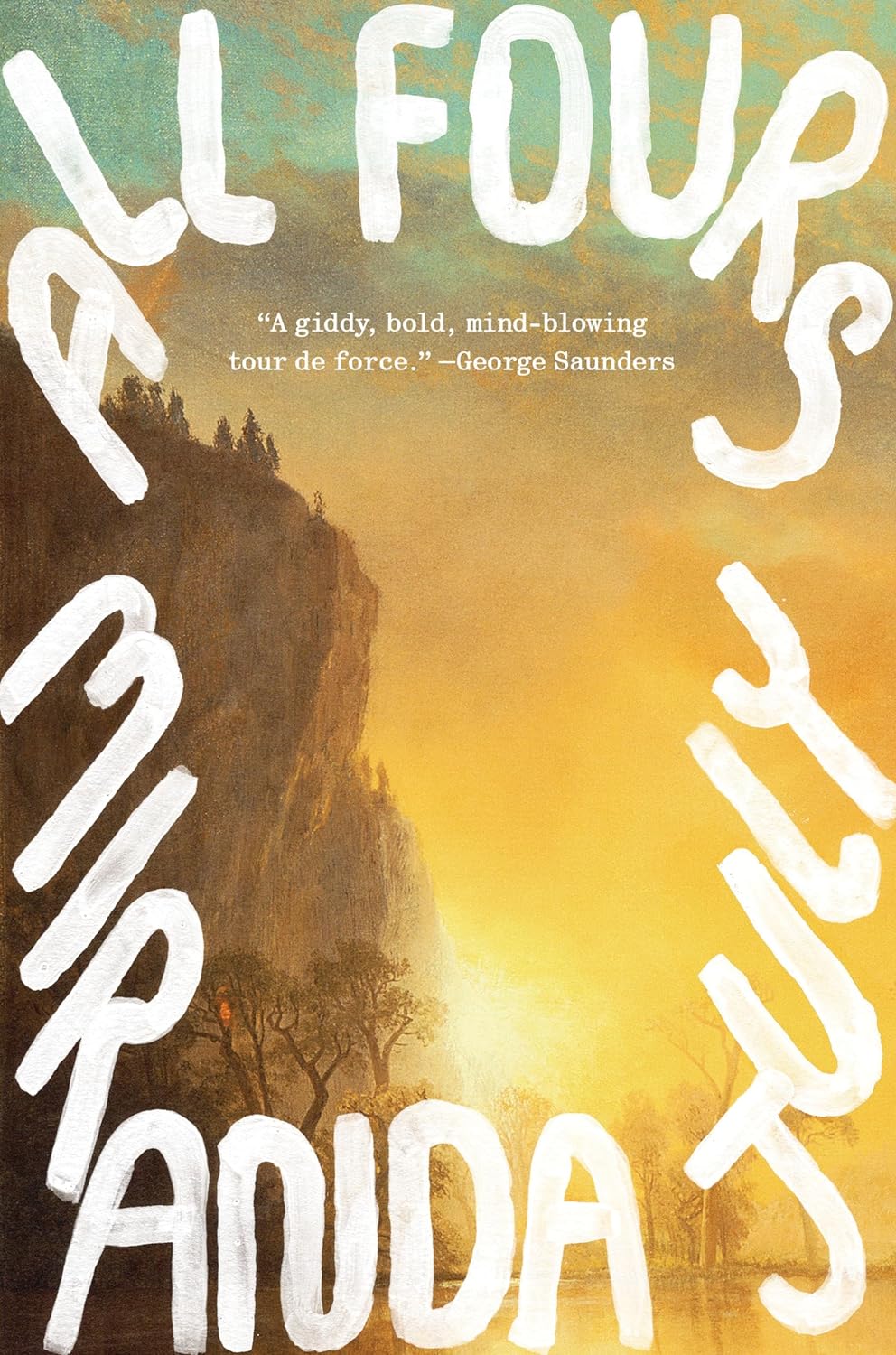
An irreverently sexy, tender, hilarious, and surprising novel about a woman upending her life.A semifamous artist announces her plan to drive cross-country, from LA to New York. Twenty minutes after leaving her husband and child at home, she spontaneously exits the freeway, beds down in a nondescript motel, and immerses herself in a temporary reinvention that turns out to be the start of an entirely different journey.Miranda July’s second novel confirms the brilliance of her unique approach to fiction. With July’s wry voice, perfect comic timing, unabashed curiosity about human intimacy, and palpable delight in pushing boundaries, All Fours tells the story of one woman’s quest for a new kind of freedom. Part absurd entertainment, part tender reinvention of the sexual, romantic, and domestic life of a forty-five-year-old female artist, All Fours transcends expectation while excavating our beliefs about life lived as a woman. Once again, July hijacks the familiar and turns it into something new and thrillingly, profoundly alive.