
Eric Weinstein Recommended Books
American mathematician and venture capital director
67 Books Recommended

The True Believer: Thoughts on the Nature of Mass Movements
by Eric Hoffer
Rating: 4.2 ⭐
• 16 recommendations ❤️
A stevedore on the San Francisco docks in the 1940s, Eric Hoffer wrote philosophical treatises in his spare time while living in the railroad yards. The True Believer -- the first and most famous of his books -- was made into a bestseller when President Eisenhower cited it during one of the earliest television press conferences. Completely relevant and essential for understanding the world today, The True Believer is a visionary, highly provocative look into the mind of the fanatic and a penetrating study of how an individual becomes one.

Father to Son, Revised Edition: Life Lessons on Raising a Boy
by Harry H. Harrison Jr.
Rating: 4.4 ⭐
• 2 recommendations ❤️
Warm and fuzzy, anchored in values, and filled with simple words of wisdom, this beloved, bestselling book for parents speaks to the important business of raising sons, and distills their timeless lessons into one nugget of wisdom per page some lighthearted, some serious, some practical, and some intangible, and all supported by a strong moral backbone.Freshly updated, the book begins with the Five Keys of Parenting, a guide to navigating the extraordinary, even if sometimes exasperating, journey of parenthood. It s filled with the importance of nurturing responsibility: Teach him that the world will judge him by his actions, not his intentions. Fun stuff: Have tea with him in the afternoons. Serve cookies. And when he s ready to go: Hug him fiercely.


Einstein's General Theory of Relativity leads to two remarkable predictions: first, that the ultimate destiny of many massive stars is to undergo gravitational collapse and to disappear from view, leaving behind a 'black hole' in space; and secondly, that there will exist singularities in space-time itself. These singularities are places where space-time begins or ends, and the presently known laws of physics break down. They will occur inside black holes, and in the past are what might be construed as the beginning of the universe. To show how these predictions arise, the authors discuss the General Theory of Relativity in the large. Starting with a precise formulation of the theory and an account of the necessary background of differential geometry, the significance of space-time curvature is discussed and the global properties of a number of exact solutions of Einstein's field equations are examined. The theory of the causal structure of a general space-time is developed, and is used to study black holes and to prove a number of theorems establishing the inevitability of singualarities under certain conditions. A discussion of the Cauchy problem for General Relativity is also included in this 1973 book.

Save the Cat: The Last Book on Screenwriting You'll Ever Need
by Blake Snyder
Rating: 4.0 ⭐
• 10 recommendations ❤️
Here’s what started the phenomenon: the best seller, for over 15 years, that’s been used by screenwriters around the world! Blake Snyder tells all in this fast, funny and candid look inside the movie business. “Save the Cat” is just one of many ironclad rules for making your ideas more marketable and your script more satisfying, including: The four elements of every winning logline The seven immutable laws of screenplay physics The 10 genres that every movie ever made can be categorized by ― and why they’re important to your script Why your Hero must serve your Idea Mastering the 15 Beats Creating the “Perfect Beast” by using The Board to map 40 scenes with conflict and emotional change How to get back on track with proven rules for script repair This ultimate insider’s guide reveals the secrets that none dare admit, told by a showbiz veteran who’s proven that you can sell your script if you can save the cat.

The Emperor of Scent: A True Story of Perfume and Obsession
by Chandler Burr
Rating: 4.2 ⭐
• 4 recommendations ❤️
The Emperor of Scent tells of the scientific maverick Luca Turin, a connoisseur and something of an aesthete who wrote a bestselling perfume guide and bandied about an outrageous new theory on the human sense of smell. Drawing on cutting-edge work in biology, chemistry, and physics, Turin used his obsession with perfume and his eerie gift for smell to turn the cloistered worlds of the smell business and science upside down, leading to a solution to the last great mystery of the senses: how the nose works.
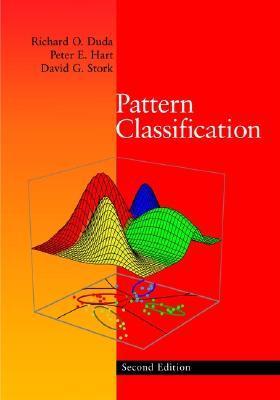
The first edition, published in 1973, has become a classic reference in the field. Now with the second edition, readers will find information on key new topics such as neural networks and statistical pattern recognition, the theory of machine learning, and the theory of invariances. Also included are worked examples, comparisons between different methods, extensive graphics, expanded exercises and computer project topics.An Instructor's Manual presenting detailed solutions to all the problems in the book is available from the Wiley editorial department.

Winner of the Pulitzer prize in 1974 and the culmination of a life's work, The Denial of Death is Ernest Becker's brilliant and impassioned answer to the "why" of human existence. In bold contrast to the predominant Freudian school of thought, Becker tackles the problem of the vital lie -- man's refusal to acknowledge his own mortality. In doing so, he sheds new light on the nature of humanity and issues a call to life and its living that still resonates more than twenty years after its writing.
Appropriate for senior and graduate level courses in Computer Science Theory, Automata, and Theory of Computation. This is the long awaited Second Edition of Lewis and Papadimitriou's best-selling theory of computation text. In this substantially modified edition, the authors have enhanced the clarity of their presentation by making the material more accessible to a broader undergraduate audience with no special mathematical experience.

Economists generally accept as a given the old adage that there’s no accounting for tastes. Nobel Laureate Gary Becker disagrees, and in this lively new collection he confronts the problem of preferences and how they are formed and how they affect our behavior. He argues that past experiences and social influences form two basic capital personal and social. He then applies these concepts to assessing the effects of advertising, the power of peer pressure, the nature of addiction, and the function of habits. This framework promises to illuminate many other realms of social life previously considered off-limits by economists.
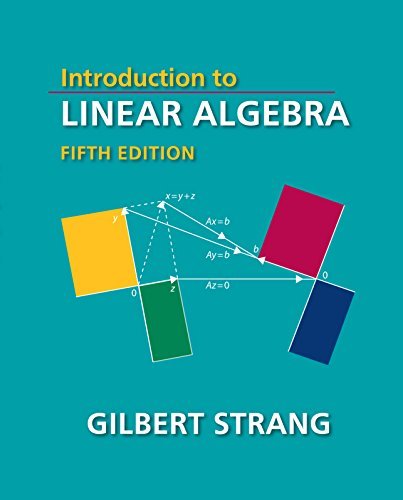
Linear algebra is something all mathematics undergraduates and many other students, in subjects ranging from engineering to economics, have to learn. The fifth edition of this hugely successful textbook retains all the qualities of earlier editions, while at the same time seeing numerous minor improvements and major additions. The latter include: - A new chapter on singular values and singular vectors, including ways to analyze a matrix of data - A revised chapter on computing in linear algebra, with professional-level algorithms and code that can be downloaded for a variety of languages - A new section on linear algebra and cryptography - A new chapter on linear algebra in probability and statistics. A dedicated and active website also offers solutions to exercises as well as new exercises from many different sources (including practice problems, exams, and development of textbook examples), plus codes in MATLAB(R), Julia, and Python.

A course in spoken and written Hindi includes dialogues, grammar, pronunciation, vocabulary, and cultural tips.

The Whole Shebang: A State of the Universe Report
by Timothy Ferris
Rating: 4.0 ⭐
• 2 recommendations ❤️
A non-technical account of recent astronomical research makes all that is known about the universe accessible to the average reader, in a study that integrates scientific personalities with hard facts, vivid explanations, and authoritative speculation
Reviews from the First Edition:"An excellent text ... The postulates of quantum mechanics and the mathematical underpinnings are discussed in a clear, succinct manner." (American Scientist)"No matter how gently one introduces students to the concept of Dirac's bras and kets, many are turned off. Shankar attacks the problem head-on in the first chapter, and in a very informal style suggests that there is nothing to be frightened of." (Physics Bulletin)Reviews of the Second Edition:"This massive text of 700 and odd pages has indeed an excellent get-up, is very verbal and expressive, and has extensively worked out calculational details---all just right for a first course. The style is conversational, more like a corridor talk or lecture notes, though arranged as a text. ... It would be particularly useful to beginning students and those in allied areas like quantum chemistry." (Mathematical Reviews)R. Shankar has introduced major additions and updated key presentations in this second edition of Principles of Quantum Mechanics. New features of this innovative text include an entirely rewritten mathematical introduction, a discussion of Time-reversal invariance, and extensive coverage of a variety of path integrals and their applications. Additional highlights include:- Clear, accessible treatment of underlying mathematics- A review of Newtonian, Lagrangian, and Hamiltonian mechanics- Student understanding of quantum theory is enhanced by separate treatment of mathematical theorems and physical postulates- Unsurpassed coverage of path integrals and their relevance in contemporary physicsThe requisite text for advanced undergraduate- and graduate-level students, Principles of Quantum Mechanics, Second Edition is fully referenced and is supported by many exercises and solutions. The book's self-contained chapters also make it suitable for independent study as well as for courses in applied disciplines.

Peddling Prosperity: Economic Sense and Nonsense in an Age of Diminished Expectations
by Paul Krugman
Rating: 3.9 ⭐
• 2 recommendations ❤️
Newsweek hailed Paul Krugman as "a superstar among economists" and went on to praise Peddling Prosperity as "the best primer around on recent U.S. economic history." Others joined the chorus. This wonderfully received book finds him in top form, observing the years he's dubbed "the age of diminished expectations." The past twenty years have been an era of economic disappointment in the United States. They have also been a time of intense economic debate, as rival ideologies contend for policy influence. But strange things have happened to economic ideas on their way to power: they've been hijacked by policy entrepreneurs―economic snake-oil salesmen, right or left, who offer easy answers to hard problems. Supply-siders rose to power with Ronald Reagan and not only cured nothing but left behind a $3 trillion debt. Krugman finds an unhappy parallel in those who shape policy within the Clinton administration.
Calculus on Manifolds: A Modern Approach to Classical Theorems of Advanced Calculus
by Michael Spivak
Rating: 4.2 ⭐
• 2 recommendations ❤️
This little book is especially concerned with those portions of ”advanced calculus” in which the subtlety of the concepts and methods makes rigor difficult to attain at an elementary level. The approach taken here uses elementary versions of modern methods found in sophisticated mathematics. The formal prerequisites include only a term of linear algebra, a nodding acquaintance with the notation of set theory, and a respectable first-year calculus course (one which at least mentions the least upper bound (sup) and greatest lower bound (inf) of a set of real numbers). Beyond this a certain (perhaps latent) rapport with abstract mathematics will be found almost essential.

An astonishing work of cultural criticism, this book is widely recognized as a brilliant and devastating challenge to conventional views of literature, anthropology, religion, and psychoanalysis. In its scope and interest it can be compared with Freud's Totem and Taboo, the subtext Girard refutes with polemic daring, vast erudition, and a persuasiveness that leaves the reader compelled to respond, one way or another.This is the single fullest summation of Girard's ideas to date, the book by which they will stand or fall. In a dialogue with two psychiatrists (Jean-Michel Oughourlian and Guy Lefort), Girard probes an encyclopedic array of topics, ranging across the entire spectrum of anthropology, psychoanalysis, and cultural production.Girard's point o departure is what he calls 'mimesis,' the conflict that arises when human rivals compete to differentiate themselves from each other, yet succeed only in becoming more and more alike. At certain points in the life of a society, according to Girard, this mimetic conflict erupts into a crisis in which all difference dissolves in indiscriminate violence. In primitive societies, such crises were resolved by the 'scapegoating mechanism,' in which the community, en masse, turned on an unpremeditated victim. The repression of this collective murder and its repetition in ritual sacrifice then formed the foundations of both religion and the restored social order.How does Christianity, at once the most 'sacrificial' of religions and a faith with a non-violent ideology, fit into this scheme? Girard grants Freud's point, in Totem and Taboo, that Christianity is similar to primitive religion, but only to refute Freud—if Christ is sacrificed, Girard argues, it is not because God willed it, but because human beings wanted it.The book is not merely, or perhaps not mainly, biblical exegesis, for within its scope fall some of the most vexing problems of social history—the paradox that violence has social efficacy, the function of the scapegoat, the mechanism of anti-semitism.

Shelter Island II: Proceedings of the 1983 Shelter Island Conference on Quantum Field Theory and the Fundamental Problems of Physics
by Roman Jackiw
Rating: 4.0 ⭐
• 2 recommendations ❤️
Since Robert Oppenheimer called the first Shelter island conference in 1947 to consolidate the advances in theoretical physics made during the war and to chart a course for the development of a "pure" physics far removed from defense applications, physics appears once again to have reached a critical juncture. "Shelter Island II" held at that same remote inn off the Eastern tip of Long Island documents the proceedings of the 1983 Shelter Island Conference on Quantum Field Theory and the Fundamental Problems of Physics, calling for a new consolidation and consensus on the directions of future research."Shelter Island II" brings together an international constellation of leading theoreticians, including some of the most intellectually vigorous of the younger physicists and almost all of the living participants in the first conference, a number of them now Nobel laureates. It provides a historical overview and recollections of the first conference, whose proceedings were never published, reviews the major developments in quantum field theory and cosmology over the subsequent 36 years, and identifies the most promising paths for future exploration. A number of the contributions present significant new results. Among the topics discussed are the new inflationary universe scenario, supersymmetry, "The Cosmological Constant Is Probably Zero" (Stephen Hawking), superunification and the seven-sphere, time as a dynamical variable, induced gravity, and an extensive and previously unpublished paper by Edward Witten on KaluzaKlein theories.The contributors are Stephen L. Adler, Hans Bethe, M. J. Duff, Murray Gell-Mann, Alan. Guth, Stephen W. Hawking, R. Jackiw, Toichiro Kinoshita, W E. Lamb, Jr., T D. Lee, A. D. Linde, R. E. Marshak, Y Nambu, K. Nishijima, John H. Schwarz, Silvan S. Schweber, I. M. Singer, Steven Weinberg, Victor Weisskopf, P. C. West, Edward Witten, and Bruno Zumino.Editors Jackiw, Khuri, Weinberg, and Witten are respectively affiliated with MIT, Rockefeller University, the University of Texas, and Princeton.

The Geometric Universe: Science, Geometry, and the Work of Roger Penrose
by
Rating: 4.4 ⭐
• 2 recommendations ❤️
This collection has been inspired by the work of Roger Penrose. It gives an overview of current work on the interaction between geometry and physics, from which many important developments in research have emerged. This volume collects together the contributions of many important researchers, including Sir Roger himself, and gives an overview of the many applications of geometrical ideas and techniques across mathematics and the physical sciences. From the area of pure mathematics papers are included on the topics of classical differential geometry and non-commutative geometry, knot invariants, and the applications of gauge theory. Contributions from applied mathematics cover the topics of integrable systems and general relativity. Current research in experimental and theoretical physics inspired chapters on string theory, quantum gravity, the foundations of quantum mechanics, quasi-crystals and astrophysics. The collection also includes articles on quantum computation,quantum cryptography and the possible role of micro-tubules in a theory of consciousness.

Introductory Econometrics: A Modern Approach
by Jeffrey M. Wooldridge
Rating: 4.6 ⭐
• 2 recommendations ❤️
Gain an understanding of how econometrics can answer today's questions in business, policy evaluation and forecasting with Wooldridge's INTRODUCTORY ECONOMETRICS: A MODERN APPROACH, 7E. Unlike traditional texts, this book's practical, yet professional, approach demonstrates how econometrics has moved beyond a set of abstract tools to become genuinely useful for answering questions across a variety of disciplines. The author has organized the book's presentation around the type of data being analyzed with a systematic approach that only introduces assumptions as they are needed. This makes the material easier to understand and, ultimately, leads to better econometric practices. Packed with relevant applications, the text incorporates more than 100 data sets in different formats. Updates introduce the latest developments in the field, including the recent advances in the so-called "causal effects" or "treatment effects," to provide a complete understanding of the impact and importance of econometrics today.
The latest edition of this classic is updated with new problem sets and material The Second Edition of this fundamental textbook maintains the book's tradition of clear, thought-provoking instruction. Readers are provided once again with an instructive mix of mathematics, physics, statistics, and information theory.All the essential topics in information theory are covered in detail, including entropy, data compression, channel capacity, rate distortion, network information theory, and hypothesis testing. The authors provide readers with a solid understanding of the underlying theory and applications. Problem sets and a telegraphic summary at the end of each chapter further assist readers. The historical notes that follow each chapter recap the main points.The Second Edition features: * Chapters reorganized to improve teaching * 200 new problems * New material on source coding, portfolio theory, and feedback capacity * Updated referencesNow current and enhanced, the Second Edition of Elements of Information Theory remains the ideal textbook for upper-level undergraduate and graduate courses in electrical engineering, statistics, and telecommunications.

Essential Relativity: Special, General, and Cosmological
by Wolfgang Rindler
Rating: 3.9 ⭐
• 2 recommendations ❤️
From the reviews of the second "It is the book par excellence for the nonrelativist who is at home with mathematics...What gives the book its outstanding quality is Professor Rindler's profound understanding of the ideas behind the formulas and his remarkable ability to share this understanding with the reader. In graceful prose he makes deep things simple. Under his guidance the basic concepts come vividly to life and acquire a force of their own so that the mathematics takes on a secondary role...With its combination of substantial mathematics, insight, and physical down-to-earthedness, the book is a delight in every way." American Mathematical Monthly

Brand New International Paper-back Edition Same as per description, **Economy edition, May have been printed in Asia with cover stating Not for sale in US. Legal to use despite any disclaimer on cover. Save Money. Contact us for any queries. Best Customer Support! All Orders shipped with Tracking Number

In the 1930s, physics was in a crisis. There appeared to be no way to reconcile the new theory of quantum mechanics with Einstein's theory of relativity. Several approaches had been tried and had failed. In the post-World War II period, four eminent physicists rose to the challenge and developed a calculable version of quantum electrodynamics (QED), probably the most successful theory in physics. This formulation of QED was pioneered by Freeman Dyson, Richard Feynman, Julian Schwinger, and Sin-Itiro Tomonaga, three of whom won the Nobel Prize for their work. In this book, physicist and historian Silvan Schweber tells the story of these four physicists, blending discussions of their scientific work with fascinating biographical sketches.Setting the achievements of these four men in context, Schweber begins with an account of the early work done by physicists such as Dirac and Jordan, and describes the gathering of eminent theorists at Shelter Island in 1947, the meeting that heralded the new era of QED. The rest of his narrative comprises individual biographies of the four physicists, discussions of their major contributions, and the story of the scientific community in which they worked. Throughout, Schweber draws on his technical expertise to offer a lively and lucid explanation of how this theory was finally established as the appropriate way to describe the atomic and subatomic realms.

First published in 1973, Gravitation is a landmark graduate-level textbook that presents Einstein's general theory of relativity and offers a rigorous, full-year course on the physics of gravitation. Upon publication, Science called it "a pedagogic masterpiece," and it has since become a classic, considered essential reading for every serious student and researcher in the field of relativity. This authoritative text has shaped the research of generations of physicists and astronomers, and the book continues to influence the way experts think about the subject.With an emphasis on geometric interpretation, this masterful and comprehensive book introduces the theory of relativity; describes physical applications, from stars to black holes and gravitational waves; and portrays the field's frontiers. The book also offers a unique, alternating, two-track pathway through the subject. Material focusing on basic physical ideas is designated as Track 1 and formulates an appropriate one-semester graduate-level course. The remaining Track 2 material provides a wealth of advanced topics instructors can draw on for a two-semester course, with Track 1 sections serving as prerequisites.This must-have reference for students and scholars of relativity includes a new preface by David Kaiser, reflecting on the history of the book's publication and reception, and a new introduction by Charles Misner and Kip Thorne, discussing exciting developments in the field since the book's original publication.The book teaches students to:Grasp the laws of physics in flat and curved spacetimePredict orders of magnitudeCalculate using the principal tools of modern geometryUnderstand Einstein's geometric framework for physicsExplore applications, including neutron stars, Schwarzschild and Kerr black holes, gravitational collapse, gravitational waves, cosmology, and so much more

More Heat than Light: Economics as Social Physics, Physics as Nature's Economics
by Philip Mirowski
Rating: 4.1 ⭐
• 5 recommendations ❤️
This is a history of how physics has drawn some inspiration from economics and how economics has sought to emulate physics, especially with regard to the theory of value. The author traces the development of the energy concept in Western physics and its subsequent effect on the invention and promulgation of neoclassical economics, the modern orthodox theory.

Lie Algebras in Particle Physics: From Isospin to Unified Theories
by Howard Georgi
Rating: 4.0 ⭐
• 2 recommendations ❤️
In this book, the author convinces that Sir Arthur Stanley Eddington had things a little bit wrong, as least as far as physics is concerned. He explores the theory of groups and Lie algebras and their representations to use group representations as labor-saving tools.

A coherently organized lectures from a General Biology course taught at MIT.
Modern Geometry ― Methods and Applications: Part I: The Geometry of Surfaces, Transformation Groups, and Fields
by B.A. Dubrovin
Rating: 4.5 ⭐
• 2 recommendations ❤️
This is the first volume of a three-volume introduction to modern geometry which emphasizes applications to other areas of mathematics and theoretical physics. Topics covered include tensors and their differential calculus, the calculus of variations in one and several dimensions, and geometric field theory. This new edition offers substantial revisions, and the material is written in concrete language with terminology acceptable to physicists.

Heraclitean Fire: Sketches from a Life Before Nature
by Erwin Chargaff
Rating: 3.9 ⭐
• 4 recommendations ❤️
The eminent biochemist reflects on his life and work in Vienna and in America, shedding light on his DNA research and the work and opinions that led to his reputation as a maverick.

Developed from a first-year graduate course in algebraic topology, this text is an informal introduction to some of the main ideas of contemporary homotopy and cohomology theory. The materials are structured around four core areas: de Rham theory, the Cech-de Rham complex, spectral sequences, and characteristic classes. By using the de Rham theory of differential forms as a prototype of cohomology, the machineries of algebraic topology are made easier to assimilate. With its stress on concreteness, motivation, and readability, this book is equally suitable for self-study and as a one-semester course in topology.

Differential Topology provides an elementary and intuitive introduction to the study of smooth manifolds. In the years since its first publication, Guillemin and Pollack's book has become a standard text on the subject. It is a jewel of mathematical exposition, judiciously picking exactly the right mixture of detail and generality to display the richness within. The text is mostly self-contained, requiring only undergraduate analysis and linear algebra. By relying on a unifying idea--transversality--the authors are able to avoid the use of big machinery or ad hoc techniques to establish the main results. In this way, they present intelligent treatments of important theorems, such as the Lefschetz fixed-point theorem, the Poincarøƒ-Hopf index theorem, and Stokes theorem. The book has a wealth of exercises of various types. Some are routine explorations of the main material. In others, the students are guided step-by-step through proofs of fundamental results, such as the Jordan-Br
A Guide to LATEX: Document Preparation for Beginners and Advanced Users
by Helmut Kopka
Rating: 4.1 ⭐
• 2 recommendations ❤️
Describes how to use the text-preparation system to create documents, covering such topics as inputting text, symbols, and mathematics; how to include graphics; using LATEX with HTML and XML; and PDF outputing.

The Beat of a Different Drum: The Life and Science of Richard Feynman
by Jagdish Mehra
Rating: 4.2 ⭐
• 2 recommendations ❤️
This definitive book deals with the life & scientific work of arguably the greatest American-born theoretical physicist of the 20th century. He was a great teacher, a born showman, bongo drummer, buffoon & iconoclast; a scientific magician capable of transcendental leaps of the imagination. During his career he was drawn into research on the atomic bomb before working out his path-integral formulation of quantum mechanics & quantum electro-dynamics. Subsequently he developed the diagrammatic technique, as a result of which Feynman diagrams became ubiquitous in quantum field theory, elementary particle physics & statistical mechanics. From 1950 he was based at the California Institute of Technology, where he worked on the superfluidity of liquid helium, the theory of polarons, the theory of weak interactions, the quantum theory of gravitation, partons, quark jets & the limits of computation. He'd a unified view of physics & nature. He took the whole of nature as the arena of his science & imagination. Jagdish Mehra personally knew Feynman for 30 years. In 1980 Feynman suggested he might do what he had already done for Heisenberg, Pauli & Dirac, that is write a definitive account of his life, science & personality. Mehra instantly agreed & subsequently spent several weeks talking to him. After Feynman's death Mehra interviewed almost 80 people who'd known him & aspects of his work. This book draws on this unique material & on Feynman's remarkable writings. It covers his childhood, his three marriages, his extraordinary range of interests. But most important, it deals with his scientific work in far greater detail than in any other biographical work. What has emerged is an authoritative account of Feynman's life & achievements.
Book by Fairbanks, Gordon H.;Bal Misra

A modern classic, Einstein's Dreams is a fictional collage of stories dreamed by Albert Einstein in 1905, when he worked in a patent office in Switzerland. As the defiant but sensitive young genius is creating his theory of relativity, a new conception of time, he imagines many possible worlds. In one, time is circular, so that people are fated to repeat triumphs and failures over and over. In another, there is a place where time stands still, visited by lovers and parents clinging to their children. In another, time is a nightingale, sometimes trapped by a bell jar.Now translated into thirty languages, Einstein's Dreams has inspired playwrights, dancers, musicians, and painters all over the world. In poetic vignettes, it explores the connections between science and art, the process of creativity, and ultimately the fragility of human existence.
The 4-Hour Workweek: Escape 9-5, Live Anywhere, and Join the New Rich
by Timothy Ferriss
Rating: 3.9 ⭐
• 48 recommendations ❤️
sach ky nang

Symmetry is a classic study of symmetry in mathematics, the sciences, nature, and art from one of the twentieth century's greatest mathematicians. Hermann Weyl explores the concept of symmetry beginning with the idea that it represents a harmony of proportions, and gradually departs to examine its more abstract varieties and manifestations―as bilateral, translatory, rotational, ornamental, and crystallographic. Weyl investigates the general abstract mathematical idea underlying all these special forms, using a wealth of illustrations as support. Symmetry is a work of seminal relevance that explores the great variety of applications and importance of symmetry.
The Loom of Language: An Approach to the Mastery of Many Languages
by Frederick Bodmer
Rating: 4.2 ⭐
• 2 recommendations ❤️
It is at the same time a history of language, a guide to foreign tongues, and a method for learning them. It shows, through basic vocabularies, family resemblances of languages—Teutonic, Romance, Greek—helpful tricks of translation, key combinations of roots and phonetic patterns. It presents by common-sense methods the most helpful approach to the mastery of many languages; it condenses vocabulary to a minimum of essential words; it simplifies grammar in an entirely new way; and it teaches a languages as it is actually used in everyday life.But this book is more than a guide to foreign languages; it goes deep into the roots of all knowledge as it explores the history of speech. It lights up the dim pathways of prehistory and unfolds the story of the slow growth of human expression from the most primitive signs and sounds to the elaborate variations of the highest cultures. Without language no knowledge would be possible; here we see how language is at once the source and the reservoir of all we know.

The Penguin Russian Course: A Complete Course for Beginners
by John L.I. Fennell
Rating: 4.2 ⭐
• 2 recommendations ❤️
Solid Condition Book, ideal for collector's and reader's of this type of genre.
The Annotated Alice: 150th Anniversary Deluxe Edition
by Lewis Carroll
Rating: 4.5 ⭐
• 2 recommendations ❤️
One summer afternoon in 1862, the Rev. Charles Lutwidge Dodgson took a rowboat out on the Thames. With him were three young friends from the Liddell family—the sisters Lorina, Edith, and Alice. Dodgson often spun fairy tales on these boating trips to pass the time, and on this particular afternoon the story was particularly well received by Alice, who afterwards entreated him to write it down for her. Dodgson recalled the pivotal moment thusly: "In a desperate attempt to strike out some new line of fairy-lore, I had sent my heroine straight down a rabbit-hole, to begin with, without the least idea what was to happen afterwards."The tale, initially titled Alice's Adventures Under Ground, became Alice's Adventures in Wonderland, which Dodgson published in 1865 as Lewis Carroll. So began the journey, now in its 150th year, of one of the most beloved stories of all time.The Annotated Alice: 150th Anniversary Deluxe Edition compiles over half a century of scholarship by leading Carrollian experts to reveal the history and full depth of the Alice books and their enigmatic creator. This volume brings together Martin Gardner’s legendary original 1960 publication, The Annotated Alice; his follow-ups, More Annotated Alice and the Definitive Edition; his continuing explication through the Knight Letter magazine; and masterly additions and updates edited by Mark Burstein, president emeritus of the Lewis Carroll Society of North America. In these pages Lewis Carroll's mathematical riddles and curious wordplay, ingeniously embedded throughout the Alice works, are delightfully decoded and presented in the margins, along with original correspondence, amusing anecdotal detours, and fanciful illustrations by Salvador Dalí, Beatrix Potter, Ralph Steadman, and a host of other famous artists.Put simply, this anniversary edition of The Annotated Alice is the most comprehensive collection of Alice materials ever published in a single volume. May it serve as a beautiful and enduring tribute to the charming, utterly original "new line of fairy-lore" that Lewis Carroll first spun 150 years ago.The deluxe anniversary edition of The Annotated Alice includes:• A rare, never-before-published portrait of Francis Jane Lutwidge, Lewis Carroll's mother• Over 100 new or updated annotations, collected since the publication of Martin Gardner's Definitive Edition of The Annotated Alice in 1999• More than 100 new illustrations, in vibrant color, by Salvador Dalí, Beatrix Potter, Ralph Steadman, and 42 other artists and illustrators, in addition to the original artwork by Sir John Tenniel• A preface by Mark Burstein, president emeritus of the Lewis Carroll Society of North America, and all of Gardner's introductions to other editions• A filmography of every Alice-related film by Carroll scholar David Schaefer

Gauge Theories Of Strong, Weak, And Electromagnetic Interactions
by Chris Quigg
Rating: 4.7 ⭐
• 2 recommendations ❤️
This monograph presents a coherent and elementary introduction to Gauge theories of the fundamental interactions and their applications to high-energy physics. It deals with the logic and structure of local Gauge symmetries and Gauge theories, from quantum electrodynamics through unified theories of the interactions among leptons and quarks. Many explicit calculations provide the reader with practice in computing the consequences of these theories and offer a perspective on key experimental investigations. First published in 1983, this text is ideal for a one-semester course on Gauge theories and particle physics. Specialists in particle physics and others who wish to understand the basic ideas of Gauge theories will find it useful as a reference and for self-study.
Analysis, Manifolds and Physics, Part 1: Basics
by Yvonne Choquet-Bruhat
Rating: 4.4 ⭐
• 2 recommendations ❤️
This reference book, which has found wide use as a text, provides an answer to the needs of graduate physical mathematics students and their teachers. The present edition is a thorough revision of the first, including a new chapter entitled ``Connections on Principle Fibre Bundles'' which includes sections on holonomy, characteristic classes, invariant curvature integrals and problems on the geometry of gauge fields, monopoles, instantons, spin structure and spin connections. Many paragraphs have been rewritten, and examples and exercises added to ease the study of several chapters. The index includes over 130 entries.

A History of Economic Theory: Classic Contributions, 1720-1980
by Jürg Niehans
Rating: 3.9 ⭐
• 2 recommendations ❤️
A History of Economic Theory offers a comprehensive account of the builders and building blocks of modern mainstream economics. Jurg Niehans shows how the analytical tools used by economists have evolved from the eighteenth century to the present. Niehans first surveys the development of classical economics from the scholastic and mercantilist traditions to Marx. He then follows the progress of marginalist economics from Thunen to Fischer. In the book's final section, he describes economic theory in the model-building era from Pigou and Keynes to Rational Expectations. Building his story around the economists themselves, Niehans presents a pantheon of economic theory. It includes the famous from Smith and Riccardo to Samuelson and Friedman, as well as detailed discussions of lesser-known figures who have nevertheless made classic contributions. For each theorist Niehans offers a biographical sketch followed by a description, interpretation, and critical assessment of his work. With the current revival of interest in the history of economics, economists will find A History of Economic Theory not only a rich source of information but also a challenging analysis of the dynamics of scientific progress.
This is the second edition of a book that has already been well received as a clear and readable introduction to particle physics. It bridges the gap between traditional textbooks on the subject and the popular accounts which assume little or no background in the physical sciences on the part of the reader. The first edition has been carefully revised throughout to provide an up-to-date and comprehensive overview of this fascinating subject. There are also four completely new chapters covering quantum gravity, super-unification, the relationship between particle physics and cosmology, and superstrings. Historical developments are discussed, together with the most important recent experiments, and the theoretical development of the subject is traced from its foundations in relativity and quantum mechanics through to the very latest theories. The book is intended for anyone with a background in the physical sciences who wishes to learn about particle physics. It will also be of value to students of physics wishing to gain an introductory overview of the subject before getting down to the details of the formalism.

Topology and Analysis: The Atiyah-Singer Index Formula and Gauge-Theoretic Physics
by B. Booss
Rating: 4.0 ⭐
• 2 recommendations ❤️
The Motivation. With intensified use of mathematical ideas, the methods and techniques of the various sciences and those for the solution of practical problems demand of the mathematician not only greater readi ness for extra-mathematical applications but also more comprehensive orientations within mathematics. In applications, it is frequently less important to draw the most far-reaching conclusions from a single mathe matical idea than to cover a subject or problem area tentatively by a proper "variety" of mathematical theories. To do this the mathematician must be familiar with the shared as weIl as specific features of differ ent mathematical approaches, and must have experience with their inter connections. The Atiyah-Singer Index Formula, "one of the deepest and hardest results in mathematics", "probably has wider ramifications in topology and analysis than any other single result" (F. Hirzebruch) and offers perhaps a particularly fitting example for such an introduction to "Mathematics": In spi te of i ts difficulty and immensely rich interrela tions, the realm of the Index Formula can be delimited, and thus its ideas and methods can be made accessible to students in their middle * semesters. In fact, the Atiyah-Singer Index Formula has become progressively "easier" and "more transparent" over the years. The discovery of deeper and more comprehensive applications (see Chapter 111. 4) brought with it, not only a vigorous exploration of its methods particularly in the many facetted and always new presentations of the material by M. F.
More than two hundred extracts from literature, biographies, memoirs, reportage, and poetry introduce the giants of science and explore the impact of science on the world

The major differences between this book and richard's previous title published with TELOS in Jan. '94, are that a) in "Projects" theory was stated, then projects listed as exercises. In "Topics" there will be a set of problems. while the author will refer to some of the more useful algotithms in the "Prjects" text, most algorithms in the "Topics" vilume will be distincly new. Also, b) while "Prjects" in a course book (in context and design) with assigned Problems, "Topics" is inteded as a research reference with stated solutions. The author feels this is an extention of "Projects". "Topics" has a 40-page appendix and no diskette. Finally, the overall style and level of presentation are directed towars the research professional in "Topics", rather than a textbook approach.

A full length treatment of the modal system used in Turkish art music including the music of the Whirling Dervishes. An invaluable aid to students of Turkish music and ethnomusicologists

The Strangest Man: The Hidden Life of Paul Dirac, Mystic of the Atom
by Graham Farmelo
Rating: 4.4 ⭐
• 4 recommendations ❤️
Paul Dirac was among the greatest scientific geniuses of the modern age. One of Einstein's most admired colleagues, he helped discover quantum mechanics, and his prediction of antimatter was one of the greatest triumphs in the history of physics. In 1933 he became the youngest theoretician ever to win the Nobel Prize in Physics. Dirac's personality, like his achievements, is legendary. The Strangest Man uses previously undiscovered archives to reveal the many facets of Dirac's brilliantly original mind.

Armed with a red pencil, scissors, tape, and index cards, author Maxwell Nurnberg spent years scouring The New York Times, the The New Yorker, and the New York Review of Books, with the aim of creating a new kind of vocabulary book. The result is a veritable panoply of words -- drawn from the real-life context of written and spoken language.
Encyclopedia of Physics Edition
by Rita G. Lerner; George L. Trigg
Rating: 3.5 ⭐
• 2 recommendations ❤️
1991 2nd Ed VCH 10 9 8 7 6 5 4 3 2

This is an updated and expanded second edition of a successful and well-reviewed text presenting a detailed exposition of the modern theory of supermanifolds, including a rigorous account of the super-analogs of all the basic structures of ordinary manifold theory. The exposition opens with the theory of analysis over supernumbers (Grassman variables), Berezin integration, supervector spaces and the superdeterminant. This basic material is then applied to the theory of supermanifolds, with an account of super-analogs of Lie derivatives, connections, metric, curvature, geodesics, Killing flows, conformal groups, etc. The book goes on to discuss the theory of super Lie groups, super Lie algebras, and invariant geometrical structures on coset spaces. Complete descriptions are given of all the simple super Lie groups. The book then turns to applications. Chapter 5 contains an account of the Peierals bracket for superclassical dynamical systems, super Hilbert spaces, path integration for fermionic quantum systems, and simple models of Bose–Fermi supersymmetry. The sixth and final chapter, which is new in this revised edition, examines dynamical systems for which the topology of the configuration supermanifold is important. A concise but complete account is given of the pathintegral derivation of the Chern–Gauss–Bonnet formula for the Euler–Poincaré characteristic of an ordinary manifold, which is based on a simple extension of a point particle moving freely in this manifold to a supersymmetric dynamical system moving in an associated supermanifold. Many exercises are included to complement the text.

A splendid review of subnuclear phenomena ... Physicists of all stripes have reason to look forward to Volume II with considerable enthusiasm.'___ Physics Today .

With All the Trouble in the World, P. J. O'Rourke once again landed on best-seller lists around the country, confirming his reputation as the pre-eminent political humorist of our time. Attacking fashionable worries - all those terrible problems that are constantly on our minds and in the news, but about which most of us have no real clue - P. J. crisscrosses the globe in search of solutions to today's most vexing issues, including overpopulation, famine, plague, and multiculturalism, and in the process produces a hilarious and informative book which ensures that the concept of political correctness will never be the same again. "One of the funniest, most insightful, dead-on-the-money books of the year." - Los Angeles Times; "All the Trouble in the World is O'Rourke's best work since Parliament of Whores." - The Houston Post; "The dispatches are unfailingly funny....Mr. O'Rourke gets to the heart of the matter with a steady stream of wisecracks....Economists, political scientists and sociologists are inclined to approach the ills of society with regression analysis. P. J. O'Rourke just points and laughs. Not surprisingly, it is Mr. O'Rourke who gets it right." - The Washington Times; "Bottom Buy the book." - The Wall Street Journal.

The Theoretical Minimum: What You Need to Know to Start Doing Physics
by Leonard Susskind
Rating: 4.2 ⭐
• 2 recommendations ❤️
A master teacher presents the ultimate introduction to classical mechanics for people who are serious about learning physics"Beautifully clear explanations of famously 'difficult' things," -- Wall Street JournalIf you ever regretted not taking physics in college -- or simply want to know how to think like a physicist -- this is the book for you. In this bestselling introduction to classical mechanics, physicist Leonard Susskind and hacker-scientist George Hrabovsky offer a first course in physics and associated math for the ardent amateur. Challenging, lucid, and concise, The Theoretical Minimum provides a tool kit for amateur scientists to learn physics at their own pace.

In recent years topology has firmly established itself as an important part of the physicist's mathematical arsenal. It has many applications, first of all in quantum field theory, but increasingly also in other areas of physics. The main focus of this book is on the results of quantum field theory that are obtained by topological methods. Some aspects of the theory of condensed matter are also discussed. Part I is an introduction to quantum field theory: it discusses the basic Lagrangians used in the theory of elementary particles. Part II is devoted to the applications of topology to quantum field theory. Part III covers the necessary mathematical background in summary form. The book is aimed at physicists interested in applications of topology to physics and at mathematicians wishing to familiarize themselves with quantum field theory and the mathematical methods used in this field. It is accessible to graduate students in physics and mathematics.

Gauge theory is now recognized as one of the most revolutionary discoveries in physics since the development of quantum mechanics. This primer explains how and why gauge theory has dramatically changed our view of the fundamental forces of nature. The text is designed for the non-specialist. A new, intuitive approach is used to make the ideas of gauge theory accessible to both scientists and students with only a background in quantum mechanics. Emphasis is placed on the physics rather than the formalism.
Grand Unified Theories introduces the application of gauge field theories to a unified description of the strong, electromagnetic, weak, and gravitational interactions. The phenomenological aspects of the work are emphasized and explicit calculations presented. Many of the aspects of current research, including technicolor models, supersymmetry and supergravity, and the cosmological implications of these theories, are discussed in this book.This book is suitable for graduate students with a background in quantum mechanics, and experimental and theoretical particle physicists who want to understand the grand unified theories.

Zero to One: Notes on Startups, or How to Build the Future
by Peter Thiel
Rating: 4.2 ⭐
• 48 recommendations ❤️
If you want to build a better future, you must believe in secrets.The great secret of our time is that there are still uncharted frontiers to explore and new inventions to create. In Zero to One, legendary entrepreneur and investor Peter Thiel shows how we can find singular ways to create those new things. Thiel begins with the contrarian premise that we live in an age of technological stagnation, even if we’re too distracted by shiny mobile devices to notice. Information technology has improved rapidly, but there is no reason why progress should be limited to computers or Silicon Valley. Progress can be achieved in any industry or area of business. It comes from the most important skill that every leader must master: learning to think for yourself.Doing what someone else already knows how to do takes the world from 1 to n, adding more of something familiar. But when you do something new, you go from 0 to 1. The next Bill Gates will not build an operating system. The next Larry Page or Sergey Brin won’t make a search engine. Tomorrow’s champions will not win by competing ruthlessly in today’s marketplace. They will escape competition altogether, because their businesses will be unique. Zero to One presents at once an optimistic view of the future of progress in America and a new way of thinking about innovation: it starts by learning to ask the questions that lead you to find value in unexpected places.

This is a book about physics, written for mathematicians. The readers we have in mind can be roughly described as those I. are mathematics graduate students with some knowledge of global differential geometry 2. have had the equivalent of freshman physics, and find popular accounts of astrophysics and cosmology interesting 3. appreciate mathematical elarity, but are willing to accept physical motiva tions for the mathematics in place of mathematical ones 4. are willing to spend time and effort mastering certain technical details, such as those in Section 1. 1. Each book disappoints so me readers. This one will 1. physicists who want to use this book as a first course on differential geometry 2. mathematicians who think Lorentzian manifolds are wholly similar to Riemannian ones, or that, given a sufficiently good mathematical back ground, the essentials of a subject !ike cosmology can be learned without so me hard work on boring detaiis 3. those who believe vague philosophical arguments have more than historical and heuristic significance, that general relativity should somehow be "proved," or that axiomatization of this subject is useful 4. those who want an encyclopedic treatment (the books by Hawking-Ellis [1], Penrose [1], Weinberg [1], and Misner-Thorne-Wheeler [I] go further into the subject than we do; see also the survey article, Sachs-Wu [1]). 5. mathematicians who want to learn quantum physics or unified fieId theory (unfortunateIy, quantum physics texts all seem either to be for physicists, or merely concerned with formaI mathematics).

More than just a phrase book, more than just a travel guide, "Everyday Indonesian" is a completely illustrated introduction to the language and culture of Indonesia. Whether you're planning a vacation or a business trip to Indonesia or studying its language and culture, you won't want to be without this compact and useful book!

The Diary of Anais Nin (Box Set) Complete in 4 Volumes
by Anaïs Nin
Rating: 4.5 ⭐
• 2 recommendations ❤️
Four-volume set contains the diaries covering 1931-1947, edited with prefaces by Gunther Stuhlmann.

The Jazz of Physics: The Secret Link Between Music and the Structure of the Universe
by Stephon Alexander
Rating: 4.0 ⭐
• 2 recommendations ❤️
A spectacular musical and scientific journey from the Bronx to the cosmic horizon that reveals the astonishing links between jazz, science, Einstein, and ColtraneMore than fifty years ago, John Coltrane drew the twelve musical notes in a circle and connected them by straight lines, forming a five-pointed star. Inspired by Einstein, Coltrane put physics and geometry at the core of his music.Physicist and jazz musician Stephon Alexander follows suit, using jazz to answer physics' most vexing questions about the past and future of the universe. Following the great minds that first drew the links between music and physics-a list including Pythagoras, Kepler, Newton, Einstein, and Rakim — The Jazz of Physics reveals that the ancient poetic idea of the "Music of the Spheres," taken seriously, clarifies confounding issues in physics.The Jazz of Physics will fascinate and inspire anyone interested in the mysteries of our universe, music, and life itself.

Modern Elementary Particle Physics: Explaining and Extending the Standard Model
by Gordon L. Kane
• 2 recommendations ❤️
This book is written for students and scientists wanting to learn about the Standard Model of particle physics. Only an introductory course knowledge about quantum theory is needed. The text provides a pedagogical description of the theory, and incorporates the recent Higgs boson and top quark discoveries. With its clear and engaging style, this new edition retains its essential simplicity. Long and detailed calculations are replaced by simple approximate ones. It includes introductions to accelerators, colliders, and detectors, and several main experimental tests of the Standard Model are explained. Descriptions of some well-motivated extensions of the Standard Model prepare the reader for new developments. It emphasizes the concepts of gauge theories and Higgs physics, electroweak unification and symmetry breaking, and how force strengths vary with energy, providing a solid foundation for those working in the field, and for those who simply want to learn about the Standard Model.

Discours Des Causes Pour Lesquelles Le Sieur De Civille Se Dit Avoir Été Mort, Enterré Et Ressuscité
by
• 2 recommendations ❤️
This work has been selected by scholars as being culturally important, and is part of the knowledge base of civilization as we know it. This work was reproduced from the original artifact, and remains as true to the original work as possible. Therefore, you will see the original copyright references, library stamps (as most of these works have been housed in our most important libraries around the world), and other notations in the work. This work is in the public domain in the United States of America, and possibly other nations. Within the United States, you may freely copy and distribute this work, as no entity (individual or corporate) has a copyright on the body of the work. As a reproduction of a historical artifact, this work may contain missing or blurred pages, poor pictures, errant marks, etc. Scholars believe, and we concur, that this work is important enough to be preserved, reproduced, and made generally available to the public. We appreciate your support of the preservation process, and thank you for being an important part of keeping this knowledge alive and relevant.

In 2008, Turin and Sanchez up-ended the world of fragrance with their critically acclaimed Perfumes: The A–Z Guide, one of Amazon’s best books of the year, described by John Lanchester in the New Yorker as “ravishingly entertaining,” by India Knight in the Sunday Times (UK) as “one of the best books I have ever read,” by Hilary Mantel as “opinionated, knowledgeable, sharply written and surprisingly comprehensive … a purely enjoyable book,” and by Philip Hensher as "a work of the highest criticism, one which elevates writing about perfume to the best sort of writing about wine or rock music." Ten years later they bring their inimitably passionate, erudite perspective back to the hugely changed world of fragrance, to sort out which of over 1,200 new individual perfumes deserves celebration (and which condemnation). The 2018 guide includes all new content, including - “Ten Years Later,” looking back on the last decade of fragrance - “The Shifting Shape of Fragrance 1918–2018” - all new FAQ - over 1,200 individual reviews: masculine and feminine, mainstream and arcane, from the latest Guerlains to a 5-star masterpiece by a small Malaysian firm - an expanded glossary - top 10 lists, this time including not just masculines and feminines but introverts and extroverts, the best retro, citrus, oud, and more