
Elon Musk Recommended Books
businessman and entrepreneur (born 1971)
40 Books Recommended

If the Universe Is Teeming with Aliens ... WHERE IS EVERYBODY?: Seventy-Five Solutions to the Fermi Paradox and the Problem of Extraterrestrial Life
by Stephen Webb
Rating: 4.1 ⭐
• 5 recommendations ❤️
Given the fact that there are perhaps 400 billion stars in our Galaxy alone, and perhaps400 billion galaxies in the Universe, it stands to reason that somewhere out there, in the14-billion-year-old cosmos, there is or once was a civilization at least as advanced as ourown. The sheer enormity of the numbers almost demands that we accept the truth of thishypothesis. Why, then, have we encountered no evidence, no messages, no artifacts ofthese extraterrestrials? In this second, significantly revised and expanded edition of his widely popular book,Webb discusses in detail the (for now!) 75 most cogent and intriguing solutions toFermi's famous paradox: If the numbers strongly point to the existence of extraterrestrialcivilizations, why have we found no evidence of them?

Masters of Doom: How Two Guys Created an Empire and Transformed Pop Culture
by David Kushner
Rating: 4.3 ⭐
• 15 recommendations ❤️
Masters of Doom is the amazing true story of the Lennon and McCartney of video John Carmack and John Romero. Together, they ruled big business. They transformed popular culture. And they provoked a national controversy. More than anything, they lived a unique and rollicking American Dream, escaping the broken homes of their youth to co-create the most notoriously successful game franchises in history—Doom and Quake—until the games they made tore them apart.Americans spend more money on video games than on movie tickets. Masters of Doom is the first book to chronicle this industry’s greatest story, written by one of the medium’s leading observers. David Kushner takes readers inside the rags-to-riches adventure of two rebellious entrepreneurs who came of age to shape a generation. The vivid portrait reveals why their games are so violent and why their immersion in their brilliantly designed fantasy worlds offered them solace. And it shows how they channeled their fury and imagination into products that are a formative influence on our culture, from MTV to the Internet to Columbine. This is a story of friendship and betrayal, commerce and artistry—a powerful and compassionate account of what it’s like to be young, driven, and wildly creative.“To my taste, the greatest American myth of cosmogenesis features the maladjusted, antisocial, genius teenage boy who, in the insular laboratory of his own bedroom, invents the universe from scratch. Masters of Doom is a particularly inspired rendition. Dave Kushner chronicles the saga of video game virtuosi Carmack and Romero with terrific brio. This is a page-turning, mythopoeic cyber-soap opera about two glamorous geek geniuses—and it should be read while scarfing down pepperoni pizza and swilling Diet Coke, with Queens of the Stone Age cranked up all the way.”—Mark Leyner, author of I Smell Esther Williams

The memoir widely viewed as the best account ever written of fighting in WW1A memoir of astonishing power, savagery, and ashen lyricism, Storm of Steel illuminates not only the horrors but also the fascination of total war, seen through the eyes of an ordinary German soldier. Young, tough, patriotic, but also disturbingly self-aware, Jünger exulted in the Great War, which he saw not just as a great national conflict but—more importantly—as a unique personal struggle. Leading raiding parties, defending trenches against murderous British incursions, simply enduring as shells tore his comrades apart, Jünger kept testing himself, braced for the death that will mark his failure. Published shortly after the war’s end, Storm of Steel was a worldwide bestseller and can now be rediscovered through Michael Hofmann’s brilliant new translation.For more than sixty-five years, Penguin has been the leading publisher of classic literature in the English-speaking world. With more than 1,500 titles, Penguin Classics represents a global bookshelf of the best works throughout history and across genres and disciplines. Readers trust the series to provide authoritative texts enhanced by introductions and notes by distinguished scholars and contemporary authors, as well as up-to-date translations by award-winning translators.
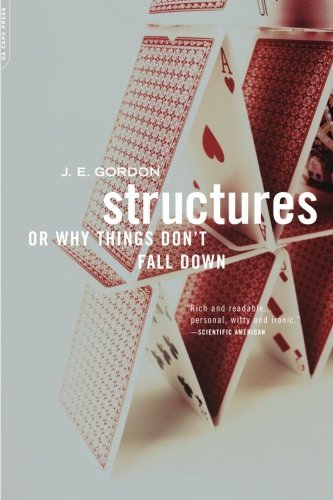
In a book that Business Insider noted as one of the "14 Books that inspired Elon Musk," J.E. Gordon strips engineering of its confusing technical terms, communicating its founding principles in accessible, witty prose.For anyone who has ever wondered why suspension bridges don't collapse under eight lanes of traffic, how dams hold back--or give way under--thousands of gallons of water, or what principles guide the design of a skyscraper, a bias-cut dress, or a kangaroo, this book will ease your anxiety and answer your questions. Or Why Things Don't Fall Down is an informal explanation of the basic forces that hold together the ordinary and essential things of this world--from buildings and bodies to flying aircraft and eggshells. In a style that combines wit, a masterful command of his subject, and an encyclopedic range of reference, Gordon includes such chapters as "How to Design a Worm" and "The Advantage of Being a Beam," offering humorous insights in human and natural creation.Architects and engineers will appreciate the clear and cogent explanations of the concepts of stress, shear, torsion, fracture, and compression. If you're building a house, a sailboat, or a catapult, here is a handy tool for understanding the mechanics of joinery, floors, ceilings, hulls, masts--or flying buttresses.Without jargon or oversimplification, Structures opens up the marvels of technology to anyone interested in the foundations of our everyday lives.

American Caesar: Douglas MacArthur 1880-1964
by William Manchester
Rating: 4.5 ⭐
• 4 recommendations ❤️
The bestselling classic that indelibly captures the life and times of one of the most brilliant and controversial military figures of the twentieth century."Electric...Tense with the feeling that this is the authentic MacArthur...Splendid reading." -- New York TimesInspiring, outrageous... A thundering paradox of a man. Douglas MacArthur, one of only five men in history to have achieved the rank of General of the United States Army. He served in World Wars I, II, and the Korean War, and is famous for stating that "in war, there is no substitute for victory."American Caesar examines the exemplary army career, the stunning successes (and lapses) on the battlefield, and the turbulent private life of the soldier-hero whose mystery and appeal created a uniquely American legend.

Howard Hughes has always fascinated the public with his mixture of secrecy, dashing lifestyle, and reclusiveness. This is the book that breaks through the image to get at the man. Originally published under the title Empire: The Life, Legend, and Madness of Howard Hughes.

The Fifteen Decisive Battles of the World: From Marathon to Waterloo
by Edward Shepherd Creasy
Rating: 3.7 ⭐
• 4 recommendations ❤️
Each chapter of Creasy’s strategy book dissects a different battle. The fifteen chapters I - THE BATTLE OF MARATHON II - DEFEAT OF THE ATHENIANS AT SYRACUSE, B.C. 413 III - THE BATTLE OF ARBELA, B.C. 331 IV - THE BATTLE OF THE METAURUS, B.C. 207 V - VICTORY OF ARMINIUS OVER THE ROMAN LEGIONS UNDER VARUS, A.D. 9 VI - THE BATTLE OF CHALONS, A.D. 451 VII - THE BATTLE OF TOURS, A.D. 732 VIII - THE BATTLE OF HASTINGS, 1066 IX - JOAN OF ARC'S VICTORY OVER THE ENGLISH AT ORLEANS, A.D. 1429 X - THE DEFEAT OF THE SPANISH ARMADA, A.D. 1588 XI - THE BATTLE OF BLENHEIM, 1704 XII - THE BATTLE OF PULTOWA, 1709 XIII - VICTORY OF THE AMERICANS OVER BURGOYNE AT SARATOGA, A.D. 1777 XIV - THE BATTLE OF VALMY XV – THE BATTLE OF WATERLOO, 1815

The Autobiography of Benjamin Franklin

Twelve Against the Gods: The Story of Adventure
by William Bolitho
Rating: 3.3 ⭐
• 2 recommendations ❤️
The 1929 collection of short and exquisitely written biographical essays on the lives of such famed adventurers as Alexander the Great, Casanova, Christopher Columbus, Napoleon, and Isadora Duncan.The author, William Bolitho, celebrates the contradictions and bipolar tensions that live inside and often drive even history's most celebrated heroes. Although all the greats featured in the book lived ages ago, the principles by which they lived their lives hold valuable lessons for those of us in contemporary times.All were wildly successful in their chosen fields and we aim to distil key business, leadership and personal lessons from these. Each chapter delves into the life of one of the characters from the classic book, tracing their path to success (and ultimate ruin) while highlighting the key lessons to be gleaned.

Ignition!: An Informal History of Liquid Rocket Propellants
by John Drury Clark
Rating: 4.2 ⭐
• 2 recommendations ❤️
A classic work in the history of science, and described as “a good book on rocket stuff…that’s a really fun one” by SpaceX founder Elon Musk, readers will want to get their hands on this influential classic, available for the first time in decades. This newly reissued debut book in the Rutgers University Press Classics imprint is the story of the search for a rocket propellant which could be trusted to take man into space. This search was a hazardous enterprise carried out by rival labs who worked against the known laws of nature, with no guarantee of success or safety.Acclaimed scientist and sci-fi author John Drury Clark writes with irreverent and eyewitness immediacy about the development of the explosive fuels strong enough to negate the relentless restraints of gravity. The resulting volume is as much a memoir as a work of history, sharing a behind-the-scenes view of an enterprise which eventually took men to the moon, missiles to the planets, and satellites to outer space.
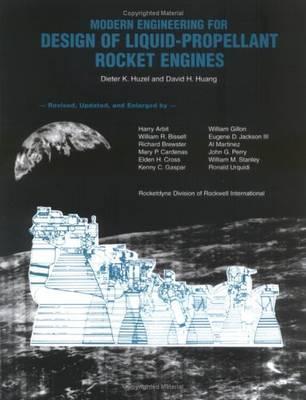
Modern Engineering for Design of Liquid Propellant Rocket Engines
by Dieter K. Huzel
Rating: 4.7 ⭐
• 2 recommendations ❤️
From the component design, to the subsystem design, to the engine systems design, engine development and flight-vehicle application, this how-to text bridges the gap between basic physical and design principles and actual rocket-engine design as it's done in industry.

Benjamin Franklin is the Founding Father who winks at us. An ambitious urban entrepreneur who rose up the social ladder, from leather-aproned shopkeeper to dining with kings, he seems made of flesh rather than of marble. In bestselling author Walter Isaacson's vivid and witty full-scale biography, we discover why Franklin seems to turn to us from history's stage with eyes that twinkle from behind his new-fangled spectacles. By bringing Franklin to life, Isaacson shows how he helped to define both his own time and ours.He was, during his 84-year life, America's best scientist, inventor, diplomat, writer, and business strategist, and he was also one of its most practical—though not most profound—political thinkers. He proved by flying a kite that lightning was electricity, and he invented a rod to tame it. He sought practical ways to make stoves less smoky and commonwealths less corrupt. He organized neighborhood constabularies and international alliances, local lending libraries and national legislatures. He combined two types of lenses to create bifocals and two concepts of representation to foster the nation's federal compromise. He was the only man who shaped all the founding documents of America: the Albany Plan of Union, the Declaration of Independence, the treaty of alliance with France, the peace treaty with England, and the Constitution. And he helped invent America's unique style of homespun humor, democratic values, and philosophical pragmatism.But the most interesting thing that Franklin invented, and continually reinvented, was himself. America's first great publicist, he was, in his life and in his writings, consciously trying to create a new American archetype. In the process, he carefully crafted his own persona, portrayed it in public, and polished it for posterity.Through it all, he trusted the hearts and minds of his fellow "leather-aprons" more than he did those of any inbred elite. He saw middle-class values as a source of social strength, not as something to be derided. His guiding principle was a "dislike of everything that tended to debase the spirit of the common people." Few of his fellow founders felt this comfort with democracy so fully, and none so intuitively.In this colorful and intimate narrative, Isaacson provides the full sweep of Franklin's amazing life, from his days as a runaway printer to his triumphs as a statesman, scientist, and Founding Father. He chronicles Franklin's tumultuous relationship with his illegitimate son and grandson, his practical marriage, and his flirtations with the ladies of Paris. He also shows how Franklin helped to create the American character and why he has a particular resonance in the twenty-first century.
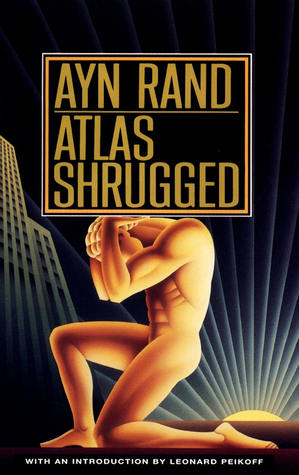
This is the story of a man who said that he would stop the motor of the world and did. Was he a destroyer or the greatest of liberators?Why did he have to fight his battle, not against his enemies, but against those who needed him most, and his hardest battle against the woman he loved? What is the world’s motor — and the motive power of every man? You will know the answer to these questions when you discover the reason behind the baffling events that play havoc with the lives of the characters in this story. Tremendous in its scope, this novel presents an astounding panorama of human life — from the productive genius who becomes a worthless playboy — to the great steel industrialist who does not know that he is working for his own destruction — to the philosopher who becomes a pirate — to the composer who gives up his career on the night of his triumph — to the woman who runs a transcontinental railroad — to the lowest track worker in her Terminal tunnels. You must be prepared, when you read this novel, to check every premise at the root of your convictions.This is a mystery story, not about the murder — and rebirth — of man’s spirit. It is a philosophical revolution, told in the form of an action thriller of violent events, a ruthlessly brilliant plot structure and an irresistible suspense. Do you say this is impossible? Well, that is the first of your premises to check.

Britannica Concise Encyclopedia is the perfect resource for information on the people, places, and events of yesterday and today. Students, teachers, and librarians can find fast facts combined with the quality and accuracy that have made Britannica the brand to trust. A tool for both the classroom and the library, no other desk reference can compare.

Robert A. Heinlein was the most influential science fiction writer of his era, an influence so large that, as Samuel R. Delany notes, "modern critics attempting to wrestle with that influence find themselves dealing with an object rather like the sky or an ocean." He won the Hugo Award for best novel four times, a record that still stands. The Moon is a Harsh Mistress was the last of these Hugo-winning novels, and it is widely considered his finest work.It is a tale of revolution, of the rebellion of the former Lunar penal colony against the Lunar Authority that controls it from Earth. It is the tale of the disparate people – a computer technician, a vigorous young female agitator, and an elderly academic – who become the rebel movement's leaders. And it is the story of Mike, the supercomputer whose sentience is known only to this inner circle, and who for reasons of his own is committed to the revolution's ultimate success.The Moon is a Harsh Mistress is one of the high points of modern science fiction, a novel bursting with politics, humanity, passion, innovative technical speculation, and a firm belief in the pursuit of human freedom.Cover illustration by Bob Eggleton

This seminal work on political economy and the foundation of the modern market economy was originally published in 1776. Rich in historical background and acute observations of the 18th-century scene, Adam Smith's masterpiece of economic analysis is also an insightful work of political philosophy. Its revolutionary concepts, including the notion that self-interest stimulates the healthiest economic conditions for all, remain influential with politicians and economists alike.

The million copy international bestseller, critically acclaimed and translated into over 25 languages. As influential today as when it was first published, The Selfish Gene has become a classic exposition of evolutionary thought. Professor Dawkins articulates a gene's eye view of evolution - a view giving centre stage to these persistent units of information, and in which organisms can be seen as vehicles for their replication. This imaginative, powerful, and stylistically brilliant work not only brought the insights of Neo-Darwinism to a wide audience, but galvanized the biology community, generating much debate and stimulating whole new areas of research. Forty years later, its insights remain as relevant today as on the day it was published. This 40th anniversary edition includes a new epilogue from the author discussing the continuing relevance of these ideas in evolutionary biology today, as well as the original prefaces and foreword, and extracts from early reviews. Oxford Landmark Science books are 'must-read' classics of modern science writing which have crystallized big ideas, and shaped the way we think.

For a thousand years and more, The Worlds of Man had been dominated by the Laowon Imperium. The aliens thought humans made good slaves and better pets, and they were fond of creating new breeds. And the Laowon made sure that their playthings never grew too powerful. Born one day, on the edge of Human Space, Jon Iehard was ordered to hunt Eblis Bey, a terrorist for Old Earth. And that was the beginning of the end for the Laowon. Because Iehard had been a Laowon slave. And Eblis Bey held half the key to a weapon that could destroy the Laowon tyranny and bring freedon once more to Mankind!

Fascinated by the leading military figures of his day, Prussian General Carl von Clausewitz spent over ten years writing a book - “On War” – that he would never finish. The book examines the tactics of Napoleon, Frederick II of Prussia, and others. In this insightful, well-informed work of military analysis, Von Clausewitz theorizes that war is an instrument of political commerce.

From an inauspicious beginning at the tiny Left Bank Theatre de Babylone in 1953, followed by bewilderment among American and British audiences, Waiting for Godot has become of the most important and enigmatic plays of the past fifty years and a cornerstone of twentieth-century drama. As Clive Barnes wrote, "Time catches up with genius ... Waiting for Godot is one of the masterpieces of the century."The story revolves around two seemingly homeless men waiting for someone--or something--named Godot. Vladimir and Estragon wait near a tree, inhabiting a drama spun of their own consciousness. The result is a comical wordplay of poetry, dreamscapes, and nonsense, which has been interpreted as mankind's inexhaustible search for meaning. Beckett's language pioneered an expressionistic minimalism that captured the existential post-World War II Europe. His play remains one of the most magical and beautiful allegories of our time.

An alternative cover edition for ISBN 9781400076789 can be found hereThis widely acclaimed biography provides a vivid and riveting account of Stalin and his courtiers—killers, fanatics, women, and children—during the terrifying decades of his supreme power. In a seamless meshing of exhaustive research and narrative ?lan, Simon Sebag Montefiore gives us the everyday details of a monstrous life.We see Stalin playing his deadly game of power and paranoia at debauched dinners at Black Sea villas and in the apartments of the Kremlin. We witness first-hand how the dictator and his magnates carried out the Great Terror and the war against the Nazis, and how their families lived in this secret world of fear, betrayal, murder, and sexual degeneracy. Montefiore gives an unprecedented understanding of Stalin’s dictatorship, and a Stalin as human and complicated as he is brutal.

Alternative cover editions of isbn 9780345418913 can be found here and hereA beautifully illustrated edition of the New York Times bestselling classic, timed to celebrate the pivotal 42nd anniversary of the original publication--with never-before-seen illustrations by award winner Chris Riddell Seconds before Earth is demolished to make way for a galactic freeway, Arthur Dent is plucked off the planet by his friend Ford Prefect, a researcher for the revised edition of The Hitchhiker's Guide to the Galaxy who, for the last fifteen years, has been posing as an out-of-work actor.Together, this dynamic pair begin a journey through space aided by a galaxyful of fellow travelers: Zaphod Beeblebrox--the two-headed, three-armed ex-hippie and totally out-to-lunch president of the galaxy; Trillian (formerly Tricia McMillan), Zaphod's girlfriend, whom Arthur tried to pick up at a cocktail party once upon a time zone; Marvin, a paranoid, brilliant, and chronically depressed robot; and Veet Voojagig, a former graduate student obsessed with the disappearance of all the ballpoint pens he's bought over the years.Where are these pens? Why are we born? Why do we die? For all the answers, stick your thumb to the stars!

Twenty-Five Hundred years ago, Sun Tzu wrote this classic book of military strategy based on Chinese warfare and military thought. Since that time, all levels of military have used the teaching on Sun Tzu to warfare and civilization have adapted these teachings for use in politics, business and everyday life. The Art of War is a book which should be used to gain advantage of opponents in the boardroom and battlefield alike.

The History of the Decline and Fall of the Roman Empire
by Edward Gibbon
Rating: 4.1 ⭐
• 6 recommendations ❤️
'Instead of inquiring why the Roman empire was destroyed, we should rather be surprised that it had subsisted so long'Edward Gibbon's Decline and Fall of the Roman Empire compresses thirteen turbulent centuries into an epic narrative shot through with insight, irony and incisive character analysis. Sceptical about Christianity, sympathetic to the barbarian invaders and the Byzantine Empire, constantly aware of how political leaders often achieve the exact opposite of what they intend, Gibbon was both alert to the broad pattern of events and significant revealing detail. The first of the six volumes, published in 1776, was attacked for its enlightened views on politics, sexuality and religion, yet it was an immediate bestseller and widely acclaimed for the elegance of its prose. Gripping, powerfully intelligent and wonderfully entertaining, this is among the greatest works of history in the English language and a literary masterpiece of its age.

Rage—Goddess, sing the rage of Peleus' son Achilles,murderous, doomed, that cost the Achaeans countless losses,hurling down to the House of Death so many sturdy souls …Thus begins the stirring story of the Trojan War and the rage of Achilles that has gripped listeners and readers for 2,700 years. This timeless poem still vividly conveys the horror and heroism of men and gods wrestling with towering emotions and battling amidst devastation and destruction, as it moves inexorably to its wrenching, tragic conclusion. Renowned classicist Bernard Knox observes in his superb Introduction that although the violence of the Iliad is grim and relentless, it coexists with both images of civilized life and a poignant yearning for peace.Combining the skills of a poet and scholar, Robert Fagles brings the energy of contemporary language to this enduring heroic epic. He maintains the drive and metric music of Homer's poetry, and evokes the impact and nuance of the Iliad's mesmerizing repeated phrases in what Peter Levi calls "an astonishing performance."

Merchants of Doubt: How a Handful of Scientists Obscured the Truth on Issues from Tobacco Smoke to Climate Change
by Naomi Oreskes
Rating: 4.3 ⭐
• 2 recommendations ❤️
Now a powerful documentary from the acclaimed director of Food Inc., Merchants of Doubt was one of the most talked-about climate change books of recent years, for reasons easy to understand: It tells the controversial story of how a loose-knit group of high-level scientists and scientific advisers, with deep connections in politics and industry, ran effective campaigns to mislead the public and deny well-established scientific knowledge over four decades. The same individuals who claim the science of global warming is "not settled" have also denied the truth about studies linking smoking to lung cancer, coal smoke to acid rain and CFCs to the ozone hole. "Doubt is our product," wrote one tobacco executive. These "experts" supplied it.

“[A] tale of power, perseverance and passion . . . a great story in the hands of a master storyteller.”—The Wall Street Journal The Pulitzer Prize–winning author of Peter the Great, Nicholas and Alexandra, and The Romanovs returns with another masterpiece of narrative biography, the extraordinary story of an obscure German princess who became one of the most remarkable, powerful, and captivating women in history. Born into a minor noble family, Catherine transformed herself into empress of Russia by sheer determination. For thirty-four years, the government, foreign policy, cultural development, and welfare of the Russian people were in her hands. She dealt with domestic rebellion, foreign wars, and the tidal wave of political change and violence churned up by the French Revolution. Catherine’s family, friends, ministers, generals, lovers, and enemies—all are here, vividly brought to life. History offers few stories richer than that of Catherine the Great. In this book, an eternally fascinating woman is returned to life. “[A] compelling portrait not just of a Russian titan, but also of a flesh-and-blood woman.”—Newsweek “An absorbing, satisfying biography.”—Los Angeles Times “Juicy and suspenseful.”—The New York Times Book Review “A great life, indeed, and irresistibly told.”—Salon NAMED ONE OF THE BEST BOOKS OF THE YEAR BYThe New York Times • The Washington Post • USA Today • The Boston Globe • San Francisco Chronicle • Chicago Tribune • Newsweek/The Daily Beast • Salon • Vogue • St. Louis Post-Dispatch • The Providence Journal • Washington Examiner • South Florida Sun-Sentinel • BookPage • Bookreporter • Publishers Weekly BONUS: This edition contains a Catherine the Great reader's guide.

Walter Isaacson’s “enthralling” ( The New Yorker ) worldwide bestselling biography of Apple cofounder Steve Jobs.Based on more than forty interviews with Steve Jobs conducted over two years—as well as interviews with more than 100 family members, friends, adversaries, competitors, and colleagues—Walter Isaacson has written a riveting story of the roller-coaster life and searingly intense personality of a creative entrepreneur whose passion for perfection and ferocious drive revolutionized six personal computers, animated movies, music, phones, tablet computing, and digital publishing. Isaacson’s portrait touched millions of readers.At a time when America is seeking ways to sustain its innovative edge, Jobs stands as the ultimate icon of inventiveness and applied imagination. He knew that the best way to create value in the twenty-first century was to connect creativity with technology. He built a company where leaps of the imagination were combined with remarkable feats of engineering.Although Jobs cooperated with the author, he asked for no control over what was written. He put nothing off-limits. He encouraged the people he knew to speak honestly. He himself spoke candidly about the people he worked with and competed against.His friends, foes, and colleagues offer an unvarnished view of the passions, perfectionism, obsessions, artistry, devilry, and compulsion for control that shaped his approach to business and the innovative products that resulted.His tale is instructive and cautionary, filled with lessons about innovation, character, leadership, and values.Steve Jobs is the inspiration for the movie of the same name starring Michael Fassbender, Kate Winslet, Seth Rogen, and Jeff Daniels, directed by Danny Boyle with a screenplay by Aaron Sorkin.

As it was in Anna Karenina, Madame Bovary, and Othello, so it is in life. Most forms of private vice and public evil are kindled and sustained by lies. Acts of adultery and other personal betrayals, financial fraud, government corruption—even murder and genocide—generally require an additional moral defect: a willingness to lie.In Lying , best-selling author and neuroscientist Sam Harris argues that we can radically simplify our lives and improve society by merely telling the truth in situations where others often lie. He focuses on "white" lies—those lies we tell for the purpose of sparing people discomfort—for these are the lies that most often tempt us. And they tend to be the only lies that good people tell while imagining that they are being good in the process.

Our Final Invention: Artificial Intelligence and the End of the Human Era
by James Barrat
Rating: 3.8 ⭐
• 6 recommendations ❤️
In as little as a decade, artificial intelligence could match, then surpass human intelligence. Corporations & government agencies around the world are pouring billions into achieving AI’s Holy Grail—human-level intelligence. Once AI has attained it, scientists argue, it will have survival drives much like our own. We may be forced to compete with a rival more cunning, more powerful & more alien than we can imagine. Thru profiles of tech visionaries, industry watchdogs & groundbreaking AI systems, James Barrat's Our Final Invention explores the perils of the heedless pursuit of advanced AI. Until now, human intelligence has had no rival. Can we coexist with beings whose intelligence dwarfs our own? Will they allow us to?

Zero to One: Notes on Startups, or How to Build the Future
by Peter Thiel
Rating: 4.2 ⭐
• 48 recommendations ❤️
If you want to build a better future, you must believe in secrets.The great secret of our time is that there are still uncharted frontiers to explore and new inventions to create. In Zero to One, legendary entrepreneur and investor Peter Thiel shows how we can find singular ways to create those new things. Thiel begins with the contrarian premise that we live in an age of technological stagnation, even if we’re too distracted by shiny mobile devices to notice. Information technology has improved rapidly, but there is no reason why progress should be limited to computers or Silicon Valley. Progress can be achieved in any industry or area of business. It comes from the most important skill that every leader must master: learning to think for yourself.Doing what someone else already knows how to do takes the world from 1 to n, adding more of something familiar. But when you do something new, you go from 0 to 1. The next Bill Gates will not build an operating system. The next Larry Page or Sergey Brin won’t make a search engine. Tomorrow’s champions will not win by competing ruthlessly in today’s marketplace. They will escape competition altogether, because their businesses will be unique. Zero to One presents at once an optimistic view of the future of progress in America and a new way of thinking about innovation: it starts by learning to ask the questions that lead you to find value in unexpected places.
An introduction to a broad range of topics in deep learning, covering mathematical and conceptual background, deep learning techniques used in industry, and research perspectives.Deep learning is a form of machine learning that enables computers to learn from experience and understand the world in terms of a hierarchy of concepts. Because the computer gathers knowledge from experience, there is no need for a human computer operator to formally specify all the knowledge that the computer needs. The hierarchy of concepts allows the computer to learn complicated concepts by building them out of simpler ones; a graph of these hierarchies would be many layers deep. This book introduces a broad range of topics in deep learning.The text offers mathematical and conceptual background, covering relevant concepts in linear algebra, probability theory and information theory, numerical computation, and machine learning. It describes deep learning techniques used by practitioners in industry, including deep feedforward networks, regularization, optimization algorithms, convolutional networks, sequence modeling, and practical methodology; and it surveys such applications as natural language processing, speech recognition, computer vision, online recommendation systems, bioinformatics, and videogames. Finally, the book offers research perspectives, covering such theoretical topics as linear factor models, autoencoders, representation learning, structured probabilistic models, Monte Carlo methods, the partition function, approximate inference, and deep generative models.Deep Learning can be used by undergraduate or graduate students planning careers in either industry or research, and by software engineers who want to begin using deep learning in their products or platforms. A website offers supplementary material for both readers and instructors.

A wonderfully romantic and searingly sexy love story to make your heart soar, perfect for fans of Curtis Sittenfeld's Eligible. 'A refreshing love story' - Marie Claire'A truly unique heroine' - HeatBernadette knows what she wants.Tim is perfect, and she's always had a feeling that something is about to happen between them.He might have just announced his engagement to the sickeningly wonderful Elizabeth, but the ring's not on his finger yet.And when Elizabeth starts meddling in Bernie's own love life, she knows it's time to act.Yes, Elizabeth's best friend Radley might be charming, charismatic and intelligent.But he's not Tim.And Bernadette's not a woman who takes no for an answer.'Talulah Riley is an absolute force of nature. Read and revel' - Eva Rice

Life 3.0: Being Human in the Age of Artificial Intelligence
by Max Tegmark
Rating: 3.9 ⭐
• 12 recommendations ❤️
In this authoritative and eye-opening book, Max Tegmark describes and illuminates the recent, path-breaking advances in Artificial Intelligence and how it is poised to overtake human intelligence. How will AI affect crime, war, justice, jobs, society and our very sense of being human? The rise of AI has the potential to transform our future more than any other technology--and there's nobody better qualified or situated to explore that future than Max Tegmark, an MIT professor who's helped mainstream research on how to keep AI beneficial.How can we grow our prosperity through automation without leaving people lacking income or purpose? What career advice should we give today's kids? How can we make future AI systems more robust, so that they do what we want without crashing, malfunctioning or getting hacked? Should we fear an arms race in lethal autonomous weapons? Will machines eventually outsmart us at all tasks, replacing humans on the job market and perhaps altogether? Will AI help life flourish like never before or give us more power than we can handle?What sort of future do you want? This book empowers you to join what may be the most important conversation of our time. It doesn't shy away from the full range of viewpoints or from the most controversial issues--from superintelligence to meaning, consciousness and the ultimate physical limits on life in the cosmos.

An all-encompassing guide to skeptical thinking from podcast host and academic neurologist at Yale University School of Medicine Steven Novella and his SGU co-hosts, which Richard Wiseman calls "the perfect primer for anyone who wants to separate fact from fiction."It is intimidating to realize that we live in a world overflowing with misinformation, bias, myths, deception, and flawed knowledge. There really are no ultimate authority figures-no one has the secret, and there is no place to look up the definitive answers to our questions (not even Google).Luckily, The Skeptic's Guide to the Universe is your map through this maze of modern life. Here Dr. Steven Novella-along with Bob Novella, Cara Santa Maria, Jay Novella, and Evan Bernstein-will explain the tenets of skeptical thinking and debunk some of the biggest scientific myths, fallacies, and conspiracy theories-from anti-vaccines to homeopathy, UFO sightings to N- rays. You'll learn the difference between science and pseudoscience, essential critical thinking skills, ways to discuss conspiracy theories with that crazy co- worker of yours, and how to combat sloppy reasoning, bad arguments, and superstitious thinking.So are you ready to join them on an epic scientific quest, one that has taken us from huddling in dark caves to setting foot on the moon? (Yes, we really did that.) DON'T PANIC! With The Skeptic's Guide to the Universe , we can do this together."Thorough, informative, and enlightening, The Skeptic's Guide to the Universe inoculates you against the frailties and shortcomings of human cognition. If this book does not become required reading for us all, we may well see modern civilization unravel before our eyes." -- Neil deGrasse Tyson"In this age of real and fake information, your ability to reason, to think in scientifically skeptical fashion, is the most important skill you can have. Read The Skeptics' Guide Universe ; get better at reasoning. And if this claim about the importance of reason is wrong, The Skeptics' Guide will help you figure that out, too." -- Bill Nye
![The Book of Limericks [Jan 01, 2018] Debroy, Bibek](https://m.media-amazon.com/images/S/compressed.photo.goodreads.com/books/1534782384i/41284550.jpg)
The Book of Limericks [Jan 01, 2018] Debroy, Bibek
by Bibek Debroy
Rating: 3.0 ⭐
• 13 recommendations ❤️
A compilation of witty verses based on current events, The Book of Limericks by Bibek Debroy is a brilliantly illustrated guide for anyone trying to understand what exactly happened last year.From economic issues to citizen concerns, these hilarious five-liners will take you on a roller coaster ride through the year 2017.
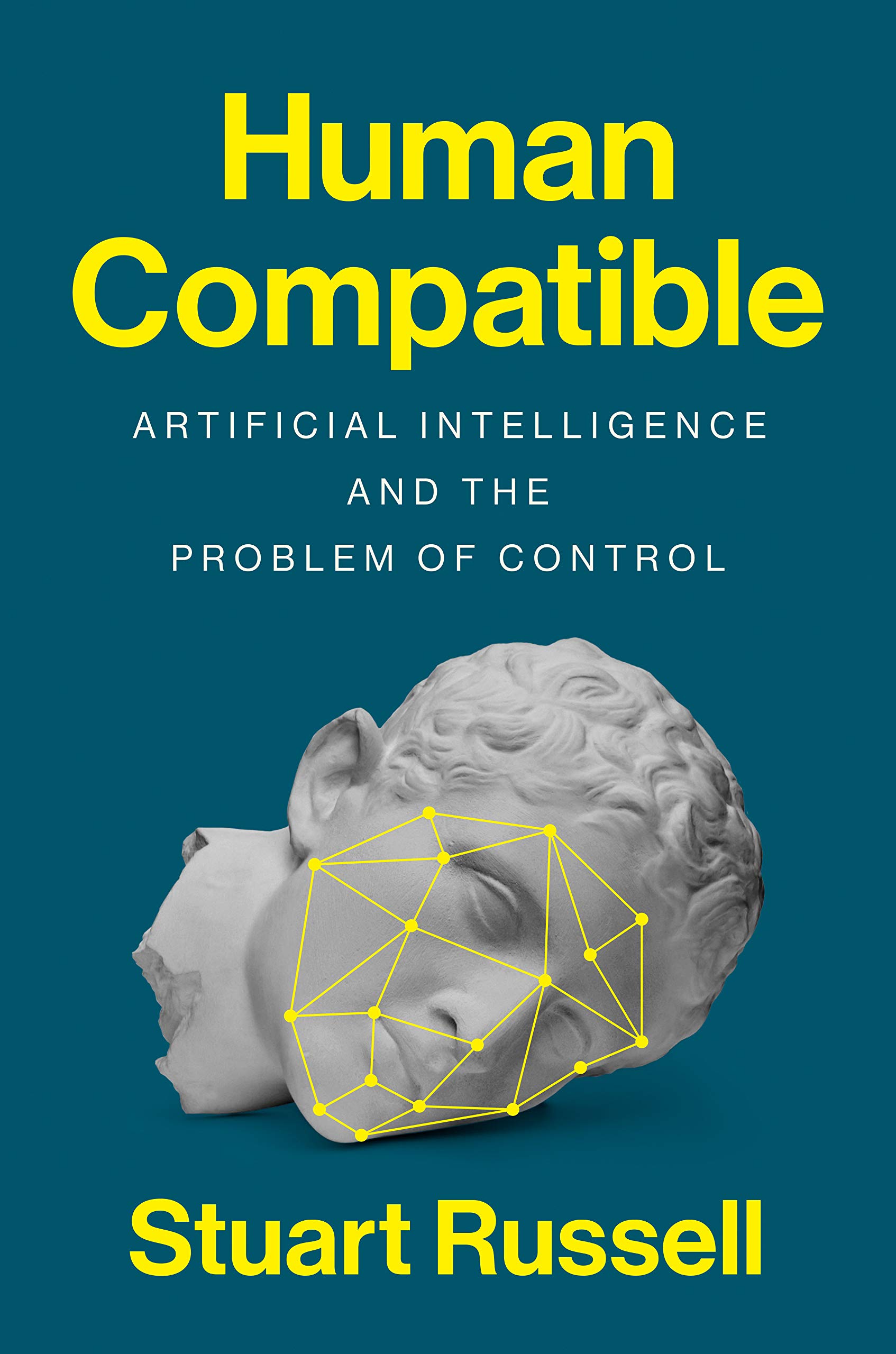
Human Compatible: Artificial Intelligence and the Problem of Control
by Stuart Russell
Rating: 4.0 ⭐
• 2 recommendations ❤️
A leading artificial intelligence researcher lays out a new approach to AI that will enable us to coexist successfully with increasingly intelligent machines In the popular imagination, superhuman artificial intelligence is an approaching tidal wave that threatens not just jobs and human relationships, but civilization itself. Conflict between humans and machines is seen as inevitable and its outcome all too predictable.In this groundbreaking book, distinguished AI researcher Stuart Russell argues that this scenario can be avoided, but only if we rethink AI from the ground up. Russell begins by exploring the idea of intelligence in humans and in machines. He describes the near-term benefits we can expect, from intelligent personal assistants to vastly accelerated scientific research, and outlines the AI breakthroughs that still have to happen before we reach superhuman AI. He also spells out the ways humans are already finding to misuse AI, from lethal autonomous weapons to viral sabotage.If the predicted breakthroughs occur and superhuman AI emerges, we will have created entities far more powerful than ourselves. How can we ensure they never, ever, have power over us? Russell suggests that we can rebuild AI on a new foundation, according to which machines are designed to be inherently uncertain about the human preferences they are required to satisfy. Such machines would be humble, altruistic, and committed to pursue our objectives, not theirs. This new foundation would allow us to create machines that are provably deferential and provably beneficial.In a 2014 editorial co-authored with Stephen Hawking, Russell wrote, "Success in creating AI would be the biggest event in human history. Unfortunately, it might also be the last." Solving the problem of control over AI is not just possible; it is the key that unlocks a future of unlimited promise.

A Woman Makes a Plan: Advice for a Lifetime of Adventure, Beauty, and Success
by Maye Musk
Rating: 3.8 ⭐
• 4 recommendations ❤️
The international supermodel shares personal stories and lessons learned from a life of "living dangerously--carefully".Maye Musk is a fashionable, charming, jet-setting supermodel with a fascinating and tight-knit circle of family and friends--and is 71 years old. But things were not always so easy or glamorous--she became a single mom at 31, struggling through poverty to provide for her three children; dealt with weight issues as a plus-size model and overcame ageism in the modeling industry; and established a lifelong career as a respected dietitian, all the while starting over in eight different cities across three countries and two continents. But she made her way through it all with an indomitable spirit and a no-nonsense attitude to become a global success at what she calls the "prime of her life."As everyone who follows her obsessively on social media knows, Maye is a fount of frank and practical advice on how the choices you make in every decade can pay off in surprising, exciting ways throughout your life. In A Woman Makes a Plan, Maye shares experiences from her life conveying hard-earned wisdom on career (the harder you work, the luckier you get), family (let the people you love go their own way), health (there is no magic pill), and adventure (make room for discovery, but always be ready for anything). You can't control all that happens in life, but you can have the life you want at any age. All you have to do is make a plan.
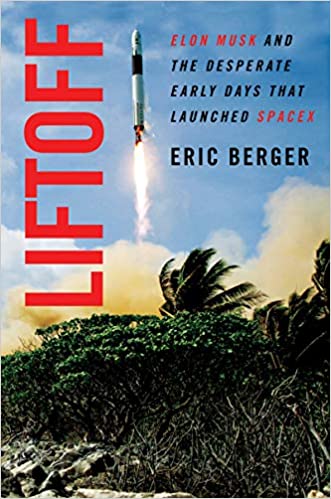
Liftoff: Elon Musk and the Desperate Early Days That Launched SpaceX
by Eric Berger
Rating: 4.4 ⭐
• 4 recommendations ❤️
"This is as important a book on space as has ever been written and it's a riveting page-turner, too." —Homer Hickam, #1 New York Times Bestselling Author of Rocket BoysThe dramatic inside story of the historic flights that launched SpaceX—and Elon Musk—from a shaky startup into the world's leading-edge rocket company.SpaceX has enjoyed a miraculous decade. Less than 20 years after its founding, it boasts the largest constellation of commercial satellites in orbit, has pioneered reusable rockets, and in 2020 became the first private company to launch human beings into orbit. Half a century after the space race it is private companies, led by SpaceX, standing alongside NASA pushing forward into the cosmos, and laying the foundation for our exploration of other worlds.But before it became one of the most powerful players in the aerospace industry, SpaceX was a fledgling startup, scrambling to develop a single workable rocket before the money ran dry. The engineering challenge was immense; numerous other private companies had failed similar attempts. And even if SpaceX succeeded, they would then have to compete for government contracts with titans such as Lockheed Martin and Boeing, who had tens of thousands of employees and tens of billions of dollars in annual revenue. SpaceX had fewer than 200 employees and the relative pittance of $100 million in the bank.In Liftoff, Eric Berger, senior space editor at Ars Technica, takes readers inside the wild early days that made SpaceX. Focusing on the company’s first four launches of the Falcon 1 rocket, he charts the bumpy journey from scrappy underdog to aerospace pioneer. We travel from company headquarters in El Segundo, to the isolated Texas ranchland where they performed engine tests, to Kwajalein, the tiny atoll in the Pacific where SpaceX launched the Falcon 1. Berger has reported on SpaceX for more than a decade, enjoying unparalleled journalistic access to the company’s inner workings. Liftoff is the culmination of these efforts, drawing upon exclusive interviews with dozens of former and current engineers, designers, mechanics, and executives, including Elon Musk. The enigmatic Musk, who founded the company with the dream of one day settling Mars, is the fuel that propels the book, with his daring vision for the future of space.Filled with never-before-told stories of SpaceX’s turbulent beginning, Liftoff is a saga of cosmic proportions.
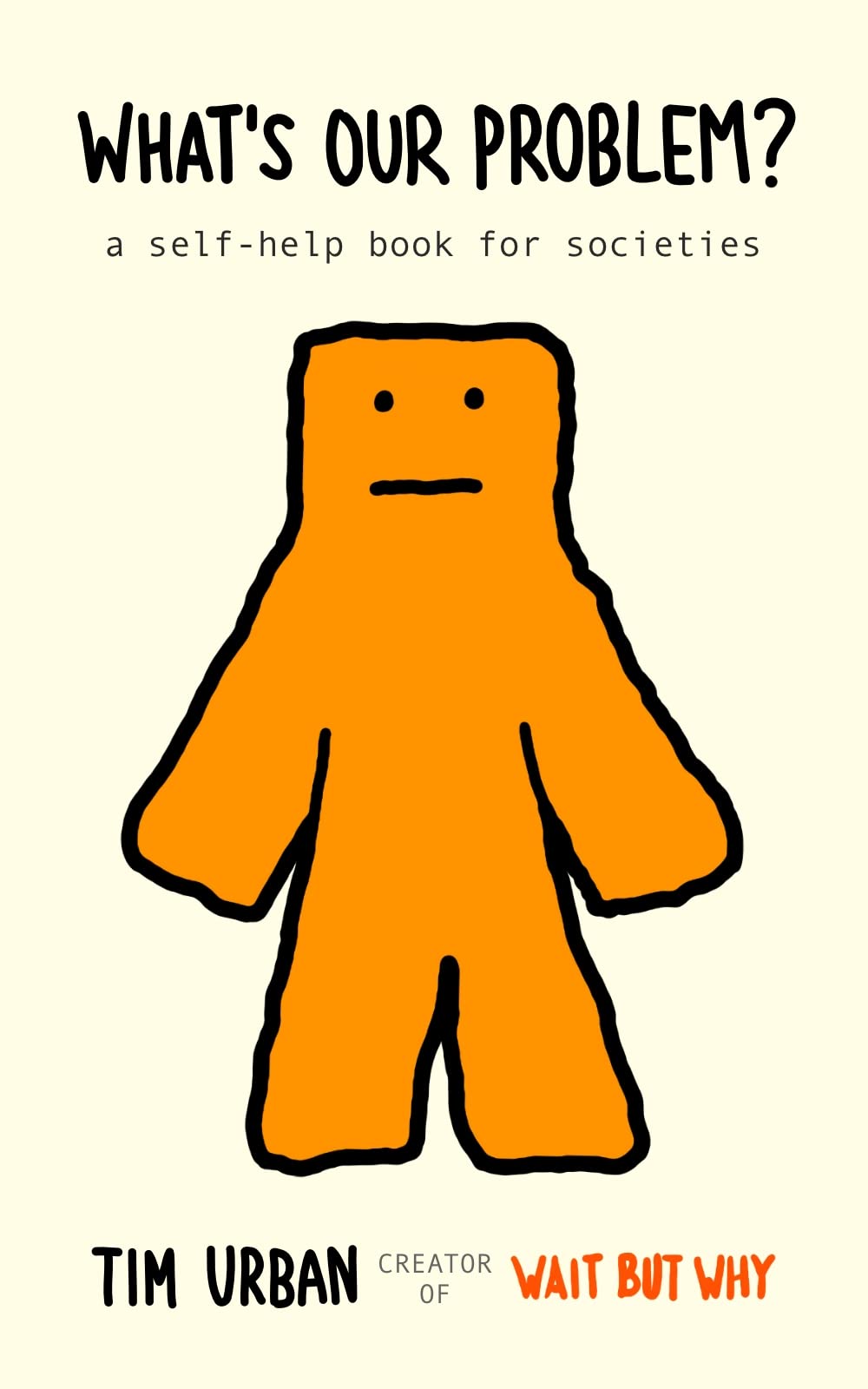
From the creator of the wildly popular blog Wait But Why, a fun and fascinating deep dive into what the hell is going on in our strange, unprecedented modern times.Between 2013 and 2016, Tim Urban became one of the world’s most popular bloggers, writing dozens of viral, long-form articlesabout everything from AI to colonizing Mars to procrastination. Then, he turned his attention to a new topic: the society around him. Why was everything such a mess? Why was everyone acting like such a baby? When did things get so tribal? Why do humans do this stuff?This massive topic sent Tim tumbling down his deepest rabbit hole yet, through mountains of history, evolutionary psychology, political theory, neuroscience, and modern-day political movements, as he tried to figure out the answer to a simple question: What’s our problem?Six years later, he emerged from the hole holding this book. What’s Our Problem? is a deep and expansive analysis of our modern times, in the classic style of Wait But Why, packed with original concepts, sticky metaphors, and 300 drawings. The book provides an entirely new framework and language for thinking and talking about today’s complex world. Instead of focusing on the usual left-center-right horizontal political axis, which is all about what we think, the book introduces a verticalaxis that explores how we think, as individuals and as groups. Readers will find themselves on a delightful and fascinating journey that will ultimately change the way they see the world around them.Anyway he wanted to say a lot more about all of this but there was a word limit on this book description so just go read the book.