
Edward Norton Recommended Books
American actor (born 1969)
12 Books Recommended

Buddhism without Beliefs: A Contemporary Guide to Awakening
by Stephen Batchelor
Rating: 4.0 ⭐
• 5 recommendations ❤️
A national bestseller and acclaimed guide to Buddhism for beginners and practitioners alikeIn this simple but important volume, Stephen Batchelor reminds us that the Buddha was not a mystic who claimed privileged, esoteric knowledge of the universe, but a man who challenged us to understand the nature of anguish, let go of its origins, and bring into being a way of life that is available to us all. The concepts and practices of Buddhism, says Batchelor, are not something to believe in but something to do —and as he explains clearly and compellingly, it is a practice that we can engage in, regardless of our background or beliefs, as we live every day on the path to spiritual enlightenment.

The Power Broker: Robert Moses and the Fall of New York
by Robert A. Caro
Rating: 4.7 ⭐
• 1 recommendation ❤️
PULITZER PRIZE WINNER • A modern American classic, this huge and galvanizing biography of Robert Moses reveals not only the saga of one man’s incredible accumulation of power but the story of his shaping (and mis-shaping) of twentieth-century New York.One of the Modern Library’s hundred greatest books of the twentieth century, Robert Caro's monumental book makes public what few outsiders that Robert Moses was the single most powerful man of his time in the City and in the State of New York. And in telling the Moses story, Caro both opens up to an unprecedented degree the way in which politics really happens—the way things really get done in America's City Halls and Statehouses—and brings to light a bonanza of vital information about such national figures as Alfred E. Smith and Franklin D. Roosevelt (and the genesis of their blood feud), about Fiorello La Guardia, John V. Lindsay and Nelson Rockefeller.But The Power Broker is first and foremost a brilliant multidimensional portrait of a man—an extraordinary man who, denied power within the normal framework of the democratic process, stepped outside that framework to grasp power sufficient to shape a great city and to hold sway over the very texture of millions of lives. We see how Moses the handsome, intellectual young heir to the world of Our Crowd, an idealist. How, rebuffed by the entrenched political establishment, he fought for the power to accomplish his ideals. How he first created a miraculous flowering of parks and parkways, playlands and beaches—and then ultimately brought down on the city the smog-choked aridity of our urban landscape, the endless miles of (never sufficient) highway, the hopeless sprawl of Long Island, the massive failures of public housing, and countless other barriers to humane living. How, inevitably, the accumulation of power became an end in itself.Moses built an empire and lived like an emperor. He was held in fear—his dossiers could disgorge the dark secret of anyone who opposed him. He was, he claimed, above politics, above deals; and through decade after decade, the newspapers and the public believed. Meanwhile, he was developing his public authorities into a fourth branch of government known as "Triborough"—a government whose records were closed to the public, whose policies and plans were decided not by voters or elected officials but solely by Moses—an immense economic force directing pressure on labor unions, on banks, on all the city's political and economic institutions, and on the press, and on the Church. He doled out millions of dollars' worth of legal fees, insurance commissions, lucrative contracts on the basis of who could best pay him back in the only coin he power. He dominated the politics and politicians of his time—without ever having been elected to any office. He was, in essence, above our democratic system.Robert Moses held power in the state for 44 years, through the governorships of Smith, Roosevelt, Lehman, Dewey, Harriman and Rockefeller, and in the city for 34 years, through the mayoralties of La Guardia, O'Dwyer, Impellitteri, Wagner and Lindsay, He personally conceived and carried through public works costing 27 billion dollars—he was undoubtedly America's greatest builder.This is how he built and dominated New York—before, finally, he was stripped of his reputation (by the press) and his power (by Nelson Rockefeller). But his work, and his will, had been done.

Commissioned by the Circle Repertory Company, Burn This first appeared at the Mark Taper Forum in Los angeles in 1987 to near-universal praise. Set in the bohemian art world of downtown New York, this vivid and challenging drama explores the spiritual and emotional isolation of Anna and Pale, two outcasts who meet in the wake of the accidental death by drowning of a mutual friend. Their determined struggle toward emotional honesty and liberation--by no means guaranteed at the play's ambiguous end--exemplifies the strength, humor, and complexity of all of Lanford Wilson's work and confirms his standing as one of America's greatest living playwrights.Lanford Wilson was born in Lebanon, Missouri, in 1938 and attended the University of Chicago. A founding member of the Circle Repertory Company in New York, he has seen many of his plays produced in theaters all over the United States and abroad. He is the recipient of many awards, including a Drama Desk Vernon Rice Award, the Pulitzer Prize, and two Obies.

The Psychology of Sex, Gender, and Jobs: Issues and Solutions
by
Rating: 3.7 ⭐
• 18 recommendations ❤️
Employers often ascribe values to gender and sexual orientation that override truly relevant personal characteristics including ability, intelligence and dedication. Policy makers and business leaders need to be informed and involved in creating a workplace climate that openly accepts all people. This volume highlights concerns such as gender barriers to occupational advancement, sexual harassment and female vulnerability, and heterosexual men as targets of sexual harassment.Diamant and Lee discuss the origins and development of sexual stereotypes that form the basis for discrimination. Busines leaders must educate themselves and their employees to understand the wide range of differences that exist in the workforce. The Psychology of Sex, Gender, and Jobs offers solutions to managing the workforce of today.

The leading textbook by the leading scholar.This text, the classic introduction to modern China for students and general readers, emerged from Spence’s highly successful introductory course at Yale, in which he traced the beginnings of modern China to internal developments beginning in the early 17th century. Strong on social and political history, as well as Chinese culture and its intersections with politics, this paperback is a longstanding leader in the survey course on modern China.

Exupery was a prize-winning novelist, professional mail pilot, airborne adventurer, war correspondent, commercial test pilot, and the author of a popular children's book The Little Prince. Wind, Sand, and Stars more than all the others is a synthesis of his skill as a writer and his life as a flier. It is a collage of anecdotes, speculations and peotic reflections the earth and its inhabitants as seen from the air, all glued together by one basic them: that the airplane has broght man into confrontation with the elemnets of the univeerse, and thus has given him a new perspective on his own nature.

Facsimile of 1943 Edition. Born in 1875, the great German lyric poet Rainer Maria Rilke published his first collection of poems in 1898 and went on to become renowned for his delicate depiction of the workings of the human heart. Drawn by some sympathetic note in his poems, young people often wrote to Rilke with their problems and hopes. From 1903 to 1908 Rilke wrote a series of remarkable responses to a young, would-be poet on poetry and on surviving as a sensitive observer in a harsh world. Those letters, ten in all, remain a fresh source of inspiration and insight to the poetic sensibility to this day.

Out of Africa tells the story of a farm that the narrator once had in Africa. The farm is located at the foot of the Ngong hills outside of Nairobi, in what is now Kenya. It sits at an altitude of six thousand feet. The farm grows coffee, although only part of its six thousand acres is used for agriculture. The remaining parts of the land are forest and space for the natives to live on.

Winner of the National Book Critics Circle Award.A compelling and complusively readable riff on the classic detective novel from America's most inventive novelist. Brooklyn's very own self-appointed Human Freakshow, Lionel Essrog is an orphan whose Tourettic impulses drive him to bark, count, and rip apart our language in startling and original ways. Together with three veterans of the St. Vincent's Home for Boys, he works for small-time mobster Frank Minna's limo service cum detective agency. Life without Frank Minna, the charismatic King of Brooklyn, would be unimaginable, so who cares if the tasks he sets them are, well, not exactly legal. But when Frank is fatally stabbed, one of Lionel's colleagues lands in jail, the other two vie for his position, and the victim's widow skips town. Lionel's world is suddenly topsy-turvy, and this outcast who has trouble even conversing attempts to untangle the threads of the case while trying to keep the words straight in his head. Motherless Brooklyn is a brilliantly original, captivating homage to the classic detective novel by one of the most acclaimed writers of his generation.

The Black Swan: The Impact of the Highly Improbable
by Nassim Nicholas Taleb
Rating: 4.0 ⭐
• 19 recommendations ❤️
A black swan is an event, positive or negative, that is deemed improbable yet causes massive consequences. In this groundbreaking and prophetic book, Taleb shows in a playful way that Black Swan events explain almost everything about our world, and yet we—especially the experts—are blind to them. In this second edition, Taleb has added a new essay, On Robustness and Fragility, which offers tools to navigate and exploit a Black Swan world.*2nd Edition, With a new essay: "On Robustness and Fragility"

Drawing on local Chinese histories, the memoirs of scholars, and other contemporary writings, Chinese historian Jonathan Spence reconstructs an extraordinary tale of rural tragedy in a remote corner of Shantung province in 17th-century China. Life in the county of T'an-ch'eng emerges as an endless cycle of floods, plagues, crop failures, banditry, and heavy taxation. Against this turbulent background a tenacious tax collector, an irascible farmer, and an unhappy wife act out a poignant drama at whose climax the wife, having run away from her husband, returns to him, only to die at his hands.
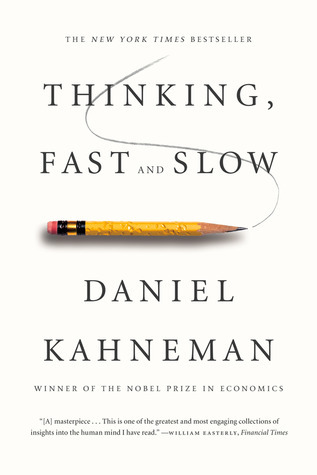
Major New York Times bestsellerWinner of the National Academy of Sciences Best Book Award in 2012Selected by the New York Times Book Review as one of the best books of 2011A Globe and Mail Best Books of the Year 2011 TitleOne of The Economist's 2011 Books of the Year One of The Wall Street Journal's Best Nonfiction Books of the Year 20112013 Presidential Medal of Freedom RecipientIn the international bestseller, Thinking, Fast and Slow, Daniel Kahneman, the renowned psychologist and winner of the Nobel Prize in Economics, takes us on a groundbreaking tour of the mind and explains the two systems that drive the way we think. System 1 is fast, intuitive, and emotional; System 2 is slower, more deliberative, and more logical. The impact of overconfidence on corporate strategies, the difficulties of predicting what will make us happy in the future, the profound effect of cognitive biases on everything from playing the stock market to planning our next vacation—each of these can be understood only by knowing how the two systems shape our judgments and decisions. Engaging the reader in a lively conversation about how we think, Kahneman reveals where we can and cannot trust our intuitions and how we can tap into the benefits of slow thinking. He offers practical and enlightening insights into how choices are made in both our business and our personal lives—and how we can use different techniques to guard against the mental glitches that often get us into trouble. Winner of the National Academy of Sciences Best Book Award and the Los Angeles Times Book Prize and selected by The New York Times Book Review as one of the ten best books of 2011, Thinking, Fast and Slow is destined to be a classic.