
Edgar Wright Recommended Books
British film director, screenwriter and producer
38 Books Recommended

"Them" began as a book about different kinds of extremists, but after Jon had got to know some of them - Islamic fundamentalists, neo-Nazis, Ku Klux Klansmen - he found that they had one oddly similar belief: that a tiny, shadowy elite rule the world from a secret room.In "Them," Jon sets out, with the help of the extremists, to locate that room. The journey is as creepy as it is comic and, along the way, Jon is chased by men in dark glasses, unmasked as a Jew in the middle of a Jihad training camp, and witnesses international CEOs and politicians participate in a bizarre pagan ritual in the forests of northern California."Them" is a fascinating and entertaining exploration of extremism, in which Jon learns some alarming things about the looking-glass world of "them" and "us'. Are the extremists on to something? Or has Jon become one of THEM?

Rat Pack Confidential: Frank, Dean, Sammy, Peter, Joey and the Last Great Show Biz Party
by Shawn Levy
Rating: 3.8 ⭐
• 2 recommendations ❤️
For the first time, the full story of what happened when Frank brought his best pals to party in a land called VegasJanuary 1960. Las Vegas is at its smooth, cool peak. The Strip is a jet-age theme park, and the greatest singer in the history of American popular music summons a group of friends there to make a movie. One is an insouciant singer of Italian songs, ex-partner to the most popular film comedian of the day. One is a short, black, Jewish, one-eyed, singing, dancing wonder. One is an upper-crust British pretty boy turned degenerate B-movie star actor, brother-in-law to an ascendant politician. And one is a stiff-shouldered comic with the quintessential Borscht Belt emcee’s knack for needling one-liners. The architectonically sleek marquee of the Sands Hotel announces their presence simply by listing their FRANK SINATRA. DEAN MARTIN. SAMMY DAVIS, JR. PETER LAWFORD. JOEY BISHOP. Around them an entire cast actors, comics, singers, songwriters, gangsters, politicians, and women, as well as thousands of starstruck everyday folks who fork over pocketfuls of money for the privilege of basking in their presence. They call themselves The Clan. But to an awed world, they are known as The Rat Pack.They had it all. Fame. Gorgeous women. A fabulouse playground of a city and all the money in the world. The backing of fearsome crime lords and the blessing of the President of the United States. But the dark side–over the thin line between pleasure and debauchery, between swinging self-confidence and brutal arrogance–took its toll. In four years, their great ride was over, and showbiz was never the same.Acclaimed Jerry Lewis biographer Shawn Levy has written a dazzling portrait of a time when neon brightness cast sordid shadows. It was Frank’s World, and we just lived in it.

Rebel Without a Crew, or How a 23-Year-Old Filmmaker with $7,000 Became a Hollywood Player
by Robert Rodríguez
Rating: 4.2 ⭐
• 5 recommendations ❤️
In Rebel Without a Crew, famed independent screenwriter and director Robert Rodriguez (Sin City, Sin City 2, Once Upon a Time in Mexico, Spy Kids) discloses all the unique strategies and original techniques he used to make his remarkable debut film, El Mariachi, on a shoestring budget. This is both one man's remarkable story and an essential guide for anyone who has a celluloid story to tell and the dreams and determination to see it through. Part production diary, part how-to manual, Rodriguez unveils how he was able to make his influential first film on only a $7,000 budget. Also included is the appendix, 'The Ten Minute Film Course,” a tell-all on how to save thousands of dollars on film school and teach yourself the ropes of film production, directing, and screenwriting.

"Long live the King," hailed Entertainment Weekly upon the publication of Stephen King's On Writing.Part memoir, part masterclass by one of the bestselling authors of all time, this superb volume is a revealing and practical view of the writer's craft, comprising the basic tools of the trade every writer must have. King's advice is grounded in his vivid memories from childhood through his emergence as a writer, from his struggling early career to his widely reported, near-fatal accident in 1999—and how the inextricable link between writing and living spurred his recovery.Brilliantly structured, friendly and inspiring, On Writing will empower and entertain everyone who reads it—fans, writers, and anyone who loves a great story well told.

The Devil's Candy: The Anatomy of a Hollywood Fiasco
by Julie Salamon
Rating: 4.0 ⭐
• 2 recommendations ❤️
"A definitive portrait of the madness of big-time moviemaking" ( Newsweek ), now the basis for the new season of TCM's hit podcast, "The Plot Thickens"When Brian De Palma agreed to allow Julie Salamon unlimited access to the film production of Tom Wolfe's best-selling book The Bonfire of the Vanities , both director and journalist must have felt like they were on to something big. How could it lose? But instead Salamon got a front-row seat at the Hollywood disaster of the decade. She shadowed the film from its early stages through the last of the eviscerating reviews, and met everyone from the actors to the technicians to the studio executives. They'd all signed on for a blockbuster, but there was a sense of impending doom from the start--heart-of-gold characters replaced Wolfe's satiric creations; affable Tom Hanks was cast as the patrician heel; Melanie Griffith appeared mid-shoot with new, bigger breasts. With a keen eye and ear, Salamon shows us how the best of intentions turned into a legendary Hollywood debacle.The Devil's Candy joins John Gregory Dunne's The Studio, Steven Bach's Final Cut, and William Goldman's Adventures in the Screen Trade as a classic for anyone interested in the workings of Hollywood. With a new afterword profiling De Palma ten years after the movie's devastating flop (and this book's best-selling publication), Julie Salamon has created a riveting insider's portrait of an industry where art, talent, ego, and money combine and clash on a monumental scale.

Hollywood Babylon: The Legendary Underground Classic of Hollywood's Darkest and Best Kept Secrets
by Kenneth Anger
Rating: 3.6 ⭐
• 2 recommendations ❤️
Kenneth Anger is a former child movie actor who grew up to become one of America's leading underground filmmakers. Hollywood Babylon was originally published in Paris, and quickly became an underground legend. Not a word has been changed. Not a story omitted. Here is the hot, luscious plum of sizzling scandal that continues to shock the world.
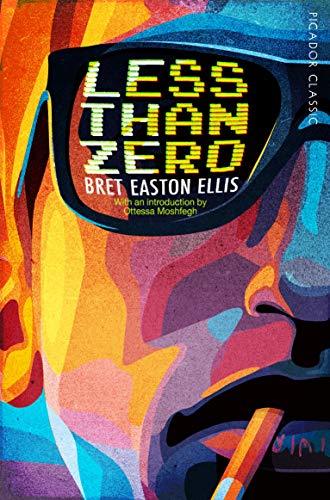
Eighteen-year-old college student Clay is back in his home town of Los Angeles for Christmas break. Clay is three things: rich, bored and looking to get high. As he reacquaints himself with a familiarly limitless world of privilege, along with his best friend and his ex, his shocking, stunning and disturbing adventure is filled with non-stop drinking in glamorous nightclubs, drug-fuelled parties and endless sexual encounters.Published in 1985, when Bret Easton Ellis was just twenty-one, Less Than Zero is a fierce coming-of-age story which quickly defined a genre. A cult classic beloved for its dogged portrayal of hedonistic youth and the morally depraved, this extraordinary and instantly famous novel is a landmark in modern fiction: an inventive, precocious and invigorating story of getting what you want when you want it.

Pictures at a Revolution: Five Movies and the Birth of the New Hollywood
by Mark Harris
Rating: 4.2 ⭐
• 4 recommendations ❤️
Explores the epic human drama behind the making of the five movies nominated for Best Picture in 1967-Guess Who's Coming to Dinner, The Graduate, In the Heat of the Night, Doctor Doolittle, and Bonnie and Clyde-and through them, the larger story of the cultural revolution that transformed Hollywood, and America, forever.

Winner of the Eisner, Harvey, and Ignatz AwardsThe setting: suburban Seattle, the mid-1970s. We learn from the outset that a strange plague has descended upon the area’s teenagers, transmitted by sexual contact. The disease is manifested in any number of ways — from the hideously grotesque to the subtle (and concealable) — but once you’ve got it, that’s it. There’s no turning back.As we inhabit the heads of several key characters — some kids who have it, some who don’t, some who are about to get it — what unfolds isn’t the expected battle to fight the plague, or bring heightened awareness to it , or even to treat it. What we become witness to instead is a fascinating and eerie portrait of the nature of high school alienation itself — the savagery, the cruelty, the relentless anxiety and ennui, the longing for escape.And then the murders start.As hypnotically beautiful as it is horrifying, Black Hole transcends its genre by deftly exploring a specific American cultural moment in flux and the kids who are caught in it- back when it wasn’t exactly cool to be a hippie anymore, but Bowie was still just a little too weird.To say nothing of sprouting horns and molting your skin…

Who the Hell's in It: Conversations With Hollywood's Legendary Actors
by Peter Bogdanovich
Rating: 4.0 ⭐
• 2 recommendations ❤️
Peter Bogdanovich, known primarily as a director, film historian and critic, has been working with professional actors all his life. He started out as an actor (he debuted on the stage in his sixth-grade production of Finian’s Rainbow ); he watched actors work (he went to the theater every week from the age of thirteen and saw every important show on, or off, Broadway for the next decade); he studied acting, starting at sixteen, with Stella Adler (his work with her became the foundation for all he would ever do as an actor and a director).Now, in his new book, Who the Hell’s in It, Bogdanovich draws upon a lifetime of experience, observation and understanding of the art to write about the actors he came to know along the way; actors he admired from afar; actors he worked with, directed, befriended. Among Lauren Bacall, Humphrey Bogart, James Cagney, John Cassavetes, Charlie Chaplin, Montgomery Clift, Marlene Dietrich, Henry Fonda, Ben Gazzara, Audrey Hepburn, Boris Karloff, Dean Martin, Marilyn Monroe, River Phoenix, Sidney Poitier, Frank Sinatra, and James Stewart.Bogdanovich captures—in their words and his—their work, their individual styles, what made them who they were, what gave them their appeal and why they’ve continued to be America’s iconic actors.On Lillian “the first virgin hearth goddess of the screen . . . a valiant and courageous symbol of fortitude and love through all distress.”On Marlon “He challenged himself never to be the same from picture to picture, refusing to become the kind of film star the studio system had invented and thrived upon—the recognizable human commodity each new film was built around . . . The funny thing is that Brando’s charismatic screen persona was vividly apparent despite the multiplicity of his guises . . . Brando always remains recognizable, a star-actor in spite of himself. ”Jerry Lewis to Bogdanovich on the first laugh Lewis ever got “I was five years old. My mom and dad had a tux made—I worked in the borscht circuit with them—and I came out and I sang, ‘Brother, Can You Spare a Dime?’ the big hit at the time . . . It was 1931, and I stopped the show—naturally—a five-year-old in a tuxedo is not going to stop the show? And I took a bow and my foot slipped and hit one of the floodlights and it exploded and the smoke and the sound scared me so I started to cry. The audience laughed—they were hysterical . . . So I knew I had to get the rest of my laughs the rest of my life, breaking, sitting, falling, spinning.”John Wayne to Bogdanovich, on the early years of Wayne’s career when he was working as a prop “Well, I’ve naturally studied John Ford professionally as well as loving the man. Ever since the first time I walked down his set as a goose-herder in 1927. They needed somebody from the prop department to keep the geese from getting under a fake hill they had for Mother Machree at Fox. I’d been hired because Tom Mix wanted a box seat for the USC football games, and so they promised jobs to Don Williams and myself and a couple of the players. They buried us over in the properties department, and Mr. Ford’s need for a goose-herder just seemed to fit my pistol.”These twenty-six portraits and conversations are unsurpassed in their evocation of a certain kind of great movie star that has vanished. Bogdanovich’s book is a celebration and a farewell.
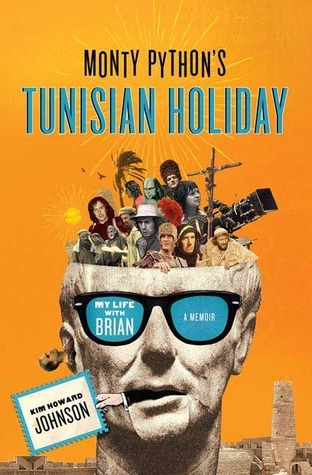
Monty Python's Tunisian Holiday: My Life with Brian
by Kim Howard Johnson
Rating: 3.4 ⭐
• 2 recommendations ❤️
In 1978, Kim “Howard” Johnson ran away to join the circus---Monty Python’s Flying Circus, that is. The Pythons converged on Tunisia to film their timeless classic, Life of Brian, and Howard found himself in the thick of it, doubling for nearly all the Pythons, playing more roles in the film than John Cleese, and managing to ruin only one shot. He became the unit journalist, substitute still photographer, Roman soldier, peasant, Biggus Dickus’s double, near-stalker, and, ultimately, friend and confidant of the comedy legends. He also kept a detailed journal of what he saw and heard, on set and off, throughout those six weeks. The result is a unique eyewitness account that reveals the Pythons at work and at play in a way that nothing else written about them could do. Now, for the first time ever, the inside story of the making of the film is revealed through the fly-on-the-castle-wall perspective. Even the most diehard fans will get a fresh take on the comedy greats through some never-before-revealed nuggets of Python brilliance: what John Cleese offered to exchange for suntan lotion; Terry Jones directing in drag; Michael Palin’s secret to playing revolutionaries and peasants; Graham Chapman gets naked; Terry Gilliam gets filthy; Eric Idle haggles; the secret of the Thespo-Squat; Mrs. Pilate; talk of George Harrison; the cake-flinging that jeopardized the production; badminton, impromptu cricket, and erotic frescoes; and the first-ever presentation of “Always Look on the Bright Side of Life.” Here, uncensored, are the legendary Pythons in their prime. It was a period of comedy history that will never be duplicated, and Monty Python’s Tunisian Holiday captures the wit, the genius, and the sheer silliness of the six men that comprised Python.

The Devil in the White City: Murder, Magic, and Madness at the Fair That Changed America
by Erik Larson
Rating: 4.0 ⭐
• 2 recommendations ❤️
Bringing Chicago circa 1893 to vivid life, Erik Larson's spell-binding bestseller intertwines the true tale of two men--the brilliant architect behind the legendary 1893 World's Fair, striving to secure America's place in the world; and the cunning serial killer who used the fair to lure his victims to their death. Combining meticulous research with nail-biting storytelling. Erik Larson has crafted a narrative with all the wonder of newly discovered history and the thrills of the best fiction.

Characterized by grandiose song-and-dance numbers featuring ornate geometric patterns and mimicked in many modern films, Busby Berkeley's unique artistry is as recognizable and striking as ever. From his years on Broadway to the director's chair, Berkeley is notorious for his inventiveness and signature style. Through sensational films like 42nd Street (1933), Gold Diggers of 1933 (1933), Footlight Parade (1933), and Dames (1934), Berkeley sought to distract audiences from the troubles of the Great Depression. Although his bold technique is familiar to millions of moviegoers, Berkeley's life remains a mystery. The Life and Art of Busby Berkeley is a telling portrait of the filmmaker who revolutionized the musical and changed the world of choreography. Berkeley pioneered many conventions still in use today, including the famous "parade of faces" technique, which lends an identity to each anonymous performer in a close-up. Carefully arranging dancers in complex and beautiful formations, Berkeley captured perspectives never seen before.Jeffrey Spivak's meticulous research magnifies the career and personal life of this beloved filmmaker. Employing personal letters, interviews, studio memoranda, and Berkeley's private memoirs, Spivak unveils the colorful life of one of cinema's greatest artists.

In the heyday of his sleaze empire, with his pencil moustache, gold jewellery and trademark fur coat, Paul Raymond was for many people the brash personification of nouveau riche vulgarity, posing proudly beside his customised Rolls Royce, a fat cigar protruding from his lips, a curvaceous showgirl on either arm. For other people, Margaret Thatcher among them, he exemplified the entrepreneurial spirit that enabled a poor boy from Depression-era Liverpool to become Britain's richest man. Right up until he died on 2 March 2008, he was a controversial figure around whom scandal swirled. Paul Willetts follows Raymond from his strictly Catholic early life to the isolation, paranoia and extreme wealth of his old age.

Shock Value: How a Few Eccentric Outsiders Gave Us Nightmares, Conquered Hollywood, and Invented Modern Horror
by Jason Zinoman
Rating: 4.0 ⭐
• 2 recommendations ❤️
Much has been written about the storied New Hollywood of the 1970s, but at the same time that Steven Spielberg and Martin Scorcese were producing their first classic movies, a parallel universe of directors gave birth to the modern horror film. Shock Value tells the unlikely story of how directors like Wes Craven, Roman Polanski, and John Carpenter revolutionized the genre in the 1970s, plumbing their deepest anxieties to bring a gritty realism and political edge to their craft. From Rosemary’s Baby to Halloween, the films they unleashed on the world created a template for horror that has been relentlessly imitated but rarely matched. Based on unprecedented access to the genre’s major players, this is an enormously entertaining account of a hugely influential golden age in American film.

This is the truth. This is history. It’s the end of the world. And nobody knows anything about it. You know what I mean.In the small town of Ealing, Iowa, Austin and his best friend, Robby, have accidentally unleashed an unstoppable army. An army of horny, hungry, six-foot-tall praying mantises that only want to do two things.

Crab Monsters, Teenage Cavemen, and Candy Stripe Nurses: Roger Corman, King of the B-Movie
by Chris Nashawaty
Rating: 4.2 ⭐
• 2 recommendations ❤️
Crab Monsters, Teenage Cavemen, and Candy Stripe Nurses is an outrageously rollicking account of the life and career of Roger Corman―one of the most prolific and successful independent producers, directors, and writers of all time, and self-proclaimed king of the B movie. As told by Corman himself and graduates of 'The Corman Film School', including Peter Bogdanovich, James Cameron, Francis Ford Coppola, Robert De Niro, and Martin Scorsese, this comprehensive oral history takes readers behind the scenes of more than six decades of American cinema, as now-legendary directors and actors candidly unspool recollections of working with Corman, continually one-upping one another with tales of the years before their big breaks.Crab Monsters... is supplemented with dozens of full-color reproductions of classic Corman movie posters; behind-the-scenes photographs and ephemera (many taken from Corman’s personal archive); and critical essays on Corman’s most daring films―including The Intruder, Little Shop of Horrors, and The Big Doll House―that make the case for Corman as an artist like no other.

Five Came Back: A Story of Hollywood and the Second World War
by Mark Harris
Rating: 3.7 ⭐
• 2 recommendations ❤️
Before the Second World War the Hollywood box office was booming, but the business was accused of being too foreign, too Jewish, too 'un-American'. Then the war changed everything. With Pearl Harbor came the opportunity for Hollywood to prove its critics wrong. America's most legendary directors played a huge role in the war John Ford, William Wyler, John Huston, Frank Capra, and George Stevens. Between them they shaped the public perception of almost every major moment of the war. With characteristic insight and expert knowledge Harris tells the untold story of how Hollywood changed World War II, and how World War II changed Hollywood.

Tinseltown: Murder, Morphine, and Madness at the Dawn of Hollywood
by William J. Mann
Rating: 3.9 ⭐
• 2 recommendations ❤️
New York Times Bestseller • Edgar Award winner for Best Fact Crime The Day of the Locust meets The Devil in the White City and Midnight in the Garden of Good and Evil in this juicy, untold Hollywood an addictive true tale of ambition, scandal, intrigue, murder, and the creation of the modern film industry. By 1920, the movies had suddenly become America’s new favorite pastime, and one of the nation’s largest industries. Never before had a medium possessed such power to influence. Yet Hollywood’s glittering ascendency was threatened by a string of headline-grabbing tragedies—including the murder of William Desmond Taylor, the popular president of the Motion Picture Directors Association, a legendary crime that has remained unsolved until now. In a fiendishly involving narrative, bestselling Hollywood chronicler William J. Mann draws on a rich host of sources, including recently released FBI files, to unpack the story of the enigmatic Taylor and the diverse cast that surrounded him—including three beautiful, ambitious actresses; a grasping stage mother; a devoted valet; and a gang of two-bit thugs, any of whom might have fired the fatal bullet. And overseeing this entire landscape of intrigue was Adolph Zukor, the brilliant and ruthless founder of Paramount, locked in a struggle for control of the industry and desperate to conceal the truth about the crime. Along the way, Mann brings to life Los Angeles in the Roaring a sparkling yet schizophrenic town filled with party girls, drug dealers, religious zealots, newly-minted legends and starlets already past their prime—a dangerous place where the powerful could still run afoul of the desperate. A true story recreated with the suspense of a novel, Tinseltown is the work of a storyteller at the peak of his powers—and the solution to a crime that has stumped detectives and historians for nearly a century.

David Smith is giving his life for his art—literally. Thanks to a deal with Death, the young sculptor gets his childhood wish: to sculpt anything he can imagine with his bare hands. But now that he only has 200 days to live, deciding what to create is harder than he thought, and discovering the love of his life at the 11th hour isn't making it any easier! This is a story of desire taken to the edge of reason and beyond; of the frantic, clumsy dance steps of young love; and a gorgeous, street-level portrait of the world's greatest city. It's about the small, warm, human moments of everyday life…and the great surging forces that lie just under the surface. Scott McCloud wrote the book on how comics work; now he vaults into great fiction with a breathtaking, funny, and unforgettable new work.

An Amazon Best of The Year Nonfiction SelectionLibrary Journal Top Ten Book of the Year!The Extraordinary True Story of Kim Jong-Il’s kidnapping of the golden couple of South Korean Cinema, The Movies They Were Forced to Make, and Their Daring Escape.Before becoming the world’s most notorious dictator, Kim Jong-Il ran North Korea’s Ministry for Propaganda and all its film studios. Underwhelmed by the pool of talent available to him he took drastic steps, ordering the kidnap of Choi Eun-Hee (Madame Choi) – South Korea’s most famous actress – and her ex-husband Shin Sang-Ok, the country’s most famous filmmaker. But as Madame Choi and Shin Shang-Ok begin to make North Korea’s greatest films, they hatch a plan of escape worthy of a blockbuster Hollywood ending. A Kim Jong-Il Production is that rarest of a wildly entertaining, cunningly told story that offers a rare glimpse into a nation still wrapped in mystery.“Gripping… A Kim Jong-Il Production tells the absurd, harrowing, and true story of Choi and Shin's ordeal, which reveals the importance of film as propaganda to the North Korean regime.” ― Esquire.com“The 1978 abductions of the South Korean actress Choi-Eun-He and her ex-husband, the director Shin Sang-Ok, in Hong Kong is the true crime at the center of Paul Fischer's gripping and surprisingly timely new book.” ― The New York Times“An entertaining new book…details how [Shin and Choi] finally seized their chance to seek asylum…A stupefying, novelistic read.” ― The Boston Globe“Fischer's entertaining narrative paints an arresting portrait of a North Korean "theater state," forced to enact the demented script of a sociopathic tyrant.” ― Publishers Weekly“Paul Fischer's book A Kim Jong-Il Production is a highly illuminating deep dive on the middle Kim's cinematic obsessions and the film arms race between the two Koreas.” ― The Washington Post“Exhaustively researched, highly engrossing chronicle of the outrageous abduction of a pair of well-known South Korean filmmakers by the nefarious network of North Korea's Kim Jong-Il.”― Kirkus Reviews (Starred Review)

Funny Girl - the latest novel from Nick Hornby, the million-copy bestselling author of About a BoyMake them laugh, and they're yours forever . . .Barbara Parker is Miss Blackpool of 1964, but she doesn't want to be a beauty queen. She only wants to make people laugh. So she leaves her hometown behind, takes herself off to London, and lands a life-changing audition for a new BBC comedy series. Overnight she becomes Sophie charming, gorgeous, destined to win the nation's hearts.Funny Girl is the story of a smash-hit TV show and the people behind the the writers, Tony and Bill, friends since national service and comedy obsessives; producer Dennis, Oxbridge educated, clever, mild and not-so-secretly devoted to his star actress Sophie; and dashing male lead Clive, who firmly believes he's destined for better things. The show's success continues rocketing and the cast and crew are having the time of their lives. But when the script begins to get a bit too close to home, and life starts imitating art, they all face a choice. How long can they keep going before it's time to change the channel?Nick Hornby's novel is about popular culture and the swinging sixties. Sophie Straw is learning about youth and old age, fame and hard work, class and collaboration. Funny Girl offers a captivating portrait of youthful exuberance and freedom at a time when Britain itself was experiencing one of its most enduring creative bursts. Hornby fans will love his latest book, as will readers of David Nicholls, Mark Haddon and William Boyd.'Fans won't be disappointed by this new story... endearing, humorous and touching, full of spot-on period detail, all brought to vivid life by a cast of very human characters. Hugely enjoyable' Sunday Mirror'Resolutely, winningly light-hearted' Observer'Nick Hornby's funny, winningly perceptive novel is a pleasure to read' Telegraph'If you devoured About a Boy and whizzed through High Fidelity you're going to love Nick Hornby's brilliant new novel. Hilarious and captivating, this is a fabulous read' Take a Break'There is something about Hornby's writing that is so simple, so easy-to-read and yet so sensitive and profound at the same time, that anything he writes turns out very special. The premise of Funny Girl is like a lot of Nick Hornby's irritatingly genius something so obvious you can't believe no one thought of it before.' Independent'Everything he writes is addictively readable and clever, but with this one he just surpasses himself' Red'Effortlessly engaging... Hornby's writing is so fluid, he has a great knack for capturing atmosphere and skewering a character with a killer phrase' - Evening Standard

Meet Me in the Bathroom: Rebirth and Rock and Roll in New York City 2001-2011
by Lizzy Goodman
Rating: 4.3 ⭐
• 2 recommendations ❤️
An intriguing oral history of the post-9/11 decline of the old-guard music industry and rebirth of the New York rock scene, led by a group of iconoclastic rock bands.In the second half of the twentieth-century New York was the source of new sounds, including the Greenwich Village folk scene, punk and new wave, and hip-hop. But as the end of the millennium neared, cutting-edge bands began emerging from Seattle, Austin, and London, pushing New York further from the epicenter. The behemoth music industry, too, found itself in free fall, under siege from technology. Then 9/11/2001 plunged the country into a state of uncertainty and war—and a dozen New York City bands that had been honing their sound and style in relative obscurity suddenly became symbols of glamour for a young, web-savvy, forward-looking generation in need of an anthem.Meet Me in the Bathroom charts the transformation of the New York music scene in the first decade of the 2000s, the bands behind it—including The Strokes, The Yeah Yeah Yeahs, LCD Soundsystem, Interpol, and Vampire Weekend—and the cultural forces that shaped it, from the Internet to a booming real estate market that forced artists out of the Lower East Side to Williamsburg. Drawing on 200 original interviews with James Murphy, Julian Casablancas, Karen O, Ezra Koenig, and many others musicians, artists, journalists, bloggers, photographers, managers, music executives, groupies, models, movie stars, and DJs who lived through this explosive time, journalist Lizzy Goodman offers a fascinating portrait of a time and a place that gave birth to a new era in modern rock-and-roll.

The Nazi regime preached an ideology of physical, mental, and moral purity. Yet as Norman Ohler reveals in this gripping new history, the Third Reich was saturated with drugs: cocaine, opiates, and, most of all, methamphetamines. Troops were encouraged, and in some cases ordered, to take rations of a form of crystal meth – the elevated energy and feelings of invincibility associated with the high even help to account for the breakneck invasion that sealed the fall of France in 1940, as well as other German military victories. Hitler himself became increasingly dependent on a cocktail of drugs – ultimately including Eukodal, a cousin of heroin – administered by his personal doctor.Thoroughly researched and rivetingly readable, Blitzed throws light on a history that, until now, has remained in the shadows.

*THE SUNDAY TIMES TOP TEN BESTSELLER*The Sixties ended a year late – on New Year's Eve 1970, when Paul McCartney initiated proceedings to wind up The Beatles. Music would never be the same again.The next day would see the dawning of a new era. 1971 saw the release of more monumental albums than any year before or since and the establishment of a pantheon of stars to dominate the next forty years – Led Zeppelin, David Bowie, the Rolling Stones, Pink Floyd, Marvin Gaye, Carole King, Joni Mitchell, Rod Stewart, the solo Beatles and more.January that year fired the gun on an unrepeatable surge of creativity, technological innovation, blissful ignorance, naked ambition and outrageous good fortune. By December rock had exploded into the mainstream.How did it happen? This book tells you how. It's the story of 1971, rock’s golden year.

ONE OF ENTERTAINMENT WEEKLY 'S MOST ANTICIPATED BOOKS OF 2017"Gripping." --- Maureen Corrigan, Washington Post"Mesmerizing." ---Associated PressIt's 1965 in a tight-knit working-class neighborhood in Queens, New York, and Ruth Malone--a single mother who works long hours as a cocktail waitress--wakes to discover her two small children, Frankie Jr. and Cindy, have gone missing. Later that day, Cindy's body is found in a derelict lot a half mile from her home, strangled. Ten days later, Frankie Jr.'s decomposing body is found. Immediately, all fingers point to Ruth.As police investigate the murders, the detritus of Ruth's life is exposed. Seen through the eyes of the cops, the empty bourbon bottles and provocative clothing which litter her apartment, the piles of letters from countless men and Ruth's little black book of phone numbers, make her a drunk, a loose woman--and therefore a bad mother. The lead detective, a strict Catholic who believes women belong in the home, leaps to the obvious facing divorce and a custody battle, Malone took her children's lives.Pete Wonicke is a rookie tabloid reporter who finagles an assignment to cover the murders. Determined to make his name in the paper, he begins digging into the case. Pete's interest in the story develops into an obsession with Ruth, and he comes to believe there's something more to the woman whom prosecutors, the press, and the public have painted as a promiscuous femme fatale. Did Ruth Malone violently kill her own children, is she a victim of circumstance--or is there something more sinister at play?Inspired by a true story, Little Deaths , like celebrated novels by Sarah Waters and Megan Abbott , is compelling literary crime fiction that explores the capacity for good and evil in us all.

Dolce Vita Confidential: Fellini, Loren, Pucci, Paparazzi, and the Swinging High Life of 1950s Rome
by Shawn Levy
Rating: 4.0 ⭐
• 2 recommendations ❤️
“A brisk, frothy narrative . . . informative and fun.” ―The Wall Street Journal In the dizzying wake of World War II, Rome skyrocketed to prominence as an epicenter of film, fashion, photography, and boldfaced libertinism. Artists, exiles, and a dazzling array of movie talent rushed to Rome for a chance to thrive in this hotbed of excitement. From the photographers who tailed the stars to the legends who secured their place in cinematic fame, Dolce Vita Confidential resurrects the drama that permeated the streets and screens of Rome. 8 pages of photographs

Without the Sex Pistols there would be no Punk. And without Steve Jones there would be no Sex Pistols. It was Steve who formed Kutie Jones and his Sex Pistols, the band that eventually went on to become the Sex Pistols, with his schoolmate Paul Cook and who was its original leader. As the world celebrates the 40th anniversary of Punk – the influence and cultural significance of which is felt in music, fashion and the visual arts to this day – Steve tells his story for the very first time.Steve’s modern Dickensian tale begins in the streets of Hammersmith and Shepherd’s Bush, West London, where as a lonely, neglected boy living off his wits and petty thievery he is given purpose by the glam art rock of David Bowie and Roxy Music and becomes one of the first generation of ragamuffin punks taken under the wings of Malcolm McLaren and Vivienne Westwood. For the very first time Steve describes the sadness of never having known his dad, the neglect and abuse he suffered at the hands of his step father, and how his interest in music and fashion saved him from a potential life of crime spent in remand centres and prison. From the Kings Road of the early seventies, through the years of the Sex Pistols, Punk Rock and the recording of Never Mind the Bollocks (ranked number 41 in Rolling Stone magazine’s Best Albums of All Time), to his self-imposed exile in New York and Los Angeles where he battled with alcohol, heroin and sex addiction – caught in a cycle of rehab and relapse – Lonely Boy, written with music journalist and author Ben Thompson, is the story of an unlikely guitar hero who, with the Sex Pistols, changed history.

The Show That Never Ends: The Rise and Fall of Prog Rock
by David Weigel
Rating: 3.5 ⭐
• 2 recommendations ❤️
The Show That Never Ends is the definitive story of the extraordinary rise and fall of progressive (“prog”) rock. Epitomized by such classic, chart-topping bands as Yes, Genesis, Pink Floyd, Jethro Tull, and Emerson Lake Palmer, along with such successors as Rush, Marillion, Asia, Styx, and Porcupine Tree, prog sold hundreds of millions of records. It brought into the mainstream concept albums, spaced-out cover art, crazy time signatures, multitrack recording, and stagecraft so bombastic it was spoofed in the classic movie This Is Spinal Tap.With a vast knowledge of what Rolling Stone has called “the deliciously decadent genre that the punks failed to kill,” access to key people who made the music, and the passion of a true enthusiast, Washington Post national reporter David Weigel tells the story of prog in all its pomp, creativity, and excess.Weigel explains exactly what was “progressive” about prog rock and how its complexity and experimentalism arose from such precursors as the Beach Boys’ Pet Sounds and the Beatles’ Sgt. Pepper. He traces prog’s popularity from the massive success of Procol Harum’s “Whiter Shade of Pale” and the Moody Blues’ “Nights in White Satin” in 1967. He reveals how prog’s best-selling, epochal albums were made, including The Dark Side of the Moon, Thick as a Brick, and Tubular Bells. And he explores the rise of new instruments into the prog mix, such as the synthesizer, flute, mellotron, and—famously—the double-neck guitar.The Show That Never Ends is filled with the candid reminiscences of prog’s celebrated musicians. It also features memorable portraits of the vital contributions of producers, empresarios, and technicians such as Richard Branson, Brian Eno, Ahmet Ertegun, and Bob Moog.Ultimately, Weigel defends prog from the enormous derision it has received for a generation, and he reveals the new critical respect and popularity it has achieved in its contemporary resurgence.

Hard-Boiled Hollywood: Crime and Punishment in Postwar Los Angeles
by Jon Lewis
Rating: 3.3 ⭐
• 2 recommendations ❤️
The tragic and mysterious circumstances surrounding the deaths of Elizabeth Short, or the Black Dahlia, and Marilyn Monroe ripped open Hollywood’s glitzy façade, exposing the city's ugly underbelly of corruption, crime, and murder. These two spectacular dead bodies, one found dumped and posed in a vacant lot in January 1947, the other found dead in her home in August 1962, bookend this new history of Hollywood. Short and Monroe are just two of the many left for dead after the collapse of the studio system, Hollywood’s awkward adolescence when the company town’s many competing subcultures—celebrities, moguls, mobsters, gossip mongers, industry wannabes, and desperate transients—came into frequent contact and conflict. Hard-Boiled Hollywood focuses on the lives lost at the crossroads between a dreamed-of Los Angeles and the real thing after the Second World War, where reality was anything but glamorous."

Dylan Jones's engrossing, magisterial biography of David Bowie is unlike any Bowie story ever written. Drawn from over 180 interviews with friends, rivals, lovers, and collaborators, some of whom have never before spoken about their relationship with Bowie, this oral history weaves a hypnotic spell as it unfolds the story of a remarkable rise to stardom and an unparalleled artistic path. Tracing Bowie's life from the English suburbs to London to New York to Los Angeles, Berlin, and beyond, its collective voices describe a man profoundly shaped by his relationship with his schizophrenic half-brother Terry; an intuitive artist who could absorb influences through intense relationships and yet drop people cold when they were no longer of use; and a social creature equally comfortable partying with John Lennon and dining with Frank Sinatra. By turns insightful and deliciously gossipy, DAVID BOWIE is as intimate a portrait as may ever be drawn. It sparks with admiration and grievances, lust and envy, as the speakers bring you into studios and bedrooms they shared with Bowie, and onto stages and film sets, opening corners of his mind and experience that transform our understanding of both artist and art. Including illuminating, never-before-seen material from Bowie himself, drawn from a series of Jones's interviews with him across two decades, DAVID BOWIE is an epic, unforgettable cocktail-party conversation about a man whose enigmatic shapeshifting and irrepressible creativity produced one of the most sprawling, fascinating lives of our time.
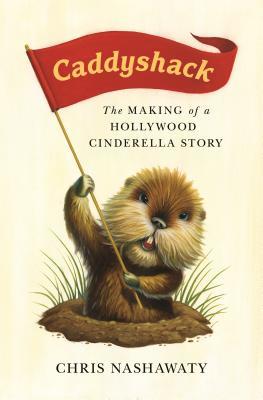
“More fun to read than the movie was to watch… a scene-stealing book.”― The Washington PostAn Entertainment Weekly "Must List" selectionCaddyshack is one of the most beloved comedies of all time, a classic snobs vs. slobs story of working class kids and the white collar buffoons that make them haul their golf bags in the hot summer sun. It has sex, drugs and one very memorable candy bar, but the movie we all know and love didn’t start out that way, and everyone who made it certainly didn’t have the word “classic” in mind as the cameras were rolling.In Caddyshack:The Making of a Hollywood Cinderella Story film critic for Entertainment Weekly Chris Nashawaty goes behind the scenes of the iconic film, chronicling the rise of comedy’s greatest deranged minds as they form The National Lampoon , turn the entertainment industry on its head, and ultimately blow up both a golf course and popular culture as we know it. Caddyshack is at once an eye-opening narrative about one of the most interesting, surreal, and dramatic film productions there’s ever been, and a rich portrait of the biggest, and most revolutionary names in Hollywood. So, it’s got that going for it…which is nice.

Seduction: Sex, Lies, and Stardom in Howard Hughes's Hollywood
by Karina Longworth
Rating: 4.0 ⭐
• 2 recommendations ❤️
In this riveting popular history, the creator of You Must Remember This probes the inner workings of Hollywood’s glamorous golden age through the stories of some of the dozens of actresses pursued by Howard Hughes, to reveal how the millionaire mogul’s obsessions with sex, power and publicity trapped, abused, or benefitted women who dreamt of screen stardom.In recent months, the media has reported on scores of entertainment figures who used their power and money in Hollywood to sexually harass and coerce some of the most talented women in cinema and television. But as Karina Longworth reminds us, long before the Harvey Weinsteins there was Howard Hughes—the Texas millionaire, pilot, and filmmaker whose reputation as a cinematic provocateur was matched only by that as a prolific womanizer.His supposed conquests between his first divorce in the late 1920s and his marriage to actress Jean Peters in 1957 included many of Hollywood’s most famous actresses, among them Billie Dove, Katharine Hepburn, Ava Gardner, and Lana Turner. From promoting bombshells like Jean Harlow and Jane Russell to his contentious battles with the censors, Hughes—perhaps more than any other filmmaker of his era—commoditized male desire as he objectified and sexualized women. Yet there were also numerous women pulled into Hughes’s grasp who never made it to the screen, sometimes virtually imprisoned by an increasingly paranoid and disturbed Hughes, who retained multitudes of private investigators, security personnel, and informers to make certain these actresses would not escape his clutches.Vivid, perceptive, timely, and ridiculously entertaining, The Seducer is a landmark work that examines women, sex, and male power in Hollywood during its golden age—a legacy that endures nearly a century later.

The Castle on Sunset: Life, Death, Love, Art, and Scandal at Hollywood's Chateau Marmont
by Shawn Levy
Rating: 4.0 ⭐
• 2 recommendations ❤️
The definitive--and salacious--history of the iconic hotel that Hollywood stars have called a home away from home for almost a century.Since 1929, Hollywood's brightest stars have flocked to the Chateau Marmont as if it were a second home. Perched above the Sunset Strip like a fairytale castle, the Chateau seems to come from another world entirely. An apartment building-turned-hotel, it has been the backdrop for generations of gossip and folklore: director Nicholas Ray slept with his sixteen-year-old Rebel Without a Cause star Natalie Wood; Jim Morrison swung from the balconies; John Belushi suffered a fatal overdose; and Lindsay Lohan got the boot after racking up nearly $50,000 in charges in less than two months. Much of what's happened inside the Chateau's walls has eluded the public eye--until now. With wit and insight, Shawn Levy recounts the wild revelries and scandalous liaisons, the creative breakthroughs and marital breakdowns, the births and deaths to which the hotel has been a party.

The hilarious and heartwarming new memoir from James Acaster: cult comedian, bestselling author, undercover cop, receiver of cabbages.January, 2017.James Acaster wakes hungover and alone in New York, his girlfriend having just left him. Thinking this is his rock bottom, little does James know that by the end of the year he will have befouled himself in a Los Angeles steakhouse and disrespected a pensioner on television. Luckily, there is one thing he can rely on for comfort – music. In true Acaster fashion, this ends up with a completely unnecessary mission: to buy as much music as he can released in 2016, the year before everything went wrong (for James, at least). Some albums are life-changing masterpieces, others are ‘Howdilly Doodilly’ by Okilly Dokilly, a metalcore album devoted to The Simpsons character Ned Flanders. But all of them play a part in the year that James gets his life back on track.In PERFECT SOUND WHATEVER, James takes us through the music of 2016, the bullshit of 2017, and how the beauty of one defeated the ugliness of the other. He will also reveal how he stole a cookie from Clint Eastwood and attempted to complete his musical odyssey by reforming one of Kettering’s most overlooked bands.

A Long Time Ago in a Cutting Room Far, Far Away: My Fifty Years Editing Hollywood Hits—Star Wars, Carrie, Ferris Bueller's Day Off, Mission: Impossible, and More
by Paul Hirsch
Rating: 4.3 ⭐
• 2 recommendations ❤️
"For its sheer excellence, diversity, and cultural impact, Paul Hirsch's filmography speaks for itself. They say a film is made in the editing room, and this book is easily the most comprehensive, revelatory, and illuminating account of this essential cinematic art. A must-read for both the casual moviegoer and the serious cinephile alike." —Mark HamillA Long Time Ago in a Cutting Room Far, Far Away provides a behind-the-scenes look at some of the most influential films of the last fifty years as seen through the eyes of Paul Hirsch, the Oscar-winning film editor who worked on such classics as George Lucas’s Star Wars and The Empire Strikes Back , Brian De Palma’s Carrie and Impossible , Herbert Ross’s Footloose and Steel Magnolias , John Hughes’s Ferris Bueller’s Day Off and Planes, Trains & Automobiles , Joel Schumacher’s Falling Down , and Taylor Hackford’s Ray .Hirsch breaks down his career movie by movie, offering a riveting look at the decisions that went into creating some of cinema’s most iconic scenes. He also provides behind-the-scenes insight into casting, directing, and scoring and intimate portraits of directors, producers, composers, and stars.Part film school primer, part paean to legendary filmmakers and professionals, this funny and insightful book will entertain and inform aficionados and casual moviegoers alike.

A magnificent biography of one of the most protean creative forces in American entertainment history, a life of dazzling highs and vertiginous plunges--some of the worst largely unknown until now--by the acclaimed author of Pictures at a Revolution and Five Came BackMike Nichols burst onto the scene as a wunderkind: while still in his twenties, he was half of a hit improv duo with Elaine May that was the talk of the country. Next he directed four consecutive hit plays, won back-to-back Tonys, ushered in a new era of Hollywood moviemaking with Who's Afraid of Virginia Woolf?, and followed it with The Graduate, which won him an Oscar and became the third-highest-grossing movie ever. At thirty-five, he lived in a three-story Central Park West penthouse, drove a Rolls-Royce, collected Arabian horses, and counted Jacqueline Kennedy, Elizabeth Taylor, Leonard Bernstein, and Richard Avedon as friends.Where he arrived is even more astonishing given where he had begun: born Igor Peschkowsky to a Jewish couple in Berlin in 1931, he and his younger brother were sent to America on a ship in 1939. The young immigrant boy caught very few breaks. He was bullied and ostracized--an allergic reaction had rendered him permanently hairless--and his father died when he was just twelve, leaving his mother alone and overwhelmed.The gulf between these two sets of facts explains a great deal about Nichols's transformation from lonely outsider to the center of more than one cultural universe--the acute powers of observation that first made him famous; the nourishment he drew from his creative partnerships, most enduringly with May; his unquenchable drive; his hunger for security and status; and the depressions and self-medications that brought him to terrible lows. It would take decades for him to come to grips with his demons. In an incomparable portrait that follows Nichols from Berlin to New York to Chicago to Hollywood, Mark Harris explores, with brilliantly vivid detail and insight, the life, work, struggle, and passion of an artist and man in constant motion. Among the 250 people Harris interviewed: Elaine May, Meryl Streep, Stephen Sondheim, Robert Redford, Glenn Close, Tom Hanks, Candice Bergen, Emma Thompson, Annette Bening, Natalie Portman, Julia Roberts, Lorne Michaels, and Gloria Steinem.Mark Harris gives an intimate and evenhanded accounting of success and failure alike; the portrait is not always flattering, but its ultimate impact is to present the full story of one of the most richly interesting, complicated, and consequential figures the worlds of theater and motion pictures have ever seen. It is a triumph of the biographer's art.

North American Edition of the UK BestsellerHow identity politics failed one particular identity.‘a must read and if you think YOU don’t need to read it, that’s just the clue to know you do.’ SARAH SILVERMAN‘This is a brave and necessary book.’ JONATHAN SAFRAN FOER‘a masterpiece.’STEPHEN FRYJews Don’t Count is a book for people who consider themselves on the right side of history. People fighting the good fight against homophobia, disablism, transphobia and, particularly, racism. People, possibly, like you.It is the comedian and writer David Baddiel’s contention that one type of racism has been left out of this fight. In his unique combination of close reasoning, polemic, personal experience and jokes, Baddiel argues that those who think of themselves as on the right side of history have often ignored the history of anti-Semitism. He outlines why and how, in a time of intensely heightened awareness of minorities, Jews don’t count as a real minority: and why they should.