
Derren Brown Recommended Books
British illusionist and writer
19 Books Recommended

The Happiness Hypothesis: Finding Modern Truth in Ancient Wisdom
by Jonathan Haidt
Rating: 4.1 ⭐
• 10 recommendations ❤️
In his widely praised book, award-winning psychologist Jonathan Haidt examines the world’s philosophical wisdom through the lens of psychological science, showing how a deeper understanding of enduring maxims-like Do unto others as you would have others do unto you, or What doesn’t kill you makes you stronger-can enrich and even transform our lives.

Flow: The Psychology of Optimal Experience
by Mihály Csíkszentmihályi
Rating: 4.1 ⭐
• 9 recommendations ❤️
Psychologist Mihaly Csikszentmihalyi's famous investigations of "optimal experience" have revealed that what makes an experience genuinely satisfying is a state of consciousness called flow. During flow, people typically experience deep enjoyment, creativity, and a total involvement with life. In this new edition of his groundbreaking classic work, Csikszentmihalyi demonstrates the ways this positive state can be controlled, not just left to chance. Flow: The Psychology of Optimal Experience teaches how, by ordering the information that enters our consciousness, we can discover true happiness and greatly improve the quality of our lives.

John Crowley's masterful Little, Big is the epic story of Smoky Barnable, an anonymous young man who travels by foot from the City to a place called Edgewood—not found on any map—to marry Daily Alice Drinkwater, as was prophesied. It is the story of four generations of a singular family, living in a house that is many houses on the magical border of an otherworld. It is a story of fantastic love and heartrending loss; of impossible things and unshakable destinies; and of the great Tale that envelops us all. It is a wonder.

Derren Brown's television and stage performances have entranced and dumbfounded millions. His baffling illusions and stunning set pieces - such as The Seance, Russian Roulette and The Heist - have set new standards of what's possible, as well as causing more than their fair share of controversy. Now, for the first time, he reveals the secrets behind his craft, what makes him tick and just why he grew that beard. Tricks of the Mind takes you on a journey into the structure and pyschology of magic. Derren teaches you how to read clues in people's behaviour and spot liars. He discusses the whys and wherefores of hypnosis and shows how to do it. And he investigates the power of suggestion and how you can massively improve your memory. He also takes a long hard look at the paranormal industry and why some of us feel the need to believe in it in the first place. Alternately hilarious, controversial and challenging, Tricks of the Mind is essential reading for Derren's legions of fans, and pretty bloody irresistible even if you don't like him that much...

An alternative cover edition for this ISBN can be found here.Now a major motion picture―The Secret: Dare to Dream―starring Katie Holmes and Josh Lucas.The worldwide bestselling phenomenon that has helped millions tap the power of the law that governs all our lives to create—intentionally and effortlessly—a joyful life.In 2006, a groundbreaking feature-length film revealed the great mystery of the universe—The Secret—and, later that year, Rhonda Byrne followed with a book that became a worldwide bestseller.Fragments of a Great Secret have been found in the oral traditions, in literature, in religions, and philosophies throughout the centuries. For the first time, all the pieces of The Secret come together in an incredible revelation that will be life-transforming for all who experience it.In this book, you’ll learn how to use The Secret in every aspect of your life—money, health, relationships, happiness, and in every interaction you have in the world. You’ll begin to understand the hidden, untapped power that’s within you, and this revelation can bring joy to every aspect of your life.The Secret contains wisdom from modern-day teachers—men and women who have used it to achieve health, wealth, and happiness. By applying the knowledge of The Secret, they bring to light compelling stories of eradicating disease, acquiring massive wealth, overcoming obstacles, and achieving what many would regard as impossible.

In his sensational international bestseller, the preeminent scientist and outspoken atheist Richard Dawkins delivers a hard-hitting, impassioned, but humorous, rebuttal of religious belief. With rigor and wit, Dawkins eviscerates the arguments for religion and demonstrates the supreme improbability of the existence of a supreme being. He makes a compelling case that faith is not just irrational but potentially deadly. In a preface written for the paperback edition, Dawkins responds to some of the controversies the book has incited. This brilliantly argued, provocative book challenges all of us to examine our belifs, no matter what beliefs we hold.

Seconds before the Earth is demolished to make way for a galactic freeway, Arthur Dent is plucked off the planet by his friend Ford Prefect, a researcher for the revised edition of The Hitchhiker's Guide to the Galaxy who, for the last 15 years, has been posing as an out-of-work actor.Together this dynamic pair begin a journey through space aided by quotes from The Hitchhiker's Guide ("A towel is about the most massively useful thing an interstellar hitchhiker can have.") and a galaxy full of fellow travelers: Zaphod Beeblebrox, the two-headed, three-armed ex-hippie and totally out-to-lunch president of the galaxy; Trillian, Zaphod's girlfriend (formally Tricia McMillan), whom Arthur tried to pick up at a cocktail party once upon a time zone; Marvin, a paranoid, brilliant, and chronically depressed robot; and Veet Voojagig, a former graduate student who is obsessed with the disappearance of all the ballpoint pens he bought over the years.Where are these pens? Why are we born? Why do we die? Why do we spend so much time in between wearing digital watches? For all the answers stick your thumb to the stars. And don't forget to bring a towel!LENGTH5 hrs and 51 mins

Have you ever wondered how one day the media can assert that alcohol is bad for us and the next unashamedly run a story touting the benefits of daily alcohol consumption? Or how a drug that is pulled off the market for causing heart attacks ever got approved in the first place? How can average readers, who aren't medical doctors or Ph.D.s in biochemistry, tell what they should be paying attention to and what's, well, just more bullshit?Ben Goldacre has made a point of exposing quack doctors and nutritionists, bogus credentialing programs, and biased scientific studies. He has also taken the media to task for its willingness to throw facts and proof out the window. But he's not here just to tell you what's wrong. Goldacre is here to teach you how to evaluate placebo effects, double-blind studies, and sample sizes, so that you can recognize bad science when you see it. You're about to feel a whole lot better.

The Righteous Mind: Why Good People Are Divided by Politics and Religion
by Jonathan Haidt
Rating: 4.3 ⭐
• 10 recommendations ❤️
NEW YORK TIMES BESTSELLER • The acclaimed social psychologist challenges conventional thinking about morality, politics, and religion in a way that speaks to conservatives and liberals alike—a “landmark contribution to humanity’s understanding of itself” ( The New York Times Book Review ).Drawing on his twenty-five years of groundbreaking research on moral psychology, Jonathan Haidt shows how moral judgments arise not from reason but from gut feelings. He shows why liberals, conservatives, and libertarians have such different intuitions about right and wrong, and he shows why each side is actually right about many of its central concerns.In this subtle yet accessible book, Haidt gives you the key to understanding the miracle of human cooperation, as well as the curse of our eternal divisions and conflicts. If you’re ready to trade in anger for understanding, read The Righteous Mind .

Resonance: A Sociology of Our Relationship to the World
by Hartmut Rosa
Rating: 4.5 ⭐
• 1 recommendation ❤️
The pace of modern life is undoubtedly speeding up, yet this acceleration does not seem to have made us any happier or more content. If acceleration is the problem, then the solution, argues Hartmut Rosa in this major new work, lies in "resonance." The quality of a human life cannot be measured simply in terms of resources, options, and moments of happiness; instead, we must consider our relationship to, or resonance with, the world.Applying his theory of resonance to many domains of human activity, Rosa describes the full spectrum of ways in which we establish our relationship to the world, from the act of breathing to the adoption of culturally distinct worldviews. He then turns to the realms of concrete experience and action - family and politics, work and sports, religion and art - in which we as late modern subjects seek out resonance. This task is proving ever more difficult as modernity's logic of escalation is both cause and consequence of a distorted relationship to the world, at individual and collective levels. As Rosa shows, all the great crises of modern society - the environmental crisis, the crisis of democracy, the psychological crisis - can also be understood and analyzed in terms of resonance and our broken relationship to the world around us.Building on his now classic work on acceleration, Rosa's new book is a major new contribution to the theory of modernity, showing how our problematic relation to the world is at the crux of some of the most pressing issues we face today. This bold renewal of critical theory for our times will be of great interest to students and scholars across the social sciences and humanities.

Everyone says they want to be happy. But that's much more easily said than done. What does being happy actually mean? And how do you even know when you feel it? Across the millennia, philosophers have thought long and hard about happiness. They have defined it in many different ways and come up with myriad strategies for living the good life. Drawing on this vast body of work, in Happy Derren Brown explores changing concepts of happiness—from the surprisingly modern wisdom of the Stoics and Epicureans in classical times right up until today, when the self-help industry has attempted to claim happiness as its own. He shows how many of self-help’s suggested routes to happiness and success—such as positive thinking, self-belief and setting goals—can be disastrous to follow and, indeed, actually cause anxiety. This brilliant, candid and deeply entertaining book exposes the flaws in these ways of thinking, and in return poses challenging but stimulating questions about how we choose to live and the way we think about death. Happy aims to reclaim happiness and to enable us to appreciate the good things in life, in all their transient glory. By taking control of the stories we tell ourselves, by remembering that "everything’s fine" even when it might not feel that way, we can allow ourselves to flourish and to live more happily.
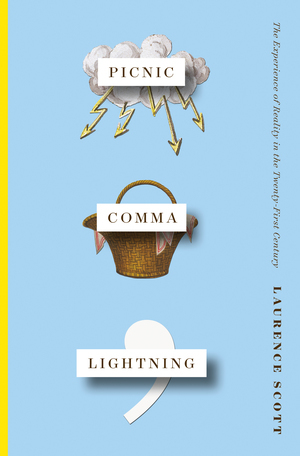
Picnic Comma Lightning: The Experience of Reality in the Twenty-First Century
by Laurence Scott
Rating: 3.7 ⭐
• 1 recommendation ❤️
What does it mean to be human in the twenty- first century? How do we be real people in a world of online personas and “authentic” simulated experiences? In this innovative examination of our present reality, award- winning writer Laurence Scott charts the ways our traditional mental models of the world have started to fray.Effortlessly applying philosophy to the quotidian, Scott “makes banal things shimmer with meaning” (Guardian). He ponders how ubiquitous cameras reframe our private lives (an event only exists once someone posts the video), how mysterious algorithms undermine our attempts at self- definition through their own data- driven portraits, and what happens in those moments when our illusions of reality are ruptured by incontrovertible facts (like the death of a parent or a bolt of lightning).Virtuosic and intellectually delightful, Picnic Comma Lightning is an astounding account of how we have started to make sense of our strange new world.

The Coddling of the American Mind: How Good Intentions and Bad Ideas Are Setting Up a Generation for Failure
by Greg Lukianoff
Rating: 4.3 ⭐
• 16 recommendations ❤️
A timely investigation into the campus assault on free speech and what it means for students, education, and our democracy.The generation now coming of age has been taught three Great Untruths: their feelings are always right; they should avoid pain and discomfort; and they should look for faults in others and not themselves. These three Great Untruths are part of a larger philosophy that sees young people as fragile creatures who must be protected and supervised by adults. But despite the good intentions of the adults who impart them, the Great Untruths are harming kids by teaching them the opposite of ancient wisdom and the opposite of modern psychological findings on grit, growth, and antifragility. The result is rising rates of depression and anxiety, along with endless stories of college campuses torn apart by moralistic divisions and mutual recriminations.This is a book about how we got here. First Amendment expert Greg Lukianoff and social psychologist Jonathan Haidt take us on a tour of the social trends stretching back to the 1980s that have produced the confusion and conflict on campus today, including the loss of unsupervised play time and the birth of social media, all during a time of rising political polarization.This is a book about how to fix the mess. The culture of "safety" and its intolerance of opposing viewpoints has left many young people anxious and unprepared for adult life, with devastating consequences for them, for their parents, for the companies that will soon hire them, and for a democracy that is already pushed to the brink of violence over its growing political divisions. Lukianoff and Haidt offer a comprehensive set of reforms that will strengthen young people and institutions, allowing us all to reap the benefits of diversity, including viewpoint diversity.This is a book for anyone who is confused by what's happening on college campuses today, or has children, or is concerned about the growing inability of Americans to live and work and cooperate across party lines.

Hannibal: Red Dragon,Hannibal,Silence Of The Lambs,Hannibal Rising
by Thomas Harris
Rating: 4.5 ⭐
• 1 recommendation ❤️
Red Dragon Sexual hunger; demonic violence; sinister logic - the lethal components of a deadly formula driving a psychopath in the grip of an unimagin-able delusion; a boastful killer who sends the police tormenting notes; a tortured, torturing monster who finds ultimate pleasure in viciously murdering happy families, and calls himself. . . The Red Dragon.Books Collection Hannibal Seven years have passed since Dr Hannibal Lecter escaped from custody...Seven years since FBI Special Agent Clarice Starling interviewed him in a maximum security hospital for the criminally insane. The doctor is still at large, but Starling has never forgotten her encounters with Dr Lecter, and the metallic rasp of his seldom-used voice still sounds in her dreams...Books Collection Silence Of The Lambs FBI rookie Clarice Starling turns to Dr. Hannibal Lecter, monster cannibal held in a hospital for the criminally insane, for insight into the deadly madman she must find. As Dr. Lecter invites her into the darkest chambers of his mind, he forces her to confront her own childhood demons as the price of understanding, an unspeakable tuition he exacts to teach her how the monster thinks. And time is running out . . .Books Collection Hannibal Rising Hannibal Lecter emerges from the nightmare of the Eastern Front, a boy in the snow, mute, with a chain around his neck. He seems utterly alone, but he has brought his demons with him. Hannibal's uncle, a noted painter, finds him in a Soviet orphanage and brings him to France, where Hannibal will live with his uncle and his uncle's beautiful and exotic wife, Lady Murasaki.Lady Murasaki helps Hannibal to heal.With her help he flourishes, becoming the youngest person ever admitted to medical school in France.But Hannibal's demons visit him and torment him.When he is old enough, he visits them in turn.He discovers he has gifts beyond the academic, and in that epiphany, Hannibal Lecter becomes death's prodigy.Books Collection

How to Think Like a Roman Emperor: The Stoic Philosophy of Marcus Aurelius
by Donald J. Robertson
Rating: 4.3 ⭐
• 2 recommendations ❤️
"This is a wonderful and important book that anyone interested in Stoicism or in being a better leader should read." —Ryan Holiday Roman emperor Marcus Aurelius was the final famous Stoic philosopher of the ancient world. The Meditations, his personal journal, survives to this day as one of the most loved self-help and spiritual classics of all time. In How to Think Like a Roman Emperor, cognitive psychotherapist Donald Robertson weaves the life and philosophy of Marcus Aurelius together seamlessly to provide a compelling modern-day guide to the Stoic wisdom followed by countless individuals throughout the centuries as a path to achieving greater fulfillment and emotional resilience.How to Think Like a Roman Emperor takes readers on a transformative journey along with Marcus, following his progress from a young noble at the court of Hadrian—taken under the wing of some of the finest philosophers of his day—through to his reign as emperor of Rome at the height of its power. Robertson shows how Marcus used philosophical doctrines and therapeutic practices to build emotional resilience and endure tremendous adversity, and guides readers through applying the same methods to their own lives.Combining remarkable stories from Marcus’s life with insights from modern psychology and the enduring wisdom of his philosophy, How to Think Like a Roman Emperor puts a human face on Stoicism and offers a timeless and essential guide to handling the ethical and psychological challenges we face today.

The Full Facts Book Of Cold Reading: The definitive guide to how cold reading is used in the psychic industry
by Mr Ian Rowland
Rating: 4.1 ⭐
• 1 recommendation ❤️
Cold reading can be loosely defined as 'how to talk to people so you sound psychic'. This is the definitive guide to how cold reading is used in the psychic industry. It systematically describes a wide range of techniques that enable those who give readings to make seemingly accurate statements to a complete stranger. These statements can refer to past, current or future events or to the client's personality, feelings and potential.This is primarily a descriptive book, not an instructional one. It's primary aim is to describe cold reading techniques rather than to teach anyone how to use them or how to give readings.

A Book of Secrets: Finding Comfort in a Complex World
by Derren Brown
Rating: 3.5 ⭐
• 2 recommendations ❤️
THE SUNDAY TIMES BESTSELLER'Enlightening, thought-provoking and illuminating. Derren Brown asks questions about the world, and his intelligent curiosity benefits us all.'ELIZABETH DAYIn A Book of Secrets , the star of 'Showman', and internationally bestselling author, Derren Brown shows us that it is in those moments when we are faced with adversity that we can find life's most lasting rewards.In thirteen fascinating chapters, Derren takes us on a personal journey - to the scene of a childhood humiliation, to lonely evenings on tour, to being paralysed by shyness at a dinner party, to navigating middle age and to finding love.Sharing moments of anger, frustration, loneliness and loss, Derren reveals how it's possible to find consolation and compassion. Even in our most challenging times we can find meaning and grow.'Derren Brown is a mine of wisdom, humanity and kindness - everything we need to sustain and nourish ourselves.'ALAIN DE BOTTON***** 'This is the most I've seen Derren lay himself bare'***** 'Funny, moving and always, always meaningful'***** 'Derren's best book to date and the best book I have read this year'***** 'Everything you need in this is a gem. I can't wait to read it a second time'

Conspiracy: Why the Rational Believe the Irrational
by Michael Shermer
Rating: 4.0 ⭐
• 1 recommendation ❤️
"A well-written and essential tool for those navigating today's complicated geopolitical landscape."― Library Journal Best-selling author Michael Shermer presents an overarching theory of conspiracy theories―who believes them and why, which ones are real, and what we should do about them. Nothing happens by accident, everything is connected, and there are no that is the essence of conspiratorial thinking. Long a fringe part of the American political landscape, conspiracy theories are now 147 members of Congress voted in favor of objections to the 2020 presidential election based on an unproven theory about a rigged electoral process promoted by the mysterious group QAnon. But this is only the latest example in a long history of ideas that include the satanic panics of the 1980s, the New World Order and Vatican conspiracy theories, fears about fluoridated water, speculations about President John F. Kennedy's assassination, and the notions that the Sandy Hook massacre was a false-flag operation and 9/11 was an inside job. In Conspiracy , Michael Shermer presents an overarching review of conspiracy theories―who believes them and why, which ones are real, and what we should do about them. Trust in conspiracy theories, he writes, cuts across gender, age, race, income, education level, occupational status―and even political affiliation. One reason that people believe these conspiracies, Shermer argues, is that enough of them are real that we should be constructively elections have been rigged (LBJ's 1948 Senate race); medical professionals have intentionally harmed patients in their care (Tuskegee); your government does lie to you (Watergate, Iran-Contra, and Afghanistan); and, tragically, some adults do conspire to sexually abuse children. But Shermer reveals that other factors are also in anxiety and a sense of loss of control play a role in conspiratorial cognition patterns, as do certain personality traits. This engaging book will be an important read for anyone concerned about the future direction of American politics, as well as anyone who's watched friends or family fall into patterns of conspiratorial thinking.
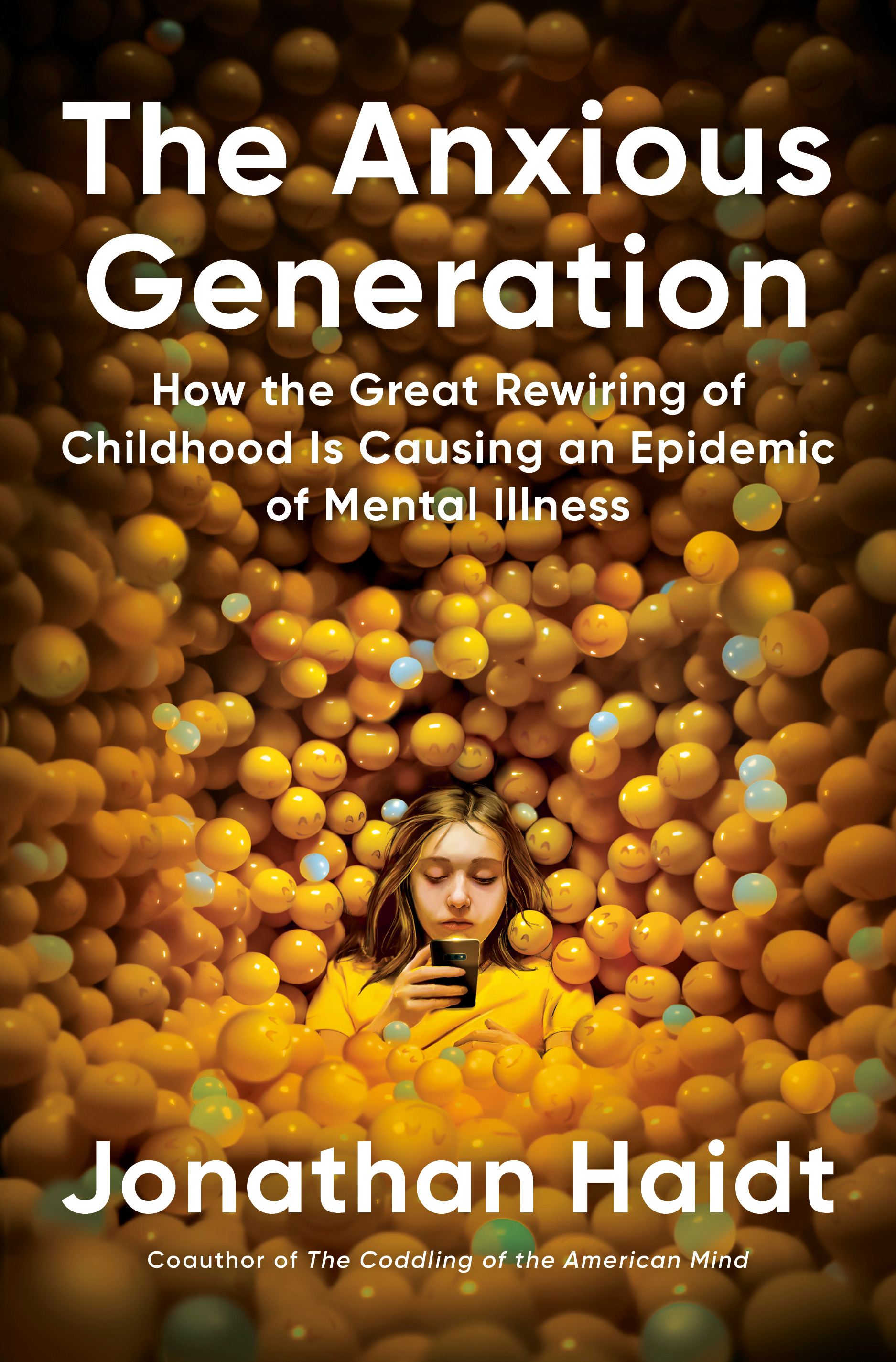
The Anxious Generation: How the Great Rewiring of Childhood Caused an Epidemic of Mental Illness
by Jonathan Haidt
Rating: 4.3 ⭐
• 2 recommendations ❤️
THE INSTANT #1 NEW YORK TIMES BESTSELLER • A Wall Street Journal Top 10 Book of 2024 • A Washington Post Notable Book • A New York Times Notable Book • The Goodreads Choice Award Nonfiction Book of the YearA must-read for all parents: the generation-defining investigation into the collapse of youth mental health in the era of smartphones, social media, and big tech—and a plan for a healthier, freer childhood.“With tenacity and candor, Haidt lays out the consequences that have come with allowing kids to drift further into the virtual world . . . While also offering suggestions and solutions that could help protect a new generation of kids.” —Shannon Carlin, ,i>TIME, 100 Must-Read Books of 2024After more than a decade of stability or improvement, the mental health of adolescents plunged in the early 2010s. Rates of depression, anxiety, self-harm, and suicide rose sharply, more than doubling on many measures. Why?In The Anxious Generation, social psychologist Jonathan Haidt lays out the facts about the epidemic of teen mental illness that hit many countries at the same time. He then investigates the nature of childhood, including why children need play and independent exploration to mature into competent, thriving adults. Haidt shows how the “play-based childhood” began to decline in the 1980s, and how it was finally wiped out by the arrival of the “phone-based childhood” in the early 2010s. He presents more than a dozen mechanisms by which this “great rewiring of childhood” has interfered with children’s social and neurological development, covering everything from sleep deprivation to attention fragmentation, addiction, loneliness, social contagion, social comparison, and perfectionism. He explains why social media damages girls more than boys and why boys have been withdrawing from the real world into the virtual world, with disastrous consequences for themselves, their families, and their societies.Most important, Haidt issues a clear call to action. He diagnoses the “collective action problems” that trap us, and then proposes four simple rules that might set us free. He describes steps that parents, teachers, schools, tech companies, and governments can take to end the epidemic of mental illness and restore a more humane childhood.Haidt has spent his career speaking truth backed by data in the most difficult landscapes—communities polarized by politics and religion, campuses battling culture wars, and now the public health emergency faced by Gen Z. We cannot afford to ignore his findings about protecting our children—and ourselves—from the psychological damage of a phone-based life.