
9 Books Recommended

Food of the Gods: The Search for the Original Tree of Knowledge
by Terence McKenna
Rating: 4.1 ⭐
• 3 recommendations ❤️
A Radical History of Plants, Drugs & Human EvolutionFor the first time in paperback, the counterculture manifesto on mind-altering drugs & hallucinogens. Illustrated.

Like a lovely psychedelic sophist, McKenna recounts his adventures with psychoactive plants in the Amazon Basin. Either a profoundly psychotic episode or a galvanizing glimpse into the true nature of time & mind, McKenna is a spellbinding storyteller, providing plenty of down-to-earth reasons for preserving the planet.Preface1 The Call of the Secret2 Into the Devil's Paradise3 Along a Ghostly Trail 4 Camped by a Doorway 5 A Brush with the Other6 Kathmandu Interlude 7 A Violet Psychofluid8 The Opus Clarified 9 A Conversation Over Saucers10 More on the Opus 11 The Experiment at La Chorrera12 In the Vortex 13 At Play in the Fields of the Lord14 Looking Backward 15 A Saucer Full of Secrets16 Return 17 Waltzing the Enigma18 Say What Does It Mean?19 The Coming of the Strophariad20 The Hawaiian Connection EpilogueAcknowledgmentsFurther Reading

"Surely You're Joking, Mr. Feynman!": Adventures of a Curious Character
by
Rating: 4.3 ⭐
• 25 recommendations ❤️
A New York Times bestseller—the outrageous exploits of one of this century's greatest scientific minds and a legendary American original.Richard Feynman, winner of the Nobel Prize in physics, thrived on outrageous adventures. Here he recounts in his inimitable voice his experience trading ideas on atomic physics with Einstein and Bohr and ideas on gambling with Nick the Greek; cracking the uncrackable safes guarding the most deeply held nuclear secrets; accompanying a ballet on his bongo drums; painting a naked female toreador. In short, here is Feynman's life in all its eccentric—a combustible mixture of high intelligence, unlimited curiosity, and raging chutzpah.

Psilocybin: Magic Mushroom Grower's Guide: A Handbook for Psilocybin Enthusiasts
by
Rating: 4.0 ⭐
• 1 recommendation ❤️
In the 1970s, two of the most influential thinkers of the psychedelic era gathered what was then known about psilocybin botany and culture and presented it in Psilocybin: Magic Mushroom Grower’s Guide . Writing under pseudonyms, the McKenna brothers provided simple, reliable, and productive methods for magic mushroom propagation, including black-and-white photographs that showed the techniques of the time. The development of more modern cultivation techniques does not eclipse the cultural contributions of this book. Philosophical asides, whimsical illustrations evoking the mystical nature of mushrooms, and speculations about the relationship of these organisms to humankind provide a lasting legacy. Truly the classic manual on home cultivation, the wisdom of Psilocybin: Magic Mushroom Grower’s Guide continues to inspire new students of psycho-mycology—and refreshes psychedelic memories for others.

Hallucinogens and culture Peter t. Furst

The Mind of a Mnemonist: A Little Book about a Vast Memory
by Alexander R. Luria
Rating: 4.1 ⭐
• 1 recommendation ❤️
The Mind of a Mnemonist is a rare phenomenon - a scientific study that transcends its data and, in the manner of the best fictional literature, fashions a portrait of an unforgettable human being."
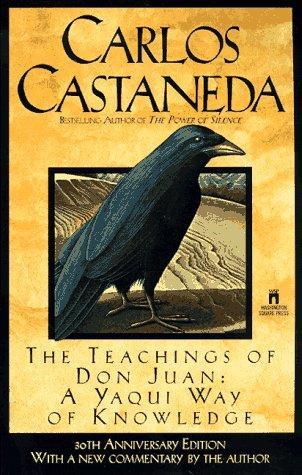
The Teachings of Don Juan: A Yaqui Way of Knowledge
by Carlos Castaneda
Rating: 3.8 ⭐
• 3 recommendations ❤️
A Yaqui way of knowledge.The teachings of don Juan is the story of a remarkable journey: the first awesome steps on the road to becoming a "man of knowledge" -- the road that continues with A Separate Reality and Journey to Ixtlan. "For me there is only the traveling on paths that have heart, on any path that may have heart. There I travel, and the only worthwhile challenge is to traverse its full length. And there I travel, looking, looking, breathlessly." -- Don Juan

Ethnopharmacologic Search for Psychoactive Drugs (Vol. 1 & 2): 50 Years of Research
by
Rating: 4.6 ⭐
• 2 recommendations ❤️
A defining scholarly publication on the past and current state of research with psychedelic plant substances for medicine, therapeutics, and spiritual uses.Certain plants have long been known to contain healing properties and used to treat everything from depression and addiction, to aiding in on one’s own spiritual well-being for hundreds of years. Can Western medicine find new cures for human ailments by tapping into indigenous plant wisdom? And why the particular interest in the plants with psychoactive properties? These two conference volume proceedings provide an abundance of answers.The first international gathering of researchers held on this subject was in 1967, sponsored by the National Institute of Mental Health (NIMH) and U.S. Public Health Service. It was an interdisciplinary group of specialists – from ethnobotanists to neuroscientists – gathered in one place to share their findings on a topic that was gaining widespread The use of psychoactive plants in indigenous societies. The WAR ON DRUGS which intervened slowed advances in this field.Research, however, has continued, and in the fifty years since that first conference, new and significant discoveries have been made. A new generation of researchers, many inspired by the giants present at that first conference, has continued to investigate the outer limits of ethno-psychopharmacology. At the same time, there has been a sea change in public and medical perceptions of psychedelics. There is now a renaissance in research, and some of these agents are actively being investigated for their therapeutic potential. They are no longer as stigmatized as they have been in the past, although they remain controversial. There still remains much work to do in this field, and many significant discoveries remain to be made.So, in June of 2017, once again specialists from around the world in fields of ethnopharmacology, chemistry, botany, and anthropology gathered to discuss their research and findings in a setting that encouraged the free and frank exchange of information and ideas on the last 50 years of research, and assess the current and possible futures for research in ethnopsychopharmacology. The papers given at the 2017 Symposium, organized by Dr. Dennis McKenna, in a handsome two volume boxed collectors set represents perhaps the most significant body of knowledge in this interdisciplinary field available.About Dennis He is an icon amongst psychedelic explorers, working to inspire the next generation of ethnobotanists in the search for new medicines for the benefit of humanity and the preservation of the biosphere that produces what is apparent from reading these papers – a rich pharmacopeia of medicines.Essential for academic libraries, pharmaceutical and ethnobotanical collections.

Illustrator, musician and self-described “comic stripper” Brian Blomerth has spent years combining classic underground art styles with his bitingly irreverent visual wit in zines, comics, and album covers. With Brian Blomerth’s Bicycle Day, the artist has produced his most ambitious work to a historical account of the events of April 19, 1943, when Swiss chemist Albert Hofmann ingested an experimental dose of a new compound known as lysergic acid diethylamide and embarked on the world’s first acid trip. Combining an extraordinary true story told in journalistic detail with the artist’s gritty, timelessly Technicolor comix style, Brian Blomerth’s Bicycle Day is a testament to mind expansion and a stunningly original visual history.