David Senra Recommended Books
34 Books Recommended

Since its hardcover publication in August of 1995, Buffett has appeared on the Wall Street Journal, New York Times, San Francisco Chronicle, Los Angeles Times, Seattle Times, Newsday and Business Week bestseller lists.Starting from scratch, simply by picking stocks and companies for investment, Warren Buffett amassed one of the epochal fortunes of the twentieth century—an astounding net worth of $10 billion, and counting. His awesome investment record has made him a cult figure popularly known for his seeming a billionaire who has a modest lifestyle, a phenomenally successful investor who eschews the revolving-door trading of modern Wall Street, a brilliant dealmaker who cultivates a homespun aura.Journalist Roger Lowenstein draws on three years of unprecedented access to Buffett’s family, friends, and colleagues to provide the first definitive, inside account of the life and career of this American original. Buffett explains Buffett’s investment strategy—a long-term philosophy grounded in buying stock in companies that are undervalued on the market and hanging on until their worth invariably surfaces—and shows how it is a reflection of his inner self.
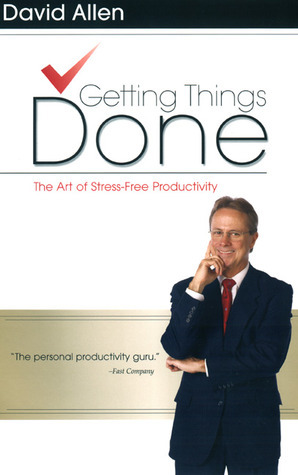
Getting Things Done: The Art of Stress-Free Productivity
by David Allen
Rating: 4.0 ⭐
• 1 recommendation ❤️
In today's world, yesterday's methods just don't work. Veteran coach and management consultant David Allen recognizes that time management is useless the minute your schedule is interrupted; setting priorities isn't relevant when your e-mail is down; procrastination solutions won't help if your goals aren't clear. Instead, Allen shares with readers the proven methods he has already introduced in seminars and at top organizations across the country. The key to Getting Things Done? Relaxation. Allen's premise is our ability to be productive is directly proportional to our ability to relax. Only when our minds are clear and our thoughts are organized can we achieve stress-free productivity. His seamless system teaches us how to identify, track, and-most important-choose the next action on all our tasks, commitments, and projects and thus master all the demands on our time while unleashing our creative potential. The book's stylish, dynamic design makes it easy to follow Allen's tips, examples, and inspiration to achieve what we all seek-energy, focus, and relaxed control.

Let My People Go Surfing: The Education of a Reluctant Businessman--Including 10 More Years of Business Unusual
by Yvon Chouinard
Rating: 4.3 ⭐
• 5 recommendations ❤️
In his long-awaited memoir, Yvon Chouinard-legendary climber, businessman, environmentalist, and founder of Patagonia, Inc.-shares the persistence and courage that have gone into being head of one of the most respected and environmentally responsible companies on earth. From his youth as the son of a French Canadian blacksmith to the thrilling, ambitious climbing expeditions that inspired his innovative designs for the sport's equipment, Let My People Go Surfing is the story of a man who brought doing good and having grand adventures into the heart of his business life-a book that will deeply affect entrepreneurs and outdoor enthusiasts alike.

Overdrive: Bill Gates and the Race to Control Cyberspace
by James Wallace
Rating: 3.5 ⭐
• 1 recommendation ❤️
Praise for OverdriveGates and the Race to Control Cyberspace"James Wallace offers many tales of . . . temper tantrums, antitrust tussles with the Justice Department, and general dirty tricks Microsoft has allegedly played on its competitors." -The New York Times Book ReviewPraise for James Wallace'sHard Bill Gates and the Making of the Microsoft Empire"A stupendous success story. This is the most informative book yet on Bill Gates and Microsoft." -the Washington Post"Remarkable . . . This book will make you wonder why you didn't buy Microsoft stock when it went public." -The Wall Street Journal"An engaging, almost classic tale of a boy who finds power in gadgets and then won't let go." -Los Angeles Times

Vagabonding: An Uncommon Guide to the Art of Long-Term World Travel
by Rolf Potts
Rating: 3.9 ⭐
• 7 recommendations ❤️
Vagabonding is about taking time off from your normal life--from six weeks to four months to two years--to discover and experience the world on your own terms. Veteran shoestring traveler Rolf Potts shows how anyone with an independent spirit can achieve the dream of extended overseas travel. Visit the vagabonding community's hub at www dot vagabonding dot net.

Losing My Virginity: How I've Survived, Had Fun, and Made a Fortune Doing Business My Way
by Richard Branson
Rating: 4.0 ⭐
• 1 recommendation ❤️
"Oh, screw it, let's do it."That's the philosophy that has allowed Richard Branson, in slightly more than twenty-five years, to spawn so many successful ventures. From the airline business (Virgin Atlantic Airways), to music (Virgin Records and V2), to cola (Virgin Cola), to retail (Virgin Megastores), and nearly a hundred others, ranging from financial services to bridal wear, Branson has a track record second to none.Losing My Virginity is the unusual, frequently outrageous autobiography of one of the great business geniuses of our time. When Richard Branson started his first business, he and his friends decided that "since we're complete virgins at business, let's call it just that: Virgin." Since then, Branson has written his own "rules" for success, creating a group of companies with a global presence, but no central headquarters, no management hierarchy, and minimal bureaucracy.Many of Richard Branson's companies--airlines, retailing, and cola are good examples--were started in the face of entrenched competition. The experts said, "Don't do it." But Branson found golden opportunities in markets in which customers have been ripped off or underserved, where confusion reigns, and the competition is complacent. And in this stressed-out, overworked age, Richard Branson gives us a new model: a dynamic, hardworking, successful entrepreneur who lives life to the fullest. Family, friends, fun, and adventure are equally important as business in Branson's life. Losing My Virginity is a portrait of a productive, sane, balanced life, filled with rich and colorful stories: Crash-landing his hot-air balloon in the Algerian desert, yet remaining determined to have another go at being the first to circle the globeSigning the Sex Pistols, Janet Jackson, the Rolling Stones, Boy George, and Phil CollinsFighting back when British Airways took on Virgin Atlantic and successfully suing this pillar of the British business establishmentSwimming two miles to safety during a violent storm off the coast of MexicoSelling Virgin Records to save Virgin AtlanticStaging a rescue flight into Baghdad before the start of the Gulf War . . .And much more. Losing My Virginity is the ultimate tale of personal and business survival from a man who combines the business prowess of Bill Gates and the promotional instincts of P. T. Barnum.

Miyamoto Musashi was the child of an era when Japan was emerging from decades of civil strife. Lured to the great Battle of Sekigahara in 1600 by the hope of becoming a samurai--without really knowing what it meant--he regains consciousness after the battle to find himself lying defeated, dazed and wounded among thousands of the dead and dying. On his way home, he commits a rash act, becomes a fugitive and brings life in his own village to a standstill--until he is captured by a weaponless Zen monk.The lovely Otsu, seeing in Musashi her ideal of manliness, frees him from his tortuous punishment, but he is recaptured and imprisoned. During three years of solitary confinement, he delves into the classics of Japan and China. When he is set free again, he rejects the position of samurai and for the next several years pursues his goal relentlessly, looking neither to left nor to right.Ever so slowly it dawns on him that following the Way of the Sword is not simply a matter of finding a target for his brute strength. Continually striving to perfect his technique, which leads him to a unique style of fighting with two swords simultaneously, he travels far and wide, challenging fighters of many disciplines, taking nature to be his ultimate and severest teacher and undergoing the rigorous training of those who follow the Way. He is supremely successful in his encounters, but in the Art of War he perceives the way of peaceful and prosperous governance and disciplines himself to be a real human being.He becomes a reluctant hero to a host of people whose lives he has touched and been touched by. And, inevitably, he has to pit his skill against the naked blade of his greatest rival.Musashi is a novel in the best tradition of Japanese story telling. It is a living story, subtle and imaginative, teeming with memorable characters, many of them historical. Interweaving themes of unrequited love, misguided revenge, filial piety and absolute dedication to the Way of the Samurai, it depicts vividly a world Westerners know only vaguely. Full of gusto and humor, it has an epic quality and universal appeal.

The Power Broker: Robert Moses and the Fall of New York
by Robert A. Caro
Rating: 4.5 ⭐
• 15 recommendations ❤️
One of the most acclaimed books of our time, winner of both the Pulitzer and the Francis Parkman prizes, The Power Broker tells the hidden story behind the shaping (and mis-shaping) of twentieth-century New York (city and state) and makes public what few have known: that Robert Moses was, for almost half a century, the single most powerful man of our time in New York, the shaper not only of the city's politics but of its physical structure and the problems of urban decline that plague us today.In revealing how Moses did it--how he developed his public authorities into a political machine that was virtually a fourth branch of government, one that could bring to their knees Governors and Mayors (from La Guardia to Lindsay) by mobilizing banks, contractors, labor unions, insurance firms, even the press and the Church, into an irresistible economic force--Robert Caro reveals how power works in all the cities of the United States. Moses built an empire and lived like an emperor. He personally conceived and completed public works costing 27 billion dollars--the greatest builder America (and probably the world) has ever known. Without ever having been elected to office, he dominated the men who were--even his most bitter enemy, Franklin D. Roosevelt, could not control him--until he finally encountered, in Nelson Rockefeller, the only man whose power (and ruthlessness in wielding it) equalled his own.

The Hugo Award-winning and controversial science fiction masterpiece from Robert A. Heinlein, the New York Times bestselling author of Starship Troopers. Valentine Michael Smith is a man raised by Martians. Sent to Earth, he must learn what it is to be human. But his beliefs and his powers far exceed the limits of man, and his arrival leads to a transformation that will alter Earth’s inhabitants forever...

The Border Trilogy: All the Pretty Horses, The Crossing, Cities of the Plain
by Cormac McCarthy
Rating: 4.5 ⭐
• 1 recommendation ❤️
Beginning with All the Pretty Horses and continuing through The Crossing and Cities of the Plain, McCarthy chronicles the lives of two young men coming of age in the Southwest and Mexico, poised on the edge of a world about to change forever. Hauntingly beautiful, filled with sorrow and humor, The Border Trilogy is a masterful elegy for the American frontier.
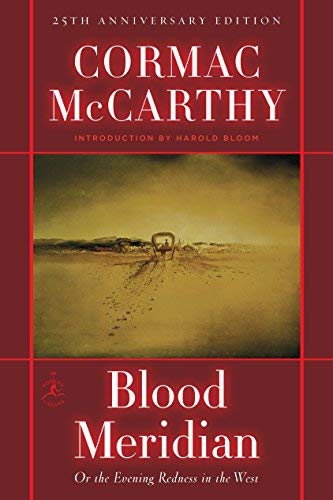
Blood Meridian, or the Evening Redness in the West
by Cormac McCarthy
Rating: 4.3 ⭐
• 1 recommendation ❤️
Widely considered one of the finest novels by a living writer, Blood Meridian is an epic tale of the violence and corruption that attended America’s westward expansion, brilliantly subverting the conventions of the Western novel and the mythology of the “Wild West.” Its wounded hero, the Kid, a fourteen-year-old Tennessean, must confront the extraordinary brutality of the Glanton gang, a murderous cadre on an official mission to scalp Indians. Seeming to preside over this nightmarish world is the diabolical Judge Holden, one of the most unforgettable characters in American fiction.Based on historical events that took place on the Texas-Mexico border in the 1850s, Blood Meridian represents a genius vision of the historical West, one whose stature has only grown in the twenty-five years since its publication.

John D. Rockefeller, Sr.--history's first billionaire and the patriarch of America's most famous dynasty--is an icon whose true nature has eluded three generations of historians. Now Ron Chernow, the National Book Award-winning biographer of the Morgan and Warburg banking families, gives us a history of the mogul "etched with uncommon objectivity and literary grace . . . as detailed, balanced, and psychologically insightful a portrait of the tycoon as we may ever have" (Kirkus Reviews). Titan is the first full-length biography based on unrestricted access to Rockefeller's exceptionally rich trove of papers. A landmark publication full of startling revelations, the book will indelibly alter our image of this most enigmatic capitalist. Born the son of a flamboyant, bigamous snake-oil salesman and a pious, straitlaced mother, Rockefeller rose from rustic origins to become the world's richest man by creating America's most powerful and feared monopoly, Standard Oil. Branded "the Octopus" by legions of muckrakers, the trust refined and marketed nearly 90 percent of the oil produced in America. Rockefeller was likely the most controversial businessman in our nation's history. Critics charged that his empire was built on unscrupulous grand-scale collusion with the railroads, predatory pricing, industrial espionage, and wholesale bribery of political officials. The titan spent more than thirty years dodging investigations until Teddy Roosevelt and his trustbusters embarked on a marathon crusade to bring Standard Oil to bay. While providing abundant new evidence of Rockefeller's misdeeds, Chernow discards the stereotype of the cold-blooded monster to sketch an unforgettably human portrait of a quirky, eccentric original. A devout Baptist and temperance advocate, Rockefeller gave money more generously--his chosen philanthropies included the Rockefeller Foundation, the University of Chicago, and what is today Rockefeller University--than anyone before him. Titan presents a finely nuanced portrait of a fascinating, complex man, synthesizing his public and private lives and disclosing numerous family scandals, tragedies, and misfortunes that have never before come to light. John D. Rockefeller's story captures a pivotal moment in American history, documenting the dramatic post-Civil War shift from small business to the rise of giant corporations that irrevocably transformed the nation. With cameos by Joseph Pulitzer, William Randolph Hearst, Jay Gould, William Vanderbilt, Ida Tarbell, Andrew Carnegie, Carl Jung, J. Pierpont Morgan, William James, Henry Clay Frick, Mark Twain, and Will Rogers, Titan turns Rockefeller's life into a vivid tapestry of American society in the late nineteenth and early twentieth centuries. It is Ron Chernow's signal triumph that he narrates this monumental saga with all the sweep, drama, and insight that this giant subject deserves.

Hard Drive: Bill Gates and the Making of the Microsoft Empire
by James Wallace
Rating: 4.1 ⭐
• 2 recommendations ❤️
This biography chronicles William Gates' rise as the most powerful player in the computer industry--a man who has revolutionized the software industry with the incredible growth of his Microsoft company, that now threatens gigantic IBM. Reveals Gates' personal quirks and idiosyncrasies which helped fuel his fierce competitive spirit. Interviews Gates' closest friends, associates and former employees, and details IBM's as well as Apples' efforts to topple his Microsoft empire.

The Snowball: Warren Buffett and the Business of Life
by Alice Schroeder
Rating: 4.3 ⭐
• 9 recommendations ❤️
The personally revealing and complete biography of the man known everywhere as “The Oracle of Omaha”—for fans of the HBO documentary Becoming Warren BuffettHere is the book recounting the life and times of one of the most respected men in the world, Warren Buffett. The legendary Omaha investor has never written a memoir, but now he has allowed one writer, Alice Schroeder, unprecedented access to explore directly with him and with those closest to him his work, opinions, struggles, triumphs, follies, and wisdom.Although the media track him constantly, Buffett himself has never told his full life story. His reality is private, especially by celebrity standards. Indeed, while the homespun persona that the public sees is true as far as it goes, it goes only so far. Warren Buffett is an array of paradoxes. He set out to prove that nice guys can finish first. Over the years he treated his investors as partners, acted as their steward, and championed honesty as an investor, CEO, board member, essayist, and speaker. At the same time he became the world’s richest man, all from the modest Omaha headquarters of his company Berkshire Hathaway. None of this fits the term “simple.”When Alice Schroeder met Warren Buffett she was an insurance industry analyst and a gifted writer known for her keen perception and business acumen. Her writings on finance impressed him, and as she came to know him she realized that while much had been written on the subject of his investing style, no one had moved beyond that to explore his larger philosophy, which is bound up in a complex personality and the details of his life. Out of this came his decision to cooperate with her on the book about himself that he would never write.Never before has Buffett spent countless hours responding to a writer’s questions, talking, giving complete access to his wife, children, friends, and business associates—opening his files, recalling his childhood. It was an act of courage, as The Snowball makes immensely clear. Being human, his own life, like most lives, has been a mix of strengths and frailties. Yet notable though his wealth may be, Buffett’s legacy will not be his ranking on the scorecard of wealth; it will be his principles and ideas that have enriched people’s lives. This book tells you why Warren Buffett is the most fascinating American success story of our time.Praise for The Snowball“Even people who don't care a whit about business will be intrigued by this portrait. . . . Schroeder, a former insurance-industry analyst, spent years interviewing Buffett, and the result is a side of the Oracle of Omaha that has rarely been seen.” — Time“Will mesmerize anyone interested in who Mr. Buffett is or how he got that way. The Snowball tells a fascinating story.” — New York Times“If the replication of any great achievement first requires knowledge of how it was done, then The Snowball , the most detailed glimpse inside Warren Buffett and his world that we likely will ever get, should become a Bible for capitalists.” — Washington Post“Riveting and encyclopedic.” — Wall Street Journal“A monumental biography . . . Schroeder got the best access yet of any Buffett biographer. . . . She deals out marvelously funny and poignant stories about Buffett and the conglomerate he runs, Berkshire Hathaway.” — Forbes“The most authoritative portrait of one of the most important American investors of our time.” — Los Angeles Times

In this groundbreaking 1923 work, written after he retired as president and chairman of one of the world's biggest ad agencies, Hopkins shares the secrets of successful marketing that are just as relevant today as they were almost a century ago. • how advertising laws are established • the importance of just salesmanship • why businesses must offer service • mail order what it teaches • what makes headlines effective • understanding customer psychology • how to use art in advertising • how to use samples • the best way to test campaigns • the impact of negative advertising • and much more. American advertising pioneer Claude C. Hopkins (1866-1932) is still renowned today for developing such marketing innovations as coded coupons that could be used to track the success of varying offers. His methods are still prized for their efficacy today.

The setting is the Texas-Mexico border. The time is our own, when rustlers have given way to drug-runners and small towns have become free-fire zones. A good old boy named Llewellyn Moss finds a pickup truck surrounded by dead men. A load of heroin and two million dollars in cash are still in the back. When Moss takes the money, he sets off a chain reaction that not even the law can contain. Encompassing themes as ancient as the Bible and as bloodily contemporary as this morning’s headlines, No Country for Old Men is a triumph.

A searing, postapocalyptic novel destined to become Cormac McCarthy’s masterpiece.A father and his son walk alone through burned America. Nothing moves in the ravaged landscape save the ash on the wind. It is cold enough to crack stones, and when the snow falls it is gray. The sky is dark. Their destination is the coast, although they don’t know what, if anything, awaits them there. They have nothing; just a pistol to defend themselves against the lawless bands that stalk the road, the clothes they are wearing, a cart of scavenged food—and each other.The Road is the profoundly moving story of a journey. It boldly imagines a future in which no hope remains, but in which the father and his son, “each the other’s world entire,” are sustained by love. Awesome in the totality of its vision, it is an unflinching meditation on the worst and the best that we are capable of: ultimate destructiveness, desperate tenacity, and the tenderness that keeps two people alive in the face of total devastation.

Librarian's note: There is an Alternate Cover Edition for this edition of this book here.In 1965, after being rejected by more than a dozen publishing houses, a book called "Dune" was brought out by the Chilton Book Company. Its respected author, journalist Frank Herbert, had written "Dune" with nothing more in mind than to entertain his readers with the telling of a particularly complex story, one which had occupied his thoughts for more than six years. No one - not Herbert, not Chilton, not the science fiction community at the time - had any idea that "Dune" would be adopted and read by successive generations with a fervor bordering on cult worship. Or that it would prove to be merely the first of what have now become five international bestsellers about a desert world of the future - the planet Arrakis, called Dune.

The Score Takes Care of Itself: My Philosophy of Leadership
by Bill Walsh
Rating: 4.2 ⭐
• 1 recommendation ❤️
Offers insights and best leadership principles from the successful coach of the San Francisco 49ers, explaining how he motivated people, crafted winning teams, and his words of wisdom such as “Believe in people,” and “Keep a short enemies list.”

By his early thirties, Paul Allen was a world-famous billionaire-and that was just the beginning. In 2007 and 2008, Time named Paul Allen, the cofounder of Microsoft, one of the hundred most influential people in the world. Since he made his fortune, his impact has been felt in science, technology, business, medicine, sports, music, and philanthropy. His passion, curiosity, and intellectual rigor-combined with the resources to launch and support new initiatives-have literally changed the world. In 2009 Allen discovered that he had lymphoma, lending urgency to his desire to share his story for the first time. In this classic memoir, Allen explains how he solved problems, what he learned from his many endeavors-both the triumphs and the failures-and his compelling vision for the future. He reflects candidly on an extraordinary life. The book also features previously untold stories about everything from the true origins of Microsoft to Allen's role in the dawn of private space travel (with SpaceShipOne) and in discoveries at the frontiers of brain science. With honesty, humor, and insight, Allen tells the story of a life of ideas made real.

The definitive biography of a legendary athlete.The Shrug. The Shot. The Flu Game. Michael Jordan is responsible for sublime moments so ingrained in sports history that they have their own names. When most people think of him, they think of his beautiful shots with the game on the line, his body totally in sync with the ball -- hitting nothing but net.But for all his greatness, this scion of a complex family from North Carolina's Coastal Plain has a darker side: he's a ruthless competitor and a lover of high stakes. There's never been a biography that encompassed the dual nature of his character and looked so deeply at Jordan on and off the court -- until now.Basketball journalist Roland Lazenby spent almost thirty years covering Michael Jordan's career in college and the pros. He witnessed Jordan's growth from a skinny rookie to the instantly recognizable global ambassador for basketball whose business savvy and success have millions of kids still wanting to be just like Mike. Yet Lazenby also witnessed the Michael Jordan whose drive and appetite are more fearsome and more insatiable than any of his fans could begin to know.Michael Jordan: The Life explores both sides of his personality to reveal the fullest, most compelling story of the man who is Michael Jordan. Lazenby draws on his personal relationships with Jordan's coaches; countless interviews with Jordan's friends, teammates, and family members; and interviews with Jordan himself to provide the first truly definitive study of Michael Jordan: the player, the icon, and the man.
Extreme Ownership: How U.S. Navy SEALs Lead and Win
by Jocko Willink
Rating: 4.2 ⭐
• 1 recommendation ❤️
The #1 New York Times bestseller Sent to the most violent battlefield in Iraq, Jocko Willink and Leif Babin’s SEAL task unit faced a seemingly impossible help U.S. forces secure Ramadi, a city deemed “all but lost.” In gripping firsthand accounts of heroism, tragic loss, and hard-won victories in SEAL Team Three’s Task Unit Bruiser, they learned that leadership―at every level―is the most important factor in whether a team succeeds or fails.Willink and Babin returned home from deployment and instituted SEAL leadership training that helped forge the next generation of SEAL leaders. After departing the SEAL Teams, they launched Echelon Front, a company that teaches these same leadership principles to businesses and organizations. From promising startups to Fortune 500 companies, Babin and Willink have helped scores of clients across a broad range of industries build their own high-performance teams and dominate their battlefields. Now, detailing the mind-set and principles that enable SEAL units to accomplish the most difficult missions in combat, Extreme Ownership shows how to apply them to any team, family or organization. Each chapter focuses on a specific topic such as Cover and Move, Decentralized Command, and Leading Up the Chain, explaining what they are, why they are important, and how to implement them in any leadership environment. A compelling narrative with powerful instruction and direct application, Extreme Ownership revolutionizes business management and challenges leaders everywhere to fulfill their ultimate lead and win.

Am I Being Too Subtle?: Straight Talk From a Business Rebel
by Sam Zell
Rating: 4.3 ⭐
• 5 recommendations ❤️
Self-made real estate billionaire Sam Zell reveals the story behind his success and lays out a road map for entrepreneurs seeking to follow in his footsteps. No one has ever accused Sam Zell of being conventional. One of the savviest, most mysterious, and most controversial investors today, he built his real estate empire by zigging when everyone else zagged. Despite a few notable failures, most famously that of the Tribune Media Company, his success with his own investment firm Equity Group, and his ownership of cmpanies like Sealy, Sant Fe Energy Resources, and Schwinn Bicycles is undeniable, and he remains one of the few truly self-made multi-billionaires in the United States Zell takes readers inside his world, where the screts of success are embedded in the dramatic and often surprising stories of his youth and business life. He tells the remarkable story of how the son of Holocaust survivors was able to grow the Equity Group network, one of the nation's largest real estate enterprises, and expand across industries - from real estate and railcars to energy, logistics, and others -- amassing enormous wealth from nothing. Instead of handing out the same old advice, Zell cuts the bull and talks straight about how to make it in business. The books i packed with his characteristic nuggets of insight, such as: . Tryingtoberight100%ofthetimeleadstoparalysis. . Businessisnotabattletobewaged.It'sapuzzletobesolved. . Keepitsimple. . Liquidityequalsvalue. Whenothersgoleft, lookright."

If you're going to read one book about Hollywood, this is the one.As co-founder of Creative Artists Agency (CAA), Michael Ovitz earned a reputation for ruthless negotiation, brilliant strategy and fierce loyalty to his clients. He reinvented the role of the agent and helped shape the careers of hundreds of A-list stars and directors, including Steven Spielberg, Martin Scorsese, Meryl Streep, Sean Connery, Steven Seagal, Bill Murray, Robin Williams and David Letterman.But this personal history is much more than celebrity friendships and bare-knuckled deal-making. It's an underdog's How did a kid with no connections work his way into the William Morris mailroom, and become the most powerful person in Hollywood? How did a superagent also become a power in producing, advertising, mergers & acquisitions and modern art? And what were the personal consequences of all those deals?After decades of near-silence in the face of intense controversy, Michael Ovitz is finally telling his whole story in this blistering, unforgettable memoir.

The Dream of Solomeo: My Life and the Idea of Humanistic Capitalism
by Brunello Cucinelli
Rating: 4.4 ⭐
• 1 recommendation ❤️
“Oggi so cosa significa modulare profitto e dono, so quanto vale riconoscere la bellezza del lavoro e produrre senza danno per niente e nessuno. La mia esperienza di vita mi ha insegnato il valore della custodia di quanto abbiamo ereditato. Ho capito che quanto ci arriva dal passato non è un peso, ma un paio d’ali che sostiene il futuro luminoso che ci aspetta.”Nel 1978 Brunello Cucinelli ha cominciato a produrre la maglieria da donna in cashmere colorato che sarebbe diventata un simbolo della moda di lusso nel mondo. Ma l’azienda situata nel borgo medievale di Solomeo è molto di più. È il luogo di nascita di un progetto imprenditoriale che ha reso realtà un paradosso, combinando le leggi del mercato capitalista con quelle dell’etica. Il sogno di Cucinelli era costruire un ambiente di lavoro in cui “il profitto non comportasse un danno o un’offesa a persone o a cose, dove il bene comune fosse lo strumento di guida per compiere azioni prudenti e coraggiose, dove l’uomo fosse al centro del processo produttivo, perché solo in questo modo la dignità gli è restituita”.Oggi Cucinelli ha deciso di raccontare questa sfida. E rivela il percorso straordinario che lo ha portato a concepire la preziosa cultura d’impresa della sua azienda.

The Psychology of Money: Timeless Lessons on Wealth, Greed, and Happiness
by Morgan Housel
Rating: 4.5 ⭐
• 11 recommendations ❤️
Doing well with money isn't necessarily about what you know. It's about how you behave. And behavior is hard to teach, even to really smart people. Money--investing, personal finance, and business decisions--is typically taught as a math-based field, where data and formulas tell us exactly what to do. But in the real world people don't make financial decisions on a spreadsheet. They make them at the dinner table, or in a meeting room, where personal history, your own unique view of the world, ego, pride, marketing, and odd incentives are scrambled together. In The Psychology of Money, award-winning author Morgan Housel shares 19 short stories exploring the strange ways people think about money and teaches you how to make better sense of one of life's most important topics.
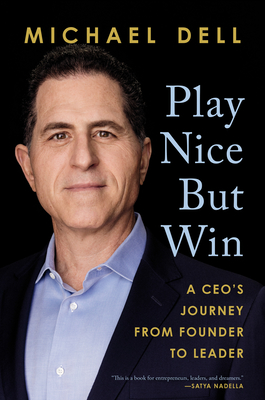
Play Nice But Win: A CEO's Journey from Founder to Leader
by Michael Dell
Rating: 4.0 ⭐
• 3 recommendations ❤️
WALL STREET JOURNAL BESTSELLER From Michael Dell, renowned founder and chief executive of one of America's largest technology companies, the inside story of the battles that defined him as a leaderIn 1984, soon-to-be college dropout Michael Dell hid signs of his fledgling PC business in the bathroom of his University of Texas dorm room. Almost 30 years later, at the pinnacle of his success as founder and leader of Dell Technologies, he found himself embroiled in a battle for his company's survival. What he'd do next could ensure its legacy--or destroy it completely.Play Nice But Win is a riveting account of the three battles waged for Dell Technologies: one to launch it, one to keep it, and one to transform it. For the first time, Dell reveals the highs and lows of the company's evolution amidst a rapidly changing industry--and his own, as he matured into the CEO it needed. With humor and humility, he recalls the mentors who showed him how to turn his passion into a business; the competitors who became friends, foes, or both; and the sharks that circled, looking for weakness. What emerges is the long-term vision underpinning his success: that technology is ultimately about people and their potential.More than an honest portrait of a leader at a crossroads, Play Nice But Win is a survival story proving that while anyone with technological insight and entrepreneurial zeal might build something great--it takes a leader to build something that lasts.
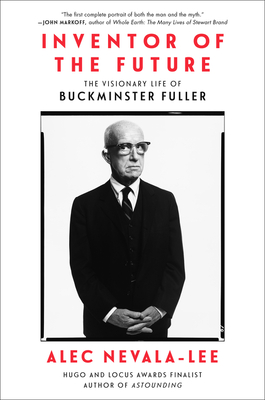
Inventor of the Future: The Visionary Life of Buckminster Fuller
by Alec Nevala-Lee
Rating: 3.6 ⭐
• 1 recommendation ❤️
From Alec Nevala-Lee, the author of the Hugo and Locus Award finalist Astounding, comes a revelatory biography of the visionary designer who defined the rules of startup culture and shaped America's idea of the future. During his lifetime, Buckminster Fuller was hailed as one of the greatest geniuses of the twentieth century. As the architectural designer and futurist best known for the geodesic dome, he enthralled a vast popular audience, inspired devotion from both the counterculture and the establishment, and was praised as a modern Leonardo da Vinci. To his admirers, he exemplified what one man could accomplish by approaching urgent design problems using a radically unconventional set of strategies, which he based on a mystical conception of the universe's geometry. His views on sustainability, as embodied in the image of Spaceship Earth, convinced him that it was possible to provide for all humanity through the efficient use of planetary resources. From Epcot Center to the molecule named in his honor as the buckyball, Fuller's legacy endures to this day, and his belief in the transformative potential of technology profoundly influenced the founders of Silicon Valley.Inventor of the Future is the first authoritative biography to cover all aspects of Fuller's career. Drawing on meticulous research, dozens of interviews, and thousands of unpublished documents, Nevala-Lee has produced a riveting portrait that transcends the myth of Fuller as an otherworldly generalist. It reconstructs the true origins of his most famous inventions, including the Dymaxion Car, the Wichita House, and the dome itself; his fraught relationships with his students and collaborators; his interactions with Frank Lloyd Wright, Isamu Noguchi, Clare Boothe Luce, John Cage, Steve Jobs, and many others; and his tumultuous private life, in which his determination to succeed on his own terms came at an immense personal cost. In an era of accelerating change, Fuller's example remains enormously relevant, and his lessons for designers, activists, and innovators are as powerful and essential as ever.

Do you have a burning passion to make a lot of money in business? Are you ready to turbocharge your chances of professional and personal success? During his more than four decades as a CEO and serial entrepreneur, Brad Jacobs has created seven flagship companies across different industries, delivering tens of billions of dollars of value to shareholders. In How to Make a Few Billion Dollars , Jacobs defines the mindset that drives his remarkable success in corporate America―and distills a lifetime of business brilliance into a tactical road map. From provocative recommendations for “rearranging your brain”―an essential prerequisite to accomplishing enormous goals―to practical advice for dealing with colleagues, Jacobs will have you rethinking what it means to win big. He explains why it’s critical to spot key trends and capitalize on them, including the biggest trend of all―the rapid evolution of technology relative to human development. And, he shares his techniques for • turning a healthy fear of failure to your advantage,• achieving lots of high-quality M&A without imploding,• building an outrageously talented team,• catalyzing electric meetings, and• transforming a company into a superorganism that kills the competition. How to Make a Few Billion Dollars is an inside look at how this entrepreneurial titan leads with humility, compassion, and accountability, while running hard toward the American Dream. If your personal dream is to create wealth through free markets or to triumph in sports, the arts, politics, philanthropy, or any other part of your life, this book will help you make that a reality.
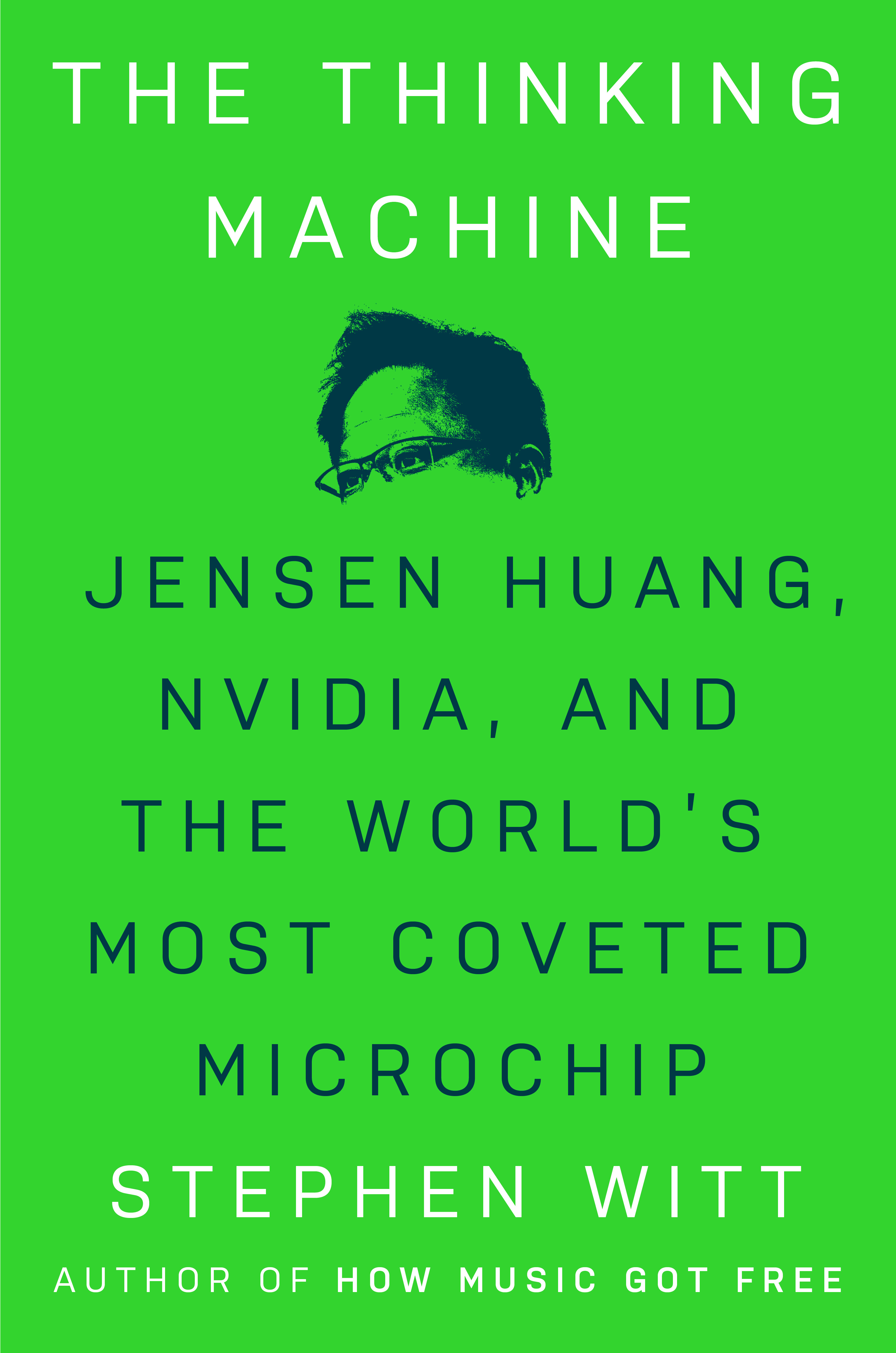
The Thinking Machine: Jensen Huang, Nvidia, and the World's Most Coveted Microchip
by Stephen Witt
Rating: 4.3 ⭐
• 1 recommendation ❤️
“Stephen Witt’s deep reporting shines through every page of The Thinking Machine. The result is a page-turning biography of perhaps the most consequential CEO and company in the world.” —David Epstein, New York Times bestselling author of RangeNvidia is as valuable as Apple and Microsoft. It has shaped the world as we know it. But its story is little known. This is the definitive story of the greatest technology company of our times.In June of 2024, thirty-one years after its founding in a Denny’s restaurant, Nvidia became the most valuable corporation on Earth. The Thinking Machine is the astonishing story of how a designer of video game equipment conquered the market for AI hardware, and in the process re-invented the computer.Essential to Nvidia’s meteoric success is its visionary CEO Jensen Huang, who more than a decade ago, on the basis of a few promising scientific results, bet his entire company on AI. Through unprecedented access to Huang, his friends, his investors, and his employees, Witt documents for the first time the company’s epic rise and its single-minded and ferocious leader, now one of Silicon Valley’s most influential figures.The Thinking Machine is the story of how Nvidia evolved to supplying hundred-million-dollar supercomputers. It is the story of a determined entrepreneur who defied Wall Street to push his radical vision for computing, becoming one of the wealthiest men alive. It is the story of a revolution in computer architecture, and the small group of renegade engineers who made it happen. And it’s the story of our awesome and terrifying AI future, which Huang has billed as the ‘next industrial revolution,’ as a new kind of microchip unlocks hyper-realistic avatars, autonomous robots, self-driving cars, and new movies, art, and books, generated on command.This is the story of the company that is inventing the future.
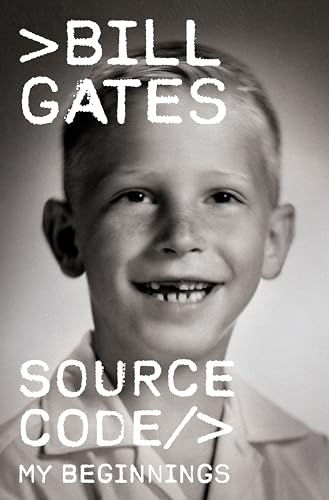
The origin story of one of the most influential and transformative business leaders and philanthropists of the modern age.The business triumphs of Bill Gates are widely known: the twenty-year-old who dropped out of Harvard to start a software company that became an industry giant and changed the way the world works and lives; the billionaire many times over who turned his attention to philanthropic pursuits to address climate change, global health, and U.S. education.Source Code is not about Microsoft or the Gates Foundation or the future of technology. It’s the human, personal story of how Bill Gates became who he is today: his childhood, his early passions and pursuits. It’s the story of his principled grandmother and ambitious parents, his first deep friendships and the sudden death of his best friend; of his struggles to fit in and his discovery of a world of coding and computers in the dawn of a new era; of embarking in his early teens on a path that took him from midnight escapades at a nearby computer center to his college dorm room, where he sparked a revolution that would change the world.Bill Gates tells this, his own story, for the first time: wise, warm, revealing, it’s a fascinating portrait of an American life.

Dyson has become a byword for high-performing products, technology, design, and invention. Now, James Dyson, the inventor and entrepreneur who made it all happen, tells his remarkable and inspirational story in A Life , “one of the year’s most relevant and revelatory business books” ( The Wall Street Journal ) .Famously, over a four-year period, James Dyson made 5,127 prototypes of the cyclonic vacuum cleaner that would transform the way houses are cleaned around the world. In devoting all his resources to iteratively setbacks came hard-fought success. His products—including vacuum cleaners, hair dryer and hair stylers, and fans and purifiers—are not only revolutionary technologies, but design classics. This was a legacy of his time studying at the Royal College of Art in the 1960s, when he was inspired by some of the most famous artists, designers, and inventors of the era, as well as his engineering heroes such as Frank Whittle and Alex Issigonis.In A Life , Dyson reveals how he came to set up his own company and led it to become one of the most inventive technology companies in the world. It is a compelling and dramatic tale, with many obstacles overcome. Dyson has always looked to the future, even setting up his own university to help provide the next generation of engineers and designers. For, as he says, “everything changes all the time, so experience is of little use.”Whether you are someone who has an idea for a better product, an aspiring entrepreneur, whether you appreciate great design or a page-turning read, A Life is an “entertaining and inspiring memoir” ( Kirkus Reviews , starred review) that offers motivation, hope, and much more.

For decades, the tech industry has overwhelmingly been just a software industry. Silicon Valley’s big win was disrupting Yellow Cab. What about disrupting General Motors? General Mills? General Electric?Energy, water, waste, food, manufacturing, construction—things every human on Earth relies on—have made incremental progress over the last century but have not seen the kind of exponential improvements we take for granted in computing.Meanwhile, scientific progress continued, invention kept advancing, but these technologies were considered too hard by the tech geniuses preoccupied with shoving more ads into your prefrontal cortex.Now is the moment when all of this changes. Seismic waves signaling the tectonic shift are underfoot. We call it Deep Tech—the advanced technologies we will use to solve the biggest problems in the world.Deep Future is about giving you the mindset, the tools and the reasons for creating technology that matters.

The Red Bull Story: The Unbelievable Success of Dietrich Mateschitz and His Energy Drink Empire
by Wolfgang Fürweger
Rating: 3.0 ⭐
• 1 recommendation ❤️