
David Rubenstein Recommended Books
American businessman
10 Books Recommended
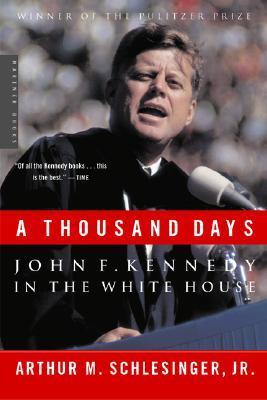
A Thousand Days: John F. Kennedy in the White House
by Arthur M. Schlesinger Jr.
Rating: 4.2 ⭐
• 1 recommendation ❤️
As special assistant to the president, Arthur Schlesinger witnessed firsthand the politics and personalities that influenced the now legendary Kennedy administration. Schlesinger’s close relationship with JFK, as a politician and as a friend, has resulted in this authoritative yet intimate account in which the president “walks through the pages, from first to last, alert, alive, amused and amusing” (John Kenneth Galbraith). A THOUSAND DAYS is “at once a masterly literary achievement and a work of major historical significance” (New York Times).

Master of the Senate, Book Three of The Years of Lyndon Johnson, carries Johnson’s story through one of its most remarkable periods: his twelve years, from 1949 to 1960, in the United States Senate.At the heart of the book is its unprecedented revelation of how legislative power works in America, how the Senate works, and how Johnson, in his ascent to the presidency, mastered the Senate as no political leader before him had ever done. It was during these years that all Johnson’s experience—from his Texas Hill Country boyhood to his passionate representation in Congress of his hardscrabble constituents to his tireless construction of a political machine—came to fruition. Caro introduces the story with a dramatic account of the Senate itself: how Daniel Webster, Henry Clay, and John C. Calhoun had made it the center of governmental energy, the forum in which the great issues of the country were thrashed out. And how, by the time Johnson arrived, it had dwindled into a body that merely responded to executive initiatives, all but impervious to the forces of change. Caro anatomizes the genius for political strategy and tactics by which, in an institution that had made the seniority system all-powerful for a century and more, Johnson became Majority Leader after only a single term-the youngest and greatest Senate Leader in our history; how he manipulated the Senate’s hallowed rules and customs and the weaknesses and strengths of his colleagues to change the “unchangeable” Senate from a loose confederation of sovereign senators to a whirring legislative machine under his own iron-fisted control. Caro demonstrates how Johnson’s political genius enabled him to reconcile the unreconcilable: to retain the support of the southerners who controlled the Senate while earning the trust—or at least the cooperation—of the liberals, led by Paul Douglas and Hubert Humphrey, without whom he could not achieve his goal of winning the presidency. He shows the dark side of Johnson’s ambition: how he proved his loyalty to the great oil barons who had financed his rise to power by ruthlessly destroying the career of the New Dealer who was in charge of regulating them, Federal Power Commission Chairman Leland Olds. And we watch him achieve the impossible: convincing southerners that although he was firmly in their camp as the anointed successor to their leader, Richard Russell, it was essential that they allow him to make some progress toward civil rights. In a breathtaking tour de force, Caro details Johnson’s amazing triumph in maneuvering to passage the first civil rights legislation since 1875. Master of the Senate, told with an abundance of rich detail that could only have come from Caro’s peerless research, is both a galvanizing portrait of the man himself—the titan of Capital Hill, volcanic, mesmerizing—and a definitive and revelatory study of the workings and personal and legislative power.

The Power Broker: Robert Moses and the Fall of New York
by Robert A. Caro
Rating: 4.5 ⭐
• 15 recommendations ❤️
One of the most acclaimed books of our time, winner of both the Pulitzer and the Francis Parkman prizes, The Power Broker tells the hidden story behind the shaping (and mis-shaping) of twentieth-century New York (city and state) and makes public what few have known: that Robert Moses was, for almost half a century, the single most powerful man of our time in New York, the shaper not only of the city's politics but of its physical structure and the problems of urban decline that plague us today.In revealing how Moses did it--how he developed his public authorities into a political machine that was virtually a fourth branch of government, one that could bring to their knees Governors and Mayors (from La Guardia to Lindsay) by mobilizing banks, contractors, labor unions, insurance firms, even the press and the Church, into an irresistible economic force--Robert Caro reveals how power works in all the cities of the United States. Moses built an empire and lived like an emperor. He personally conceived and completed public works costing 27 billion dollars--the greatest builder America (and probably the world) has ever known. Without ever having been elected to office, he dominated the men who were--even his most bitter enemy, Franklin D. Roosevelt, could not control him--until he finally encountered, in Nelson Rockefeller, the only man whose power (and ruthlessness in wielding it) equalled his own.

Barbarians at the Gate: The Inside Story of America’s Most Notorious Corporate Takeover
by Bryan Burrough
Rating: 4.4 ⭐
• 10 recommendations ❤️
#1 New York Times bestseller and arguably the best business narrative ever written, Barbarians at the Gate is the classic account of the fall of RJR Nabisco at the hands of a buyout from investment firm KKR. A book that stormed both the bestseller list and the public imagination, a book that created a genre of its own, and a book that gets at the heart of Wall Street and the '80s culture it helped define, Barbarians at the Gate is a modern classic—a masterpiece of investigatory journalism and a rollicking book of corporate derring-do and financial swordsmanship. The fight to control RJR Nabisco during October and November of 1988 was more than just the largest takeover in Wall Street history. Marked by brazen displays of ego not seen in American business for decades, it became the high point of a new gilded age and its repercussions are still being felt. The tale remains the ultimate story of greed and glory—a story and a cast of characters that determined the course of global business and redefined how deals would be done and fortunes made in the decades to come. Barbarians at the Gate is the gripping account of these two frenzied months, of deal makers and publicity flaks, of an old-line industrial powerhouse (home of such familiar products a Oreos and Camels) that became the victim of the ruthless and rapacious style of finance in the 1980s. As reporters for The Wall Street Journal , Burrough and Helyar had extensive access to all the characters in this drama. They take the reader behind the scenes at strategy meetings and society dinners, into boardrooms and bedrooms, providing an unprecedentedly detailed look at how financial operations at the highest levels are conducted but also a richly textured social history of wealth at the twilight of the Reagan era. At the center of the huge power struggle is RJR Nabisco's president, the high-living Ross Johnson. It's his secret plan to buy out the company that sets the frenzy in motion, attracting the country's leading takeover Henry Kravis, the legendary leveraged-buyout king of investment firm KKR, whose entry into the fray sets off an acquisitive commotion; Peter Cohen, CEO of Shearson Lehman Hutton and Johnson's partner, who needs a victory to propel his company to an unchallenged leadership in the lucrative mergers and acquisitions field; the fiercely independent Ted Forstmann, motivated as much by honor as by his rage at the corruption he sees taking over the business he cherishes; Jim Maher and his ragtag team, struggling to regain credibility for the decimated ranks at First Boston; and an army of desperate bankers, lawyers, and accountants, all drawn inexorably to the greatest prize of their careers—and one of the greatest prizes in the history of American business. Written with the bravado of a novel and researched with the diligence of a sweeping cultural history, Barbarians at the Gate is present at the front line of every battle of the campaign. Here is the unforgettable story of that takeover in all its brutality. In a new afterword specially commissioned for the story's 20th anniversary, Burrough and Helyar return to visit the heroes and villains of this epic story, tracing the fallout of the deal, charting the subsequent success and failure of those involved, and addressing the incredible impact this story—and the book itself—made on the world.

“A brilliant and essential document about the man, the President, and his times. In all the millions of words which have been written about the martyred President, this book must remain unique. . . . It is John F. Kennedy’s life, his personality, his thinking which informed his action and that action itself described with honest and candor which illuminate and enliven the crowded pages of this book. Sorensen has managed to portray Kennedy in realistic human terms and not as the hero of a myth. . . . It is the richness of detail, anecdotes, incidents, conversations, descriptions rather than any gossip or startling revelations which gives the book its compelling readability.” ― Los Angeles TimesThe classic, intimate, and #1 national bestselling biography of JFK by his great advisor Ted Sorensen. In January 1953, freshman senator John F. Kennedy of Massachusetts hired a twenty-four-year-old from Nebraska as his Number Two legislative assistant―on a trial basis. Despite the differences in their backgrounds, in the eleven years that followed Ted Sorensen became known as Kennedy's intellectual blood bank, top policy aide, and alter ego. Sorensen knew Kennedy the man, the senator, the candidate, and the president as no other associate did. From his role as a legislative assistant to Kennedy's death in 1963, Sorensen was with him during the key crises and turning points―including the spectacular race for the vice presidency at the 1956 convention, the launching of Kennedy's presidential candidacy, the TV debates with Nixon, and election night at Hyannis Port. The first appointment made by the new president was to name Ted Sorensen his Special Counsel. In Kennedy , Sorensen recounts failures as well as successes with surprising candor and objectivity. He reveals Kennedy's errors on the Bay of Pigs, and his attitudes toward the press, Congress, and the Joint Chiefs of Staff. Sorensen saw firsthand Kennedy's actions in the Cuban missile crisis, and the evolution of his beliefs on civil rights and arms control. First published in 1965 and reissued here with a new preface, Kennedy is an intimate biography of an extraordinary man, and one of the most important historical accounts of the twentieth century.

The American Story: Conversations with Master Historians
by David M. Rubenstein
Rating: 4.4 ⭐
• 6 recommendations ❤️
Co-founder of The Carlyle Group and patriotic philanthropist David M. Rubenstein takes readers on a sweeping journey across the grand arc of the American story through revealing conversations with our greatest historians.In these lively dialogues, the biggest names in American history explore the subjects they’ve come to so intimately know and understand.— David McCullough on John Adams— Jon Meacham on Thomas Jefferson— Ron Chernow on Alexander Hamilton— Walter Isaacson on Benjamin Franklin— Doris Kearns Goodwin on Abraham Lincoln— A. Scott Berg on Charles Lindbergh— Taylor Branch on Martin Luther King— Robert Caro on Lyndon B. Johnson— Bob Woodward on Richard Nixon— And many others, including a special conversation with Chief Justice John RobertsThrough his popular program The David Rubenstein Show , David Rubenstein has established himself as one of our most thoughtful interviewers. Now, in The American Story, David captures the brilliance of our most esteemed historians, as well as the souls of their subjects. The book features introductions by Rubenstein as well a foreword by Librarian of Congress Carla Hayden, the first woman and the first African American to lead our national library. Richly illustrated with archival images from the Library of Congress, the book is destined to become a classic for serious readers of American history.Through these captivating exchanges, these bestselling and Pulitzer Prize–winning authors offer fresh insight on pivotal moments from the Founding Era to the late 20th century.

The Man Who Ran Washington: The Life and Times of James A. Baker III
by Peter Baker
Rating: 4.4 ⭐
• 1 recommendation ❤️
Co-authored by the Chief White House correspondent at The New York Times and the Washington columnist at the The New Yorker, this is a biography any would-be power broker must own: the story of legendary White House chief of staff and secretary of state James A. Baker III, the man who ran Washington when Washington ran the world.In the latter half of the twentieth century, no Republican won the presidency without his help, and the men he counseled in the Oval Office--Gerald R. Ford, Ronald Reagan, George H.W. Bush, and George W. Bush--defined more than one generation of American life. Campaign manager, chief of staff, treasury secretary, and ultimately secretary of state, James A. Baker III understood better than anyone how to make Washington work and how to pull the levers of power at home and abroad. A suave and profane Texas Democrat, Baker worked as a wealthy Houston lawyer until his best friend, George H. W. Bush, drew him into Republican politics. His first dramatic win was in 1976 as the delegate hunter who secured the Republican nomination for Ford against a challenge from Ronald Reagan. His next job, as Bush's campaign manager four years later, maneuvered Bush onto the ticket with Reagan and Baker into the most powerful office in Washington other than the Oval Office: White House chief of staff. In his years in the White House and in the cabinet, Baker was the avatar of a style of politics and governance that valued pragmatism and deal making over purity. He went from win to win--reforming the tax code, negotiating the first Middle East peace talks, managing the dissolution of the Soviet Union--until his capstone victory, as field marshal for the younger Bush's Florida recount battle, helped divide the country forever. In today's era of gridlock, The Man Who Ran Washington is an electrifying escape.

From one of America’s most respected journalists and modern historians comes the highly acclaimed, “splendid” ( The Washington Post ) biography of Jimmy Carter, the thirty-ninth president of the United States and Nobel Prize–winning humanitarian.Jonathan Alter tells the epic story of an enigmatic man of faith and his improbable journey from barefoot boy to global icon. Alter paints an intimate and surprising portrait of the only president since Thomas Jefferson who can fairly be called a Renaissance Man, a complex figure—ridiculed and later revered—with a piercing intelligence, prickly intensity, and biting wit beneath the patented smile. Here is a moral exemplar for our times, a flawed but underrated president of decency and vision who was committed to telling the truth to the American people.Growing up in one of the meanest counties in the Jim Crow South, Carter is the only American president who essentially lived in three his early life on the farm in the 1920s without electricity or running water might as well have been in the nineteenth; his presidency put him at the center of major events in the twentieth; and his efforts on conflict resolution and global health set him on the cutting edge of the challenges of the twenty-first.“One of the best in a celebrated genre of presidential biography,” ( The Washington Post ), His Very Best traces how Carter evolved from a timid, bookish child—raised mostly by a Black woman farmhand—into an ambitious naval nuclear engineer writing passionate, never-before-published love letters from sea to his wife and full partner, Rosalynn; a peanut farmer and civic leader whose guilt over staying silent during the civil rights movement and not confronting the white terrorism around him helped power his quest for racial justice at home and abroad; an obscure, born-again governor whose brilliant 1976 campaign demolished the racist wing of the Democratic Party and took him from zero percent to the presidency; a stubborn outsider who failed politically amid the bad economy of the 1970s and the seizure of American hostages in Iran but succeeded in engineering peace between Israel and Egypt, amassing a historic environmental record, moving the government from tokenism to diversity, setting a new global standard for human rights and normalizing relations with China among other unheralded and far-sighted achievements. After leaving office, Carter eradicated diseases, built houses for the poor, and taught Sunday school into his mid-nineties.This “important, fair-minded, highly readable contribution” ( The New York Times Book Review ) will change our understanding of perhaps the most misunderstood president in American history.

How to Lead: Wisdom from the World's Greatest CEOs, Founders, and Game Changers
by David M. Rubenstein
Rating: 3.8 ⭐
• 2 recommendations ❤️
Rozmowy z największymi liderami naszych czasówWspółtwórca Microsofta, założyciel Nike, właściciel Amazona, ikona telewizji, trener reprezentacji narodowej w koszykówce, dyrektor generalny Google’a. Prezydenci, prawnicy, politycy, sportowcy, muzycy, wizjonerzy. NAJWIĘKSI.David Rubenstein, popularny dziennikarz telewizyjny i… miliarder, wie, jak namówić swoich bohaterów na szczerą rozmowę.Co naprawdę sprawia, że Jeff Bezos i Bill Gates są tak skuteczni? Jak Warren Buffett radzi sobie w kryzysowych sytuacjach? Czego z gier komputerowych nauczyła się Melinda Gates? I dlaczego Phil Knight zakłada sportowe buty do smokingu?Ci, którzy w swoich dziedzinach osiągnęli już wszystko, dzielą się mądrością i pasją, zdradzają tajemnice sukcesu, przyznają się do porażek. Motywują i inspirują.***Skorzystaj z wieloletniego doświadczenia i cennych rad największych ludzi sukcesu – pomogą ci stać się lepszym i skuteczniejszym w każdej dziedzinie.Bestseller „New York Timesa” i „Wall Street Journal” – już ponad 100 tysięcy sprzedanych egzemplarzy. "LIDERZY" to prawdziwa BIBLIA ZARZĄDZANIA.OBOWIĄZKOWA LEKTURA DLA KAŻDEGO, KTO SZUKA DROGI NA SZCZYT

A riveting, deeply personal account of history in the making—from the president who inspired us to believe in the power of democracy. In the stirring, highly anticipated first volume of his presidential memoirs, Barack Obama tells the story of his improbable odyssey from young man searching for his identity to leader of the free world, describing in strikingly personal detail both his political education and the landmark moments of the first term of his historic presidency—a time of dramatic transformation and turmoil. Obama takes readers on a compelling journey from his earliest political aspirations to the pivotal Iowa caucus victory that demonstrated the power of grassroots activism to the watershed night of November 4, 2008, when he was elected 44th president of the United States, becoming the first African American to hold the nation’s highest office. Reflecting on the presidency, he offers a unique and thoughtful exploration of both the awesome reach and the limits of presidential power, as well as singular insights into the dynamics of U.S. partisan politics and international diplomacy. Obama brings readers inside the Oval Office and the White House Situation Room, and to Moscow, Cairo, Beijing, and points beyond. We are privy to his thoughts as he assembles his cabinet, wrestles with a global financial crisis, takes the measure of Vladimir Putin, overcomes seemingly insurmountable odds to secure passage of the Affordable Care Act, clashes with generals about U.S. strategy in Afghanistan, tackles Wall Street reform, responds to the devastating Deepwater Horizon blowout, and authorizes Operation Neptune’s Spear, which leads to the death of Osama bin Laden. A Promised Land is extraordinarily intimate and introspective—the story of one man’s bet with history, the faith of a community organizer tested on the world stage. Obama is candid about the balancing act of running for office as a Black American, bearing the expectations of a generation buoyed by messages of “hope and change,” and meeting the moral challenges of high-stakes decision-making. He is frank about the forces that opposed him at home and abroad, open about how living in the White House affected his wife and daughters, and unafraid to reveal self-doubt and disappointment. Yet he never wavers from his belief that inside the great, ongoing American experiment, progress is always possible. This beautifully written and powerful book captures Barack Obama’s conviction that democracy is not a gift from on high but something founded on empathy and common understanding and built together, day by day.