
David Frum Recommended Books
American political commentator
8 Books Recommended

What has Germany made of its Nazi past? A significant new look at the legacy of the Nazi regime, this book exposes the workings of past beliefs and political interests on how--and how differently--the two Germanys have recalled the crimes of Nazism, from the anti-Nazi emigration of the 1930s through the establishment of a day of remembrance for the victims of National Socialism in 1996. Why, Jeffrey Herf asks, would German politicians raise the specter of the Holocaust at all, in view of the considerable depth and breadth of support its authors and their agenda had found in Nazi Germany? Why did the public memory of Nazi anti-Jewish persecution and the Holocaust emerge, if selectively, in West Germany, yet was repressed and marginalized in "anti-fascist" East Germany? And how do the politics of left and right come into play in this divided memory? The answers reveal the surprising relationship between how the crimes of Nazism were publicly recalled and how East and West Germany separately evolved a Communist dictatorship and a liberal democracy. This book, for the first time, points to the impact of the Cold War confrontation in both West and East Germany on the public memory of anti-Jewish persecution and the Holocaust. Konrad Adenauer, Theodor Heuss, Kurt Schumacher, Willy Brandt, Richard von Weizsacker, and Helmut Kohl in the West and Walter Ulbricht, Wilhelm Pieck, Otto Grotewohl, Paul Merker, and Erich Honnecker in the East are among the many national figures whose private and public papers and statements Herf examines. His work makes the German memory of Nazism--suppressed on the one hand and selective on the other, from Nuremberg to Bitburg--comprehensible within the historical context of the ideologies and experiences of pre-1945 German and European history as well as within the international context of shifting alliances from World War II to the Cold War. Drawing on West German and recently opened East German archives, this book is a significant contribution to the history of belief that shaped public memory of Germany's recent past.

Good Intentions, Bad Outcomes: Social Policy, Informality, and Economic Growth in Mexico
by Santiago Levy
Rating: 3.9 ⭐
• 2 recommendations ❤️
"Despite various reform efforts, Mexico has experienced economic stability but little growth. Today more than half of all Mexican workers are employed informally, and one out of every four is poor. Good Intentions, Bad Outcomes argues that incoherent social programs significantly contribute to this state of affairs and it suggests reforms to improve the situation. Over the past decade, Mexico has channeled an increasing number of resources into subsidizing the creation of low-productivity, informal jobs. These social programs have hampered growth, fostered illegality, and provided erratic protection to workers, trapping many in poverty. Informality has boxed Mexico into a provide benefits to informal workers at the expense of lower growth and reduced productivity or leave millions of workers without benefits. Former finance official Santiago Levy proposes how to convert the existing system of social security for formal workers into universal social entitlements. He advocates eliminating wage-based social security contributions and raising consumption taxes on higher-income households to simultaneously increase the rate of growth of GDP, reduce inequality, and improve benefits for workers. Go od Intentions, Bad Outcomes c onsiders whether Mexico can build on the success of Progresa-Oportunidades, a targeted poverty alleviation program that originated in Mexico and has been replicated in over 25 countries as well as in New York City. It sets forth a plan to reform social and economic policy, an essential element of a more equitable and sustainable development strategy for Mexico."

Fights of Our Lives: Elections, Leadership and the Making of Canada
by John Duffy
Rating: 4.1 ⭐
• 2 recommendations ❤️
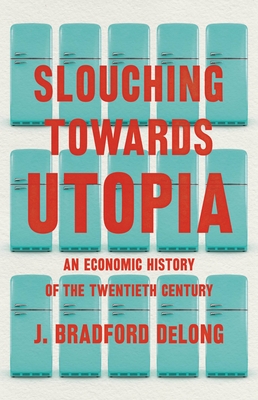
Slouching Towards Utopia: An Economic History of the Twentieth Century
by J. Bradford DeLong
Rating: 3.9 ⭐
• 2 recommendations ❤️
An instant New York Times and Wall Street Journal bestseller from one of the world’s leading economists, offering a grand narrative of the century that made us richer than ever, but left us unsatisfied“A magisterial history.”—Paul KrugmanNamed a Best Book of 2022 by Financial Times * Economist * Fast CompanyBefore 1870, humanity lived in dire poverty, with a slow crawl of invention offset by a growing population. Then came a great invention sprinted forward, doubling our technological capabilities each generation and utterly transforming the economy again and again. Our ancestors would have presumed we would have used such powers to build utopia. But it was not so. When 1870–2010 ended, the world instead saw global warming; economic depression, uncertainty, and inequality; and broad rejection of the status quo. Economist Brad DeLong’s Slouching Towards Utopia tells the story of how this unprecedented explosion of material wealth occurred, how it transformed the globe, and why it failed to deliver us to utopia. Of remarkable breadth and ambition, it reveals the last century to have been less a march of progress than a slouch in the right direction.

How to Change Your Mind: What the New Science of Psychedelics Teaches Us About Consciousness, Dying, Addiction, Depression, and Transcendence
by Michael Pollan
Rating: 4.4 ⭐
• 6 recommendations ❤️
"Pollan keeps you turning the pages . . . cleareyed and assured." --New York Times A #1 New York Times Bestseller, New York Times Book Review 10 Best Books of 2018, and New York Times Notable BookA brilliant and brave investigation into the medical and scientific revolution taking place around psychedelic drugs--and the spellbinding story of his own life-changing psychedelic experiencesWhen Michael Pollan set out to research how LSD and psilocybin (the active ingredient in magic mushrooms) are being used to provide relief to people suffering from difficult-to-treat conditions such as depression, addiction and anxiety, he did not intend to write what is undoubtedly his most personal book. But upon discovering how these remarkable substances are improving the lives not only of the mentally ill but also of healthy people coming to grips with the challenges of everyday life, he decided to explore the landscape of the mind in the first person as well as the third. Thus began a singular adventure into various altered states of consciousness, along with a dive deep into both the latest brain science and the thriving underground community of psychedelic therapists. Pollan sifts the historical record to separate the truth about these mysterious drugs from the myths that have surrounded them since the 1960s, when a handful of psychedelic evangelists inadvertently catalyzed a powerful backlash against what was then a promising field of research.A unique and elegant blend of science, memoir, travel writing, history, and medicine, How to Change Your Mind is a triumph of participatory journalism. By turns dazzling and edifying, it is the gripping account of a journey to an exciting and unexpected new frontier in our understanding of the mind, the self, and our place in the world. The true subject of Pollan's mental travelogue is not just psychedelic drugs but also the eternal puzzle of human consciousness and how, in a world that offers us both suffering and joy, we can do our best to be fully present and find meaning in our lives.

The Malevolent Republic: A Short History of the New India
by K.S. Komireddi
Rating: 4.1 ⭐
• 2 recommendations ❤️
‘INDIA IS AN IMPROBABLE NATION.’ Under Narendra Modi and the Bharatiya Janata Party, India has undergone the most total transformation since 1991. The ‘invisible threads’ Nehru said held together an improbable union divided by language, religion and ethnicity have snapped under the burden of Modi’s Hindu-supremacist rule.In this blistering critique of post-Independence India from Nehru to Modi, K.S. Komireddi charts the unsound course of Indian nationalism: its cowardly concessions to the Hindu right, convenient distortions of India’s past and demeaning bribes to India’s minorities. He argues that the missteps of the nation’s founders, the mistakes of Nehru, the betrayals of his daughter and her sons, the anti-democratic fetish for technocracy inaugurated by Narasimha Rao and carried to the extremes by Manmohan Singh—all of them laid down the road on which Hindu nationalists rode to absolute power.Hindu bigotry, ennobled under Modi as a healthy form of self-assertion, has reopened old fissures that threaten to devour India’s hard-won unity. Yet bad times have also smashed the citizenly complacency that brought India to this point. There are multitudes who now realise how extraordinary and brave the idea of India was to begin with; there is a resurgent struggle against its extinction, and the assertion of new voices to wrest the republic from the forces of religious majoritarianism.A short history of the modern Indian nation, Malevolent Republic is also an impassioned plea for India’s reclamation. ‘Kapil Komireddi is one of the most thoughtful and thorough journalists writing today. His range of interests is impressive in its breadth and cosmopolitanism; his is a rare voice that can comment on global affairs from a truly comparative perspective.’ AMITAV Ghosh ‘Kapil Komireddi is a write of flair, originality and, above all, an absolute independence of mind … His ability to see through posturing and prejudice makes his work both distinctive and compelling. This book deserves to be widely read within India and beyond.’RAMACHANDRA GUHA

Journalist and law professor Rosa Brooks goes beyond the blue wall of silence in this radical inside examination of American policingIn her forties, with two children, a spouse, a dog, a mortgage, and a full-time job as a tenured law professor at Georgetown University, Rosa Brooks decided to become a cop. A liberal academic and journalist with an enduring interest in law's troubled relationship with violence, Brooks wanted the kind of insider experience that would help her understand how police officers make sense of their world--and whether that world can be changed. In 2015, against the advice of everyone she knew, she applied to become a sworn, armed reserve police officer with the Washington, DC, Metropolitan Police Department.Then as now, police violence was constantly in the news. The Black Lives Matter movement was gaining momentum, protests wracked America's cities, and each day brought more stories of cruel, corrupt cops, police violence, and the racial disparities that mar our criminal justice system. Lines were being drawn, and people were taking sides. But as Brooks made her way through the police academy and began work as a patrol officer in the poorest, most crime-ridden neighborhoods of the nation's capital, she found a reality far more complex than the headlines suggested.In Tangled Up in Blue, Brooks recounts her experiences inside the usually closed world of policing. From street shootings and domestic violence calls to the behind-the-scenes police work during Donald Trump's 2016 presidential inauguration, Brooks presents a revelatory account of what it's like inside the blue wall of silence. She issues an urgent call for new laws and institutions, and argues that in a nation increasingly divided by race, class, ethnicity, geography, and ideology, a truly transformative approach to policing requires us to move beyond sound bites, slogans, and stereotypes. An explosive and groundbreaking investigation, Tangled Up in Blue complicates matters rather than simplifies them, and gives pause both to those who think police can do no wrong--and those who think they can do no right.

The Existential Questions: Uncomfortable facts confronting Nigeria after a 60-year journey
by Oluseun Onigbinde
• 2 recommendations ❤️
On October 1, 2020, Nigeria celebrated sixty years as an independent nation. This book reviews the country's evolution since independence. As a well-traveled Nigerian, I have always wondered why a nation so blessed with human and natural resources has failed to reach its enviable height. Over the years, I have seen how gross mismanagement, short-termism, lack of national values, and polarising elements such as tribalism and nepotism have severely held back the country. In this book, I attempt a dissection of the issues. I started with an inquiry on the state of Nigeria and why the country has failed to rise to its potential. I questioned the poor state of Nigeria’s socio-economic status and also its current leaders’ lack of ideas. My questions also revolved around the country’s low level of revenues, high level of poverty, current addiction to revenues, weak legal and judicial systems. These guided me to an interrogation of the nation’s current human development situation through its weak health and education systems. I asked these existential questions with the hope that Nigerian leaders will be provoked to rethink the country’s trajectory. I hope that perhaps, they will look around and begin to how did the rain start beating us? And that in their asking, they will find solutions.