
16 Books Recommended

50th ANNIVERSARY EDITION—WITH A NEW INTRODUCTION BY FRANCIS FORD COPPOLAMario Puzo’s classic saga of an American crime family that became a global phenomenon—nominated as one of America’s best-loved novels by PBS’s The Great American Read.With its brilliant and brutal portrayal of the Corleone family, The Godfather burned its way into our national consciousness. This unforgettable saga of crime and corruption, passion and loyalty continues to stand the test of time, as the definitive novel of the Mafia underworld.A #1 New York Times bestseller in 1969, Mario Puzo’s epic was turned into the incomparable film of the same name, directed by Francis Ford Coppola, which won the Academy Award for Best Picture. It is the original classic that has been often imitated, but never matched. A tale of family and society, law and order, obedience and rebellion, it reveals the dark passions of human nature played out against a backdrop of the American dream.With a Note from Anthony Puzo and an Afterword by Robert J. Thompson

The Wizard of Menlo Park: How Thomas Alva Edison Invented the Modern World
by Randall E. Stross
Rating: 3.8 ⭐
• 4 recommendations ❤️
Thomas Edison’s greatest invention? His own fame. At the height of his fame Thomas Alva Edison was hailed as “the Napoleon of invention” and blazed in the public imagination as a virtual demigod. Starting with the first public demonstrations of the phonograph in 1878 and extending through the development of incandescent light and the first motion picture cameras, Edison’s name became emblematic of all the wonder and promise of the emerging age of technological marvels. But as Randall Stross makes clear in this critical biography of the man who is arguably the most globally famous of all Americans, Thomas Edison’s greatest invention may have been his own celebrity. Edison was certainly a technical genius, but Stross excavates the man from layers of myth-making and separates his true achievements from his almost equally colossal failures. How much credit should Edison receive for the various inventions that have popularly been attributed to him—and how many of them resulted from both the inspiration and the perspiration of his rivals and even his own assistants? This bold reassessment of Edison’s life and career answers this and many other important questions while telling the story of how he came upon his most famous inventions as a young man and spent the remainder of his long life trying to conjure similar success. We also meet his partners and competitors, presidents and entertainers, his close friend Henry Ford, the wives who competed with his work for his attention, and the children who tried to thrive in his shadow—all providing a fuller view of Edison’s life and times than has ever been offered before. The Wizard of Menlo Park reveals not only how Edison worked, but how he managed his own fame, becoming the first great celebrity of the modern age.

Parasite Rex: Inside the Bizarre World of Nature's Most Dangerous Creatures
by Carl Zimmer
Rating: 4.2 ⭐
• 2 recommendations ❤️
For centuries, parasites have lived in nightmares, horror stories, and in the darkest shadows of science. Now award-winning writer Carl Zimmer takes us on a fantastic voyage into the secret parasite universe we actually live in but haven't recognized. He reveals not only that parasites are the most successful life-forms on Earth, but that they triggered the development of sex, shape ecosystems, and have driven the engine of evolution. In mapping the parasite universe, Zimmer makes the astonishing observation that most species are parasites, and that almost every animal, including humans, will at one time or another become the home of a parasite. Zimmer shows how highly evolved parasites are and describes the frightening and amazing ingenuity these commando invaders use to devour their hosts from the inside and control their behavior. The sinister Sacculina carcini makes its home in an unlucky crab and proceeds to eat everything but what the crab needs to put food in its mouth, which Sacculina then consumes. When Sacculina finally reproduces, it places its young precisely where the crab would nurture its own progeny, and then has the crab nurture the foster family members. Single-celled Toxoplasma gondi has an even more insidious role, for it can invade the human brain. There it makes men distrustful and less willing to submit to social mores. Women become more outgoing and warm-hearted. Why would a parasite cause these particular personality changes? It seems Toxoplasma wants its host to be less afraid, to be more prone to danger and a violent end -- so that, in the carnage, it will be able to move on to another host. From the steamy jungles of Costa Rica to the fetid parasite heaven of rebel-held southern Sudan, Zimmer tracks the genius of parasitic life and its impact on humanity. We hosts have developed remarkable defenses against the indomitable parasite: our mighty immune system, our culturally enforced habit of keeping clean, and, perhaps most intriguingly, sex. But this is not merely a book about the evil power of parasitism and how we must defend against it. On the contrary, Zimmer concludes that humankind itself is a new kind of parasite, one that preys on the entire Earth. If we are to achieve the sophistication of the parasites on display here in vivid detail, if we are to promote the flourishing of life in all its diversity as they do, we must learn the ways nature lives with itself, the laws of Parasite Rex.

The Light of Other Days: A Novel of the Transformation of Humanity
by Arthur C. Clarke
Rating: 4.0 ⭐
• 2 recommendations ❤️
From Arthur C. Clarke, the brilliant mind that brought us 2001: A Space Odyssey , and Stephen Baxter, one of the most cogent SF writers of his generation, comes a novel of a day, not so far in the future, when the barriers of time and distance have suddenly turned to glass.When a brilliant, driven industrialist harnesses cutting-edge physics to enable people everywhere, at trivial cost, to see one another at all times―around every corner, through every wall―the result is the sudden and complete abolition of human privacy, forever. Then the same technology proves able to look backward in time as well.The Light of Other Days is a story that will change your view of what it is to be human.

John D. Rockefeller, Sr.--history's first billionaire and the patriarch of America's most famous dynasty--is an icon whose true nature has eluded three generations of historians. Now Ron Chernow, the National Book Award-winning biographer of the Morgan and Warburg banking families, gives us a history of the mogul "etched with uncommon objectivity and literary grace . . . as detailed, balanced, and psychologically insightful a portrait of the tycoon as we may ever have" (Kirkus Reviews). Titan is the first full-length biography based on unrestricted access to Rockefeller's exceptionally rich trove of papers. A landmark publication full of startling revelations, the book will indelibly alter our image of this most enigmatic capitalist. Born the son of a flamboyant, bigamous snake-oil salesman and a pious, straitlaced mother, Rockefeller rose from rustic origins to become the world's richest man by creating America's most powerful and feared monopoly, Standard Oil. Branded "the Octopus" by legions of muckrakers, the trust refined and marketed nearly 90 percent of the oil produced in America. Rockefeller was likely the most controversial businessman in our nation's history. Critics charged that his empire was built on unscrupulous tactics: grand-scale collusion with the railroads, predatory pricing, industrial espionage, and wholesale bribery of political officials. The titan spent more than thirty years dodging investigations until Teddy Roosevelt and his trustbusters embarked on a marathon crusade to bring Standard Oil to bay. While providing abundant new evidence of Rockefeller's misdeeds, Chernow discards the stereotype of the cold-blooded monster to sketch an unforgettably human portrait of a quirky, eccentric original. A devout Baptist and temperance advocate, Rockefeller gave money more generously--his chosen philanthropies included the Rockefeller Foundation, the University of Chicago, and what is today Rockefeller University--than anyone before him. Titan presents a finely nuanced portrait of a fascinating, complex man, synthesizing his public and private lives and disclosing numerous family scandals, tragedies, and misfortunes that have never before come to light. John D. Rockefeller's story captures a pivotal moment in American history, documenting the dramatic post-Civil War shift from small business to the rise of giant corporations that irrevocably transformed the nation. With cameos by Joseph Pulitzer, William Randolph Hearst, Jay Gould, William Vanderbilt, Ida Tarbell, Andrew Carnegie, Carl Jung, J. Pierpont Morgan, William James, Henry Clay Frick, Mark Twain, and Will Rogers, Titan turns Rockefeller's life into a vivid tapestry of American society in the late nineteenth and early twentieth centuries. It is Ron Chernow's signal triumph that he narrates this monumental saga with all the sweep, drama, and insight that this giant subject deserves.From the Hardcover edition.

The Alchemy of Air: A Jewish Genius, a Doomed Tycoon, and the Scientific Discovery That Fed the World but Fueled the Rise of Hitler
by Thomas Hager
Rating: 4.3 ⭐
• 4 recommendations ❤️
A sweeping history of tragic genius, cutting-edge science, and the Haber-Bosch discovery that changed billions of lives—including your own.At the dawn of the twentieth century, humanity was facing global Mass starvation was about to become a reality. A call went out to the world’ s scientists to find a solution.This is the story of the two men who found brilliant, self-important Fritz Haber and reclusive, alcoholic Carl Bosch. Together they discovered a way to make bread out of air, built city-sized factories, and saved millions of lives.But their epochal triumph came at a price we are still paying. The Haber-Bosch process was also used to make the gunpowder and explosives that killed millions during the two world wars. Both men were vilified during their lives; both, disillusioned and disgraced, died tragically.The Alchemy of Air is the extraordinary, previously untold story of a discovery that changed the way we grow food and the way we make war–and that promises to continue shaping our lives in fundamental and dramatic ways.
The Idea Factory: Bell Labs and the Great Age of American Innovation
by Jon Gertner
Rating: 4.4 ⭐
• 9 recommendations ❤️
The definitive history of America’s greatest incubator of innovation and the birthplace of some of the 20th century’s most influential technologies“Filled with colorful characters and inspiring lessons . . . The Idea Factory explores one of the most critical issues of our What causes innovation?” —Walter Isaacson, The New York Times Book Review“Compelling . . . Gertner's book offers fascinating evidence for those seeking to understand how a society should best invest its research resources.” — The Wall Street JournalFrom its beginnings in the 1920s until its demise in the 1980s, Bell Labs-officially, the research and development wing of AT&T-was the biggest, and arguably the best, laboratory for new ideas in the world. From the transistor to the laser, from digital communications to cellular telephony, it's hard to find an aspect of modern life that hasn't been touched by Bell Labs. In The Idea Factory , Jon Gertner traces the origins of some of the twentieth century's most important inventions and delivers a riveting and heretofore untold chapter of American history. At its heart this is a story about the life and work of a small group of brilliant and eccentric men-Mervin Kelly, Bill Shockley, Claude Shannon, John Pierce, and Bill Baker-who spent their careers at Bell Labs. Today, when the drive to invent has become a mantra, Bell Labs offers us a way to enrich our understanding of the challenges and solutions to technological innovation. Here, after all, was where the foundational ideas on the management of innovation were born.

The Vital Question: Energy, Evolution, and the Origins of Complex Life
by Nick Lane
Rating: 4.2 ⭐
• 8 recommendations ❤️
The Earth teems with life: in its oceans, forests, skies and cities. Yet there’s a black hole at the heart of biology. We do not know why complex life is the way it is, or, for that matter, how life first began. In The Vital Question, award-winning author and biochemist Nick Lane radically reframes evolutionary history, putting forward a solution to conundrums that have puzzled generations of scientists.For two and a half billion years, from the very origins of life, single-celled organisms such as bacteria evolved without changing their basic form. Then, on just one occasion in four billion years, they made the jump to complexity. All complex life, from mushrooms to man, shares puzzling features, such as sex, which are unknown in bacteria. How and why did this radical transformation happen?The answer, Lane argues, lies in energy: all life on Earth lives off a voltage with the strength of a lightning bolt. Building on the pillars of evolutionary theory, Lane’s hypothesis draws on cutting-edge research into the link between energy and cell biology, in order to deliver a compelling account of evolution from the very origins of life to the emergence of multicellular organisms, while offering deep insights into our own lives and deaths.Both rigorous and enchanting, The Vital Question provides a solution to life’s vital question: why are we as we are, and indeed, why are we here at all?

The Grid: The Fraying Wires Between Americans and Our Energy Future
by Gretchen Bakke
Rating: 3.9 ⭐
• 2 recommendations ❤️
A revelatory look at our national power grid--how it developed, its current flaws, and how it must be completely reimagined for our fast-approaching energy future.America's electrical grid, an engineering triumph of the twentieth century, is turning out to be a poor fit for the present. It's not just that the grid has grown old and is now in dire need of basic repair. Today, as we invest great hope in new energy sources--solar, wind, and other alternatives--the grid is what stands most firmly in the way of a brighter energy future. If we hope to realize this future, we need to reimagine the grid according to twenty-first-century values. It's a project which forces visionaries to work with bureaucrats, legislators with storm-flattened communities, moneymen with hippies, and the left with the right. And though it might not yet be obvious, this revolution is already well under way. Cultural anthropologist Gretchen Bakke unveils the many facets of America's energy infrastructure, its most dynamic moments and its most stable ones, and its essential role in personal and national life. The grid, she argues, is an essentially American artifact, one which developed with us: a product of bold expansion, the occasional foolhardy vision, some genius technologies, and constant improvisation. Most of all, her focus is on how Americans are changing the grid right now, sometimes with gumption and big dreams and sometimes with legislation or the brandishing of guns.The Grid tells--entertainingly, perceptively--the story of what has been called "the largest machine in the world": its fascinating history, its problematic present, and its potential role in a brighter, cleaner future.
Enlightenment Now: The Case for Reason, Science, Humanism, and Progress
by Steven Pinker
Rating: 4.2 ⭐
• 18 recommendations ❤️
If you think the world is coming to an end, think again: people are living longer, healthier, freer, and happier lives, and while our problems are formidable, the solutions lie in the Enlightenment ideal of using reason and science.Is the world really falling apart? Is the ideal of progress obsolete? In this elegant assessment of the human condition in the third millennium, cognitive scientist and public intellectual Steven Pinker urges us to step back from the gory headlines and prophecies of doom, which play to our psychological biases. Instead, follow the data: In seventy-five jaw-dropping graphs, Pinker shows that life, health, prosperity, safety, peace, knowledge, and happiness are on the rise, not just in the West, but worldwide. This progress is not the result of some cosmic force. It is a gift of the Enlightenment: the conviction that reason and science can enhance human flourishing.Far from being a naïve hope, the Enlightenment, we now know, has worked. But more than ever, it needs a vigorous defense. The Enlightenment project swims against currents of human nature–tribalism, authoritarianism, demonization, magical thinking–which demagogues are all too willing to exploit. Many commentators, committed to political, religious, or romantic ideologies, fight a rearguard action against it. The result is a corrosive fatalism and a willingness to wreck the precious institutions of liberal democracy and global cooperation.With intellectual depth and literary flair, Enlightenment Now makes the case for reason, science, and humanism: the ideals we need to confront our problems and continue our progress.

American Prison: A Reporter's Undercover Journey into the Business of Punishment
by Shane Bauer
Rating: 4.3 ⭐
• 4 recommendations ❤️
In 2014, Shane Bauer was hired for $9 an hour to work as an entry-level prison guard at a private prison in Winnfield, Louisiana. An award-winning investigative journalist, he used his real name; In American Prison, Bauer weaves a much deeper reckoning with his experiences together with a thoroughly researched history of for-profit prisons in America from their origins in the decades before the Civil War. For, as he soon realized, we can't understand the cruelty of our current system and its place in the larger story of mass incarceration without understanding where it came from. Private prisons became entrenched in the South as part of a systemic effort to keep the African-American labor force in place in the aftermath of slavery, and the echoes of these shameful origins are with us still.

How to Avoid a Climate Disaster: The Solutions We Have and the Breakthroughs We Need
by Bill Gates
Rating: 4.0 ⭐
• 4 recommendations ❤️
Bill Gates shares what he's learned in more than a decade of studying climate change and investing in innovations to address the problems, and sets out a vision for how the world can build the tools it needs to get to zero greenhouse gas emissions.Bill Gates explains why he cares so deeply about climate change and what makes him optimistic that the world can prevent the worst impacts of the climate crisis. Gates says, "we can work on a local, national, and global level to build the technologies, businesses, and industries to avoid the worst impacts of climate change." His interest in climate change is a natural outgrowth of the efforts by his foundation to reduce poverty and disease. Climate change, according to Gates, will have the biggest impact on the people who have done the least to cause it. As a technologist, he has seen first-hand how innovation can change the world. By investing in research, inventing new technologies, and by deploying them quickly at large scale, Gates believes climate change can be addressed in meaningful ways. According to Gates, "to prevent the worst effects of climate change, we have to get to net-zero emissions of greenhouse gases. This problem is urgent, and the debate is complex, but I believe we can come together to invent new carbon-zero technologies, deploy the ones we have, and ultimately avoid a climate catastrophe."

Every Life is on Fire: How Thermodynamics Explains the Origins of Living Things
by Jeremy England
Rating: 3.2 ⭐
• 2 recommendations ❤️
A preeminent physicist unveils a field-defining theory of the origins and purpose of life.Why are we alive? Most things in the universe aren't. And everything that is alive traces back to things that, puzzlingly, weren't. For centuries, the scientific question of life's origins has confounded us. But in Every Life is on Fire, physicist Jeremy England argues that the answer has been under our noses the whole time, deep within the laws of thermodynamics. England explains how, counterintuitively, the very same forces that tend to tear things apart assembled the first living systems.But how life began isn't just a scientific question. We ask it because we want to know what it really means to be alive. So England, an ordained rabbi, uses his theory to examine how, if at all, science helps us find purpose in a vast and mysterious universe.In the tradition of Viktor Frankl's Man's Search for Meaning, Every Life is on Fire is a profound testament to how something can come from nothing.
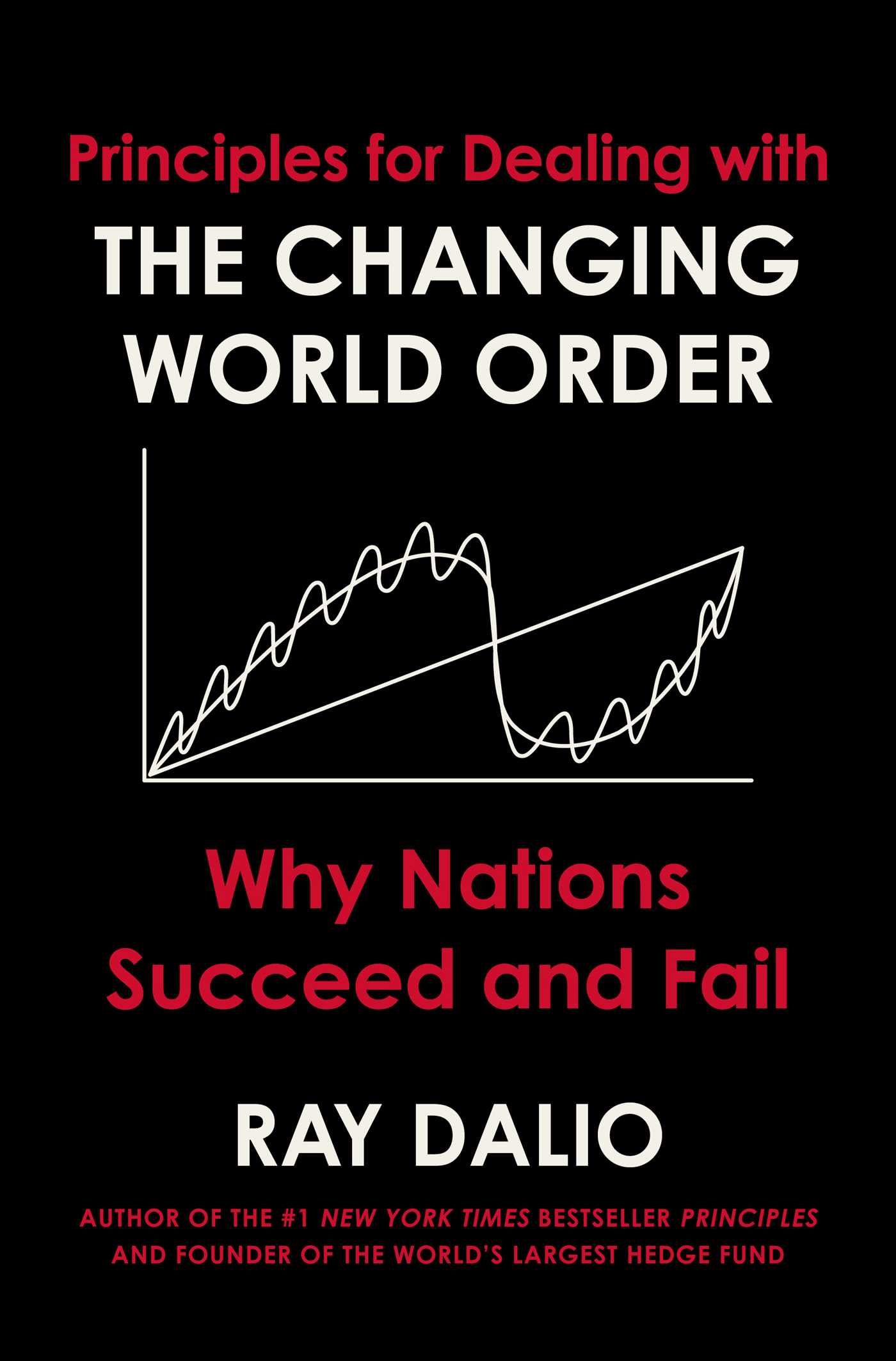
Principles for Dealing with the Changing World Order: Why Nations Succeed and Fail
by Ray Dalio
Rating: 4.3 ⭐
• 21 recommendations ❤️
From legendary investor Ray Dalio, author of the #1 New York Times bestseller Principles, who has spent half a century studying global economies and markets, Principles for Dealing with the Changing World Order examines history’s most turbulent economic and political periods to reveal why the times ahead will likely be radically different from those we’ve experienced in our lifetimes—and to offer practical advice on how to navigate them well.A few years ago, Ray Dalio noticed a confluence of political and economic conditions he hadn’t encountered before. They included huge debts and zero or near-zero interest rates that led to massive printing of money in the world’s three major reserve currencies; big political and social conflicts within countries, especially the US, due to the largest wealth, political, and values disparities in more than 100 years; and the rising of a world power (China) to challenge the existing world power (US) and the existing world order. The last time that this confluence occurred was between 1930 and 1945. This realization sent Dalio on a search for the repeating patterns and cause/effect relationships underlying all major changes in wealth and power over the last 500 years.In this remarkable and timely addition to his Principles series, Dalio brings readers along for his study of the major empires—including the Dutch, the British, and the American—putting into perspective the “Big Cycle” that has driven the successes and failures of all the world’s major countries throughout history. He reveals the timeless and universal forces behind these shifts and uses them to look into the future, offering practical principles for positioning oneself for what’s ahead.

Out of Many, One: Portraits of America's Immigrants
by George W. Bush
Rating: 4.4 ⭐
• 2 recommendations ❤️
In this powerful new collection of oil paintings and stories, President George W. Bush spotlights the inspiring journeys of America's immigrants and the contributions they make to the life and prosperity of our nation.The issue of immigration stirs intense emotions today, as it has throughout much of American history. But what gets lost in the debates about policy are the stories of immigrants themselves, the people who are drawn to America by its promise of economic opportunity and political and religious freedom--and who strengthen our nation in countless ways.In the tradition of Portraits of Courage, President Bush's #1 New York Times bestseller, Out of Many, One brings together forty-three full-color portraits of men and women who have immigrated to the United States, alongside stirring stories of the unique ways all of them are pursuing the American Dream. Featuring men and women from thirty-five countries and nearly every region of the world, Out of Many, One shows how hard work, strong values, dreams, and determination know no borders or boundaries and how immigrants embody values that are often viewed as distinctly American: optimism and gratitude, a willingness to strive and to risk, a deep sense of patriotism, and a spirit of self-reliance that runs deep in our immigrant heritage. In these pages, we meet a North Korean refugee fighting for human rights, a Dallas-based CEO who crossed the Rio Grande from Mexico at age seventeen, and a NASA engineer who as a girl in Nigeria dreamed of coming to America, along with notable figures from business, the military, sports, and entertainment. President Bush captures their faces and stories in striking detail, bringing depth to our understanding of who immigrants are, the challenges they face on their paths to citizenship, and the lessons they can teach us about our country's character.As the stories unfold in this vibrant book, readers will gain a better appreciation for the humanity behind one of our most pressing policy issues and the countless ways in which America, through its tradition of welcoming newcomers, has been strengthened by those who have come here in search of a better life.
Designing Brand Identity: A Comprehensive Guide to the World of Brands and Branding
by Alina Wheeler
Rating: 4.2 ⭐
• 10 recommendations ❤️
Revised and updated sixth edition of the best-selling guide to branding fundamentals, strategy, and process. It’s harder than ever to be the brand of choice―in many markets, technology has lowered barriers to entry, increasing competition. Everything is digital and the need for fresh content is relentless. Decisions that used to be straightforward are now complicated by rapid advances in technology, the pandemic, political polarization, and numerous social and cultural changes. The sixth edition of Designing Brand Identity has been updated throughout to address the challenges faced by branding professionals today. This best-selling book demystifies branding, explains the fundamentals, and gives practitioners a roadmap to create sustainable and successful brands. With each topic covered in a single spread, the book celebrates great design and strategy while adding new thinking, new case studies, and future-facing, global perspectives. Organized into three sections―brand fundamentals, process basics, and case studies―this revised edition Whether you’re the project manager for your company’s rebrand or you need to educate your staff or students about brand fundamentals, Designing Brand Identity is the quintessential resource. From research to brand strategy, design execution to launch and governance, Designing Brand identity is a compendium of tools for branding success and best practices for inspiration.