20 Books Recommended

The Inner Game of Tennis: The Classic Guide to the Mental Side of Peak Performance
by W. Timothy Gallwey
Rating: 4.2 ⭐
• 11 recommendations ❤️
The timeless guide to achieving the state of “relaxed concentration” that’s not only the key to peak performance in tennis but the secret to success in life itself—part of the bestselling Inner Game series, with more than one million copies sold!“Groundbreaking . . . the best guide to getting out of your own way . . . Its profound advice applies to many other parts of life.”—Bill Gates, GatesNotes (“Five of My All-Time Favorite Books”) This phenomenally successful guide to mastering the game from the inside out has become a touchstone for hundreds of thousands of people. Billie Jean King has called the book her tennis bible; Al Gore has used it to focus his campaign staff; and Itzhak Perlman has recommended it to young violinists. Based on W. Timothy Gallwey’s profound realization that the key to success doesn’t lie in holding the racket just right, or positioning the feet perfectly, but rather in keeping the mind uncluttered, this transformative book gives you the tools to unlock the potential that you’ve possessed all along. “The Inner Game” is the one played within the mind of the player, against the hurdles of self-doubt, nervousness, and lapses in concentration. Gallwey shows us how to overcome these obstacles by trusting the intuitive wisdom of our bodies and achieving a state of “relaxed concentration.” With chapters devoted to trusting the self and changing habits, it is no surprise then, that Gallwey’s method has had an impact far beyond the confines of the tennis court. Whether you want to play music, write a novel, get ahead at work, or simply unwind after a stressful day, Gallwey shows you how to tap into your utmost potential. No matter your goals, The Inner Game of Tennis gives you the definitive framework for long-term success.

A World Lit Only by Fire: The Medieval Mind and the Renaissance: Portrait of an Age
by William Manchester
Rating: 3.8 ⭐
• 2 recommendations ❤️
From tales of chivalrous knights to the barbarity of trial by ordeal, no era has been a greater source of awe, horror, and wonder than the Middle Ages. In handsomely crafted prose, and with the grace and authority of his extraordinary gift for narrative history, William Manchester leads us from a civilization tottering on the brink of collapse to the grandeur of its rebirth - the dense explosion of energy that spawned some of history's greatest poets, philosophers, painters, adventurers, and reformers, as well as some of its most spectacular villains - the Renaissance.

The path to achieving Zen (a balance between the body and the mind) is brilliantly explained by Professor Eugen Herrigel in this timeless account.This book is the result of the author’s six year quest to learn archery in the hands of Japanese Zen masters. It is an honest account of one man’s journey to complete abandonment of ‘the self’ and the Western principles that we use to define ourselves. Professor Herrigel imparts knowledge from his experiences and guides the reader through physical and spiritual lessons in a clear and insightful way.Mastering archery is not the key to achieving Zen, and this is not a practical guide to archery. It is more a guide to Zen principles and learning and perfect for practitioners and non-practitioners alike.

This comprehensive record of Krishnamurti’s teachings is an excellent, wide-ranging introduction to the great philosopher’s thought. With among others, Jacob Needleman, Alain Naude, and Swami Venkatasananda, Krishnamurti examines such issues as the role of the teacher and tradition; the need for awareness of ‘cosmic consciousness; the problem of good and evil; and traditional Vedanta methods of help for different levels of seekers.

The Image: A Guide to Pseudo-Events in America
by Daniel J. Boorstin
Rating: 4.1 ⭐
• 2 recommendations ❤️
First published in 1962, this wonderfully provocative book introduced the notion of “pseudo-events”—events such as press conferences and presidential debates, which are manufactured solely in order to be reported—and the contemporary definition of celebrity as “a person who is known for his well-knownness.” Since then Daniel J. Boorstin’s prophetic vision of an America inundated by its own illusions has become an essential resource for any reader who wants to distinguish the manifold deceptions of our culture from its few enduring truths.Cover design by Matt Dorfman.

The Brutality of Fact: Interviews with Francis Bacon by David Sylvester (1987) Paperback
by David Sylvester
Rating: 3.0 ⭐
• 2 recommendations ❤️
Interviews with painter, Francis Bacon.

Ellen J. Langer, Harvard professor of psychology, determines that the mindless following of routine and other automatic behaviors lead to much error, pain and a predetermined course of life. In this thought-provoking book, her research has been "translated" for the lay reader. With anecdotes and metaphors, Langer explains how the mindless--as opposed to the mindful--develop mindsets of categories, associations, habits of thought born of repetition in childhood and throughout schooling. To be mindful, she notes, stressing process over outcome, allows free rein to intuition and creativity, and opens us to new information and perspectives. Langer discusses the negative impact of mindsets on business and social relations, showing special concern for the elderly, who often suffer from learned helplessness and lack of options. Encouraging the application of mindfulness to health, the author affirms that placebos and alternative, mind-based therapies can help patients and addicts move from unhealthy to healthy contexts.

Facing Love Addiction: Giving Yourself the Power to Change the Way You Love
by Pia Mellody
Rating: 4.1 ⭐
• 5 recommendations ❤️
In this revised and updated version of Facing Love Addiction , bestselling author of Facing Codependence and internationally recognized dependence and addiction authority Pia Mellody unravels the intricate dynamics of unhealthy love relationships and shows us how to let go of toxic love. Through twelve-step work, exercises, and journal-keeping, Facing Love Addiction compassionately and realistically outlines the recovery process for Love Addicts, and Mellody’s fresh perspective and clear methods work to comfort and motivate all those looking to establish and maintain healthy, happy relationships.

Few works of political and cultural theory have been as enduringly provocative as Guy Debord's The Society of the Spectacle. From its publication amid the social upheavals of the 1960s up to the present, the volatile theses of this book have decisively transformed debates on the shape of modernity, capitalism and everyday life in the late twentieth century. Now finally available in a superb English translation approved by the author, Debord's text remains as crucial as ever for understanding the contemporary effects of power, which are increasingly inseparable from the new virtual worlds of our rapidly changing image/information culture.

A new edition of the best-selling work from one of the most forward-thinking and important philosophers of our time. Join one of the greatest contemporary philosophers on a breathtaking tour of time and the Kosmos--from the Big Bang right up to the eve of the twenty-first century. This accessible and entertaining summary of Ken Wilber's great ideas has been expanding minds now for two decades, providing a kind of unified field theory of the universe and, along the way, treating a host of issues related to that universe, from gender roles, to multiculturalism, to environmentalism, and even the meaning of the Internet. This special anniversary edition contains as an afterword a dialogue between the author and Lana Wachowski, the award-winning writer-director of the Matrix film trilogy, in which we're offered an intimate glimpse into the evolution of Ken's thinking and where he stands today. A Brief History of Everything may well be the best introduction to the thought of this man who has been called the -Einstein of Consciousness- (John White).
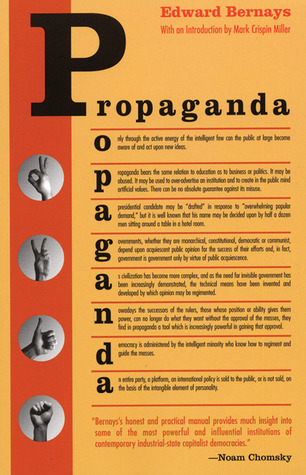
“Bernays’ honest and practical manual provides much insight into some of the most powerful and influential institutions of contemporary industrial state capitalist democracies.”— Noam Chomsky “The conscious and intelligent manipulation of the organized habits and opinions of the masses is an important element in democratic society. Those who manipulate this unseen mechanism of society constitute an invisible government which is the true ruling power of our country.”— Edward Bernays A seminal and controversial figure in the history of political thought and public relations, Edward Bernays (1891–1995), pioneered the scientific technique of shaping and manipulating public opinion, which he famously dubbed “engineering of consent.” During World War I, he was an integral part of the U.S. Committee on Public Information (CPI), a powerful propaganda apparatus that was mobilized to package, advertise and sell the war to the American people as one that would “Make the World Safe for Democracy.” The CPI would become the blueprint in which marketing strategies for future wars would be based upon. Bernays applied the techniques he had learned in the CPI and, incorporating some of the ideas of Walter Lipmann, as well as his uncle, Sigmund Freud, became an outspoken proponent of propaganda as a tool for democratic and corporate manipulation of the population. His 1928 bombshell Propaganda lays out his eerily prescient vision for using propaganda to regiment the collective mind in a variety of areas, including government, politics, art, science and education. To read this book today is to frightfully comprehend what our contemporary institutions of government and business have become in regards to organized manipulation of the masses.
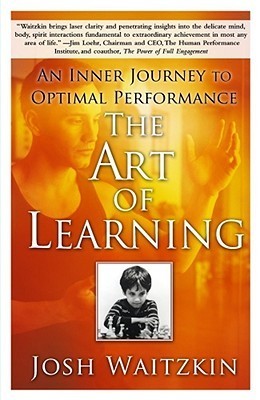
The Art of Learning: An Inner Journey to Optimal Performance
by Josh Waitzkin
Rating: 4.1 ⭐
• 9 recommendations ❤️
In his riveting new book, The Art of Learning , Waitzkin tells his remarkable story of personal achievement and shares the principles of learning and performance that have propelled him to the top—twice.Josh Waitzkin knows what it means to be at the top of his game. A public figure since winning his first National Chess Championship at the age of nine, Waitzkin was catapulted into a media whirlwind as a teenager when his father’s book Searching for Bobby Fischer was made into a major motion picture. After dominating the scholastic chess world for ten years, Waitzkin expanded his horizons, taking on the martial art Tai Chi Chuan and ultimately earning the title of World Champion. How was he able to reach the pinnacle of two disciplines that on the surface seem so different? “I’ve come to realize that what I am best at is not Tai Chi, and it is not chess,” he says. “What I am best at is the art of learning.”With a narrative that combines heart-stopping martial arts wars and tense chess face-offs with life lessons that speak to all of us, The Art of Learning takes readers through Waitzkin’s unique journey to excellence. He explains in clear detail how a well-thought-out, principled approach to learning is what separates success from failure. Waitzkin believes that achievement, even at the championship level, is a function of a lifestyle that fuels a creative, resilient growth process. Rather than focusing on climactic wins, Waitzkin reveals the inner workings of his everyday method, from systematically triggering intuitive breakthroughs, to honing techniques into states of remarkable potency, to mastering the art of performance psychology.Through his own example, Waitzkin explains how to embrace defeat and make mistakes work for you. Does your opponent make you angry? Waitzkin describes how to channel emotions into creative fuel. As he explains it, obstacles are not obstacles but challenges to overcome, to spur the growth process by turning weaknesses into strengths. He illustrates the exact routines that he has used in all of his competitions, whether mental or physical, so that you too can achieve your peak performance zone in any competitive or professional circumstance.In stories ranging from his early years taking on chess hustlers as a seven year old in New York City’s Washington Square Park, to dealing with the pressures of having a film made about his life, to International Chess Championships in India, Hungary, and Brazil, to gripping battles against powerhouse fighters in Taiwan in the Push Hands World Championships, The Art of Learning encapsulates an extraordinary competitor’s life lessons in a page-turning narrative.

The Power Of Myth launched an extraordinary resurgence of interest in Joseph Campbell and his work. A preeminent scholar, writer, and teacher, he has had a profound influence on millions of people. To him, mythology was the "song of the universe, the music of the spheres." With Bill Moyers, one of America's most prominent journalists, as his thoughtful and engaging interviewer, The Power Of Myth touches on subjects from modern marriage to virgin births, from Jesus to John Lennon, offering a brilliant combination of intelligence and wit.

The first collection of stories from “one of the great short story writers of our time” ( The Philadelphia Inquirer ) breathed new life into the American short story, showing us the humor and tragedy that dwell in the hearts of ordinary people."[Carver's stories] can ... be counted among the masterpieces of American Literature." — The New York Times Book Review"One of the great short story writers of our time—of any time." — The Philadelhpia Inquirer"The whole collection is a knock out. Few writers can match Raymond Carver's entwining style and language." — The Dallas Morning News

John Berger’s Classic Text on ArtWays of Seeing is one of the most stimulating and the most influential books on art in any language. First published in 1972, it was based on the BBC television series about which the (London) Sunday Times a critic commented: "This is an eye-opener in more ways than one: by concentrating on how we look at paintings . . . he will almost certainly change the way you look at pictures." By now he has."Berger has the ability to cut right through the mystification of the professional art critics . . . He is a liberator of images: and once we have allowed the paintings to work on us directly, we are in a much better position to make a meaningful evaluation" —Peter Fuller, Arts Review"The influence of the series and the book . . . was enormous . . . It opened up for general attention to areas of cultural study that are now commonplace" —Geoff Dyer in Ways of Telling.

Generation X is Douglas Coupland's acclaimed salute to the generation born in the late 1950s and 1960s--a generation known vaguely up to then as "twentysomething."Andy, Claire, and Dag, each in their twenties, have quit "pointless jobs done grudgingly to little applause" in their respective hometowns and cut themselves adrift on the California desert. In search of the drastic changes that will lend meaning to their lives, they've mired themselves in the detritus of American cultural memory. Refugees from history, the three develop an ascetic regime of story-telling, boozing, and working McJobs--"low-pay, low-prestige, low-benefit, no-future jobs in the service industry." They create modern fables of love and death among the cosmetic surgery parlors and cocktail bars of Palm Springs, disturbingly funny tales of nuclear waste, historical overdosing, and mall culture.A dark snapshot of the trio's highly fortressed inner world quickly emerges--landscapes peopled with dead TV shows, "Elvis moments," and semi-disposable Swedish furniture. And from these landscapes, deeper portraits emerge, those of fanatically independent individuals, pathologically ambivalent about the future and brimming with unsatisfied longings for permanence, for love, and for their own home. Andy, Dag, and Claire are underemployed, overeducated, intensely private, and unpredictable. Like the group they mirror, they have nowhere to assuage their fears, and no culture to replace their anomie.

Man's Search for Meaning has riveted generations of readers with its descriptions of life in Nazi death camps and its lessons for spiritual survival. Between 1942 and 1945 psychiatrist Viktor Frankl labored in four different camps, including Auschwitz, while his parents, brother, and pregnant wife perished. Based on his own experience and the stories of his many patients, Frankl argues that we cannot avoid suffering but we can choose how to cope with it, find meaning in it, and move forward with renewed purpose. Frankl's theory—known as logotherapy, from the Greek word logos ("meaning")—holds that our primary drive in life is not pleasure, as Freud maintained, but the discovery and pursuit of what we personally find meaningful. In the decades since its first publication in 1959, Man's Search for Meaning has become a classic, with more than twelve million copies in print around the world. A 1991 Library of Congress survey that asked readers to name a "book that made a difference in your life" found Man's Search for Meaning among the ten most influential books in America. At once a memoir, a meditation, a treatise, and a history, it continues to inspire us all to find significance in the very act of living.(back cover)

#1 NATIONAL BESTSELLER • F ar more than a superb memoir about the highest levels of professional tennis, Open is the engrossing story of a remarkable life. • "Agassi’s memoir is just as entrancing as his tennis game.” — Time “Honest in a way that such books seldom are.” — The New York Times Andre Agassi had his life mapped out for him before he left the crib. Groomed to be a tennis champion by his moody and demanding father, by the age of twenty-two Agassi had won the first of his eight grand slams and achieved wealth, celebrity, and the game’s highest honors. But as he reveals in this searching autobiography, off the court he was often unhappy and confused, unfulfilled by his great achievements in a sport he had come to resent.Agassi writes candidly about his early success and his uncomfortable relationship with fame, his marriage to Brooke Shields, his growing interest in philanthropy, and—described in haunting, point-by-point detail—the highs and lows of his celebrated career.

Breaking the Habit of Being Yourself: How to Lose Your Mind and Create a New One
by Joe Dispenza
Rating: 4.3 ⭐
• 2 recommendations ❤️
Discover how to reprogram your biology and thinking, and break the habit of being yourself so you can truly change your mind and life.Best-selling author, international speaker, chiropractor, and renowned researcher of epigenetics, quantum physics, and neuroscience, Dr. Joe Dispenza shares that you are not doomed by your genes and hardwired to be a certain way for the rest of your life.New science is emerging that empowers all human beings to create the reality they choose.In Breaking the Habit of Being Yourself, Dr. Joe Dispenza combines the fields of quantum physics, neuroscience, brain chemistry, biology, and genetics to show you what is truly possible and how to recondition the body and create better health.Not only will you be given the necessary knowledge to change your energy and any aspect of yourself, but you will be taught the step-by-step tools to apply what you learn in order to make measurable changes in any area of your life.
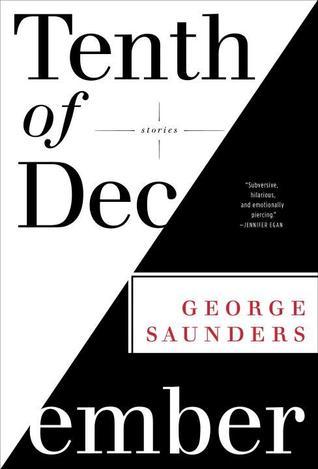
One of the most important and blazingly original writers of his generation, George Saunders is an undisputed master of the short story, and Tenth of December is his most honest, accessible, and moving collection yet.In the taut opening, "Victory Lap," a boy witnesses the attempted abduction of the girl next door and is faced with a harrowing choice: Does he ignore what he sees, or override years of smothering advice from his parents and act? In "Home," a combat-damaged soldier moves back in with his mother and struggles to reconcile the world he left with the one to which he has returned. And in the title story, a stunning meditation on imagination, memory, and loss, a middle-aged cancer patient walks into the woods to commit suicide, only to encounter a troubled young boy who, over the course of a fateful morning, gives the dying man a final chance to recall who he really is. A hapless, deluded owner of an antique store; two mothers struggling to do the right thing; a teenage girl whose idealism is challenged by a brutal brush with reality; a man tormented by a series of pharmaceutical experiments that force him to lust, to love, to kill—the unforgettable characters that populate the pages of Tenth of December are vividly and lovingly infused with Saunders' signature blend of exuberant prose, deep humanity, and stylistic innovation.Writing brilliantly and profoundly about class, sex, love, loss, work, despair, and war, Saunders cuts to the core of the contemporary experience. These stories take on the big questions and explore the fault lines of our own morality, delving into the questions of what makes us good and what makes us human.Unsettling, insightful, and hilarious, the stories in Tenth of December—through their manic energy, their focus on what is redeemable in human beings, and their generosity of spirit—not only entertain and delight; they fulfill Chekhov's dictum that art should "prepare us for tenderness."