
Changpeng Zhao Recommended Books
Canadian businessman
28 Books Recommended

This book covers the basic truths about economics in less than 200 pages.

Deploying invulnerable twenty-fifth-century soldiers called Skins, Zantiu-Braun's corporate starships loot entire planets. But as the Skins invade bucolic Thallspring, Z-B's strategy is about to go awry, all because of: Sgt. Lawrence Newton, a dreamer whose twenty years as a Skin have destroyed his hopes and desires; Denise Ebourn, a schoolteacher and resistance leader whose guerilla tactics rival those of Che Guevara and George Washington; and Simon Roderick, the director who serves Z-B with a dedication that not even he himself can understand. Grimly determined to steal, or protect, a mysterious treasure, the three players emgage in a private war that will explode into unimaginable quests for personal grace...or galactic domination.

Crossing the Chasm: Marketing and Selling High-Tech Products to Mainstream Customers
by Geoffrey A. Moore
Rating: 4.0 ⭐
• 22 recommendations ❤️
Here is the bestselling guide that created a new game plan for marketing in high-tech industries. Crossing the Chasm has become the bible for bringing cutting-edge products to progressively larger markets. This edition provides new insights into the realities of high-tech marketing, with special emphasis on the Internet. It's essential reading for anyone with a stake in the world's most exciting marketplace.

Made to Stick: Why Some Ideas Survive and Others Die
by Chip Heath
Rating: 4.0 ⭐
• 10 recommendations ❤️
NEW YORK TIMES BESTSELLER - The instant classic about why some ideas thrive, why others die, and how to improve your idea's chances--essential reading in the "fake news" era.Mark Twain once observed, "A lie can get halfway around the world before the truth can even get its boots on." His observation rings true: Urban legends, conspiracy theories, and bogus news stories circulate effortlessly. Meanwhile, people with important ideas--entrepreneurs, teachers, politicians, and journalists--struggle to make them "stick."In Made to Stick, Chip and Dan Heath reveal the anatomy of ideas that stick and explain ways to make ideas stickier, such as applying the human scale principle, using the Velcro Theory of Memory, and creating curiosity gaps. Along the way, we discover that sticky messages of all kinds--from the infamous "kidney theft ring" hoax to a coach's lessons on sportsmanship to a vision for a new product at Sony--draw their power from the same six traits.Made to Stick will transform the way you communicate. It's a fast-paced tour of success stories (and failures): the Nobel Prize-winning scientist who drank a glass of bacteria to prove a point about stomach ulcers; the charities who make use of the Mother Teresa Effect; the elementary-school teacher whose simulation actually prevented racial prejudice.Provocative, eye-opening, and often surprisingly funny, Made to Stick shows us the vital principles of winning ideas--and tells us how we can apply these rules to making our own messages stick.

The Law was originally published in 1850, and considered the work for which Bastiat is best known. This is an unabridged edition -

The Starfish and the Spider: The Unstoppable Power of Leaderless Organizations
by Ori Brafman
Rating: 3.8 ⭐
• 4 recommendations ❤️
If you cut off a spider’s leg, it’s crippled; if you cut off its head, it dies. But if you cut off a starfish’s leg it grows a new one, and the old leg can grow into an entirely new starfish.What’s the hidden power behind the success of Wikipedia, Craigslist, and Skype? What do eBay and General Electric have in common with the abolitionist and women’s rights movements? What fundamental choice put General Motors and Toyota on vastly different paths? How could winning a Supreme Court case be the biggest mistake MGM could have made?After five years of ground-breaking research, Ori Brafman and Rod Beckstrom share some unexpected answers, gripping stories, and a tapestry of unlikely connections. The Starfish and the Spider argues that organizations fall into two categories: traditional “spiders,” which have a rigid hierarchy and top-down leadership, and revolutionary “starfish,” which rely on the power of peer relationships.The Starfish and the Spider explores what happens when starfish take on spiders (such as the music industry vs. Napster, Kazaa, and the P2P services that followed). It reveals how established companies and institutions, from IBM to Intuit to the US government, are also learning how to incorporate starfish principles to achieve success. The book explores:* How the Apaches fended off the powerful Spanish army for 200 years* The power of a simple circle* The importance of catalysts who have an uncanny ability to bring people together * How the Internet has become a breeding ground for leaderless organizations* How Alcoholics Anonymous has reached untold millions with only a shared ideology and without a leaderThe Starfish and the Spider is the rare book that will change how you understand the world around you.
The Advantage: Why Organizational Health Trumps Everything Else In Business
by Patrick Lencioni
Rating: 4.1 ⭐
• 5 recommendations ❤️
There is a competitive advantage out there, arguably more powerful than any other. Is it superior strategy? Faster innovation? Smarter employees? No, New York Times best-selling author, Patrick Lencioni, argues that the seminal difference between successful companies and mediocre ones has little to do with what they know and how smart they are and more to do with how healthy they are. In this book, Lencioni brings together his vast experience and many of the themes cultivated in his other best-selling books and delivers a first: a cohesive and comprehensive exploration of the unique advantage organizational health provides. Simply put, an organization is healthy when it is whole, consistent and complete, when its management, operations and culture are unified. Healthy organizations outperform their counterparts, are free of politics and confusion and provide an environment where star performers never want to leave. Lencioni’s first non-fiction book provides leaders with a groundbreaking, approachable model for achieving organizational health―complete with stories, tips and anecdotes from his experiences consulting to some of the nation’s leading organizations. In this age of informational ubiquity and nano-second change, it is no longer enough to build a competitive advantage based on intelligence alone. The Advantage provides a foundational construct for conducting business in a new way―one that maximizes human potential and aligns the organization around a common set of principles.

A Summer Reading Pick for President Barack Obama, Bill Gates, and Mark Zuckerberg From a renowned historian comes a groundbreaking narrative of humanity’s creation and evolution—a #1 international bestseller—that explores the ways in which biology and history have defined us and enhanced our understanding of what it means to be “human.”One hundred thousand years ago, at least six different species of humans inhabited Earth. Yet today there is only one—homo sapiens. What happened to the others? And what may happen to us?Most books about the history of humanity pursue either a historical or a biological approach, but Dr. Yuval Noah Harari breaks the mold with this highly original book that begins about 70,000 years ago with the appearance of modern cognition. From examining the role evolving humans have played in the global ecosystem to charting the rise of empires, Sapiens integrates history and science to reconsider accepted narratives, connect past developments with contemporary concerns, and examine specific events within the context of larger ideas.Dr. Harari also compels us to look ahead, because over the last few decades humans have begun to bend laws of natural selection that have governed life for the past four billion years. We are acquiring the ability to design not only the world around us, but also ourselves. Where is this leading us, and what do we want to become?Featuring 27 photographs, 6 maps, and 25 illustrations/diagrams.
Antifragile: Things That Gain from Disorder
by Nassim Nicholas Taleb
Rating: 4.2 ⭐
• 23 recommendations ❤️
Antifragile is a standalone book in Nassim Nicholas Taleb’s landmark Incerto series, an investigation of opacity, luck, uncertainty, probability, human error, risk, and decision-making in a world we don’t understand. The other books in the series are Fooled by Randomness, The Black Swan, Skin in the Game, and The Bed of Procrustes .Nassim Nicholas Taleb, the bestselling author of The Black Swan and one of the foremost thinkers of our time, reveals how to thrive in an uncertain world.Just as human bones get stronger when subjected to stress and tension, and rumors or riots intensify when someone tries to repress them, many things in life benefit from stress, disorder, volatility, and turmoil. What Taleb has identified and calls “antifragile” is that category of things that not only gain from chaos but need it in order to survive and flourish. In The Black Swan, Taleb showed us that highly improbable and unpredictable events underlie almost everything about our world. In Antifragile, Taleb stands uncertainty on its head, making it desirable, even necessary, and proposes that things be built in an antifragile manner. The antifragile is beyond the resilient or robust. The resilient resists shocks and stays the same; the antifragile gets better and better.Furthermore, the antifragile is immune to prediction errors and protected from adverse events. Why is the city-state better than the nation-state, why is debt bad for you, and why is what we call “efficient” not efficient at all? Why do government responses and social policies protect the strong and hurt the weak? Why should you write your resignation letter before even starting on the job? How did the sinking of the Titanic save lives? The book spans innovation by trial and error, life decisions, politics, urban planning, war, personal finance, economic systems, and medicine. And throughout, in addition to the street wisdom of Fat Tony of Brooklyn, the voices and recipes of ancient wisdom, from Roman, Greek, Semitic, and medieval sources, are loud and clear.Antifragile is a blueprint for living in a Black Swan world.Erudite, witty, and iconoclastic, Taleb’s message is revolutionary: The antifragile, and only the antifragile, will make it.Praise for Antifragile“Ambitious and thought-provoking . . . highly entertaining.” — The Economist“A bold book explaining how and why we should embrace uncertainty, randomness, and error . . . It may just change our lives.” — Newsweek

New York Times bestseller and named Best Marketing Book of 2014 by the American Marketing AssociationWhat makes things popular? Why do people talk about certain products and ideas more than others? Why are some stories and rumors more infectious? And what makes online content go viral?If you said advertising, think again. People don't listen to advertisements, they listen to their peers. But why do people talk about certain products and ideas more than others? Why are some stories and rumors more infectious? And what makes online content go viral? Wharton marketing professor Jonah Berger has spent the last decade answering these questions. He's studied why New York Times articles make the paper's own Most E-mailed List, why products get word of mouth, and how social influence shapes everything from the cars we buy to the clothes we wear to the names we give our children. In this book, Berger reveals the secret science behind word-of-mouth and social transmission. Discover how six basic principles drive all sorts of things to become contagious, from consumer products and policy initiatives to workplace rumors and YouTube videos.Contagious combines groundbreaking research with powerful stories. Learn how a luxury steakhouse found popularity through the lowly cheese-steak, why anti-drug commercials might have actually increased drug use, and why more than 200 million consumers shared a video about one of the seemingly most boring products there is: a blender. If you've wondered why certain stories get shared, e-mails get forwarded, or videos go viral, Contagious explains why, and shows how to leverage these concepts to craft contagious content. This book provides a set of specific, actionable techniques for helping information spread - for designing messages, advertisements, and information that people will share. Whether you're a manager at a big company, a small business owner trying to boost awareness, a politician running for office, or a health official trying to get the word out, Contagious will show you how to make your product or idea catch on.

Give and Take: Why Helping Others Drives Our Success
by Adam M. Grant
Rating: 4.2 ⭐
• 32 recommendations ❤️
A groundbreaking look at why our interactions with others hold the key to success, from the bestselling author of Originals For generations, we have focused on the individual drivers of success: passion, hard work, talent, and luck. But in today’s dramatically reconfigured world, success is increasingly dependent on how we interact with others. In Give and Take, Adam Grant, an award-winning researcher and Wharton’s highest-rated professor, examines the surprising forces that shape why some people rise to the top of the success ladder while others sink to the bottom. Praised by social scientists, business theorists, and corporate leaders, Give and Take opens up an approach to work, interactions, and productivity that is nothing short of revolutionary.

Team of Teams: New Rules of Engagement for a Complex World
by Stanley McChrystal
Rating: 4.1 ⭐
• 7 recommendations ❤️
The retired four-star general and and bestselling author of My Share of the Task shares a powerful new leadership model As commander of Joint Special Operations Command (JSOC), General Stanley McChrystal played a crucial role in the War on Terror. But when he took the helm in 2004, America was losing that war badly: despite vastly inferior resources and technology, Al Qaeda was outmaneuvering America’s most elite warriors. McChrystal came to realize that today’s faster, more interdependent world had overwhelmed the conventional, top-down hierarchy of the US military. Al Qaeda had seen the future: a decentralized network that could move quickly and strike ruthlessly. To defeat such an enemy, JSOC would have to discard a century of management wisdom, and pivot from a pursuit of mechanical efficiency to organic adaptability. Under McChrystal’s leadership, JSOC remade itself, in the midst of a grueling war, into something entirely new: a network that combined robust centralized communication with decentralized managerial authority. As a result, they beat back Al Qaeda. In this book, McChrystal shows not only how the military made that transition, but also how similar shifts are possible in all organizations, from large companies to startups to charities to governments. In a turbulent world, the best organizations think and act like a team of teams, embracing small groups that combine the freedom to experiment with a relentless drive to share what they’ve learned. Drawing on a wealth of evidence from his military career, the private sector, and sources as diverse as hospital emergency rooms and NASA’s space program, McChrystal frames the existential challenge facing today’s organizations, and presents a compelling, effective solution.

Exponential Organizations: Why new organizations are ten times better, faster, and cheaper than yours
by Salim Ismail
Rating: 4.1 ⭐
• 2 recommendations ❤️
In business, performance is key. In performance, how you organize can be the key to growth. In the past five years, the business world has seen the birth of a new breed of company - the Exponential Organization - that has revolutionized how a company can accelerate its growth by using technology.

Work Rules!: Insights from Inside Google That Will Transform How You Live and Lead
by Laszlo Bock
Rating: 4.1 ⭐
• 6 recommendations ❤️
From the visionary head of Google's innovative People Operations comes a groundbreaking inquiry into the philosophy of work-and a blueprint for attracting the most spectacular talent to your business and ensuring that they succeed. "We spend more time working than doing anything else in life. It's not right that the experience of work should be so demotivating and dehumanizing." So says Laszlo Bock, head of People Operations at the company that transformed how the world interacts with knowledge. This insight is the heart of WORK RULES!, a compelling and surprisingly playful manifesto that offers lessons including:Take away managers' power over employeesLearn from your best employees-and your worstHire only people who are smarter than you are, no matter how long it takes to find themPay unfairly (it's more fair!)Don't trust your gut: Use data to predict and shape the futureDefault to open-be transparent and welcome feedbackIf you're comfortable with the amount of freedom you've given your employees, you haven't gone far enough. Drawing on the latest research in behavioral economics and a profound grasp of human psychology, WORK RULES! also provides teaching examples from a range of industries-including lauded companies that happen to be hideous places to work and little-known companies that achieve spectacular results by valuing and listening to their employees. Bock takes us inside one of history's most explosively successful businesses to reveal why Google is consistently rated one of the best places to work in the world, distilling 15 years of intensive worker R&D into principles that are easy to put into action, whether you're a team of one or a team of thousands. WORK RULES! shows how to strike a balance between creativity and structure, leading to success you can measure in quality of life as well as market share. Read it to build a better company from within rather than from above; read it to reawaken your joy in what you do.

Platform Revolution: How Networked Markets Are Transforming the Economy―and How to Make Them Work for You
by Geoffrey G. Parker
Rating: 4.0 ⭐
• 2 recommendations ❤️
Uber. Airbnb. Amazon. Apple. PayPal. All of these companies disrupted their markets when they launched. Today they are industry leaders. What’s the secret to their success?These cutting-edge businesses are built on platforms: two-sided markets that are revolutionizing the way we do business. Written by three of the most sought-after experts on platform businesses, Platform Revolution is the first authoritative, fact-based book on platform models. Whether platforms are connecting sellers and buyers, hosts and visitors, or drivers with people who need a ride, Geoffrey G. Parker, Marshall W. Van Alstyne, and Sangeet Paul Choudary reveal the what, how, and why of this revolution and provide the first “owner’s manual” for creating a successful platform business.Platform Revolution teaches newcomers how to start and run a successful platform business, explaining ways to identify prime markets and monetize networks. Addressing current business leaders, the authors reveal strategies behind some of today’s up-and-coming platforms, such as Tinder and SkillShare, and explain how traditional companies can adapt in a changing marketplace. The authors also cover essential issues concerning security, regulation, and consumer trust, while examining markets that may be ripe for a platform revolution, including healthcare, education, and energy.As digital networks increase in ubiquity, businesses that do a better job of harnessing the power of the platform will win. An indispensable guide, Platform Revolution charts out the brilliant future of platforms and reveals how they will irrevocably alter the lives and careers of millions.

Hug Your Haters: How to Embrace Complaints and Keep Your Customers
by Jay Baer
Rating: 3.8 ⭐
• 2 recommendations ❤️
Haters are not your problem. . . .Ignoring them is.Eighty percent of companies say they deliver outstanding customer service, but only 8 percent of their customers agree. This book will help you close that gap by reconfiguring your customer service to deliver knockout experiences.The near-universal adoption of smartphones and social media has fundamentally altered the science of complaints. Critics (“haters”) can now express their displeasure faster and more publicly than ever. These trends have resulted in an overall increase in complaints and a belief by many businesses that they have to “pick their spots” when choosing to answer criticisms.Bestselling author Jay Baer shows why that approach is a major mistake. Based on an extensive proprietary study of how, where, and why we complain, Hug Your Haters proves that there are two types of complainers, each with very different · Offstage haters. These people simply want solutions to their problems. They complain via legacy channels where the likelihood of a response is highest—phone, e-mail, and company websites. Offstage haters don’t care if anyone else finds out, as long as they get answers.· Onstage haters. These people are often disappointed by a substandard interaction via traditional channels, so they turn to indirect venues, such as social media, online review sites, and discussion boards. Onstage haters want more than solutions—they want an audience to share their righteous indignation.Hug Your Haters shows exactly how to deal with both groups, drawing on meticulously researched case studies from businesses of all types and sizes from around the world. It includes specific playbooks and formulas as well as a fold-out poster of “the Hatrix,” which summarizes the best strategies for different situations. The book is also filled with poignant and hilarious examples of haters gone wild, and companies gone crazy, as well as inspirational stories of companies responding with speed, compassion, and humanity.Whether you work for a mom-and-pop store or a global brand, you will have haters—and you can’t afford to ignore them. Baer’s insights and tactics will teach you how to embrace complaints, put haters to work for you, and turn bad news into good outcomes.
The Culture Code: The Secrets of Highly Successful Groups
by Daniel Coyle
Rating: 4.2 ⭐
• 7 recommendations ❤️
What do Pixar, Google and the San Antonio Spurs basketball team have in common?The answer is that they all owe their extraordinary success to their team-building skills. In The Culture Code, Daniel Coyle goes inside some of the most effective organisations in the world and reveals their secrets. He not only explains what makes such groups tick, but also identifies the key factors that can generate team cohesion in any walk of life. He examines the verbal and physical cues that bring people together. He determines specific strategies that encourage collaboration and build trust. And he offers cautionary tales of toxic cultures and advises how to reform them, above all demonstrating the extraordinary achievements that result when we know how to cooperate effectively.
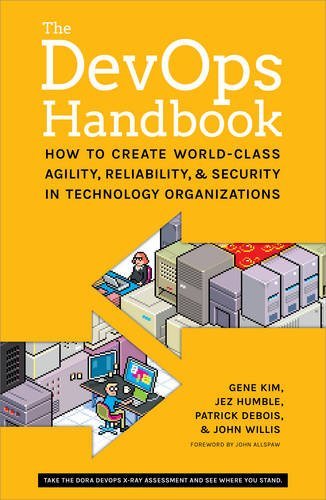
The DevOps Handbook: How to Create World-Class Agility, Reliability, and Security in Technology Organizations
by Gene Kim
Rating: 4.3 ⭐
• 2 recommendations ❤️
Increase profitability, elevate work culture, and exceed productivity goals through DevOps practices.More than ever, the effective management of technology is critical for business competitiveness. For decades, technology leaders have struggled to balance agility, reliability, and security. The consequences of failure have never been greater whether it's the healthcare.gov debacle, cardholder data breaches, or missing the boat with Big Data in the cloud.And yet, high performers using DevOps principles, such as Google, Amazon, Facebook, Etsy, and Netflix, are routinely and reliably deploying code into production hundreds, or even thousands, of times per day.Following in the footsteps of The Phoenix Project, The DevOps Handbook shows leaders how to replicate these incredible outcomes, by showing how to integrate Product Management, Development, QA, IT Operations, and Information Security to elevate your company and win in the marketplace."Table of contentsPrefaceSpreading the Aha! MomentIntroductionPART I: THE THREE WAYS1. Agile, continuous delivery and the three ways2. The First Way: The Principles of Flow3. The Second Way: The Principle of Feedback4. The Third Way: The Principles of Continual LearningPART II: WHERE TO START5. Selecting which value stream to start with6. Understanding the work in our value stream…7. How to design our organization and architecture8. How to get great outcomes by integrating operations into the daily work for developmentPART III: THE FIRST WAY: THE TECHNICAL PRACTICES OF FLOW9. Create the foundations of our deployment pipeline10. Enable fast and reliable automated testing11. Enable and practice continuous integration12. Automate and enable low-risk releases13. Architect for low-risk releasesPART IV: THE SECOND WAY: THE TECHNICAL PRACTICES OF FEEDBACK14*. Create telemetry to enable seeing abd solving problems15. Analyze telemetry to better anticipate problems16. Enable feedbackso development and operation can safely deploy code17. Integrate hypothesis-driven development and A/B testing into our daily work18. Create review and coordination processes to increase quality of our current workPART V: THE THRID WAY: THE TECHNICAL PRACTICES OF CONTINUAL LEARNING19. Enable and inject learning into daily work20. Convert local discoveries into global improvements21. Reserve time to create organizational learning22. Information security as everyone’s job, every day23. Protecting the deployment pipelinePART VI: CONCLUSIONA call to actionConclusion to the DevOps HandbookAPPENDICES1. The convergence of Devops2. The theory of constraints and core chronic conflicts3. Tabular form of downward spiral4. The dangers of handoffs and queues5. Myths of industrial safety6. The Toyota Andon Cord7. COTS Software8. Post-mortem meetings9. The Simian Army10. Transparent uptimeAdditional ResourcesEndnotes

Alchemy: The Dark Art and Curious Science of Creating Magic in Brands, Business, and Life
by Rory Sutherland
Rating: 4.2 ⭐
• 8 recommendations ❤️
HOW DOES MAGIC HAPPEN? The Ogilvy advertising legend—“one of the leading minds in the world of branding” (NPR)—explores the art and science of conjuring irresistible products and ideas . "Sutherland, the legendary Vice Chairman of Ogilvy, uses his decades of experience to dissect human spending behavior in an insanely entertaining way. Alchemy combines scientific research with hilarious stories and case studies of campaigns for AmEx, Microsoft and the like. This is a must-read." —Entrepreneur ("Best Books of the Year")Why is Red Bull so popular, though everyone— everyone! —hates the taste? Humans are, in a word, irrational, basing decisions as much on subtle external signals (that little blue can) as on objective qualities (flavor, price, quality). The surrounding world, meanwhile, is irreducibly complex and random. This means future success can’t be projected on any accounting spreadsheet. To strike gold, you must master the dark art and curious science of conjuring irresistible alchemy . Based on thirty years of field work inside the largest experiment in human behavior ever conceived—the forever-unfolding pageant of consumer capitalism— Alchemy, the revolutionary book by Ogilvy advertising legend Rory Sutherland, whose TED talks have been viewed nearly seven million times, decodes human behavior, blending leading-edge scientific research, absurdly entertaining storytelling, deep psychological insight, and practical case studies from his storied career working on campaigns for AmEx, Microsoft, and others. Heralded as “one of the leading minds in the world of branding” by NPR and "the don of modern advertising" by The Times , Sutherland is a unique thought leader, as comfortable exchanging ideas with Nobel Prize winners Daniel Kahneman and Richard Thaler (both interviewed in these pages) as he is crafting the next product launch. His unconventional and relentlessly curious approach has led him to discover that the most compelling secrets to human decision-making can be found in surprising What can honey bees teach us about creating a sustainable business? How could budget airlines show us how to market a healthcare system? Why is it better to be vaguely right than precisely wrong? What might soccer penalty kicks teach us about the dangers of risk-aversion? Better “branding,” Sutherland reveals, can also be employed not just to sell products, but to promote a variety of social aims, like getting people to pay taxes, improving public health outcomes, or encouraging more women to pursue careers in tech. Equally startling and profound, Sutherland’s journey through the strange world of decision making is filled with astonishing lessons for all aspects of life and business.

The Coaching Habit : Say Less, Ask More & Change the Way You Lead Forever
by Michael Bungay Stanier
Rating: 4.1 ⭐
• 2 recommendations ❤️
Coaching is an essential skill for leaders. But for most busy, overworked managers, coaching employees is done badly, or not at all. They’re just too busy, and it’s too hard to change. But what if managers could coach their people in 10 minutes or less? In Michael Bungay Stanier’s The Coaching Habit, coaching becomes a regular, informal part of your day so managers and their teams can work less hard and have more impact. Coaching is an art and it’s far easier said than done. It takes courage to ask a question rather than offer up advice, provide an answer, or unleash a solution. Giving another person the opportunity to find their own way, make their own mistakes, and create their own wisdom is both brave and vulnerable. It can also mean unlearning our “fix it” habits. In this practical and inspiring book, Michael shares seven transformative questions that can make a difference in how we lead and support. And, he guides us through the tricky part - how to take this new information and turn it into habits and a daily practice. ––Brené Brown, author of Rising Strong and Daring Greatly Drawing on years of experience training more than 10,000 busy managers from around the globe in practical, everyday coaching skills, Bungay Stanier reveals how to unlock your peoples’ potential. He unpacks seven essential coaching questions to demonstrate how—by saying less and asking more—you can develop coaching methods that produce great results. • Get straight to the point in any conversation with The Kickstart Question • Stay on track during any interaction with The AWE Question • Save hours of time for yourself with The Lazy Question, and hours of time for others with The Strategic Question • Get to the heart of any interpersonal or external challenge with The Focus Question and The Foundation Question • Finally, ensure others find your coaching as beneficial as you do with The Learning Question A fresh, innovative take on the traditional how-to manual, the book combines insider information with research based in neuroscience and behavioural economics, together with interactive training tools to turn practical advice into practiced habits. Dynamic question-and-answer sections help identify old habits and kick-start new behaviour, making sure you get the most out of all seven chapters. Witty and conversational, The Coaching Habit takes your work—and your workplace—from good to great.

Sell with a Story: How to Capture Attention, Build Trust, and Close the Sale
by Paul Smith
Rating: 4.0 ⭐
• 2 recommendations ❤️
Despite all the high-tech tools available to salespeople, the most personal method still works best.Storytelling packs the emotional punch to turn routine presentations into productive relationships. It explains products or services in ways that resonate; it connects people and creates momentum. Stories speak to the part of the brain where decisions are made.Paul Smith, author of the acclaimed Lead with a Story, shifts his best-selling formula to the sales arena. In Sell with a Story, he identifies the ingredients of the most effective sales stories and reveals how to:● Select the right story● Craft a compelling and memorable narrative● Incorporate challenge, conflict, and resolution● Use stories to introduce yourself, build rapport, address objections, add value, bring data to life, create a sense of urgency, and moreComplete with model stories, skill-building exercises, and enlightening examples from Microsoft, Costco, Xerox, Abercrombie & Fitch, Hewlett Packard, and other top companies, this powerful and practical guide gives you the tools you need to turn your experiences into stories that sell.

From the New York Times bestselling author of The Black Swan, a bold new work that challenges many of our long-held beliefs about risk and reward, politics and religion, finance and personal responsibility In his most provocative and practical book yet, one of the foremost thinkers of our time redefines what it means to understand the world, succeed in a profession, contribute to a fair and just society, detect nonsense, and influence others. Citing examples ranging from Hammurabi to Seneca, Antaeus the Giant to Donald Trump, Nassim Nicholas Taleb shows how the willingness to accept one’s own risks is an essential attribute of heroes, saints, and flourishing people in all walks of life. As always both accessible and iconoclastic, Taleb challenges long-held beliefs about the values of those who spearhead military interventions, make financial investments, and propagate religious faiths. Among his insights: • For social justice, focus on symmetry and risk sharing. You cannot make profits and transfer the risks to others, as bankers and large corporations do. You cannot get rich without owning your own risk and paying for your own losses. Forcing skin in the game corrects this asymmetry better than thousands of laws and regulations. • Ethical rules aren’t universal. You’re part of a group larger than you, but it’s still smaller than humanity in general. • Minorities, not majorities, run the world. The world is not run by consensus but by stubborn minorities imposing their tastes and ethics on others. • You can be an intellectual yet still be an idiot. “Educated philistines” have been wrong on everything from Stalinism to Iraq to low-carb diets. • Beware of complicated solutions (that someone was paid to find). A simple barbell can build muscle better than expensive new machines. • True religion is commitment, not just faith. How much you believe in something is manifested only by what you’re willing to risk for it.The phrase “skin in the game” is one we have often heard but rarely stopped to truly dissect. It is the backbone of risk management, but it’s also an astonishingly rich worldview that, as Taleb shows in this book, applies to all aspects of our lives. As Taleb says, “The symmetry of skin in the game is a simple rule that’s necessary for fairness and justice, and the ultimate BS-buster,” and “Never trust anyone who doesn’t have skin in the game. Without it, fools and crooks will benefit, and their mistakes will never come back to haunt them.”

NEW YORK TIMES BESTSELLERThe New York Times-bestselling author of Start With Why, Leaders Eat Last, and Together Is Better offers a bold new approach to business strategy by asking one question: are you playing the finite game or the infinite game? In The Infinite Game, Sinek applies game theory to explore how great businesses achieve long-lasting success. He finds that building long-term value and healthy, enduring growth - that playing the infinite game - is the only thing that matters to your business.

Blitzscaling: The Lightning-Fast Path to Building Massively Valuable Companies
by Reid Hoffman
Rating: 3.9 ⭐
• 16 recommendations ❤️
Foreword by Bill GatesLinkedIn cofounder, legendary investor, and host of the award-winning Masters of Scale podcast reveals the secret to starting and scaling massively valuable companies.What entrepreneur or founder doesn’t aspire to build the next Amazon, Facebook, or Airbnb? Yet those who actually manage to do so are exceedingly rare. So what separates the startups that get disrupted and disappear from the ones who grow to become global giants?The secret is a set of techniques for scaling up at a dizzying pace that blows competitors out of the water. The objective of Blitzscaling is not to go from zero to one, but from one to one billion –as quickly as possible.When growing at a breakneck pace, getting to next level requires very different strategies from those that got you to where you are today. In a book inspired by their popular class at Stanford Business School, Hoffman and Yeh reveal how to navigate the necessary shifts and weather the unique challenges that arise at each stage of a company’s life cycle, such how to design business models for igniting and sustaining relentless growth; strategies for hiring and managing; how the role of the founder and company culture must evolve as the business matures, and more. Whether your business has ten employees or ten thousand, Blitzscaling is the essential playbook for winning in a world where speed is the only competitive advantage that matters.

Team Topologies: Organizing Business and Technology Teams for Fast Flow
by Matthew Skelton
Rating: 4.2 ⭐
• 2 recommendations ❤️
Successful teams are fundamental to create successful outcomes for any business, across all industries, to include building and running modern software systems, and successful organizations take care in designing and evolving their team structures. In TEAM TOPOLOGIES DevOps consultants Matthew Skelton and Manuel Pais share secrets of successful team patterns and interactions to help readers choose and evolve the right team patterns for their organization, making sure to keep the software healthy and optimize value streams. TEAM TOPOLOGIES will help readers discover: Team patterns used by successful organizations Common team patterns to avoid with modern software systems When and why to use different team patternsHow to evolve teams effectivelyHow to split software and align to teams

New York Times and Wall Street Journal BestsellerA New York Times technology correspondent presents the dramatic story of Uber, the Silicon Valley startup at the center of one of the great venture capital power struggles of our time. In June 2017, Travis Kalanick, the hard-charging CEO of Uber, was ousted in a boardroom coup that capped a brutal year for the transportation giant. Uber had catapulted to the top of the tech world, yet for many came to symbolize everything wrong with Silicon Valley. Award-winning New York Times technology correspondent Mike Isaac’s Super Pumped presents the dramatic rise and fall of Uber, set against an era of rapid upheaval in Silicon Valley. Backed by billions in venture capital dollars and led by a brash and ambitious founder, Uber promised to revolutionize the way we move people and goods through the world. A near instant “unicorn,” Uber seemed poised to take its place next to Amazon, Apple, and Google as a technology giant. What followed would become a corporate cautionary tale about the perils of startup culture and a vivid example of how blind worship of startup founders can go wildly wrong. Isaac recounts Uber’s pitched battles with taxi unions and drivers, the company’s toxic internal culture, and the bare-knuckle tactics it devised to overcome obstacles in its quest for dominance. With billions of dollars at stake, Isaac shows how venture capitalists asserted their power and seized control of the startup as it fought its way toward its fateful IPO. Based on hundreds of interviews with current and former Uber employees, along with previously unpublished documents, Super Pumped is a page-turning story of ambition and deception, obscene wealth, and bad behavior that explores how blistering technological and financial innovation culminated in one of the most catastrophic twelve-month periods in American corporate history.

Warren Buffett: Inside the Ultimate Money Mind
by Robert G Hagstrom
Rating: 4.0 ⭐
• 2 recommendations ❤️
In Warren Inside the Ultimate Money Mind , Hagstrom breaks new ground with a deep analysis of Buffett's essential wisdom, an intricate mosaic of wide-ranging ideas and insights that Buffett calls a Money Mind. What exactly is a Money Mind? At one level, it's a way of thinking about major financial issues such as capital allocation. At another level, it summarizes an overall mindset for successfully investing in today’s fast-paced stock market, a mindset that depends on a commitment to learning, adapting, and facing down irrelevant noise. This is not a method book. It is a thinking book. Warren Inside the Ultimate Money Mind explains the philosophies of self-reliance, stoicism, rationalism, and pragmatism and their contributions to making intelligent investment decisions. It also outlines the evolution of value investing, discusses how to develop a business-driven investing mindset, and describes the defining traits of successful active management. Lastly, it examines the surprising aspects of a Money Mind – sportsman, teacher, and artist. In short, Warren Inside the Ultimate Money Mind helps readers understand the building blocks that go into making a Money Mind so they can begin to incorporate its principles in the service to a life of value. Testimonials "An erudite masterpiece..."–Lawrence A. Cunningham , author; professor and director, Quality Shareholders Initiative, George Washington University "It's another must-read…"–Bethany McLean , journalist and Contributing Editor, Vanity Fair , author, Saudi America and co-author The Smartest Guys in the Room "Pure Genius! This is a game changer in investment books..."– Robert P. Miles , author; Executive in Residence, University of Nebraska at Omaha, Executive MBA Program, 'The Genius of Warren Buffett' "Effervescence and thoughtful analysis of Buffett's life and work..."– Tom Gayner , Co-chief Executive Officer, Markel Corporation "Hagstrom's books always enable readers to think about the world in new ways…"– Tren Griffin , author, Charlie The Complete Investor
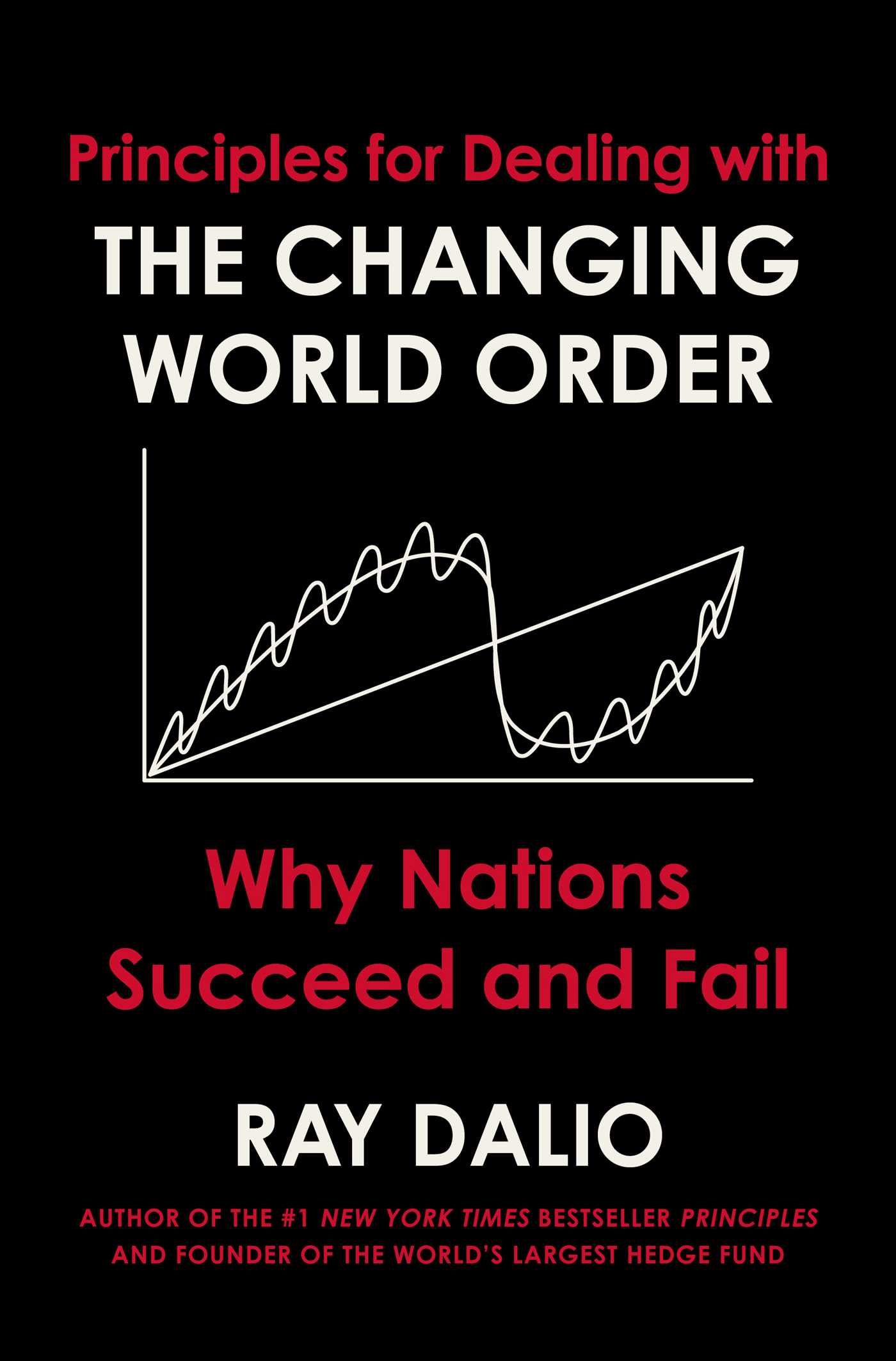
Principles for Dealing with the Changing World Order: Why Nations Succeed and Fail
by Ray Dalio
Rating: 4.3 ⭐
• 21 recommendations ❤️
From legendary investor Ray Dalio, author of the #1 New York Times bestseller Principles, who has spent half a century studying global economies and markets, Principles for Dealing with the Changing World Order examines history’s most turbulent economic and political periods to reveal why the times ahead will likely be radically different from those we’ve experienced in our lifetimes—and to offer practical advice on how to navigate them well.A few years ago, Ray Dalio noticed a confluence of political and economic conditions he hadn’t encountered before. They included huge debts and zero or near-zero interest rates that led to massive printing of money in the world’s three major reserve currencies; big political and social conflicts within countries, especially the US, due to the largest wealth, political, and values disparities in more than 100 years; and the rising of a world power (China) to challenge the existing world power (US) and the existing world order. The last time that this confluence occurred was between 1930 and 1945. This realization sent Dalio on a search for the repeating patterns and cause/effect relationships underlying all major changes in wealth and power over the last 500 years.In this remarkable and timely addition to his Principles series, Dalio brings readers along for his study of the major empires—including the Dutch, the British, and the American—putting into perspective the “Big Cycle” that has driven the successes and failures of all the world’s major countries throughout history. He reveals the timeless and universal forces behind these shifts and uses them to look into the future, offering practical principles for positioning oneself for what’s ahead.