
8 Books Recommended

A picture book about a spotted pig in a class full of pink pigs who learns to accept her differences.Pip is a normal pig who does normal stuff: cooking, painting, and dreaming of what she’ll be when she grows up.But one day a new pig comes to school and starts pointing out all the ways in which Pip is different. Suddenly she doesn’t like any of the same things she used to . . . the things that made her Pip.

On the morning of April 29, 1986, a fire alarm sounded in the Los Angeles Public Library. As the moments passed, the patrons and staff who had been cleared out of the building realized this was not the usual fire alarm. As one fireman recounted, “Once that first stack got going, it was ‘Goodbye, Charlie.’” The fire was disastrous: it reached 2000 degrees and burned for more than seven hours. By the time it was extinguished, it had consumed four hundred thousand books and damaged seven hundred thousand more. Investigators descended on the scene, but more than thirty years later, the mystery remains: Did someone purposefully set fire to the library—and if so, who? Weaving her lifelong love of books and reading into an investigation of the fire, award-winning New Yorker reporter and New York Times bestselling author Susan Orlean delivers a mesmerizing and uniquely compelling book that manages to tell the broader story of libraries and librarians in a way that has never been done before. In The Library Book, Orlean chronicles the LAPL fire and its aftermath to showcase the larger, crucial role that libraries play in our lives; delves into the evolution of libraries across the country and around the world, from their humble beginnings as a metropolitan charitable initiative to their current status as a cornerstone of national identity; brings each department of the library to vivid life through on-the-ground reporting; studies arson and attempts to burn a copy of a book herself; reflects on her own experiences in libraries; and reexamines the case of Harry Peak, the blond-haired actor long suspected of setting fire to the LAPL more than thirty years ago. Along the way, Orlean introduces us to an unforgettable cast of characters from libraries past and present—from Mary Foy, who in 1880 at eighteen years old was named the head of the Los Angeles Public Library at a time when men still dominated the role, to Dr. C.J.K. Jones, a pastor, citrus farmer, and polymath known as “The Human Encyclopedia” who roamed the library dispensing information; from Charles Lummis, a wildly eccentric journalist and adventurer who was determined to make the L.A. library one of the best in the world, to the current staff, who do heroic work every day to ensure that their institution remains a vital part of the city it serves. Brimming with her signature wit, insight, compassion, and talent for deep research, The Library Book is Susan Orlean’s thrilling journey through the stacks that reveals how these beloved institutions provide much more than just books—and why they remain an essential part of the heart, mind, and soul of our country. It is also a master journalist’s reminder that, perhaps especially in the digital era, they are more necessary than ever.

England, 1580: The Black Death creeps across the land, an ever-present threat, infecting the healthy, the sick, the old and the young alike. The end of days is near, but life always goes on.A young Latin tutor—penniless and bullied by a violent father—falls in love with an extraordinary, eccentric young woman. Agnes is a wild creature who walks her family’s land with a falcon on her glove and is known throughout the countryside for her unusual gifts as a healer, understanding plants and potions better than she does people. Once she settles with her husband on Henley Street in Stratford-upon-Avon, she becomes a fiercely protective mother and a steadfast, centrifugal force in the life of her young husband, whose career on the London stage is just taking off when his beloved young son succumbs to sudden fever.

An Indian-American magical realist coming of age story, spanning two continents, two coasts, and four epochs, in razor sharp and deeply funny prose, Sathian captures what it is to grow up as a member of a family, of a diaspora, and of the American meritocracy.A floundering second-generation teenager growing up in the Bush-era Atlanta suburbs, Neil Narayan is authentic, funny, and smart. He just doesn't share the same drive as everyone around him. His perfect older sister is headed to Duke. His parents' expectations for him are just as high. He tries to want this version of success, but mostly, Neil just wants his neighbor across the cul-de-sac, Anita Dayal.But Anita has a secret: she and her mother Anjali have been brewing an ancient alchemical potion from stolen gold that harnesses the ambition of the jewelry's original owner. Anjali's own mother in Bombay didn't waste the precious potion on her daughter, favoring her sons instead. Anita, on the other hand, just needs a little boost to get into Harvard. But when Neil--who needs a whole lot more--joins in the plot, events spiral into a tragedy that rips their community apart.Ten years later, Neil is an oft-stoned Berkeley history grad student studying the California gold rush. His high school cohort has migrated to Silicon Valley, where he reunites with Anita and resurrects their old habit of gold theft--only now, the stakes are higher. Anita's mother is in trouble, and only gold can save her. Anita and Neil must pull off one last heist.Gold Diggers is a fine-grained, profoundly intelligent, and bitingly funny investigation in to questions of identity and coming of age--that tears down American shibboleths.

In this exhilarating novel, two friends--often in love, but never lovers--come together as creative partners in the world of video game design, where success brings them fame, joy, tragedy, duplicity, and, ultimately, a kind of immortality.On a bitter-cold day, in the December of his junior year at Harvard, Sam Masur exits a subway car and sees, amid the hordes of people waiting on the platform, Sadie Green. He calls her name. For a moment, she pretends she hasn't heard him, but then, she turns, and a game begins: a legendary collaboration that will launch them to stardom. These friends, intimates since childhood, borrow money, beg favors, and, before even graduating college, they have created their first blockbuster, Ichigo. Overnight, the world is theirs. Not even twenty-five years old, Sam and Sadie are brilliant, successful, and rich, but these qualities won't protect them from their own creative ambitions or the betrayals of their hearts.Spanning thirty years, from Cambridge, Massachusetts, to Venice Beach, California, and lands in between and far beyond, Gabrielle Zevin's Tomorrow, and Tomorrow, and Tomorrow is a dazzling and intricately imagined novel that examines the multifarious nature of identity, disability, failure, the redemptive possibilities in play, and above all, our need to connect: to be loved and to love. Yes, it is a love story, but it is not one you have read before.
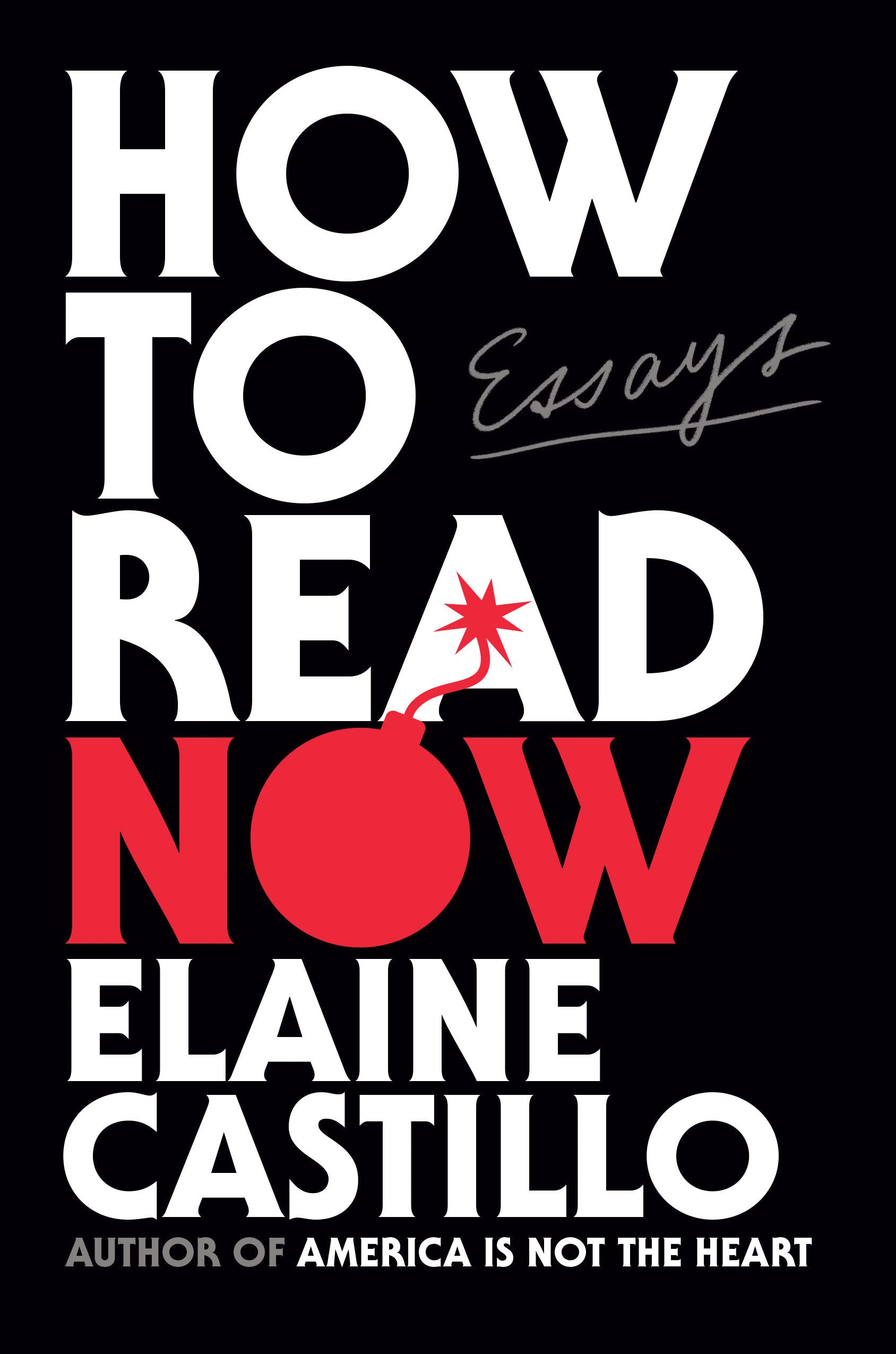
How to Read Now explores the politics and ethics of reading, and insists that we are capable of something better: a more engaged relationship not just with our fiction and our art, but with our buried and entangled histories. Smart, funny, galvanizing, and sometimes profane, Castillo attacks the stale questions and less-than-critical proclamations that masquerade as vital discussion: reimagining the cartography of the classics, building a moral case against the settler colonialism of lauded writers like Joan Didion, taking aim at Nobel Prize winners and toppling indie filmmakers, and celebrating glorious moments in everything from popular TV like The Watchmen to the films of Wong Kar-wai and the work of contemporary poets like Tommy Pico.At once a deeply personal and searching history of one woman's reading life, and a wide-ranging and urgent intervention into our globalized conversations about why reading matters today, How to Read Now empowers us to embrace a more complicated, embodied form of reading, inviting us to acknowledge complicated truths, ignite surprising connections, imagine a more daring solidarity, and create space for a riskier intimacy--within ourselves, and with each other.

It’s 2013, and Circus Palmer, a forty-year-old Boston-based trumpet player and old-school ladies’ man, lives for his music and refuses to be tied down. Before a gig in Miami, he learns that the woman who is secretly closest to his heart, the free-spirited drummer Maggie, is pregnant by him. Instead of facing the necessary conversation, Circus flees, setting off a chain of interlocking revelations from the various women in his life.Most notable among them is his teenage daughter, Koko, who idolizes him and is awakening to her own sexuality even as her mentally fragile mother struggles to overcome her long-failed marriage and rejection by Circus. Delivering a lush orchestration of diverse female voices, Warrell spins a provocative, soulful, and gripping story of passion and risk, fathers and daughters, wives and single women, and, finally, hope and reconciliation.

Mott Street: A Chinese American Family's Story of Exclusion and Homecoming
by Ava Chin
Rating: 4.0 ⭐
• 2 recommendations ❤️
A sweeping narrative history of the Chinese Exclusion Act through an intimate portrayal of one family’s epic journey to lay down roots in America* A Good Morning America , TIME , Book Riot, and Kirkus Most-Anticipated Book * As the only child of a single mother in Queens, Ava Chin found her family’s origins to be shrouded in mystery. She had never met her father, and her grandparents’ stories didn’t match the history she read at school. Mott Street traces Chin’s quest to understand her Chinese American family’s story. Over decades of painstaking research, she finds not only her father but also the building that provided a refuge for them all.Breaking the silence surrounding her family’s past meant confronting the Chinese Exclusion Act of 1882—the first federal law to restrict immigration by race and nationality, barring Chinese immigrants from citizenship for six decades. Chin traces the story of the pioneering family members who emigrated from the Pearl River Delta, crossing an ocean to make their way in the American West of the mid-nineteenth century. She tells of their backbreaking work on the transcontinental railroad and of the brutal racism of frontier towns, then follows their paths to New York City.In New York’s Chinatown she discovers a single building on Mott Street where so many of her ancestors would live, begin families, and craft new identities. She follows the men and women who became merchants, “paper son” refugees, activists, and heads of the Chinese tong, piecing together how they bore and resisted the weight of the Exclusion laws. She soon realizes that exclusion is not simply a political condition but also a personal one.Gorgeously written, deeply researched, and tremendously resonant, Mott Street uncovers a legacy of exclusion and resilience that speaks to the American experience, past and present.