Cal Newport Recommended Books
American computer scientist, academic lecturer and writer
42 Books Recommended
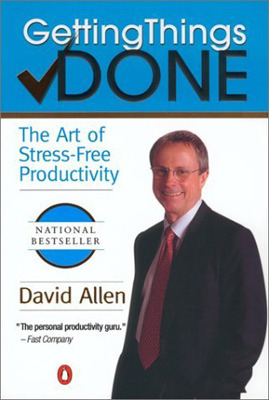
Getting Things Done: The Art of Stress-Free Productivity
by David Allen
Rating: 4.0 ⭐
• 5 recommendations ❤️
In today's world, yesterday's methods just don't work. In Getting Things Done, veteran coach and management consultant David Allen shares the breakthrough methods for stress-free performance that he has introduced to tens of thousands of people across the country. Allen's premise is simple: our productivity is directly proportional to our ability to relax. Only when our minds are clear and our thoughts are organized can we achieve effective productivity and unleash our creative potential. In Getting Things Done Allen shows how to:* Apply the "do it, delegate it, defer it, drop it" rule to get your in-box to empty* Reassess goals and stay focused in changing situations* Plan projects as well as get them unstuck* Overcome feelings of confusion, anxiety, and being overwhelmed* Feel fine about what you're not doingFrom core principles to proven tricks, Getting Things Done can transform the way you work, showing you how to pick up the pace without wearing yourself down.

One of the most inspiring and impactful books ever written, The 7 Habits of Highly Effective People has captivated readers for nearly three decades. It has transformed the lives of presidents and CEOs, educators and parents—millions of people of all ages and occupations. Now, this 30th anniversary edition of the timeless classic commemorates the wisdom of the 7 Habits with modern additions from Sean Covey.The 7 Habits have become famous and are integrated into everyday thinking by millions and millions of people. Why? Because they work!With Sean Covey’s added takeaways on how the habits can be used in our modern age, the wisdom of the 7 Habits will be refreshed for a new generation of leaders.They include:Habit 1: Be ProactiveHabit 2: Begin with the End in MindHabit 3: Put First Things FirstHabit 4: Think Win/WinHabit 5: Seek First to Understand, Then to Be UnderstoodHabit 6: SynergizeHabit 7: Sharpen the SawThis beloved classic presents a principle-centered approach for solving both personal and professional problems. With penetrating insights and practical anecdotes, Stephen R. Covey reveals a step-by-step pathway for living with fairness, integrity, honesty, and human dignity—principles that give us the security to adapt to change and the wisdom and power to take advantage of the opportunities that change creates.

The Effective Executive: The Definitive Guide to Getting the Right Things Done
by Peter F. Drucker
Rating: 4.1 ⭐
• 12 recommendations ❤️
What makes an effective executive? The measure of the executive, Peter F. Drucker reminds us, is the ability to "get the right things done." This usually involves doing what other people have overlooked as well as avoiding what is unproductive. Intelligence, imagination, and knowledge may all be wasted in an executive job without the acquired habits of mind that mold them into results. Drucker identifies five practices essential to business effectiveness that can, and must, be learned: Ranging widely through the annals of business and government, Peter F. Drucker demonstrates the distinctive skill of the executive and offers fresh insights into old and seemingly obvious business situations.

An illuminating portrayal of Richard Feynman—a giant of twentieth century physics—from his childhood tinkering with radios, to his vital work on the Manhattan Project and beyond Raised in Depression-era Rockaway Beach, physicist Richard Feynman was irreverent, eccentric, and childishly enthusiastic—a new kind of scientist in a field that was in its infancy. His quick mastery of quantum mechanics earned him a place at Los Alamos working on the Manhattan Project under J. Robert Oppenheimer, where the giddy young man held his own among the nation’s greatest minds. There, Feynman turned theory into practice, culminating in the Trinity test, on July 16, 1945, when the Atomic Age was born. He was only twenty-seven. And he was just getting started. In this sweeping biography, James Gleick captures the forceful personality of a great man, integrating Feynman’s work and life in a way that is accessible to laymen and fascinating for the scientists who follow in his footsteps.

How to Win at College: Surprising Secrets for Success from the Country's Top Students
by Cal Newport
Rating: 4.0 ⭐
• 1 recommendation ❤️
The only guide to getting ahead once you’ve gotten in—proven strategies for making the most of your college years, based on winning secrets from the country's most successful students What does it take to be a standout student? How can you make the most of your college years—graduate with honors, choose exciting activities, build a head-turning resume, and gain access to the best post-college opportunities? Based on interviews with star students at universities nationwide, from Harvard to the University of Arizona, How to Win at College presents seventy-five simple rules that will rocket you to the top of the class. These college-tested—and often surprising—strategies include:• Don’t do all your reading• Drop classes every term• Become a club president• Care about your grades, Ignore your GPA• Never pull an all-nighter• Take three days to write a paper• Always be working on a “grand project”• Do one thing better than anyone else you knowProving that success has little to do with being a genius workaholic, and everything to do with playing the game, How to Win at College is the must-have guide for making the most of these four important years—and getting an edge on life after graduation.
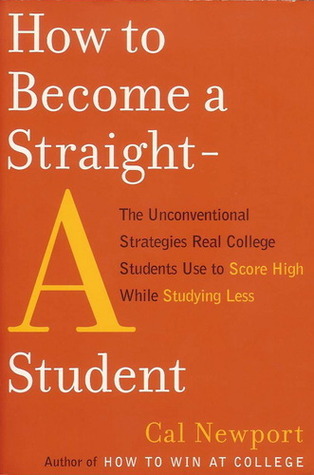
Looking to jumpstart your GPA? Most college students believe that straight A's can be achieved only through cramming and painful all-nighters at the library. But Cal Newport knows that real straight-A students don't study harder--they study smarter. A breakthrough approach to acing academic assignments, from quizzes and exams to essays and papers, "How to Become a Straight-A Student" reveals for the first time the proven study secrets of real straight-A students across the country and weaves them into a simple, practical system that anyone can master. You will learn how to: Streamline and maximize your study time Conquer procrastinationAbsorb the material quickly and effectivelyKnow which reading assignments are critical--and which are notTarget the paper topics that wow professorsProvide A+ answers on examsWrite stellar prose without the agony A strategic blueprint for success that promises more free time, more fun, and top-tier results, "How to Become a Straight-A Student" is the only study guide written by students for students--with the insider knowledge and real-world methods to help you master the college system and rise to the top of the class.

Billy Beane, general manager of MLB's Oakland A's and protagonist of Michael Lewis's Moneyball, had a problem: how to win in the Major Leagues with a budget that's smaller than that of nearly every other team. Conventional wisdom long held that big name, highly athletic hitters and young pitchers with rocket arms were the ticket to success. But Beane and his staff, buoyed by massive amounts of carefully interpreted statistical data, believed that wins could be had by more affordable methods such as hitters with high on-base percentage and pitchers who get lots of ground outs. Given this information and a tight budget, Beane defied tradition and his own scouting department to build winning teams of young affordable players and inexpensive castoff veterans. Lewis was in the room with the A's top management as they spent the summer of 2002 adding and subtracting players and he provides outstanding play-by-play. In the June player draft, Beane acquired nearly every prospect he coveted (few of whom were coveted by other teams) and at the July trading deadline he engaged in a tense battle of nerves to acquire a lefty reliever. Besides being one of the most insider accounts ever written about baseball, Moneyball is populated with fascinating characters. We meet Jeremy Brown, an overweight college catcher who most teams project to be a 15th round draft pick (Beane takes him in the first). Sidearm pitcher Chad Bradford is plucked from the White Sox triple-A club to be a key set-up man and catcher Scott Hatteberg is rebuilt as a first baseman. But the most interesting character is Beane himself. A speedy athletic can't-miss prospect who somehow missed, Beane reinvents himself as a front-office guru, relying on players completely unlike, say, Billy Beane. Lewis, one of the top nonfiction writers of his era (Liar's Poker, The New New Thing), offers highly accessible explanations of baseball stats and his roadmap of Beane's economic approach makes Moneyball an appealing reading experience for business people and sports fans alike. --John Moe

In reality, Hiro Protagonist delivers pizza for Uncle Enzo's CosoNostra Pizza Inc., but in the Metaverse he's a warrior prince. Plunging headlong into the enigma of a new computer virus that's striking down hackers everywhere, he races along the neon-lit streets on a search-and-destroy mission for the shadowy virtual villain threatening to bring about infocalypse. Snow Crash is a mind-altering romp through a future America so bizarre, so outrageous… you'll recognize it immediately.

A Walk in the Woods: Rediscovering America on the Appalachian Trail
by Bill Bryson
Rating: 4.1 ⭐
• 4 recommendations ❤️
The Appalachian Trail stretches from Georgia to Maine and covers some of the most breathtaking terrain in America—majestic mountains, silent forests, sparking lakes. If you’re going to take a hike, it’s probably the place to go. And Bill Bryson is surely the most entertaining guide you’ll find. He introduces us to the history and ecology of the trail and to some of the other hardy (or just foolhardy) folks he meets along the way—and a couple of bears. Already a classic, A Walk in the Woods will make you long for the great outdoors (or at least a comfortable chair to sit and read in).

The Scientists: A History of Science Told Through the Lives of Its Greatest Inventors
by John Gribbin
Rating: 4.1 ⭐
• 2 recommendations ❤️
A wonderfully readable account of scientific development over the past five hundred years, focusing on the lives and achievements of individual scientists, by the bestselling author of In Search of Schrödinger’s CatIn this ambitious new book, John Gribbin tells the stories of the people who have made science, and of the times in which they lived and worked. He begins with Copernicus, during the Renaissance, when science replaced mysticism as a means of explaining the workings of the world, and he continues through the centuries, creating an unbroken genealogy of not only the greatest but also the more obscure names of Western science, a dot-to-dot line linking amateur to genius, and accidental discovery to brilliant deduction.By focusing on the scientists themselves, Gribbin has written an anecdotal narrative enlivened with stories of personal drama, success and failure. A bestselling science writer with an international reputation, Gribbin is among the few authors who could even attempt a work of this magnitude. Praised as “a sequence of witty, information-packed tales” and “a terrific read” by The Times upon its recent British publication, The Scientists breathes new life into such venerable icons as Galileo, Isaac Newton, Albert Einstein and Linus Pauling, as well as lesser lights whose stories have been undeservedly neglected. Filled with pioneers, visionaries, eccentrics and madmen, this is the history of science as it has never been told before.

The Principia: The Authoritative Translation and Guide: Mathematical Principles of Natural Philosophy
by Isaac Newton
Rating: 4.8 ⭐
• 10 recommendations ❤️
In his monumental 1687 work, Philosophiae Naturalis Principia Mathematica, known familiarly as the Principia, Isaac Newton laid out in mathematical terms the principles of time, force, and motion that have guided the development of modern physical science. Even after more than three centuries and the revolutions of Einsteinian relativity and quantum mechanics, Newtonian physics continues to account for many of the phenomena of the observed world, and Newtonian celestial dynamics is used to determine the orbits of our space vehicles. This authoritative, modern translation by Cohen and Whitman, the first in over 285 years, is based on the 1726 edition, the final revised version approved by Newton; it includes extracts from the earlier editions, corrects errors found in earlier versions, and replaces archaic English with contemporary prose and up-to-date mathematical forms. Newton's principles describe acceleration, deceleration, and inertial movement; fluid dynamics; and the motions of the earth, moon, planets, and comets. A great work in itself, the Principia also revolutionized the methods of scientific investigation. It set forth the fundamental three laws of motion and the law of universal gravity, the physical principles that account for the Copernican system of the world as emended by Kepler, thus effectively ending controversy concerning the Copernican planetary system. The illuminating Guide to the Principia by I. Bernard Cohen, along with his and Anne Whitman's translation, make this preeminent work truly accessible for today's scientists, scholars, and students.

The time was the 1980s. The place was Wall Street. The game was called Liar’s Poker. Michael Lewis was fresh out of Princeton and the London School of Economics when he landed a job at Salomon Brothers, one of Wall Street’s premier investment firms. During the next three years, Lewis rose from callow trainee to bond salesman, raking in millions for the firm and cashing in on a modern-day gold rush. Liar’s Poker is the culmination of those heady, frenzied years—a behind-the-scenes look at a unique and turbulent time in American business. From the frat-boy camaraderie of the forty-first-floor trading room to the killer instinct that made ambitious young men gamble everything on a high-stakes game of bluffing and deception, here is Michael Lewis’s knowing and hilarious insider’s account of an unprecedented era of greed, gluttony, and outrageous fortune. .

Somewhere in South America at the home of the country's vice president, a lavish birthday party is being held in honor of Mr. Hosokawa, a powerful Japanese businessman. Roxanne Coss, opera's most revered soprano, has mesmerized the guests with her singing. It is a perfect evening, until a band of terrorists breaks in, taking the entire party hostage.But what begins as a life-threatening scenario slowly evolves into something quite different. Friendship, compassion, and the chance for great love lead the characters to forget the real danger that has been set in motion and cannot be stopped.Ann Patchett has written a novel that is as lyrical and profound as it is unforgettable. Bel Canto is a virtuoso performance by one of our best and most important writers.
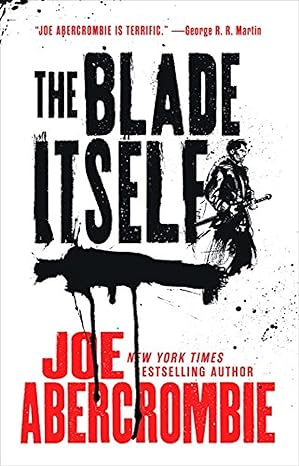
Logen Ninefingers, infamous barbarian, has finally run out of luck. Caught in one feud too many, he's on the verge of becoming a dead barbarian -- leaving nothing behind him but bad songs, dead friends, and a lot of happy enemies. Nobleman, dashing officer, and paragon of selfishness, Captain Jezal dan Luthar has nothing more dangerous in mind than fleecing his friends at cards and dreaming of glory in the fencing circle. But war is brewing, and on the battlefields of the frozen North they fight by altogether bloodier rules. Inquisitor Glokta, cripple turned torturer, would like nothing better than to see Jezal come home in a box. But then Glokta hates everyone: cutting treason out of the Union one confession at a time leaves little room for friendship. His latest trail of corpses may lead him right to the rotten heart of government, if he can stay alive long enough to follow it. Enter the wizard, Bayaz. A bald old man with a terrible temper and a pathetic assistant, he could be the First of the Magi, he could be a spectacular fraud, but whatever he is, he's about to make the lives of Logen, Jezal, and Glokta a whole lot more difficult. Murderous conspiracies rise to the surface, old scores are ready to be settled, and the line between hero and villain is sharp enough to draw blood. Unpredictable, compelling, wickedly funny, and packed with unforgettable characters, The Blade Itself is noir fantasy with a real cutting edge.

An alternative cover edition can be found hereA military space probe, sent to collect extraterrestrial organisms from the upper atmosphere, is knocked out of orbit and falls to Earth. Twelve miles from the crash site, an inexplicable and deadly phenomenon terrorizes the residents of a sleepy desert town in Arizona, leaving only two survivors: an elderly addict and a newborn infant.The United States government is forced to mobilize Project Wildfire, a top-secret emergency response protocol. Four of the nation’s most elite biophysicists are summoned to a clandestine underground laboratory located five stories beneath the desert and fitted with an automated atomic self-destruction mechanism for cases of irremediable contamination. Under conditions of total news blackout and the utmost urgency, the scientists race to understand and contain the crisis. But the Andromeda Strain proves different from anything they’ve ever seen—and what they don’t know could not only hurt them, but lead to unprecedented worldwide catastrophe.
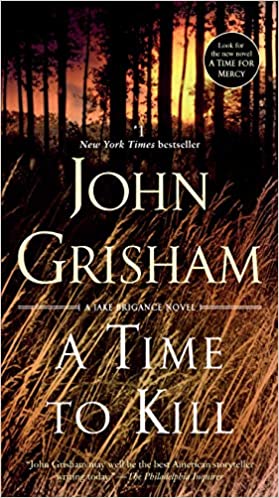
A previously published edition of this ISBN can be found here.The life of a ten-year-old girl is shattered by two drunken and remorseless young men. The mostly white town of Clanton in Ford County, Mississippi, reacts with shock and horror at the inhuman crime. Until her black father acquires an assault rifle and takes justice into his own outraged hands. For ten days, as burning crosses and the crack of sniper fire spread through the streets of Clanton, the nation sits spellbound as young defense attorney Jake Brigance struggles to save his client’s life–and then his own.

Journey to the heart of the sea with this larger-than-life classic.Regarded as a Great American Novel, "Moby Dick" is the ultimate tale of seeking vengeance.Narrated by the crew member Ishmael, this epic whaling adventure follows the crew of the "Pequod," as its captain, Ahab, descends deeper and deeper into madness on his quest to find and kill the white whale that maimed him. Beyond the surface--of ship life, whaling, and the hunt for the elusive Moby Dick--are allegorical references to life--and even the universe--in this masterpiece by Herman Melville.Complete and unabridged, this elegantly designed clothbound edition features an elastic closure and a new introduction by Christopher McBride.

In the midseventies, Steve Martin exploded onto the comedy scene. By 1978 he was the biggest concert draw in the history of stand-up. In 1981 he quit forever. This book is, in his own words, the story of "why I did stand-up and why I walked away." Emmy and Grammy Award winner, author of the acclaimed New York Times bestsellers Shopgirl and The Pleasure of My Company, and a regular contributor to The New Yorker, Martin has always been a writer. His memoir of his years in stand-up is candid, spectacularly amusing, and beautifully written. At age ten Martin started his career at Disneyland, selling guidebooks in the newly opened theme park. In the decade that followed, he worked in the Disney magic shop and the Bird Cage Theatre at Knott's Berry Farm, performing his first magic/comedy act a dozen times a week. The story of these years, during which he practiced and honed his craft, is moving and revelatory. The dedication to excellence and innovation is formed at an astonishingly early age and never wavers or wanes. Martin illuminates the sacrifice, discipline, and originality that made him an icon and informs his work to this day. To be this good, to perform so frequently, was isolating and lonely. It took Martin decades to reconnect with his parents and sister, and he tells that story with great tenderness. Martin also paints a portrait of his times - the era of free love and protests against the war in Vietnam, the heady irreverence of The Smothers Brothers Comedy Hour in the late sixties, and the transformative new voice of Saturday Night Live in the seventies. Throughout the text, Martin has placed photographs, many never seen before. Born Standing Up is a superb testament to the sheer tenacity, focus, and daring of one of the greatest and most iconoclastic comedians of all time.

The Odyssey is one of two major ancient Greek epic poems attributed to Homer. It is, in part, a sequel to the Iliad, the other Homeric epic. The Odyssey is a fundamental work in the modern Western canon, being the oldest extant piece of Western literature, second to the Iliad. Scholars believe the Odyssey was composed near the end of the 8th century BC, somewhere in Ionia, the Greek coastal region of Anatolia.

NATIONAL BESTSELLER • A nuanced exploration of the role of religion in our lives, drawing on insights of the past to build a faith for our dangerously polarized age —from the New York Times bestselling author of The History of GodMoving from the Paleolithic age to the present, Karen Armstrong details the great lengths to which humankind has gone in order to experience a sacred reality that it called by many names, such as God, Brahman, Nirvana, Allah, or Dao. Focusing especially on Christianity but including Judaism, Islam, Buddhism, Hinduism, and Chinese spiritualities, Armstrong examines the diminished impulse toward religion in our own time, when a significant number of people either want nothing to do with God or question the efficacy of faith. Why has God become unbelievable? Why is it that atheists and theists alike now think and speak about God in a way that veers so profoundly from the thinking of our ancestors?Answering these questions with the same depth of knowledge and profound insight that have marked all her acclaimed books, Armstrong makes clear how the changing face of the world has necessarily changed the importance of religion at both the societal and the individual level. Yet she cautions us that religion was never supposed to provide answers that lie within the competence of human reason; that, she says, is the role of logos. The task of religion is “to help us live creatively, peacefully, and even joyously with realities for which there are no easy explanations.” She emphasizes, too, that religion will not work automatically. It is, she says, a practical discipline: its insights are derived not from abstract speculation but from “dedicated intellectual endeavor” and a “compassionate lifestyle that enables us to break out of the prism of selfhood.”

How to Be a High School Superstar: A Revolutionary Plan to Get into College by Standing Out
by Cal Newport
Rating: 4.1 ⭐
• 1 recommendation ❤️
Do Less, Live More, Get Accepted What if getting into your reach schools didn’t require four years of excessive A.P. classes, overwhelming activity schedules, and constant stress? In How to Be a High School Superstar, Cal Newport explores the world of relaxed superstars—students who scored spots at the nation’s top colleges by leading uncluttered, low stress, and authentic lives. Drawing from extensive interviews and cutting-edge science, Newport explains the surprising truths behind these superstars’ mixture of happiness and admissions success, · Why doing less is the foundation for becoming more impressive.· Why demonstrating passion is meaningless, but being interesting is crucial.· Why accomplishments that are hard to explain are better than accomplishments that are hard to do. These insights are accompanied by step-by-step instructions to help any student adopt the relaxed superstar lifestyle—proving that getting into college doesn’t have to be a chore to survive, but instead can be the reward for living a genuinely interesting life.

More Money Than God: Hedge Funds and the Making of a New Elite (Council on Foreign Relations Books
by Sebastian Mallaby
Rating: 4.2 ⭐
• 9 recommendations ❤️
The New York Times bestseller“The bright light shed by More Money Than God is particularly welcome. Mr. Mallaby . . . brings a keen sense of financial theory to his subject and a vivid narrative style.” — Wall Street Journal“Splendid . . . the definitive history of the hedge fund history, a compelling narrative full of larger-than-life characters and dramatic tales of their financial triumphs and reversals.” — The Washington PostThe first authoritative history of hedge funds-from their rebel beginnings to their role in defining the future of finance, from the author of The Power LawWealthy, powerful, and potentially dangerous, hedge fund moguls have become the It Boys of twenty-first-century capitalism. Beating the market was long thought to be impossible, but hedge funds cracked its mysteries and made fortunes in the process. Drawing on his unprecedented access to the industry, esteemed financial writer Sebastian Mallaby tells the inside story of the hedge funds, from their origins in the 1960s to their role in the financial crisis of 2007 to 2009 — and explains why understanding the history of hedge funds is key to predicting the future of finance.

Built to Sell: Creating a Business That Can Thrive Without You
by John Warrillow
Rating: 4.4 ⭐
• 2 recommendations ❤️
Run your company. Don’t let it run you.Most business owners started their company because they wanted more freedom—to work on their own schedules, make the kind of money they deserve, and eventually retire on the fruits of their labor.Unfortunately, according to John Warrillow, most owners find that stepping out of the picture is extremely difficult because their business relies too heavily on their personal involvement. Without them, their company—no matter how big or profitable—is essentially worthless.But the good news is that entrepreneurs can take specific steps—no matter what stage a business is in—to create a valuable, sellable company. Warrillow shows exactly what it takes to create a solid business that can thrive long into the future.

All Things Shining: Reading the Western Classics to Find Meaning in a Secular Age
by Hubert L. Dreyfus
Rating: 3.8 ⭐
• 1 recommendation ❤️
An inspirational book that is “a smart, sweeping run through the history of Western philosophy. Important for the way it illuminates life today and for the controversial advice it offers on how to live” ( The New York Times ).“What constitutes human excellence?” and “What is the best way to live a life?” These are questions that human beings have been asking since the beginning of time. In their critically acclaimed book, All Things Shining , Hubert Dreyfus and Sean Dorrance Kelly argue that our search for meaning was once fulfilled by our responsiveness to forces greater than ourselves, whether one God or many. These forces drew us in and imbued the ordinary moments of life with wonder and gratitude. Dreyfus and Kelly argue in this thought-provoking work that as we began to rely on the power of our own independent will we lost our skill for encountering the sacred.Through their original and transformative discussion of some of the greatest works of Western literature, from Homer’s Odyssey to Melville’s Moby Dick, Dreyfus and Kelly reveal how we have lost our passionate engagement with the things that gave our lives purpose, and show how, by reading our culture’s classics anew, we can once again be drawn into intense involvement with the wonder and beauty of the world.Well on its way to becoming a classic itself, this inspirational book will change the way we understand our culture, our history, our sacred practices, and ourselves.
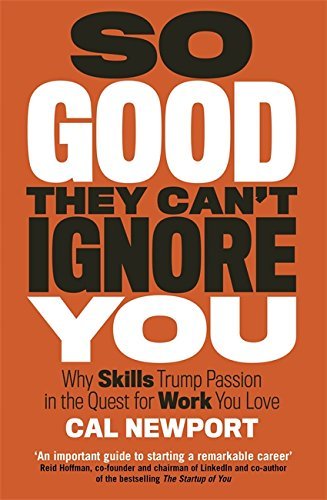
In this eye-opening account, Cal Newport debunks the long-held belief that "follow your passion" is good advice. Not only is the cliché flawed—preexisting passions are rare and have little to do with how most people end up loving their work—but it can also be dangerous, leading to anxiety and chronic job hopping.After making his case against passion, Newport sets out on a quest to discover the reality of how people end up loving what they do. Spending time with organic farmers, venture capitalists, screenwriters, freelance computer programmers, and others who admitted to deriving great satisfaction from their work, Newport uncovers the strategies they used and the pitfalls they avoided in developing their compelling careers.Matching your job to a preexisting passion does not matter, he reveals. Passion comes after you put in the hard work to become excellent at something valuable, not before. In other words, what you do for a living is much less important than how you do it.With a title taken from the comedian Steve Martin, who once said his advice for aspiring entertainers was to "be so good they can't ignore you," Cal Newport's clearly written manifesto is mandatory reading for anyone fretting about what to do with their life, or frustrated by their current job situation and eager to find a fresh new way to take control of their livelihood. He provides an evidence-based blueprint for creating work you love.So Good They Can't Ignore You will change the way we think about our careers, happiness, and the crafting of a remarkable life.

Have you ever found yourself stretched too thin?Do you simultaneously feel overworked and underutilized?Are you often busy but not productive? Do you feel like your time is constantly being hijacked by other people’s agendas?If you answered yes to any of these, the way out is the Way of the EssentialistThe Way of the Essentialist isn’t about getting more done in less time. It’s about getting only the right things done. It is not a time management strategy, or a productivity technique. It is a systematic discipline for discerning what is absolutely essential, then eliminating everything that is not, so we can make the highest possible contribution towards the things that really matter. By forcing us to apply a more selective criteria for what is Essential, the disciplined pursuit of less empowers us to reclaim control of our own choices about where to spend our precious time and energy – instead of giving others the implicit permission to choose for us.Essentialism is not one more thing – it’s a whole new way of doing everything. A must-read for any leader, manager, or individual who wants to learn how to do less, but better, in every area of their lives, Essentialism is a movement whose time has come.

The long-awaited guide to writing long-form nonfiction by the legendary author and teacherDraft No. 4 is a master class on the writer's craft. In a series of playful, expertly wrought essays, John McPhee shares insights he has gathered over his career and has refined while teaching at Princeton University, where he has nurtured some of the most esteemed writers of recent decades. McPhee offers definitive guidance in the decisions regarding arrangement, diction, and tone that shape nonfiction pieces, and he presents extracts from his work, subjecting them to wry scrutiny. In one essay, he considers the delicate art of getting sources to tell you what they might not otherwise reveal. In another, he discusses how to use flashback to place a bear encounter in a travel narrative while observing that "readers are not supposed to notice the structure. It is meant to be about as visible as someone's bones." The result is a vivid depiction of the writing process, from reporting to drafting to revising--and revising, and revising.Draft No. 4 is enriched by multiple diagrams and by personal anecdotes and charming reflections on the life of a writer. McPhee describes his enduring relationships with The New Yorker and Farrar, Straus and Giroux, and recalls his early years at Time magazine. Throughout, Draft No. 4 is enlivened by his keen sense of writing as a way of being in the world.

It's Always Sunny in Philadelphia: The 7 Secrets of Awakening the Highly Effective Four-Hour Giant, Today
by The Gang
Rating: 3.9 ⭐
• 1 recommendation ❤️
Though most sitcoms don't joke about crack addiction, abortion, and racism, "It's Always Sunny in Philadelphia" turns these subjects into comedy goldmines. This title provides an opportunity to extend the show experience through reimagining some favorite plot lines and the further development of backstory.

What would happen if the world were ending?A catastrophic event renders the earth a ticking time bomb. In a feverish race against the inevitable, nations around the globe band together to devise an ambitious plan to ensure the survival of humanity far beyond our atmosphere, in outer space.But the complexities and unpredictability of human nature coupled with unforeseen challenges and dangers threaten the intrepid pioneers, until only a handful of survivors remain...Five thousand years later, their progeny -- seven distinct races now three billion strong -- embark on yet another audacious journey into the unknown ... to an alien world utterly transformed by cataclysm and time: Earth.

Deep Work: Rules for Focused Success in a Distracted World
by Cal Newport
Rating: 4.2 ⭐
• 9 recommendations ❤️
One of the most valuable skills in our economy is becoming increasingly rare. If you master this skill, you'll achieve extraordinary results.Deep work is the ability to focus without distraction on a cognitively demanding task. It's a skill that allows you to quickly master complicated information and produce better results in less time. Deep work will make you better at what you do and provide the sense of true fulfillment that comes from craftsmanship. In short, deep work is like a super power in our increasingly competitive twenty-first century economy. And yet, most people have lost the ability to go deep-spending their days instead in a frantic blur of e-mail and social media, not even realizing there's a better way.In Deep Work, author and professor Cal Newport flips the narrative on impact in a connected age. Instead of arguing distraction is bad, he instead celebrates the power of its opposite. Dividing this book into two parts, he first makes the case that in almost any profession, cultivating a deep work ethic will produce massive benefits. He then presents a rigorous training regimen, presented as a series of four "rules," for transforming your mind and habits to support this skill.A mix of cultural criticism and actionable advice, Deep Work takes the reader on a journey through memorable stories-from Carl Jung building a stone tower in the woods to focus his mind, to a social media pioneer buying a round-trip business class ticket to Tokyo to write a book free from distraction in the air-and no-nonsense advice, such as the claim that most serious professionals should quit social media and that you should practice being bored. Deep Work is an indispensable guide to anyone seeking focused success in a distracted world.

Hyperfocus: How to Manage Your Attention in a World of Distraction
by Chris Bailey
Rating: 4.0 ⭐
• 1 recommendation ❤️
A practical guide to managing your attention--the most powerful resource you have to get stuff done, become more creative, and live a meaningful lifeOur attention has never been as overwhelmed as it is today. Many of us recognize that our brains struggle to multitask. Despite this, we feel compelled to do so anyway while we fill each moment of our lives to the brim with mindless distraction. Hyperfocus provides profound insights into how you can best take charge of your attention to achieve a greater sense of purpose and productivity throughout the day.The most recent neuroscientific research reveals that our brain has two powerful modes that can be unlocked when we use our attention effectively: a focused mode (hyperfocus), which is the foundation for being highly productive, and a creative mode (scatterfocus), which enables us to connect ideas in novel ways. Hyperfocus helps you access each of the two mental modes so you can concentrate more deeply, think more clearly, and work and live more deliberately every day. Chris Bailey examines such topics such as:- identifying and dealing with the four key types of distraction and interruption; - establishing a clear physical and mental environment in which to work; - controlling motivation and working fewer hours to become more productive; - taking time-outs with intention; - multitasking strategically; and - learning when to pay attention and when to let your mind wander wherever it wants to.By transforming how you think about your attention, Hyperfocus reveals that the more effectively you learn to take charge of it, the better you'll be able to manage every aspect of your life.

Lessons From Lucy: The Simple Joys of an Old, Happy Dog
by Dave Barry
Rating: 4.1 ⭐
• 1 recommendation ❤️
In this “little gem” (Washington Independent Review of Books), Pulitzer Prize–winning columnist and New York Times bestselling author Dave Barry learns how to age happily from his old but joyful dog, Lucy. As Dave Barry turns seventy—not happily—he realizes that his dog, Lucy, is dealing with old age far better than he is. She has more friends, fewer worries, and way more fun. So Dave decides to figure out how Lucy manages to stay so happy, to see if he can make his own life happier by doing the things she does (except for drinking from the toilet). He reconnects with old friends and tries to make new ones—which turns out to be a struggle, because Lucy likes people a lot more than he does. And he gets back in touch with two ridiculous but fun groups from his past: the Lawn Rangers, a group of guys who march in parades pushing lawnmowers and twirling brooms (alcohol is involved), and the Rock Bottom Remainders, the world’s oldest and least-talented all-author band. With each new lesson, Dave riffs hilariously on dogs, people, and life in general, while also pondering Deep Questions, such as when it’s okay to lie. (Answer: when scallops are involved.) Lessons From Lucy shows readers a new side to Dave Barry that’s “touching and sentimental, but there’s still a laugh on every page” (The Sacramento Bee). The master humorist has written a witty and affable guide to joyous living at any age.

Digital Minimalism: Choosing a Focused Life in a Noisy World
by Cal Newport
Rating: 4.0 ⭐
• 9 recommendations ❤️
The key to living well in a high tech world is to spend much less time using technology.Georgetown computer scientist Cal Newport's Deep Work sparked a movement around the idea that unbroken concentration produces far more value than the electronic busyness that defines the modern work day. But his readers had an urgent follow-up question: What about technology in our personal lives?In recent years, our culture's relationship with personal technology has transformed from something exciting into something darker. Innovations like smartphones and social media are useful, but many of us are increasingly troubled by how much control these tools seem to exert over our daily experiences--including how we spend our free time and how we feel about ourselves.In Digital Minimalism, Newport proposes a bold solution: a minimalist approach to technology use in which you radically reduce the time you spend online, focusing on a small set of carefully-selected activities while happily ignoring the rest.He mounts a vigorous defense for this less-is-more approach, combining historical examples with case studies of modern digital minimalists to argue that this philosophy isn't a rejection of technology, but instead a necessary realignment to ensure that these tools serve us, not the other way around.To make these principles practical, he takes us inside the growing subculture of digital minimalists who have built rich lives on a foundation of intentional technology use, and details a decluttering process that thousands have already used to simplify their online lives. He also stresses the importance of never clicking "like," explores the underappreciated value of analog hobbies, and draws lessons from the "attention underground"--a resistance movement fighting the tech companies' attempts to turn us into gadget addicts.Digital Minimalism is an indispensable guide for anyone looking to reclaim their life from the alluring diversions of the digital world.
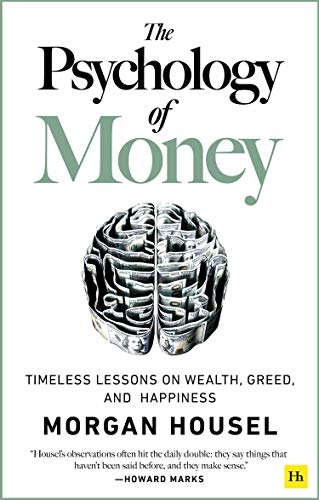
Doing well with money isn't necessarily about what you know. It's about how you behave. And behavior is hard to teach, even to really smart people. Money--investing, personal finance, and business decisions--is typically taught as a math-based field, where data and formulas tell us exactly what to do. But in the real world people don't make financial decisions on a spreadsheet. They make them at the dinner table, or in a meeting room, where personal history, your own unique view of the world, ego, pride, marketing, and odd incentives are scrambled together. In The Psychology of Money, award-winning author Morgan Housel shares 19 short stories exploring the strange ways people think about money and teaches you how to make better sense of one of life's most important topics.

** A New York Times Bestseller **NAMED ONE OF THE BEST BOOKS OF THE YEAR BY: Time • The New Yorker • NPR • GQ • Elle • Vulture • Fortune • Boing Boing • The Irish Times • The New York Public Library • The Brooklyn Public Library"A complex, smart and ambitious book that at first reads like a self-help manual, then blossoms into a wide-ranging political manifesto."—Jonah Engel Bromwich, The New York Times Book ReviewOne of President Barack Obama's "Favorite Books of 2019"Porchlight's Personal Development & Human Behavior Book of the YearIn a world where addictive technology is designed to buy and sell our attention, and our value is determined by our 24/7 data productivity, it can seem impossible to escape. But in this inspiring field guide to dropping out of the attention economy, artist and critic Jenny Odell shows us how we can still win back our lives. Odell sees our attention as the most precious—and overdrawn—resource we have. And we must actively and continuously choose how we use it. We might not spend it on things that capitalism has deemed important … but once we can start paying a new kind of attention, she writes, we can undertake bolder forms of political action, reimagine humankind’s role in the environment, and arrive at more meaningful understandings of happiness and progress.Far from the simple anti-technology screed, or the back-to-nature meditation we read so often, How to do Nothing is an action plan for thinking outside of capitalist narratives of efficiency and techno-determinism. Provocative, timely, and utterly persuasive, this book will change how you see your place in our world.
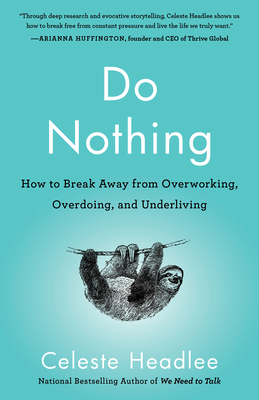
Do Nothing: How to Break Away from Overworking, Overdoing, and Underliving
by Celeste Headlee
Rating: 3.9 ⭐
• 1 recommendation ❤️
“A welcome antidote to our toxic hustle culture of burnout.”—Arianna Huffington“This book is so important and could truly save lives.”—Elizabeth Gilbert“A clarion call to work smarter [and] accomplish more by doing less.”—Adam Grant We work feverishly to make ourselves happy. So why are we so miserable? Despite our constant search for new ways to optimize our bodies and minds for peak performance, human beings are working more instead of less, living harder not smarter, and becoming more lonely and anxious. We strive for the absolute best in every aspect of our lives, ignoring what we do well naturally and reaching for a bar that keeps rising higher and higher. Why do we measure our time in terms of efficiency instead of meaning? Why can’t we just take a break? In Do Nothing, award-winning journalist Celeste Headlee illuminates a new path ahead, seeking to institute a global shift in our thinking so we can stop sabotaging our well-being, put work aside, and start living instead of doing. As it turns out, we’re searching for external solutions to an internal problem. We won’t find what we’re searching for in punishing diets, productivity apps, or the latest self-improvement schemes. Yet all is not lost—we just need to learn how to take time for ourselves, without agenda or profit, and redefine what is truly worthwhile. Pulling together threads from history, neuroscience, social science, and even paleontology, Headlee examines long-held assumptions about time use, idleness, hard work, and even our ultimate goals. Her research reveals that the habits we cling to are doing us harm; they developed recently in human history, which means they are habits that can, and must, be broken. It’s time to reverse the trend that’s making us all sadder, sicker, and less productive, and return to a way of life that allows us to thrive.

Can't Even: How Millennials Became the Burnout Generation
by Anne Helen Petersen
Rating: 4.0 ⭐
• 1 recommendation ❤️
A BEST BOOK OF THE FALL AS SEEN Apartment Therapy • Book Riot • Business Insider • BuzzFeed • Daily Nebraskan • Entertainment Weekly • Esquire • Fortune • Harper’s Bazaar • HelloGiggles • LinkedIn • O Magazine • Time Magazine“[A] razor sharp book of cultural criticism . . . With blistering prose and all-too vivid reporting, Petersen lays bare the burnout and despair of millennials, while also charting a path to a world where members of her generation can feel as if the boot has been removed from their necks.” — Esquire“ An analytically precise, deeply empathic book about the psychic toll modern capitalism has taken on those shaped by it. Can’t Even is essential to understanding our age, and ourselves.” —Ezra Klein, Vox co-founder and New York Times best-selling author of Why We’re PolarizedAn incendiary examination of burnout in millennials—the cultural shifts that got us here, the pressures that sustain it, and the need for drastic changeDo you feel like your life is an endless to-do list? Do you find yourself mindlessly scrolling through Instagram because you’re too exhausted to pick up a book? Are you mired in debt, or feel like you work all the time, or feel pressure to take whatever gives you joy and turn it into a monetizable hustle? Welcome to burnout culture.While burnout may seem like the default setting for the modern era, in Can’t Even , BuzzFeed culture writer and former academic Anne Helen Petersen argues that burnout is a definitional condition for the millennial generation, born out of distrust in the institutions that have failed us, the unrealistic expectations of the modern workplace, and a sharp uptick in anxiety and hopelessness exacerbated by the constant pressure to “perform” our lives online. The genesis for the book is Petersen’s viral BuzzFeed article on the topic, which has amassed over seven million reads since its publication in January 2019.Can’t Even goes beyond the original article, as Petersen examines how millennials have arrived at this point of burnout ( unchecked capitalism and changing labor laws) and examines the phenomenon through a variety of lenses—including how burnout affects the way we work, parent, and socialize—describing its resonance in alarming familiarity. Utilizing a combination of sociohistorical framework, original interviews, and detailed analysis, Can’t Even offers a galvanizing, intimate, and ultimately redemptive look at the lives of this much-maligned generation, and will be required reading for both millennials and the parents and employers trying to understand them.

From social psychologist Dr. Devon Price, a conversational, stirring call to “a better, more human way to live” (Cal Newport, New York Times bestselling author) that examines the “laziness lie”—which falsely tells us we are not working or learning hard enough.Extra-curricular activities. Honors classes. 60-hour work weeks. Side hustles.Like many Americans, Dr. Devon Price believed that productivity was the best way to measure self-worth. Price was an overachiever from the start, graduating from both college and graduate school early, but that success came at a cost. After Price was diagnosed with a severe case of anemia and heart complications from overexertion, they were forced to examine the darker side of all this productivity.Laziness Does Not Exist explores the psychological underpinnings of the “laziness lie,” including its origins from the Puritans and how it has continued to proliferate as digital work tools have blurred the boundaries between work and life. Using in-depth research, Price explains that people today do far more work than nearly any other humans in history yet most of us often still feel we are not doing enough.Filled with practical and accessible advice for overcoming society’s pressure to do more, and featuring interviews with researchers, consultants, and experiences from real people drowning in too much work, Laziness Does Not Exist “is the book we all need right now” (Caroline Dooner, author of The F*ck It Diet ).
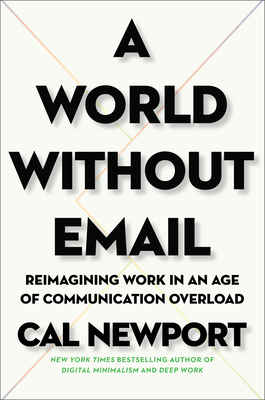
A World Without Email: Reimagining Work in an Age of Communication Overload
by Cal Newport
Rating: 3.8 ⭐
• 5 recommendations ❤️
A New York Times and Wall Street Journal bestsellerFrom New York Times bestselling author Cal Newport comes a bold vision for liberating workers from the tyranny of the inbox--and unleashing a new era of productivity.Modern knowledge workers communicate constantly. Their days are defined by a relentless barrage of incoming messages and back-and-forth digital conversations--a state of constant, anxious chatter in which nobody can disconnect, and so nobody has the cognitive bandwidth to perform substantive work. There was a time when tools like email felt cutting edge, but a thorough review of current evidence reveals that the "hyperactive hive mind" workflow they helped create has become a productivity disaster, reducing profitability and perhaps even slowing overall economic growth. Equally worrisome, it makes us miserable. Humans are simply not wired for constant digital communication.We have become so used to an inbox-driven workday that it's hard to imagine alternatives. But they do exist. Drawing on years of investigative reporting, author and computer science professor Cal Newport makes the case that our current approach to work is broken, then lays out a series of principles and concrete instructions for fixing it. In A World without Email , he argues for a workplace in which clear processes--not haphazard messaging--define how tasks are identified, assigned and reviewed. Each person works on fewer things (but does them better), and aggressive investment in support reduces the ever-increasing burden of administrative tasks. Above all else, important communication is streamlined, and inboxes and chat channels are no longer central to how work unfolds.The knowledge sector's evolution beyond the hyperactive hive mind is inevitable. The question is not whether a world without email is coming (it is), but whether you'll be ahead of this trend. If you're a CEO seeking a competitive edge, an entrepreneur convinced your productivity could be higher, or an employee exhausted by your inbox, A World Without Email will convince you that the time has come for bold changes, and will walk you through exactly how to make them happen.

The Power Law: Venture Capital and the Making of the New Future
by Sebastian Mallaby
Rating: 4.4 ⭐
• 12 recommendations ❤️
Shortlisted for the Financial Times Business Book of the Year Named a Best Book of 2022 by The Economist“A gripping fly-on-the-wall story of the rise of this unique and important industry based on extensive interviews with some of the most successful venture capitalists.” - Daniel Rasmussen, Wall Street Journal“A must-read for anyone seeking to understand modern-day Silicon Valley and even our economy writ large.” -Bethany McLean, The Washington Post"A rare and unsettling look inside a subculture of unparalleled influence.” —Jane Mayer"A classic...A book of exceptional reporting, analysis and storytelling.” —Charles DuhiggFrom the New York Times bestselling author of More Money Than God comes the astonishingly frank and intimate story of Silicon Valley’s dominant venture-capital firms—and how their strategies and fates have shaped the path of innovation and the global economyInnovations rarely come from “experts.” Elon Musk was not an “electric car person” before he started Tesla. When it comes to improbable innovations, a legendary tech VC told Sebastian Mallaby, the future cannot be predicted , it can only be discovered . It is the nature of the venture-capital game that most attempts at discovery fail, but a very few succeed at such a scale that they more than make up for everything else. That extreme ratio of success and failure is the power law that drives the VC business, all of Silicon Valley, the wider tech sector, and, by extension, the world. In The Power Law , Sebastian Mallaby has parlayed unprecedented access to the most celebrated venture capitalists of all time—the key figures at Sequoia, Kleiner Perkins, Accel, Benchmark, and Andreessen Horowitz, as well as Chinese partnerships such as Qiming and Capital Today—into a riveting blend of storytelling and analysis that unfurls the history of tech incubation, in the Valley and ultimately worldwide. We learn the unvarnished truth, often for the first time, about some of the most iconic triumphs and infamous disasters in Valley history, from the comedy of errors at the birth of Apple to the avalanche of venture money that fostered hubris at WeWork and Uber. VCs’ relentless search for grand slams brews an obsession with the ideal of the lone entrepreneur-genius, and companies seen as potential “unicorns” are given intoxicating amounts of power, with sometimes disastrous results. On a more systemic level, the need to make outsized bets on unproven talent reinforces bias, with women and minorities still represented at woefully low levels. This does not just have social justice as Mallaby relates, China’s homegrown VC sector, having learned at the Valley’s feet, is exploding and now has more women VC luminaries than America has ever had. Still, Silicon Valley VC remains the top incubator of business innovation anywhere—it is not where ideas come from so much as where they go to become the products and companies that create the future. By taking us so deeply into the VCs’ game, The Power Law helps us think about our own future through their eyes.

Slow Productivity: The Lost Art of Accomplishment Without Burnout
by Cal Newport
Rating: 3.6 ⭐
• 2 recommendations ❤️
Do fewer things. Work at a natural pace. Obsess over quality.From the New York Times bestselling author of Digital Minimalism and Deep Work, a groundbreaking philosophy for pursuing meaningful accomplishment while avoiding overload.Our current definition of “productivity” is broken. It pushes us to treat busyness as a proxy for useful effort, leading to impossibly lengthy task lists and ceaseless meetings. We’re overwhelmed by all we have to do and on the edge of burnout, left to decide between giving into soul-sapping hustle culture or rejecting ambition altogether. But are these really our only choices?Long before the arrival of pinging inboxes and clogged schedules, history’s most creative and impactful philosophers, scientists, artists, and writers mastered the art of producing valuable work with staying power. In this timely and provocative book, Cal Newport harnesses the wisdom of these traditional knowledge workers to radically transform our modern jobs. Drawing from deep research on the habits and mindsets of a varied cast of storied thinkers—from Galileo and Isaac Newton, to Jane Austen and Georgia O’Keefe—Newport lays out the key principles of “slow productivity,” a more sustainable alternative to the aimless overwhelm that defines our current moment. Combining cultural criticism with systematic pragmatism, Newport deconstructs the absurdities inherent in standard notions of productivity, and then provides step-by-step advice for workers to replace them with a slower, more humane alternative.From the aggressive rethinking of workload management, to introducing seasonal variation, to shifting your performance toward long-term quality, Slow Productivity provides a roadmap for escaping overload and arriving instead at a more timeless approach to pursuing meaningful accomplishment. The world of work is due for a new revolution. Slow productivity is exactly what we need.

Alternative cover edition of ISBN 9780440245926When Mitch McDeere signed on with Bendini, Lambert & Locke of Memphis, he thought that he and his beautiful wife, Abby, were on their way. The firm leased him a BMW, paid off his school loans, arranged a mortgage, and hired the McDeeres a decorator. Mitch should have remembered what his brother Ray–doing fifteen years in a Tennessee jail–already knew: You never get nothing for nothing. Now the FBI has the lowdown on Mitch’s firm and needs his help. Mitch is caught between a rock and a hard place, with no choice–if he wants to live.