
Brianne Kimmel Recommended Books
Ukrainian-American venture capitalist and angel investor
18 Books Recommended

Bowling Alone: Revised and Updated: The Collapse and Revival of American Community
by Robert D. Putnam
Rating: 3.9 ⭐
• 2 recommendations ❤️
Updated to include a new chapter about the influence of social media and the Internet—the 20th anniversary edition of Bowling Alone remains a seminal work of social analysis, and its examination of what happened to our sense of community remains more relevant than ever in today’s fractured America. Twenty years, ago, Robert D. Putnam made a seemingly simple observation: once we bowled in leagues, usually after work; but no longer. This seemingly small phenomenon symbolized a significant social change that became the basis of the acclaimed bestseller, Bowling Alone, which The Washington Post called “a very important book” and Putnam, “the de Tocqueville of our generation.” Bowling Alone surveyed in detail Americans’ changing behavior over the decades, showing how we had become increasingly disconnected from family, friends, neighbors, and social structures, whether it’s with the PTA, church, clubs, political parties, or bowling leagues. In the revised edition of his classic work, Putnam shows how our shrinking access to the “social capital” that is the reward of communal activity and community sharing still poses a serious threat to our civic and personal health, and how these consequences have a new resonance for our divided country today. He includes critical new material on the pervasive influence of social media and the internet, which has introduced previously unthinkable opportunities for social connection—as well as unprecedented levels of alienation and isolation. At the time of its publication, Putnam’s then-groundbreaking work showed how social bonds are the most powerful predictor of life satisfaction, and how the loss of social capital is felt in critical ways, acting as a strong predictor of crime rates and other measures of neighborhood quality of life, and affecting our health in other ways. While the ways in which we connect, or become disconnected, have changed over the decades, his central argument remains as powerful and urgent as ever: mending our frayed social capital is key to preserving the very fabric of our society.

No Applause--Just Throw Money: The Book That Made Vaudeville Famous
by Trav S.D.
Rating: 4.1 ⭐
• 2 recommendations ❤️
A seriously funny look at the roots of American EntertainmentWhen Groucho Marx and Charlie Chaplin were born, variety entertainment had been going on for decades in America, and like Harry Houdini, Milton Berle, Mae West, and countless others, these performers got their start on the vaudeville stage. From 1881 to 1932, vaudeville was at the heart of show business in the States. Its stars were America's first stars in the modern sense, and it utterly dominated American popular culture. Writer and modern-day vaudevillian Trav S.D. chronicles vaudeville's far-reaching impact in No Applause--Just Throw Money . He explores the many ways in which vaudeville's story is the story of show business in America and documents the rich history and cultural legacy of our country's only purely indigenous theatrical form, including its influence on everything from USO shows to Ed Sullivan to The Muppet Show and The Gong Show. More than a quaint historical curiosity, vaudeville is thriving today, and Trav S.D. pulls back the curtain on the vibrant subculture that exists across the United States--a vast grassroots network of fire-eaters, human blockheads, burlesque performers, and bad comics intent on taking vaudeville into its second century.

In ‘The Politics of Experience’ and the visionary ‘Bird of Paradise’, R.D. Laing shows how the straitjacket of conformity imposed on us all leads to intense feelings of alienation and a tragic waste of human potential. He throws into question the notion of normality, examines schizophrenia and psychotherapy, transcendence and ‘us and them’ thinking, and illustrates his ideas with a remarkable case history of a ten-day psychosis. ‘We are bemused and crazed creatures,’ Laing suggests. This outline of ‘a thoroughly self-conscious and self-critical human account of man’ represents a major attempt to understand our deepest dilemmas and sketch in solutions.‘Everyone in contemporary psychiatry owes something to R.D. Laing’ Anthony Clare, the Guardian.
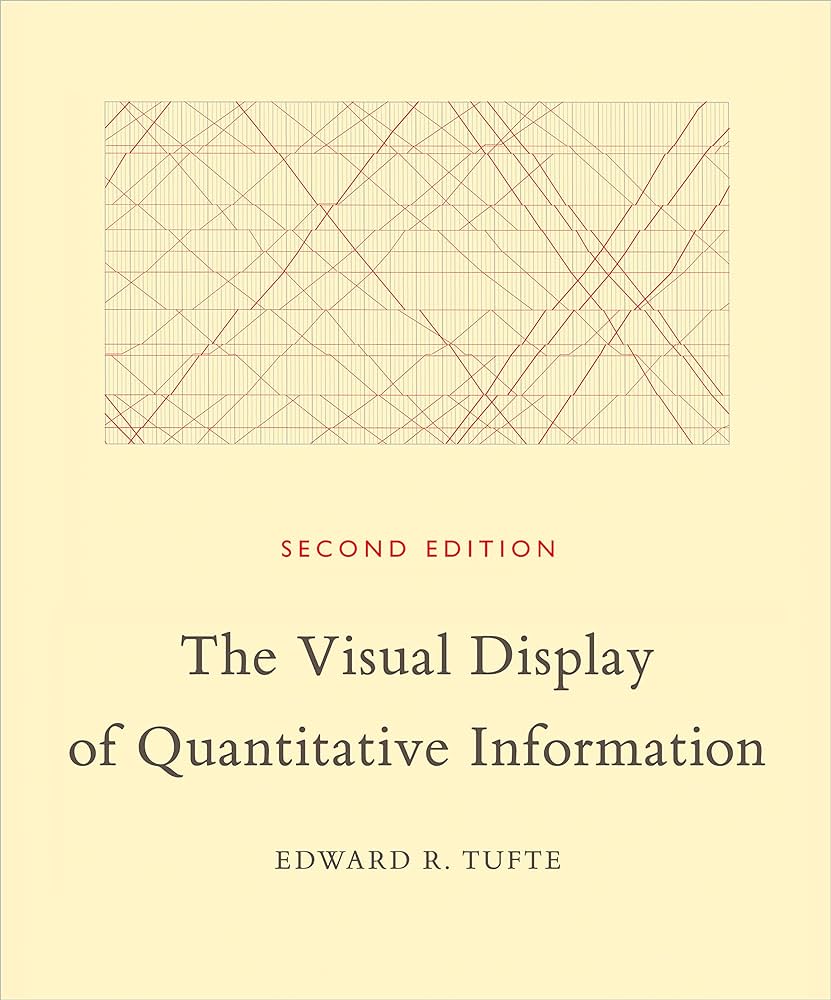
The classic book on statistical graphics, charts, tables. Theory and practice in the design of data graphics, 250 illustrations of the best (and a few of the worst) statistical graphics, with detailed analysis of how to display data for precise, effective, quick analysis. Design of the high-resolution displays, small multiples. Editing and improving graphics. The data-ink ratio. Time-series, relational graphics, data maps, multivariate designs. Detection of graphical deception: design variation vs. data variation. Sources of deception. Aesthetics and data graphical displays. This is the second edition of The Visual Display of Quantitative Information. Recently published, this new edition provides excellent color reproductions of the many graphics of William Playfair, adds color to other images, and includes all the changes and corrections accumulated during 17 printings of the first edition.

The Sense of Style: The Thinking Person’s Guide to Writing in the 21st Century
by Steven Pinker
Rating: 4.1 ⭐
• 2 recommendations ❤️
Why is so much writing so bad, and how can we make it better? Is the English language being corrupted by texting and social media? Do the kids today even care about good writing—and why should we care? In this entertaining and eminently practical book, the cognitive scientist, dictionary consultant, and New York Times–bestselling author Steven Pinker rethinks the usage guide for the twenty-first century. Using examples of great and gruesome modern prose while avoiding the scolding tone and Spartan tastes of the classic manuals, he shows how the art of writing can be a form of pleasurable mastery and a fascinating intellectual topic in its own right. The Sense of Style is for writers of all kinds, and for readers who are interested in letters and literature and are curious about the ways in which the sciences of mind can illuminate how language works at its best.

Red Notice: A True Story of High Finance, Murder, and One Man’s Fight for Justice
by Bill Browder
Rating: 4.6 ⭐
• 10 recommendations ❤️
A real-life political thriller about an American financier in the Wild East of Russia, the murder of his principled young tax attorney, and his dangerous mission to expose the Kremlin’s corruption.Bill Browder’s journey started on the South Side of Chicago and moved through Stanford Business School to the dog-eat-dog world of hedge fund investing in the 1990s. It continued in Moscow, where Browder made his fortune heading the largest investment fund in Russia after the Soviet Union’s collapse. But when he exposed the corrupt oligarchs who were robbing the companies in which he was investing, Vladimir Putin turned on him and, in 2005, had him expelled from Russia. In 2007, a group of law enforcement officers raided Browder’s offices in Moscow and stole $230 million of taxes that his fund’s companies had paid to the Russian government. Browder’s attorney Sergei Magnitsky investigated the incident and uncovered a sprawling criminal enterprise. A month after Sergei testified against the officials involved, he was arrested and thrown into pre-trial detention, where he was tortured for a year. On November 16, 2009, he was led to an isolation chamber, handcuffed to a bedrail, and beaten to death by eight guards in full riot gear. Browder glimpsed the heart of darkness, and it transformed his he embarked on an unrelenting quest for justice in Sergei’s name, exposing the towering cover-up that leads right up to Putin. A financial caper, a crime thriller, and a political crusade, Red Notice is the story of one man taking on overpowering odds to change the world

From the author of the international bestseller Go the Fuck to Sleep comes a long-awaited sequel about the other great parental frustration: getting your little angel to eat something that even vaguely resembles a normal meal. Profane, loving, and deeply cathartic, You Have to Fucking Eat breaks the code of child-rearing silence, giving moms and dads new, old, grand-, and expectant a much-needed chance to laugh about a universal problem.A perfect gift book like the smash hit Go the Fuck to Sleep (over 1.5 million copies sold worldwide!), You Have to Fucking Eat perfectly captures Adam Mansbach's trademark humor, which is simultaneously affectionate and radically honest. You probably shouldn't read it to your kids.Adam Mansbach is the author of the #1 international bestseller Go the Fuck to Sleep, as well as the novels Rage Is Back, Angry Black White Boy, The Dead Run, and The End of the Jews, winner of the California Book Award. He has written for the New Yorker, the New York Times, Esquire, the Believer, and National Public Radio’s All Things Considered. His daughter Vivien is six.Owen Brozman has illustrated for National Geographic, Time Out New York, Scholastic, Ninja Tune, Definitive Jux, and numerous other clients. He and Mansbach recently collaborated on the acclaimed graphic novel Nature of the Beast, and his work has been recognized by the Society of Illustrators of Los Angeles, Creative Quarterly, 3x3 magazine, and many more. He lives in Brooklyn, New York, with his wife and daughter, whose favorite food is bananas.

The last book from beloved Hollywood icon Carrie Fisher, The Princess Diarist is an intimate, hilarious, and revealing recollection of what happened behind the scenes on one of the most famous film sets of all time, the first Star Wars movie. When Carrie Fisher discovered the journals she kept during the filming of the first Star Wars movie, she was astonished to see what they had preserved--plaintive love poems, unbridled musings with youthful naiveté, and a vulnerability that she barely recognized. Before her passing, her fame as an author, actress, and pop-culture icon was indisputable, but in 1977, Carrie Fisher was just a teenager with an all-consuming crush on her costar, Harrison Ford.With these excerpts from her handwritten notebooks, The Princess Diarist is Fisher's intimate and revealing recollection of what happened on one of the most famous film sets of all time--and what developed behind the scenes. Fisher also ponders the joys and insanity of celebrity, and the absurdity of a life spawned by Hollywood royalty, only to be surpassed by her own outer-space royalty. Laugh-out-loud hilarious and endlessly quotable, The Princess Diarist brims with the candor and introspection of a diary while offering shrewd insight into one of Hollywood's most beloved stars.

The Attention Merchants: The Epic Scramble to Get Inside Our Heads
by Tim Wu
Rating: 4.0 ⭐
• 7 recommendations ❤️
From Tim Wu, author of the award-winning The Master Switch ( a New Yorker and Fortune Book of the Year) and who coined the term -net neutrality---a revelatory, ambitious and urgent account of how the capture and re-sale of human attention became the defining industry of our time. Feeling attention challenged? Even assaulted? American business depends on it. In nearly every moment of our waking lives, we face a barrage of messaging, advertising enticements, branding, sponsored social media, and other efforts to harvest our attention. Few moments or spaces of our day remain uncultivated by the -attention merchants, - contributing to the distracted, unfocused tenor of our times. Tim Wu argues that this condition is not simply the byproduct of recent technological innovations but the result of more than a century's growth and expansion in the industries that feed on human attention. From the pre-Madison Avenue birth of advertising to the explosion of the mobile web; from AOL and the invention of email to the attention monopolies of Google and Facebook; from Ed Sullivan to celebrity power brands like Oprah Winfrey, Kim Kardashian and Donald Trump, the basic business model of -attention merchants- has never changed: free diversion in exchange for a moment of your consideration, sold in turn to the highest-bidding advertiser. Wu describes the revolts that have risen against the relentless siege of our awareness, from the remote control to the creation of public broadcasting to Apple's ad-blocking OS. But he makes clear that attention merchants are always growing new heads, even as their means of getting inside our heads are changing our very nature--cognitive, social, political and otherwise--in ways unimaginable even a generation ago. -A startling and sweeping examination of the increasingly ubiquitous commercial effort to capture and commodify our attention...We've become the consumers, the producers, and the content. We are selling ourselves to ourselves.- --Tom Vanderbilt, The New Republic -An erudite, energizing, outraging, funny and thorough history...A devastating critique of ad tech as it stands today, transforming -don't be evil- into the surveillance business model in just a few short years. It connects the dots between the sale of advertising inventory in schools to the bizarre ecosystem of trackers, analyzers and machine-learning models that allow the things you look at on the web to look back at you...This stuff is my daily beat, and I learned a lot from Attention Merchants.- --Cory Doctorow, BoingBoing -Illuminating.- --Jacob Weisberg, The New York Review of Books From the Hardcover edition.

Representing Talent: Hollywood Agents and the Making of Movies
by Violaine Roussel
Rating: 3.6 ⭐
• 2 recommendations ❤️
Audiences love the glitz and glamour of Hollywood, but beyond the red carpet and behind the velvet curtain exists a legion of individuals who make showbiz work : agents. Whether literary, talent, or indie film, agents are behind the scenes brokering power, handling mediation, and doing the deal-making that keeps Hollywood spinning. In Representing Talent , Violaine Roussel explores the little-known but decisive work of agents, turning the spotlight on how they help produce popular culture.The book takes readers behind the scenes to observe the day-to-day activities of agents, revealing their influence on artistic careers and the prospects of Hollywood’s forthcoming projects. Agents are crucial to understanding how creative and economic power are intertwined in Hollywood today. They play a key role in the process by which artistic worth and economic value are evaluated and attributed to people and projects. Roussel’s fieldwork examines what “having relationships” really means for agents, and how they perform the relationship work that’s at the heart of their professional existence and success. Representing Talent helps us to understand the players behind the definition of entertainment itself, as well as behind its current transformations.

This is a book that should never fall into the hands of children, for it is filled with the darkest truths about life that might unbearably depress the young. However, for the older ones among us, this is a book full of solace, humour and relief.In a charming, naively illustrated tale, we follow the adventures of Bunny - a version of all of us - as he encounters a series of obstacles that we may well recognise from our own lives.Watching poor Bunny, we end up delighted that we are not alone, and perhaps smiling darkly in sympathy with his sorrows. Children might even have the odd peek inside if they dare.

Boom: Mad Money, Mega Dealers, and the Rise of Contemporary Art
by Michael Shnayerson
Rating: 3.9 ⭐
• 2 recommendations ❤️
A behind-the-scenes look at the egomaniacs, geniuses, and canny promoters who shaped the world of modern art and created the largest unregulated financial market in the world. Before Damien Hirst stuffed a shark, before Basquiat picked up a spray can, before Andy Warhol started The Factory, a pile of unwanted Jackson Pollocks changed everything. From them emerged the first major modern art dealer. It was 1947, and the art world would never be the same. From the early days on 57th Street, to the rise of SoHo in the 60s, to the emergence of Chelsea as the hotbed of art galleries, we see the meteoric rise and the devastating falls of the most renowned dealers: Larry Gagosian, David Zwirner, Arne Glimcher, and Iwan Wirth. With unparalleled access, the longtime Vanity Fair reporter tells us the story of contemporary art through the people who coddled, supported, and funded the likes of Jeff Koons, and Cy Twombly.It's a story of backstabbing, betrayals, fruitful partnerships, genius, and ever larger sums of money. The world of contemporary art is inextricable from the wild wealth and naked financial opportunism that surrounds it.

Wild and Crazy Guys: How the Comedy Mavericks of the '80s Changed Hollywood Forever
by Nick de Semlyen
Rating: 4.0 ⭐
• 2 recommendations ❤️
The behind-the-scenes story of the iconic funnymen who ruled '80s Hollywood—Bill Murray, Steve Martin, Chevy Chase, John Belushi, Dan Aykroyd, and Eddie Murphy—and the beloved films that made them stars, including Animal House, Caddyshack, and Ghostbusters. NAMED ONE OF THE BEST BOOKS OF THE YEAR BY NEW YORK. "An enjoyable romp that vividly captures the manic ups and downs of the remarkable group of funny folk who gave us a golden age of small and big screen comedy, from SNL to Groundhog Day." —Peter Biskind, author of Easy Riders, Raging Bulls. Wild and Crazy Guys opens in 1978 with Chevy Chase and Bill Murray taking bad-tempered swings at each other backstage at Saturday Night Live, and closes 21 years later with the two doing a skit in the same venue, poking fun at each other, their illustrious careers, triumphs and prat falls. In between, Nick de Semlyen takes us on a trip through the tumultuous '80s, delving behind the scenes of movies such as National Lampoon's Vacation, Beverly Hills Cop, The Blues Brothers, Dirty Rotten Scoundrels, and dozens more. Chronicling the off-screen, larger-than-life antics of Bill Murray, Chevy Chase, Steve Martin, Dan Aykroyd, Eddie Murphy, John Belushi, John Candy, and Rick Moranis, it's got drugs, sex, punch-ups, webbed toes, and Bill Murray being pushed into a swimming pool by Hunter S. Thompson while tied to a lawn chair. What's not to like? Based on candid interviews from many of the stars themselves, as well as those in their immediate orbit, including directors John Landis, Carl Reiner, and Amy Heckerling, Wild and Crazy Guys is a fantastic insider account of the friendships, feuds, triumphs, and disasters experienced by these beloved comedians. Hilarious and revealing, it is both a hidden history of the most fertile period ever for screen comedy and a celebration of some of the most popular films of all time. Praise for Wild and Crazy Guys: "Eminently readable . . . Children of the 1980s, take note: this is a fond, engrossing look back at the making of movies that became cultural touchstones." —Booklist (starred review). "Nick de Semlyen smartly charts the pinballing career paths of the stars of this new comic wave. . . . His punchy, nonstop narrative . . . tells a [story] where art and commerce smash hard against each other, sometimes causing destruction, but sometimes making sparks fly." —The Sunday Times (UK)

What You Do Is Who You Are: How to Create Your Business Culture
by Ben Horowitz
Rating: 4.0 ⭐
• 10 recommendations ❤️
Ben Horowitz, a leading venture capitalist, modern management expert, and New York Times bestselling author, combines lessons both from history and from modern organizational practice with practical and often surprising advice to help executives build cultures that can weather both good and bad times. Ben Horowitz has long been fascinated by history, and particularly by how people behave differently than you’d expect. The time and circumstances in which they were raised often shapes them—yet a few leaders have managed to shape their times. In What You Do Is Who You Are, he turns his attention to a question crucial to every organization: how do you create and sustain the culture you want?To Horowitz, culture is how a company makes decisions. It is the set of assumptions employees use to resolve everyday problems: should I stay at the Red Roof Inn, or the Four Seasons? Should we discuss the color of this product for five minutes or thirty hours? If culture is not purposeful, it will be an accident or a mistake.What You Do Is Who You Are explains how to make your culture purposeful by spotlighting four models of leadership and culture-building—the leader of the only successful slave revolt, Haiti’s Toussaint Louverture; the Samurai, who ruled Japan for seven hundred years and shaped modern Japanese culture; Genghis Khan, who built the world’s largest empire; and Shaka Senghor, a man convicted of murder who ran the most formidable prison gang in the yard and ultimately transformed prison culture.Horowitz connects these leadership examples to modern case-studies, including how Louverture’s cultural techniques were applied (or should have been) by Reed Hastings at Netflix, Travis Kalanick at Uber, and Hillary Clinton, and how Genghis Khan’s vision of cultural inclusiveness has parallels in the work of Don Thompson, the first African-American CEO of McDonalds, and of Maggie Wilderotter, the CEO who led Frontier Communications. Horowitz then offers guidance to help any company understand its own strategy and build a successful culture.What You Do Is Who You Are is a journey through culture, from ancient to modern. Along the way, it answers a question fundamental to any organization: who are we? How do people talk about us when we’re not around? How do we treat our customers? Are we there for people in a pinch? Can we be trusted?Who you are is not the values you list on the wall. It’s not what you say in company-wide meeting. It’s not your marketing campaign. It’s not even what you believe. Who you are is what you do. This book aims to help you do the things you need to become the kind of leader you want to be—and others want to follow.

Edward Snowden, the man who risked everything to expose the US government’s system of mass surveillance, reveals for the first time the story of his life, including how he helped to build that system and what motivated him to try to bring it down.In 2013, twenty-nine-year-old Edward Snowden shocked the world when he broke with the American intelligence establishment and revealed that the United States government was secretly pursuing the means to collect every single phone call, text message, and email. The result would be an unprecedented system of mass surveillance with the ability to pry into the private lives of every person on earth. Six years later, Snowden reveals for the very first time how he helped to build this system and why he was moved to expose it.Spanning the bucolic Beltway suburbs of his childhood and the clandestine CIA and NSA postings of his adulthood, Permanent Record is the extraordinary account of a bright young man who grew up online—a man who became a spy, a whistleblower, and, in exile, the Internet’s conscience. Written with wit, grace, passion, and an unflinching candor, Permanent Record is a crucial memoir of our digital age and destined to be a classic.

Making Art in the Twenty-First Century: How Writers, Musicians, and Others are Earning a Living—or Trying to—in the Digital Age
by William Deresiewicz
Rating: 4.0 ⭐
• 2 recommendations ❤️
A deeply researched warning about how the digital economy threatens artists' lives and work―the music, writing, and visual art that sustain our souls and societies―from an award-winning essayist and criticThere are two stories you hear about earning a living as an artist in the digital age. One comes from Silicon Valley. There's never been a better time to be an artist, it goes. If you've got a laptop, you've got a recording studio. If you've got an iPhone, you've got a movie camera. And if production is cheap, distribution is it's called the Internet. Everyone's an artist; just tap your creativity and put your stuff out there.The other comes from artists themselves. Sure, it goes, you can put your stuff out there, but who's going to pay you for it? Everyone is not an artist. Making art takes years of dedication, and that requires a means of support. If things don't change, a lot of art will cease to be sustainable.So which account is true? Since people are still making a living as artists today, how are they managing to do it? William Deresiewicz, a leading critic of the arts and of contemporary culture, set out to answer those questions. Based on interviews with artists of all kinds, The Death of the Artist argues that we are in the midst of an epochal transformation. If artists were artisans in the Renaissance, bohemians in the nineteenth century, and professionals in the twentieth, a new paradigm is emerging in the digital age, one that is changing our fundamental ideas about the nature of art and the role of the artist in society.

The Fabric of Civilization: How Textiles Made the World
by Virginia Postrel
Rating: 4.1 ⭐
• 6 recommendations ❤️
From Neanderthal string to 3D knitting, an “expansive” global history that highlights “how textiles truly changed the world” (Wall Street Journal)The story of humanity is the story of textiles—as old as civilization itself. Since the first thread was spun, the need for textiles has driven technology, business, politics, and culture.In The Fabric of Civilization, Virginia Postrel synthesizes groundbreaking research from archaeology, economics, and science to reveal a surprising history. From Minoans exporting wool colored with precious purple dye to Egypt, to Romans arrayed in costly Chinese silk, the cloth trade paved the crossroads of the ancient world. Textiles funded the Renaissance and the Mughal Empire; they gave us banks and bookkeeping, Michelangelo’s David and the Taj Mahal. The cloth business spread the alphabet and arithmetic, propelled chemical research, and taught people to think in binary code. Assiduously researched and deftly narrated, The Fabric of Civilization tells the story of the world’s most influential commodity.“We are taken on a journey as epic, and varying, as the Silk Road itself.… [The Fabric of Civilization is] like a swatch of a Florentine Renaissance brocade: carefully woven, the technique precise, the colors a mix of shade and shine and an accurate representation of the whole cloth."—New York Times“Textile-making hasn’t gotten enough credit for its own sophistication, and for all the ways it undergirds human technological innovation—an error Virginia Postrel’s erudite and complete book goes a long way toward correcting at last.”—Wired

Working in Public: The Making and Maintenance of Open Source Software
by Nadia Eghbal
Rating: 3.9 ⭐
• 4 recommendations ❤️
An inside look at modern open source software developers--and their applications to, and influence on, our online social world."Nadia is one of today's most nuanced thinkers about the depth and potential of online communities, and this book could not have come at a better time." --Devon Zuegel, director of product, communities at GitHubOpen source software--in which developers publish code that anyone can use--has long served as a bellwether for other online behavior. In the late 1990s, it provided an optimistic model for public