
Brian Armstrong Recommended Books
American business executive and investor
41 Books Recommended

The Singularity is Near: When Humans Transcend Biology
by Ray Kurzweil
Rating: 3.9 ⭐
• 16 recommendations ❤️
“Startling in scope and bravado.” —Janet Maslin, The New York Times“Artfully envisions a breathtakingly better world.” — Los Angeles Times“Elaborate, smart and persuasive.” — The Boston Globe“A pleasure to read.” — The Wall Street JournalOne of CBS News ’s Best Fall Books of 2005 • Among St Louis Post-Dispatch ’s Best Nonfiction Books of 2005 • One of Amazon.com’s Best Science Books of 2005A radical and optimistic view of the future course of human development from t he bestselling author of How to Create a Mind and The Singularity is Nearer who Bill Gates calls “the best person I know at predicting the future of artificial intelligence”For over three decades, Ray Kurzweil has been one of the most respected and provocative advocates of the role of technology in our future. In his classic The Age of Spiritual Machines , he argued that computers would soon rival the full range of human intelligence at its best. Now he examines the next step in this inexorable evolutionary the union of human and machine, in which the knowledge and skills embedded in our brains will be combined with the vastly greater capacity, speed, and knowledge-sharing ability of our creations.
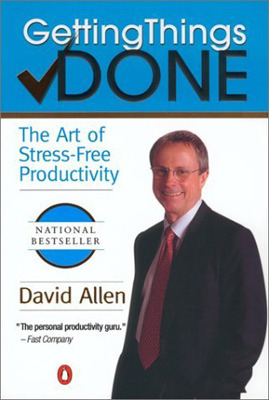
Getting Things Done: The Art of Stress-Free Productivity
by David Allen
Rating: 4.0 ⭐
• 5 recommendations ❤️
In today's world, yesterday's methods just don't work. In Getting Things Done, veteran coach and management consultant David Allen shares the breakthrough methods for stress-free performance that he has introduced to tens of thousands of people across the country. Allen's premise is simple: our productivity is directly proportional to our ability to relax. Only when our minds are clear and our thoughts are organized can we achieve effective productivity and unleash our creative potential. In Getting Things Done Allen shows how to:* Apply the "do it, delegate it, defer it, drop it" rule to get your in-box to empty* Reassess goals and stay focused in changing situations* Plan projects as well as get them unstuck* Overcome feelings of confusion, anxiety, and being overwhelmed* Feel fine about what you're not doingFrom core principles to proven tricks, Getting Things Done can transform the way you work, showing you how to pick up the pace without wearing yourself down.

The 22 Immutable Laws of Marketing: Violate Them at Your Own Risk
by Al Ries
Rating: 4.0 ⭐
• 11 recommendations ❤️
There are laws of nature, so why shouldn't there be laws of marketing? As Al Ries and Jack Trout—the world-renowned marketing consultants and bestselling authors of Positioning —note, you can build an impressive airplane, but it will never leave the ground if you ignore the laws of physics, especially gravity. Why then, they ask, shouldn't there also be laws of marketing that must be followed to launch and maintain winning brands? In The 22 Immutable Laws of Marketing , Ries and Trout offer a compendium of twenty-two innovative rules for understanding and succeeding in the international marketplace. From the Law of Leadership, to The Law of the Category, to The Law of the Mind, these valuable insights stand the test of time and present a clear path to successful products. Violate them at your own risk.
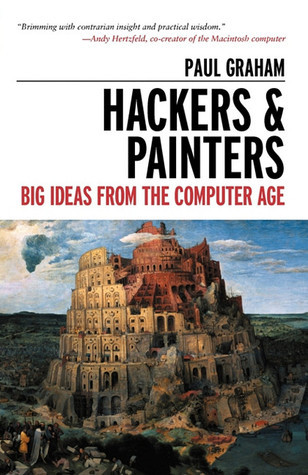
Hackers & Painters: Big Ideas from the Computer Age
by Paul Graham
Rating: 4.2 ⭐
• 14 recommendations ❤️
"The computer world is like an intellectual Wild West, in which you can shoot anyone you wish with your ideas, if you're willing to risk the consequences. " --from Hackers & Big Ideas from the Computer Age , by Paul Graham We are living in the computer age, in a world increasingly designed and engineered by computer programmers and software designers, by people who call themselves hackers. Who are these people, what motivates them, and why should you care? Consider these Everything around us is turning into computers. Your typewriter is gone, replaced by a computer. Your phone has turned into a computer. So has your camera. Soon your TV will. Your car was not only designed on computers, but has more processing power in it than a room-sized mainframe did in 1970. Letters, encyclopedias, newspapers, and even your local store are being replaced by the Internet. Hackers & Big Ideas from the Computer Age , by Paul Graham, explains this world and the motivations of the people who occupy it. In clear, thoughtful prose that draws on illuminating historical examples, Graham takes readers on an unflinching exploration into what he calls "an intellectual Wild West." The ideas discussed in this book will have a powerful and lasting impact on how we think, how we work, how we develop technology, and how we live. Topics include the importance of beauty in software design, how to make wealth, heresy and free speech, the programming language renaissance, the open-source movement, digital design, internet startups, and more.

The Inmates Are Running the Asylum: Why High Tech Products Drive Us Crazy and How to Restore the Sanity
by Alan Cooper
Rating: 4.1 ⭐
• 6 recommendations ❤️
Technology isn't only the way of the future, but also the way of today. With electronics, computer chips, transmitters, and so on finding their into the most common of household and office environments, most people find that they really don't know very much about the technological advances they use. They need their phones, cameras, computers, and cars to work the way they think - with common sense. Alan Cooper offers up the revelation.

The Four Obsessions of an Extraordinary Executive: A Leadership Fable
by Patrick Lencioni
Rating: 4.1 ⭐
• 2 recommendations ❤️
In this stunning follow-up to his best-selling book, The Five Temptations of a CEO, Patrick Lencioni offers up another leadership fable that's every bit as compelling and illuminating as its predecessor. This time, Lencioni's focus is on a leader's crucial role in building a healthy organization--an often overlooked but essential element of business life that is the linchpin of sustained success. Readers are treated to a story of corporate intrigue as the frustrated head of one consulting firm faces a leadership challenge so great that it threatens to topple his company, his career, and everything he holds true about leadership itself. In the story's telling, Lencioni helps his readers understand the disarming simplicity and power of creating organizational health, and reveals four key disciplines that they can follow to achieve it.

The Sovereign Individual: Mastering the Transition to the Information Age
by James Dale Davidson
Rating: 4.2 ⭐
• 14 recommendations ❤️
Two renowned investment advisors and authors of the bestseller The Great Reckoning bring to light both currents of disaster and the potential for prosperity and renewal in the face of radical changes in human history as we move into the next century.The Sovereign Individual details strategies necessary for adapting financially to the next phase of Western civilization.Few observers of the late twentieth century have their fingers so presciently on the pulse of the global political and economic realignment ushering in the new millennium as do James Dale Davidson and Lord William Rees-Mogg. Their bold prediction of disaster on Wall Street in Blood in the Streets was borne out by Black Tuesday. In their ensuing bestseller, The Great Reckoning, published just weeks before the coup attempt against Gorbachev, they analyzed the pending collapse of the Soviet Union and foretold the civil war in Yugoslavia and other events that have proved to be among the most searing developments of the past few years.In The Sovereign Individual, Davidson and Rees-Mogg explore the greatest economic and political transition in centuries—the shift from an industrial to an information-based society. This transition, which they have termed "the fourth stage of human society," will liberate individuals as never before, irrevocably altering the power of government. This outstanding book will replace false hopes and fictions with new understanding and clarified values.

Success can be yours with Brian Tracy's The Psychology of Achievement Develop the top achiever's mindset The world's foremost producer of personal development and motivational audio programs offers an inside look at the thinking that leads to great achievement. Drawing on the work of leading psychologists and behavioral researchers, Brian Tracy -- America's "success mentor" -- demonstrates the attitude, deep self-knowledge and pin-pointed goals that are important factors in achieving great success. He'll help you identify your own "area of excellence" and master the tools that make each achiever tick, including:How to sharpen your natural intuitionHow to increase your brain powerHow to change thoughts from negative to positiveHow to break bad habits quickly and painlesslyPacked with practical advice that lead to extraordinary results, The Psychology of Achievement will help you use every ounce of your potential

An accessible analysis of the global expansion of financial markets in poor communities, incorporating the latest thinking and evidence. The microfinance revolution has allowed more than 150 million poor people around the world to receive small loans without collateral, build up assets, and buy insurance. The idea that providing access to reliable and affordable financial services can have powerful economic and social effects has captured the imagination of policymakers, activists, bankers, and researchers around the world; the 2006 Nobel Peace Prize went to microfinance pioneer Muhammed Yunis and Grameen Bank of Bangladesh. This book offers an accessible and engaging analysis of the global expansion of financial markets in poor communities. It introduces readers to the key ideas driving microfinance, integrating theory with empirical data and addressing a range of issues, including savings and insurance, the role of women, impact measurement, and management incentives. This second edition has been updated throughout to reflect the latest data. A new chapter on commercialization describes the rapid growth in investment in microfinance institutions and the tensions inherent in the efforts to meet both social and financial objectives. The chapters on credit contracts, savings and insurance, and gender have been expanded substantially; a new section in the chapter on impact measurement describes the growing importance of randomized controlled trials; and the chapter on managing microfinance offers a new perspective on governance issues in transforming institutions. Appendixes and problem sets cover technical material.

The moment when you’re tired of trying……and all around is darkness. It’s time to act.Are you ready to truly love yourself?25 years ago, Gay Hendricks made a drastic decision. This book tells his story. Since then, he’s received thousands of letters from the people who have read his writing and had their lives profoundly changed. For Gay, it led to meeting Kathlyn.It wouldn’t have been possible had he not learned this valuable lesson.Are you ready to feel real love?This book is one that is meant to be read and reread daily. It will show you how to alter your personal opinion about yourself and reinforce those beliefs until the new you is ready to soar.Learn - Forgive- Accept Others- Grow Kinder- Find Happiness- Appreciate Your GiftsYou’ll love this New Age Mental & Spiritual Healing book because mindset is a hard thing to change without the right guidance.Get it now.

Sperm Wars: Infidelity, Sexual Conflict, and Other Bedroom Battles
by Robin Baker
Rating: 3.9 ⭐
• 4 recommendations ❤️
Forse non tutti sanno che:- il 10% dei bambini sono allevati da un uomo che non è il loro padre genetico, anche se crede di esserlo;- meno dell'1% degli spermatozoi eiaculati da un uomo è in grado di fecondare l'ovulo; il rimanente 99% serve solo a ingaggiare guerre sessuali con spermatozoi di altri uomini;- un uomo e una donna, che si trovino nel deserto o in una modernissima città, avranno da due a tremila rapporti sessuali in tutta la loro vita;- raramente le scappatelle vengono scoperte e anche i tradimenti di lunga durata hanno solo il 50% di probabilità di essere smascherati.Guerre sessuali è il risultato di anni di rigorose ricerche e ci aiuta a comprendere il nostro comportamento sessuale nella sua complesità e, a volte, apparente perversità.

The Dip: A Little Book That Teaches You When to Quit
by Seth Godin
Rating: 3.8 ⭐
• 7 recommendations ❤️
A New York Times , USA Today , and Wall Street Journal bestsellerIn this iconic bestseller, popular business blogger and bestselling author Seth Godin proves that winners are really just the best quitters. Godin shows that winners quit fast, quit often, and quit without guilt—until they commit to beating the right Dip.Every new project (or job, or hobby, or company) starts out fun…then gets really hard, and not much fun at all. You might be in a Dip—a temporary setback that will get better if you keep pushing. But maybe it’s really a Cul-de-Sac—a total dead end. What really sets superstars apart is the ability to tell the two apart.Winners seek out the Dip. They realize that the bigger the barrier, the bigger the reward for getting past it. If you can beat the Dip to be the best, you’ll earn profits, glory, and long-term security.Whether you’re an intern or a CEO, this fun little book will help you figure out if you’re in a Dip that’s worthy of your time, effort, and talents. The old saying is wrong—winners do quit, and quitters do win.

In this legendary business book and Silicon Valley staple, the former chairman and CEO of Intel shares his perspective on how to build and run a company. A practical handbook for navigating real-life business scenarios and a powerful management manifesto with the ability to revolutionize the way we work. The essential skill of creating and maintaining new businesses—the art of the entrepreneur—can be summed up in a single word: managing. Born of Grove’s experiences at one of America’s leading technology companies (as CEO and employee number three at Intel), High Output Management is equally appropriate for sales managers, accountants, consultants, and teachers, as well as CEOs and startup founders. Grove covers techniques for creating highly productive teams, demonstrating methods of motivation that lead to peak performance. "Generous enough with advice and observations to be required reading." — The Wall Street Journal

"Surely You're Joking, Mr. Feynman!": Adventures of a Curious Character
by
Rating: 4.3 ⭐
• 25 recommendations ❤️
A New York Times bestseller—the outrageous exploits of one of this century's greatest scientific minds and a legendary American original.Richard Feynman, winner of the Nobel Prize in physics, thrived on outrageous adventures. Here he recounts in his inimitable voice his experience trading ideas on atomic physics with Einstein and Bohr and ideas on gambling with Nick the Greek; cracking the uncrackable safes guarding the most deeply held nuclear secrets; accompanying a ballet on his bongo drums; painting a naked female toreador. In short, here is Feynman's life in all its eccentric—a combustible mixture of high intelligence, unlimited curiosity, and raging chutzpah.
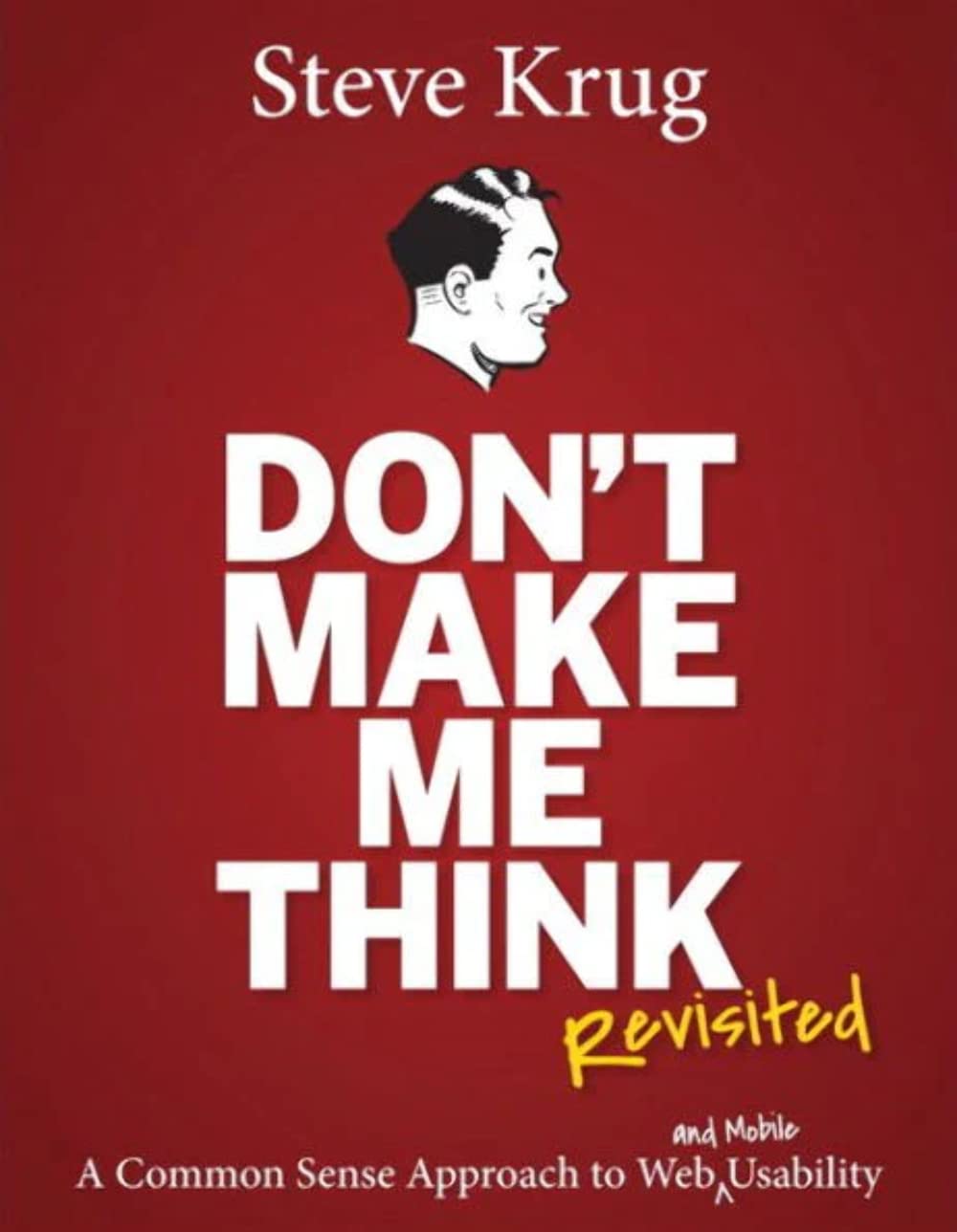
Don't Make Me Think, Revisited: A Common Sense Approach to Web Usability
by Steve Krug
Rating: 4.2 ⭐
• 8 recommendations ❤️
Since Don’t Make Me Think was first published in 2000, over 400,000 Web designers and developers have relied on Steve Krug’s guide to help them understand the principles of intuitive navigation and information design.In this 3rd edition, Steve returns with fresh perspective to reexamine the principles that made Don’t Make Me Think a classic-–with updated examples and a new chapter on mobile usability. And it’s still short, profusely illustrated…and best of all–fun to read.If you’ve read it before, you’ll rediscover what made Don’t Make Me Think so essential to Web designers and developers around the world. If you’ve never read it, you’ll see why so many people have said it should be required reading for anyone working on Web sites.

The New One Minute Manager offers a way for you to succeed sooner with less stress in changing times—both at work and at home.Based on the original book The One Minute Manager that helped millions of people around the world in organizations large and small, The New One Minute Manager is a concise, easily read story that reveals three very practical secrets: One Minute Goals, One Minute Praisings, and One Minute Re-Directs, the new third secret. The story is based on studies in the behavioral sciences and medicine that support why these apparently simple methods work so well with so many people. And by the book's end, you will know how to apply what you discover to your own situation and enjoy the benefits.
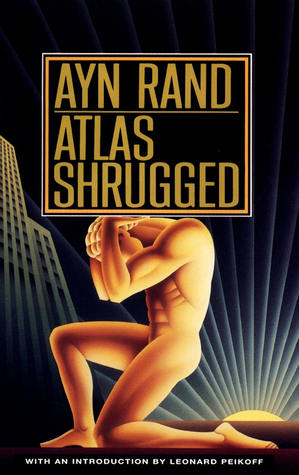
This is the story of a man who said that he would stop the motor of the world and did. Was he a destroyer or the greatest of liberators?Why did he have to fight his battle, not against his enemies, but against those who needed him most, and his hardest battle against the woman he loved? What is the world’s motor — and the motive power of every man? You will know the answer to these questions when you discover the reason behind the baffling events that play havoc with the lives of the characters in this story. Tremendous in its scope, this novel presents an astounding panorama of human life — from the productive genius who becomes a worthless playboy — to the great steel industrialist who does not know that he is working for his own destruction — to the philosopher who becomes a pirate — to the composer who gives up his career on the night of his triumph — to the woman who runs a transcontinental railroad — to the lowest track worker in her Terminal tunnels. You must be prepared, when you read this novel, to check every premise at the root of your convictions.This is a mystery story, not about the murder — and rebirth — of man’s spirit. It is a philosophical revolution, told in the form of an action thriller of violent events, a ruthlessly brilliant plot structure and an irresistible suspense. Do you say this is impossible? Well, that is the first of your premises to check.
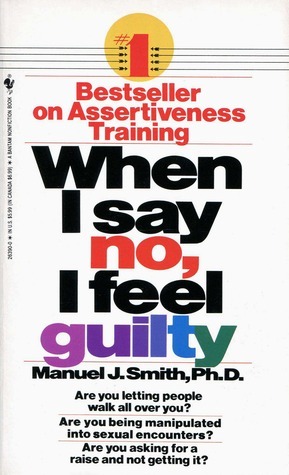
When I Say No, I Feel Guilty: How to Cope - Using the Skills of Systematic Assertive Therapy
by Manuel J. Smith
Rating: 4.0 ⭐
• 2 recommendations ❤️
The best-seller that helps you say: "I just said 'no' and I don't feel guilty!" Are you letting your kids get away with murder? Are you allowing your mother-in-law to impose her will on you? Are you embarrassed by praise or crushed by criticism? Are you having trouble coping with people? Learn the answers in "When I Say No, I Feel Guilty," the best-seller with revolutionary new techniques for getting your own way.

Good to Great: Why Some Companies Make the Leap... and Others Don't
by Jim Collins
Rating: 4.1 ⭐
• 28 recommendations ❤️
sach hay ve ky nang - bi quyet thanh cong - hinh thanh tu duy tich cuc

Made to Stick: Why Some Ideas Survive and Others Die
by Chip Heath
Rating: 4.0 ⭐
• 10 recommendations ❤️
NEW YORK TIMES BESTSELLER - The instant classic about why some ideas thrive, why others die, and how to improve your idea's chances--essential reading in the "fake news" era.Mark Twain once observed, "A lie can get halfway around the world before the truth can even get its boots on." His observation rings true: Urban legends, conspiracy theories, and bogus news stories circulate effortlessly. Meanwhile, people with important ideas--entrepreneurs, teachers, politicians, and journalists--struggle to make them "stick."In Made to Stick, Chip and Dan Heath reveal the anatomy of ideas that stick and explain ways to make ideas stickier, such as applying the human scale principle, using the Velcro Theory of Memory, and creating curiosity gaps. Along the way, we discover that sticky messages of all kinds--from the infamous "kidney theft ring" hoax to a coach's lessons on sportsmanship to a vision for a new product at Sony--draw their power from the same six traits.Made to Stick will transform the way you communicate. It's a fast-paced tour of success stories (and failures): the Nobel Prize-winning scientist who drank a glass of bacteria to prove a point about stomach ulcers; the charities who make use of the Mother Teresa Effect; the elementary-school teacher whose simulation actually prevented racial prejudice.Provocative, eye-opening, and often surprisingly funny, Made to Stick shows us the vital principles of winning ideas--and tells us how we can apply these rules to making our own messages stick.

The million copy international bestseller, critically acclaimed and translated into over 25 languages. As influential today as when it was first published, The Selfish Gene has become a classic exposition of evolutionary thought. Professor Dawkins articulates a gene's eye view of evolution - a view giving centre stage to these persistent units of information, and in which organisms can be seen as vehicles for their replication. This imaginative, powerful, and stylistically brilliant work not only brought the insights of Neo-Darwinism to a wide audience, but galvanized the biology community, generating much debate and stimulating whole new areas of research. Forty years later, its insights remain as relevant today as on the day it was published. This 40th anniversary edition includes a new epilogue from the author discussing the continuing relevance of these ideas in evolutionary biology today, as well as the original prefaces and foreword, and extracts from early reviews. Oxford Landmark Science books are 'must-read' classics of modern science writing which have crystallized big ideas, and shaped the way we think.

In this classic discussion about economics, freedom, and the relationship between the two, Milton and Rose Friedman explain how our freedom has been eroded and our affluence undermined through the explosion of laws, regulations, agencies, and spending in Washington. Also they carefully examine how good intentions often produce deplorable results when government steps in as a middleman. The Friedmans also provide remedies for those economic ills-energetically informing us about what we should do in order to expand our freedom and promote prosperity. Powerful and persuasive, here is the important analysis of what has gone wrong in America in the past and what is necessary for our economic health to flourish.

Since Dr. Brizendine wrote The Female Brain ten years ago, the response has been overwhelming. This New York Times bestseller has been translated into more than thirty languages, has sold nearly a million copies between editions, and has most recently inspired a romantic comedy starring Whitney Cummings and Sofia Vergara. And its profound scientific understanding of the nature and experience of the female brain continues to guide women as they pass through life stages, to help men better understand the girls and women in their lives, and to illuminate the delicate emotional machinery of a love relationship.Why are women more verbal than men? Why do women remember details of fights that men can’t remember at all? Why do women tend to form deeper bonds with their female friends than men do with their male counterparts? These and other questions have stumped both sexes throughout the ages.Now, pioneering neuropsychiatrist Louann Brizendine, M.D., brings together the latest findings to show how the unique structure of the female brain determines how women think, what they value, how they communicate, and who they love. While doing research as a medical student at Yale and then as a resident and faculty member at Harvard, Louann Brizendine discovered that almost all of the clinical data in existence on neurology, psychology, and neurobiology focused exclusively on males. In response to the overwhelming need for information on the female mind, Brizendine established the first clinic in the country to study and treat women’s brain function.In The Female Brain, Dr. Brizendine distills all her findings and the latest information from the scientific community in a highly accessible book that educates women about their unique brain/body/behavior.The result: women will come away from this book knowing that they have a lean, mean, communicating machine. Men will develop a serious case of brain envy.

How to Talk So Kids Will Listen & Listen So Kids Will Talk
by Adele Faber
Rating: 4.4 ⭐
• 2 recommendations ❤️
You can stop fighting with your children!Here is the bestselling book that will give you the know-how you need to be more effective with your children - and more supportive of yourself. Enthusiastically praised by parents and professionals around the world, the down-to-earth, respectful approach of Adele Faber and Elaine Mazlish makes relationships with children of all ages less stressful and more rewarding. Now, in this thirtieth-anniversary edition, these award-winning experts share their latest insights and suggestions based on feedback they've received over the years.Their methods of communication - illustrated with delightful cartoons showing the skills in action - offer innovative ways to solve common problems. You'll learn how:★ Cope with your child's negative feelings - frustration, disappointment, anger, etc.★ Express your anger without being hurtful★ Engage your child's willing cooperation★ Set firm limits and still maintain goodwill★ Use alternatives to punishment★ Resolve family conflicts peacefully

A preeminent scientist - and the world's most prominent atheist - asserts the irrationality of belief in God, and the grievous harm religion has inflicted on society, from the Crusades to 9/11.With rigor and wit, Dawkins examines God in all his forms, from the sex-obsessed tyrant of the Old Testament, to the more benign (but still illogical) Celestial Watchmaker favored by some Enlightenment thinkers. He eviscerates the major arguments for religion, and demonstrates the supreme improbability of a supreme being. He shows how religion fuels war, foments bigotry, and abuses children, buttressing his points with historical and contemporary evidence.The God Delusion makes a compelling case that belief in God is not just wrong, but potentially deadly. It also offers exhilarating insight into the advantages of atheism to the individual and society, not the least of which is a clearer, truer appreciation of the universe's wonders than any faith could ever muster.

In this candid and riveting memoir, for the first time ever, Nike founder and CEO Phil Knight shares the inside story of the company’s early days as an intrepid start-up and its evolution into one of the world’s most iconic, game-changing, and profitable brands.In 1962, fresh out of business school, Phil Knight borrowed $50 from his father and created a company with a simple mission: import high-quality, low-cost athletic shoes from Japan. Selling the shoes from the trunk of his lime green Plymouth Valiant, Knight grossed $8,000 his first year. Today, Nike’s annual sales top $30 billion. In an age of startups, Nike is the ne plus ultra of all startups, and the swoosh has become a revolutionary, globe-spanning icon, one of the most ubiquitous and recognizable symbols in the world today.But Knight, the man behind the swoosh, has always remained a mystery. Now, for the first time, in a memoir that is candid, humble, gutsy, and wry, he tells his story, beginning with his crossroads moment. At 24, after backpacking around the world, he decided to take the unconventional path, to start his own business—a business that would be dynamic, different.Knight details the many risks and daunting setbacks that stood between him and his dream—along with his early triumphs. Above all, he recalls the formative relationships with his first partners and employees, a ragtag group of misfits and seekers who became a tight-knit band of brothers. Together, harnessing the transcendent power of a shared mission, and a deep belief in the spirit of sport, they built a brand that changed everything.

Strengths Based Leadership: Great Leaders, Teams, and Why People Follow
by Tom Rath
Rating: 4.0 ⭐
• 2 recommendations ❤️
From Gallup: a landmark study of great leaders, teams and the reasons why people follow.More than a decade ago, Gallup unveiled the results of a landmark 30-year research project that ignited a global conversation on the topic of strengths. Since then, more than 23 million people have taken Gallup’s CliftonStrengths (formerly StrengthsFinder) assessment, which forms the core of several books on this topic, including the #1 international bestseller StrengthsFinder 2.0 .In recent years, while continuing to learn more about strengths, Gallup scientists have also been examining decades of data on the topic of leadership. They studied more than 1 million work teams, conducted more than 20,000 in-depth interviews with leaders, and even interviewed more than 10,000 followers around the world to ask exactly why they followed the most important leader in their life.Gallup reveals the results of this research in Strengths Based Leadership . Based on Gallup’s discoveries, the book identifies three keys to being a more effective leader: knowing your strengths and investing in others’ strengths, getting people with the right strengths on your team, and understanding and meeting the four basic needs of those who look to you for leadership.As you read Strengths Based Leadership , you’ll hear firsthand accounts from some of the most successful organizational leaders in recent history, from the founder of Teach For America to the president of The Ritz-Carlton, as they discuss how their unique strengths have driven their success. Filled with novel research and actionable ideas, Strengths Based Leadership will give you a new road map for leading people toward a better future.A unique access code allows you to take a leadership version of Gallup’s CliftonStrengths assessment. The leadership version provides you with specific strategies for leading with your top five strengths and enables you to plot the strengths of your team based on the four domains of leadership strength revealed in the book.

Pilot's Handbook of Aeronautical Knowledge: FAA-H-8083-25B
by Federal Aviation Administration
Rating: 4.4 ⭐
• 2 recommendations ❤️
This official FAA handbook has been required reading for more than 30 years. Providing basic knowledge essential for all pilots, from beginning students through to the more advanced certificates, this Federal Aviation Administration (FAA) publication introduces readers to the broad spectrum of knowledge required as they progress through pilot training. Studying this book, pilots gain the required knowledge to earn a certificate and understand aerodynamic theory associated with airplane flight. Written for the pilot preparing for a Remote, Sport, Private, Commercial, or Flight Instructor Pilot Certificate, it is a key reference for all the information necessary to operate an aircraft and to pass the FAA Knowledge Exam and Practical Test (checkride).This invaluable learning tool begins with a basic introduction to flying and a history of flight, then explores the role of the FAA, criteria for earning the various pilot certificates, how to select a flight school and instructor, and the tests associated with earning a pilot certificate. Topics covered include aeronautical decision making, aircraft construction, principles of flight, aerodynamics of flight, flight controls, aircraft systems, flight instruments, flight manuals and other documents, weight and balance, aircraft performance, weather theory, aviation weather services, airport operations, airspace, navigation, and aeromedical factors. Appendices provide additional support including acronyms, abbreviations, and NOTAM contractions, airport signs and markings, a glossary and index.

In the year 2044, reality is an ugly place. The only time teenage Wade Watts really feels alive is when he's jacked into the virtual utopia known as the OASIS. Wade's devoted his life to studying the puzzles hidden within this world's digital confines--puzzles that are based on their creator's obsession with the pop culture of decades past and that promise massive power and fortune to whoever can unlock them. But when Wade stumbles upon the first clue, he finds himself beset by players willing to kill to take this ultimate prize. The race is on, and if Wade's going to survive, he'll have to win--and confront the real world he's always been so desperate to escape.

NAMED ONE OF THE BEST BOOKS OF THE YEAR BYThe Christian Science Monitor • St. Louis Post-Dispatch“Magisterial.”— The New York Times In this extraordinary volume, Jean Edward Smith presents a portrait of Dwight D. Eisenhower that is as full, rich, and revealing as anything ever written about America’s thirty-fourth president. Here is Eisenhower the young dreamer, charting a course from Abilene, Kansas, to West Point and beyond. Drawing on a wealth of untapped primary sources, Smith provides new insight into Ike’s maddening apprenticeship under Douglas MacArthur. Then the whole panorama of World War II unfolds, with Eisenhower’s superlative generalship forging the Allied path to victory. Smith also gives us an intriguing examination of Ike’s finances, details his wartime affair with Kay Summersby, and reveals the inside story of the 1952 Republican convention that catapulted him to the White House. Smith’s chronicle of Eisenhower’s presidential years is as compelling as it is comprehensive. Derided by his detractors as a somnambulant caretaker, Eisenhower emerges in Smith’s perceptive retelling as both a canny politician and a skillful, decisive leader. He managed not only to keep the peace, but also to enhance America’s prestige in the Middle East and throughout the world. Unmatched in insight, Eisenhower in War and Peace at last gives us an Eisenhower for our time—and for the ages. NATIONAL BESTSELLERPraise for Eisenhower in War and Peace “[A] fine new biography . . . [Eisenhower’s] White House years need a more thorough exploration than many previous biographers have given them. Smith, whose long, distinguished career includes superb one-volume biographies of Grant and Franklin Roosevelt, provides just that.” —The Washington Post “Highly readable . . . [Smith] shows us that [Eisenhower’s] ascent to the highest levels of the military establishment had much more to do with his easy mastery of politics than with any great strategic or tactical achievements.”— The Wall Street Journal “Always engrossing . . . Smith portrays a genuinely admirable smart, congenial, unpretentious, and no ideologue. Despite competing biographies from Ambrose, Perret, and D’Este, this is the best.”— Publishers Weekly (starred review) “No one has written so heroic a biography [on Eisenhower] as this year’s Eisenhower in War and Peace [by] Jean Edward Smith.”— The National Interest “Dwight Eisenhower, who was more cunning than he allowed his adversaries to know, understood the advantage of being underestimated. Jean Edward Smith demonstrates precisely how successful this stratagem was. Smith, America’s greatest living biographer, shows why, now more than ever, Americans should like Ike.”—George F. Will

As it was in Anna Karenina, Madame Bovary, and Othello, so it is in life. Most forms of private vice and public evil are kindled and sustained by lies. Acts of adultery and other personal betrayals, financial fraud, government corruption—even murder and genocide—generally require an additional moral defect: a willingness to lie.In Lying , best-selling author and neuroscientist Sam Harris argues that we can radically simplify our lives and improve society by merely telling the truth in situations where others often lie. He focuses on "white" lies—those lies we tell for the purpose of sparing people discomfort—for these are the lies that most often tempt us. And they tend to be the only lies that good people tell while imagining that they are being good in the process.

Perfect Puppy in 7 Days: How to Start Your Puppy Off Right
by Sophia Yin
Rating: 4.2 ⭐
• 1 recommendation ❤️
the corners of the cover and some of the pages are a little damaged.

The Outsiders: Eight Unconventional CEOs and Their Radically Rational Blueprint for Success
by William N. Thorndike Jr.
Rating: 4.2 ⭐
• 14 recommendations ❤️
”It is impossible to produce superior performance unless you do something different.” — John TempletonWhat makes a successful CEO? Most people call to mind a familiar definition: a seasoned manager with deep industry expertise. Others might point to the qualities of today’s so-called celebrity CEOs—charisma, virtuoso communication skills, and a confident management style. But what really matters when you run an organization? What is the hallmark of exceptional CEO performance? Quite simply, it is the returns for the shareholders of that company over the long term.In this refreshing, counterintuitive book, author Will Thorndike brings to bear the analytical wisdom of a successful career in investing, closely evaluating the performance of companies and their leaders. You will meet eight individualistic CEOs whose firms’ average returns outperformed the S&P 500 by a factor of twenty—in other words, an investment of $10,000 with each of these CEOs, on average, would have been worth over $1.5 million twenty-five years later. You may not know all their names, but you will recognize their companies: General Cinema, Ralston Purina, The Washington Post Company, Berkshire Hathaway, General Dynamics, Capital Cities Broadcasting, TCI, and Teledyne. In The Outsiders, you’ll learn the traits and methods—striking for their consistency and relentless rationality—that helped these unique leaders achieve such exceptional performance.Humble, unassuming, and often frugal, these "outsiders” shunned Wall Street and the press, and shied away from the hottest new management trends. Instead, they shared specific traits that put them and the companies they led on winning trajectories: a laser-sharp focus on per share value as opposed to earnings or sales growth; an exceptional talent for allocating capital and human resources; and the belief that cash flow, not reported earnings, determines a company’s long-term value.Drawing on years of research and experience, Thorndike tells eye-opening stories, extracting lessons and revealing a compelling alternative model for anyone interested in leading a company or investing in one—and reaping extraordinary returns.
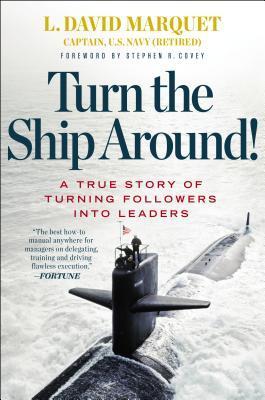
Turn the Ship Around!: A True Story of Turning Followers into Leaders
by L. David Marquet
Rating: 4.2 ⭐
• 8 recommendations ❤️
"David Marquet is the kind of leader who comes around only once in a generation ... his ideas and lessons are invaluable" — Simon Sinek, author of Start With WhyCaptain David Marquet was used to giving orders. In the high-stress environment of the USS Santa Fe, a nuclear-powered submarine, it was crucial his men did their job well. But the ship was dogged by poor morale, poor performance and the worst retention in the fleet.One day, Marquet unknowingly gave an impossible order, and his crew tried to follow it anyway. He realized he was leading in a culture of followers, and they were all in danger unless they fundamentally changed the way they did things. Marquet took matters into his own hands and pushed for leadership at every level. Before long, his crew became fully engaged and the Santa Fe skyrocketed from worst to first in the fleet.No matter your business or position, you can apply Marquet's approach to create a workplace where everyone takes responsibility for their actions, people are healthier and happier — and everyone is a leader.

The first job of an author is, of course, to write great books, but these days, their second job is to market them.Marketing isn't a skill that most authors have naturally, and there is little formal training. But when your book hits the shelves, and the sales don't start rolling in, there's only two things an author can do. Keep writing more books and ... Get to grips with marketing. This book is for authors who want to sell more books, but it's also for those writers who want to think more like an entrepreneur. It's for traditionally published authors who want to take control of their future, and for self-published authors who want to jumpstart a career. There are some short-term tactics for those who want to kick up immediate sales, but the focus of the book is more about instilling values and marketing principles that will help your long-term career as a writer. It's also about going beyond just the book, because the methods in this guide can take you from being an author into professional speaking, making money from other products and creating opportunities that you can't even imagine yet. There are no rules in this game, but learning this kind of authentic marketing has certainly changed my life, so read on and I'll share everything I know with you.How To Market A Book covers an extensive range of marketing principles, strategies and tactics: Part 1: Marketing Principles - including myths, how to balance your time, co-opetition and generosity Part 2: Prerequisites for Success - including an understanding of yourself and your target market, professional editing and cover design, your book page on the retailer websites, pricing and the use of freePart 3: No Platform Needed - Short-term Marketing - including how to get book reviews, paid advertising, using traditional media and tips for TV, radio and press releases Part 4: The Author Platform - Long-term Marketing - including the reasons why a platform is a good thing, author branding, your author website, list-building and email marketing, content marketing and blogging, audio and podcasting, video and book trailers, social networking, professional speaking, and becoming an author-entrepreneur. Part 5: Launching Your Book - including how launching has changed, soft launch, launch spikes, post launch and relaunches as well as lessons learned from some major book launches. Plus/ tips for when you get overwhelmed and plenty more links to further resources.

The Alliance: Managing Talent in the Networked Age
by Reid Hoffman
Rating: 3.8 ⭐
• 4 recommendations ❤️
The New York Times Bestelling guide for managers and executives.Introducing the new, realistic loyalty pact between employer and employee.The employer-employee relationship is broken, and managers face a seemingly impossible dilemma: the old model of guaranteed long-term employment no longer works in a business environment defined by continuous change, but neither does a system in which every employee acts like a free agent.The solution? Stop thinking of employees as either family or as free agents. Think of them instead as allies .As a manager you want your employees to help transform the company for the future. And your employees want the company to help transform their careers for the long term. But this win-win scenario will happen only if both sides trust each other enough to commit to mutual investment and mutual benefit. Sadly, trust in the business world is hovering at an all-time low.We can rebuild that lost trust with straight talk that recognizes the realities of the modern economy. So, paradoxically, the alliance begins with managers acknowledging that great employees might leave the company, and with employees being honest about their own career aspirations.By putting this new alliance at the heart of your talent management strategy, you’ll not only bring back trust, you’ll be able to recruit and retain the entrepreneurial individuals you need to adapt to a fast-changing world.These individuals, flexible, creative, and with a bias toward action, thrive when they’re on a specific “tour of duty”—when they have a mission that’s mutually beneficial to employee and company that can be completed in a realistic period of time.Coauthored by the founder of LinkedIn, this bold but practical guide for managers and executives will give you the tools you need to recruit, manage, and retain the kind of employees who will make your company thrive in today’s world of constant innovation and fast-paced change.

Becoming Steve Jobs: The Evolution of a Reckless Upstart into a Visionary Leader
by Brent Schlender
Rating: 4.4 ⭐
• 16 recommendations ❤️
The #1 New York Times bestselling biography of how Steve Jobs became the most visionary CEO in history. Becoming Steve Jobs breaks down the conventional, one-dimensional view of Steve Jobs that he was half-genius, half-jerk from youth, an irascible and selfish leader who slighted friends and family alike. Becoming Steve Jobs answers the central question about the life and career of the Apple cofounder and How did a young man so reckless and arrogant that he was exiled from the company he founded become the most effective visionary business leader of our time, ultimately transforming the daily life of billions of people?Drawing on incredible and sometimes exclusive access, Schlender and Tetzeli tell a different story of a real human being who wrestled with his failings and learned to maximize his strengths over time. Their rich, compelling narrative is filled with stories never told before from the people who knew Jobs best, including his family, former inner circle executives, and top people at Apple, Pixar and Disney, most notably Tim Cook, Jony Ive, Eddy Cue, Ed Catmull, John Lasseter, Robert Iger and many others. In addition, Schlender knew Jobs personally for 25 years and draws upon his many interviews with him, on and off the record, in writing the book. He and Tetzeli humanize the man and explain, rather than simply describe, his behavior. Along the way, the book provides rich context about the technology revolution we've all lived through, and the ways in which Jobs changed our world.A rich and revealing account, Becoming Steve Jobs shows us how one of the most colorful and compelling figures of our times was able to combine his unchanging, relentless passion with an evolution in management style to create one of the most valuable and beloved companies on the planet.

On a winter day in 1903, on the remote Outer Banks of North Carolina, two brothers changed history. But it would take the world some time to believe that The age of flight had begun, with the first heavier-than-air powered machine carrying a pilot.Far more than a couple of Dayton bicycle mechanics who happened to hit on success, Wilbur and Orville Wright were men of exceptional ability, unyielding determination, and far-ranging intellectual interest and curiosity. Two-time Pulitzer Prize winner David McCullough tells the dramatic story of how these courageous brothers taught the world how to fly - and how their devoted sister, Katherine, played a far more important role than has been generally understood.

Humans Need Not Apply: A Guide to Wealth and Work in the Age of Artificial Intelligence
by Jerry Kaplan
Rating: 3.7 ⭐
• 2 recommendations ❤️
An insightful, engaging tour by a noted Silicon Valley insider of how accelerating developments in Artificial Intelligence will transform the way we live and workSelected as one of the 10 best science and technology books of 2015 by The Economist After billions of dollars and fifty years of effort, researchers are finally cracking the code on artificial intelligence. As society stands on the cusp of unprecedented change, Jerry Kaplan unpacks the latest advances in robotics, machine learning, and perception powering systems that rival or exceed human capabilities. Driverless cars, robotic helpers, and intelligent agents that promote our interests have the potential to usher in a new age of affluence and leisure — but as Kaplan warns, the transition may be protracted and brutal unless we address the two great scourges of the modern developed world: volatile labor markets and income inequality. He proposes innovative, free-market adjustments to our economic system and social policies to avoid an extended period of social turmoil. His timely and accessible analysis of the promise and perils of artificial intelligence is a must-read for business leaders and policy makers on both sides of the aisle.

The Coddling of the American Mind: How Good Intentions and Bad Ideas Are Setting Up a Generation for Failure
by Greg Lukianoff
Rating: 4.3 ⭐
• 4 recommendations ❤️
New York Times Bestseller - Finalist for the 2018 National Book Critics Circle Award in Nonfiction - A New York Times Notable Book - Bloomberg Best Book of 2018 Something has been going wrong on many college campuses in the last few years. Speakers are shouted down. Students and professors say they are walking on eggshells and are afraid to speak honestly. Rates of anxiety, depression, and suicide are rising--on campus as well as nationally. How did this happen?First Amendment expert Greg Lukianoff and social psychologist Jonathan Haidt show how the new problems on campus have their origins in three terrible ideas that have become increasingly woven into American childhood and education: What doesn't kill you makes you weaker; always trust your feelings; and life is a battle between good people and evil people. These three Great Untruths contradict basic psychological principles about well-being and ancient wisdom from many cultures. Embracing these untruths--and the resulting culture of safetyism--interferes with young people's social, emotional, and intellectual development. It makes it harder for them to become autonomous adults who are able to navigate the bumpy road of life.Lukianoff and Haidt investigate the many social trends that have intersected to promote the spread of these untruths. They explore changes in childhood such as the rise of fearful parenting, the decline of unsupervised, child-directed play, and the new world of social media that has engulfed teenagers in the last decade. They examine changes on campus, including the corporatization of universities and the emergence of new ideas about identity and justice. They situate the conflicts on campus within the context of America's rapidly rising political polarization and dysfunction.This is a book for anyone who is confused by what is happening on college campuses today, or has children, or is concerned about the growing inability of Americans to live, work, and cooperate across party lines.
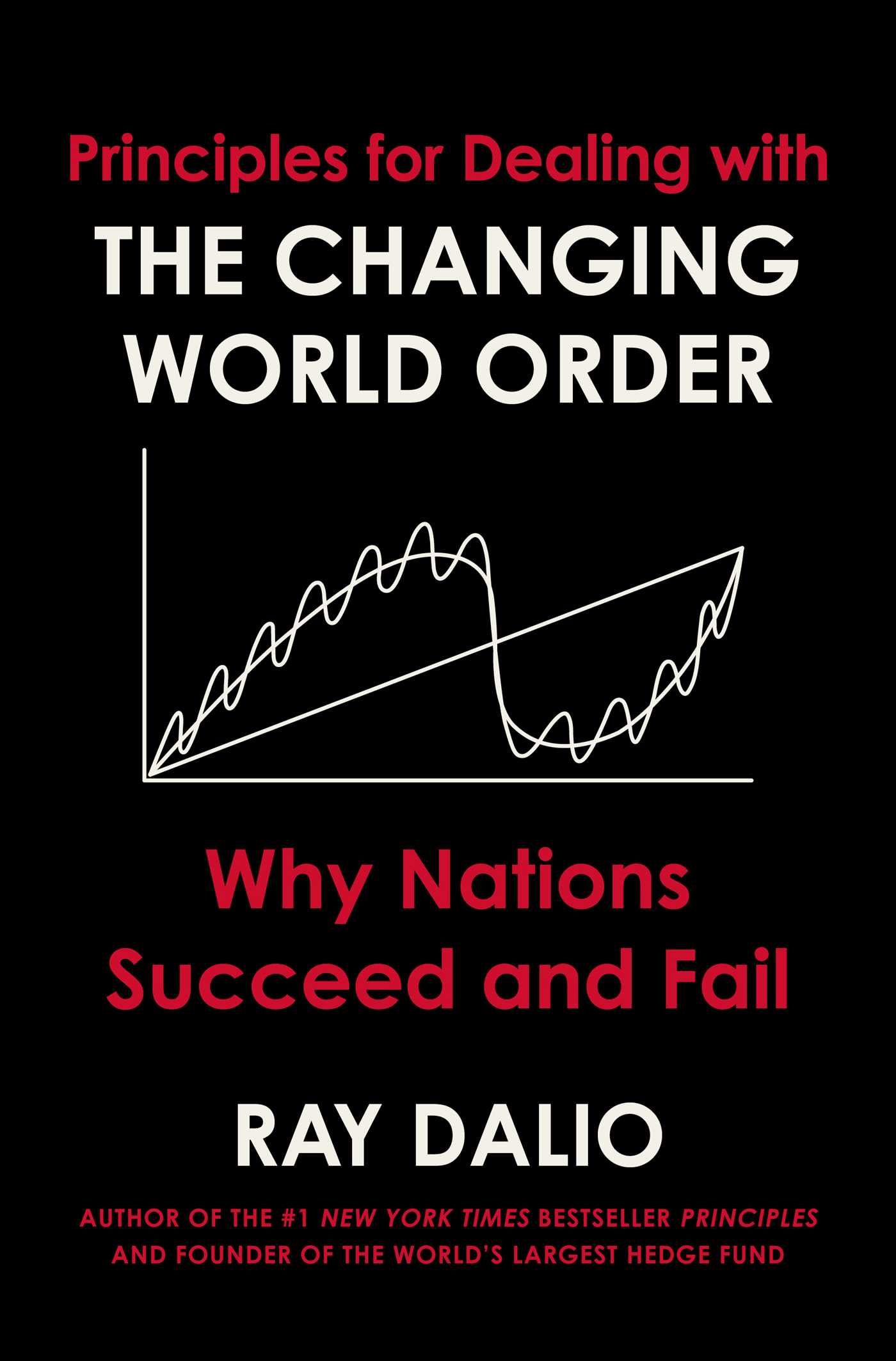
Principles for Dealing with the Changing World Order: Why Nations Succeed and Fail
by Ray Dalio
Rating: 4.3 ⭐
• 21 recommendations ❤️
From legendary investor Ray Dalio, author of the #1 New York Times bestseller Principles, who has spent half a century studying global economies and markets, Principles for Dealing with the Changing World Order examines history’s most turbulent economic and political periods to reveal why the times ahead will likely be radically different from those we’ve experienced in our lifetimes—and to offer practical advice on how to navigate them well.A few years ago, Ray Dalio noticed a confluence of political and economic conditions he hadn’t encountered before. They included huge debts and zero or near-zero interest rates that led to massive printing of money in the world’s three major reserve currencies; big political and social conflicts within countries, especially the US, due to the largest wealth, political, and values disparities in more than 100 years; and the rising of a world power (China) to challenge the existing world power (US) and the existing world order. The last time that this confluence occurred was between 1930 and 1945. This realization sent Dalio on a search for the repeating patterns and cause/effect relationships underlying all major changes in wealth and power over the last 500 years.In this remarkable and timely addition to his Principles series, Dalio brings readers along for his study of the major empires—including the Dutch, the British, and the American—putting into perspective the “Big Cycle” that has driven the successes and failures of all the world’s major countries throughout history. He reveals the timeless and universal forces behind these shifts and uses them to look into the future, offering practical principles for positioning oneself for what’s ahead.