
16 Books Recommended

Written 75 years ago, 1984 was George Orwell’s chilling prophecy about the future. And while 1984 has come and gone, his dystopian vision of a government that will do anything to control the narrative is timelier than ever...This 75th Anniversary Edition includes:• A New Introduction by Dolen Perkins-Valdez, author of Take My Hand, winner of the 2023 NAACP Image Award for Outstanding Literary Work—Fiction• A New Afterword by Sandra Newman, author of Julia: A Retelling of George Orwell’s 1984“The Party told you to reject the evidence of your eyes and ears. It was their final, most essential command.”Winston Smith toes the Party line, rewriting history to satisfy the demands of the Ministry of Truth. With each lie he writes, Winston grows to hate the Party that seeks power for its own sake and persecutes those who dare to commit thoughtcrimes. But as he starts to think for himself, Winston can’t escape the fact that Big Brother is always watching...A startling and haunting novel, 1984 creates an imaginary world that is completely convincing from start to finish. No one can deny the novel’s hold on the imaginations of whole generations, or the power of its admonitions—a power that seems to grow, not lessen, with the passage of time.• Nominated as one of America’s best-loved novels by PBS’s The Great American Read •

The Wealth and Poverty of Nations: Why Some Are So Rich and Some So Poor
by David S. Landes
Rating: 4.0 ⭐
• 6 recommendations ❤️
The Wealth and Poverty of Nations is David S. Landes's acclaimed, best-selling exploration of one of the most contentious and hotly debated questions of our time: Why do some nations achieve economic success while others remain mired in poverty? The answer, as Landes definitively illustrates, is a complex interplay of cultural mores and historical circumstance. Rich with anecdotal evidence, piercing analysis, and a truly astonishing range of erudition, The Wealth and Poverty of Nations is a "picture of enormous sweep and brilliant insight" (Kenneth Arrow) as well as one of the most audaciously ambitious works of history in decades.For the paperback edition, Landes has written a new epilogue, in which he takes account of Asian financial crisises and the international tension between overconfidence and reality.

An unimpeachable classic work in political philosophy, intellectual and cultural history, and economics, The Road to Serfdom has inspired and infuriated politicians, scholars, and general readers for half a century. Originally published in 1944—when Eleanor Roosevelt supported the efforts of Stalin, and Albert Einstein subscribed lock, stock, and barrel to the socialist program— The Road to Serfdom was seen as heretical for its passionate warning against the dangers of state control over the means of production. For F. A. Hayek, the collectivist idea of empowering government with increasing economic control would lead not to a utopia but to the horrors of Nazi Germany and Fascist Italy.First published by the University of Chicago Press on September 18, 1944, The Road to Serfdom garnered immediate, widespread attention. The first printing of 2,000 copies was exhausted instantly, and within six months more than 30,000 books were sold. In April 1945, Reader’s Digest published a condensed version of the book, and soon thereafter the Book-of-the-Month Club distributed this edition to more than 600,000 readers. A perennial best seller, the book has sold 400,000 copies in the United States alone and has been translated into more than twenty languages, along the way becoming one of the most important and influential books of the century.With this new edition, The Road to Serfdom takes its place in the series The Collected Works of F. A. Hayek. The volume includes a foreword by series editor and leading Hayek scholar Bruce Caldwell explaining the book's origins and publishing history and assessing common misinterpretations of Hayek's thought. Caldwell has also standardized and corrected Hayek's references and added helpful new explanatory notes. Supplemented with an appendix of related materials ranging from prepublication reports on the initial manuscript to forewords to earlier editions by John Chamberlain, Milton Friedman, and Hayek himself, this new edition of The Road to Serfdom will be the definitive version of Hayek's enduring masterwork.

The Machiavellian Moment: Florentine Political Thought and the Atlantic Republican Tradition
by J.G.A. Pocock
Rating: 4.0 ⭐
• 2 recommendations ❤️
"The Machiavellian Moment" is a classic study of the consequences for modern historical and social consciousness of the ideal of the classical republic revived by Machiavelli and other thinkers of Renaissance Italy. J.G.A. Pocock suggests that Machiavelli's prime emphasis was on the moment in which the republic confronts the problem of its own instability in time, and which he calls the "Machiavellian moment."After examining this problem in the thought of Machiavelli, Guicciardini, and Giannotti, Pocock turns to the revival of republican thought in Puritan England and in Revolutionary and Federalist America. He argues that the American Revolution can be considered the last great act of civic humanism of the Renaissance. He relates the origins of modern historicism to the clash between civic, Christian, and commercial values in the thought of the eighteenth century.

Revolution in Time: Clocks and the Making of the Modern World
by David S. Landes
Rating: 3.9 ⭐
• 2 recommendations ❤️
This book on the cultural, technological, and manufacturing aspects of measuring time and making clocks is expanded here with a new preface and updated passages exploring findings about medieval and early-modern time keeping, as well as contemporary hi-tech uses of the watch as mini-computer, cellular phone, and even radio receiver or TV screen.

The Reproduction of Mothering: Psychoanalysis and the Sociology of Gender
by Nancy J. Chodorow
Rating: 3.5 ⭐
• 2 recommendations ❤️
When this best-seller was published, it put the mother-daughter relationship and female psychology on the map. The Reproduction of Mothering was chosen by Contemporary Sociology as one of the ten most influential books of the past twenty-five years. With a new preface by the author, this updated edition is testament to the formative effect that Nancy Chodorow's work continues to exert on psychoanalysis, social science, and the humanities.
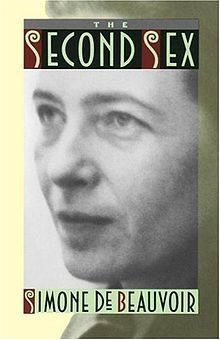
Newly translated and unabridged in English for the first time, Simone de Beauvoir's masterwork is a powerful analysis of the Western notion of "woman," and a groundbreaking exploration of inequality and otherness. This long-awaited new edition reinstates significant portions of the original French text that were cut in the first English translation. Vital and groundbreaking, Beauvoir's pioneering and impressive text remains as pertinent today as it was back then, and will continue to provoke and inspire generations of men and women to come.

The Road To Wigan Pier: (Authorized Orwell Edition): A Mariner Books Classic
by George Orwell
Rating: 3.9 ⭐
• 6 recommendations ❤️
George Orwell, the author of "1984" and "Animal Farm" and the prophet of dystopia, was always a staunch socialist throughout his life. This may confuse today's readers who do not understand the changes in the political spectrum, but for Orwell, this was a natural choice.In the 1930s, commissioned by a left-wing book club, Orwell went to the industrial areas of northern England to investigate and record the real situation of the working class. Orwell did more than just investigate; he went down to the deepest part of the mine, lived in dilapidated and filthy workers' houses, and used the tip of his pen to vividly reveal every aspect of the coal miners' lives. Reading today, 80 years later, Still shockingly true. The despair and poverty conveyed by this picture have a terrifying power that transcends time and national boundaries. At the same time, the Road to Wigan Pier is also Orwell's road to socialism as he examines his own inner self. Born in the British middle class, he recalled how he gradually began to doubt and then hate the strict class barriers that divided British society at that time. Because in his mind, socialism ultimately means only one concept: "justice and freedom."

Upon its original publication, Plagues and Peoples was an immediate critical and popular success, offering a radically new interpretation of world history as seen through the extraordinary impact--political, demographic, ecological, and psychological--of disease on cultures. From the conquest of Mexico by smallpox as much as by the Spanish, to the bubonic plague in China, to the typhoid epidemic in Europe, the history of disease is the history of humankind. With the identification of AIDS in the early 1980s, another chapter has been added to this chronicle of events, which William McNeill explores in his new introduction to this updated editon.Thought-provoking, well-researched, and compulsively readable, Plagues and Peoples is that rare book that is as fascinating as it is scholarly, as intriguing as it is enlightening. "A brilliantly conceptualized and challenging achievement" (Kirkus Reviews), it is essential reading, offering a new perspective on human history.From the Trade Paperback edition.

The New Class: An Analysis of the Communist System
by Milovan Djilas
Rating: 3.9 ⭐
• 2 recommendations ❤️
This classic by an associate of Yugoslavia's Tito created a sensation when it was published in 1957 because it was the first time that a ranking Communist had publicly analyzed his disillusionment with the system.

A good book may have the power to change the way we see the world, but a great book actually becomes part of our daily consciousness, pervading our thinking to the point that we take it for granted, and we forget how provocative and challenging its ideas once were—and still are. The Structure of Scientific Revolutions is that kind of book. When it was first published in 1962, it was a landmark event in the history and philosophy of science. Fifty years later, it still has many lessons to teach. With The Structure of Scientific Revolutions, Kuhn challenged long-standing linear notions of scientific progress, arguing that transformative ideas don’t arise from the day-to-day, gradual process of experimentation and data accumulation but that the revolutions in science, those breakthrough moments that disrupt accepted thinking and offer unanticipated ideas, occur outside of “normal science,” as he called it. Though Kuhn was writing when physics ruled the sciences, his ideas on how scientific revolutions bring order to the anomalies that amass over time in research experiments are still instructive in our biotech age. This new edition of Kuhn’s essential work in the history of science includes an insightful introduction by Ian Hacking, which clarifies terms popularized by Kuhn, including paradigm and incommensurability, and applies Kuhn’s ideas to the science of today. Usefully keyed to the separate sections of the book, Hacking’s introduction provides important background information as well as a contemporary context. Newly designed, with an expanded index, this edition will be eagerly welcomed by the next generation of readers seeking to understand the history of our perspectives on science.

The Great Transformation: The Political and Economic Origins of Our Time
by Karl Polanyi
Rating: 4.2 ⭐
• 6 recommendations ❤️
In this classic work of economic history and social theory, Karl Polanyi analyzes the economic and social changes brought about by the "great transformation" of the Industrial Revolution. His analysis explains not only the deficiencies of the self-regulating market, but the potentially dire social consequences of untempered market capitalism. New introductory material reveals the renewed importance of Polanyi's seminal analysis in an era of globalization and free trade.

More than three decades after its first publication, Edward Said's groundbreaking critique of the West's historical, cultural, and political perceptions of the East has become a modern classic.In this wide-ranging, intellectually vigorous study, Said traces the origins of "orientalism" to the centuries-long period during which Europe dominated the Middle and Near East and, from its position of power, defined "the orient" simply as "other than" the occident. This entrenched view continues to dominate western ideas and, because it does not allow the East to represent itself, prevents true understanding. Essential, and still eye-opening, Orientalism remains one of the most important books written about our divided world.

The End of Ideology: On the Exhaustion of Political Ideas in the Fifties, with "The Resumption of History in the New Century"
by Daniel Bell
Rating: 3.6 ⭐
• 2 recommendations ❤️
Named by the Times Literary Supplement as one of the 100 most influential books since the end of World War II, The End of Ideology has been a landmark in American social thought, regarded as a classic since its first publication in 1962.Daniel Bell postulated that the older humanistic ideologies derived from the nineteenth and early twentieth centuries were exhausted, and that new parochial ideologies would arise. In a new introduction to the year 2000 edition, he argues that with the end of communism, we are seeing a resumption of history, a lifting of the heavy ideological blanket and the return of traditional ethnic and religious conflicts in the many regions of the former socialist states and elsewhere.

"The power to become habituated to his surroundings is a marked characteristic of mankind. Very few of us realise with conviction the intensely unusual, unstable, complicated, unreliable, temporary nature of the economic organisation by which Western Europe has lived for the last half century."- CHAPTER I-INTRODUCTORYAs the most important figures in the history of economics, the work of John Maynard Keynes is nearly without precedent in the history of economics.THE ECONOMIC CONSEQUENCES OF PEACE, first published in 1919, achieved great notoriety due of its contemptuous critique of the French premier as well as President Woodrow Wilson. Keynes criticized the Allied victors for signing the Treaty of Versailles in 1920, which would have ruinous consequences for Europe. At the time, few world and economic leaders appreciated his criticisms as Keynes saw his worst fears realized in the rise of Adolf Hitler and the resulting devastation of World War II.JOHN MAYNARD KEYNES, 1883-1946, was born into an academic family. His father, John Nevile Keynes, was a lecturer at the University of Cambridge where he taught logic and political economy while his son was educated at Eton and Cambridge. Most importantly, Keynes revolutionized economics with his classic book, The General Theory of Employment, Interest and Money (1936). This work is generally regarded as perhaps the most influential social science treatise of the 20th Century, as it quickly and permanently changed the scope of economic thought. Interestingly, Keynes was a central member of the Bloomsbury Group, a collection of upper-class Edwardian aesthetes that served as his life outside of economics, which included Virginia Woolf, Clive Bell, and Lytton Strachey.

Bankers and Pashas: International Finance and Economic Imperialism in Egypt
by David S. Landes
Rating: 3.8 ⭐
• 2 recommendations ❤️
Book by Landes, David S.