
Bill Ackman Recommended Books
American billionaire hedge fund manager (born 1966)
12 Books Recommended

Foreword--Wade BaskinThe Ruins of Existenialism--Jean WahlThe Humanism of ExistentialismFreedom & ResponsibilityThe Desire to Be GodThe Problem of Nothingness The Origin of Negation Bad FaithThe Emotions: Outline of a Theory Psychology, Phenomenology & Phenomenological Psychology The Classical Theories The Psychoanalytic Theory A Sketch of Phenomenological Theory ConclusionThe Role of the Image in Mental Life The Synbol Symbolic Schemes & Illustrations of Thought Image & Thought Image & PerceptionWhat is Writing?Essays on Aesthetics The Venetian Pariah The Quest for the Absolute The Paintings of Giacometti The Mobiles of CalderBibliographyAcknowledgmentsIndex

More than one million hardcovers soldNow available for the first time in paperback!The Classic Text Annotated to Update Graham's Timeless Wisdom for Today's Market ConditionsThe greatest investment advisor of the twentieth century, Benjamin Graham taught and inspired people worldwide. Graham's philosophy of "value investing" -- which shields investors from substantial error and teaches them to develop long-term strategies -- has made The Intelligent Investor the stock market bible ever since its original publication in 1949.Over the years, market developments have proven the wisdom of Graham's strategies. While preserving the integrity of Graham's original text, this revised edition includes updated commentary by noted financial journalist Jason Zweig, whose perspective incorporates the realities of today's market, draws parallels between Graham's examples and today's financial headlines, and gives readers a more thorough understanding of how to apply Graham's principles.Vital and indispensable, this HarperBusiness Essentials edition of The Intelligent Investor is the most important book you will ever read on how to reach your financial goals.

You Can Be a Stock Market Genius: Uncover the Secret Hiding Places of Stock Market Profits
by Joel Greenblatt
Rating: 4.2 ⭐
• 2 recommendations ❤️
A comprehensive and practical guide to the stock market from a successful fund manager—filled with case studies, important background information, and all the tools you’ll need to become a stock market genius.Fund manager Joel Greenblatt has been beating the Dow (with returns of 50 percent a year) for more than a decade. And now, in this highly accessible guide, he’s going to show you how to do it, too. You’re about to discover investment opportunities that portfolio managers, business-school professors, and top investment experts regularly miss—uncharted areas where the individual investor has a huge advantage over the Wall Street wizards. Here is your personal treasure map to special situations in which big profits are possible, -Spin-offs-Restructurings-Merger Securities-Rights Offerings-Recapitalizations-Bankruptcies-Risk ArbitragePrepared with the tools from this guide, it won’t be long until you’re a stock market genius!

The Essays of Warren Buffett: Lessons for Corporate America
by Lawrence A. Cunningham
Rating: 4.4 ⭐
• 4 recommendations ❤️
The fifth edition of The Essays of Warren Lessons for Corporate America continues a 25-year tradition of collating Warren Buffett's philosophy in a historic collaboration between Mr. Buffett and Prof. Lawrence Cunningham. As the book Buffett autographs most, its popularity and longevity attest to the widespread appetite for this unique compilation of Mr. Buffett's thoughts that is at once comprehensive, non-repetitive, and digestible. New and experienced readers alike will gain an invaluable informal education by perusing this classic arrangement of Mr. Buffett's best writings.

"A road map for investing that I have now been following for 57 years."--From the Foreword by Warren E. BuffettFirst published in 1934, "Security Analysis" is one of the most influential financial books ever written. Selling more than one million copies through five editions, it has provided generations of investors with the timeless value investing philosophy and techniques of Benjamin Graham and David L. Dodd.As relevant today as when they first appeared nearly 75 years ago, the teachings of Benjamin Graham, the father of value investing, have withstood the test of time across a wide diversity of market conditions, countries, and asset classes.This new sixth edition, based on the classic 1940 version, is enhanced with 200 additional pages of commentary from some of today s leading Wall Street money managers. These masters of value investing explain why the principles and techniques of Graham and Dodd are still highly relevant even in today s vastly different markets. The contributor list includes: Seth A. Klarman, president of The Baupost Group, L.L.C. and author of "Margin of Safety" James Grant, founder of "Grant's Interest Rate Observer," general partner of Nippon Partners Jeffrey M. Laderman, twenty-five year veteran of "BusinessWeek" Roger Lowenstein, author of "Buffett: The Making of an American Capitalist" and "When America Aged" and Outside Director, Sequoia Fund Howard S. Marks, CFA, Chairman and Co-Founder, Oaktree Capital Management L.P. J. Ezra Merkin, Managing Partner, Gabriel Capital Group . Bruce Berkowitz, Founder, Fairholme Capital Management. Glenn H. Greenberg, Co-Founder and Managing Director, Chieftain Capital Management Bruce Greenwald, Robert Heilbrunn Professor of Finance and Asset Management, Columbia Business School David Abrams, Managing Member, Abrams CapitalFeaturing a foreword by Warren E. Buffett (in which he reveals that he has read the 1940 masterwork at least four times ), this new edition of "Security Analysis" will reacquaint you with the foundations of value investing more relevant than ever in the tumultuous 21st century markets."

Warren Buffett is the most famous investor of all time and one of today's most admired business leaders. He became a billionaire and investment sage by looking at companies as businesses rather than prices on a stock screen. The first two editions of The Warren Buffett Way gave investors their first in-depth look at the innovative investment and business strategies behind Buffett's spectacular success. The new edition updates readers on the latest investments by Buffett. And, more importantly, it draws on the new field of behavioral finance to explain how investors can overcome the common obstacles that prevent them from investing like Buffett. New material includes:How to think like a long-term investor - just like Buffett Why "loss aversion," the tendency of most investors to overweight the pain of losing money, is one of the biggest obstacles that investors must overcome. Why behaving rationally in the face of the ups and downs of the market has been the key to Buffett's investing success Analysis of Buffett's recent acquisition of H.J. Heinz and his investment in IBM stock The greatest challenge to emulating Buffett is not in the selection of the right stocks, Hagstrom writes, but in having the fortitude to stick with sound investments in the face of economic and market uncertainty. The new edition explains the psychological foundations of Buffett's approach, thus giving readers the best roadmap yet for mastering both the principles and behaviors that have made Buffett the greatest investor of our generation.

Margin of Safety: Risk-Averse Value Investing Strategies for the Thoughtful Investor
by Seth A. Klarman
Rating: 4.3 ⭐
• 2 recommendations ❤️
Investors are all too often lured by the prospect of instant millions and fall prey to the many fads of Wall Street. The myriad approaches they adopt offer little or no real prospect for long-term success and invariably run the risk of considerable economic loss - they resemble speculation or outright gambling, not a coherent investment program. But value investing - the strategy of investing in securities trading at an appreciable discount from underlying value - has a long history - has a long history of delivering excellent investment results with limited downside risk. Taking its title from Benjamin Graham's often-repeated admonition to invest always with a margin of safety, Klarman's 'Margin of Safety' explains the philosophy of value investing, and perhaps more importantly, the logic behind it, demonstrating why it succeeds while other approaches fail. The blueprint that Klarman offers, if carefully followed, offers the investor the strong possibility of investment succe
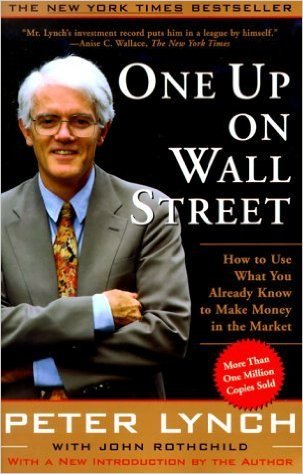
One Up On Wall Street: How to Use What You Already Know to Make Money in the Market
by Peter Lynch
Rating: 4.3 ⭐
• 5 recommendations ❤️
More than one million copies have been sold of this seminal book on investing in which legendary mutual-fund manager Peter Lynch explains the advantages that average investors have over professionals and how they can use these advantages to achieve financial success.America’s most successful money manager tells how average investors can beat the pros by using what they know. According to Lynch, investment opportunities are everywhere. From the supermarket to the workplace, we encounter products and services all day long. By paying attention to the best ones, we can find companies in which to invest before the professional analysts discover them. When investors get in early, they can find the “tenbaggers,” the stocks that appreciate tenfold from the initial investment. A few tenbaggers will turn an average stock portfolio into a star performer.Lynch offers easy-to-follow advice for sorting out the long shots from the no-shots by reviewing a company’s financial statements and knowing which numbers really count. He offers guidelines for investing in cyclical, turnaround, and fast-growing companies.As long as you invest for the long term, Lynch says, your portfolio can reward you. This timeless advice has made One Up on Wall Street a #1 bestseller and a classic book of investment know-how.

Legendary money manager Peter Lynch explains his own strategies for investing and offers advice for how to pick stocks and mutual funds to assemble a successful investment portfolio.Develop a Winning Investment Strategy—with Expert Advice from “The Nation’s #1 Money Manager.” Peter Lynch’s “invest in what you know” strategy has made him a household name with investors both big and small.An important key to investing, Lynch says, is to remember that stocks are not lottery tickets. There’s a company behind every stock and a reason companies—and their stocks—perform the way they do. In this book, Peter Lynch shows you how you can become an expert in a company and how you can build a profitable investment portfolio, based on your own experience and insights and on straightforward do-it-yourself research.In Beating the Street, Lynch for the first time explains how to devise a mutual fund strategy, shows his step-by-step strategies for picking stock, and describes how the individual investor can improve his or her investment performance to rival that of the experts.There’s no reason the individual investor can’t match wits with the experts, and this book will show you how.

An indispensable guide to determining how much money a company is really making and for buying and selling stocks without making costly blunders.
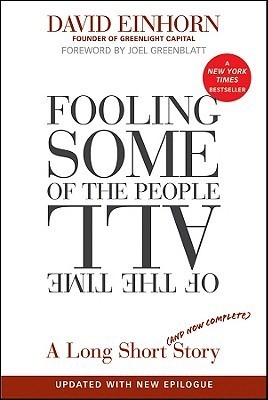
Fooling Some of the People All of the Time, A Long Short (and Now Complete) Story, Updated with New Epilogue
by David Einhorn
Rating: 4.0 ⭐
• 4 recommendations ❤️
A revealing look at Wall Street, the financial media, and financial regulators by David Einhorn, the President of Greenlight CapitalCould 2008's credit crisis have been minimized or even avoided? In 2002, David Einhorn-one of the country's top investors-was asked at a charity investment conference to share his best investment advice. Short sell Allied Capital. At the time, Allied was a leader in the private financing industry. Einhorn claimed Allied was using questionable accounting practices to prop itself up. Sound familiar? At the time of the original version of "Fooling Some of the People All of the Time: A Long Short Story" the outcome of his advice was unknown. Now, the story is complete and we know Einhorn was right. In 2008, Einhorn advised the same conference to short sell Lehman Brothers. And had the market been more open to his warnings, yes, the market meltdown might have been avoided, or at least minimized.Details the gripping battle between Allied Capital and Einhorn's Greenlight CapitalIlluminates how questionable company practices are maintained and, at times, even protected by Wall StreetDescribes the failings of investment banks, analysts, journalists, and government regulatorsDescribes how many parts of the Allied Capital story were replayed in the debate over Lehman Brothers"Fooling Some of the People All of the Time" is an important call for effective government regulation, free speech, and fair play.

Confidence Game: How Hedge Fund Manager Bill Ackman Called Wall Street's Bluff
by Christine S. Richard
Rating: 4.3 ⭐
• 2 recommendations ❤️
An expose on the delusion, greed, and arrogance that led to America's credit crisisThe collapse of America's credit markets in 2008 is quite possibly the biggest financial disaster in U.S. history. Confidence Game: How a Hedge Fund Manager Called Wall Street's Bluff is the story of Bill Ackman's six-year campaign to warn that the $2.5 trillion bond insurance business was a catastrophe waiting to happen. Branded a fraud by the "Wall Street Journal" and "New York Times," and investigated by Eliot Spitzer and the Securities and Exchange Commission, Ackman later made his investors more than $1 billion when bond insurers kicked off the collapse of the credit markets.Unravels the story of the credit crisis through an engaging and human dramaDraws on unprecedented access to one of Wall Street's best-known investorsShows how excessive leverage, dangerous financial models, and a blind reliance on triple-A credit ratings sent Wall Street careening toward disasterConfidence Game is a real world "Emperor's New Clothes," a tale of widespread delusion, and one dissenting voice in the era leading up to the worst financial disaster since the Great Depression.