
Ben Shapiro Recommended Books
American conservative political commentator
33 Books Recommended

First published in 1959, Shirley Jackson’s The Haunting of Hill House has been hailed as a perfect work of unnerving terror. It is the story of four seekers who arrive at a notoriously unfriendly pile called Hill House: Dr. Montague, an occult scholar looking for solid evidence of a “haunting”; Theodora, his lighthearted assistant; Eleanor, a friendless, fragile young woman well acquainted with poltergeists; and Luke, the future heir of Hill House. At first, their stay seems destined to be merely a spooky encounter with inexplicable phenomena. But Hill House is gathering its powers—and soon it will choose one of them to make its own.

This book covers the basic truths about economics in less than 200 pages.

The clownish Bombolini becomes a man of significance when he devises a plan to prevent the Germans from taking Santa Vittoria's liquor supply

“An extraordinary real picture of human beings numbed by catastrophe but still driven by the unconquerable determination of living creatures to keep on being alive.” — The New Yorker The classic apocalyptic novel by Pat Frank, first published in 1959 at the height of the Cold War, with an introduction by award-winning science fiction writer and scientist David Brin. “Alas, Babylon.” Those fateful words heralded the end. When the unthinkable nightmare of nuclear holocaust ravaged the United States, it was instant death for tens of millions of people; for survivors, it was a nightmare of hunger, sickness, and brutality. Overnight, a thousand years of civilization were stripped away. But for one small Florida town, miraculously spared against all the odds, the struggle was only just beginning, as the isolated survivors—men and women of all ages and races—found the courage to come together and confront the harrowing darkness.

Comprising the classic bestsellers Getting Even, Without Feathers, and Side Effects, this definitive collection of comic writings is from a man who needs no Introduction. Really–this book has no Introduction. The Insanity Defense reveals many sides of Woody Allen as he holds forth on the most human of urges (“Why does man kill? He kills for food. And not only for food: frequently there must be a beverage”); reflects on death (“I don’t believe in an afterlife, although I am bringing a change of underwear”); and notes the effect on history wrought by trick chewing gum, the dribble glass, and other novelties. There is also an inspiring story of the futile race to beat Dr. Heimlich to the punch: “The food went down the wrong pipe, and choking occurred. Grasping the mouse firmly by the tail, I snapped it like a small whip, and the morsel of cheese came loose. If we can transfer the procedure to humans, we may have something. Too early to tell.”All Woody Allen fans will cherish this uproarious treasury–and those who don’t enjoy The Insanity Defense are just plain crazy.

Ball Four is a baseball classic, a number one bestseller when it was published; it still is in demand throughout the U.S. Now in a new updated hardcover edition, Ball Four will reach a whole new generation of avid baseball fans. In fact, Ball Four has been selected by the NY Public Library as one of the "Books of the Century." And David Halberstam writes: "a book deep in the American Vein, so deep in fact that is by no means a sports book." Bouton has written a baseball book about the reality of the game. Thirty years after its publication, it remains as wonderful to read as ever.

Revised EditionThe history of the 20th century is marked by two great narratives: nations locked in savage wars over ideology and territory, and scientists overturning the received wisdom of preceding generations. For Paul Johnson, the modern era begins with one of the second types of revolutions, in 1919, when English astronomer Sir Arthur Eddington translated observations from a solar eclipse into proof of Albert Einstein's general theory of relativity, which turned Newtonian physics on its head. Eddington's research became an international cause célèbre: "No exercise in scientific verification, before or since, has ever attracted so many headlines or become a topic of universal conversation," Johnson writes, and it made Einstein into science's first real folk hero. Einstein looms large over Johnson's narrative, as do others who sought to harness the forces of nature and society: men like Mao Zedong, "a big, brutal, earthy and ruthless peasant," and Adolf Hitler, creator of "a brutal, secure, conscience-less, successful, and, for most Germans, popular regime." Johnson takes a contentious conservative viewpoint throughout: he calls the 1960s "America's suicide attempt," deems the Watergate affair "a witch-hunt ... run by liberals in the media," and deems the rise of Margaret Thatcher a critical element in Western civilization's "recovery of freedom"--arguable propositions all, but ones advanced in a stimulating and well-written narrative that provides much food for thought in the course of its more than 800 pages. --Gregory McNamee

Patriots: The Men Who Started The American Revolution
by A.J. Langguth
Rating: 4.2 ⭐
• 2 recommendations ❤️
With meticulous research and page-turning suspense, Patriots brings to life the American Revolution—the battles, the treacheries, and the dynamic personalities of the men who forged our freedom.George Washington, John Adams, Samuel Adams, Ben Franklin, Thomas Jefferson, Patrick Henry—these heroes were men of intellect, passion, and ambition. From the secret meetings of the Sons of Liberty to the final victory at Yorktown and the new Congress, Patriots vividly re-creates one of history's great eras.

The Hoover Institution Senior Fellow challenges the utopian social theory that he believes has eroded basic American freedoms and made the nation weaker as a result. Tour.

Ghosts of Manila: The Fateful Blood Feud Between Muhammad Ali and Joe Frazier
by Mark Kram
Rating: 3.9 ⭐
• 2 recommendations ❤️
When Muhammad Ali met Joe Frazier in Manila for their third fight, their rivalry had spun out of control. The Ali-Frazier matchup had become a madness, inflamed by the media and the politics of race. When the "Thrilla in Manila" was over, one man was left with a ruin of a life; the other was battered to his soul. Mark Kram covered that fight for Sports Illustrated in an award-winning article. Now his riveting book reappraises the boxers -- who they are and who they were. And in a voice as powerful as a heavyweight punch, Kram explodes the myths surrounding each fighter, particularly Ali. A controversial, no-holds-barred account, Ghosts of Manila ranks with the finest boxing books ever written.

In this fifth edition of Basic Economics , Thomas Sowell revises and updates his popular book on common sense economics, bringing the world into clearer focus through a basic understanding of the fundamental economic principles and how they explain our lives. Drawing on lively examples from around the world and from centuries of history, Sowell explains basic economic principles for the general public in plain English.Basic Economics , which has now been translated into six languages and has additional material online, remains true to its core that the fundamental facts and principles of economics do not require jargon, graphs, or equations, and can be learned in a relaxed and even enjoyable way.

Tom Wolfe began The Right Stuff at a time when it was unfashionable to contemplate American heroism. Nixon had left the White House in disgrace, the nation was reeling from the catastrophe of Vietnam, and in 1979--the year the book appeared--Americans were being held hostage by Iranian militants. Yet it was exactly the anachronistic courage of his subjects that captivated Wolfe. In his foreword, he notes that as late as 1970, almost one in four career Navy pilots died in accidents. "The Right Stuff," he explains, "became a story of why men were willing--willing?--delighted!--to take on such odds in this, an era literary people had long since characterized as the age of the anti-hero." Wolfe's roots in New Journalism were intertwined with the nonfiction novel that Truman Capote had pioneered with In Cold Blood. As Capote did, Wolfe tells his story from a limited omniscient perspective, dropping into the lives of his "characters" as each in turn becomes a major player in the space program. After an opening chapter on the terror of being a test pilot's wife, the story cuts back to the late 1940s, when Americans were first attempting to break the sound barrier. Test pilots, we discover, are people who live fast lives with dangerous machines, not all of them airborne. Chuck Yeager was certainly among the fastest, and his determination to push through Mach 1--a feat that some had predicted would cause the destruction of any aircraft--makes him the book's guiding spirit. Yet soon the focus shifts to the seven initial astronauts. Wolfe traces Alan Shepard's suborbital flight and Gus Grissom's embarrassing panic on the high seas (making the controversial claim that Grissom flooded his Liberty capsule by blowing the escape hatch too soon). The author also produces an admiring portrait of John Glenn's apple-pie heroism and selfless dedication. By the time Wolfe concludes with a return to Yeager and his late-career exploits, the narrative's epic proportions and literary merits are secure. Certainly The Right Stuff is the best, the funniest, and the most vivid book ever written about America's manned space program. --Patrick O'Kelley
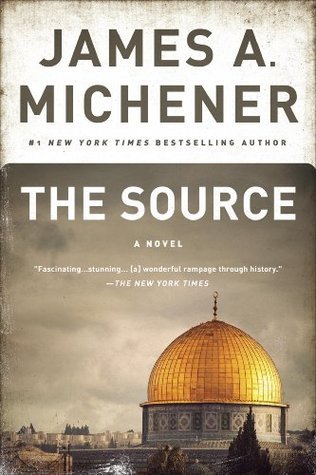
In his signature style of grand storytelling, James A. Michener transports us back thousands of years to the Holy Land. Through the discoveries of modern archaeologists excavating the site of Tell Makor, Michener vividly re-creates life in an ancient city and traces the profound history of the Jewish people—from the persecution of the early Hebrews, the rise of Christianity, and the Crusades to the founding of Israel and the modern conflict in the Middle East. An epic tale of love, strength, and faith, The Source is a richly written saga that encompasses the history of Western civilization and the great religious and cultural ideas that have shaped our world. Praise for The Source “Fascinating . . . stunning . . . [a] wonderful rampage through history . . . Biblical history, as seen through the eyes of a professor who is puzzled, appalled, delighted, enriched and impoverished by the spectacle of a land where all men are archeologists.”—The New York Times “A sweeping [novel] filled with excitement—pagan ritual, the clash of armies, ancient and modern: the evolving drama of man’s faith.”—The Philadelphia Inquirer “Magnificent . . . a superlative piece of writing both in scope and technique . . . one of the great books of this generation.”—San Francisco Call BulletinFrom the Trade Paperback edition.

A superb critical study of tragedy and comedy from their sources, masks, meanings is examined by New York Times drama critic, Walter Kerr.

This never-before-translated masterpiece—by a heroic best-selling writer who saw his life crumble when he wouldn’t join the Nazi Party—is based on a true story.It presents a richly detailed portrait of life in Berlin under the Nazis and tells the sweeping saga of one working-class couple who decides to take a stand when their only son is killed at the front. With nothing but their grief and each other against the awesome power of the Reich, they launch a simple, clandestine resistance campaign that soon has an enraged Gestapo on their trail, and a world of terrified neighbors and cynical snitches ready to turn them in.In the end, it’s more than an edge-of-your-seat thriller, more than a moving romance, even more than literature of the highest order—it’s a deeply stirring story of two people standing up for what’s right, and for each other.

Alternate cover here.Inspired by the true story of a political murder that horrified Russia in 1869, Fyodor Dostoevsky conceived of Demons as a "novel-pamphlet" in which he would say everything about the plague of materialist ideology that he saw infecting his native land. What emerged in 1872 was at once his darkest novel until The Brothers Karamazov and his most ferociously funny. For alongside its relentlessly escalating plot of conspiracy and assassination, Demons (which earlier translators erroneously translated as The Possessed) is a blistering comedy of ideas run amok. And like all of Dostoevsky's novels, it is also a riot of literary voices, whose profusion, energy and variety are rendered wonderfully in this new English version.--back cover

Wealth and Poverty: A New Edition for the Twenty-First Century
by George Gilder
Rating: 4.1 ⭐
• 2 recommendations ❤️
Hailed as “the guide to capitalism,” the New York Times bestseller Wealth and Poverty by George F. Gilder is one of the most famous economic books of all time and has sold more than one million copies since its first release. In this influential classic, Gilder explains and makes the case for supply-side economics, proves the moral superiority of free-market capitalism, and shows why supply-side economics are more effective at decreasing poverty than government-regulated markets.Now, in this new and completely updated edition of Wealth and Poverty, Gilder compares America’s current economic challenges with her past economic problems–particularly those of the late 1970s–and explains why Obama’s big-government, redistributive policies are doing more harm than good for the poor.Making the case that supply-side economics and free market policies are–and always will be–the answer to decreasing America’s poverty rate and increasing her prosperity, Wealth & Poverty offers solutions to America’s current economic problems and hope to those who fear that our best days are behind us.

Nudge: Improving Decisions About Health, Wealth, and Happiness
by Richard H. Thaler
Rating: 3.9 ⭐
• 6 recommendations ❤️
From the winner of the 2017 Nobel Prize in Economics, Richard H. Thaler, and Cass R. Sunstein: a revelatory look at how we make decisionsNew York Times bestsellerNamed a Best Book of the Year by The Economist and the Financial Times Every day we make choices—about what to buy or eat, about financial investments or our children’s health and education, even about the causes we champion or the planet itself. Unfortunately, we often choose poorly. Nudge is about how we make these choices and how we can make better ones. Using dozens of eye-opening examples and drawing on decades of behavioral science research, Nobel Prize winner Richard H. Thaler and Harvard Law School professor Cass R. Sunstein show that no choice is ever presented to us in a neutral way, and that we are all susceptible to biases that can lead us to make bad decisions. But by knowing how people think, we can use sensible “choice architecture” to nudge people toward the best decisions for ourselves, our families, and our society, without restricting our freedom of choice.

The Wisdom of Crowds: Why the Many Are Smarter Than the Few
by James Surowiecki
Rating: 3.7 ⭐
• 8 recommendations ❤️
In this fascinating book, New Yorker business columnist James Surowiecki explores a deceptively simple idea: Large groups of people are smarter than an elite few, no matter how brilliant -- better at solving problems, fostering innovation, coming to wise decisions, even predicting the future.With boundless erudition and in delightfully clear prose, Surowiecki ranges across fields as diverse as popular culture, psychology, ant biology, behavioral economics, artificial intelligence, military history, and politics to show how this simple idea offers important lessons for how we live our lives, select our leaders, run our companies, and think about our world.

Knowledge and Power: The Information Theory of Capitalism and How it is Revolutionizing our World
by George Gilder
Rating: 3.9 ⭐
• 2 recommendations ❤️
Ronald Reagan’s most-quoted living author—George Gilder—is back with an all-new paradigm-shifting theory of capitalism that will upturn conventional wisdom, just when our economy desperately needs a new direction.America’s struggling economy needs a better philosophy than the college student's "I can't be out of money, I still have checks in my checkbook!" We’ve tried a government spending spree, and we’ve learned it doesn’t work. Now is the time to rededicate our country to the pursuit of free market capitalism, before we’re buried under a mound of debt and unfunded entitlements. But how do we navigate between government spending that's too big to sustain and financial institutions that are "too big to fail?" In Knowledge and Power , George Gilder proposes a bold new theory on how capitalism produces wealth and how our economy can regain its vitality and its growth.Gilder breaks away from the supply-side model of economics to present a new economic the epic conflict between the knowledge of entrepreneurs on one side, and the blunt power of government on the other. The knowledge of entrepreneurs, and their freedom to share and use that knowledge, are the sparks that light up the economy and set its gears in motion. The power of government to regulate, stifle, manipulate, subsidize or suppress knowledge and ideas is the inertia that slows those gears down, or keeps them from turning at all.One of the twentieth century’s defining economic minds has returned with a new philosophy to carry us into the twenty-first. Knowledge and Power is a must-read for fiscal conservatives, business owners, CEOs, investors, and anyone interested in propelling America’s economy to future success.

The Moral Arc: How Science Makes Us Better People
by Michael Shermer
Rating: 4.0 ⭐
• 2 recommendations ❤️
Bestselling author Michael Shermer's exploration of science and morality that demonstrates how the scientific way of thinking has made people, and society as a whole, more moralFrom Galileo and Newton to Thomas Hobbes and Martin Luther King, Jr., thinkers throughout history have consciously employed scientific techniques to better understand the non-physical world. The Age of Reason and the Enlightenment led theorists to apply scientific reasoning to the non-scientific disciplines of politics, economics, and moral philosophy. Instead of relying on the woodcuts of dissected bodies in old medical texts, physicians opened bodies themselves to see what was there; instead of divining truth through the authority of an ancient holy book or philosophical treatise, people began to explore the book of nature for themselves through travel and exploration; instead of the supernatural belief in the divine right of kings, people employed a natural belief in the right of democracy.In The Moral Arc , Shermer will explain how abstract reasoning, rationality, empiricism, skepticism--scientific ways of thinking--have profoundly changed the way we perceive morality and, indeed, move us ever closer to a more just world.

The Professor in the Cage: Why Men Fight and Why We Like to Watch
by Jonathan Gottschall
Rating: 4.0 ⭐
• 4 recommendations ❤️
An English professor begins training in the sport of mixed martial arts and explores the science and history behind the violence of men.When a mixed martial arts (MMA) gym moves in across the street from his office, Jonathan Gottschall sees a challenge, and an opportunity. Pushing forty, out of shape, and disenchanted with his job as an adjunct English professor, part of him yearns to cross the street and join up. The other part is terrified. Gottschall eventually works up his nerve, and starts training for a real cage fight. He’s fighting not only as a personal test but also to answer questions that have intrigued him for years: Why do men fight? And why do so many seemingly decent people like to watch?In The Professor in the Cage, Gottschall’s unlikely journey from the college classroom to the fighting cage drives an important new investigation into the science and history of violence. Mixed martial arts is a full-contact hybrid sport in which fighters punch, choke, and kick each other into submission. MMA requires intense strength, endurance, and skill; the fights are bloody, brutal, and dangerous. Yet throughout the last decade, cage fighting has evolved from a small-time fringe spectacle banned in many states to the fastest-growing spectator sport in America.But the surging popularity of MMA, far from being new, is just one more example of our species’ insatiable interest not just in violence but in the rituals that keep violence contained. From duels to football to the roughhousing of children, humans are masters of what Gottschall calls the monkey dance: a dizzying variety of rule-bound contests that establish hierarchies while minimizing risk and social disorder. In short, Gottschall entered the cage to learn about the violence in men, but learned instead how men keep violence in check.Gottschall endures extremes of pain, occasional humiliation, and the incredulity of his wife to take us into the heart of fighting culture—culminating, after almost two years of grueling training, in his own cage fight. Gottschall’s unsparing personal journey crystallizes in his epiphany, and ours, that taming male violence through ritualized combat has been a hidden key to the success of the human race. Without the restraining codes of the monkey dance, the world would be a much more chaotic and dangerous place.

The electrifying debut of a new master of American crime fiction, Harry Brandt—the pen name of novelist Richard Price.Back in the run-and-gun days of the mid-90s, when Billy Graves worked in the South Bronx as part of an anti-crime unit known as the Wild Geese, he made headlines by accidentally shooting a 10-year-old boy while stopping an angel-dusted berserker in the street. Branded as a cowboy by his higher-ups, for the next eighteen years Billy endured one dead-end posting after another. Now in his early forties, he has somehow survived and become a sergeant in Manhattan Night Watch, a small team of detectives charged with responding to all night-time felonies from Wall Street to Harlem.Night Watch usually acts a set-up crew for the day shift, but when Billy is called to a 4:00 a.m. fatal slashing of a man in Penn Station, his investigation of the crime moves beyond the usual handoff. And when he discovers that the victim was once a suspect in the unsolved murder of a 12-year-old boy—a brutal case with connections to the former members of the Wild Geese—the bad old days are back in Billy's life with a vengeance, tearing apart enduring friendships forged in the urban trenches and even threatening the safety of his family.Richard Price, one of America’s most gifted novelists, has always written brilliantly about cops, criminals, and New York City. Now, writing as Harry Brandt, he is poised to win a huge following among all those who hunger for first-rate crime fiction.

Going Red: The Two Million Voters Who Will Elect the Next President--and How Conservatives Can Win Them
by Ed Morrissey
Rating: 3.8 ⭐
• 2 recommendations ❤️
The 2016 election is conservatives’ last, best chance to take back the country. How can they win? The answer, conservative columnist and analyst Ed Morrissey says, depends on seven battleground counties in swing states Republicans must win. Each county pulled for Obama in one or both of the last two elections, but after eight years of misadventures under the Obama administration, the door is open for Republicans to win them—and the presidency—once again, making a decisive mandate against progressivism for the generation to come. In Going Red, Morrissey takes readers inside the battlegrounds that will decide the election, weaving together data and the stories of people and leaders in these communities to answer the most pressing questions facing conservatives in 2016: - What went wrong in 2008 and 2012, and how can the party do better in 2016?- Can Republicans take back crucial swing states like Florida, Ohio, and Virginia?- Is a Hillary Clinton victory really inevitable?- How can conservatives reverse their track record with minorities and young voters?Providing an unparalleled look into the campaign and the thinking of experts from both parties, Going Red is a field guide for taking back the White House and an essential book for anyone who cares about the fate of the Right.

The War on Cops: How the New Attack on Law and Order Makes Everyone Less Safe
by Heather Mac Donald
Rating: 3.9 ⭐
• 2 recommendations ❤️
Violent crime has been rising sharply in many American cities after two decades of decline. Homicides jumped nearly 17 percent in 2015 in the largest 50 cities, the biggest one-year increase since 1993. The reason is what Heather Mac Donald first identified nationally as the “Ferguson effect”: Since the 2014 police shooting death of Michael Brown in Ferguson, Missouri, officers have been backing off of proactive policing, and criminals are becoming emboldened. This book expands on Mac Donald’s groundbreaking and controversial reporting on the Ferguson effect and the criminal-justice system. It deconstructs the central narrative of the Black Lives Matter that racist cops are the greatest threat to young black males. On the contrary, it is criminals and gangbangers who are responsible for the high black homicide death rate. The War on Cops exposes the truth about officer use of force and explodes the conceit of “mass incarceration.” A rigorous analysis of data shows that crime, not race, drives police actions and prison rates. The growth of proactive policing in the 1990s, along with lengthened sentences for violent crime, saved thousands of minority lives. In fact, Mac Donald argues, no government agency is more dedicated to the proposition that “black lives matter” than today’s data-driven, accountable police department. Mac Donald gives voice to the many residents of high-crime neighborhoods who want proactive policing. She warns that race-based attacks on the criminal-justice system, from the White House on down, are eroding the authority of law and putting lives at risk. This book is a call for a more honest and informed debate about policing, crime, and race.
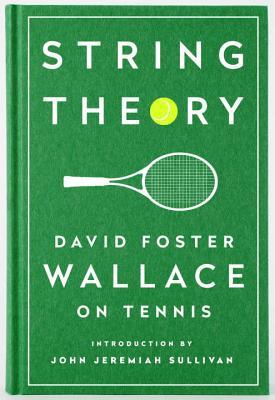
String Theory: David Foster Wallace on Tennis
by David Foster Wallace
Rating: 4.2 ⭐
• 5 recommendations ❤️
An instant classic of American sportswriting—the tennis essays of David Foster Wallace, “the best mind of his generation” (A. O. Scott) and “the best tennis-writer of all time” ( New York Times ) Gathered for the first time in a deluxe collector's edition, here are David Foster Wallace's legendary writings on tennis, five tour-de-force pieces written with a competitor's insight and a fan's obsessive enthusiasm. Wallace brings his dazzling literary magic to the game he loved as he celebrates the other-worldly genius of Roger Federer; offers a wickedly witty disection of Tracy Austin's memoir; considers the artistry of Michael Joyce, a supremely disciplined athlete on the threshold of fame; resists the crush of commerce at the U.S. Open; and recalls his own career as a "near-great" junior player.Whiting Award-winning writer John Jeremiah Sullivan provides an introduction.

The Scandal of Money: Why Wall Street Recovers but the Economy Never Does
by George Gilder
Rating: 3.7 ⭐
• 2 recommendations ❤️
Why do conservatives have such a hard time winning the economic debate in the court of public opinion? Simple, George Gilder says: conservatives misunderstand economics almost as badly as liberals do. Republicans have been running on tax cut proposals since the era of Harding and Coolidge without seriously addressing the key problems of a global economy in decline. Enough is enough. Gilder, author of New York Times bestseller Wealth and Poverty, proposes a completely new framework for understanding economic growth that will replace failed 20th century conservative economics and turn the economic debate—and the country—around.

Suicide of the West: How the Rebirth of Tribalism, Nationalism, and Socialism Is Destroying American Democracy
by Jonah Goldberg
Rating: 3.8 ⭐
• 2 recommendations ❤️
NEW YORK TIMES BESTSELLER • An urgent argument that America and other democracies are in peril because they have lost the will to defend the values and institutions that sustain freedom and prosperity. Now updated with a new preface! “Epic and debate-shifting.”—David Brooks, New York Times Only once in the last 250,000 years have humans stumbled upon a way to lift ourselves out of the endless cycle of poverty, hunger, and war that defines most of history. If democracy, individualism, and the free market were humankind’s destiny, they should have appeared and taken hold a bit earlier in the evolutionary record. The emergence of freedom and prosperity was nothing short of a miracle. As Americans we are doubly blessed, because the radical ideas that made the miracle possible were written not just into the Constitution but in our hearts, laying the groundwork for our uniquely prosperous society. Those ideas • Our rights come from God, not from the government. • The government belongs to us; we do not belong to it. • The individual is sovereign. We are all captains of our own souls, not bound by the circumstances of our birth. • The fruits of our labors belong to us. In the last few decades, these political virtues have been turned into vices. As we are increasingly taught to view our traditions as a system of oppression, exploitation, and privilege, the principles of liberty and the rule of law are under attack from left and right. For the West to survive, we must renew our sense of gratitude for what our civilization has given us and rediscover the ideals and habits of the heart that led us out of the bloody muck of the past—or back to the muck we will go.

Reasons to Vote for Democrats: A Comprehensive Guide
by Michael J. Knowles
Rating: 4.7 ⭐
• 2 recommendations ❤️
Read the book that Donald Trump called “a great book for your reading enjoyment!”The most exhaustively researched and coherently argued Democrat Party apologia to date, Reasons to Vote for A Comprehensive Guide is a political treatise sure to stand the test of time. A must-have addition to any political observer's coffee table.*** Lefty lawyers require that we state the book is mostly blank and contains precisely 1,235 words.

Since the 2016 election, college campuses have erupted in violent protests, demands for safe spaces, and the silencing of views that activist groups find disagreeable. Who are the leaders behind these protests, and what do they want? In Panic Attack, libertarian journalist Robby Soave answers these questions by profiling young radicals from across the political spectrum.Millennial activism has risen to new heights in the age of Trump. Although Soave may not personally agree with their motivations and goals, he takes their ideas seriously, approaching his interviews with a mixture of respect and healthy skepticism. The result is a faithful cross-section of today's radical youth, which will appeal to libertarians, conservatives, centrist liberals, and anyone who is alarmed by the trampling of free speech and due process in the name of social justice.

A chapter-by-chapter explanation of the Book of Exodus, revealing its wisdom about nation building and people formation"Kass draws from Exodus’ record of the founding of Judaism timely—even urgent—universal lessons about twenty-first-century preconditions for human flourishing in any community. Compelling modern reflections on ancient wisdom.”—Bryce Christensen, Booklist (starred review)In this long-awaited follow-up to his 2003 book on Genesis, humanist scholar Leon Kass explores how Exodus raises and then answers the central political questions of what defines a nation and how a nation should govern itself. Considered by some the most important book in the Hebrew Bible, Exodus tells the story of the Jewish people from their enslavement in Egypt, through their liberation under Moses’s leadership, to the covenantal founding at Sinai and the building of the Tabernacle. In Kass’s analysis, these events began the slow process of learning how to stop thinking like slaves and become an independent people. The Israelites ultimately founded their nation on three elements: a shared narrative that instills empathy for the poor and the suffering, the uplifting rule of a moral law, and devotion to a higher common purpose. These elements, Kass argues, remain the essential principles for any freedom-loving nation today.

Think Again: The Power of Knowing What You Don't Know
by Adam M. Grant
Rating: 4.3 ⭐
• 6 recommendations ❤️
#1 New York Times Bestseller“THIS. This is the right book for right now. Yes, learning requires focus. But, unlearning and relearning requires much more—it requires choosing courage over comfort. In Think Again , Adam Grant weaves together research and storytelling to help us build the intellectual and emotional muscle we need to stay curious enough about the world to actually change it. I’ve never felt so hopeful about what I don’t know.”—Brené Brown, Ph.D., #1 New York Times bestselling author of Dare to LeadThe #1 New York Times bestselling author of Originals , Give and Take , and the forthcoming Hidden Potential examines the critical art of learning to question your opinions and open other people's minds, which can position you for excellence at work and wisdom in lifeIntelligence is usually seen as the ability to think and learn, but in a rapidly changing world, there's another set of cognitive skills that might matter the ability to rethink and unlearn. In our daily lives, too many of us favor the comfort of conviction over the discomfort of doubt. We listen to opinions that make us feel good, instead of ideas that make us think hard. We see disagreement as a threat to our egos, rather than an opportunity to learn. We surround ourselves with people who agree with our conclusions, when we should be gravitating toward those who challenge our thought process. The result is that our beliefs get brittle long before our bones. We think too much like preachers defending our sacred beliefs, prosecutors proving the other side wrong, and politicians campaigning for approval--and too little like scientists searching for truth. Intelligence is no cure, and it can even be a being good at thinking can make us worse at rethinking. The brighter we are, the blinder to our own limitations we can become.Organizational psychologist Adam Grant is an expert on opening other people's minds--and our own. As Wharton's top-rated professor and the bestselling author of Originals and Give and Take , he makes it one of his guiding principles to argue like he's right but listen like he's wrong. With bold ideas and rigorous evidence, he investigates how we can embrace the joy of being wrong, bring nuance to charged conversations, and build schools, workplaces, and communities of lifelong learners. You'll learn how an international debate champion wins arguments, a Black musician persuades white supremacists to abandon hate, a vaccine whisperer convinces concerned parents to immunize their children, and Adam has coaxed Yankees fans to root for the Red Sox. Think Again reveals that we don't have to believe everything we think or internalize everything we feel. It's an invitation to let go of views that are no longer serving us well and prize mental flexibility over foolish consistency. If knowledge is power, knowing what we don't know is wisdom.

Myths and Facts: A Guide to the Arab-Israeli Conflict
by Mitchell G. Bard
Rating: 4.0 ⭐
• 2 recommendations ❤️
In the last sixty years, Israel has faced seven different wars. During that time, the country has been under immense scrutiny and been the recipient of false accusations. This leaves the public with many Does Israel want peace with the Arab nations? How do Islamic views affect Israel? Using a number of sources, Mitchell G. Bard uncovers Israel’s true history. His book includes the · A discussion of various wars involving Israel (including the war of 1948) · Multiple maps that help the reader visualize the wars · An analysis of terrorism directed at Israel · An alphabetical index · A discussion of the media’s role in how it portrays Israel · A review of successful and unsuccessful peace efforts · An overview of US-Israel relations Bard also offers a synopsis of Israel’s roots, beginning with the great that the Jews have no claim to their own land. Bard focuses on Israel’s relationships with neighboring countries, but he also includes suggested readings for those interested in further research. You’ll learn about the Jewish Virtual Library, an online source that’s constantly updated and offers reliable options for study. Dive into this versatile read as Bard investigates common myths about Israel and reveals the truth.