
Ben Horowitz Recommended Books
American businessman
20 Books Recommended

The coauthor of The 22 Immutable Laws of Marketing shares practical advice on how companies can increase profitability and competitiveness by focusing on core products and eliminating extraneous areas. $50,000 ad/promo. Tour.

My Years with General Motors became an instant bestseller when it was first published in 1963. It has since been used as a manual for managers, offering personal glimpses into the practice of the "discipline of management" by the man who perfected it. This is the story no other businessman could tell—a distillation of half a century of intimate leadership experience with a giant industry and an inside look at dramatic events and creative business management.Only a handful of business books have reached the status of a classic, having withstood the test of over fifty years' time. Even today, Bill Gates praises My Years with General Motors as the best book to read on business, and Business Week has named it the number one choice for its "bookshelf of indispensable reading."

In this legendary business book and Silicon Valley staple, the former chairman and CEO of Intel shares his perspective on how to build and run a company. A practical handbook for navigating real-life business scenarios and a powerful management manifesto with the ability to revolutionize the way we work. The essential skill of creating and maintaining new businesses—the art of the entrepreneur—can be summed up in a single word: managing. Born of Grove’s experiences at one of America’s leading technology companies (as CEO and employee number three at Intel), High Output Management is equally appropriate for sales managers, accountants, consultants, and teachers, as well as CEOs and startup founders. Grove covers techniques for creating highly productive teams, demonstrating methods of motivation that lead to peak performance. "Generous enough with advice and observations to be required reading." — The Wall Street Journal

Colin Powell is the embodiment of the American dream. He was born in Harlem to immigrant parents from Jamaica. He knew the rough life of the streets. He overcame a barely average start at school. Then he joined the Army. The rest is history—Vietnam, the Pentagon, Panama, Desert Storm—but a history that until now has been known only on the surface. Here, for the first time, Colin Powell himself tells us how it happened, in a memoir distinguished by a heartfelt love of country and family, warm good humor, and a soldier's directness.My American Journey is the powerful story of a life well lived and well told. It is also a view from the mountaintop of the political landscape of America. At a time when Americans feel disenchanted with their leaders. General Powell's passionate views on family, personal responsibility, and, in his own words, "the greatness of America and the opportunities it offers" inspire hope and present a blueprint for the future. An utterly absorbing account, it is history with a vision.

Only the Paranoid Survive: How to Exploit the Crisis Points That Challenge Every Company
by Andrew S. Grove
Rating: 4.0 ⭐
• 17 recommendations ❤️
Andy Grove, founder and former CEO of Intel shares his strategy for success as he takes the reader deep inside the workings of a major company in Only the Paranoid Survive .Under Andy Grove's leadership, Intel became the world's largest chip maker and one of the most admired companies in the world. In Only the Paranoid Survive , Grove reveals his strategy for measuring the nightmare moment every leader dreads--when massive change occurs and a company must, virtually overnight, adapt or fall by the wayside--in a new way.Grove calls such a moment a Strategic Inflection Point, which can be set off by almost mega-competition, a change in regulations, or a seemingly modest change in technology. When a Strategic Inflection Point hits, the ordinary rules of business go out the window. Yet, managed right, a Strategic Inflection Point can be an opportunity to win in the marketplace and emerge stronger than ever.Grove underscores his message by examining his own record of success and failure, including how he navigated the events of the Pentium flaw, which threatened Intel's reputation in 1994, and how he has dealt with the explosions in growth of the Internet. The work of a lifetime, Only the Paranoid Survive is a classic of managerial and leadership skills.

The Black Jacobins: Toussaint L'Ouverture and the San Domingo Revolution
by C.L.R. James
Rating: 4.4 ⭐
• 4 recommendations ❤️
A powerful and impassioned historical account of the largest successful revolt by enslaved people in the Haitian Revolution of 1791–1803“One of the seminal texts about the history of slavery and abolition.... Provocative and empowering.” — The New York Times Book ReviewThe Black Jacobins, by Trinidadian historian C. L. R. James, was the first major analysis of the uprising that began in the wake of the storming of the Bastille in France and became the model for liberation movements from Africa to Cuba. It is the story of the French colony of San Domingo, a place where the brutality of plantation owners toward enslaved people was horrifyingly severe.And it is the story of a charismatic and barely literate enslaved person named Toussaint L’Ouverture, who successfully led the Black people of San Domingo against successive invasions by overwhelming French, Spanish, and English forces—and in the process helped form the first independent post-colonial nation in the Caribbean.With a new introduction (2023) by Professor David Scott.

The Innovator's Dilemma: When New Technologies Cause Great Firms to Fail
by Clayton M. Christensen
Rating: 4.1 ⭐
• 39 recommendations ❤️
The bestselling classic on disruptive innovation, by renowned author Clayton M. Christensen. His work is cited by the world’s best-known thought leaders, from Steve Jobs to Malcolm Gladwell. In this classic bestseller—one of the most influential business books of all time—innovation expert Clayton Christensen shows how even the most outstanding companies can do everything right—yet still lose market leadership. Christensen explains why most companies miss out on new waves of innovation. No matter the industry, he says, a successful company with established products will get pushed aside unless managers know how and when to abandon traditional business practices. Offering both successes and failures from leading companies as a guide, The Innovator’s Dilemma gives you a set of rules for capitalizing on the phenomenon of disruptive innovation. Sharp, cogent, and provocative—and consistently noted as one of the most valuable business ideas of all time—The Innovator’s Dilemma is the book no manager, leader, or entrepreneur should be without.

Genghis Khan and the Making of the Modern World
by Jack Weatherford
Rating: 4.0 ⭐
• 13 recommendations ❤️
The definitive biography of the founder of history's greatest empire. In 25 years, Genghis Khan and his Mongol armies conquered more than the Romans had in four centuries, founding the most extensive empire humankind has ever seen. Born Temujin, a pariah from the steppes, the man destined to make history as the Great Khan of the Mongols conquered every territory he held, from Georgia and Armenia to Korea. Genghis Khan emerged as an unexpected leader, abolishing torture, guaranteeing religious freedom, and destroying feudal systems based on aristocratic privilege. When he was born, holding a blood clot in his hand, his mother predicted that the child would change the course of the world. Thus, Genghis Khan united all the Mongol tribes of the steppes and transformed their way of life. He created the most efficient army of the Middle Ages, opened trade routes that connected the known world, and founded an empire that stretched from Europe to East Asia. His successors were kings, khans, and emperors in China, India, and Russia, and his legacy was enduring. From the early life of Genghis Khan and his rise and transformation from the tribal world of the steppes to the civilizing explosion of the Mongol Empire, this brilliant essay by Jack Weatherford, an anthropologist specializing in Mongol history, tells the epic story of how the modern world was forged.

Set in the cruel years of Hungary's Nazi occupation and subsequent communist regime, the bestselling "Swimming Across" is the stunning childhood memoir of one of the leading thinkers of our time, legendary Intel chairman, Andrew S. Grove. Photos throughout.

Most startups fail. But many of those failures are preventable. The Lean Startup is a new approach being adopted across the globe, changing the way companies are built and new products are launched. Eric Ries defines a startup as an organization dedicated to creating something new under conditions of extreme uncertainty. This is just as true for one person in a garage or a group of seasoned professionals in a Fortune 500 boardroom. What they have in common is a mission to penetrate that fog of uncertainty to discover a successful path to a sustainable business.The Lean Startup approach fosters companies that are both more capital efficient and that leverage human creativity more effectively. Inspired by lessons from lean manufacturing, it relies on "validated learning," rapid scientific experimentation, as well as a number of counter-intuitive practices that shorten product development cycles, measure actual progress without resorting to vanity metrics, and learn what customers really want. It enables a company to shift directions with agility, altering plans inch by inch, minute by minute.Rather than wasting time creating elaborate business plans, The Lean Startup offers entrepreneurs - in companies of all sizes - a way to test their vision continuously, to adapt and adjust before it's too late. Ries provides a scientific approach to creating and managing successful startups in a age when companies need to innovate more than ever.

The Startup Community Way: How to Build an Entrepreneurial Ecosystem That Thrives
by Brad Feld
Rating: 4.1 ⭐
• 4 recommendations ❤️
How to create a thriving startup ecosystem in a location near you--a practical guideWe are in the midst of a global startup revolution. The proliferation of digital technologies, a rising middle-class, and the quest for sustained economic growth have put entrepreneurship on the map for talent, governments, universities, and corporations everywhere. Along with the widely-recognized opportunity presented by entrepreneurship has come a realization that the success of today's startups is determined to a large degree by the complex global and uniquely local environments in which they operate. It is the nature of these external factors--and more importantly, the quality of their linkages with each other--that explains why some places are consistently able to produce high-impact entrepreneurship while many other places are not.No one tells this story better than acclaimed author and investor Brad Feld and Ian Hathaway, an entrepreneurship expert and startup advisor. The Startup Community Way: Evolving an Entrepreneurial Ecosystem--the much-anticipated sequel to Feld's bestselling book Startup Communities: Building an Entrepreneurial Ecosystem in Your City--explores what makes startup communities thrive and how to improve collaboration in rapidly-changing environments.The Startup Community Way is a governing philosophy for startup communities, rooted in the theory of complex systems and the practice of community-building in many contexts. This book establishes a robust framework and shares lessons from around the globe that illustrate how to create a flourishing startup ecosystem anywhere. Each of the crucial aspects of community-building, such as the organizing principles of community, the attributes of leadership, the goals and values of a startup community, the application of systems thinking, and methods for changing behavior and mindset are discussed in detail. Advancing the practice of building startup communities, this book:Offers practical, real-world advice for entrepreneurs, community builders, and other stakeholders who want to harness the power of startups in their city Advances a new framework for effective startup community building grounded in complex adaptive systems and systems thinking Discusses the role of key institutions--such as governments, corporations, and universities--in supporting startup communities Explores the value of key stakeholders and why leaders are crucial for bringing communities together Includes contributions from leading entrepreneurial voices in the field The Startup Community Way is a must-have resource for entrepreneurs, venture capitalists, C-suite executives, business and community leaders, and anyone wishing to understand how startup communities work anywhere in the world.

Writing My Wrongs: Life, Death, and Redemption in an American Prison
by Shaka Senghor
Rating: 4.3 ⭐
• 2 recommendations ❤️
New York Times "Bestseller In 1991, Shaka Senghor was sent to prison for second-degree murder. Today, he is a lecturer at universities, a leading voice on criminal justice reform, andaninspiration to thousands. In life, it's not how you start that matters. It's how you finish. Shaka Senghor was raised in a middle class neighborhood on Detroit s east side during the height of the 1980s crack epidemic. An honor roll student and a natural leader, he dreamed of becoming a doctor but at age 11, his parents' marriage began to unravel, and the beatings from his mother worsened, sending him on a downward spiral that saw him run away from home, turn to drug dealing to survive, and end up in prison for murder at the age of 19, fuming with anger and despair. "Writing My Wrongs" is the story of what came next. During his nineteen-year incarceration, seven of which were spent in solitary confinement, Senghor discovered literature, meditation, self-examination, and the kindness of others tools he used to confront the demons of his past, forgive the people who hurt him, and begin atoning for the wrongs he had committed. Upon his release at age thirty-eight, Senghor became an activist and mentor to young men and women facing circumstances like his. His work in the community and the courage to share his story led him to fellowships at the MIT Media Lab and the Kellogg Foundation and invitations to speak at events like TED and the Aspen Ideas Festival. In equal turns, "Writing My Wrongs" is a page-turning portrait of life in the shadow of poverty, violence, and fear; an unforgettable story of redemption, reminding us that our worst deeds don t define us; and a compelling witness to our country s need for rethinking its approach to crime, prison, and the men and women sent there."From the Hardcover edition."

Zero to One: Notes on Startups, or How to Build the Future
by Peter Thiel
Rating: 4.2 ⭐
• 48 recommendations ❤️
If you want to build a better future, you must believe in secrets.The great secret of our time is that there are still uncharted frontiers to explore and new inventions to create. In Zero to One, legendary entrepreneur and investor Peter Thiel shows how we can find singular ways to create those new things. Thiel begins with the contrarian premise that we live in an age of technological stagnation, even if we’re too distracted by shiny mobile devices to notice. Information technology has improved rapidly, but there is no reason why progress should be limited to computers or Silicon Valley. Progress can be achieved in any industry or area of business. It comes from the most important skill that every leader must master: learning to think for yourself.Doing what someone else already knows how to do takes the world from 1 to n, adding more of something familiar. But when you do something new, you go from 0 to 1. The next Bill Gates will not build an operating system. The next Larry Page or Sergey Brin won’t make a search engine. Tomorrow’s champions will not win by competing ruthlessly in today’s marketplace. They will escape competition altogether, because their businesses will be unique. Zero to One presents at once an optimistic view of the future of progress in America and a new way of thinking about innovation: it starts by learning to ask the questions that lead you to find value in unexpected places.

Toussaint Louverture’s life was one of hardship, triumph, and contradiction. He was born a slave on Saint-Domingue yet earned his freedom and established himself as a small-scale planter. He even purchased slaves of his own.Philippe Girard shows how Louverture transformed himself from lowly freedman into revolutionary hero as the mastermind of the bloody slave revolt of 1791. By 1801, Louverture was governor of the colony where he had once been a slave. But his lifelong quest to be accepted as a member of the colonial elite ended in despair: he spent the last year of his life in a French prison cell. His example nevertheless inspired anticolonial and black nationalist movements well into the twentieth century.Based on voluminous primary-source research, conducted in archives across the world and in multiple languages, Toussaint Louverture is the definitive biography of one of the most influential men in history.

Lenin: The Man, the Dictator, and the Master of Terror
by Victor Sebestyen
Rating: 4.3 ⭐
• 4 recommendations ❤️
Victor Sebestyen’s riveting biography of Vladimir Ilyich Lenin—the first major biography in English in nearly two decades—is not only a political examination of one of the most important historical figures of the twentieth century but also a fascinating portrait of Lenin the man.Brought up in comfort and with a passion for hunting and fishing, chess, and the English classics, Lenin was radicalized after the execution of his brother in 1887. Sebestyen traces the story from Lenin’s early years to his long exile in Europe and return to Petrograd in 1917 to lead the first Communist revolution in history. Uniquely, Sebestyen has discovered that throughout Lenin’s life his closest relationships were with his mother, his sisters, his wife, and his mistress. The long-suppressed story told here of the love triangle that Lenin had with his wife, Nadezhda Krupskaya, and his beautiful, married mistress and comrade, Inessa Armand, reveals a more complicated character than that of the coldly one-dimensional leader of the Bolshevik Revolution.With Lenin’s personal papers and those of other leading political figures now available, Sebestyen gives is new details that bring to life the dramatic and gripping story of how Lenin seized power in a coup and ran his revolutionary state. The product of a violent, tyrannical, and corrupt Russia, he chillingly authorized the deaths of thousands of people and created a system based on the idea that political terror against opponents was justified for a greater ideal. An old comrade what had once admired him said that Lenin “desired the good . . . but created evil.” This included his invention of Stalin, who would take Lenin’s system of the gulag and the secret police to horrifying new heights.In Lenin, Victor Sebestyen has written a brilliant portrait of this dictator as a complex and ruthless figure, and he also brings to light important new revelations about the Russian Revolution, a pivotal point in modern history.

From the New York Times bestselling author of The Black Swan, a bold new work that challenges many of our long-held beliefs about risk and reward, politics and religion, finance and personal responsibility In his most provocative and practical book yet, one of the foremost thinkers of our time redefines what it means to understand the world, succeed in a profession, contribute to a fair and just society, detect nonsense, and influence others. Citing examples ranging from Hammurabi to Seneca, Antaeus the Giant to Donald Trump, Nassim Nicholas Taleb shows how the willingness to accept one’s own risks is an essential attribute of heroes, saints, and flourishing people in all walks of life. As always both accessible and iconoclastic, Taleb challenges long-held beliefs about the values of those who spearhead military interventions, make financial investments, and propagate religious faiths. Among his insights: • For social justice, focus on symmetry and risk sharing. You cannot make profits and transfer the risks to others, as bankers and large corporations do. You cannot get rich without owning your own risk and paying for your own losses. Forcing skin in the game corrects this asymmetry better than thousands of laws and regulations. • Ethical rules aren’t universal. You’re part of a group larger than you, but it’s still smaller than humanity in general. • Minorities, not majorities, run the world. The world is not run by consensus but by stubborn minorities imposing their tastes and ethics on others. • You can be an intellectual yet still be an idiot. “Educated philistines” have been wrong on everything from Stalinism to Iraq to low-carb diets. • Beware of complicated solutions (that someone was paid to find). A simple barbell can build muscle better than expensive new machines. • True religion is commitment, not just faith. How much you believe in something is manifested only by what you’re willing to risk for it.The phrase “skin in the game” is one we have often heard but rarely stopped to truly dissect. It is the backbone of risk management, but it’s also an astonishingly rich worldview that, as Taleb shows in this book, applies to all aspects of our lives. As Taleb says, “The symmetry of skin in the game is a simple rule that’s necessary for fairness and justice, and the ultimate BS-buster,” and “Never trust anyone who doesn’t have skin in the game. Without it, fools and crooks will benefit, and their mistakes will never come back to haunt them.”

The story of a legendary designer who pioneered high-end streetwear, from a storefront in Harlem to the red carpet in Hollywood, dressing everyone from Salt-N-Pepa and Eric B. & Rakim to Beyoncé and Jay-Z along the way.With his now-legendary store on 125th Street in Harlem, Dapper Dan pioneered high-end streetwear in the early 1980s, remixing classic luxury-brand logos into his own flamboyant designs. But before reinventing fashion, he was a hungry boy with holes in his shoes, a teen who daringly gambled drug dealers out of their money, a young man in a prison cell who found nourishment in books, and, finally, a designer who broke barriers to outfit a whos-who of music, sport, and crime world celebrities in looks that went on to define an era.By turns playful, poignant, and inspiring, and featuring two incredible eight-page color photo inserts, including the only existing, never-before-seen images of the notorious Mike Tyson-Mitch Green street fight, Dapper Dan's memoir is a high-stakes coming-of-age story, spanning more than seventy years and set against the backdrop of an ever-evolving America.

Black Spartacus: The Epic Life of Toussaint Louverture
by Sudhir Hazareesingh
Rating: 3.9 ⭐
• 2 recommendations ❤️
A new interpretation of the life of the Haitian revolutionary Toussaint Louverture Among the defining figures of the Age of Revolution, Toussaint Louverture is the most enigmatic. Though the Haitian revolutionary’s image has multiplied across the globe—appearing on banknotes and in bronze, on T-shirts and in film—the only definitive portrait executed in his lifetime has been lost. Well versed in the work of everyone from Machiavelli to Rousseau, he was nonetheless dismissed by Thomas Jefferson as a “cannibal.” A Caribbean acolyte of the European Enlightenment, Toussaint nurtured a class of black Catholic clergymen who became one of the pillars of his rule, while his supporters also believed he communicated with vodou spirits. And for a leader who once summed up his modus operandi with the phrase “Say little but do as much as possible,” he was a prolific and indefatigable correspondent, famous for exhausting the five secretaries he maintained, simultaneously, at the height of his power in the 1790s.Employing groundbreaking archival research and a keen interpretive lens, Sudhir Hazareesingh restores Toussaint to his full complexity in Black Spartacus. At a time when his subject has, variously, been reduced to little more than a one-dimensional icon of liberation or criticized for his personal failings—his white mistresses, his early ownership of slaves, his authoritarianism —Hazareesingh proposes a new conception of Toussaint’s understanding of himself and his role in the Atlantic world of the late eighteenth century. Black Spartacus is a work of both biography and intellectual history, rich with insights into Toussaint’s fundamental hybridity—his ability to unite European, African, and Caribbean traditions in the service of his revolutionary aims. Hazareesingh offers a new and resonant interpretation of Toussaint’s racial politics, showing how he used Enlightenment ideas to argue for the equal dignity of all human beings while simultaneously insisting on his own world-historical importance and the universal pertinence of blackness—a message which chimed particularly powerfully among African Americans.Ultimately, Black Spartacus offers a vigorous argument in favor of “getting back to Toussaint”—a call to take Haiti’s founding father seriously on his own terms, and to honor his role in shaping the postcolonial world to come.
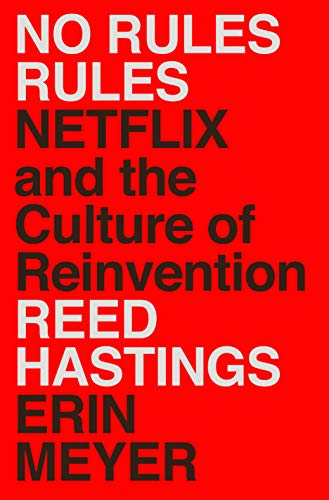
No Rules Rules: Netflix and the Culture of Reinvention
by Reed Hastings
Rating: 4.3 ⭐
• 9 recommendations ❤️
A New York Times Bestseller and Shortlisted for the 2020 Financial Times & McKinsey Business Book of the Year Netflix cofounder Reed Hastings reveals for the first time the unorthodox culture behind one of the world's most innovative, imaginative, and successful companies There's never before been a company like Netflix. Not only because it has led a revolution in the entertainment industries; or because it generates billions of dollars in annual revenue; or even because it is watched by hundreds of millions of people in nearly 200 countries. When Reed Hastings co-founded Netflix, he developed a set of counterintuitive and radical management principles, defying all tradition and expectation, which would allow the company to reinvent itself over and over on the way to becoming one of the most loved brands in the world.Rejecting the conventional wisdom under which other companies operate, Reed set new standards, valuing people over process, emphasizing innovation over efficiency, and giving employees context, not controls. At Netflix, adequate performance gets a generous severance and hard work is irrelevant. At Netflix, you don't try to please your boss, you give candid feedback instead. At Netflix, employees never need approval, and the company always pays top of market. When Hastings and his team first devised these principles, the implications were unknown and untested, but over just a short period of time they have led to unprecedented flexibility, speed, and boldness. The culture of freedom and responsibility has allowed the company to constantly grow and change as the world, and its members' needs, have also transformed.Here for the first time, Hastings and Erin Meyer, bestselling author of The Culture Map and one of the world's most influential business thinkers, dive deep into the controversial philosophies at the heart of the Netflix psyche, which have generated results that are the envy of the business world. Drawing on hundreds of interviews with current and past Netflix employees from around the globe and never-before-told stories of trial and error from his own career, No Rules Rules is the full, fascinating, and untold story of a unique company making its mark on the world.

Build: An Unorthodox Guide to Making Things Worth Making
by Tony Fadell
Rating: 4.4 ⭐
• 8 recommendations ❤️
Tony Fadell led the teams that created the iPod, iPhone and Nest Learning Thermostat and learned enough in 30+ years in Silicon Valley about leadership, design, startups, Apple, Google, decision-making, mentorship, devastating failure and unbelievable success to fill an encyclopedia.So that's what this book is. An advice encyclopedia. A mentor in a box. Written for anyone who wants to grow at work - from young grads navigating their first jobs to CEOs deciding whether to sell their companies - Build is full of personal stories, practical advice and fascinating insights into some of the most impactful products and people of the 20th century.Each quick 5-20 page entry builds on the previous one, charting Tony's personal journey from a product designer to a leader, from a startup founder to an executive to a mentor. Tony uses examples that are instantly captivating, like the process of building the very first iPod and iPhone. Every chapter is designed to help readers with a problem they're facing right now - how to get funding for their startup, whether to quit their job or not, or just how to deal with the jerk in the next cubicle.Tony forged his path to success alongside mentors like Steve Jobs and Bill Campbell, icons of Silicon Valley who succeeded time and time again. But Tony doesn't follow the Silicon Valley credo that you have to reinvent everything from scratch to make something great. His advice is unorthodox because it's old school. Because Tony's learned that human nature doesn't change. You don't have to reinvent how you lead and manage - just what you make. And Tony's ready to help everyone make things worth making.