6 Books Recommended

Extraordinary Popular Delusions and the Madness of Crowds
by Charles Mackay
Rating: 3.0 ⭐
• 2 recommendations ❤️
Extraordinary Popular Delusions and the Madness of Crowds is a history of popular folly by Charles Mackay. The book chronicles its targets in three "National Delusions," "Peculiar Follies," and "Philosophical Delusions." Learn why intelligent people do amazingly stupid things when caught up in speculative edevorse.The subjects of Mackay's debunking include alchemy, beards (influence of politics and religion on), witch-hunts, crusades and duels. Present day writers on economics, such as Andrew Tobias, laud the three chapters on economic bubbles.

Ponzi's Scheme: The True Story of a Financial Legend
by Mitchell Zuckoff
Rating: 4.1 ⭐
• 2 recommendations ❤️
You’ve heard of the scheme. Now comes the man behind it. In Mitchell Zuckoff's exhilarating book, the first nonfiction account of Charles Ponzi, we meet the charismatic rogue who launched the most famous and extraordinary scam in the annals of American finance.It was a time when anything seemed possible–instant wealth, glittering fame, fabulous luxury–and for a run of magical weeks in the spring and summer of 1920, Charles Ponzi made it all come true. Promising to double investors’ money in three months, the dapper, charming Ponzi raised the “rob Peter to pay Paul” scam to an art form and raked in millions at his office in downtown Boston. Ponzi’s Scheme is the amazing true story of the irresistible scoundrel who launched the most successful scheme of financial alchemy in modern history–and uttered the first roar of the Roaring Twenties.Ponzi may have been a charlatan, but he was also a wonderfully likable man. His intentions were noble, his manners impeccable, his sales pitch enchanting. Born to a genteel Italian family, he immigrated to the United States with big dreams but no money. Only after he became hopelessly enamored of a stenographer named Rose Gnecco and persuaded her to marry him did Ponzi light on the means to make his dreams come true. His true motive was not greed but love.With rich narrative skill, Mitchell Zuckoff conjures up the feverish atmosphere of Boston during the weeks when Ponzi’s bubble grew bigger and bigger. At the peak of his success, Ponzi was taking in more than $2 million a week. And then his house of cards came crashing down–thanks in large part to the relentless investigative reporting of Richard Grozier’s Boston Post .In Zuckoff's hands, Ponzi is no mere swindler; instead he is appealing and magnetic, a colorful and poignant figure, someone who struggled his whole life to attain great wealth and who sincerely believed–to the very end–that he could have made good on his investment promises if only he’d had enough time. Ponzi is a classic American tale of immigrant life and the dream of success, and the unexpectedly moving story of a man who–for a fleeting, illusory moment–attained it all.From the Hardcover edition.

When Money Dies: The Nightmare of Deficit Spending, Devaluation, and Hyperinflation in Weimar Germany
by Adam Fergusson
Rating: 3.9 ⭐
• 3 recommendations ❤️
When Money Dies is the classic history of what happens when a nation's currency depreciates beyond recovery.In 1923, with its currency effectively worthless (the exchange rate in December of that year was one dollar to 4,200,000,000,000 marks), the German republic was all but reduced to a barter economy. Expensive cigars, artworks, and jewels were routinely exchanged for staples such as bread; a cinema ticket could be bought for a lump of coal; and a bottle of paraffin for a silk shirt. People watched helplessly as their life savings disappeared and their loved ones starved. Germany's finances descended into chaos, with severe social unrest in its wake.Money may no longer be physically printed and distributed in the voluminous quantities of 1923. However, "quantitative easing," that modern euphemism for surreptitious deficit financing in an electronic era, can no less become an assault on monetary discipline. Whatever the reason for a country's deficit -- necessity or profligacy, unwillingness to tax or blindness to expenditure -- it is beguiling to suppose that if the day of reckoning is postponed economic recovery will come in time to prevent higher unemployment or deeper recession. What if it does not? Germany in 1923 provides a vivid, compelling, sobering moral tale.

Mint Condition: How Baseball Cards Became an American Obsession
by Dave Jamieson
Rating: 4.0 ⭐
• 2 recommendations ❤️
When award-winning journalist Dave Jamieson’s parents sold his childhood home a few years ago, he rediscovered a prized boyhood possession: his baseball card collection. Now was the time to cash in on the “investments” of his youth. But all the card shops had closed, and cards were selling for next to nothing online. What had happened? In Mint Condition, his fascinating, eye-opening, endlessly entertaining book, Jamieson finds the answer by tracing the complete story of this beloved piece of American childhood. Picture cards had long been used for advertising, but after the Civil War, tobacco companies started slipping them into cigarette packs as collector’s items. Before long, the cards were wagging the cigarettes. In the 1930s, cards helped gum and candy makers survive the Great Depression. In the 1960s, royalties from cards helped transform the baseball players association into one of the country’s most powerful unions, dramatically altering the game. In the ’80s and ’90s, cards went through a spectacular bubble, becoming a billion-dollar-a-year industry before all but disappearing, surviving today as the rarified preserve of adult collectors. Mint Condition is charming, original history brimming with colorful characters, sure to delight baseball fans and collectors.

Digital Gold: Bitcoin and the Inside Story of the Misfits and Millionaires Trying to Reinvent Money
by Nathaniel Popper
Rating: 4.1 ⭐
• 8 recommendations ❤️
New York Times Book Review Editor’s Choice SHORTLISTED FOR THE 2015 FINANCIAL TIMES AND MCKINSEY BUSINESS BOOK OF THE YEAR A New York Times technology and business reporter charts the dramatic rise of Bitcoin and the fascinating personalities who are striving to create a new global money for the Internet age. Digital Gold is New York Times reporter Nathaniel Popper’s brilliant and engrossing history of Bitcoin, the landmark digital money and financial technology that has spawned a global social movement. The notion of a new currency, maintained by the computers of users around the world, has been the butt of many jokes, but that has not stopped it from growing into a technology worth billions of dollars, supported by the hordes of followers who have come to view it as the most important new idea since the creation of the Internet. Believers from Beijing to Buenos Aires see the potential for a financial system free from banks and governments. More than just a tech industry fad, Bitcoin has threatened to decentralize some of society’s most basic institutions. An unusual tale of group invention, Digital Gold charts the rise of the Bitcoin technology through the eyes of the movement’s colorful central characters, including an Argentinian millionaire, a Chinese entrepreneur, Tyler and Cameron Winklevoss, and Bitcoin’s elusive creator, Satoshi Nakamoto. Already, Bitcoin has led to untold riches for some, and prison terms for others.
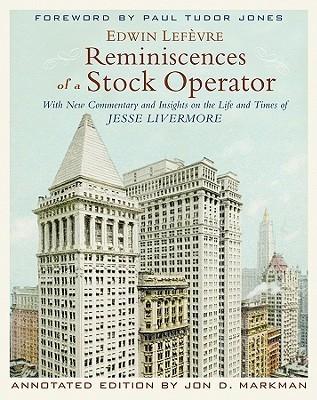
Reminiscences of a Stock Operator: With New Commentary and Insights on the Life and Times of Jesse Livermore
by Edwin Lefèvre
Rating: 4.5 ⭐
• 6 recommendations ❤️
Book annotation not available for this Reminiscences of a Stock Lefevre, Edwin/ Markman, Jon John Wiley & Sons IncPublication 2009/12/21Number of 423Binding HARDCOVERLibrary of 2009042600