9 Books Recommended

Experience one of the greatest adventure stories of the modern age in this New York Times bestseller: the harrowing tale of British explorer Ernest Shackleton's 1914 attempt to reach the South Pole.In August 1914, polar explorer Ernest Shackleton boarded the Endurance and set sail for Antarctica, where he planned to cross the last uncharted continent on foot. In January 1915, after battling its way through a thousand miles of pack ice and only a day's sail short of its destination, the Endurance became locked in an island of ice. Thus began the legendary ordeal of Shackleton and his crew of twenty-seven men. When their ship was finally crushed between two ice floes, they attempted a near-impossible journey over 850 miles of the South Atlantic's heaviest seas to the closest outpost of civilization.In Endurance , the definitive account of Ernest Shackleton's fateful trip, Alfred Lansing brilliantly narrates the harrowing and miraculous voyage that has defined heroism for the modern age.

Black Monday: The Catastrophe of October 19, 1987 ... and Beyond
by Tim Metz
Rating: 3.7 ⭐
• 2 recommendations ❤️
Presents a thorough financial report on the events leading up to the 1988 stock crash, its aftermath, and the reverberations of the catastrophe on Wall Street and around the world

In this fascinating book, New Yorker business columnist James Surowiecki explores a deceptively simple Large groups of people are smarter than an elite few, no matter how brilliant—better at solving problems, fostering innovation, coming to wise decisions, even predicting the future. With boundless erudition and in delightfully clear prose, Surowiecki ranges across fields as diverse as popular culture, psychology, ant biology, behavioral economics, artificial intelligence, military history, and politics to show how this simple idea offers important lessons for how we live our lives, select our leaders, run our companies, and think about our world.

In the year 2044, reality is an ugly place. The only time teenage Wade Watts really feels alive is when he's jacked into the virtual utopia known as the OASIS. Wade's devoted his life to studying the puzzles hidden within this world's digital confines, puzzles that are based on their creator's obsession with the pop culture of decades past and that promise massive power and fortune to whoever can unlock them. When Wade stumbles upon the first clue, he finds himself beset by players willing to kill to take this ultimate prize. The race is on, and if Wade's going to survive, he'll have to win—and confront the real world he's always been so desperate to escape.

The Soul of an Octopus: A Surprising Exploration into the Wonder of Consciousness
by Sy Montgomery
Rating: 4.0 ⭐
• 2 recommendations ❤️
In pursuit of the wild, solitary, predatory octopus, popular naturalist Sy Montgomery has practiced true immersion journalism. From New England aquarium tanks to the reefs of French Polynesia and the Gulf of Mexico, she has befriended octopuses with strikingly different personalities—gentle Athena, assertive Octavia, curious Kali, and joyful Karma. Each creature shows her cleverness in myriad ways: escaping enclosures like an orangutan; jetting water to bounce balls; and endlessly tricking companions with multiple “sleights of hand” to get food.Scientists have only recently accepted the intelligence of dogs, birds, and chimpanzees but now are watching octopuses solve problems and are trying to decipher the meaning of the animal’s color-changing techniques. With her “joyful passion for these intelligent and fascinating creatures” (Library Journal Editors’ Spring Pick), Montgomery chronicles the growing appreciation of this mollusk as she tells a unique love story. By turns funny, entertaining, touching, and profound, The Soul of an Octopus reveals what octopuses can teach us about the meeting of two very different minds.

Americana: A 400-Year History of American Capitalism
by Bhu Srinivasan
Rating: 4.4 ⭐
• 2 recommendations ❤️
An absorbing and original narrative history of American capitalismNAMED A BEST BOOK OF 2017 BY THE ECONOMISTFrom the days of the Mayflower and the Virginia Company, America has been a place for people to dream, invent, build, tinker, and bet the farm in pursuit of a better life. Americana takes us on a four-hundred-year journey of this spirit of innovation and ambition through a series of Next Big Things -- the inventions, techniques, and industries that drove American history from the telegraph, the railroad, guns, radio, and banking to flight, suburbia, and sneakers, culminating with the Internet and mobile technology at the turn of the twenty-first century. The result is a thrilling alternative history of modern America that reframes events, trends, and people we thought we knew through the prism of the value that, for better or for worse, this nation holds capitalism. In a winning, accessible style, Bhu Srinivasan boldly takes on four centuries of American enterprise, revealing the unexpected connections that link them. We learn how Andrew Carnegie's early job as a telegraph messenger boy paved the way for his leadership of the steel empire that would make him one of the nation's richest men; how the gunmaker Remington reinvented itself in the postwar years to sell typewriters; how the inner workings of the Mafia mirrored the trend of consolidation and regulation in more traditional business; and how a 1950s infrastructure bill triggered a series of events that produced one of America's most enduring KFC. Reliving the heady early days of Silicon Valley, we are reminded that the start-up is an idea as old as America itself.Entertaining, eye-opening, and sweeping in its reach, Americana is an exhilarating new work of narrative history.
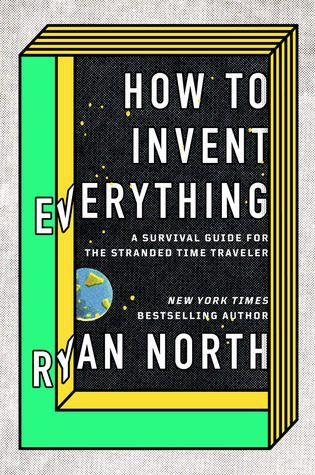
How to Invent Everything: A Survival Guide for the Stranded Time Traveler
by Ryan North
Rating: 4.2 ⭐
• 2 recommendations ❤️
What would you do if a time machine hurled you thousands of years into the past. . . and then broke? How would you survive? Could you improve on humanity's original timeline? And how hard would it be to domesticate a giant wombat? With this book as your guide, you'll survive--and thrive--in any period in Earth's history. Bestselling author and time-travel enthusiast Ryan North shows you how to invent all the modern conveniences we take for granted--from first principles. This illustrated manual contains all the science, engineering, art, philosophy, facts, and figures required for even the most clueless time traveler to build a civilization from the ground up. Deeply researched, irreverent, and significantly more fun than being eaten by a saber-toothed tiger, How to Invent Everything will make you smarter, more competent, and completely prepared to become the most important and influential person ever.

The Man Who Solved the Market: How Jim Simons Launched the Quant Revolution
by Gregory Zuckerman
Rating: 4.2 ⭐
• 6 recommendations ❤️
Gregory Zuckerman, the bestselling author of The Greatest Trade Ever and The Frackers, answers the question investors have been asking for decades: How did Jim Simons do it?Shortlisted for the Financial Times/McKinsey Business Book of the Year AwardJim Simons is the greatest money maker in modern financial history. No other investor--Warren Buffett, Peter Lynch, Ray Dalio, Steve Cohen, or George Soros--can touch his record. Since 1988, Renaissance's signature Medallion fund has generated average annual returns of 66 percent. The firm has earned profits of more than $100 billion; Simons is worth twenty-three billion dollars.Drawing on unprecedented access to Simons and dozens of current and former employees, Zuckerman, a veteran Wall Street Journal investigative reporter, tells the gripping story of how a world-class mathematician and former code breaker mastered the market. Simons pioneered a data-driven, algorithmic approach that's sweeping the world.As Renaissance became a market force, its executives began influencing the world beyond finance. Simons became a major figure in scientific research, education, and liberal politics. Senior executive Robert Mercer is more responsible than anyone else for the Trump presidency, placing Steve Bannon in the campaign and funding Trump's victorious 2016 effort. Mercer also impacted the campaign behind Brexit.The Man Who Solved the Market is a portrait of a modern-day Midas who remade markets in his own image, but failed to anticipate how his success would impact his firm and his country. It's also a story of what Simons's revolution means for the rest of us.

The Power Law: Venture Capital and the Making of the New Future
by Sebastian Mallaby
Rating: 4.4 ⭐
• 12 recommendations ❤️
Shortlisted for the Financial Times Business Book of the Year Named a Best Book of 2022 by The Economist“A gripping fly-on-the-wall story of the rise of this unique and important industry based on extensive interviews with some of the most successful venture capitalists.” - Daniel Rasmussen, Wall Street Journal“A must-read for anyone seeking to understand modern-day Silicon Valley and even our economy writ large.” -Bethany McLean, The Washington Post"A rare and unsettling look inside a subculture of unparalleled influence.” —Jane Mayer"A classic...A book of exceptional reporting, analysis and storytelling.” —Charles DuhiggFrom the New York Times bestselling author of More Money Than God comes the astonishingly frank and intimate story of Silicon Valley’s dominant venture-capital firms—and how their strategies and fates have shaped the path of innovation and the global economyInnovations rarely come from “experts.” Elon Musk was not an “electric car person” before he started Tesla. When it comes to improbable innovations, a legendary tech VC told Sebastian Mallaby, the future cannot be predicted , it can only be discovered . It is the nature of the venture-capital game that most attempts at discovery fail, but a very few succeed at such a scale that they more than make up for everything else. That extreme ratio of success and failure is the power law that drives the VC business, all of Silicon Valley, the wider tech sector, and, by extension, the world. In The Power Law , Sebastian Mallaby has parlayed unprecedented access to the most celebrated venture capitalists of all time—the key figures at Sequoia, Kleiner Perkins, Accel, Benchmark, and Andreessen Horowitz, as well as Chinese partnerships such as Qiming and Capital Today—into a riveting blend of storytelling and analysis that unfurls the history of tech incubation, in the Valley and ultimately worldwide. We learn the unvarnished truth, often for the first time, about some of the most iconic triumphs and infamous disasters in Valley history, from the comedy of errors at the birth of Apple to the avalanche of venture money that fostered hubris at WeWork and Uber. VCs’ relentless search for grand slams brews an obsession with the ideal of the lone entrepreneur-genius, and companies seen as potential “unicorns” are given intoxicating amounts of power, with sometimes disastrous results. On a more systemic level, the need to make outsized bets on unproven talent reinforces bias, with women and minorities still represented at woefully low levels. This does not just have social justice as Mallaby relates, China’s homegrown VC sector, having learned at the Valley’s feet, is exploding and now has more women VC luminaries than America has ever had. Still, Silicon Valley VC remains the top incubator of business innovation anywhere—it is not where ideas come from so much as where they go to become the products and companies that create the future. By taking us so deeply into the VCs’ game, The Power Law helps us think about our own future through their eyes.