
Balaji Srinivasan Recommended Books
American entrepreneur and investor
80 Books Recommended

Game of Shadows: Barry Bonds, BALCO, and the Steroids Scandal that Rocked Professional Sports
by Mark Fainaru-Wada
Rating: 3.9 ⭐
• 1 recommendation ❤️
In the summer of 1998 two of baseball leading sluggers, Mark McGwire and Sammy Sosa, embarked on a race to break Babe Ruth’s single season home run record. The nation was transfixed as Sosa went on to hit 66 home runs, and McGwire 70. Three years later, San Francisco Giants All-Star Barry Bonds surpassed McGwire by 3 home runs in the midst of what was perhaps the greatest offensive display in baseball history. Over the next three seasons, as Bonds regularly launched mammoth shots into the San Francisco Bay, baseball players across the country were hitting home runs at unprecedented rates. For years there had been rumors that perhaps some of these players owed their success to steroids. But crowd pleasing homers were big business, and sportswriters, fans, and officials alike simply turned a blind eye. Then, in December of 2004, after more than a year of investigation, San Francisco Chronicle reporters Mark Fainaru-Wada and Lance Williams broke the story that in a federal investigation of a nutritional supplement company called BALCO, Yankees slugger Jason Giambi had admitted taking steroids. Barry Bonds was also implicated. Immediately the issue of steroids became front page news. The revelations led to Congressional hearings on baseball’s drug problems and continued to drive the effort to purge the U.S. Olympic movement of drug cheats. Now Fainaru-Wada and Williams expose for the first time the secrets of the BALCO investigation that has turned the sports world upside down. Game of Barry Bonds, BALCO, and the Steroid Scandal That Rocked Professional by award-winning investigative journalists Mark Fainaru-Wada and Lance Williams, is a riveting narrative about the biggest doping scandal in the history of sports, and how baseball’s home run king, Barry Bonds of the San Francisco Giants, came to use steroids. Drawing on more than two years of reporting, including interviews with hundreds of people, and exclusive access to secret grand jury testimony, confidential documents, audio recordings, and more, the authors provide, for the first time, a definitive account of the shocking steroids scandal that made headlines across the country. The book traces the career of Victor Conte, founder of the BALCO laboratory, an egomaniacal former rock musician and self-proclaimed nutritionist, who set out to corrupt sports by providing athletes with “designer” steroids that would be undetectable on “state-of-the-art” doping tests. Conte gave the undetectable drugs to 28 of the world’s greatest athletes—Olympians, NFL players and baseball stars, Bonds chief among them. A separate narrative thread details the steroids use of Bonds, an immensely talented, moody player who turned to performance-enhancing drugs after Mark McGwire of the St. Louis Cardinals set a new home run record in 1998. Through his personal trainer, Bonds gained access to BALCO drugs. All of the great athletes who visited BALCO benefited tremendously—Bonds broke McGwire’s record—but many had their careers disrupted after federal investigators raided BALCO and indicted Conte. The authors trace the course of the probe, and the baffling decision of federal prosecutors to protect the elite athletes who were involved. Highlights of Game of Shadows Barry Bonds

Seeing Like a State: How Certain Schemes to Improve the Human Condition Have Failed
by James C. Scott
Rating: 4.2 ⭐
• 1 recommendation ❤️
Compulsory ujamaa villages in Tanzania, collectivization in Russia, Le Corbusier’s urban planning theory realized in Brasilia, the Great Leap Forward in China, agricultural "modernization" in the Tropics—the twentieth century has been racked by grand utopian schemes that have inadvertently brought death and disruption to millions. Why do well-intentioned plans for improving the human condition go tragically awry?In this wide-ranging and original book, James C. Scott analyzes failed cases of large-scale authoritarian plans in a variety of fields. Centrally managed social plans misfire, Scott argues, when they impose schematic visions that do violence to complex interdependencies that are not—and cannot—be fully understood. Further, the success of designs for social organization depends upon the recognition that local, practical knowledge is as important as formal, epistemic knowledge. The author builds a persuasive case against "development theory" and imperialistic state planning that disregards the values, desires, and objections of its subjects. He identifies and discusses four conditions common to all planning disasters: administrative ordering of nature and society by the state; a "high-modernist ideology" that places confidence in the ability of science to improve every aspect of human life; a willingness to use authoritarian state power to effect large- scale interventions; and a prostrate civil society that cannot effectively resist such plans.

The Great Influenza: The Story of the Deadliest Pandemic in History
by John M. Barry
Rating: 4.0 ⭐
• 7 recommendations ❤️
At the height of WWI, history’s most lethal influenza virus erupted in an army camp in Kansas, moved east with American troops, then exploded, killing as many as 100 million people worldwide. It killed more people in twenty-four months than AIDS killed in twenty-four years, more in a year than the Black Death killed in a century. But this was not the Middle Ages, and 1918 marked the first collision of science and epidemic disease. Magisterial in its breadth of perspective and depth of research and now revised to reflect the growing danger of the avian flu, The Great Influenza is ultimately a tale of triumph amid tragedy, which provides us with a precise and sobering model as we confront the epidemics looming on our own horizon. John M. Barry has written a new afterword for this edition that brings us up to speed on the terrible threat of the avian flu and suggest ways in which we might head off another flu pandemic.

The Great Wave: Price Revolutions and the Rhythm of History
by David Hackett Fischer
Rating: 4.1 ⭐
• 4 recommendations ❤️
David Hackett Fischer, one of our most prominent historians, has garnered a reputation for making history come alive--even stories as familiar as Paul Revere's ride, or as complicated as the assimilation of British culture in North America. Now, in The Great Wave, Fischer has done it again, marshaling an astonishing array of historical facts in lucid and compelling prose to outline a history of prices--"the history of change," as Fischer puts it--covering the dazzling sweep of Western history from the medieval glory of Chartres to the modern day. Going far beyond the economic data, Fischer writes a powerful history of the people of the Western world: the economic patterns they lived in, and the politics, culture, and society that they created as a result. As he did in Albion's Seed and Paul Revere's Ride, two of the most talked-about history books in recent years, Fischer combines extensive research and meticulous scholarship with wonderfully evocative writing to create a book for scholars and general readers alike.Records of prices are more abundant than any other quantifiable data, and span the entire range of history, from tables of medieval grain prices to the overabundance of modern statistics. Fischer studies this wealth of data, creating a narrative that encompasses all of Western culture. He describes four waves of price revolutions, each beginning in a period of equilibrium: the High Middle Ages, the Renaissance, the Enlightenment, and finally the Victorian Age. Each revolution is marked by continuing inflation, a widening gap between rich and poor, increasing instability, and finally a crisis at the crest of the wave that is characterized by demographic contraction, social and political upheaval, and economic collapse. The most violent of these climaxes was the catastrophic fourteenth century, in which war, famine, and the Black Death devastated the continent--the only time in Europe's history that the population actually declined.Fischer also brilliantly illuminates how these long economic waves are closely intertwined with social and political events, affecting the very mindset of the people caught in them. The long periods of equilibrium are marked by cultural and intellectual movements--such as the Renaissance, the Enlightenment, and the Victorian Age-- based on a belief in order and harmony and in the triumph of progress and reason. By contrast, the years of price revolution created a melancholy culture of despair.Fischer suggests that we are living now in the last stages of a price revolution that has been building since the turn of the century. The destabilizing price surges and declines and the diminished expectations the United States has suffered in recent years--and the famines and wars of other areas of the globe--are typical of the crest of a price revolution. He does not attempt to predict what will happen, noting that "uncertainty about the future is an inexorable fact of our condition." Rather, he ends with a brilliant analysis of where we might go from here and what our choices are now. This book is essential reading for anyone concerned about the state of the world today.
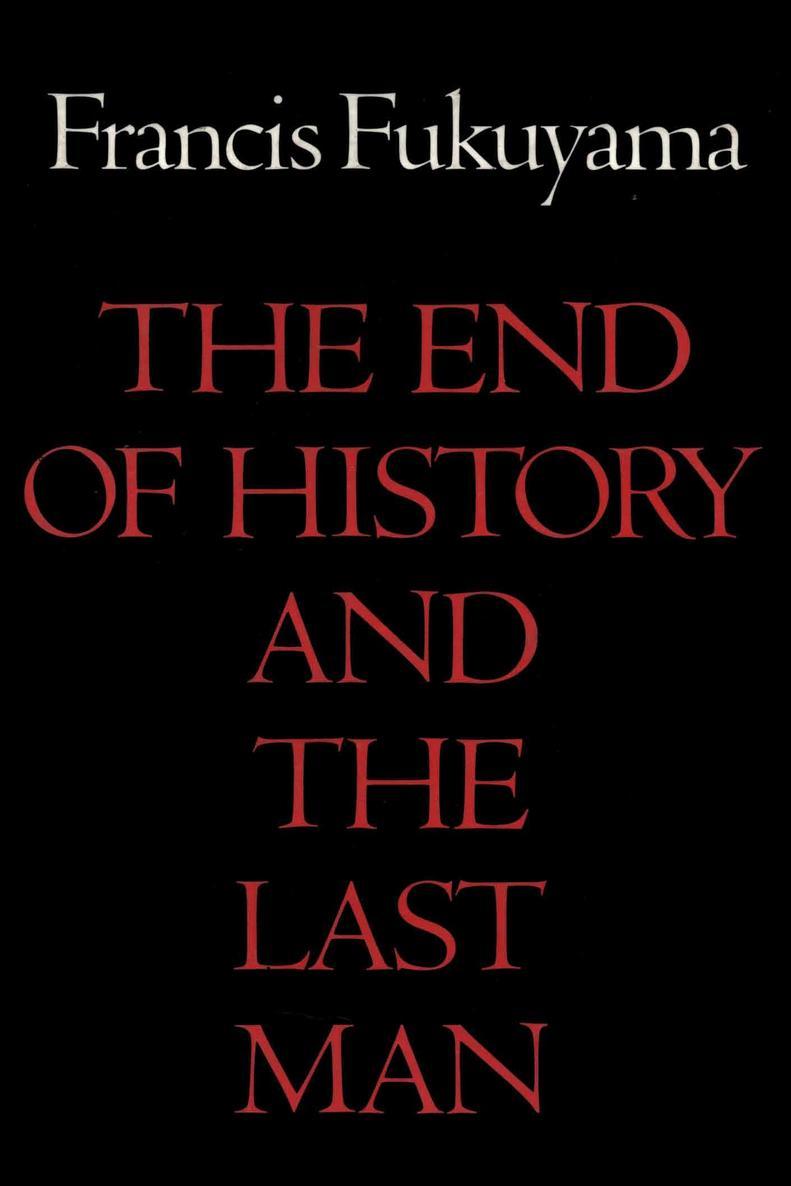
Ever since its first publication in 1992, The End of History and the Last Man has provoked controversy and debate. Francis Fukuyama's prescient analysis of religious fundamentalism, politics, scientific progress, ethical codes, and war is as essential for a world fighting fundamentalist terrorists as it was for the end of the Cold War. Now updated with a new afterword, The End of History and the Last Man is a modern classic.

The Sovereign Individual: Mastering the Transition to the Information Age
by James Dale Davidson
Rating: 4.2 ⭐
• 14 recommendations ❤️
Two renowned investment advisors and authors of the bestseller The Great Reckoning bring to light both currents of disaster and the potential for prosperity and renewal in the face of radical changes in human history as we move into the next century.The Sovereign Individual details strategies necessary for adapting financially to the next phase of Western civilization.Few observers of the late twentieth century have their fingers so presciently on the pulse of the global political and economic realignment ushering in the new millennium as do James Dale Davidson and Lord William Rees-Mogg. Their bold prediction of disaster on Wall Street in Blood in the Streets was borne out by Black Tuesday. In their ensuing bestseller, The Great Reckoning, published just weeks before the coup attempt against Gorbachev, they analyzed the pending collapse of the Soviet Union and foretold the civil war in Yugoslavia and other events that have proved to be among the most searing developments of the past few years.In The Sovereign Individual, Davidson and Rees-Mogg explore the greatest economic and political transition in centuries—the shift from an industrial to an information-based society. This transition, which they have termed "the fourth stage of human society," will liberate individuals as never before, irrevocably altering the power of government. This outstanding book will replace false hopes and fictions with new understanding and clarified values.

The Japan That Can Say No: Why Japan Will Be First Among Equals
by Shintarō Ishihara
Rating: 3.2 ⭐
• 1 recommendation ❤️
Asserts that Japan has overtaken the United States economically, technologically, and politically

If the Kennedys are America's royal family, then John F. Kennedy was the nation's crown prince. Magnetic, handsome, and charismatic, his perfectly coifed image overshadowed the successes and failures of his presidency, and his assassination cemented his near-mythological status in American culture and politics. Struck down in his prime, he represented the best and the brightest of America's future, and when he died, part of the nation's promise and innocence went with him. That, at least, is the public version of the story.The private version, according to Pulitzer Prize-winning journalist Seymour M. Hersh, is quite different. His meticulous investigation of Kennedy has revealed a wealth of indiscretions and malfeasance, ranging from frequent liaisons with prostitutes and mistresses to the attempted assassination of Fidel Castro to involvement in organized crime. Though scandals in the White House are nothing new, Hersh maintains that Kennedy's activities went beyond minor abuses of power and personal indulgences: they threatened the security of the nation--particularly in the realm of foreign policy--and the integrity of the office. Hersh believes it was only a matter of time before Kennedy's dealings were exposed, and only his popularity and charm, compounded by his premature death, spared such an investigation for so long. Exposure was further stalled by Bobby Kennedy's involvement in nefarious dealings, enabling him to bury any investigation of his brother and--by extension--himself.Based on interviews with former Kennedy administration officials, former Secret Service agents, and hundreds of Kennedy's personal friends and associates, The Dark Side of Camelot rewrites the history of John F. Kennedy and his presidency.
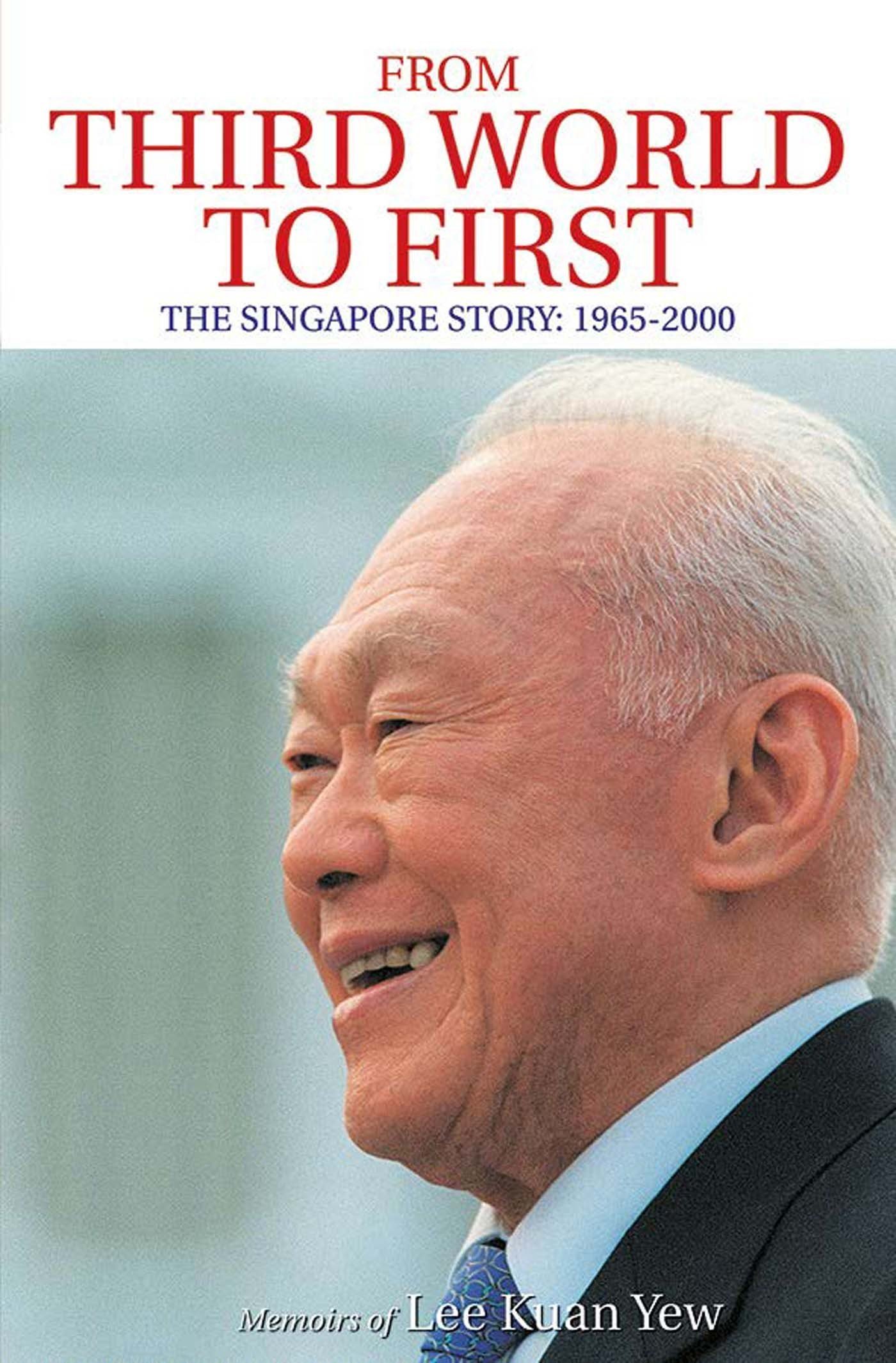
From Third World to First: The Singapore Story: 1965-2000
by Lee Kuan Yew
Rating: 4.5 ⭐
• 3 recommendations ❤️
Few gave tiny Singapore much chance of survival when it was granted independence in 1965. How is it, then, that today the former British colonial trading post is a thriving Asian metropolis with not only the world's number one airline, best airport, and busiest port of trade, but also the world's fourth–highest per capita real income?The story of that transformation is told here by Singapore's charismatic, controversial founding father, Lee Kuan Yew. Rising from a legacy of divisive colonialism, the devastation of the Second World War, and general poverty and disorder following the withdrawal of foreign forces, Singapore now is hailed as a city of the future. This miraculous history is dramatically recounted by the man who not only lived through it all but who fearlessly forged ahead and brought about most of these changes.Delving deep into his own meticulous notes, as well as previously unpublished government papers and official records, Lee details the extraordinary efforts it took for an island city–state in Southeast Asia to survive at that time.Lee explains how he and his cabinet colleagues finished off the communist threat to the fledgling state's security and began the arduous process of nation building: forging basic infrastructural roads through a land that still consisted primarily of swamps, creating an army from a hitherto racially and ideologically divided population, stamping out the last vestiges of colonial–era corruption, providing mass public housing, and establishing a national airline and airport.In this illuminating account, Lee writes frankly about his trenchant approach to political opponents and his often unorthodox views on human rights, democracy, and inherited intelligence, aiming always "to be correct, not politically correct." Nothing in Singapore escaped his watchful eye: whether choosing shrubs for the greening of the country, restoring the romance of the historic Raffles Hotel, or openly, unabashedly persuading young men to marry women as well educated as themselves. Today's safe, tidy Singapore bears Lee's unmistakable stamp, for which he is unapologetic: "If this is a nanny state, I am proud to have fostered one."Though Lee's domestic canvas in Singapore was small, his vigor and talent assured him a larger place in world affairs. With inimitable style, he brings history to life with cogent analyses of some of the greatest strategic issues of recent times and reveals how, over the years, he navigated the shifting tides of relations among America, China, and Taiwan, acting as confidant, sounding board, and messenger for them. He also includes candid, sometimes acerbic pen portraits of his political peers, including the indomitable Margaret Thatcher and Ronald Reagan, the poetry–spouting Jiang Zemin, and ideologues George Bush and Deng Xiaoping.Lee also lifts the veil on his family life and writes tenderly of his wife and stalwart partner, Kwa Geok Choo, and of their pride in their three children –– particularly the eldest son, Hsien Loong, who is now Singapore's deputy prime minister.For more than three decades, Lee Kuan Yew has been praised and vilified in equal measure, and he has established himself as a force impossible to ignore in Asian and international politics. From Third World to First offers readers a compelling glimpse into this visionary's heart, soul, and mind.
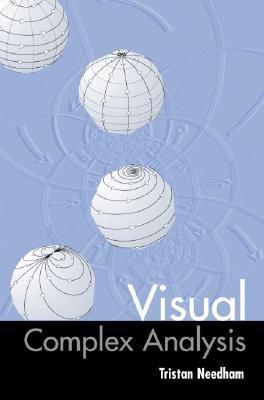
FROM THE Please do NOT buy this original 1997 edition! I have created a new, greatly improved (and cheaper!) edition, which was published on February 28th, 2023:Visual Complex 25th Anniversary Edition (with a new Foreword by Roger Penrose)**************************************************************************************************This radical first course on complex analysis brings a beautiful and powerful subject to life by consistently using geometry (not calculation) as the means of explanation. Aimed at undergraduate students in mathematics, physics, and engineering, the book's intuitive explanations, lack of advanced prerequisites, and consciously user-friendly prose style will help students to master the subject more readily than was previously possible. The key to this is the book's use of new geometric arguments in place of the standard calculational ones. These geometric arguments are communicated with the aid of hundreds of diagrams of a standard seldom encountered in mathematical works. A new approach to a classical topic, this work will be of interest to students in mathematics, physics, and engineering, as well as to professionals in these fields.

The Forgotten Man: A New History of the Great Depression
by Amity Shlaes
Rating: 4.1 ⭐
• 4 recommendations ❤️
It's difficult today to imagine how America survived the Great Depression. Only through the stories of the common people who struggled during that era can we really understand how the nation endured. These are the people at the heart of Amity Shlaes's insightful and inspiring history of one of the most crucial events of the twentieth century.In The Forgotten Man, Amity Shlaes, one of the nation's most respected economic commentators, offers a striking reinterpretation of the Great Depression. Rejecting the old emphasis on the New Deal, she turns to the neglected and moving stories of individual Americans, and shows how through brave leadership they helped establish the steadfast character we developed as a nation. Some of those figures were well known, at least in their day—Andrew Mellon, the Greenspan of the era; Sam Insull of Chicago, hounded as a scapegoat. But there were also unknowns: the Schechters, a family of butchers in Brooklyn who dealt a stunning blow to the New Deal; Bill W., who founded Alcoholics Anonymous in the name of showing that small communities could help themselves; and Father Divine, a black charismatic who steered his thousands of followers through the Depression by preaching a Gospel of Plenty.Shlaes also traces the mounting agony of the New Dealers themselves as they discovered their errors. She shows how both Presidents Hoover and Roosevelt failed to understand the prosperity of the 1920s and heaped massive burdens on the country that more than offset the benefit of New Deal programs. The real question about the Depression, she argues, is not whether Roosevelt ended it with World War II. It is why the Depression lasted so long. From 1929 to 1940, federal intervention helped to make the Depression great—in part by forgetting the men and women who sought to help one another.Authoritative, original, and utterly engrossing, The Forgotten Man offers an entirely new look at one of the most important periods in our history. Only when we know this history can we understand the strength of American character today.

Just in time for the 40th anniversary of The Exorcist -- Legion, a classic tale of horror, is back in print!A young boy is found horribly murdered in a mock crucifixion. Is the murderer the elderly woman who witnessed the crime? A neurologist who can no longer bear the pain life inflicts on its victims? A psychiatrist with a macabre sense of humor and a guilty secret? A mysterious mental patient, locked in silent isolation?Lieutenant Kinderman follows a bewildering trail that links all these people, confronting a new enigma at every turn even as more murders surface. Why does each victim suffer the same dreadful mutilations? Why are two of the victims priests? Is there a connection between these crimes and another series of murders that took place twelve years ago—and supposedly ended with the death of the killer?Legion is a novel of breathtaking energy and suspense. But more than this, it is an extraordinary journey into the uncharted depths of the human mind and the most agonizing questions of the human condition.The answers are revealed in a climax so stunning that it could only have been written by the author of The Exorcist—William Peter Blatty.

The paranoid and brilliant inventor Allie Fox takes his family to live in the Honduran jungle, determined to build a civilization better than the one they've left. Fleeing from an America he sees as mired in materialism and conformity, he hopes to rediscover a purer life. But his utopian experiment takes a dark turn when his obsessions lead the family toward unimaginable danger.

In this legendary business book and Silicon Valley staple, the former chairman and CEO of Intel shares his perspective on how to build and run a company. A practical handbook for navigating real-life business scenarios and a powerful management manifesto with the ability to revolutionize the way we work. The essential skill of creating and maintaining new businesses—the art of the entrepreneur—can be summed up in a single word: managing. Born of Grove’s experiences at one of America’s leading technology companies (as CEO and employee number three at Intel), High Output Management is equally appropriate for sales managers, accountants, consultants, and teachers, as well as CEOs and startup founders. Grove covers techniques for creating highly productive teams, demonstrating methods of motivation that lead to peak performance. "Generous enough with advice and observations to be required reading." — The Wall Street Journal

The God That Failed is a classic work and crucial document of the Cold War that brings together essays by six of the most important writers of the twentieth century on their conversion to and subsequent disillusionment with communism. In describing their own experiences, the authors illustrate the fate of leftism around the world. André Gide (France), Richard Wright (the United States), Ignazio Silone (Italy), Stephen Spender (England), Arthur Koestler (Germany), and Louis Fischer, an American foreign correspondent, all tell how their search for the betterment of humanity led them to communism, and the personal agony and revulsion which then caused them to reject it. David Engerman's new foreword to this central work of our time recounts the tumultuous events of the era, providing essential background. It also describes the book's origins and impact, the influence of communism in American intellectual life, and how the events described in The God That Failed continue to affect public discourse today.

The Goal: 40th Anniversary Edition: A Process of Ongoing Improvement
by Eliyahu M. Goldratt
Rating: 4.1 ⭐
• 9 recommendations ❤️
*A Graphic Novel version of this title is now available: "The Goal: A Business Graphic Novel"30th Anniversary Edition. Written in a fast-paced thriller style, The Goal, a gripping novel, is transforming management thinking throughout the world. It is a book to recommend to your friends in industry - even to your bosses - but not to your competitors. Alex Rogo is a harried plant manager working ever more desperately to try improve performance. His factory is rapidly heading for disaster. So is his marriage. He has ninety days to save his plant - or it will be closed by corporate HQ, with hundreds of job losses. It takes a chance meeting with a professor from student days - Jonah - to help him break out of conventional ways of thinking to see what needs to be done. The story of Alex's fight to save his plant is more than compulsive reading. It contains a serious message for all managers in industry and explains the ideas, which underline the Theory of Constraints (TOC), developed by Eli Goldratt.One of Eli Goldratt s convictions was that the goal of an individual or an organization should not be defined in absolute terms. A good definition of a goal is one that sets us on a path of ongoing improvement.Pursuing such a goal necessitates more than one breakthrough. In fact it requires many. To be in a position to identify these breakthroughs we should have a deep understanding of the underlying rules of our environment. Twenty-five years after writing The Goal, Dr. Goldratt wrote Standing on the Shoulders of Giants. In this article he provided the underlying rules of operations. This article appears at the end of this book.Like Mrs. Fields and her cookies,The Goal was too tasty to remain obscure. Companies began buying big batches and management schools included it in their curriculums. Fortune MagazineA survey of the reading habits of managers found that though they buy books by the likes of Tom Peters for display purposes, the one management book they have actually read from cover to cover is The Goal. The Economist"Goal readers are now doing the best work of their lives. Success MagazineA factory may be an unlikely setting for a novel, but the book has been wildly effective.: Tom PetersRequired reading for Amazon's Management.

ONE OF THE ECONOMIST' S BEST BOOKS OF THE YEAR AND A WINNER OF THE WASHINGTON MONTHLY' S ANNUAL POLITICAL BOOK AWARDPolitical experts John B. Judis and Ruy Teixeira convincingly use hard data -- demographic, geographic, economic, and political -- to forecast the dawn of a new progressive era. In the 1960s, Kevin Phillips, battling conventional wisdom, correctly foretold the dawn of a new conservative era. His book, The Emerging Republican Majority, became an indispensable guide for all those attempting to understand political change through the 1970s and 1980s. At the beginning of the twenty-first century, with the country in Republican hands, The Emerging Democratic Majority is the indispensable guide to this era.In five well-researched chapters and a new afterword covering the 2002 elections, Judis and Teixeira show how the most dynamic and fastest-growing areas of the country are cultivating a new wave of Democratic voters who embrace what the authors call "progressive centrism" and take umbrage at Republican demands to privatize social security, ban abortion, and cut back environmental regulations.As the GOP continues to be dominated by neoconservatives, the religious right, and corporate influence, this is an essential volume for all those discontented with their narrow agenda -- and a clarion call for a new political order.

Simple language and attention to detail have made this a superior English translation. Widely acclaimed and respected for accurately reflecting Arabic meanings, it has received recommendations by numerous well-known scholars, including Shaykh Muhammad bin Saleh al-Munajjid, Dr. Zakir Naik, Sheikh Yusuf Estes, Dr. Bilal Philips and Dr. Jamal Badawi.*ISBN: 9960792633 ISBN 13: 9789960792637Author: Saheeh International (editors); Al Muntada al IslamiPublisher: Al-Muntada al-Islami (2001-2004-2010), Abul-Qasim Publishing House (1997), Saheeh International

Only the Paranoid Survive: How to Exploit the Crisis Points That Challenge Every Company
by Andrew S. Grove
Rating: 4.0 ⭐
• 17 recommendations ❤️
Andy Grove, founder and former CEO of Intel shares his strategy for success as he takes the reader deep inside the workings of a major company in Only the Paranoid Survive .Under Andy Grove's leadership, Intel became the world's largest chip maker and one of the most admired companies in the world. In Only the Paranoid Survive , Grove reveals his strategy for measuring the nightmare moment every leader dreads--when massive change occurs and a company must, virtually overnight, adapt or fall by the wayside--in a new way.Grove calls such a moment a Strategic Inflection Point, which can be set off by almost mega-competition, a change in regulations, or a seemingly modest change in technology. When a Strategic Inflection Point hits, the ordinary rules of business go out the window. Yet, managed right, a Strategic Inflection Point can be an opportunity to win in the marketplace and emerge stronger than ever.Grove underscores his message by examining his own record of success and failure, including how he navigated the events of the Pentium flaw, which threatened Intel's reputation in 1994, and how he has dealt with the explosions in growth of the Internet. The work of a lifetime, Only the Paranoid Survive is a classic of managerial and leadership skills.

Flu: The Story Of the Great Influenza Pandemic of 1918 and the Search for the Virus That Caused It
by Gina Kolata
Rating: 3.9 ⭐
• 4 recommendations ❤️
In 1918 the Great Flu Epidemic killed an estimated 40 million people virtually overnight. If such a plague returned today, taking a comparable percentage of the U.S. population with it, 1.5 million Americans would die.The fascinating, true story of the world's deadliest disease.In 1918, the Great Flu Epidemic felled the young and healthy virtually overnight. An estimated forty million people died as the epidemic raged. Children were left orphaned and families were devastated. As many American soldiers were killed by the 1918 flu as were killed in battle during World War I. And no area of the globe was safe. Eskimos living in remote outposts in the frozen tundra were sickened and killed by the flu in such numbers that entire villages were wiped out.Scientists have recently rediscovered shards of the flu virus frozen in Alaska and preserved in scraps of tissue in a government warehouse. Gina Kolata, an acclaimed reporter for "The New York Times," unravels the mystery of this lethal virus with the high drama of a great adventure story. Delving into the history of the flu and previous epidemics, detailing the science and the latest understanding of this mortal disease, Kolata addresses the prospects for a great epidemic recurring, and, most important, what can be done to prevent it.

A seminal work and examination of the psychopathology of journalism. Using a strange and unprecedented lawsuit by a convicted murder againt the journalist who wrote a book about his crime, Malcolm delves into the always uneasy, sometimes tragic relationship that exists between journalist and subject.Featuring the real-life lawsuit of Jeffrey MacDonald, a convicted murderer, against Joe McGinniss, the author of Fatal Vision.In Malcolm's view, neither journalist nor subject can avoid the moral impasse that is built into the journalistic situation. When the text first appeared, as a two-part article in The New Yorker , its thesis seemed so radical and its irony so pitiless that journalists across the country reacted as if stung.Her book is a work of journalism as well as an essay on it at once exemplifies and dissects its subject. In her interviews with the leading and subsidiary characters in the MacDonald-McGinniss case -- the principals, their lawyers, the members of the jury, and the various persons who testified as expert witnesses at the trial -- Malcolm is always aware of herself as a player in a game that, as she points out, she cannot lose. The journalist-subject encounter has always troubled journalists, but never before has it been looked at so unflinchingly and so ruefully. Hovering over the narrative -- and always on the edge of the reader's consciousness -- is the MacDonald murder case itself, which imparts to the book an atmosphere of anxiety and uncanniness.The Journalist and the Murderer derives from and reflects many of the dominant intellectual concerns of our time, and it will have a particular appeal for those who cherish the odd, the off-center, and the unsolved.

The Principia: The Authoritative Translation and Guide: Mathematical Principles of Natural Philosophy
by Isaac Newton
Rating: 4.8 ⭐
• 10 recommendations ❤️
In his monumental 1687 work, Philosophiae Naturalis Principia Mathematica, known familiarly as the Principia, Isaac Newton laid out in mathematical terms the principles of time, force, and motion that have guided the development of modern physical science. Even after more than three centuries and the revolutions of Einsteinian relativity and quantum mechanics, Newtonian physics continues to account for many of the phenomena of the observed world, and Newtonian celestial dynamics is used to determine the orbits of our space vehicles. This authoritative, modern translation by Cohen and Whitman, the first in over 285 years, is based on the 1726 edition, the final revised version approved by Newton; it includes extracts from the earlier editions, corrects errors found in earlier versions, and replaces archaic English with contemporary prose and up-to-date mathematical forms. Newton's principles describe acceleration, deceleration, and inertial movement; fluid dynamics; and the motions of the earth, moon, planets, and comets. A great work in itself, the Principia also revolutionized the methods of scientific investigation. It set forth the fundamental three laws of motion and the law of universal gravity, the physical principles that account for the Copernican system of the world as emended by Kepler, thus effectively ending controversy concerning the Copernican planetary system. The illuminating Guide to the Principia by I. Bernard Cohen, along with his and Anne Whitman's translation, make this preeminent work truly accessible for today's scientists, scholars, and students.

Manufacturing Consent: The Political Economy of the Mass Media
by Edward S. Herman
Rating: 4.3 ⭐
• 1 recommendation ❤️
A Powerful Assessment of How the U.S. Mass Media Fail to Provide the Kind of Information That We Need to Understand the WorldIn this pathbreaking work, Edward S. Herman and Noam Chomsky show that, contrary to the usual image of the news media as cantankerous, obstinate, and ubiquitous in their search for truth and defense of justice, in their actual practice they defend the economic, social, and political agendas of the privileged groups that dominate domestic society, the state, and the global order.Based on a series of case studies—including the media’s dichotomous treatment of “worthy” versus “unworthy” victims, “legitimizing” and “meaningless” Third World elections, and devastating critiques of media coverage of the U.S. wars against Indochina—Herman and Chomsky draw on decades of criticism and research to propose a Propaganda Model to explain the media’s behavior and performance. Their new introduction updates the Propaganda Model and the earlier case studies, and it discusses several other applications. These include the manner in which the media covered the passage of the North American Free Trade Agreement and subsequent Mexican financial meltdown of 1994-1995, the media’s handling of the protests against the World Trade Organization, World Bank, and International Monetary Fund in 1999 and 2000, and the media’s treatment of the chemical industry and its regulation. What emerges from this work is a powerful assessment of how propagandistic the U.S. mass media are, how they systematically fail to live up to their self-image as providers of the kind of information that people need to make sense of the world, and how we can understand their function in a radically new way.

Our economy and future way of life depend on how well American manufacturing managers adapt to the dynamic, globally competitive landscape and evolve their firms to keep pace. A major challenge is how to structure the firm s environment so that it attains the speed and low cost of high-volume flow lines while retaining the flexibility and customization potential of a low-volume job shop. The book's three parts are organized according to three categories of skills required by managers and basics, intuition, and synthesis. Part I reviews traditional operations management techniques and identifies the necessary components of the science of manufacturing. Part II presents the core concepts of the book, beginning with the structure of the science of manufacturing and a discussion of the systems approach to problem solving. Other topics include behavioral tendencies of manufacturing plants, push and pull production systems, the human element in operations management, and the relationship between quality and operations. Chapter conclusions include main points and observations framed as manufacturing laws. In Part III, the lessons of Part I and the laws of Part II are applied to address specific manufacturing management issues in detail. The authors compare and contrast common problems, including shop floor control, long-range aggregate planning, workforce planning, and capacity management. A main focus in Part III is to help readers visualize how general concepts in Part II can be applied to specific problems. Written for both engineering and management students, the authors demonstrate the effectiveness of a rule-based and data driven approach to operations planning and control. They advance an organized framework from which to evaluate management practices and develop useful intuition about manufacturing systems. Titles of related interest also from Waveland Hopp, Supply Chain Science (ISBN 9781577667384) and Nahmias-Olsen, Production and Operations Analysis, Seventh Edition (ISBN 9781478623069). Table of Contents 0. Factory Physics? THE LESSONS OF HISTORY 1. Manufacturing in America, 2. Inventory From EOQ to ROP, 3. The MRP Crusade, 4. From the JIT Revolution to Lean Manufacturing, 5. What Went Wrong? FACTORY PHYSICS 6. A Science of Manufacturing, 7. Basic Factory Dynamics, 8. Variability Basics, 9. The Corrupting Influence of Variability, 10. Push and Pull Production Systems, 11. The Human Element in Operations Management, 12. Total Quality Manufacturing PRINCIPLES IN PRACTICE 13. A Pull Planning Framework, 14. Shop Floor Control, 15. Production Scheduling, 16. Aggregate and Workforce Planning, 17. Supply Chain Management, 18. Capacity Management, 19. Synthesis--Putting It All Together

The Man Who Invented Fidel: Castro, Cuba, and Herbert L. Matthews of The New York Times
by Anthony DePalma
Rating: 3.8 ⭐
• 2 recommendations ❤️
In 1957, Herbert L.Matthews of the New York Times , then considered one of the premiere foreign correspondents of his time, tracked down Fidel Castro in Cuba's Sierra Maestra mountains and returned with what was considered the scoop of the century. His heroic portrayal of Castro, who was then believed dead, had a powerful effect on American perceptions of Cuba, both in and out of the government, and profoundly influenced the fall of the Batista regime. When Castro emerged as a Soviet-backed dictator, Matthews became a scapegoat; his paper turned on him, his career foundered, and he was accused of betraying his country. In this fascinating book, New York Times reporter DePalma investigates the Matthews case to reveal how it contains the story not just of one newspaperman but of an age, not just how Castro came to power but how America determines who its enemies are. He re-creates the atmosphere of revolutionary Cuba and Cold War America, and clarifies the facts of Castro's ascension and political evolution from the many myths that have sprung up around them. Through a dramatic, ironic, in ways tragic story, The Man Who Invented Fidel offers provocative insights into Cuban politics, the Cuban-American relationship, and the many difficult balancing acts of responsible journalism.

Make family reading a regular and cherished activity with Horton Hears a Who and READ TOGETHER, BE TOGETHER, a nationwide movement developed by Penguin Random House in partnership with Parents magazine. Choose kindness with Horton the elephant and the Whos of Who-ville in this classic Dr. Seuss picture book about caring for others!A person's a person, no matter how small.Everyone's favorite elephant stars in this heartwarming and timeless story for readers of all ages. In the colorful Jungle of Nool, Horton discovers something that at first seems impossible: a tiny speck of dust contains an entire miniature world--Who-ville--complete with houses and grocery stores and even a mayor! But when no one will stand up for the Whos of Who-ville, Horton uses his elephant-sized heart to save the day. This tale of compassion and determination proves that any person, big or small, can choose to speak out for what is right.This story showcases the very best of Dr. Seuss, from the moving message to the charming rhymes and imaginative illustrations. No bookshelf is complete without Horton and the Whos!Do you see what I mean? . . . They've proved they ARE persons, no matter how small. And their whole world was saved by the Smallest of All! Picture books in the READ TOGETHER, BE TOGETHER program are available at a low price for a limited time so that families everywhere can make the most of storytime. Other titles include: - Llama Llama Misses Mama (Anna Dewdney) - Richard Scarry's Cars and Trucks and Things That Go (Richard Scarry) - The Little Engine That Could (Watty Piper) - The Very Busy Spider (Eric Carle) - We're All Wonders (R. J. Palacio)

Soon to be a major motion picture, the story of one of the most improbable and productive collaborations ever chronicled, between a young unschooled Indian prodigy and a great English mathematician.In 1913, a young unschooled Indian clerk wrote a letter to G H Hardy, begging the preeminent English mathematician's opinion on several ideas he had about numbers. Realizing the letter was the work of a genius, Hardy arranged for Srinivasa Ramanujan to come to England. Thus began one of the most improbable and productive collaborations ever chronicled. With a passion for rich and evocative detail, Robert Kanigel takes us from the temples and slums of Madras to the courts and chapels of Cambridge University, where the devout Hindu Ramanujan, "the Prince of Intuition," tested his brilliant theories alongside the sophisticated and eccentric Hardy, "the Apostle of Proof." In time, Ramanujan's creative intensity took its toll: he died at the age of thirty-two and left behind a magical and inspired legacy that is still being plumbed for its secrets today.

The Fourth Turning: An American Prophecy—What the Cycles of History Tell Us About America's Next Rendezvous with Destiny
by William Strauss
Rating: 3.9 ⭐
• 6 recommendations ❤️
NATIONAL BESTSELLER. Discover the game-changing theory of the cycles of history and what past generations can teach us about living through times of upheaval—with deep insights into the roles that Boomers, Generation X, and Millennials have to play. First comes a High, a period of confident expansion. Next comes an Awakening, a time of spiritual exploration and rebellion. Then comes an Unraveling, in which individualism triumphs over crumbling institutions. Last comes a Crisis—the Fourth Turning—when society passes through a great and perilous gate in history. William Strauss and Neil Howe will change the way you see the world—and your place in it. With blazing originality, The Fourth Turning illuminates the past, explains the present, and reimagines the future. Most remarkably, it offers an utterly persuasive prophecy about how America's past will predict what comes next. Strauss and Howe base this vision on a provocative theory of American history. The authors look back five hundred years and uncover a distinct Modern history moves in cycles, each one lasting about the length of a long human life, each composed of four twenty-year eras—or "turnings"—that comprise history's seasonal rhythm of growth, maturation, entropy, and rebirth. Illustrating this cycle through a brilliant analysis of the post–World War II period, The Fourth Turning offers bold predictions about how all of us can prepare, individually and collectively, for this rendezvous with destiny.
Physics for Scientists and Engineers: Vol. 1: Mechanics, Oscillations and Waves, Thermodynamics
by Paul Allen Tipler
Rating: 4.2 ⭐
• 2 recommendations ❤️
For nearly 25 years, Tipler’s standard-setting textbook has been a favorite for the calculus-based introductory physics course. With this edition, the book makes a dramatic re-emergence, adding innovative pedagogy that eases the learning process without compromising the integrity of Tipler’s presentation of the science. For instructor and student convenience, the Fourth Edition of Physics for Scientists and Engineers. Vol. 1: Mechanics, Oscillations and Waves, Thermodynamics, 768 pages, 1-57259-491-8

This work has become a benchmark of popular anthropology and psychology.Zoologist Desmond Morris considers humans as being simply another animal species in this classic book first published in 1967. Here is the Naked Ape at his most primal in love, at work, at war. Meet man as he really is: relative to the apes, stripped of his veneer as we see him courting, making love, sleeping, socializing, grooming, playing. The Naked Ape takes its place alongside Darwin’s Origin of the Species, presenting man not as a fallen angel, but as a risen ape, remarkable in his resilience, energy and imagination, yet an animal nonetheless, in danger of forgetting his origins. With its penetrating insights on man's beginnings, sex life, habits and our astonishing bonds to the animal kingdom, The Naked Ape is a landmark, at once provocative, compelling and timeless.

This is a one-of-a-kind reference for anyone with a serious interest in mathematics. Edited by Timothy Gowers, a recipient of the Fields Medal, it presents nearly two hundred entries, written especially for this book by some of the world's leading mathematicians, that introduce basic mathematical tools and vocabulary; trace the development of modern mathematics; explain essential terms and concepts; examine core ideas in major areas of mathematics; describe the achievements of scores of famous mathematicians; explore the impact of mathematics on other disciplines such as biology, finance, and musi—and much, much more.Unparalleled in its depth of coverage, The Princeton Companion to Mathematics surveys the most active and exciting branches of pure mathematics. Accessible in style, this is an indispensable resource for undergraduate and graduate students in mathematics as well as for researchers and scholars seeking to understand areas outside their specialties.- Features nearly 200 entries, organized thematically and written by an international team of distinguished contributors- Presents major ideas and branches of pure mathematics in a clear, accessible style- Defines and explains important mathematical concepts, methods, theorems, and open problems- Introduces the language of mathematics and the goals of mathematical research- Covers number theory, algebra, analysis, geometry, logic, probability, and more- Traces the history and development of modern mathematics- Profiles more than ninety-five mathematicians who influenced those working today- Explores the influence of mathematics on other disciplines- Includes bibliographies, cross-references, and a comprehensive indexContributors include:Graham Allan, Noga Alon, George Andrews, Tom Archibald, Sir Michael Atiyah, David Aubin, Joan Bagaria, Keith Ball, June Barrow-Green, Alan Beardon, David D. Ben-Zvi, Vitaly Bergelson, Nicholas Bingham, Béla Bollobás, Henk Bos, Bodil Branner, Martin R. Bridson, John P. Burgess, Kevin Buzzard, Peter J. Cameron, Jean-Luc Chabert, Eugenia Cheng, Clifford C. Cocks, Alain Connes, Leo Corry, Wolfgang Coy, Tony Crilly, Serafina Cuomo, Mihalis Dafermos, Partha Dasgupta, Ingrid Daubechies, Joseph W. Dauben, John W. Dawson Jr., Francois de Gandt, Persi Diaconis, Jordan S. Ellenberg, Lawrence C. Evans, Florence Fasanelli, Anita Burdman Feferman, Solomon Feferman, Charles Fefferman, Della Fenster, José Ferreirós, David Fisher, Terry Gannon, A. Gardiner, Charles C. Gillispie, Oded Goldreich, Catherine Goldstein, Fernando Q. Gouvêa, Timothy Gowers, Andrew Granville, Ivor Grattan-Guinness, Jeremy Gray, Ben Green, Ian Grojnowski, Niccolò Guicciardini, Michael Harris, Ulf Hashagen, Nigel Higson, Andrew Hodges, F. E. A. Johnson, Mark Joshi, Kiran S. Kedlaya, Frank Kelly, Sergiu Klainerman, Jon Kleinberg, Israel Kleiner, Jacek Klinowski, Eberhard Knobloch, János Kollár, T. W. Körner, Michael Krivelevich, Peter D. Lax, Imre Leader, Jean-François Le Gall, W. B. R. Lickorish, Martin W. Liebeck, Jesper Lützen, Des MacHale, Alan L. Mackay, Shahn Majid, Lech Maligranda, David Marker, Jean Mawhin, Barry Mazur, Dusa McDuff, Colin McLarty, Bojan Mohar, Peter M. Neumann, Catherine Nolan, James Norris, Brian Osserman, Richard S. Palais, Marco Panza, Karen Hunger Parshall, Gabriel P. Paternain, Jeanne Peiffer, Carl Pomerance, Helmut Pulte, Bruce Reed, Michael C. Reed, Adrian Rice, Eleanor Robson, Igor Rodnianski, John Roe, Mark Ronan, Edward Sandifer, Tilman Sauer, Norbert Schappacher, Andrzej Schinzel, Erhard Scholz, Reinhard Siegmund-Schultze, Gordon Slade, David J. Spiegelhalter, Jacqueline Stedall, Arild Stubhaug, Madhu Sudan, Terence Tao, Jamie Tappenden, C. H. Taubes, Rüdiger Thiele, Burt Totaro, Lloyd N. Trefethen, Dirk van Dalen, Richard Weber, Dominic Welsh, Avi Wigderson, Herbert Wilf, David Wilkins, B. Yandell, Eric Zaslow, Doron Zeilberger

This book first covers exact and approximate analytical techniques (ordinary differential and difference equations, partial differential equations, variational principles, stochastic processes); numerical methods (finite differences for ODE's and PDE's, finite elements, cellular automata); model inference based on observations (function fitting, data transforms, network architectures, search techniques, density estimation); as well as the special role of time in modeling (filtering and state estimation, hidden Markov processes, linear and nonlinear time series). Each of the topics in the book would be the worthy subject of a dedicated text, but only by presenting the material in this way is it possible to make so much material accessible to so many people. Each chapter presents a concise summary of the core results in an area, providing an orientation to what they can (and cannot) do, enough background to use them to solve typical problems, and pointers to access the literature for particular applications.

Rules for Radicals: A Pragmatic Primer for Realistic Radicals
by Saul D. Alinsky
Rating: 3.7 ⭐
• 4 recommendations ❤️
First published in 1971, Rules for Radicals is Saul Alinsky's impassioned counsel to young radicals on how to effect constructive social change and know “the difference between being a realistic radical and being a rhetorical one.” Written in the midst of radical political developments whose direction Alinsky was one of the first to question, this volume exhibits his style at its best. Like Thomas Paine before him, Alinsky was able to combine, both in his person and his writing, the intensity of political engagement with an absolute insistence on rational political discourse and adherence to the American democratic tradition.ContentsThe PurposeOf Means and EndsA Word about WordsThe Education of an OrganizerCommunicationIn the BeginningTacticsThe Genesis of Tactic ProxyThe Way Ahead

Originally published in 1971, The Exorcist is now a major television series on FOX. It remains one of the most controversial novels ever written and went on to become a literary phenomenon: It spent fifty-seven weeks on the New York Times bestseller list, seventeen consecutively at number one. Inspired by a true story of a child’s demonic possession in the 1940s, William Peter Blatty created an iconic novel that focuses on Regan, the eleven-year-old daughter of a movie actress residing in Washington, D.C. A small group of overwhelmed yet determined individuals must rescue Regan from her unspeakable fate, and the drama that ensues is gripping and unfailingly terrifying. Two years after its publication, The Exorcist was, of course, turned into a wildly popular motion picture, garnering ten Academy Award nominations. On opening day of the film, lines of the novel’s fans stretched around city blocks. In Chicago, frustrated moviegoers used a battering ram to gain entry through the double side doors of a theater. In Kansas City, police used tear gas to disperse an impatient crowd who tried to force their way into a cinema. The three major television networks carried footage of these events; CBS’s Walter Cronkite devoted almost ten minutes to the story. The Exorcist was, and is, more than just a novel and a film: it is a true landmark. Purposefully raw and profane, The Exorcist still has the extraordinary ability to disturb readers and cause them to forget that it is “just a story.” Published here in this beautiful fortieth anniversary edition, it remains an unforgettable reading experience and will continue to shock and frighten a new generation of readers.

The Communist Manifesto, Marx and Engels' revolutionary 1848 summons to the working classes, is one of the most influential political theories ever formulated. After four years of collaboration, the authors produced this incisive account of their idea of Communism, in which they envisage a society without classes, private property, or a state. They argue that increasing exploitation of industrial workers will eventually lead to a revolution in which capitalism is overthrown. Their vision transformed the world irrevocably, and remains relevant as a depiction of global capitalism today.
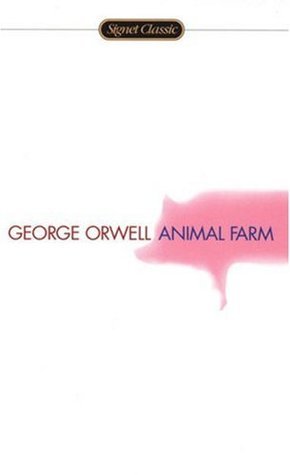
Librarian's note: There is an Alternate Cover Edition for this edition of this book here.A farm is taken over by its overworked, mistreated animals. With flaming idealism and stirring slogans, they set out to create a paradise of progress, justice, and equality. Thus the stage is set for one of the most telling satiric fables ever penned –a razor-edged fairy tale for grown-ups that records the evolution from revolution against tyranny to a totalitarianism just as terrible. When Animal Farm was first published, Stalinist Russia was seen as its target. Today it is devastatingly clear that wherever and whenever freedom is attacked, under whatever banner, the cutting clarity and savage comedy of George Orwell’s masterpiece have a meaning and message still ferociously fresh.

Between 1921 and 1933, Berlin developed a reputation for debauchery unrivaled by any city before or since. Unlike Paris, Barcelona, and Amsterdam, where brothel districts were extensive but discreet, in Berlin sexual tourism was a primary industry. On any given evening, over 600 establishments, from massage parlors to sex clubs to cabarets to private torture dungeons, promised unique sights and pleasures. Using tourist guidebooks that appeared before the Nazi period, historical memoirs, and more than 400 specialized journals and books, Mel Gordon has put together a provocative exploration of Berlin's erotic underground and its relationship to the rise of Nazism.This seductive sourcebook of rare visual delights from pre-Nazi, Cabaret-period “Babylon on the Spree” has the distinction of being praised both by scholars and avatars of contemporary culture, inspiring hip club goers, filmmakers, gay historians, graphic designers, and musicians like the Dresden Dolls and Marilyn Manson.This expanded edition includes “Sex Magic and the Occult,” documenting German pagan cults and their often-bizarre erotic rituals, including instructions for entering into the “Sexual Fourth Dimension.”Mel Gordon is professor of theater at the University of California, Berkeley, and is also the author of Erik Jan Hanussen: Hitler’s Jewish Clairvoyant (Feral House).

Librarian's note: Alternate cover editions can be found here, here, here and here.When a plane crashes on a remote island, a small group of schoolboys are the sole survivors. From the prophetic Simon and virtuous Ralph to the lovable Piggy and brutish Jack, each of the boys attempts to establish control as the reality - and brutal savagery - of their situation sets in.The boys' struggle to find a way of existing in a community with no fixed boundaries invites readers to evaluate the concepts involved in social and political constructs and moral frameworks. Ideas of community, leadership, and the rule of law are called into question as the reader has to consider who has a right to power, why, and what the consequences of the acquisition of power may be. Often compared to Catcher in the Rye, Lord of the Flies also represents a coming-of-age story of innocence lost.

"Who Moved My Cheese?" is a simple parable that reveals profound truths. It is an amusing and enlightening story of four characters who live in a "Maze" and look for "Cheese" to nourish them and make them happy.Two are mice named Sniff and Scurry. And two are "Littlepeople" - beings the size of mice who look and act a lot like people. Their names are Hem and Haw."Cheese" is a metaphor for what you want to have in life - whether it's a good job, a loving relationship, money, a possession, health, or spiritual peace of mind.And the "Maze" is where you look for what you want - the organisation you work in or the family or community you live in.In the story, the characters are faced with unexpected change. Eventually, one of them deals with it successfully, and writes what he has learned from his experience on the Maze walls.When you come to see "The Handwriting on the Wall," you can discover for yourself how to deal with change, so that you can enjoy less stress and more success (however you define it) in your work and in your life.Written for all ages, the story takes less than an hour to read, but its unique insights can last for a lifetime.

When Money Dies: The Nightmare of Deficit Spending, Devaluation, and Hyperinflation in Weimar Germany
by Adam Fergusson
Rating: 3.9 ⭐
• 3 recommendations ❤️
When Money Dies is the classic history of what happens when a nation's currency depreciates beyond recovery.In 1923, with its currency effectively worthless (the exchange rate in December of that year was one dollar to 4,200,000,000,000 marks), the German republic was all but reduced to a barter economy. Expensive cigars, artworks, and jewels were routinely exchanged for staples such as bread; a cinema ticket could be bought for a lump of coal; and a bottle of paraffin for a silk shirt. People watched helplessly as their life savings disappeared and their loved ones starved. Germany's finances descended into chaos, with severe social unrest in its wake.Money may no longer be physically printed and distributed in the voluminous quantities of 1923. However, "quantitative easing," that modern euphemism for surreptitious deficit financing in an electronic era, can no less become an assault on monetary discipline. Whatever the reason for a country's deficit -- necessity or profligacy, unwillingness to tax or blindness to expenditure -- it is beguiling to suppose that if the day of reckoning is postponed economic recovery will come in time to prevent higher unemployment or deeper recession. What if it does not? Germany in 1923 provides a vivid, compelling, sobering moral tale.
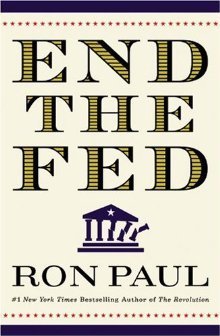
In the post-meltdown world, it is irresponsible, ineffective, and ultimately useless to have a serious economic debate without considering and challenging the role of the Federal Reserve.Most people think of the Fed as an indispensable institution without which the country's economy could not properly function. But in END THE FED, Ron Paul draws on American history, economics, and fascinating stories from his own long political life to argue that the Fed is both corrupt and unconstitutional. It is inflating currency today at nearly a Weimar or Zimbabwe level, a practice that threatens to put us into an inflationary depression where $100 bills are worthless. What most people don't realize is that the Fed -- created by the Morgans and Rockefellers at a private club off the coast of Georgia -- is actually working against their own personal interests. Congressman Paul's urgent appeal to all citizens and officials tells us where we went wrong and what we need to do fix America's economic policy for future generations.

Three Felonies A Day: How the Feds Target the Innocent
by Harvey A. Silverglate
Rating: 3.8 ⭐
• 2 recommendations ❤️
The average professional in this country wakes up in the morning, goes to work, comes home, eats dinner, and then goes to sleep, unaware that he or she has likely committed several federal crimes that day. Why? The answer lies in the very nature of modern federal criminal laws, which have exploded in number but also become impossibly broad and vague. In Three Felonies a Day, Harvey A. Silverglate reveals how federal criminal laws have become dangerously disconnected from the English common law tradition and how prosecutors can pin arguable federal crimes on any one of us, for even the most seemingly innocuous behavior. The volume of federal crimes in recent decades has increased well beyond the statute books and into the morass of the Code of Federal Regulations, handing federal prosecutors an additional trove of vague and exceedingly complex and technical prohibitions to stick on their hapless targets. The dangers spelled out in Three Felonies a Day do not apply solely to "white collar criminals," state and local politicians, and professionals. No social class or profession is safe from this troubling form of social control by the executive branch, and nothing less than the integrity of our constitutional democracy hangs in the balance.

Start-up Nation: The Story of Israel's Economic Miracle
by Dan Senor
Rating: 4.1 ⭐
• 2 recommendations ❤️
Danh sách chương Lời Nói Đầu Lời Giới Thiệu Chương 1: “Ngoan Cố” Chương 2: Doanh Nhân Trên Chiến Trường Chương 3: Nhân Vật Của Quyển Sách Chương 4: Harvard, Princeton Và Yale Chương 5: Nơi Trật Tự Gặp Hỗn Loạn Chương 6: Một Chính Sách Công Nghiệp Hiệu Quả Chương 7: Nhập Cư Chương 8: Cộng Đồng Do Thái Hải Ngoại Chương 9: Phép Thử Của Buffett Chương 10: Yozma Chương 11: Phản Bội Và Cơ Hội Chương 12: Từ Đầu Đạn Tên Lửa Đến Mạch Nước Phun Chương 13: Thế Lưỡng Nan Của Sheikh Chương 14: Các Mối Đe Dọa Đối Với Sự Thần Kỳ Của Nền Kinh Tế Kết Luận Lời Bạt Chú Thích “Quốc gia khởi nghiệp”là câu chuyện viết về sự phát triển thần kỳ của nền kinh tế Israel từ lúc lập quốc cho đến khi trở thành quốc gia có nền công nghệ hàng đầu thế giới. Quyển sách này có thể trả lời cho những thắc mắc làm thế nào một đất nước nhỏ bé lại có thể tồn tại giữa sự thù địch của các quốc gia lân cận, đối phó với những cuộc chiến giữ vững bờ cõi mà vẫn tạo ra sự sáng tạo vượt bậc trong các lĩnh vực công nghệ, quân sự và dân sự. Với ngòi bút sắc sảo, phong phú và tập trung những lời nhận xét thực tế từ những doanh nhân thành công hàng đầu, “Quốc gia khởi nghiệp” đã đem đến những cái nhìn mới mẻ về con người và đất nước Israel, làm sáng tỏ phần nào những thành công tưởng chừng như không tưởng của đất nước nhỏ bé này. Cá tính quyết liệt, dám thách thức và sáng tạo không ngừng của những con người Do Thái lưu vong, chạy trốn và sống sót sau những cuộc thảm sát trong Chiến tranh thế giới thứ II, không cam chịu cuộc sống nghèo khó, họ đã cùng với những người theo Chủ nghĩa Phục quốc Do Thái gầy dựng và bảo vệ đất nước Israel bằng chính sức lực của mình và khiến cả thế gi&

The gripping account of the out-of-control drug wars that have brought chaos to Mexico--and are now spilling into the United States.

Frisco Kid - bk647; Xenos Verlag; Jack London; Paperback; 1978

Trust Me, I'm Lying: Confessions of a Media Manipulator
by Ryan Holiday
Rating: 4.0 ⭐
• 7 recommendations ❤️
You've seen it all before. A malicious online rumor costs a company millions. A political sideshow derails the national news cycle and destroys a candidate. Some product or celebrity zooms from total obscurity to viral sensation. What you don’t know is that someone is responsible for all this. Usually, someone like me. I’m a media manipulator. In a world where blogs control and distort the news, my job is to control blogs—as much as any one person can. IN TODAY’S CULTURE…Blogs like Gawker, BuzzFeed, and The Huffington Post drive the media agenda. Bloggers are slaves to money, technology, and deadlines. Manipulators wield these levers to shape everything you read, see, and hear— online and off. Why am I giving away these secrets? Because I’m tired of a world where blogs take indirect bribes, marketers help write the news, reckless journalists spread lies, and no one is accountable for any of it. I’m going to explain exactly how the media really works. What you choose to do with this information is up to you.
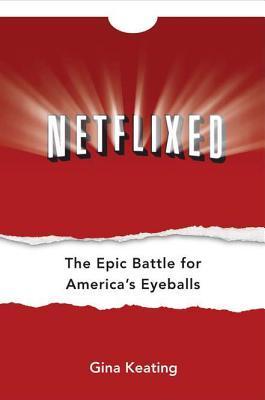
Netflix has come a long way since 1997, when two Silicon Valley entrepreneurs, Marc Randolph and Reed Hastings, decided to start an online DVD store before most people owned a DVD player. They were surprised and elated when launch-day traffic in April 1998 crashed their server and resulted in 150 sales. Today, Netflix has more than 25 million subscribers and annual revenues above $3 billion. Yet long- term success-or even survival-is still far from guaranteed. Journalist Gina Keating recounts the absorbing, fast-paced drama of the company's turbulent rise to the top and its attempt to invent two new kinds of business. First it engaged in a grueling war against video-store behemoth Blockbuster, transforming movie rental forever. Then it jumped into an even bigger battle for online video streaming against Google, Hulu, Amazon, and the big cable companies. Netflix ushered in such innovations as DVD rental by mail, a patented online queue of upcoming rentals, and a recommendation algorithm called Cinematch that proved crucial in its struggle against bigger rivals. Yet for all its success, Netflix is still a polarizing company. Hastings is often heralded as a visionary-he was named Business Person of the Year in 2010 by Fortune-even as he has been called the nation's worst CEO. Netflix also faces disgruntled customers after price increases and other stumbles that could tarnish the brand forever. The quest to become the world's portal for premium video on demand will determine nothing less than the future of entertainment and the Internet. Drawing on extensive new interviews and her years covering Netflix as a financial and entertainment reporter, Keating makes this tale as absorbing as it is important.

My Brother Ron: A Personal and Social History of the Deinstitutionalization of the Mentally Ill
by Clayton E. Cramer
Rating: 4.0 ⭐
• 2 recommendations ❤️
America started a grand experiment in the 1960 deinstitutionalization of the mentally ill. The consequences were very homelessness; a degradation of urban life; increases in violent crime rates; increasing death rates for the mentally ill. My Brother Ron tells the story of deinstitutionalization from two points of what happened to the author's older brother, part of the first generation of those who became mentally ill after deinstitutionalization, and a detailed history of how and why America went down this path. My Brother Ron examines the multiple strands that came together to create the perfect storm that was a well-meaning concern about the poor conditions of many state mental hospitals; a giddy optimism by the psychiatric profession in the ability of new drugs to cure the mentally ill; a rigid ideological approach to due process that ignored that the beneficiaries would end up starving to death or dying of exposure.

The groundbreaking theory of how fire and food drove the evolution of modern humansEver since Darwin and The Descent of Man , the evolution and world-wide dispersal of humans has been attributed to our intelligence and adaptability. But in Catching Fire , renowned primatologist Richard Wrangham presents a startling alternative: our evolutionary success is the result of cooking. In a groundbreaking theory of our origins, Wrangham shows that the shift from raw to cooked foods was the key factor in human evolution. Once our hominid ancestors began cooking their food, the human digestive tract shrank and the brain grew. Time once spent chewing tough raw food could be sued instead to hunt and to tend camp. Cooking became the basis for pair bonding and marriage, created the household, and even led to a sexual division of labor. In short, once our ancestors adapted to using fire, humanity began. Tracing the contemporary implications of our ancestors' diets, Catching Fire sheds new light on how we came to be the social, intelligent, and sexual species we are today. A pathbreaking new theory of human evolution, Catching Fire will provoke controversy and fascinate anyone interested in our ancient origins-or in our modern eating habits.

The Knowledge: How to Rebuild Civilization in the Aftermath of a Cataclysm
by Lewis Dartnell
Rating: 3.9 ⭐
• 5 recommendations ❤️
How would you go about rebuilding a technological society from scratch? If our technological society collapsed tomorrow, perhaps from a viral pandemic or catastrophic asteroid impact, what would be the one book you would want to press into the hands of the postapocalyptic survivors? What crucial knowledge would they need to survive in the immediate aftermath and to rebuild civilization as quickly as possible—a guide for rebooting the world? Human knowledge is collective, distributed across the population. It has built on itself for centuries, becoming vast and increasingly specialized. Most of us are ignorant about the fundamental principles of the civilization that supports us, happily utilizing the latest—or even the most basic—technology without having the slightest idea of why it works or how it came to be. If you had to go back to absolute basics, like some sort of postcataclysmic Robinson Crusoe, would you know how to re-create an internal combustion engine, put together a microscope, get metals out of rock, accurately tell time, weave fibers into clothing, or even how to produce food for yourself? Regarded as one of the brightest young scientists of his generation, Lewis Dartnell proposes that the key to preserving civilization in an apocalyptic scenario is to provide a quickstart guide, adapted to cataclysmic circumstances. The Knowledge describes many of the modern technologies we employ, but first it explains the fundamentals upon which they are built. Every piece of technology rests on an enormous support network of other technologies, all interlinked and mutually dependent. You can’t hope to build a radio, for example, without understanding how to acquire the raw materials it requires, as well as generate the electricity needed to run it. But Dartnell doesn’t just provide specific information for starting over; he also reveals the greatest invention of them all—the phenomenal knowledge-generating machine that is the scientific method itself. This would allow survivors to learn technological advances not explicitly explored in The Knowledge as well as things we have yet to discover. The Knowledge is a brilliantly original guide to the fundamentals of science and how it built our modern world as well as a thought experiment about the very idea of scientific knowledge itself.

The Three-Body Problem is the first chance for English-speaking readers to experience this multiple award winning phenomenon from China's most beloved science fiction author, Liu Cixin.Fans of hard SF will revel in this intricate and imaginative novel by one of China’s most celebrated genre writers. In 1967, physics professor Ye Zhetai is killed after he refuses to denounce the theory of relativity. His daughter, Ye Wenjie, witnesses his gruesome death.Shortly after, she’s falsely charged with sedition for promoting the works of environmentalist Rachel Carson, and told she can avoid punishment by working at a defense research facility involved with the search for extraterrestrial intelligence. More than 40 years later, Ye’s work becomes linked to a string of physicist suicides and a complex role-playing game involving the classic physics problem of the title.

How the basic concepts of economics—including markets, institutions, and money—can be used to create and analyze economies based on virtual goods.In the twenty-first-century digital world, virtual goods are sold for real money. Digital game players happily pay for avatars, power-ups, and other game items. But behind every virtual sale, there is a virtual economy, simple or complex. In this book, Vili Lehdonvirta and Edward Castronova introduce the basic concepts of economics into the game developer's and game designer's toolkits. Lehdonvirta and Castronova explain how the fundamentals of economics—markets, institutions, and money—can be used to create or analyze economies based on artificially scarce virtual goods. They focus on virtual economies in digital games, but also touch on serious digital currencies such as Bitcoin as well as virtual economies that emerge in social media around points, likes, and followers. The theoretical emphasis is on elementary microeconomic theory, with some discussion of behavioral economics, macroeconomics, sociology of consumption, and other social science theories relevant to economic behavior.Topics include the rational choice model of economic decision making; information goods versus virtual goods; supply, demand, and market equilibrium; monopoly power; setting prices; and externalities. The book will enable developers and designers to create and maintain successful virtual economies, introduce social scientists and policy makers to the power of virtual economies, and provide a useful guide to economic fundamentals for students in other disciplines.

A young girl digs up a thousand-year-old humanoid skull from a cave in northern Mexico. But the skull contains no human DNA. An amateur videographer taking footage of lights over Mount Shasta, California, captures a giant floating triangle on tape. It's not a plane. It's not a helicopter. What is it? These questions and more are answered in UFO Hunters Book Two . Using eyewitness accounts and information from footage never before seen on television, author William Birnes takes readers on the hunt for the real truth about flying saucers, what they are, and why they're here. This is the second companion to the popular HISTORY series and should delight fans in every way.

The founder and executive chairman of the World Economic Forum on how the impending technological revolution will change our livesWe are on the brink of the Fourth Industrial Revolution. And this one will be unlike any other in human history.Characterized by new technologies fusing the physical, digital and biological worlds, the Fourth Industrial Revolution will impact all disciplines, economies and industries - and it will do so at an unprecedented rate. World Economic Forum data predicts that by 2025 we will see: commercial use of nanomaterials 200 times stronger than steel and a million times thinner than human hair; the first transplant of a 3D-printed liver; 10% of all cars on US roads being driverless; and much more besides.In The Fourth Industrial Revolution, Schwab outlines the key technologies driving this revolution, discusses the major impacts on governments, businesses, civil society and individuals, and offers bold ideas for what can be done to shape a better future for all.

Pale Rider: The Spanish Flu of 1918 and How It Changed the World
by Laura Spinney
Rating: 4.0 ⭐
• 2 recommendations ❤️
In 1918, the Italian-Americans of New York, the Yupik of Alaska and the Persians of Mashed had almost nothing in common except for a virus--one that triggered the worst pandemic of modern times and had a decisive effect on the history of the twentieth century.The Spanish flu of 1918-1920 was one of the greatest human disasters of all time. It infected a third of the people on Earth--from the poorest immigrants of New York City to the king of Spain, Franz Kafka, Mahatma Gandhi and Woodrow Wilson. But despite a death toll of between 50 and 100 million people, it exists in our memory as an afterthought to World War I.In this gripping narrative history, Laura Spinney traces the overlooked pandemic to reveal how the virus travelled across the globe, exposing mankind's vulnerability and putting our ingenuity to the test. As socially significant as both world wars, the Spanish flu dramatically disrupted--and often permanently altered--global politics, race relations and family structures, while spurring innovation in medicine, religion and the arts. It was partly responsible, Spinney argues, for pushing India to independence, South Africa to apartheid and Switzerland to the brink of civil war. It also created the true "lost generation." Drawing on the latest research in history, virology, epidemiology, psychology and economics, Pale Rider masterfully recounts the little-known catastrophe that forever changed humanity.

From an award-winning scholar comes this definitive, single-volume history that illuminates the tensions and transformations of the Russian Revolution.In The Russian Revolution , acclaimed historian Sean McMeekin traces the events which ended Romanov rule, ushered the Bolsheviks into power, and introduced communism to the world. Between 1917 and 1922, Russia underwent a complete and irreversible transformation. Taking advantage of the collapse of the Tsarist regime in the middle of World War I, the Bolsheviks staged a hostile takeover of the Russian Imperial Army, promoting mutinies and mass desertions of men in order to fulfill Lenin’s program of turning the “imperialist war” into civil war. By the time the Bolsheviks had snuffed out the last resistance five years later, over twenty million people had died, and the Russian economy had collapsed so completely that communism had to be temporarily abandoned. The first comprehensive history of these momentous events in over two decades, The Russian Revolution combines cutting-edge scholarship and a fast-paced narrative to shed new light on one of the most significant turning points of the twentieth century.

The Truth Machine: The Blockchain and the Future of Everything
by Michael J. Casey
Rating: 3.6 ⭐
• 2 recommendations ❤️
"Views differ on bitcoin, but few doubt the transformative potential of Blockchain technology. The Truth Machine is the best book so far on what has happened and what may come along. It demands the attention of anyone concerned with our economic future." --Lawrence H. Summers, Charles W. Eliot University Professor and President Emeritus at Harvard, Former Treasury SecretaryFrom Michael J. Casey and Paul Vigna, the authors of The Age of Cryptocurrency, comes the definitive work on the Internet's Next Big Thing: The Blockchain.Big banks have grown bigger and more entrenched. Privacy exists only until the next hack. Credit card fraud is a fact of life. Many of the "legacy systems" once designed to make our lives easier and our economy more efficient are no longer up to the task. Yet there is a way past all this--a new kind of operating system with the potential to revolutionize vast swaths of our economy: the blockchain.In The Truth Machine, Michael J. Casey and Paul Vigna demystify the blockchain and explain why it can restore personal control over our data, assets, and identities; grant billions of excluded people access to the global economy; and shift the balance of power to revive society's faith in itself. They reveal the disruption it promises for industries including finance, tech, legal, and shipping.Casey and Vigna expose the challenge of replacing trusted (and not-so-trusted) institutions on which we've relied for centuries with a radical model that bypasses them. The Truth Machine reveals the empowerment possible when self-interested middlemen give way to the transparency of the blockchain, while highlighting the job losses, assertion of special interests, and threat to social cohesion that will accompany this shift. With the same balanced perspective they brought to The Age of Cryptocurrency, Casey and Vigna show why we all must care about the path that blockchain technology takes--moving humanity forward, not backward.

Merchants of Truth: The Business of Facts and The Future of News
by Jill Abramson
Rating: 3.7 ⭐
• 2 recommendations ❤️
A report on the disruption of the news media over the last decade. With the guidance of former Executive Editor of The New York Times Jill Abramson, we follow two legacy (The New York Times and The Washington Post) and two upstart (BuzzFeed and VICE) companies as they plow through a revolution in technology, economics, standards, commitment, and endurance that pits old vs. new media.Merchants of Truth is the groundbreaking and gripping story of the precarious state of the news business told by one of our most eminent journalists.Jill Abramson follows four companies: The New York Times, The Washington Post, BuzzFeed, and VICE Media over a decade of disruption and radical adjustment. The new digital reality nearly kills two venerable newspapers with an aging readership while creating two media behemoths with a ballooning and fickle audience of millennials. We get to know the defenders of the legacy presses as well as the outsized characters who are creating the new speed-driven media competitors. The players include Jeff Bezos and Marty Baron (The Washington Post), Arthur Sulzberger and Dean Baquet (The New York Times), Jonah Peretti (BuzzFeed), and Shane Smith (VICE) as well as their reporters and anxious readers.Merchants of Truth raises crucial questions that concern the well-being of our society. We are facing a crisis in trust that threatens the free press. Abramson’s book points us to the future.

Unelected Power: The Quest for Legitimacy in Central Banking and the Regulatory State
by Paul Tucker
Rating: 4.0 ⭐
• 2 recommendations ❤️
How central banks and independent regulators can support rather than challenge constitutional democracyUnelected Power lays out the principles needed to ensure that central bankers and other independent regulators act as stewards of the common good. Blending economics, political theory, and public law, this critically important book explores the necessary conditions for delegated but politically insulated power to be legitimate in the eyes of constitutional democracy and the rule of law. It explains why the solution must fit with how real-world government is structured, and why technocrats and their political overseers need incentives to make the system work as intended. Now with a new preface by Paul Tucker, Unelected Power explains how the regulatory state need not be a fourth branch of government free to steer by its own lights, and how central bankers can emulate the best of judicial self-restraint.
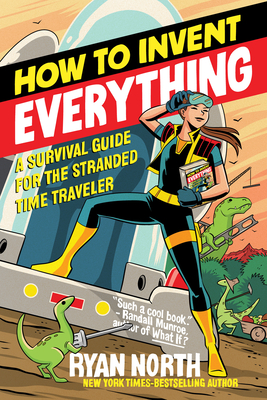
How to Invent Everything: A Survival Guide for the Stranded Time Traveler
by Ryan North
Rating: 4.3 ⭐
• 1 recommendation ❤️
"How to Invent Everything is such a cool book. It's essential reading for anyone who needs to duplicate an industrial civilization quickly." --Randall Munroe, xkcd creator and New York Times-bestselling author of What If? The only book you need if you're going back in timeWhat would you do if a time machine hurled you thousands of years into the past. . . and then broke? How would you survive? Could you improve on humanity's original timeline? And how hard would it be to domesticate a giant wombat?With this book as your guide, you'll survive--and thrive--in any period in Earth's history. Bestselling author and time-travel enthusiast Ryan North shows you how to invent all the modern conveniences we take for granted--from first principles. This illustrated manual contains all the science, engineering, art, philosophy, facts, and figures required for even the most clueless time traveler to build a civilization from the ground up. Deeply researched, irreverent, and significantly more fun than being eaten by a saber-toothed tiger, How to Invent Everything will make you smarter, more competent, and completely prepared to become the most important and influential person ever. You're about to make history. . . better.

On Desperate Ground: The Marines at The Reservoir, the Korean War's Greatest Battle
by Hampton Sides
Rating: 4.5 ⭐
• 1 recommendation ❤️
From the New York Times bestselling author of Ghost Soldiers and In the Kingdom of Ice, a chronicle of the extraordinary feats of heroism by Marines called on to do the impossible during the greatest battle of the Korean WarOn October 15, 1950, the vainglorious General Douglas MacArthur, Supreme Commander of U.N. troops in Korea, convinced President Harry Truman that the communist forces would be utterly defeated by Thanksgiving. The Chinese, he said with near certainty, would not intervene in the war. As he was speaking, 300,000 Chinese soldiers began crossing the border. Led by the 13,000 men of the 1st Marine Division, the Americans moved far north into the trap Mao had set for the arrogant MacArthur at the Chosin Reservoir. What followed was one of the most heroic - and harrowing - operations in American military history. Faced with annihilation, and temperatures plunging to 20 degrees below zero, the surrounded Marines fought through the enemy forces with ferocity, ingenuity and nearly unimaginable courage. Hampton Sides's superb account of the battle relies on years of archival research and interviews with scores of Marines and Koreans who survived the siege. While expertly chronicling the follies of the American leaders, this is an immediate, grunt's-eye view of history, enthralling in its narrative pace and powerful in its portrayal of what ordinary men are capable of in the most extreme circumstances.

Pandemic 1918: Eyewitness Accounts from the Greatest Medical Holocaust in Modern History
by Catharine Arnold
Rating: 3.8 ⭐
• 4 recommendations ❤️
Before AIDS or Ebola, there was the Spanish Flu -- This narrative history marks the 100th anniversary of an epidemic that altered world history.In January 1918, as World War I raged on, a new and terrifying virus began to spread across the globe. In three successive waves, from 1918 to 1919, influenza killed more than 50 million people world-wide. German soldiers termed it Blitzkatarrh, British soldiers referred to it as Flanders Grippe, but world-wide, the pandemic gained the notorious title of "Spanish Flu." Nowhere on earth escaped: the United States recorded 550,000 deaths (five times its total military fatalities in the war) while European deaths totaled over two million.Amid the war, some governments suppressed news of the outbreak. Even as entire battalions were decimated, with both the Allies and the Germans suffering massive casualties, the details of many servicemen's deaths were hidden to protect public morale. Meanwhile, civilian families were being struck down in their homes. The City of Philadelphia ran out of gravediggers and coffins, and mass burial trenches had to be excavated with steam shovels. Spanish flu conjured up the specter of the Black Death of 1348 and the great plague of 1665, while the medical profession, shattered after five terrible years of conflict, lacked the resources to contain and defeat this new enemy.Through primary and archival sources, historian Catharine Arnold gives readers the first truly global account of the terrible epidemic.

How the Internet Happened: From Netscape to the iPhone
by Brian McCullough
Rating: 4.3 ⭐
• 4 recommendations ❤️
A Library Journal Best Book of the Year Tech-guru Brian McCullough delivers a rollicking history of the internet, why it exploded, and how it changed everything. The internet was never intended for you, opines Brian McCullough in this lively narrative of an era that utterly transformed everything we thought we knew about technology. In How the Internet Happened , he chronicles the whole fascinating story for the first time, beginning in a dusty Illinois basement in 1993, when a group of college kids set off a once-in-an-epoch revolution with what would become the first “dotcom.” Depicting the lives of now-famous innovators like Netscape’s Marc Andreessen and Facebook’s Mark Zuckerberg, McCullough also reveals surprising quirks and unknown tales as he tracks both the technology and the culture around the internet’s rise. Cinematic in detail and unprecedented in scope, the result both enlightens and informs as it draws back the curtain on the new rhythm of disruption and innovation the internet fostered, and helps to redefine an era that changed every part of our lives.

In the 19th century, the world was Europeanized. In the 20th century, it was Americanized. Now, in the 21st century, the world is being Asianized.The “Asian Century” is even bigger than you think. Far greater than just China, the new Asian system taking shape is a multi-civilizational order spanning Saudi Arabia to Japan, Russia to Australia, Turkey to Indonesia—linking five billion people through trade, finance, infrastructure, and diplomatic networks that together represent 40 percent of global GDP. China has taken a lead in building the new Silk Roads across Asia, but it will not lead it alone. Rather, Asia is rapidly returning to the centuries-old patterns of commerce, conflict, and cultural exchange that thrived long before European colonialism and American dominance. Asians will determine their own future—and as they collectively assert their interests around the world, they will determine ours as well.There is no more important region of the world for us to better understand than Asia – and thus we cannot afford to keep getting Asia so wrong. Asia’s complexity has led to common Western thinking on Asia conflates the entire region with China, predicts imminent World War III around every corner, and regularly forecasts debt-driven collapse for the region’s major economies. But in reality, the region is experiencing a confident new wave of growth led by younger societies from India to the Philippines, nationalist leaders have put aside territorial disputes in favor of integration, and today’s infrastructure investments are the platform for the next generation of digital innovation.If the nineteenth century featured the Europeanization of the world, and the twentieth century its Americanization, then the twenty-first century is the time of Asianization. From investment portfolios and trade wars to Hollywood movies and university admissions, no aspect of life is immune from Asianization. With America’s tech sector dependent on Asian talent and politicians praising Asia’s glittering cities and efficient governments, Asia is permanently in our nation’s consciousness. We know this will be the Asian century. Now we finally have an accurate picture of what it will look like.

In Where Is My Flying Car?, engineer and futurist J. Storrs Hall sets out to answer the deceptively simple question posed in the book’s title. What starts as an exploration of the technical limitations of building flying cars evolves into an examination of the global economic stagnation that started in the 1970s. From the failure to adopt nuclear energy and the suppression of cold fusion and nanotechnology to the rise of a counterculture hostile to progress, Hall recounts how our collective ambitions for the future were derailed, with devastating consequences for global wealth creation and distribution. Hall then outlines a framework for a future powered by exponential progress—one in which we build as much in the world of atoms as we do in the world of bits, one rich in abundance and wonder.

Physics from Finance: A gentle introduction to gauge theories, fundamental interactions and fiber bundles
by Jakob Schwichtenberg
Rating: 4.4 ⭐
• 2 recommendations ❤️
Understanding modern physics doesn’t have to be confusing and hard What if there was an intuitive way to understand how nature fundamentally works? What if there was a book that allowed you to see the whole picture and not just tiny parts of it? Thoughts like this are the reason that Physics from Finance now exists. What will you learn from this book? Get to know all fundamental interactions —Grasp how we can describe electromagnetic interactions, weak interactions, strong interactions and gravity using the same key ideas. Learn how to describe modern physics mathematically — Understand the meaning and origin of the Einstein equation, Maxwell’s equations, and the Schrödinger equation. Develop an intuitive understanding of key concepts — Read how we can understand abstract ideas like Gauge Symmetry, Internal Spaces, Gauge Fields, Connections and Curvature using a simple toy model of the financial market. Get an understanding you can be proud of — Learn why fiber bundles and group theory provide a unified framework for all modern theories of physics. Physics from Finance is the most reader-friendly book on the geometry of modern physics ever written. Here’s why. First of all, it's is nothing like a formal university lecture. Instead, it’s like a casual conservation with a more experienced student. This also means that nothing is assumed to be “obvious” or “easy to see”. Each chapter, each section, and each page focusses solely on the goal to help you understand. Nothing is introduced without a thorough motivation and it is always clear where each formula comes from. The book contains no fluff since unnecessary content quickly leads to confusion. Instead, it ruthlessly focusses on the fundamentals and makes sure you’ll understand them in detail. The primary focus on the readers’ needs is also visible in dozens of small features that you won’t find in any other textbook In total, the book contains more than 100 illustrations that help you understand the most important concepts visually. Whenever a concept is used which was already introduced previously, there is a short sidenote that reminds you where it was first introduced and often recites the main points. In addition, helpful diagrams make sure you won’t get lost.

How Innovation Works: Serendipity, Energy and the Saving of Time
by Matt Ridley
Rating: 3.7 ⭐
• 6 recommendations ❤️
‘Ridley is spot-on when it comes to the vital ingredients for success’ Sir James DysonBuilding on his bestseller The Rational Optimist, Matt Ridley chronicles the history of innovation, and how we need to change our thinking on the subject.Innovation is the main event of the modern age, the reason we experience both dramatic improvements in our living standards and unsettling changes in our society. It is innovation that will shape the twenty-first century. Yet innovation remains a mysterious process, poorly understood by policy makers and businessmen alike.Matt Ridley argues that we need to see innovation as an incremental, bottom-up, fortuitous process that happens as a direct result of the human habit of exchange, rather than an orderly, top-down process developing according to a plan. Innovation is crucially different from invention, because it is the turning of inventions into things of practical and affordable use to people. It speeds up in some sectors and slows down in others. It is always a collective, collaborative phenomenon, involving trial and error, not a matter of lonely genius. It still cannot be modelled properly by economists, but it can easily be discouraged by politicians. Far from there being too much innovation, we may be on the brink of an innovation famine.Ridley derives these and other lessons from the lively stories of scores of innovations – from steam engines to search engines – how they started and why they succeeded or failed.

The Kill Chain: Defending America in the Future of High-Tech Warfare
by Christian Brose
Rating: 4.1 ⭐
• 1 recommendation ❤️
For generations of Americans, our country has been the world's dominant military power. How the US military fights, and the systems and weapons that it fights with, have been uncontested. That old reality, however, is rapidly deteriorating. America's traditional sources of power are eroding amid the emergence of new technologies and the growing military threat posed by rivals such as China. America is at grave risk of losing a future war.As Christian Brose reveals in this urgent wake-up call, the future will be defined by artificial intelligence, autonomous systems, and other emerging technologies that are revolutionizing global industries and are now poised to overturn the model of American defense. This fascinating, if disturbing, book confronts the existential risks on the horizon, charting a way for America's military to adapt and succeed with new thinking as well as new technology. America must build a battle network of systems that enables people to rapidly understand threats, make decisions, and take military actions, the process known as "the kill chain." Examining threats from China, Russia, and elsewhere, The Kill Chain offers hope and, ultimately, insights on how America can apply advanced technologies to prevent war, deter aggression, and maintain peace

Has China Won? The Chinese Challenge to American Primacy
by Kishore Mahbubani
Rating: 4.0 ⭐
• 4 recommendations ❤️
The defining geopolitical contest of the twenty-first century is between China and the US. But is it avoidable? And if it happens, is the outcome already inevitable?China and America are world powers without serious rivals. They eye each other warily across the Pacific; they communicate poorly; there seems little natural empathy. A massive geopolitical contest has begun.America prizes freedom; China values freedom from chaos.America values strategic decisiveness; China values patience.America is becoming society of lasting inequality; China a meritocracy.America has abandoned multilateralism; China welcomes it.Kishore Mahbubani, a diplomat and scholar with unrivalled access to policymakers in Beijing and Washington, has written the definitive guide to the deep fault lines in the relationship, a clear-eyed assessment of the risk of any confrontation, and a bracingly honest appraisal of the strengths and weaknesses, and superpower eccentricities, of the US and China.

The Little Bitcoin Book: Why Bitcoin Matters for Your Freedom, Finances, and Future
by Bitcoin Collective
Rating: 4.3 ⭐
• 4 recommendations ❤️
You've probably heard about Bitcoin on the news or heard it being discussed by your friends or colleagues. How come the price keeps changing? Is Bitcoin a good investment? How does it even have value? Why do people keep talking about it like it's going to change the world?The Little Bitcoin Book tells the story of what's wrong with money today, and why Bitcoin was invented to provide an alternative to the current system. It describes in simple terms what Bitcoin is, how it works, why it's valuable, and how it affects individual freedom and opportunities of people everywhere - from Nigeria to the Philippines to Venezuela to the United States. This book also includes a Q & A section with some of the most frequently asked questions about Bitcoin.If you want to learn more about this new form of money which continues to gain interest and adoption around the world, then this book is for you.

The Great CEO Within: The Tactical Guide to Company Building
by Matt Mochary
Rating: 4.5 ⭐
• 11 recommendations ❤️
Matt Mochary coaches the CEOs of many of the fastest-scaling technology companies in Silicon Valley. With The Great CEO Within , he shares his highly effective leadership and business-operating tools with any CEO or manager in the world. Learn how to efficiently scale your business from startup to corporation by implementing a system of accountability, effective problem-solving, and transparent feedback. Becoming a great CEO requires training. For a founding CEO, there is precious little time to complete that training, especially at the helm of a rapidly growing company. Now you have the guidance you need in one book.

Popular consensus says that the US rose over two centuries to Cold War victory and world domination, and is now in slow decline. But is this right? History's great civilizations have always lasted much longer, and for all its colossal power, American culture was overshadowed by Europe until recently. What if this isn't the end?In History Has Begun , Bruno Maçães offers a compelling vision of America's future, both fascinating and unnerving. From the early American Republic, he takes us to the turbulent present, when, he argues, America is finally forging its own path. We can see the birth pangs of this new civilization in today's debates on guns, religion, foreign policy and the significance of Trump. Should the coronavirus pandemic be regarded as an opportunity to build a new kind of society? What will its values be, and what will this new America look like? Maçães traces the long arc of US history to argue that in contrast to those who see the US on the cusp of decline, it may well be simply shifting to a new model, one equally powerful but no longer liberal. Consequently, it is no longer enough to analyze America's current trajectory through the simple prism of decline vs. progress, which assumes a static model-America as liberal leviathan. Rather, Maçães argues that America may be casting off the liberalism that has defined the country since its founding for a new model, one more appropriate to succeeding in a transformed world.
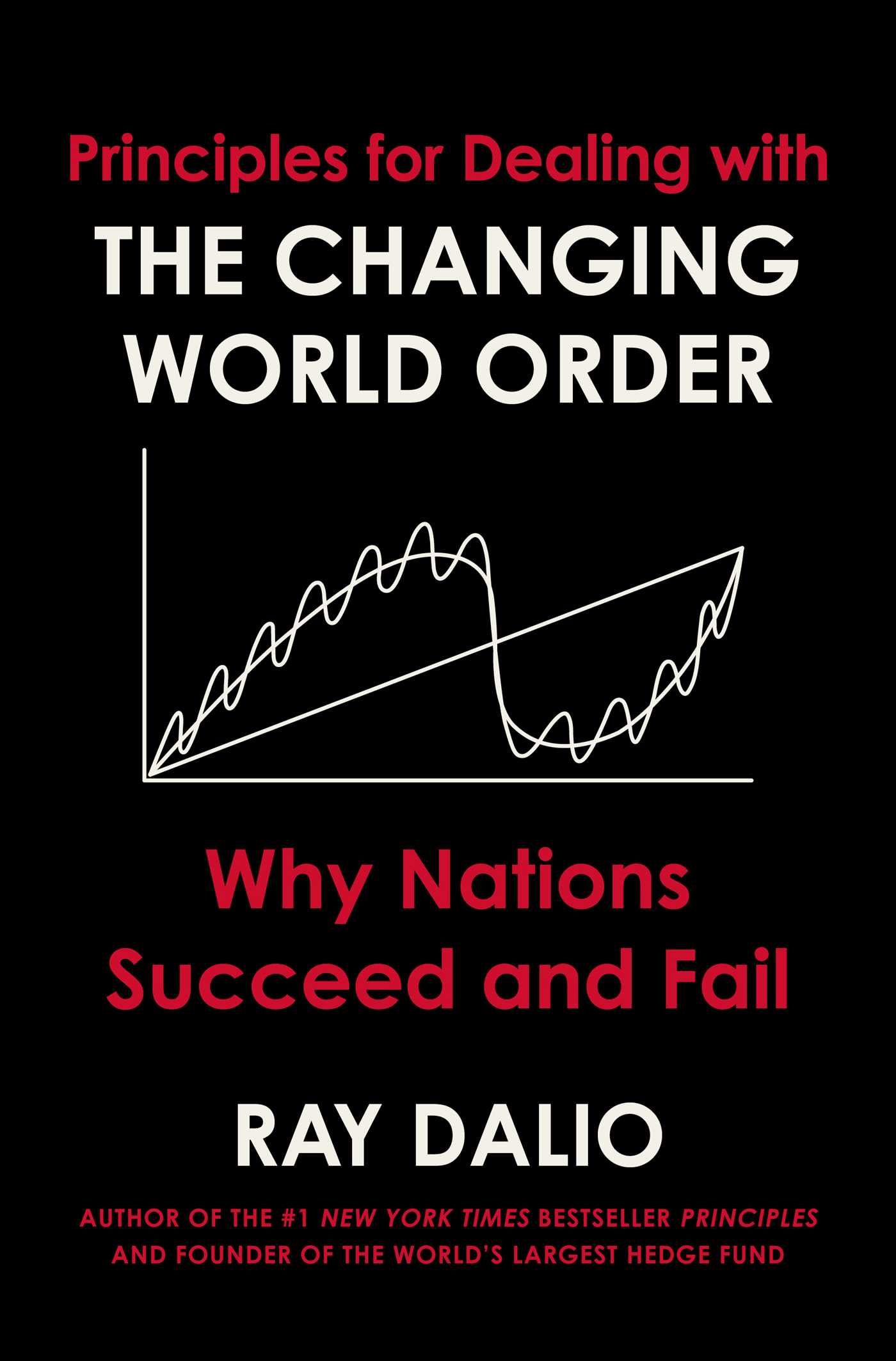
Principles for Dealing with the Changing World Order: Why Nations Succeed and Fail
by Ray Dalio
Rating: 4.3 ⭐
• 21 recommendations ❤️
From legendary investor Ray Dalio, author of the #1 New York Times bestseller Principles, who has spent half a century studying global economies and markets, Principles for Dealing with the Changing World Order examines history’s most turbulent economic and political periods to reveal why the times ahead will likely be radically different from those we’ve experienced in our lifetimes—and to offer practical advice on how to navigate them well.A few years ago, Ray Dalio noticed a confluence of political and economic conditions he hadn’t encountered before. They included huge debts and zero or near-zero interest rates that led to massive printing of money in the world’s three major reserve currencies; big political and social conflicts within countries, especially the US, due to the largest wealth, political, and values disparities in more than 100 years; and the rising of a world power (China) to challenge the existing world power (US) and the existing world order. The last time that this confluence occurred was between 1930 and 1945. This realization sent Dalio on a search for the repeating patterns and cause/effect relationships underlying all major changes in wealth and power over the last 500 years.In this remarkable and timely addition to his Principles series, Dalio brings readers along for his study of the major empires—including the Dutch, the British, and the American—putting into perspective the “Big Cycle” that has driven the successes and failures of all the world’s major countries throughout history. He reveals the timeless and universal forces behind these shifts and uses them to look into the future, offering practical principles for positioning oneself for what’s ahead.

Complete Dune Series Set ( 6 Books ) Dune; Dune Messiah; Children of Dune; God Emperor of Dune; Heretics of Dune; Chapterhouse Dune
by Frank Herbert
Rating: 4.5 ⭐
• 3 recommendations ❤️
This Dune series includes the following 6 Dune, Dune Messiah, Children of Dune, God Emperor of Dune, Heretics of Dune, Dune. Book 1 Frank Herbert’s classic masterpiece—a triumph of the imagination and one of the bestselling science fiction novels of all time. A mythic and emotionally charged hero’s journey, Dune tells the story of Paul Atreides, a brilliant and gifted young man born into a great destiny beyond his understanding, who must travel to the most dangerous planet in the universe to ensure the future of his family and his people. As malevolent forces explode into conflict over the planet’s exclusive supply of the most precious resource in existence—a commodity capable of unlocking humanity’s greatest potential—only those who can conquer their fear will survive. Book 2 Dune Dune Messiah continues the story of Paul Atreides, better known—and feared—as the man christened Muad’Dib. As Emperor of the known universe, he possesses more power than a single man was ever meant to wield. Worshipped as a religious icon by the fanatical Fremen, Paul faces the enmity of the political houses he displaced when he assumed the throne—and a conspiracy conducted within his own sphere of influence. Book 3 Children of The Children of Dune are twin siblings Leto and Ghanima Atreides, whose father, the Emperor Paul Muad’Dib, disappeared in the desert wastelands of Arrakis nine years ago. Like their father, the twins possess supernormal abilities—making them valuable to their manipulative aunt Alia, who rules the Empire in the name of House Atreides. Alia believes that by obtaining the secrets of the twins’ prophetic visions, she can maintain control over her dynasty. With millions of copies sold worldwide, Frank Herbert’s magnificent Dune novels stand among the major achievements of the human imagination as one of the most significant sagas in the history of literary science fiction.

Working in Public: The Making and Maintenance of Open Source Software
by Nadia Eghbal
Rating: 3.9 ⭐
• 4 recommendations ❤️
An inside look at modern open source software developers--and their applications to, and influence on, our online social world."Nadia is one of today's most nuanced thinkers about the depth and potential of online communities, and this book could not have come at a better time." --Devon Zuegel, director of product, communities at GitHubOpen source software--in which developers publish code that anyone can use--has long served as a bellwether for other online behavior. In the late 1990s, it provided an optimistic model for public

An instant New York Times Bestseller!“Consider this another vaccine against disaster. Fortunately, this dose won't cause a temporary fever—and it happens to be a rippingly good read.” — Wired“This crisply written and well-paced book reads like an all-caps warning for a world shackled to the machines we carry in our pockets and place on our laps . . ." — The Washington PostFrom two former military officers and award-winning authors, a chillingly authentic geopolitical thriller that imagines a naval clash between the US and China in the South China Sea in 2034 — and the path from there to a nightmarish global conflagration.On March 12, 2034, US Navy Commodore Sarah Hunt is on the bridge of her flagship, the guided missile destroyer USS John Paul Jones , conducting a routine freedom of navigation patrol in the South China Sea when her ship detects an unflagged trawler in clear distress, smoke billowing from its bridge. On that same day, US Marine aviator Major Chris "Wedge" Mitchell is flying an F35E Lightning over the Strait of Hormuz, testing a new stealth technology as he flirts with Iranian airspace. By the end of that day, Wedge will be an Iranian prisoner, and Sarah Hunt's destroyer will lie at the bottom of the sea, sunk by the Chinese Navy. Iran and China have clearly coordinated their moves, which involve the use of powerful new forms of cyber weaponry that render US ships and planes defenseless. In a single day, America's faith in its military's strategic pre-eminence is in tatters. A new, terrifying era is at hand.So begins a disturbingly plausible work of speculative fiction, co-authored by an award-winning novelist and decorated Marine veteran and the former commander of NATO, a legendary admiral who has spent much of his career strategically outmaneuvering America's most tenacious adversaries. Written with a powerful blend of geopolitical sophistication and human empathy, 2034 takes us inside the minds of a global cast of characters--Americans, Chinese, Iranians, Russians, Indians--as a series of arrogant miscalculations on all sides leads the world into an intensifying international storm. In the end, China and the United States will have paid a staggering cost, one that forever alters the global balance of power.Everything in 2034 is an imaginative extrapolation from present-day facts on the ground combined with the authors' years working at the highest and most classified levels of national security. Sometimes it takes a brilliant work of fiction to illuminate the most dire of 2034 is all too close at hand, and this cautionary tale presents the reader a dark yet possible future that we must do all we can to avoid.

An expert’s take on how a coup in China could launch a transition to democracy.This short book predicts—contrary to the prevailing consensus—that China’s leader Xi Jinping will very soon be removed from office in a coup d’état mounted by rivals in the top leadership. The leaders of the coup will then end China’s one-party dictatorship and launch a transition to democracy and the rule of law. Long-time diplomat and development banker Roger Garside draws on his deep knowledge of Chinese politics and economics first to develop a detailed scenario of how these events may unfold, and then—in the main body of the book—to explain why . His gripping, persuasive account of how Chinese leaders plot and plan away from the public eye is unique in published literature. Garside argues that under Xi’s overconfident leadership, China is on a collision course with an America that is newly awakened out of complacency. As Xi’s rivals look abroad, they are alarmed that he is blind to the reactions that China’s actions have provoked from the world’s strongest power and its allies. In domestic affairs, Xi’s rivals recognize that economic and social change without political reform have created problems that require not just new leaders but a new system of government. Security abroad and stability at home demand a revolution to which Xi is implacably opposed. To save China—and themselves—from catastrophe, they must remove him and end the dictatorship he is determined to defend. But their will and capacity to do so depend crucially on how liberal democracies act. Garside’s scenario shows America leading its allies in creating the conditions in which Xi’s rivals move against him.
The Cold Start Problem: How to Start and Scale Network Effects
by Andrew Chen
Rating: 4.2 ⭐
• 3 recommendations ❤️
A venture capitalist draws on expertise developed at the premier venture capital firm, Andreessen Horowitz, and as an executive at Uber to address how tech’s most successful products have solved the dreaded "cold start problem”—by leveraging networks effects to launch and scale towards billions of users. Although software has become easier to build, launching and scaling new products and services remains difficult. Startups face daunting challenges entering the technology ecosystem, including stiff competition, copycats, and ineffective marketing channels. Teams launching new products must consider the advantages of “the network effect,” where a product or service’s value increases as more users engage with it. Apple, Google, Microsoft, and other tech giants utilize network effects, and most tech products incorporate them, whether they’re messaging apps, workplace collaboration tools, or marketplaces. Network effects provide a path for fledgling products to break through, attracting new users through viral growth and word of mouth.Yet most entrepreneurs lack the vocabulary and context to describe them—much less understand the fundamental principles that drive the effect. What exactly are network effects? How do teams create and build them into their products? How do products compete in a market where every player has them? Andrew Chen draws on his experience and on interviews with the CEOs and founding teams of LinkedIn, Twitch, Zoom, Dropbox, Tinder, Uber, Airbnb, Pinterest — to provide unique insights in answering these questions. Chen also provides practical frameworks and principles that can be applied across products and industries. The Cold Start Problem reveals what makes winning networks successful, why some startups fail to successfully scale, and most crucially, why products that create and compete using the network effect are vitally important today.

The Gray Lady Winked: How the New York Times's Misreporting, Distortions and Fabrications Radically Alter History
by Ashley Rindsberg
Rating: 4.1 ⭐
• 6 recommendations ❤️
“The New York Times is by far the most influential newspaper in the world and thus receives far too little journalistic scrutiny due to its power to affect careers. Any book that casts a critical eye on the Paper of Record's history, as this book does, is performing a valuable service.” — Glenn Greenwald, Journalist & New York Time s Bestselling Author As flagship of the American news media, the New York Time s is the world’s most powerful news outlet. With thousands of reporters covering events from all corners of the globe, the Times has the power to influence wars, foment revolution, shape economies and change the very nature of our culture. It doesn’t just cover the news: it creates it. The Gray Lady Winked pulls back the curtain on this illustrious institution to reveal a quintessentially human organization where ideology, ego, power and politics compete with the more humble need to present the facts. In its 10 gripping chapters, The Gray Lady Winked offers readers an eye-opening, often shocking, look at the New York Times’s greatest journalistic failures, so devastating they changed the course of history. The result is an essential look at the tangled relationship between media, power and politics in a post-truth world told with novelistic flair to reveal a uniquely powerful institution’s tortured relationship with the truth. Most importantly of all, The Gray Lady Winked presents a cautionary tale that shows what happens when the guardians of the truth abandon that sacred value in favor of self-interest and ideology—and what this means for our future as much as for our past. “For 99 years—since a 1922 description of Hitler as someone ‘actuated by lofty, unselfish patriotism’—it has labored under the shadow of its dynastic owners' triad of problems: capitalist guilt, Jewish self-hatred, and an ambition for power, wealth, and status. — Daniel Pipes, President, Middle East Forum

Civil wars are the biggest danger to world peace today - this book shows us why they happen, and how to avoid them.Most of us don't know it, but we are living in the world's greatest era of civil wars. While violence has declined worldwide, civil wars have increased. This is a new phenomenon. With the exception of a handful of cases - the American and English civil wars, the French Revolution - historically it has been rare for people to organise and fight their governments. This has changed. Since 1946, over 250 armed conflicts have broken out around the world, a number that continues to rise. Major civil wars are now being fought in countries including Iraq, Syria and Libya. Smaller civil wars are being fought in Ukraine, India, and Malaysia. Even countries we thought could never experience another civil war - such as the USA, Sweden and Ireland - are showing signs of unrest.In How Civil Wars Start, acclaimed expert Barbara F. Walter, who has advised on political violence everywhere from the CIA to the U.S. Senate to the United Nations, explains the rise of civil war and the conditions that create it. As democracies across the world backslide and citizens become more polarised, civil wars will become even more widespread and last longer than they have in the past. This urgent and important book shows us a path back toward peace.