
Aryeh Bourkoff Recommended Books
American businessman
14 Books Recommended
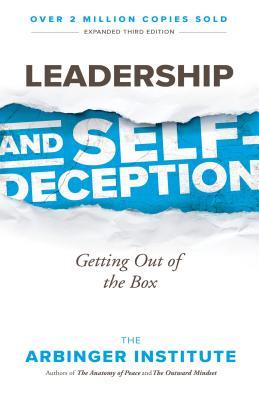
Leadership and Self-Deception: Getting Out of the Box
by Arbinger Institute
Rating: 4.1 ⭐
• 7 recommendations ❤️
Since its original publication in 2000, Leadership and Self-Deception has become a word-of-mouth phenomenon. Its sales continue to increase year after year, and the book's popularity has gone global, with editions now available in over twenty languages.Leadership and Self-Deception shows how the problems that typically prevent superior performance in organizations and cause conflicts in our personal lives are the result of a little-known problem called self-deception. People who are in self-deception live and work as if trapped in a box. They can't see the reality around them--they're blind to the self-serving motivations that are sabotaging them on the job and at home. But there is a way out. Through an entertaining and engaging story, Leadership and Self-Deception shows what self-deception is, how it operates, the damage it does, and, most importantly, what can be done about it.This third edition includes new research about the self-deception gap in organizations and the keys to closing this gap so that people take responsibility for their own problems and for organizational problems. It also includes the first chapter from Arbinger's latest bestseller, The Outward Mindset.

A retelling of an old Mexican folk tale involving the discovery of a great pearl and the ensuing misfortune of the fisherman who found it.Today, nearly forty years after his death, Nobel Prize winner John Steinbeck remains one of America's greatest writers and cultural figures. Over the next year, his many works published as black-spine Penguin Classics for the first time and will feature eye-catching, newly commissioned art. Penguin Classics is proud to present these seminal works to a new generation of readers and to the many who revisit them again and again.

Create your own custom Visual Basic programs fast for Windows 95, Windows 98, and Windows NT! If you want to develop business applications for Windows, then Microsoft's Visual Basic 6 programming environment is for you. With its powerful and friendly object-oriented interface, Visual Basic 6 is the ideal tool for creating easy-to-use and attractive interfaces of your own. Whether you want to build original programs from the ground up or take advantage of existing wizards, Visual Basic 6 For Dummies will help you design and debug your work - and accomplish all your goals! From the fundamentals of writing BASIC code to the thrill of distributing your very own custom applications, Visual Basic 6 For Dummies brings a fresh perspective to programming in Visual Basic 6 that everyone can understand.

The Last Tycoons: The Secret History of Lazard Frères & Co.
by William D. Cohan
Rating: 3.7 ⭐
• 1 recommendation ❤️
NEW YORK TIMES BESTSELLER • A tale of vaulting ambitions, explosive feuds, worldly mistresses, fabulous art collections, and enormous wealth—a story of high drama in the world of high finance. • "Rips the roof off of one of Wall Street's most storied investment banks." —Vanity FairWall Street investment banks move trillions of dollars a year, make billions in fees, pay their executives in the tens of millions of dollars. But even among the most powerful firms, Lazard Frères & Co. stood apart. Discretion, secrecy, and subtle strategy were its weapons of choice. For more than a century, the mystique and reputation of the "Great Men" who worked there allowed the firm to garner unimaginable profits, social cachet, and outsized influence in the halls of power. But in the mid-1980s, their titanic egos started getting in the way, and the Great Men of Lazard jeopardized all they had built.William D. Cohan, himself a former high-level Wall Street banker, takes the reader into the mysterious and secretive world of Lazard and presents a compelling portrait of Wall Street through the tumultuous history of this exalted and fascinating company. Cohan deconstructs the explosive feuds between Felix Rohatyn and Steve Rattner, superstar investment bankers and pillars of New York society, and between the man who controlled Lazard, the inscrutable French billionaire Michel David-Weill, and his chosen successor, Bruce Wasserstein.Cohan follows Felix, the consummate adviser, as he reshapes corporate America in the 1970s and 1980s, saves New York City from bankruptcy, and positions himself in New York society and in Washington. Felix’s dreams are dashed after the arrival of Steve, a formidable and ambitious former newspaper reporter. By the mid-1990s, as Lazard neared its 150th anniversary, Steve and Felix were feuding openly. The internal strife caused by their arguments could not be solved by the imperious Michel, whose manipulative tendencies served only to exacerbate the trouble within the firm. Increasingly desperate, Michel took the unprecedented step of relinquishing operational control of Lazard to one of the few Great Men still around, Bruce Wasserstein, then fresh from selling his own M&A boutique, for $1.4 billion. Bruce’s more than $600 million. But it turned out Great Man Bruce had snookered Great Man Michel when the Frenchman was at his most vulnerable. The Last Tycoons is a tale of vaulting ambitions, whispered advice, worldly mistresses, fabulous art collections, and enormous wealth—a story of high drama in the world of high finance.
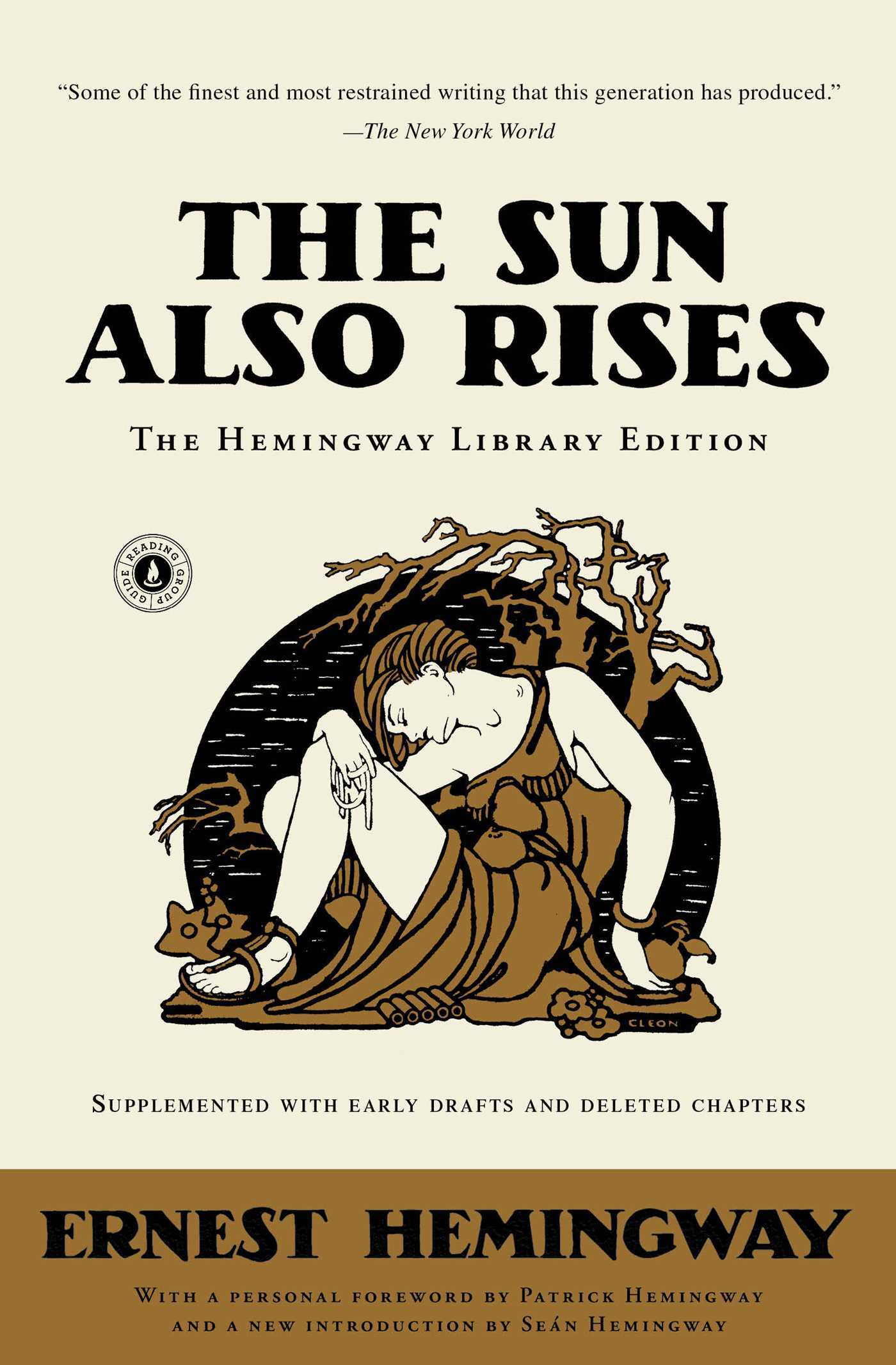
This new edition of The Sun Also Rises celebrates the art and craft of Hemingway’s quintessential story of the Lost Generation—presented by the Hemingway family with illuminating supplementary material from the Hemingway Collection at the John F. Kennedy Library.The Sun Also Rises is a classic example of Hemingway’s spare but powerful writing style. A poignant look at the disillusionment and angst of the post-World War I generation, the novel introduces two of Hemingway’s most unforgettable characters: Jake Barnes and Lady Brett Ashley. The story follows the flamboyant Brett and the hapless Jake as they journey from the wild nightlife of 1920s Paris to the brutal bullfighting rings of Spain with a motley group of expatriates. It is an age of moral bankruptcy, spiritual dissolution, unrealized love, and vanishing illusions. First published in 1926, The Sun Also Rises is “an absorbing, beautifully and tenderly absurd, heartbreaking narrative…a truly gripping story, told in lean, hard, athletic prose” (The New York Times).This new Hemingway Library Edition celebrates Hemingway’s classic novel with a personal foreword by Patrick Hemingway, the author’s sole surviving son, and a new introduction by Sean Hemingway, grandson of the author. Hemingway considered the extensive rewriting that he did to shape his first novel the most difficult job of his life. Early drafts, deleted passages, and possible titles included in this new edition elucidate how the author achieved his first great literary masterpiece.

A quest across America, from the northernmost tip of Maine to California’s Monterey PeninsulaTo hear the speech of the real America, to smell the grass and the trees, to see the colors and the light—these were John Steinbeck's goals as he set out, at the age of fifty-eight, to rediscover the country he had been writing about for so many years.With Charley, his French poodle, Steinbeck drives the interstates and the country roads, dines with truckers, encounters bears at Yellowstone and old friends in San Francisco. Along the way he reflects on the American character, racial hostility, the particular form of American loneliness he finds almost everywhere, and the unexpected kindness of strangers.

The House of Rothschild, Vol 2: The World's Banker 1849-1999
by Niall Ferguson
Rating: 3.9 ⭐
• 1 recommendation ❤️
A major work of economic, social and political history, Niall Ferguson's The House of Rothschild: The World's Banker 1849-1999 is the second volume of the acclaimed, landmark history of the legendary Rothschild banking dynasty. Niall Ferguson's House of Rothschild: Money's Prophets 1798-1848 was hailed as a 'great biography' by Time magazine and named one of the best books of 1998 by Business Week.Now, with all the depth, clarity and drama with which he traced their ascent, Ferguson - the first historian with access to the long-lost Rothschild family archives - concludes his myth-breaking portrait of once of the most fascinating and power families of all time.From Crimea to World War II, wars repeatedly threatened the stability of the Rothschilds' worldwide empire. Despite these many global upheavals, theirs remained the biggest bank in the world up until the First World War, their interests extending far beyond the realm of finance. Yet the Rothschilds' failure to establish themselves successfully in the United States proved fateful, and as financial power shifted from London to New York after 1914, their power waned.'A stupendous achievement, a triumph of historical research and imagination' Robert Skidelsky, The New York Review of Books 'Niall Ferguson's brilliant and altogether enthralling two-volume family saga proves that academic historians can still tell great stories that the rest of us want to read'The New York Times Book Review'Superb ... An impressive ... account of the Rothschilds and their role in history'Boston GlobeNiall Ferguson is one of Britain's most renowned historians. He is Laurence A. Tisch Professor of History at Harvard University and a Senior Research Fellow of Jesus College, Oxford. He is the bestselling author of The Pity of War, The Ascent of Money, Empire, Colossus, The War of the World and Civilization.

Abundance: The Future Is Better Than You Think
by Peter H. Diamandis
Rating: 4.1 ⭐
• 1 recommendation ❤️
The New York Times bestselling “manifesto for the future that is grounded in practical solutions addressing the world’s most pressing concerns: overpopulation, food, water, energy, education, health care and freedom” ( The Wall Street Journal ).Since the dawn of humanity, a privileged few have lived in stark contrast to the hardscrabble majority. Conventional wisdom says this gap cannot be closed. But it is closing—and fast.In Abundance , space entrepreneur turned innovation pioneer Peter H. Diamandis and award-winning science writer Steven Kotler document how progress in artificial intelligence, robotics, digital manufacturing synthetic biology, and other exponentially growing technologies will enable us to make greater gains in the next two decades than we have in the previous 200 years. We will soon have the ability to meet and exceed the basic needs of every person on the planet. Abundance for all is within our grasp.Breaking down human needs by category—water, food, energy, healthcare, education, freedom—Diamandis and Kotler introduce us to innovators and industry captains making tremendous strides in each area. “Not only is Abundance a riveting page-turner…but it’s a book that gives us a future worth fighting for” ( The Christian Science Monitor ).

Scarcity: The New Science of Having Less and How It Defines Our Lives
by Sendhil Mullainathan
Rating: 4.0 ⭐
• 7 recommendations ❤️
A surprising and intriguing examination of how scarcity--and our flawed responses to it--shapes our lives, our society, and our cultureWhy do successful people get things done at the last minute? Why does poverty persist? Why do organizations get stuck firefighting? Why do the lonely find it hard to make friends? These questions seem unconnected, yet Sendhil Mullainathan and Eldar Shafir show that they are all examples of a mind-set produced by scarcity.Drawing on cutting-edge research from behavioral science and economics, Mullainathan and Shafir show that scarcity creates a similar psychology for everyone struggling to manage with less than they need. Busy people fail to manage their time efficiently for the same reasons the poor and those maxed out on credit cards fail to manage their money. The dynamics of scarcity reveal why dieters find it hard to resist temptation, why students and busy executives mismanage their time, and why sugarcane farmers are smarter after harvest than before. Once we start thinking in terms of scarcity and the strategies it imposes, the problems of modern life come into sharper focus.Mullainathan and Shafir discuss how scarcity affects our daily lives, recounting anecdotes of their own foibles and making surprising connections that bring this research alive. Their book provides a new way of understanding why the poor stay poor and the busy stay busy, and it reveals not only how scarcity leads us astray but also how individuals and organizations can better manage scarcity for greater satisfaction and success.

Scale: The Universal Laws of Life, Growth, and Death in Organisms, Cities, and Companies
by Geoffrey West
Rating: 4.2 ⭐
• 1 recommendation ❤️
The former head of the Sante Fe Institute, visionary physicist Geoffrey West is a pioneer in the field of complexity science, the science of emergent systems and networks. The term “complexity” can be misleading, however, because what makes West’s discoveries so beautiful is that he has found an underlying simplicity that unites the seemingly complex and diverse phenomena of living systems, including our bodies, our cities and our businesses. Fascinated by issues of aging and mortality, West applied the rigor of a physicist to the biological question of why we live as long as we do and no longer. The result was astonishing, and changed science, creating a new understanding of energy use and metabolism: West found that despite the riotous diversity in the sizes of mammals, they are all, to a large degree, scaled versions of each other. If you know the size of a mammal, you can use scaling laws to learn everything from how much food it eats per day, what its heart-rate is, how long it will take to mature, its lifespan, and so on. Furthermore, the efficiency of the mammal’s circulatory systems scales up precisely based on weight: if you compare a mouse, a human and an elephant on a logarithmic graph, you find with every doubling of average weight, a species gets 25% more efficient—and lives 25% longer. This speaks to everything from how long we can expect to live to how many hours of sleep we need. Fundamentally, he has proven, the issue has to do with the fractal geometry of the networks that supply energy and remove waste from the organism's body. West's work has been game-changing for biologists, but then he made the even bolder move of exploring his work's applicability to cities. Cities, too, are constellations of networks and laws of scalability relate with eerie precision to them. For every doubling in a city's size, the city needs 15% less road, electrical wire, and gas stations to support the same population. More amazingly, for every doubling in size, cities produce 15% more patents and more wealth, as well as 15% more crime and disease. This broad pattern lays the groundwork for a new science of cities. Recently, West has applied his revolutionary work on cities and biological life to the business world. This investigation has led to powerful insights into why some companies thrive while others fail. The implications of these discoveries are far-reaching, and are just beginning to be explored. Scale is a thrilling scientific adventure story about the elemental natural laws that bind us together in simple but profound ways. Through the brilliant mind of Geoffrey West, we can envision how cities, companies and biological life alike are dancing to the same simple, powerful tune, however diverse and unrelated they are to each other.From the Hardcover edition.

#1 NEW YORK TIMES BESTSELLER - Everybody tells you to live for a cause larger than yourself, but how exactly do you do it? The author of The Road to Character explores what it takes to lead a meaningful life in a self-centered world."Deeply moving, frequently eloquent and extraordinarily incisive."--The Washington PostEvery so often, you meet people who radiate joy--who seem to know why they were put on this earth, who glow with a kind of inner light. Life, for these people, has often followed what we might think of as a two-mountain shape. They get out of school, they start a career, and they begin climbing the mountain they thought they were meant to climb. Their goals on this first mountain are the ones our culture endorses: to be a success, to make your mark, to experience personal happiness. But when they get to the top of that mountain, something happens. They look around and find the view . . . unsatisfying. They realize: This wasn't my mountain after all. There's another, bigger mountain out there that is actually my mountain.And so they embark on a new journey. On the second mountain, life moves from self-centered to other-centered. They want the things that are truly worth wanting, not the things other people tell them to want. They embrace a life of interdependence, not independence. They surrender to a life of commitment.In The Second Mountain, David Brooks explores the four commitments that define a life of meaning and purpose: to a spouse and family, to a vocation, to a philosophy or faith, and to a community. Our personal fulfillment depends on how well we choose and execute these commitments. Brooks looks at a range of people who have lived joyous, committed lives, and who have embraced the necessity and beauty of dependence. He gathers their wisdom on how to choose a partner, how to pick a vocation, how to live out a philosophy, and how we can begin to integrate our commitments into one overriding purpose.In short, this book is meant to help us all lead more meaningful lives. But it's also a provocative social commentary. We live in a society, Brooks argues, that celebrates freedom, that tells us to be true to ourselves, at the expense of surrendering to a cause, rooting ourselves in a neighborhood, binding ourselves to others by social solidarity and love. We have taken individualism to the extreme--and in the process we have torn the social fabric in a thousand different ways. The path to repair is through making deeper commitments. In The Second Mountain, Brooks shows what can happen when we put commitment-making at the center of our lives.

In the vein of Sound Man and The Soundtrack of My Life , a lyrical, warmhearted, and inspirational memoir from the founder of Island Records about his astonishing life and career helping to bring reggae music to the world stage and working with Bob Marley, U2, Grace Jones, Cat Stevens, and many other icons.Chris Blackwell, like the paradigm-shifting artists he came to support over his sixty-plus years in the music business, never took the conventional route. He grew up between Jamaica and London, crossing paths with Ian Fleming, Noel Coward, and Errol Flynn. After being expelled from an elite British school for rebellious behavior in 1954 at age seventeen, he moved back to Jamaica, and within five years, founded Island Records—the company that would make an indelible mark on music, shifting with the times, but always keeping its core identity intact.The Islander is the story of Blackwell and his cohorts at Island Records, who time and again, identified, nurtured, and broke out musicians who had been overlooked by bigger record labels, including Steve Winwood, Nick Drake, John Martyn, and Cat Stevens. After an impromptu meeting with Bob Marley and his bandmates in 1972, Blackwell decided to fund and produce their groundbreaking album Catch a Fire . He’d go on to work with Marley over the rest of his career, remain his close friend, and continually champion Jamaican culture and reggae music.In the ensuing years, Blackwell worked with U2, Grace Jones, the B-52s, Tom Waits, Robert Palmer, Tom Tom Club, and many other groundbreaking artists. He also opened the first Jamaican boutique hotel, on the property of Ian Fleming’s former home, Goldeneye, where all the James Bond books were written.Blackwell is a legendary as well as deeply humble raconteur, and reading The Islander is like spending a day with the most interesting man in the world.

In this New York Times bestseller, Rolling Stone founder, co-editor, and publisher Jann Wenner offers a "touchingly honest" and "wonderfully deep" memoir from the beating heart of classic rock and roll (Bruce Springsteen). Jann Wenner has been called by his peers “the greatest editor of his generation.”His deeply personal memoir vividly describes and brings you inside the music, the politics, and the lifestyle of a generation, an epoch of cultural change that swept America and beyond. The age of rock and roll in an era of consequence, what will be considered one of the great watersheds in modern history. Wenner writes with the clarity of a journalist and an essayist. He takes us into the life and work of Bob Dylan, John Lennon, Mick Jagger, Bono, and Bruce Springsteen, to name a few. He was instrumental in the careers of Hunter S. Thompson, Tom Wolfe, and Annie Leibovitz. His journey took him to the Oval Office with his legendary interviews with Bill Clinton and Barack Obama, leaders to whom Rolling Stone gave its historic, full-throated backing. From Jerry Garcia to the Dalai Lama, Aretha Franklin to Greta Thunberg, the people Wenner chose to be seen and heard in the pages of Rolling Stone tried to change American culture, values, and morality.Like a Rolling Stone is a beautifully written portrait of one man’s life, and the life of his generation.

A Banker's Journey: How Edmond J Safra Built a Global Financial Empire
by Daniel Gross
Rating: 4.5 ⭐
• 1 recommendation ❤️
Who was Edmond J. Safra? “The greatest banker of his generation,” in the estimation of a former World Bank President. The founder of four massive financial institutions on three continents, and a proud child of Beirut’s Jewish quarter. An innovative avatar of financial globalization, and a faithful heir to a tradition of old-world banking. The leading champion and protector of the Sephardic diaspora. In A Banker’s Journey, financial journalist and historian Daniel Gross, who, like Safra, traces his heritage to Aleppo, Syria, reconstructs the public life of an intensely private man. With exclusive access to Safra’s personal archives, Gross tracks the banker’s remarkable journey from Beirut to Milan, São Paulo, Geneva, and New York—to the pinnacle of global finance.Edmond Safra was fifteen in 1947, when his father sent him to establish a presence in Milan, Italy. Fluent in six languages, and with an eye for value, managing risk, and personal potential, Safra was in perpetual motion until his tragic death in 1999. The modern, global financial empire he built was based on timeless principles: a banker must protect his depositors and avoid excessive leverage and risk. In an age of busts and bailouts, Safra posted remarkable returns while rarely suffering a credit loss.From a young age, Safra assumed the mantle of leadership in the Syrian-Lebanese Jewish community, providing personal aid, supporting the communities that formed in exile, and championing Sephardic religious and educational efforts in Israel and around the world. Edmond J. Safra’s life of achievement in the twentieth century offers enduring lessons for those seeking to make their way in the twenty-first century. He inspired generations to make the world a better place.