37 Books Recommended

This timeless book holds that the key to success lies in the secrets of the ancients. Based on the famous "Babylonian principles," it's been hailed as the greatest of all inspirational works on the subject of thrift and financial planning.

Think and Grow Rich - Over 80 Million Copies Sold This edition of Napoleon Hill's Classic Think and Grow Rich is a reproduction of Napoleon Hill's personal copy of the first edition, the ONLY original version recommended by The Napoleon Hill Foundation, originally printed in March of 1937. The most famous of all teachers of success spent "a fortune and the better part of a lifetime of effort" to produce the "Law of Success" philosophy that forms the basis of his books and that is so powerfully summarized and explained for the general public in this book. In Think and Grow Rich, Hill draws on stories of Andrew Carnegie, Thomas Edison, Henry Ford, and other millionaires of his generation to illustrate his principles. This book will teach you the secrets that could bring you a fortune. It will show you not only what to do but how to do it. Once you learn and apply the simple, basic techniques revealed here, you will have mastered the secret of true and lasting success. Money and material things are essential for freedom of body and mind, but there are some who will feel that the greatest of all riches can be evaluated only in terms of lasting friendships, loving family relationships, understanding between business associates, and introspective harmony which brings one true peace of mind! All who read, understand, and apply this philosophy will be better prepared to attract and enjoy these spiritual values.BE PREPARED! When you expose yourself to the influence of this philosophy, you may experience a CHANGED LIFE which can help you negotiate your way through life with harmony and understanding and prepare you for the accumulation of abundant material riches.

John D. Rockefeller, Sr.--history's first billionaire and the patriarch of America's most famous dynasty--is an icon whose true nature has eluded three generations of historians. Now Ron Chernow, the National Book Award-winning biographer of the Morgan and Warburg banking families, gives us a history of the mogul "etched with uncommon objectivity and literary grace . . . as detailed, balanced, and psychologically insightful a portrait of the tycoon as we may ever have" (Kirkus Reviews). Titan is the first full-length biography based on unrestricted access to Rockefeller's exceptionally rich trove of papers. A landmark publication full of startling revelations, the book will indelibly alter our image of this most enigmatic capitalist. Born the son of a flamboyant, bigamous snake-oil salesman and a pious, straitlaced mother, Rockefeller rose from rustic origins to become the world's richest man by creating America's most powerful and feared monopoly, Standard Oil. Branded "the Octopus" by legions of muckrakers, the trust refined and marketed nearly 90 percent of the oil produced in America. Rockefeller was likely the most controversial businessman in our nation's history. Critics charged that his empire was built on unscrupulous tactics: grand-scale collusion with the railroads, predatory pricing, industrial espionage, and wholesale bribery of political officials. The titan spent more than thirty years dodging investigations until Teddy Roosevelt and his trustbusters embarked on a marathon crusade to bring Standard Oil to bay. While providing abundant new evidence of Rockefeller's misdeeds, Chernow discards the stereotype of the cold-blooded monster to sketch an unforgettably human portrait of a quirky, eccentric original. A devout Baptist and temperance advocate, Rockefeller gave money more generously--his chosen philanthropies included the Rockefeller Foundation, the University of Chicago, and what is today Rockefeller University--than anyone before him. Titan presents a finely nuanced portrait of a fascinating, complex man, synthesizing his public and private lives and disclosing numerous family scandals, tragedies, and misfortunes that have never before come to light. John D. Rockefeller's story captures a pivotal moment in American history, documenting the dramatic post-Civil War shift from small business to the rise of giant corporations that irrevocably transformed the nation. With cameos by Joseph Pulitzer, William Randolph Hearst, Jay Gould, William Vanderbilt, Ida Tarbell, Andrew Carnegie, Carl Jung, J. Pierpont Morgan, William James, Henry Clay Frick, Mark Twain, and Will Rogers, Titan turns Rockefeller's life into a vivid tapestry of American society in the late nineteenth and early twentieth centuries. It is Ron Chernow's signal triumph that he narrates this monumental saga with all the sweep, drama, and insight that this giant subject deserves.From the Hardcover edition.

Rich Dad Poor Dad: What the Rich Teach Their Kids About Money That the Poor and Middle Class Do Not!
by Robert T. Kiyosaki
Rating: 4.2 ⭐
• 7 recommendations ❤️
April 2017 marks 20 years since Robert Kiyosaki’s Rich Dad Poor Dad first made waves in the Personal Finance arena.It has since become the #1 Personal Finance book of all time... translated into dozens of languages and sold around the world.Rich Dad Poor Dad is Robert's story of growing up with two dads — his real father and the father of his best friend, his rich dad — and the ways in which both men shaped his thoughts about money and investing. The book explodes the myth that you need to earn a high income to be rich and explains the difference between working for money and having your money work for you.20 Years... 20/20 HindsightIn the 20th Anniversary Edition of this classic, Robert offers an update on what we’ve seen over the past 20 years related to money, investing, and the global economy. Sidebars throughout the book will take readers “fast forward” — from 1997 to today — as Robert assesses how the principles taught by his rich dad have stood the test of time.In many ways, the messages of Rich Dad Poor Dad, messages that were criticized and challenged two decades ago, are more meaningful, relevant and important today than they were 20 years ago.As always, readers can expect that Robert will be candid, insightful... and continue to rock more than a few boats in his retrospective.Will there be a few surprises? Count on it.Rich Dad Poor Dad...• Explodes the myth that you need to earn a high income to become rich• Challenges the belief that your house is an asset• Shows parents why they can't rely on the school system to teach their kids about money• Defines once and for all an asset and a liability• Teaches you what to teach your kids about money for their future financial success

In this candid and riveting memoir, for the first time ever, Nike founder and CEO Phil Knight shares the inside story of the company’s early days as an intrepid start-up and its evolution into one of the world’s most iconic, game-changing, and profitable brands.In 1962, fresh out of business school, Phil Knight borrowed $50 from his father and created a company with a simple mission: import high-quality, low-cost athletic shoes from Japan. Selling the shoes from the trunk of his lime green Plymouth Valiant, Knight grossed $8,000 his first year. Today, Nike’s annual sales top $30 billion. In an age of startups, Nike is the ne plus ultra of all startups, and the swoosh has become a revolutionary, globe-spanning icon, one of the most ubiquitous and recognizable symbols in the world today.But Knight, the man behind the swoosh, has always remained a mystery. Now, for the first time, in a memoir that is candid, humble, gutsy, and wry, he tells his story, beginning with his crossroads moment. At 24, after backpacking around the world, he decided to take the unconventional path, to start his own business—a business that would be dynamic, different.Knight details the many risks and daunting setbacks that stood between him and his dream—along with his early triumphs. Above all, he recalls the formative relationships with his first partners and employees, a ragtag group of misfits and seekers who became a tight-knit band of brothers. Together, harnessing the transcendent power of a shared mission, and a deep belief in the spirit of sport, they built a brand that changed everything.

“Ridley writes with panache, wit, and humor and displays remarkable ingenuity in finding ways to present complicated materials for the lay reader.” — Los Angeles TimesIn a bold and provocative interpretation of economic history, Matt Ridley, the New York Times-bestselling author of Genome and The Red Queen, makes the case for an economics of hope, arguing that the benefits of commerce, technology, innovation, and change—what Ridley calls cultural evolution—will inevitably increase human prosperity. Fans of the works of Jared Diamond (Guns, Germs, and Steel), Niall Ferguson (The Ascent of Money), and Thomas Friedman (The World Is Flat) will find much to ponder and enjoy in The Rational Optimist.

King of Capital: The Remarkable Rise, Fall, and Rise Again of Steve Schwarzman and Blackstone
by David Carey
Rating: 4.2 ⭐
• 2 recommendations ❤️
Strippers and Flippers . . . or a New Positive Force Helping to Drive the Economy . . . The untold story of Steve Schwarzman and Blackstone, the financier and his financial powerhouse that avoided the self-destructive tendencies of Wall Street. David Carey and John Morris show how Blackstone (and other private equity firms) transformed themselves from gamblers, hostile-takeover artists, and ‘barbarians at the gate’ into disciplined, risk-conscious investors. The financial establishment—banks and investment bankers such as Citigroup, Bear Stearns, Lehman, UBS, Goldman Sachs, Merrill Lynch, Morgan Stanley—were the cowboys, recklessly assuming risks, leveraging up to astronomical levels and driving the economy to the brink of disaster. Blackstone is now ready to break out once again since it is sitting on billions of dollars that can be invested at a time when the market is starved for capital. The story of a financial revolution—the greatest untold success story on Wall Street: Not only have Blackstone and a small coterie of competitors wrested control of corporations around the globe, but they have emerged as a major force on Wall Street, challenging the likes of Goldman Sachs and Morgan Stanley for dominance. Great human interest story: How Blackstone went from two guys and a secretary to being one of Wall Street’s most powerful institutions, far outgrowing its much older rival KKR; and how Steve Schwarzman, with a pay packet one year of $398 million and $684 million from the Blackstone IPO, came to epitomize the spectacular new financial fortunes amassed in the 2000s. Controversial: Analyzes the controversies surrounding Blackstone and whether it and other private equity firms suck the lifeblood out of companies to enrich themselves—or whether they are a force that helps make the companies they own stronger and thereby better competitors. The story by two insiders with access: Insightful and hard-hitting, filled with never-before-revealed details about the workings of a heretofore secretive company that was the personal fiefdom of Schwarzman and Peter Peterson. Forward-looking: How Blackstone and private equity will drive the economy and provide a model for how financing will work.

The Better Angels of Our Nature: Why Violence Has Declined
by Steven Pinker
Rating: 4.1 ⭐
• 28 recommendations ❤️
Selected by The New York Times Book Review as a Notable Book of the Year. The author of The New York Times bestseller The Stuff of Thought offers a controversial history of violence. Faced with the ceaseless stream of news about war, crime, and terrorism, one could easily think we live in the most violent age ever seen. Yet as New York Times bestselling author Steven Pinker shows in this startling and engaging new work, just the opposite is true: violence has been diminishing for millennia and we may be living in the most peaceful time in our species' existence. For most of history, war, slavery, infanticide, child abuse, assassinations, pogroms, gruesome punishments, deadly quarrels, and genocide were ordinary features of life. But today, Pinker shows (with the help of more than a hundred graphs and maps) all these forms of violence have dwindled and are widely condemned. How has this happened?This groundbreaking book continues Pinker's exploration of the essence of human nature, mixing psychology and history to provide a remarkable picture of an increasingly nonviolent world. The key, he explains, is to understand our intrinsic motives- the inner demons that incline us toward violence and the better angels that steer us away-and how changing circumstances have allowed our better angels to prevail. Exploding fatalist myths about humankind's inherent violence and the curse of modernity, this ambitious and provocative book is sure to be hotly debated in living rooms and the Pentagon alike, and will challenge and change the way we think about our society.

A Summer Reading Pick for President Barack Obama, Bill Gates, and Mark Zuckerberg From a renowned historian comes a groundbreaking narrative of humanity’s creation and evolution—a #1 international bestseller—that explores the ways in which biology and history have defined us and enhanced our understanding of what it means to be “human.”One hundred thousand years ago, at least six different species of humans inhabited Earth. Yet today there is only one—homo sapiens. What happened to the others? And what may happen to us?Most books about the history of humanity pursue either a historical or a biological approach, but Dr. Yuval Noah Harari breaks the mold with this highly original book that begins about 70,000 years ago with the appearance of modern cognition. From examining the role evolving humans have played in the global ecosystem to charting the rise of empires, Sapiens integrates history and science to reconsider accepted narratives, connect past developments with contemporary concerns, and examine specific events within the context of larger ideas.Dr. Harari also compels us to look ahead, because over the last few decades humans have begun to bend laws of natural selection that have governed life for the past four billion years. We are acquiring the ability to design not only the world around us, but also ourselves. Where is this leading us, and what do we want to become?Featuring 27 photographs, 6 maps, and 25 illustrations/diagrams.

Dealing with China: An Insider Unmasks the New Economic Superpower
by Henry M. Paulson Jr.
Rating: 4.1 ⭐
• 4 recommendations ❤️
The New York Times bestselling author of Dealing with China takes the reader behind closed doors to witness the creation and evolution and future of China's state-controlled capitalism.Hank Paulson has dealt with China unlike any other foreigner. As head of Goldman Sachs, Paulson had a pivotal role in opening up China to private enterprise. Then, as Treasury secretary, he created the Strategic Economic Dialogue with what is now the world's second-largest economy. He negotiated with China on needed economic reforms, while safeguarding the teetering U.S. financial system. Over his career, Paulson has worked with scores of top Chinese leaders, including Xi Jinping, China's most powerful man in decades.In Dealing with China , Paulson draws on his unprecedented access to modern China's political and business elite, including its three most recent heads of state, to answer several key How did China become an economic superpower so quickly?How does business really get done there?What are the best ways for Western business and political leaders to work with, compete with, and benefit from China?How can the U.S. negotiate with and influence China given its authoritarian rule, its massive environmental concerns, and its huge population's unrelenting demands for economic growth and security?Written in the same anecdote-rich, page-turning style as Paulson's bestselling memoir, On the Brink, Dealing with China is certain to become the classic and definitive examination of how to engage China's leaders as they build their economic superpower.

The Dao of Capital: Austrian Investing in a Distorted World
by Mark Spitznagel
Rating: 4.0 ⭐
• 8 recommendations ❤️
As today's preeminent doomsday investor Mark Spitznagel describes his Daoist and roundabout investment approach, “one gains by losing and loses by gaining.” This is Austrian Investing , an archetypal, counterintuitive, and proven approach, gleaned from the 150-year-old Austrian School of economics, that is both timeless and exceedingly timely. In The Dao of Capital , hedge fund manager and tail-hedging pioneer Mark Spitznagel―with one of the top returns on capital of the financial crisis, as well as over a career―takes us on a gripping, circuitous journey from the Chicago trading pits, over the coniferous boreal forests and canonical strategists from Warring States China to Napoleonic Europe to burgeoning industrial America, to the great economic thinkers of late 19th century Austria. We arrive at his central investment methodology of Austrian Investing , where victory comes not from waging the immediate decisive battle, but rather from the roundabout approach of seeking the intermediate positional advantage (what he calls shi ), of aiming at the indirect means rather than directly at the ends. The monumental challenge is in seeing time differently, in a whole new intertemporal dimension, one that is so contrary to our wiring. Spitznagel is the first to condense the theories of Ludwig von Mises and his Austrian School of economics into a cohesive and―as Spitznagel has shown―highly effective investment methodology. From identifying the monetary distortions and non-randomness of stock market routs (Spitznagel's bread and butter) to scorned highly-productive assets, in Ron Paul's words from the foreword, Spitznagel “brings Austrian economics from the ivory tower to the investment portfolio.” The Dao of Capital provides a rare and accessible look through the lens of one of today's great investors to discover a profound harmony with the market process―a harmony that is so essential today.

The definitive biography of a legendary athlete.The Shrug. The Shot. The Flu Game. Michael Jordan is responsible for sublime moments so ingrained in sports history that they have their own names. When most people think of him, they think of his beautiful shots with the game on the line, his body totally in sync with the ball -- hitting nothing but net.But for all his greatness, this scion of a complex family from North Carolina's Coastal Plain has a darker side: he's a ruthless competitor and a lover of high stakes. There's never been a biography that encompassed the dual nature of his character and looked so deeply at Jordan on and off the court -- until now.Basketball journalist Roland Lazenby spent almost thirty years covering Michael Jordan's career in college and the pros. He witnessed Jordan's growth from a skinny rookie to the instantly recognizable global ambassador for basketball whose business savvy and success have millions of kids still wanting to be just like Mike. Yet Lazenby also witnessed the Michael Jordan whose drive and appetite are more fearsome and more insatiable than any of his fans could begin to know.Michael Jordan: The Life explores both sides of his personality to reveal the fullest, most compelling story of the man who is Michael Jordan. Lazenby draws on his personal relationships with Jordan's coaches; countless interviews with Jordan's friends, teammates, and family members; and interviews with Jordan himself to provide the first truly definitive study of Michael Jordan: the player, the icon, and the man.

The Courage to Be Disliked: The Japanese Phenomenon That Shows You How to Change Your Life and Achieve Real Happiness
by Ichiro Kishimi
Rating: 4.0 ⭐
• 14 recommendations ❤️
The Life-Changing Magic of Tidying Up for the mind, The Courage to Be Disliked is the Japanese phenomenon that shows you how to free yourself from the shackles of past experiences and others’ expectations to achieve real happiness.The Courage to Be Disliked, already an enormous bestseller in Asia with more than 3.5 million copies sold, demonstrates how to unlock the power within yourself to be the person you truly want to be. Using the theories of Alfred Adler, one of the three giants of twentieth century psychology, this book follows an illuminating conversation between a philosopher and a young man. The philosopher explains to his pupil how each of us is able to determine our own life, free from the shackles of past experiences, doubts, and the expectations of others. It’s a way of thinking that is deeply liberating, allowing us to develop the courage to change, and to ignore the limitations that we and those around us have placed on ourselves. The result is a book that is both highly accessible and profound in its importance. Millions have already read and benefitted from its wisdom. This is a truly special book in the vein of Marie Kondo’s The Life-Changing Magic of Tidying Up but for the mind. Those ready to embrace the insights and liberation promised by The Courage to Be Disliked will come to a deeper understanding of themselves and others, and find the inspiration to take the reins of their own life.

For more than two decades, legendary trainer Tim Grover has taken the greats—Michael Jordan, Kobe Bryant, Dwayne Wade, and dozens more—and made them greater. Now, for the first time ever, he reveals what it takes to get those results, showing you how to be relentless and achieve whatever you desire.Direct, blunt, and brutally honest, Grover breaks down what it takes to be unstoppable: you keep going when everyone else is giving up, you thrive under pressure, you never let your emotions make you weak. In “The Relentless 13,” he details the essential traits shared by the most intense competitors and achievers in sports, business, and all walks of life. Relentless shows you how to trust your instincts and get in the Zone; how to control and adapt to any situation; how to find your opponent’s weakness and attack. Grover gives you the same advice he gives his world-class clients—“don’t think”—and shows you that anything is possible. Packed with previously untold stories and unparalleled insight into the psyches of the most successful and accomplished athletes of our time, Relentless shows you how even the best get better . . . and how you can too.

Elon Musk: Tesla, SpaceX, and the Quest for a Fantastic Future
by Ashlee Vance
Rating: 4.2 ⭐
• 12 recommendations ❤️
In the spirit of Steve Jobs and Moneyball, Elon Musk is both an illuminating and authorized look at the extraordinary life of one of Silicon Valley’s most exciting, unpredictable, and ambitious entrepreneurs—a real-life Tony Stark—and a fascinating exploration of the renewal of American invention and its new “makers.”Elon Musk spotlights the technology and vision of Elon Musk, the renowned entrepreneur and innovator behind SpaceX, Tesla, and SolarCity, who sold one of his Internet companies, PayPal, for $1.5 billion. Ashlee Vance captures the full spectacle and arc of the genius’s life and work, from his tumultuous upbringing in South Africa and flight to the United States to his dramatic technical innovations and entrepreneurial pursuits.Vance uses Musk’s story to explore one of the pressing questions of our age: can the nation of inventors and creators who led the modern world for a century still compete in an age of fierce global competition? He argues that Musk—one of the most unusual and striking figures in American business history—is a contemporary, visionary amalgam of legendary inventors and industrialists including Thomas Edison, Henry Ford, Howard Hughes, and Steve Jobs. More than any other entrepreneur today, Musk has dedicated his energies and his own vast fortune to inventing a future that is as rich and far-reaching as the visionaries of the golden age of science-fiction fantasy.Thorough and insightful, Elon Musk brings to life a technology industry that is rapidly and dramatically changing by examining the life of one of its most powerful and influential titans.

Digital Gold: Bitcoin and the Inside Story of the Misfits and Millionaires Trying to Reinvent Money
by Nathaniel Popper
Rating: 4.1 ⭐
• 8 recommendations ❤️
New York Times Book Review Editor’s Choice SHORTLISTED FOR THE 2015 FINANCIAL TIMES AND MCKINSEY BUSINESS BOOK OF THE YEAR A New York Times technology and business reporter charts the dramatic rise of Bitcoin and the fascinating personalities who are striving to create a new global money for the Internet age. Digital Gold is New York Times reporter Nathaniel Popper’s brilliant and engrossing history of Bitcoin, the landmark digital money and financial technology that has spawned a global social movement. The notion of a new currency, maintained by the computers of users around the world, has been the butt of many jokes, but that has not stopped it from growing into a technology worth billions of dollars, supported by the hordes of followers who have come to view it as the most important new idea since the creation of the Internet. Believers from Beijing to Buenos Aires see the potential for a financial system free from banks and governments. More than just a tech industry fad, Bitcoin has threatened to decentralize some of society’s most basic institutions. An unusual tale of group invention, Digital Gold charts the rise of the Bitcoin technology through the eyes of the movement’s colorful central characters, including an Argentinian millionaire, a Chinese entrepreneur, Tyler and Cameron Winklevoss, and Bitcoin’s elusive creator, Satoshi Nakamoto. Already, Bitcoin has led to untold riches for some, and prison terms for others.

Superforecasting: The Art and Science of Prediction
by Philip E. Tetlock
Rating: 4.1 ⭐
• 13 recommendations ❤️
NEW YORK TIMES BESTSELLER • NAMED ONE OF THE BEST BOOKS OF THE YEAR BY THE ECONOMIST “ The most important book on decision making since Daniel Kahneman's Thinking, Fast and Slow . ” —Jason Zweig, The Wall Street Journal Everyone would benefit from seeing further into the future, whether buying stocks, crafting policy, launching a new product, or simply planning the week’s meals. Unfortunately, people tend to be terrible forecasters. As Wharton professor Philip Tetlock showed in a landmark 2005 study, even experts’ predictions are only slightly better than chance. However, an important and underreported conclusion of that study was that some experts do have real foresight, and Tetlock has spent the past decade trying to figure out why. What makes some people so good? And can this talent be taught? In Superforecasting , Tetlock and coauthor Dan Gardner offer a masterwork on prediction, drawing on decades of research and the results of a massive, government-funded forecasting tournament. The Good Judgment Project involves tens of thousands of ordinary people—including a Brooklyn filmmaker, a retired pipe installer, and a former ballroom dancer—who set out to forecast global events. Some of the volunteers have turned out to be astonishingly good. They’ve beaten other benchmarks, competitors, and prediction markets. They’ve even beaten the collective judgment of intelligence analysts with access to classified information. They are "superforecasters." In this groundbreaking and accessible book, Tetlock and Gardner show us how we can learn from this elite group. Weaving together stories of forecasting successes (the raid on Osama bin Laden’s compound) and failures (the Bay of Pigs) and interviews with a range of high-level decision makers, from David Petraeus to Robert Rubin, they show that good forecasting doesn’t require powerful computers or arcane methods. It involves gathering evidence from a variety of sources, thinking probabilistically, working in teams, keeping score, and being willing to admit error and change course.Superforecasting offers the first demonstrably effective way to improve our ability to predict the future—whether in business, finance, politics, international affairs, or daily life—and is destined to become a modern classic.

#1 NEW YORK TIMES BESTSELLER • PULITZER PRIZE FINALIST • OVER TWO MILLION COPIES SOLDThis inspiring, exquisitely observed memoir finds hope and beauty in the face of insurmountable odds as an idealistic young neurosurgeon attempts to answer the question, What makes a life worth living?“Unmissable . . . Finishing this book and then forgetting about it is simply not an option.”—Janet Maslin, The New York TimesONE OF THE BEST BOOKS OF THE YEAR: The New York Times Book Review, People, NPR, The Washington Post, Slate, Harper’s Bazaar, Time Out New York, Publishers Weekly, BookPageAn Oprah Daily Best Nonfiction Book of the Past Two Decades • A Kirkus Reviews Best Nonfiction Book of the CenturyAt the age of thirty-six, on the verge of completing a decade’s worth of training as a neurosurgeon, Paul Kalanithi was diagnosed with stage IV lung cancer. One day he was a doctor treating the dying, and the next he was a patient struggling to live. And just like that, the future he and his wife had imagined evaporated. When Breath Becomes Air chronicles Kalanithi’s transformation from a naïve medical student “possessed,” as he wrote, “by the question of what, given that all organisms die, makes a virtuous and meaningful life” into a neurosurgeon at Stanford working in the brain, the most critical place for human identity, and finally into a patient and new father confronting his own mortality.What makes life worth living in the face of death? What do you do when the future, no longer a ladder toward your goals in life, flattens out into a perpetual present? What does it mean to have a child, to nurture a new life as another fades away? These are some of the questions Kalanithi wrestles with in this profoundly moving, exquisitely observed memoir.Paul Kalanithi died in March 2015, while working on this book, yet his words live on as a guide and a gift to us all. “I began to realize that coming face to face with my own mortality, in a sense, had changed nothing and everything,” he wrote. “Seven words from Samuel Beckett began to repeat in my head: ‘I can’t go on. I’ll go on.’” When Breath Becomes Air is an unforgettable, life-affirming reflection on the challenge of facing death and on the relationship between doctor and patient, from a brilliant writer who became both.Finalist for the PEN Center USA Literary Award in Creative Nonfiction and the Books for a Better Life Award in Inspirational Memoir

The #1 New York Times bestseller that examines how people can champion new ideas—and how leaders can fight groupthink, from the author of Give and Take and co-author of Option B“Reading Originals made me feel like I was seated across from Adam Grant at a dinner party, as one of my favorite thinkers thrilled me with his insights and his wonderfully new take on the world.” —Malcolm Gladwell, author of Outliers and The Tipping Point“Originals is one of the most important and captivating books I have ever read, full of surprising and powerful ideas. It will not only change the way you see the world; it might just change the way you live your life. And it could very well inspire you to change your world.” —Sheryl Sandberg, COO of Facebook and author of Lean InWith Give and Take, Adam Grant not only introduced a landmark new paradigm for success but also established himself as one of his generation’s most compelling and provocative thought leaders. In Originals he again addresses the challenge of improving the world, but now from the perspective of becoming original: choosing to champion novel ideas and values that go against the grain, battle conformity, and buck outdated traditions. How can we originate new ideas, policies, and practices without risking it all? Using surprising studies and stories spanning business, politics, sports, and entertainment, Grant explores how to recognize a good idea, speak up without getting silenced, build a coalition of allies, choose the right time to act, and manage fear and doubt; how parents and teachers can nurture originality in children; and how leaders can build cultures that welcome dissent. Learn from an entrepreneur who pitches his start-ups by highlighting the reasons not to invest, a woman at Apple who challenged Steve Jobs from three levels below, an analyst who overturned the rule of secrecy at the CIA, a billionaire financial wizard who fires employees for failing to criticize him, and a TV executive who didn’t even work in comedy but saved Seinfeld from the cutting-room floor. The payoff is a set of groundbreaking insights about rejecting conformity and improving the status quo.
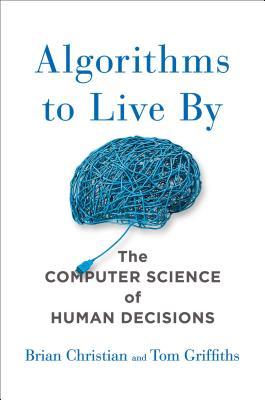
Algorithms to Live By: The Computer Science of Human Decisions
by Brian Christian
Rating: 4.1 ⭐
• 2 recommendations ❤️
A fascinating exploration of how insights from computer algorithms can be applied to our everyday lives, helping to solve common decision-making problems and illuminate the workings of the human mindAll our lives are constrained by limited space and time, limits that give rise to a particular set of problems. What should we do, or leave undone, in a day or a lifetime? How much messiness should we accept? What balance of new activities and familiar favorites is the most fulfilling? These may seem like uniquely human quandaries, but they are not: computers, too, face the same constraints, so computer scientists have been grappling with their version of such issues for decades. And the solutions they've found have much to teach us.In a dazzlingly interdisciplinary work, acclaimed author Brian Christian and cognitive scientist Tom Griffiths show how the algorithms used by computers can also untangle very human questions. They explain how to have better hunches and when to leave things to chance, how to deal with overwhelming choices and how best to connect with others. From finding a spouse to finding a parking spot, from organizing one's inbox to understanding the workings of memory, Algorithms to Live By transforms the wisdom of computer science into strategies for human living.

Play Bigger: How Pirates, Dreamers, and Innovators Create and Dominate Markets
by Al Ramadan
Rating: 3.8 ⭐
• 2 recommendations ❤️
The founders of a respected Silicon Valley advisory firm study legendary category-creating companies and reveal a groundbreaking discipline called category design.Winning today isn’t about beating the competition at the old game. It’s about inventing a whole new game—defining a new market category, developing it, and dominating it over time. You can’t build a legendary company without building a legendary category. If you think that having the best product is all it takes to win, you’re going to lose. In this farsighted, pioneering guide, the founders of Silicon Valley advisory firm Play Bigger rely on data analysis and interviews to understand the inner workings of “category kings”— companies such as Amazon, Salesforce, Uber and IKEA that give us new ways of living, thinking or doing business, often solving problems we didn’t know we had.In Play Bigger, the authors assemble their findings to introduce the new discipline of category design. By applying category design, companies can create new demand where none existed, conditioning customers’ brains so they change their expectations and buying habits. While this discipline defines the tech industry, it applies to every kind of industry and even to personal careers.Crossing The Chasm revolutionized how we think about new products in an existing market. The Innovator’s Dilemma taught us about disrupting an aging market. Now, Play Bigger is transforming business once again, showing us how to create the market itself.

Am I Being Too Subtle?: Straight Talk From a Business Rebel
by Sam Zell
Rating: 4.3 ⭐
• 5 recommendations ❤️
Self-made real estate billionaire Sam Zell reveals the story behind his success and lays out a road map for entrepreneurs seeking to follow in his footsteps. No one has ever accused Sam Zell of being conventional. One of the savviest, most mysterious, and most controversial investors today, he built his real estate empire by zigging when everyone else zagged. Despite a few notable failures, most famously that of the Tribune Media Company, his success with his own investment firm Equity Group, and his ownership of cmpanies like Sealy, Sant Fe Energy Resources, and Schwinn Bicycles is undeniable, and he remains one of the few truly self-made multi-billionaires in the United States Zell takes readers inside his world, where the screts of success are embedded in the dramatic and often surprising stories of his youth and business life. He tells the remarkable story of how the son of Holocaust survivors was able to grow the Equity Group network, one of the nation's largest real estate enterprises, and expand across industries - from real estate and railcars to energy, logistics, and others -- amassing enormous wealth from nothing. Instead of handing out the same old advice, Zell cuts the bull and talks straight about how to make it in business. The books i packed with his characteristic nuggets of insight, such as: . Tryingtoberight100%ofthetimeleadstoparalysis. . Businessisnotabattletobewaged.It'sapuzzletobesolved. . Keepitsimple. . Liquidityequalsvalue. Whenothersgoleft, lookright."

Win Bigly: Persuasion in a World Where Facts Don't Matter
by Scott Adams
Rating: 3.9 ⭐
• 2 recommendations ❤️
The New York Times bestseller that explains one of the most important perceptual shifts in the history of humankindScott Adams was one of the earliest public figures to predict Donald Trump’s election. The mainstream media regarded Trump as a lucky clown, but Adams – best known as “the guy who created Dilbert ” -- recognized a level of persuasion you only see once in a generation. We’re hardwired to respond to emotion, not reason, and Trump knew exactly which emotional buttons to push. The point isn’t whether Trump was right or wrong, good or bad. Adams goes beyond politics to look at persuasion tools that can work in any setting—the same ones Adams saw in Steve Jobs when he invested in Apple decades ago. Win Bigly is a field guide for persuading others in any situation—or resisting the tactics of emotional persuasion when they’re used on you. This revised edition features a bonus chapter that assesses just how well Adams foresaw the outcomes of Trump’s tactics with North Korea, the NFL protesters, Congress, and more.

Blitzscaling: The Lightning-Fast Path to Building Massively Valuable Companies
by Reid Hoffman
Rating: 3.9 ⭐
• 16 recommendations ❤️
Foreword by Bill GatesLinkedIn cofounder, legendary investor, and host of the award-winning Masters of Scale podcast reveals the secret to starting and scaling massively valuable companies.What entrepreneur or founder doesn’t aspire to build the next Amazon, Facebook, or Airbnb? Yet those who actually manage to do so are exceedingly rare. So what separates the startups that get disrupted and disappear from the ones who grow to become global giants?The secret is a set of techniques for scaling up at a dizzying pace that blows competitors out of the water. The objective of Blitzscaling is not to go from zero to one, but from one to one billion –as quickly as possible.When growing at a breakneck pace, getting to next level requires very different strategies from those that got you to where you are today. In a book inspired by their popular class at Stanford Business School, Hoffman and Yeh reveal how to navigate the necessary shifts and weather the unique challenges that arise at each stage of a company’s life cycle, such how to design business models for igniting and sustaining relentless growth; strategies for hiring and managing; how the role of the founder and company culture must evolve as the business matures, and more. Whether your business has ten employees or ten thousand, Blitzscaling is the essential playbook for winning in a world where speed is the only competitive advantage that matters.

Billion Dollar Whale: The Man Who Fooled Wall Street, Hollywood, and the World
by Tom Wright
Rating: 4.0 ⭐
• 12 recommendations ❤️
An epic true-tale of hubris and greed from two Pulitzer-finalist Wall Street Journal reporters, Billion Dollar Whale reveals how a young social climber pulled off one of the biggest financial heists in history--right under the nose of the global financial industry--exposing the shocking secret nexus of elite wealth, banking, Hollywood, and politics. The dust had yet to settle on the global financial crisis in 2009 when an unlikely Wharton grad was setting in motion a fraud of unprecedented gall and magnitude--one that would come to symbolize the next great threat to the global financial system. Billion Dollar Whale will become a classic, harrowing parable about the financial world in the twenty-first century.

Bitcoin Billionaires: A True Story of Genius, Betrayal and Redemption
by Ben Mezrich
Rating: 3.9 ⭐
• 8 recommendations ❤️
From Ben Mezrich, the New York Times bestselling author of The Accidental Billionaires and Bringing Down the House, comes Bitcoin Billionaires--the fascinating story of brothers Tyler and Cameron Winklevoss's big bet on crypto-currency and its dazzling pay-off.

Can't Hurt Me: Master Your Mind and Defy the Odds
by David Goggins
Rating: 4.5 ⭐
• 14 recommendations ❤️
New York Times Best SellerOver 5 million copies soldFor David Goggins, childhood was a nightmare -- poverty, prejudice, and physical abuse colored his days and haunted his nights. But through self-discipline, mental toughness, and hard work, Goggins transformed himself from a depressed, overweight young man with no future into a U.S. Armed Forces icon and one of the world's top endurance athletes. The only man in history to complete elite training as a Navy SEAL, Army Ranger, and Air Force Tactical Air Controller, he went on to set records in numerous endurance events, inspiring Outside magazine to name him "The Fittest (Real) Man in America."In Can't Hurt Me , he shares his astonishing life story and reveals that most of us tap into only 40% of our capabilities. Goggins calls this The 40% Rule, and his story illuminates a path that anyone can follow to push past pain, demolish fear, and reach their full potential.

The Psychology of Money: Timeless Lessons on Wealth, Greed, and Happiness
by Morgan Housel
Rating: 4.5 ⭐
• 11 recommendations ❤️
Doing well with money isn't necessarily about what you know. It's about how you behave. And behavior is hard to teach, even to really smart people. Money--investing, personal finance, and business decisions--is typically taught as a math-based field, where data and formulas tell us exactly what to do. But in the real world people don't make financial decisions on a spreadsheet. They make them at the dinner table, or in a meeting room, where personal history, your own unique view of the world, ego, pride, marketing, and odd incentives are scrambled together. In The Psychology of Money, award-winning author Morgan Housel shares 19 short stories exploring the strange ways people think about money and teaches you how to make better sense of one of life's most important topics.

A brilliant and buoyant investigation into the existence (or not) of streaks, from a rising star at the Wall Street Journal.For decades, statisticians, social scientists, psychologists, and economists (among them Nobel Prize winners) have spent massive amounts of precious time thinking about whether streaks actually exist. After all, a substantial number of decisions that we make in our everyday lives are quietly rooted in this one question: If something happened before, will it happen again? Is there such a thing as being in the zone? Can someone have a “hot hand”? Or is it simply a case of seeing patterns in randomness? Or, if streaks are possible, where can they be found?In The Hot Hand, Wall Street Journal reporter Ben Cohen offers an unfailingly entertaining and provocative investigation into these questions. He begins with how a $35,000 fine and a wild night in New York revived a debate about the existence of streaks that was several generations in the making. We learn how the ability to recognize and then bet against streaks turned a business school dropout named David Booth into a billionaire, and how the subconscious nature of streak-related bias can make the difference between life and death for asylum seekers. We see how previously unrecognized streaks hidden amidst archival data helped solve one of the most haunting mysteries of the twentieth century, the disappearance of Raoul Wallenberg. Cohen also exposes how streak-related incentives can be manipulated, from the five-syllable word that helped break arcade profit records to an arc of black paint that allowed Stephen Curry to transform from future junior high coach into the greatest three-point shooter in NBA history. Crucially, Cohen also explores why false recognition of nonexistent streaks can have cataclysmic results, particularly if you are a sugar beet farmer or the sort of gambler who likes to switch to black on the ninth spin of the roulette wheel.A brilliant investigation into when streaks exist and how they can be taken advantage of, The Hot Hand is essential reading for anyone who thinks they’ve got a shot.

Dark Towers: Deutsche Bank, Donald Trump, and an Epic Trail of Destruction
by David Enrich
Rating: 4.0 ⭐
• 2 recommendations ❤️
A searing exposé of the most scandalous bank in the world, including its shadowy ties to Donald Trump’s business empireOn a rainy Sunday in 2014, a senior executive at Deutsche Bank was found hanging in his London apartment. Bill Broeksmit had helped build the 150-year-old financial institution into a global colossus, and his sudden death was a mystery, made more so by the bank’s efforts to deter investigation. Broeksmit, it turned out, was a man who knew too much.In Dark Towers, award-winning journalist David Enrich reveals the truth about Deutsche Bank and its epic path of devastation. Tracing the bank’s history back to its propping up of a default-prone American developer in the 1880s, helping the Nazis build Auschwitz, and wooing Eastern Bloc authoritarians, he shows how in the 1990s, via a succession of hard-charging executives, Deutsche made a fateful decision to pursue Wall Street riches, often at the expense of ethics and the law.Soon, the bank was manipulating markets, violating international sanctions to aid terrorist regimes, scamming investors, defrauding regulators, and laundering money for Russian oligarchs. Ever desperate for an American foothold, Deutsche also started doing business with a self-promoting real estate magnate nearly every other bank in the world deemed too dangerous to touch: Donald Trump. Over the next twenty years, Deutsche executives loaned billions to Trump, the Kushner family, and an array of scandal-tarred clients, including convicted sex offender Jeffrey Epstein.Dark Towers is the never-before-told saga of how Deutsche Bank became the global face of financial recklessness and criminality—the corporate equivalent of a weapon of mass destruction. It is also the story of a man who was consumed by fear of what he’d seen at the bank—and his son’s obsessive search for the secrets he kept.

Die With Zero: Getting All You Can from Your Money and Your Life
by Bill Perkins
Rating: 4.0 ⭐
• 6 recommendations ❤️
A common-sense guide to living rich . . . instead of dying richImagine if by the time you died, you did everything you were told to. You worked hard, saved your money, and looked forward to financial freedom when you retired. The only thing you wasted along the way was . . . your life. Die with Zero presents a startling new and provocative philosophy as well as practical guide on how to get the most out of your money— and out of your life. It’s intended for those who place lifelong memorable experiences far ahead of simply making and accumulating money for one’s so-called “golden years.” In short, Bill Perkins wants to rescue you from over-saving and under-living. Regardless of your age, Die with Zero will teach you Perkins’s plan for optimizing your life, stage by stage, so you’re fully engaged and enjoying what you’ve worked and saved for. You’ll discover how to maximize your lifetime memorable moments with “time-bucketing,” how to convert your earnings into priceless memories by following your “net worth curve,” and how to navigate decisions about whether to invest in, or delay, a meaningful adventure with your “fulfillment curve” and “personal interest rate.” Using his own life experiences as well as the inspiring stories and cautionary tales of others—and drawing on eye-opening insights about time, money, and happiness from psychological science and behavioral finance—Perkins makes a timely, convincing, and contrarian case for living large.

The Little Bitcoin Book: Why Bitcoin Matters for Your Freedom, Finances, and Future
by Bitcoin Collective
Rating: 4.3 ⭐
• 4 recommendations ❤️
You've probably heard about Bitcoin on the news or heard it being discussed by your friends or colleagues. How come the price keeps changing? Is Bitcoin a good investment? How does it even have value? Why do people keep talking about it like it's going to change the world?The Little Bitcoin Book tells the story of what's wrong with money today, and why Bitcoin was invented to provide an alternative to the current system. It describes in simple terms what Bitcoin is, how it works, why it's valuable, and how it affects individual freedom and opportunities of people everywhere - from Nigeria to the Philippines to Venezuela to the United States. This book also includes a Q & A section with some of the most frequently asked questions about Bitcoin.If you want to learn more about this new form of money which continues to gain interest and adoption around the world, then this book is for you.

Feeding the Dragon: Inside the Trillion Dollar Dilemma Facing Hollywood, the NBA, & American Business
by Chris Fenton
Rating: 3.4 ⭐
• 2 recommendations ❤️
Book/Author CBS This Morning , New York Times , Washington Post , BBC , NPR , Wall Street Journal , Tucker Carlson Tonight, Fox News, CNN / Smerconish, Bloomberg, Fox Sports, Maria Bartiromo, Fast Company, Los Angeles Times, South China Morning Post, SALT Talks, Sky News, VOA, Greta Van Susteren, War Room, Adam Carolla Show, Keiser Report, CNBC, VOA, Outkick, The Bulwark, Fox Business, & more....A deeply revealing memoir of big wins and hard lessons from a seasoned executive caught smack in the middle of the trillion-dollar soft power struggle pitting China against Hollywood, the NBA, and American business.

The Founders: The Story of Paypal and the Entrepreneurs Who Shaped Silicon Valley
by Jimmy Soni
Rating: 4.2 ⭐
• 8 recommendations ❤️
NAMED A BEST BOOK OF 2022 BY THE NEW YORKERNational Bestseller * New York Times Editors’ Choice * Financial Times “Books to Read in 2022”A SABEW BEST IN BUSINESS BOOK AWARDS FINALIST“A gripping account of PayPal’s origins and a vivid portrait of the geeks and contrarians who made its meteoric rise possible” ( The Wall Street Journal )—including Elon Musk, Amy Rowe Klement, Peter Thiel, Julie Anderson, Max Levchin, Reid Hoffman, and many others whose stories have never been shared.Today, PayPal’s founders and earliest employees are considered the technology industry’s most powerful network. Since leaving PayPal, they have formed, funded, and advised the leading companies of our era, including Tesla, Facebook, YouTube, SpaceX, Yelp, Palantir, and LinkedIn, among many others. As a group, they have driven twenty-first-century innovation and entrepreneurship. Their names stir passions; they’re as controversial as they are admired.Yet for all their influence, the story of where they first started has gone largely untold. Before igniting the commercial space race or jumpstarting social media’s rise, they were the unknown creators of a scrappy online payments start-up called PayPal. In building what became one of the world’s foremost companies, they faced bruising competition, internal strife, the emergence of widespread online fraud, and the devastating dot-com bust of the 2000s. Their success was anything but certain.In The The Story of PayPal and the Entrepreneurs Who Shaped Silicon Valley , award-winning author and biographer Jimmy Soni explores PayPal’s turbulent early days. With hundreds of interviews and unprecedented access to thousands of pages of internal material, he shows how the seeds of so much of what shapes our world today—fast-scaling digital start-ups, cashless currency concepts, mobile money transfer—were planted two decades ago. He also reveals the stories of countless individuals who were left out of the front-page features and banner headlines but who were central to PayPal’s success.Described as “an intensely magnetic chronicle” ( The New York Times ) and “engrossing” ( Business Insider ), The Founders is a story of iteration and inventiveness—the products of which have cast a long and powerful shadow over modern life. This narrative illustrates how this rare assemblage of talent came to work together and how their collaboration changed our world forever.

The Almanack of Naval Ravikant: A Guide to Wealth and Happiness
by Eric Jorgenson
Rating: 4.5 ⭐
• 8 recommendations ❤️
Getting rich is not just about luck; happiness is not just a trait we are born with. These aspirations may seem out of reach, but building wealth and being happy are skills we can learn. So what are these skills, and how do we learn them? What are the principles that should guide our efforts? What does progress really look like? Naval Ravikant is an entrepreneur, philosopher, and investor who has captivated the world with his principles for building wealth and creating long-term happiness. The Almanack of Naval Ravikant is a collection of Naval's wisdom and experience from the last ten years, shared as a curation of his most insightful interviews and poignant reflections. This isn't a how-to book, or a step-by-step gimmick. Instead, through Naval's own words, you will learn how to walk your own unique path toward a happier, wealthier life.This book has been created as a public service. It is available for free download in pdf and 3-reader versions on Navalmanack.com. Naval is not earning any money on this book. Naval has essays, podcasts and more at Nav.al and is on Twitter @Naval.

Bitcoin: Hard Money You Can't F*ck With: Why bitcoin will be the next global reserve currency
by Jason A. Williams
Rating: 4.5 ⭐
• 2 recommendations ❤️
Bitcoin is hard money you can’t f*ck with.No-one controls it. No governments, no companies, no central banks, no money printing. It’s a revolution as big as the internet. And it’s never been hacked.Entrepreneur and investor Jason A. Williams is the first author to put bitcoin in context of the 2020 crisis - a year of financial disaster and unprecedented money creation (money printer go brrr!)Not only was bitcoin the best-performing asset on the planet in 2020, it quietly established itself as the next global reserve currency as central banks around the world desperately printed their money into oblivion.Hard Money You Can’t F*ck With explains bitcoin in simple, readable terms and maps out how this ‘magic internet money’ will grow into the best form of money we’ve ever had.What’s inside?Part 1: Why Bitcoin Matters Now- What is bitcoin?- Who created it?- Why bitcoin is ‘money you can’t f*ck with’- How bitcoin emerged out of the 2008 banking crisis.- Why money printing slowly destroys your wealth.Part 2: A brief history of money (and money printing)- Take a step back and learn ‘what exactly is money?’- Why ‘printing cash’ has always led to the death of currency.- Why bitcoin is the best form of money ever created.Part 3: How bitcoin becomes the next global reserve currency- A deep dive into the 2020 financial crisis and how bitcoin emerged strongest- The emergence of national digital currencies to compete.- Why some nation states are now holding and trading in bitcoin.

Layered Money: From Gold and Dollars to Bitcoin and Central Bank Digital Currencies
by Nik Bhatia
Rating: 4.4 ⭐
• 2 recommendations ❤️
In this fascinating deep dive into the evolution of monetary systems around the globe, Nik Bhatia takes us into the origins of how money has evolved to function in a "layered" manner. Using gold as an example of this term, he traces the layers of this ancient currency from raw mined material, to gold coins, and finally to bank-issued gold certificates. In a groundbreaking manner, Bhatia offers a similar paradigm for the evolution of digital currencies. Bhatia's analysis begins in Renaissance Florence with the gold Florin coin and a burgeoning banking culture, continues with the evolution of central banking, and concludes with a vision for the future of our international monetary system. As central banks around the world prepare to launch their own crypto-competitors, Bhatia illustrates how the invention of Bitcoin created a seismic shift in money and merged the monetary and cryptography sciences. His unique analysis of "layered money" illuminates money markets for the general reader and shows how Bitcoin is becoming a trusted global currency. Readers will come away with an understanding of the mechanics of our financial system, why the dollar is deeply entrenched despite its state of disrepair, and how Central Bank Digital Currencies (CBDCs) and cryptocurrencies will interact in our new monetary future.