
29 Books Recommended

Influence, the classic book on persuasion, explains the psychology of why people say "yes"—and how to apply these understandings. Dr. Robert Cialdini is the seminal expert in the rapidly expanding field of influence and persuasion. His thirty-five years of rigorous, evidence-based research along with a three-year program of study on what moves people to change behavior has resulted in this highly acclaimed book.You'll learn the six universal principles, how to use them to become a skilled persuader—and how to defend yourself against them. Perfect for people in all walks of life, the principles of Influence will move you toward profound personal change and act as a driving force for your success.

"Once there was a tree...and she loved a little boy."So begins a story of unforgettable perception, beautifully written and illustrated by the gifted and versatile Shel Silverstein.Every day the boy would come to the tree to eat her apples, swing from her branches, or slide down her trunk...and the tree was happy. But as the boy grew older he began to want more from the tree, and the tree gave and gave and gave.This is a tender story, touched with sadness, aglow with consolation. Shel Silverstein has created a moving parable for readers of all ages that offers an affecting interpretation of the gift of giving and a serene acceptance of another's capacity to love in return.

Founders at Work: Stories of Startups' Early Days
by Jessica Livingston
Rating: 4.1 ⭐
• 10 recommendations ❤️
Now available in paperback―with a new preface and interview with Jessica Livingston about Y Combinator! Founders at Work: Stories of Startups' Early Days is a collection of interviews with founders of famous technology companies about what happened in the very earliest days. These people are celebrities now. What was it like when they were just a couple friends with an idea? Founders like Steve Wozniak (Apple), Caterina Fake (Flickr), Mitch Kapor (Lotus), Max Levchin (PayPal), and Sabeer Bhatia (Hotmail) tell you in their own words about their surprising and often very funny discoveries as they learned how to build a company. Where did they get the ideas that made them rich? How did they convince investors to back them? What went wrong, and how did they recover? Nearly all technical people have thought of one day starting or working for a startup. For them, this book is the closest you can come to being a fly on the wall at a successful startup, to learn how it's done. But ultimately these interviews are required reading for anyone who wants to understand business, because startups are business reduced to its essence. The reason their founders become rich is that startups do what businesses do―create value―more intensively than almost any other part of the economy. How? What are the secrets that make successful startups so insanely productive? Read this book, and let the founders themselves tell you.

Masters of Doom: How Two Guys Created an Empire and Transformed Pop Culture
by David Kushner
Rating: 4.3 ⭐
• 15 recommendations ❤️
Masters of Doom is the amazing true story of the Lennon and McCartney of video John Carmack and John Romero. Together, they ruled big business. They transformed popular culture. And they provoked a national controversy. More than anything, they lived a unique and rollicking American Dream, escaping the broken homes of their youth to co-create the most notoriously successful game franchises in history—Doom and Quake—until the games they made tore them apart.Americans spend more money on video games than on movie tickets. Masters of Doom is the first book to chronicle this industry’s greatest story, written by one of the medium’s leading observers. David Kushner takes readers inside the rags-to-riches adventure of two rebellious entrepreneurs who came of age to shape a generation. The vivid portrait reveals why their games are so violent and why their immersion in their brilliantly designed fantasy worlds offered them solace. And it shows how they channeled their fury and imagination into products that are a formative influence on our culture, from MTV to the Internet to Columbine. This is a story of friendship and betrayal, commerce and artistry—a powerful and compassionate account of what it’s like to be young, driven, and wildly creative.“To my taste, the greatest American myth of cosmogenesis features the maladjusted, antisocial, genius teenage boy who, in the insular laboratory of his own bedroom, invents the universe from scratch. Masters of Doom is a particularly inspired rendition. Dave Kushner chronicles the saga of video game virtuosi Carmack and Romero with terrific brio. This is a page-turning, mythopoeic cyber-soap opera about two glamorous geek geniuses—and it should be read while scarfing down pepperoni pizza and swilling Diet Coke, with Queens of the Stone Age cranked up all the way.”—Mark Leyner, author of I Smell Esther Williams
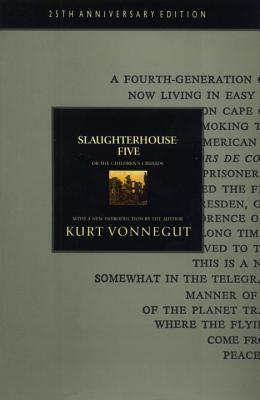
Slaughterhouse-Five, or The Children's Crusade
by Kurt Vonnegut Jr.
Rating: 4.0 ⭐
• 6 recommendations ❤️
This 25th anniversary edition of Slaughterhouse-Five introduces Billy Pilgrim, a man who becomes unstuck in time after he is abducted by aliens from the planet Tralfamadore. In a plot-scrambling display of virtuosity, we follow him simultaneously thru all his life's phases, concentrating on his (& Vonnegut's) shattering experience as an prisoner of war who witnesses the Dresden firebombing. Don't let ease of reading fool you--Vonnegut's isn't a conventional or simple novel. He writes, "There are almost no characters in this story, & almost no dramatic confrontations, because most of the people in it are so sick, & so much the listless playthings of enormous forces. One of the main effects of war, after all, is that people are discouraged from being characters..." Slaughterhouse-Five, named from the building where the POWs were held, isn't only Vonnegut's most powerful book, it's as important as any written since '45. Like Catch-22, it fashions the author's WWII experiences into an eloquent plea against butchery in authority's service. It boasts the same imaginative humanity & gleeful appreciation of the absurd found in his other works, but the book's basis in fact gives it a uniquely poignant humor.

In this candid and riveting memoir, for the first time ever, Nike founder and CEO Phil Knight shares the inside story of the company’s early days as an intrepid start-up and its evolution into one of the world’s most iconic, game-changing, and profitable brands.In 1962, fresh out of business school, Phil Knight borrowed $50 from his father and created a company with a simple mission: import high-quality, low-cost athletic shoes from Japan. Selling the shoes from the trunk of his lime green Plymouth Valiant, Knight grossed $8,000 his first year. Today, Nike’s annual sales top $30 billion. In an age of startups, Nike is the ne plus ultra of all startups, and the swoosh has become a revolutionary, globe-spanning icon, one of the most ubiquitous and recognizable symbols in the world today.But Knight, the man behind the swoosh, has always remained a mystery. Now, for the first time, in a memoir that is candid, humble, gutsy, and wry, he tells his story, beginning with his crossroads moment. At 24, after backpacking around the world, he decided to take the unconventional path, to start his own business—a business that would be dynamic, different.Knight details the many risks and daunting setbacks that stood between him and his dream—along with his early triumphs. Above all, he recalls the formative relationships with his first partners and employees, a ragtag group of misfits and seekers who became a tight-knit band of brothers. Together, harnessing the transcendent power of a shared mission, and a deep belief in the spirit of sport, they built a brand that changed everything.

Creativity, Inc.: an inspiring look at how creativity can - and should - be harnessed for business success by the founder of Pixar
by Ed Catmull
Rating: 4.3 ⭐
• 16 recommendations ❤️
As a young man, Ed Catmull had a dream: to make the world’s first computer-animated movie. He nurtured that dream first as a Ph.D. student at the University of Utah, where many computer science pioneers got their start, and then forged an early partnership with George Lucas that led, indirectly, to his founding Pixar with Steve Jobs and John Lasseter in 1986. Nine years later and against all odds, Toy Story was released, changing animation forever.Since then, Pixar has dominated the world of animation, producing such beloved films as Monsters, Inc., Finding Nemo, The Incredibles, Up, and WALL-E, which have gone on to set box-office records and garner twenty-seven Academy Awards. The joyousness of the storytelling, the inventive plots, the emotional authenticity: In some ways, Pixar movies are an object lesson in what creativity really is. Now, in this book, Catmull reveals the ideals and techniques, honed over years, that have made Pixar so widely admired—and so profitable.Creativity, Inc. is a book for managers who want to lead their employees to new heights, a manual for anyone who strives for originality, and the first-ever, all-access trip into the nerve center of Pixar Animation Studios—into the story meetings, the postmortems, and the ‘Braintrust’ sessions where art is born. It is, at heart, a book about how to build and sustain a creative culture—but it is also, as Pixar co-founder and president Ed Catmull writes, ‘an expression of the ideas that I believe make the best in us possible.’

Hatching Twitter: A True Story of Money, Power, Friendship, and Betrayal
by Nick Bilton
Rating: 4.3 ⭐
• 4 recommendations ❤️
Ev told Jack he had to “chill out” with the deluge of media he was doing. “It’s bad for the company,” Ev said. “It’s sending the wrong message.” Biz sat between them, watching like a spectator at a tennis match. “But I invented Twitter,” Jack said. “No, you didn’t invent Twitter,” Ev replied. “I didn’t invent Twitter either. Neither did Biz. People don’t invent things on the Internet. They simply expand on an idea that already exists.” Despite all the coverage of Twitter’s rise, Nick Bilton of The New York Times is the first journalist to tell the full story—a gripping drama of betrayed friendships and highstakes power struggles. The four founders—Evan Williams, Biz Stone, Jack Dorsey, and Noah Glass—made a dizzyingly fast transition from ordinary engineers to wealthy celebrities. They fought each other bitterly for money, influence, publicity, and control as Twitter grew larger and more powerful. Ultimately they all lost their grip on it. Bilton’s unprecedented access and exhaustive reporting have enabled him to write an intimate portrait of four friends who accidentally changed the world, and what they all learned along the way.

Traction: How Any Startup Can Achieve Explosive Customer Growth
by Gabriel Weinberg
Rating: 4.2 ⭐
• 6 recommendations ❤️
Two successful startup founders offer a comprehensive overview of the various ways startups can achieve strong, sustainable growth, and a guide to choosing the ones that will make the differencce.Why do so many startups fail? According to entrepreneurs Gabriel Weinberg and Justin Mares, most failed startups don’t get off the ground not because of a bad product, but because they don’t have enough customers. They make the fatal mistake of putting all their effort into perfecting their product at the cost of reaching out to potential users. Instead, they should be putting half their resources into getting traction.TRACTION is the essential guide for any startup looking to stay ahead of the curve and start building a user base early in the game. The book offers no one-size-fits-all solution: every startup is unique, so no single method is guaranteed to generate traction. Instead, the authors identify nineteen different traction channels from viral marketing to trade shows, offer insights on how to exploit each one to its fullest potential, and provide a framework to test various channels and identify the best one for any startup.Drawing on advice from more than 40 successful startup founders and marketers, from Wikipedia’s Jimmy Wales to American Apparel’s Ryan Holiday, TRACTION is a comprehensive textbook for marketing your way to growth.

If at Birth You Don't Succeed: My Adventures with Disaster and Destiny
by Zach Anner
Rating: 4.0 ⭐
• 6 recommendations ❤️
Comedian Zach Anner opens his frank and devilishly funny book, If at Birth You Don't Succeed, with an admission: he botched his own birth. Two months early, underweight and under-prepared for life, he entered the world with cerebral palsy and an uncertain future. So how did this hairless mole-rat of a boy blossom into a viral internet sensation who's hosted two travel shows, impressed Oprah, driven the Mars Rover, and inspired a John Mayer song? (It wasn't Your Body is a Wonderland.)Zach lives by the mantra: when life gives you wheelchair, make lemonade. Whether recounting a valiant childhood attempt to woo Cindy Crawford, encounters with zealous faith healers, or the time he crapped his pants mere feet from Dr. Phil, Zach shares his fumbles with unflinching honesty and characteristic charm. By his thirtieth birthday, Zach had grown into an adult with a career in entertainment, millions of fans, a loving family, and friends who would literally carry him up mountains.If at Birth You Don't Succeed is a hilariously irreverent and heartfelt memoir about finding your passion and your path even when it's paved with epic misadventure. This is the unlikely but not unlucky story of a man who couldn't safely open a bag of Skittles, but still became a fitness guru with fans around the world. You'll laugh, you'll cry, you'll fall in love with the Olive Garden all over again, and learn why cerebral palsy is, definitively, "the sexiest of the palsies."

Superforecasting: The Art and Science of Prediction
by Philip E. Tetlock
Rating: 4.1 ⭐
• 13 recommendations ❤️
NEW YORK TIMES BESTSELLER • NAMED ONE OF THE BEST BOOKS OF THE YEAR BY THE ECONOMIST “ The most important book on decision making since Daniel Kahneman's Thinking, Fast and Slow . ” —Jason Zweig, The Wall Street Journal Everyone would benefit from seeing further into the future, whether buying stocks, crafting policy, launching a new product, or simply planning the week’s meals. Unfortunately, people tend to be terrible forecasters. As Wharton professor Philip Tetlock showed in a landmark 2005 study, even experts’ predictions are only slightly better than chance. However, an important and underreported conclusion of that study was that some experts do have real foresight, and Tetlock has spent the past decade trying to figure out why. What makes some people so good? And can this talent be taught? In Superforecasting , Tetlock and coauthor Dan Gardner offer a masterwork on prediction, drawing on decades of research and the results of a massive, government-funded forecasting tournament. The Good Judgment Project involves tens of thousands of ordinary people—including a Brooklyn filmmaker, a retired pipe installer, and a former ballroom dancer—who set out to forecast global events. Some of the volunteers have turned out to be astonishingly good. They’ve beaten other benchmarks, competitors, and prediction markets. They’ve even beaten the collective judgment of intelligence analysts with access to classified information. They are "superforecasters." In this groundbreaking and accessible book, Tetlock and Gardner show us how we can learn from this elite group. Weaving together stories of forecasting successes (the raid on Osama bin Laden’s compound) and failures (the Bay of Pigs) and interviews with a range of high-level decision makers, from David Petraeus to Robert Rubin, they show that good forecasting doesn’t require powerful computers or arcane methods. It involves gathering evidence from a variety of sources, thinking probabilistically, working in teams, keeping score, and being willing to admit error and change course.Superforecasting offers the first demonstrably effective way to improve our ability to predict the future—whether in business, finance, politics, international affairs, or daily life—and is destined to become a modern classic.

American Kingpin: The Epic Hunt for the Criminal Mastermind Behind the Silk Road
by Nick Bilton
Rating: 4.5 ⭐
• 15 recommendations ❤️
NEW YORK TIMES BESTSELLER. The unbelievable true story of the man who built a billion-dollar online drug empire from his bedroom--and almost got away with it.In 2011, a twenty-six-year-old libertarian programmer named Ross Ulbricht launched the ultimate free market: the Silk Road, a clandestine Web site hosted on the Dark Web where anyone could trade anything--drugs, hacking software, forged passports, counterfeit cash, poisons--free of the government's watchful eye.It wasn't long before the media got wind of the new Web site where anyone--not just teenagers and weed dealers but terrorists and black hat hackers--could buy and sell contraband detection-free. Spurred by a public outcry, the federal government launched an epic two-year manhunt for the site's elusive proprietor, with no leads, no witnesses, and no clear jurisdiction. All the investigators knew was that whoever was running the site called himself the Dread Pirate Roberts.The Silk Road quickly ballooned into $1.2 billion enterprise, and Ross embraced his new role as kingpin. He enlisted a loyal crew of allies in high and low places, all as addicted to the danger and thrill of running an illegal marketplace as their customers were to the heroin they sold. Through his network he got wind of the target on his back and took drastic steps to protect himself--including ordering a hit on a former employee. As Ross made plans to disappear forever, the Feds raced against the clock to catch a man they weren't sure even existed, searching for a needle in the haystack of the global Internet.Drawing on exclusive access to key players and two billion digital words and images Ross left behind, Vanity Fair correspondent and New York Times bestselling author Nick Bilton offers a tale filled with twists and turns, lucky breaks and unbelievable close calls. It's a story of the boy next door's ambition gone criminal, spurred on by the clash between the new world of libertarian-leaning, anonymous, decentralized Web advocates and the old world of government control, order, and the rule of law. Filled with unforgettable characters and capped by an astonishing climax, American Kingpin might be dismissed as too outrageous for fiction. But it's all too real.

Why We Sleep: Unlocking the Power of Sleep and Dreams
by Matthew Walker
Rating: 4.4 ⭐
• 16 recommendations ❤️
“Why We Sleep is an important and fascinating book…Walker taught me a lot about this basic activity that every person on Earth needs. I suspect his book will do the same for you.” —Bill Gates A New York Times bestseller and international sensation, this “stimulating and important book” (Financial Times) is a fascinating dive into the purpose and power of slumber.With two appearances on CBS This Morning and Fresh Air's most popular interview of 2017, Matthew Walker has made abundantly clear that sleep is one of the most important but least understood aspects of our life. Until very recently, science had no answer to the question of why we sleep, or what good it served, or why we suffer such devastating health consequences when it is absent. Compared to the other basic drives in life—eating, drinking, and reproducing—the purpose of sleep remains more elusive. Within the brain, sleep enriches a diversity of functions, including our ability to learn, memorize, and make logical decisions. It recalibrates our emotions, restocks our immune system, fine-tunes our metabolism, and regulates our appetite. Dreaming creates a virtual reality space in which the brain melds past and present knowledge, inspiring creativity. In this “compelling and utterly convincing” (The Sunday Times) book, preeminent neuroscientist and sleep expert Matthew Walker provides a revolutionary exploration of sleep, examining how it affects every aspect of our physical and mental well-being. Charting the most cutting-edge scientific breakthroughs, and marshalling his decades of research and clinical practice, Walker explains how we can harness sleep to improve learning, mood and energy levels, regulate hormones, prevent cancer, Alzheimer’s and diabetes, slow the effects of aging, and increase longevity. He also provides actionable steps towards getting a better night’s sleep every night. Clear-eyed, fascinating, and accessible, Why We Sleep is a crucial and illuminating book. Written with the precision of Atul Gawande, Andrew Solomon, and Sherwin Nuland, it is “recommended for night-table reading in the most pragmatic sense” (The New York Times Book Review).

Discover the Swedish ethos of balanced living with this little book of Lagom .The Swedish concept of Lagom (pronounced "lah-gom") roughly translates to "not too little, not too much, just right." This charming book introduces readers to a new way of balanced living that promises happiness and sustainability in work and in life. Lagom provides simple solutions to juggle everyday priorities, reduce stress, eat well, and save money, with lessons on the importance of downtime, being outdoors, and Sweden's coffee break culture. Tips on removing clutter and creating a capsule wardrobe help readers achieve Sweden's famously clean and functional design aesthetic, while advice on going green and growing food gets their hands dirty.With seemingly endless financial, emotional, and environmental benefits, Lagom presents an accessible and all-encompassing lifestyle that is sure to inspire mindfulness, wellbeing, and contentment.

Featuring forty trailblazing black women in American history, Little Leaders educates and inspires as it relates true stories of breaking boundaries and achieving beyond expectations.Illuminating text paired with irresistible illustrations bring to life both iconic and lesser-known female figures of Black history such as abolitionist Sojourner Truth, pilot Bessie Coleman, chemist Alice Ball, politician Shirley Chisholm, mathematician Katherine Johnson, poet Maya Angelou, and filmmaker Julie Dash. Among these biographies, readers will find heroes, role models, and everyday women who did extraordinary things - bold women whose actions and beliefs contributed to making the world better for generations of girls and women to come.Whether they were putting pen to paper, soaring through the air or speaking up for the rights of others, the women profiled in these pages were all taking a stand against a world that didn't always accept them. The leaders in this book may be little, but they all did something big and amazing, inspiring generations to come.

White Fragility: Why It's So Hard for White People to Talk About Racism
by Robin DiAngelo
Rating: 4.0 ⭐
• 6 recommendations ❤️
The New York Times best-selling book exploring the counterproductive reactions white people have when their assumptions about race are challenged, and how these reactions maintain racial inequality.In this "vital, necessary, and beautiful book" (Michael Eric Dyson), antiracist educator Robin DiAngelo deftly illuminates the phenomenon of white fragility and "allows us to understand racism as a practice not restricted to 'bad people' (Claudia Rankine). Referring to the defensive moves that white people make when challenged racially, white fragility is characterized by emotions such as anger, fear, and guilt, and by behaviors including argumentation and silence. These behaviors, in turn, function to reinstate white racial equilibrium and prevent any meaningful cross-racial dialogue. In this in-depth exploration, DiAngelo examines how white fragility develops, how it protects racial inequality, and what we can do to engage more constructively.

An intimate and profound reckoning with the changes buffeting the $2 trillion global advertising and marketing business from the perspective of its most powerful players, by the bestselling author of GoogledAdvertising and marketing touches on every corner of our lives, and the industry is the invisible fuel powering almost all media. Complain about it though we might, without it the world would be a darker place. But of all the industries wracked by change in the digital age, few have been turned on their heads as dramatically as this one. Mad Men are turning into Math Men (and women--though too few), an instinctual art is transforming into a science, and we are a long way from the days of Don Draper.Frenemies is Ken Auletta's reckoning with an industry under existential assault. He enters the rooms of the ad world's most important players, meeting the old guard as well as new powers and power brokers, investigating their perspectives. It's essential reading, not simply because of what it reveals about this world, but because of the potential the survival of media as we know it depends on the money generated by advertising and marketing--revenue that is in peril in the face of technological changes and the fraying trust between the industry's key players.

Winners Take All: The Elite Charade of Changing the World
by Anand Giridharadas
Rating: 4.1 ⭐
• 10 recommendations ❤️
An insider's groundbreaking investigation of how the global elite's efforts to "change the world" preserve the status quo and obscure their role in causing the problems they later seek to solve.Former New York Times columnist Anand Giridharadas takes us into the inner sanctums of a new gilded age, where the rich and powerful fight for equality and justice any way they can--except ways that threaten the social order and their position atop it. We see how they rebrand themselves as saviors of the poor; how they lavishly reward "thought leaders" who redefine "change" in winner-friendly ways; and how they constantly seek to do more good, but never less harm. We hear the limousine confessions of a celebrated foundation boss; witness an American president hem and haw about his plutocratic benefactors; and attend a cruise-ship conference where entrepreneurs celebrate their own self-interested magnanimity.Giridharadas asks hard questions: Why, for example, should our gravest problems be solved by the unelected upper crust instead of the public institutions it erodes by lobbying and dodging taxes? He also points toward an answer: Rather than rely on scraps from the winners, we must take on the grueling democratic work of building more robust, egalitarian institutions and truly changing the world. A call to action for elites and everyday citizens alike.

The Creative Curve: How to Develop the Right Idea, at the Right Time
by Allen Gannett
Rating: 4.0 ⭐
• 6 recommendations ❤️
Marketing guru Allen Gannett overturns the mythology around creative genius, and reveals the real secret behind breakthrough commercial success--achieving the right balance between the unique and the familiar.We have been lied to about the source of creative genius. We have been spoon-fed the notion throughout our lives that creativity is the province of a brilliant few. And that moments of insight come to us unbidden, in flashes of genius--through our dreams, or in the shower, or in a sudden moment of divine inspiration. We are told about the young Mozart, whose effortless genius trumps the methodical and hardworking Salieri; or the creation of Paul McCartney's song "Yesterday," perhaps the most popular single in music history, which came to him in a dream one morning; or J. K. Rowling's inspiration for the Harry Potter books, which came to her while sitting in a delayed train bound for London. What we aren't told is the real background story behind such hits. Recent research has revealed the science behind increasing our odds of achieving commercial success, whether in music, in writing, in creating a startup company, or in orchestrating an effective marketing campaign. Psychologically, human beings are enticed by the novel and unfamiliar, which attracts us like honey to a bee; but when a song or idea is too novel, too far outside our experience, instead of enticing us, it pushes us away. Because there is a second, equally powerful drive in us--for the safe and familiar. The key to achieving commercial success is to find that sweet spot between the novel and the familiar. In The Creative Curve, that is what Allen Gannett shows us how to do.

"A new, conversation-shifting book that encourages women to own their anger and use it as a tool for positive change, written by one of today's most influential feminist thinkers"--

Billion Dollar Whale: The Man Who Fooled Wall Street, Hollywood, and the World
by Tom Wright
Rating: 4.0 ⭐
• 12 recommendations ❤️
An epic true-tale of hubris and greed from two Pulitzer-finalist Wall Street Journal reporters, Billion Dollar Whale reveals how a young social climber pulled off one of the biggest financial heists in history--right under the nose of the global financial industry--exposing the shocking secret nexus of elite wealth, banking, Hollywood, and politics. The dust had yet to settle on the global financial crisis in 2009 when an unlikely Wharton grad was setting in motion a fraud of unprecedented gall and magnitude--one that would come to symbolize the next great threat to the global financial system. Billion Dollar Whale will become a classic, harrowing parable about the financial world in the twenty-first century.

The first definitive volume that celebrates the best-selling Adidas sneaker with a cultlike global following. Featuring original imagery, historical photos, an exclusive portrait series by artist Juergen Teller, and contributions from style arbiters such as Raf Simons and Pharrell, plus aninterview and anecdotes from the man behind the sneaker, Stan Smith.An internationally celebrated and highly coveted icon in the world of sneaker design, the Stan Smith tennis sneaker has achieved cult status since its debut in the early 1970s. This is the first book to celebrate the global cultural impact of the ubiquitous sneaker named after former world No. 1 tennis player Stan Smith.Over the last five decades, the Stan Smith has remained the perennial icon of minimalist cool sneaker design and Smith has collaborated with groundbreaking artists, designers, and fashion brands including Colette, Yohji Yamamoto, Raf Simons, and Pharrell.This all-access volume demonstrates that the personality of the shoe has everything to do with Stan the Man. Chapters are enhanced by recollections from Stan Smith along with anecdotes from style influencers, designers, sports legends, and fervent sneaker fans. Showcasing street-style photography of Stan Smith sworn globally, to pop-culture references of the sneaker in rap lyrics to Bollywood movies--this book is an absolute collector's item for readers interested in sneaker culture, sports, street style, design, and pop culture.

A brilliant and buoyant investigation into the existence (or not) of streaks, from a rising star at the Wall Street Journal.For decades, statisticians, social scientists, psychologists, and economists (among them Nobel Prize winners) have spent massive amounts of precious time thinking about whether streaks actually exist. After all, a substantial number of decisions that we make in our everyday lives are quietly rooted in this one question: If something happened before, will it happen again? Is there such a thing as being in the zone? Can someone have a “hot hand”? Or is it simply a case of seeing patterns in randomness? Or, if streaks are possible, where can they be found?In The Hot Hand, Wall Street Journal reporter Ben Cohen offers an unfailingly entertaining and provocative investigation into these questions. He begins with how a $35,000 fine and a wild night in New York revived a debate about the existence of streaks that was several generations in the making. We learn how the ability to recognize and then bet against streaks turned a business school dropout named David Booth into a billionaire, and how the subconscious nature of streak-related bias can make the difference between life and death for asylum seekers. We see how previously unrecognized streaks hidden amidst archival data helped solve one of the most haunting mysteries of the twentieth century, the disappearance of Raoul Wallenberg. Cohen also exposes how streak-related incentives can be manipulated, from the five-syllable word that helped break arcade profit records to an arc of black paint that allowed Stephen Curry to transform from future junior high coach into the greatest three-point shooter in NBA history. Crucially, Cohen also explores why false recognition of nonexistent streaks can have cataclysmic results, particularly if you are a sugar beet farmer or the sort of gambler who likes to switch to black on the ninth spin of the roulette wheel.A brilliant investigation into when streaks exist and how they can be taken advantage of, The Hot Hand is essential reading for anyone who thinks they’ve got a shot.

The Ride of a Lifetime: Lessons Learned from 15 Years as CEO of the Walt Disney Company
by Robert Iger
Rating: 4.5 ⭐
• 18 recommendations ❤️
A grand vision defined: The CEO of The Walt Disney Company shares the ideas and values he has used to reinvent one of the most beloved companies in the world, and inspire the people who bring the magic to life.In 2005, Robert Iger became CEO of The Walt Disney Company during a difficult time. Morale had deteriorated, competition was more intense, and technology was changing faster than at any time in the company's history. "I knew there was nothing to be gained from arguing over the past," Iger writes. "The only thing that mattered was the future, and I believed I had a clear idea of the direction Disney needed to go." It came down to three clear ideas: 1) Create the highest quality content Disney could produce. 2) Embrace and adopt technology instead of fighting it. And 3) Think bigger--think global--and turn Disney into a stronger brand in international markets.Twelve years later, Disney is the largest, most respected media company in the world counting Pixar, Marvel, Lucasfilm, and 21st Century Fox among its properties. Its value is nearly five times what it was when Iger took over, and Iger is recognized as one of the most innovative and successful CEOs of our time.Now, he's sharing the lessons he's learned while running Disney and leading its 200,000 employees--taking big risks in the face of historic disruption; learning to inspire the people who work for you; leading with fairness and communicating principles clearly. This book is about the relentless curiosity that has driven Iger for forty-five years, since the day he started as a studio supervisor at ABC. It's also about thoughtfulness and respect, and a decency-over-dollars approach that has become the bedrock of every project and partnership Iger pursues, from a deep friendship with Steve Jobs in his final years to an abiding love of the evolving Star Wars myth."Over the past fourteen years, I think I've learned so much about what real leadership is," Iger writes. "But I couldn't have articulated all of this until I lived it. You can't fake it--and that's one of the key lessons in this book."Librarian Note: This edition was previously released, with a different cover image, as an Advance Reader Copy with ISBN 9780399592096. That ARC can be found here

New York Times and Wall Street Journal BestsellerA New York Times technology correspondent presents the dramatic story of Uber, the Silicon Valley startup at the center of one of the great venture capital power struggles of our time. In June 2017, Travis Kalanick, the hard-charging CEO of Uber, was ousted in a boardroom coup that capped a brutal year for the transportation giant. Uber had catapulted to the top of the tech world, yet for many came to symbolize everything wrong with Silicon Valley. Award-winning New York Times technology correspondent Mike Isaac’s Super Pumped presents the dramatic rise and fall of Uber, set against an era of rapid upheaval in Silicon Valley. Backed by billions in venture capital dollars and led by a brash and ambitious founder, Uber promised to revolutionize the way we move people and goods through the world. A near instant “unicorn,” Uber seemed poised to take its place next to Amazon, Apple, and Google as a technology giant. What followed would become a corporate cautionary tale about the perils of startup culture and a vivid example of how blind worship of startup founders can go wildly wrong. Isaac recounts Uber’s pitched battles with taxi unions and drivers, the company’s toxic internal culture, and the bare-knuckle tactics it devised to overcome obstacles in its quest for dominance. With billions of dollars at stake, Isaac shows how venture capitalists asserted their power and seized control of the startup as it fought its way toward its fateful IPO. Based on hundreds of interviews with current and former Uber employees, along with previously unpublished documents, Super Pumped is a page-turning story of ambition and deception, obscene wealth, and bad behavior that explores how blistering technological and financial innovation culminated in one of the most catastrophic twelve-month periods in American corporate history.

Edward Snowden, the man who risked everything to expose the US government’s system of mass surveillance, reveals for the first time the story of his life, including how he helped to build that system and what motivated him to try to bring it down.In 2013, twenty-nine-year-old Edward Snowden shocked the world when he broke with the American intelligence establishment and revealed that the United States government was secretly pursuing the means to collect every single phone call, text message, and email. The result would be an unprecedented system of mass surveillance with the ability to pry into the private lives of every person on earth. Six years later, Snowden reveals for the very first time how he helped to build this system and why he was moved to expose it.Spanning the bucolic Beltway suburbs of his childhood and the clandestine CIA and NSA postings of his adulthood, Permanent Record is the extraordinary account of a bright young man who grew up online—a man who became a spy, a whistleblower, and, in exile, the Internet’s conscience. Written with wit, grace, passion, and an unflinching candor, Permanent Record is a crucial memoir of our digital age and destined to be a classic.

The Great CEO Within: The Tactical Guide to Company Building
by Matt Mochary
Rating: 4.5 ⭐
• 11 recommendations ❤️
Matt Mochary coaches the CEOs of many of the fastest-scaling technology companies in Silicon Valley. With The Great CEO Within , he shares his highly effective leadership and business-operating tools with any CEO or manager in the world. Learn how to efficiently scale your business from startup to corporation by implementing a system of accountability, effective problem-solving, and transparent feedback. Becoming a great CEO requires training. For a founding CEO, there is precious little time to complete that training, especially at the helm of a rapidly growing company. Now you have the guidance you need in one book.

A legendary NBA player and beloved teammate shares his hard-earned wisdom about finding your true purpose and mastering your inner game, whatever that game might be.Chris Bosh is on any list of the Top 100 NBA players of all time--an eleven-time All Star, two-time Finals winner, Olympic gold medalist, and currently the league's Global Ambassador. Always an uncommonly philosophical NBA star, he found himself needing all the mindfulness he could muster in 2017, when his career was cut short at its prime by a freak medical condition. Suddenly, he was thrown out of the work that had given so much more than just a livelihood, and had to think deeply about his identity in the world. This game had taught him so much; what could he make of it all?Out of that place of deep reflection has emerged an uncommon book for a retired superstar to write. While it has the best elements of a memoir--the portraits of the great players and coaches, from LeBron and Kobe to Pat Riley and Coach K, and the accounts of extraordinary competitive moments--it is really a wisdom book, a blend of The Inner Game of Tennis , Wynton Marsalis's To a Young Jazz Musician , and Rilke's Letters to a Young Poet . It is rich with insight about basketball, but even richer with insight about life. It's a book about finding a purpose that is deep and real, not shallow and external, and about navigating success and failure as the twin mirages they are--pushing past fear, past ego, past fatigue to the pure flow of sustained accomplishment in a mesh with teammates who have given themselves to the same thing. Chris Bosh found that flow, and sustained it at the highest level. He misses basketball keenly still, but he has no regrets. Deep, honest, unflinching, this book is his friend's hand up to those coming up behind, whatever their pursuit might be.

Who( The A Method for Hiring) <> Hardcover <> GeoffSmart <> BallantineBooks