
Alan Kay Recommended Books
American computer scientist (born 1940)
13 Books Recommended

The definitive text in cell biology As the amount of information in biology expands dramatically, it becomes increasingly important for textbooks to distill this vast amount of scientific knowledge into concise principles and enduring concepts. Molecular Biology of the Cell , Sixth Edition accomplishes this goal with clear writing and beautiful illustrations. The Sixth Edition has been extensively revised and updated with the latest research in cell biology, and it provides an exceptional framework for teaching and learning. Table of Part I INTRODUCTION TO THE CELL1. Cells and Genomes2. Cell Chemistry and Bioenergetics3. ProteinsPart II BASIC GENETIC MECHANISMS4. DNA, Chromosomes, and Genomes5. DNA Replication, Repair, and Recombination6. How Cells Read the From DNA to Protein7. Control of Gene ExpressionPart III WAYS OF WORKING WITH CELLS8. Analyzing Cells, Molecules, and Systems9. Visualizing CellsPart IV INTERNAL ORGANIZATION OF THE CELL10. Membrane Structure11. Membrane Transport of Small Molecules and theElectrical Properties of Membranes12. Intracellular Compartments and Protein Sorting13. Intracellular Membrane Traffic14. Energy Mitochondria and Chloroplasts15. Cell Signaling16. The Cytoskeleton17. The Cell Cycle18. Cell Death19. Cell Junctions and the Extracellular MatrixPart V CELLS IN THEIR SOCIAL CONTEXT20. Cancer21. Development of Multicellular Organisms22. Stem Cells and Tissue Renewal23. Pathogens and Infection24. The Innate and Adaptive Immune Systems

The CLOS metaobject protocol is an elegant, high-performance extension tothe CommonLisp Object System. The authors, who developed the metaobject protocol andwho were among the group that developed CLOS, introduce this new approach toprogramming language design, describe its evolution and design principles, andpresent a formal specification of a metaobject protocol for CLOS.Kiczales, desRivi?res, and Bobrow show that the "art of metaobject protocol design" lies increating a synthetic combination of object-oriented and reflective techniques thatcan be applied under existing software engineering considerations to yield a newapproach to programming language design that meets a broad set of designcriteria.One of the major benefits of including the metaobject protocol inprogramming languages is that it allows users to adjust the language to better suittheir needs. Metaobject protocols also disprove the adage that adding moreflexibility to a programming language reduces its performance. In presenting theprinciples of metaobject protocols, the authors work with actual code for asimplified implementation of CLOS and its metaobject protocol, providing anopportunity for the reader to gain hands-on experience with the design process. Theyalso include a number of exercises that address important concerns and openissues.Gregor Kiczales and Jim des Rivi?res, are Members of the Research Staff, andDaniel Bobrow is a Research Fellow, in the System Sciences Laboratory at Xerox PaloAlto Research Center.
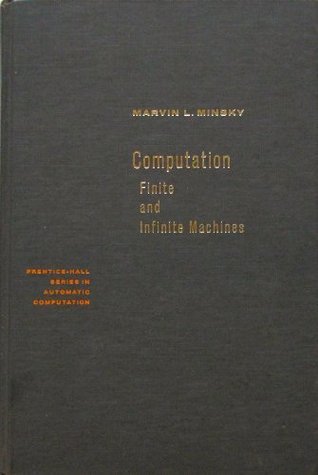
Man has within a single generation found himself sharing the world with a strange new the computers and computer-like machines. Neither history, nor philosophy, nor common sense will tell us how these machines will affect us, for they do not do "work" as did machines of the Industrial Revolution. Instead of dealing with materials or energy, we are told that they handle "control" and "information" and even "intellectual processes." There are very few individuals today who doubt that the computer and its relatives are developing rapidly in capability and complexity, and that these machines are destined to play important (though not as yet fully understood) roles in society's future. Though only some of us deal directly with computers, all of us are falling under the shadow of their ever-growing sphere of influence, and thus we all need to understand their capabilities and their limitations. It would indeed be reassuring to have a book that categorically and systematically described what all these machines can do and what they cannot do, giving sound theoretical or practical grounds for each judgment. However, although some books have purported to do this, it cannot be done for the following a) Computer-like devices are utterly unlike anything which science has ever considered---we still lack the tools necessary to fully analyze, synthesize, or even think about them; and b) The methods discovered so far are effective in certain areas, but are developing much too rapidly to allow a useful interpretation and interpolation of results. The abstract theory---as described in this book---tells us in no uncertain terms that the machines' potential range is enormous, and that its theoretical limitations are of the subtlest and most elusive sort. There is no reason to suppose machines have any limitations not shared by man.

The Principia: The Authoritative Translation and Guide: Mathematical Principles of Natural Philosophy
by Isaac Newton
Rating: 4.8 ⭐
• 10 recommendations ❤️
In his monumental 1687 work, Philosophiae Naturalis Principia Mathematica, known familiarly as the Principia, Isaac Newton laid out in mathematical terms the principles of time, force, and motion that have guided the development of modern physical science. Even after more than three centuries and the revolutions of Einsteinian relativity and quantum mechanics, Newtonian physics continues to account for many of the phenomena of the observed world, and Newtonian celestial dynamics is used to determine the orbits of our space vehicles. This authoritative, modern translation by Cohen and Whitman, the first in over 285 years, is based on the 1726 edition, the final revised version approved by Newton; it includes extracts from the earlier editions, corrects errors found in earlier versions, and replaces archaic English with contemporary prose and up-to-date mathematical forms. Newton's principles describe acceleration, deceleration, and inertial movement; fluid dynamics; and the motions of the earth, moon, planets, and comets. A great work in itself, the Principia also revolutionized the methods of scientific investigation. It set forth the fundamental three laws of motion and the law of universal gravity, the physical principles that account for the Copernican system of the world as emended by Kepler, thus effectively ending controversy concerning the Copernican planetary system. The illuminating Guide to the Principia by I. Bernard Cohen, along with his and Anne Whitman's translation, make this preeminent work truly accessible for today's scientists, scholars, and students.

'It is a ripping yarn, but it is also an eerie tale of isolation and madness ... with a compellingly Byronic central character' GuardianCombining thrilling adventure with scientific facts and a wonder at the natural world, Twenty Thousand Leagues Under the Sea is Jules Verne's most enduringly popular novel. It begins when a vast black object is spotted menacing the oceans, causing panic over the world. When Professor Aronnax joins an expedition to hunt down the creature, he and his two companions discover it is a giant submarine, the Nautilus. Captured and held prisoner on board by its captain, Nemo - unpredictable, enigmatic, exiled from humanity - they have no choice but to travel the terrifying underwater depths with him. Translated with an Introduction and Notes by David Coward

The Mythical Man-Month: Essays on Software Engineering
by Frederick P. Brooks Jr.
Rating: 4.0 ⭐
• 10 recommendations ❤️
Few books on software project management have been as influential and timeless as The Mythical Man-Month. With a blend of software engineering facts and thought-provoking opinions, Fred Brooks offers insight for anyone managing complex projects. These essays draw from his experience as project manager for the IBM System/360 computer family and then for OS/360, its massive software system. Now, 45 years after the initial publication of his book, Brooks has revisited his original ideas and added new thoughts and advice, both for readers already familiar with his work and for readers discovering it for the first time.The added chapters contain (1) a crisp condensation of all the propositions asserted in the original book, including Brooks' central argument in The Mythical Man-Month: that large programming projects suffer management problems different from small ones due to the division of labor; that the conceptual integrity of the product is therefore critical; and that it is difficult but possible to achieve this unity; (2) Brooks' view of these propositions a generation later; (3) a reprint of his classic 1986 paper "No Silver Bullet"; and (4) today's thoughts on the 1986 assertion, "There will be no silver bullet within ten years."

Continuing his exploration of the organization of complexity and the science of design, this new edition of Herbert Simon's classic work on artificial intelligence adds a chapter that sorts out the current themes and tools -- chaos, adaptive systems, genetic algorithms -- for analyzing complexity and complex systems. There are updates throughout the book as well. These take into account important advances in cognitive psychology and the science of design while confirming and extending the book's basic thesis: that a physical symbol system has the necessary and sufficient means for intelligent action. The chapter "Economic Reality" has also been revised to reflect a change in emphasis in Simon's thinking about the respective roles of organizations and markets in economic systems."People sometimes ask me what they should read to find out about artificial intelligence. Herbert Simon's book The Sciences of the Artificial is always on the list I give them. Every page issues a challenge to conventional thinking, and the layman who digests it well will certainly understand what the field of artificial intelligence hopes to accomplish. I recommend it in the same spirit that I recommend Freud to people who ask about psychoanalysis, or Piaget to those who ask about child psychology: If you want to learn about a subject, start by reading its founding fathers." -- George A. Miller

Dive into the timeless tales of gods and heroes in this bestselling A-to-Z encyclopedia detailing classic myths and legends—perfect for curious readers and academics alike. Edith Hamilton's mythology succeeds like no other book in bringing to life for the modern reader the Greek, Roman and Norse myths that are the keystone of Western culture-the stories of gods and heroes that have inspired human creativity from antiquity to the present.We follow the drama of the Trojan War and the wanderings of Odysseus. We hear the tales of Jason and the Golden Fleece, Cupid and Psyche, and mighty King Midas. We discover the origins of the names of the constellations. And we recognize reference points for countless works for art, literature and culture inquiry-from Freud's Oedipus complex to Wagner's Ring Cycle of operas to Eugene O'Neill's Mourning Becomes ElectraBoth a reference text for scholars of all ages and a book to simply enjoy, Mythology is a classic not to be missed.

Now completely up-to-date with the latest research advances, the Seventh Edition of James D. Watson’s classic book, Molecular Biology of the Gene retains the distinctive character of earlier editions that has made it the most widely used book in molecular biology. Twenty-two concise chapters, co-authored by six highly distinguished biologists, provide current, authoritative coverage of an exciting, fast-changing discipline.

This exquisite edition is rarely available. Presented in two 12"x18" volumes weighing 17 pounds, it includes 400 pages of text in volume one and 137 full-page or larger illustrations in volume two, all printed on Perma-Life paper. The volumes are hand-sewn and are robust in binding to give good service in the workshop. This magnificent work, originally published in four paper-bound installments which appeared 1776-1778, Part General information on geometry, mechanics, and tools, and descriptions and dimensions for every part of the tracker organ. Part Detailed instructions for making all of the parts of an organ; detailed instructions for voicing and tuning, enlarging, and maintaining the finished instrument. Part Models of stoplists and a specimen contract for having an organ built. It explains how to test an organ, advises organists on matters within their competence concerning the building and maintaining of an organ, and recommends certain registrations as being appropriate to various kinds of composition. Part Deals with organs for use elsewhere than in churches and with mechanical organ playing devices. The instructions for translating printed music into mechanical organ form give insights into French performance practices of the mid-18th Century. This set was published by the Sunbury Press of Raleigh, North Carolina in 1977. The set is the First Printing edition limited to 1000 copies of which this is number 490 of 1000. Some of the fold-out plates are as big as 25" x 34" and all intact and beautiful. Many pages of Volume One are not split at the top or sometimes bottom (easily split with a sharp knife), with natural front edges.
The LISP language is designed primarily for symbolic data processing used for symbolic calculations in differential and integral calculus, electrical circuit theory, mathematical logic, game playing, and other fields of artificial intelligence.The manual describes LISP, a formal mathematical language. LISP differs from most programming languages in three important ways. The first way is in the nature of the data. In the LISP language, all data are in the form of symbolic expressions usually referred to as S-expressions, of indefinite length, and which have a branching tree-type of structure, so that significant subexpressions can be readily isolated. In the LISP system, the bulk of the available memory is used for storing S-expressions in the form of list structures. The second distinction is that the LISP language is the source language itself which specifies in what way the S-expressions are to be processed. Third, LISP can interpret and execute programs written in the form of S-expressions. Thus, like machine language, and unlike most other high level languages, it can be used to generate programs for further executions.

London. A snowy December, 1888. Sherlock Holmes, 34, is languishing and back on cocaine after a disastrous Ripper investigation. Watson can neither comfort nor rouse his friend – until a strangely encoded letter arrives from Paris. Mademoiselle La Victoire, a beautiful French cabaret star writes that her illegitimate son by an English Lord has disappeared, and she has been attacked in the streets of Montmartre.Racing to Paris with Watson at his side, Holmes discovers the missing child is only the tip of the iceberg of a much larger problem. The most valuable statue since the Winged Victory has been violently stolen in Marseilles, and several children from a silk mill in Lancashire have been found murdered. The clues in all three cases point to a single, untouchable man.Will Holmes recover in time to find the missing boy and stop a rising tide of murders? To do so he must stay one step ahead of a dangerous French rival and the threatening interference of his own brother, Mycroft.This latest adventure, in the style of Sir Arthur Conan Doyle, sends the iconic duo from London to Paris and the icy wilds of Lancashire in a case which tests Watson's friendship and the fragility and gifts of Sherlock Holmes' own artistic nature to the limits.