
Alain de Botton Recommended Books
Swiss-born British philosopher and writer
13 Books Recommended

Michel de Montaigne was one of the most influential figures of the Renaissance, singlehandedly responsible for popularising the essay as a literary form. This Penguin Classics edition of The Complete Essays is translated from the French and edited with an introduction and notes by M.A. Screech.In 1572 Montaigne retired to his estates in order to devote himself to leisure, reading and reflection. There he wrote his constantly expanding 'assays', inspired by the ideas he found in books contained in his library and from his own experience. He discusses subjects as diverse as war-horses and cannibals, poetry and politics, sex and religion, love and friendship, ecstasy and experience. But, above all, Montaigne studied himself as a way of drawing out his own inner nature and that of men and women in general. The Essays are among the most idiosyncratic and personal works in all literature and provide an engaging insight into a wise Renaissance mind, continuing to give pleasure and enlightenment to modern readers.With its extensive introduction and notes, M.A. Screech's edition of Montaigne is widely regarded as the most distinguished of recent times.Michel de Montaigne (1533-1586) studied law and spent a number of years working as a counsellor before devoting his life to reading, writing and reflection.If you enjoyed The Complete Essays, you might like Francois Rabelais's Gargantua and Pantagruel, also available in Penguin Classics.'Screech's fine version ... must surely serve as the definitive English Montaigne'A.C. Grayling, Financial Times'A superb edition'Nicholas Wollaston, Observer
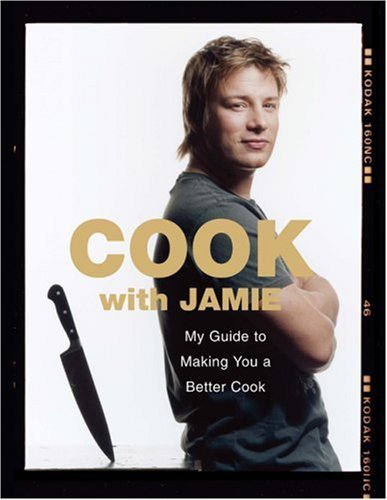
Cook with Jamie: My Guide to Making You a Better Cook
by Jamie Oliver
Rating: 4.0 ⭐
• 2 recommendations ❤️
My guide to making you a better cook. I can't tell you how long I've dreamed about writing this book. It's the biggest book I've ever done, and I've really tried to make it a timeless, modern-day classic. Whether you're a student, a young couple, an established cook, or a novice, I'll take you through a whole load of simple and accessible recipes that will blow the socks off your family and any guests you might have round for dinner. There's information on the equipment that I think you should have in your kitchen, advice on how to recognize and cook loads of different cuts of meat, as well as on how to get the best value and quality when you're out shopping. With all of us consuming more processed food than ever, it's a sad fact that most people just aren't confident enough to cook anymore. With this in mind, now is the time for you to get stuck in and reclaim your fantastic cooking heritage! You know what . . . if you're going to eat three times a day for the rest of your life, you might as well learn to cook properly and enjoy it! So roll up your sleeves and let me help you. P.S.: By the way, you should feel good about buying this book because every single penny I make from it will go toward training and inspiring young kids from tough backgrounds all over the world to have a career in food through the Fifteen Foundation. So on behalf of them, thank you.

International Bestseller • Winner of the Los Angeles Times Book Prize for Fiction “Far more than a conventional novel. It is a meditation on life, on the erotic, on the nature of men and women and love . . . full of telling details, truths large and small, to which just about every reader will respond.” — People In The Unbearable Lightness of Being , acclaimed author Milan Kundera tells the story of two couples, a young woman in love with a man torn between his love for her and his incorrigible womanizing, and one of his mistresses and her humbly faithful lover. In a world in which lives are shaped by irrevocable choices and by fortuitous events, a world in which everything occurs but once, existence seems to lose its substance, its weight. Hence, we feel "the unbearable lightness of being" not only as the consequence of our pristine actions but also in the public sphere, and the two inevitably intertwine. This magnificent novel, now available in a beautifully designed Harper Perennial Deluxe Edition with French flaps and deckle edged paper, is a story of passion and politics, infidelity and ideas, and encompasses the extremes of comedy and tragedy, illuminating all aspects of human existence.

James Beard Award WinnerA trailblazing chef reinvents the art of cooking over fire.Gloriously inspired recipes push the boundaries of live-fired cuisine in this primal yet sophisticated cookbook introducing the incendiary dishes of South America's biggest culinary star. Chef Francis Mallmann—born in Patagonia and trained in France's top restaurants—abandoned the fussy fine dining scene for the more elemental experience of cooking with fire. But his fans followed, including the world's top food journalists and celebrities, such as Francis Ford Coppola, Madonna, and Ralph Lauren, traveling to Argentina and Uruguay to experience the dashing chef's astonishing—and delicious—wood-fired feats.The seven fires of the title refer to a series of grilling techniques that have been singularly adapted for the home cook. So you can cook Signature Mallmann dishes—like Whole Boneless Ribeye with Chimichuri; Salt-Crusted Striped Bass; Whole Roasted Andean Pumpkin with Mint and Goat Cheese Salad; and desserts such as Dulce de Leche Pancakes—indoors or out in any season. Evocative photographs showcase both the recipes and the exquisite beauty of Mallmann's home turf in Patagonia, Buenos Aires, and rural Uruguay. Seven Fires is a must for any griller ready to explore food's next frontier.

The Achitecture of Happiness is a dazzling and generously illustrated journey through the philosophy and psychology of architecture and the indelible connection between our identities and our locations.One of the great but often unmentioned causes of both happiness and misery is the quality of our the kinds of walls, chairs, buildings, and streets that surround us. And yet a concern for architecture is too often described as frivolous, even self-indulgent. Alain de Botton starts from the idea that where we are heavily influences who we can be, and argues that it is architecture's task to stand as an eloquent reminder of our full potential.

“There's no writer alive like de Botton” ( Chicago Tribune ), and now this internationally heralded author turns his attention to the insatiable human quest for status—a quest that has less to do with material comfort than love.Anyone who’s ever lost sleep over an unreturned phone call or the neighbor’s Lexus had better read Alain de Botton’s irresistibly clear-headed new book, immediately. For in its pages, a master explicator of our civilization and its discontents explores the notion that our pursuit of status is actually a pursuit of love, ranging through Western history and thought from St. Augustine to Andrew Carnegie and Machiavelli to Anthony Robbins.Whether it’s assessing the class-consciousness of Christianity or the convulsions of consumer capitalism, dueling or home-furnishing, Status Anxiety is infallibly entertaining. And when it examines the virtues of informed misanthropy, art appreciation, or walking a lobster on a leash, it is not only wise but helpful.

Alain de Botton's The Consolations of Philosophy takes the discipline of logic and the mind back to its roots. Drawing inspiration from six of the finest minds in history - Socrates, Epicurus, Seneca, Montaigne, Schopenhauer and Nietzsche - he addresses lack of money, the pain of love, inadequacy, anxiety and conformity. De Botton's book led one critic to call philosophy 'the new rock and roll'.

Essays in Love will appeal to anyone who has ever been in a relationship or confused about love. The book charts the progress of a love affair from the first kiss to argument and reconciliation, from intimacy and tenderness to the onset of anxiety and heartbreak. The work’s genius lies in the way it minutely analyses emotions we’ve all felt before but have perhaps never understood so well: it includes a chapter on the anxieties of when and how to say ‘I love you’ and another on the challenges of disagreeing with someone else’s taste in shoes. While gripping the reader with the talent of a great novelist, de Botton brings a philosopher’s sensibility to his analysis of the emotions of love, resulting in a genre-breaking book that is at once touching and thought-provoking.

For anyone who ever wondered what Marcel Proust had in mind when he wrote the one-and-a-quarter-million words of In Search of Lost Time (while bedridden, no less), Alain de Botton has the answer. For, in this stylish, erudite and frequently hilarious book, de Botton dips deeply into Proust’s life and work—his fiction, letter, and conversations—and distills from them that rare self-help manual: one that is actually helpful.Here, tendered in prose almost as luminous as it’s subject’s, is advice on cultivating friendships, suffering successfully, recognizing love and understanding why you should never sleep with someone on the first date. And here, too, is a generously perceptive literary biography that suggests that the master is as relevant today as he was in fin de siècle Paris. At once slyly ironic and genuinely wise, How Proust Can Change Your Life is an unqualified delight.

On the surface a traditional "Bildungsroman" describing the narrator’s journey of self-discovery, this huge and complex book is also a panoramic and richly comic portrait of France in the author’s lifetime, and a profound meditation on the nature of art, love, time, memory and death. But for most readers it is the characters of the novel who loom the largest: Swann and Odette, Monsieur de Charlus, Morel, the Duchesse de Guermantes, Françoise, Saint-Loup and so many others — Giants, as the author calls them, immersed in Time. "In Search of Lost Time" is a novel in seven volumes. The novel began to take shape in 1909. Proust continued to work on it until his final illness in the autumn of 1922 forced him to break off. Proust established the structure early on, but even after volumes were initially finished he kept adding new material, and edited one volume after another for publication. The last three of the seven volumes contain oversights and fragmentary or unpolished passages as they existed in draft form at the death of the author; the publication of these parts was overseen by his brother Robert.For this authoritative English-language edition, D. J. Enright has revised the late Terence Kilmartin’s acclaimed reworking of C. K. Scott Moncrieff’s translation to take into account the new definitive French editions of À la recherche du temps perdu (the final volume of these new editions was published by the Bibliothèque de la Pléiade in 1989).

What is art for? In the engaging, lively, and controversial new book, bestselling philosopher Alain de Botton, with art historian John Armstrong, proposes a new way of looking at art, suggesting that it can be useful, relevant, and - above all else - therapeutic for its audiences.De Botton argues that certain great works of art offer clues on managing the tensions and confusions of everyday life. Art as Therapy is packed with 150 examples of outstanding art, with chapters on Love, Nature, Money, and Politics outlining how these works can help with common difficulties. For example, Vermeer's Girl Reading a Letter helps us focus on what we want to be loved for; Serra's Fernando Passoa reminds us of the importance of dignity in suffering; and Manet's Bunch of Asparagus teaches us how to preserve and value our long-term partners.De Botton demonstrates how art can guide and console us, and along the way, help us to better understand both art and ourselves.

From acclaimed classical historian, author of Ghost on the Throne (“Gripping . . . the narrative verve of a born writer and the erudition of a scholar” —Daniel Mendelsohn) and editor of The Landmark Arrian:The Campaign of Alexander (“Thrilling” — The New York Times Book Review ), a high-stakes drama full of murder, madness, tyranny, perversion, with the sweep of history on the grand scale.At the center, the tumultuous life of Seneca, ancient Rome’s preeminent writer and philosopher, beginning with banishment in his fifties and subsequent appointment as tutor to twelve-year-old Nero, future emperor of Rome. Controlling them both, Nero’s mother, Julia Agrippina the Younger, Roman empress, great-granddaughter of the Emperor Augustus, sister of the Emperor Caligula, niece and fourth wife of Emperor Claudius. James Romm seamlessly weaves together the life and written words, the moral struggles, political intrigue, and bloody vengeance that enmeshed Seneca the Younger in the twisted imperial family and the perverse, paranoid regime of Emperor Nero, despot and madman.Romm writes that Seneca watched over Nero as teacher, moral guide, and surrogate father, and, at seventeen, when Nero abruptly ascended to become emperor of Rome, Seneca, a man never avid for political power became, with Nero, the ruler of the Roman Empire. We see how Seneca was able to control his young student, how, under Seneca’s influence, Nero ruled with intelligence and moderation, banned capital punishment, reduced taxes, gave slaves the right to file complaints against their owners, pardoned prisoners arrested for sedition. But with time, as Nero grew vain and disillusioned, Seneca was unable to hold sway over the emperor, and between Nero’s mother, Agrippina—thought to have poisoned her second husband, and her third, who was her uncle (Claudius), and rumored to have entered into an incestuous relationship with her son—and Nero’s father, described by Suetonius as a murderer and cheat charged with treason, adultery, and incest, how long could the young Nero have been contained? Dying Every Day is a portrait of Seneca’s moral struggle in the midst of madness and excess. In his treatises, Seneca preached a rigorous ethical creed, exalting heroes who defied danger to do what was right or embrace a noble death. As Nero’s adviser, Seneca was presented with a more complex set of choices, as the only man capable of summoning the better aspect of Nero’s nature, yet, remaining at Nero’s side and colluding in the evil regime he created.Dying Every Day is the first book to tell the compelling and nightmarish story of the philosopher-poet who was almost a king, tied to a tyrant—as Seneca, the paragon of reason, watched his student spiral into madness and whose descent saw five family murders, the Fire of Rome, and a savage purge that destroyed the supreme minds of the Senate’s golden age.

The news is everywhere. We can’t stop constantly checking it on our computer screens, but what is this doing to our minds? We are never really taught how to make sense of the torrent of news we face every day, writes Alain de Botton (author of the best-selling The Architecture of Happiness), but this has a huge impact on our sense of what matters and of how we should lead our lives. In his dazzling new book, de Botton takes twenty-five archetypal news stories—including an airplane crash, a murder, a celebrity interview and a political scandal—and submits them to unusually intense analysis with a view to helping us navigate our news-soaked age. He raises such questions as Why are disaster stories often so uplifting? What makes the love lives of celebrities so interesting? Why do we enjoy watching politicians being brought down? Why are upheavals in far-off lands often so boring? In The News: A User’s Manual, de Botton has written the ultimate guide for our frenzied era, certain