
3 Books Recommended

Mountain Light: In Search of the Dynamic Landscape
by Galen A. Rowell
Rating: 4.3 ⭐
• 2 recommendations ❤️
Eighty color photographs arranged to reflect the infinitely varying qualities of light in mountain landscapes are accompanied by an informative text describing Rowell's philosophy of photography, the development of his personal style, and the methods guiding his work
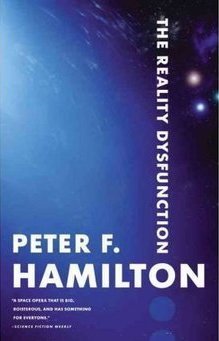
The Reality Dysfunction is a modern classic of science fiction from Peter F. Hamilton, an extraordinary feat of storytelling on a truly epic scale. "A space opera that is big, boisterous, and has something for everyone." — Science Fiction Weekly Space is not the only void. . .In AD 2600 the human race is finally beginning to realize its full potential. Hundreds of colonized planets scattered across the galaxy host a multitude of prosperous and wildly diverse cultures. Genetic engineering has pushed evolution far beyond nature's boundaries, defeating disease and producing extraordinary spaceborn creatures. Huge fleets of sentient trader starships thrive on the wealth created by the industrialization of entire star systems. And throughout inhabited space the Confederation Navy keeps the peace. A true golden age is within our grasp.But on a primitive colony planet, a renegade criminal's chance encounter with an utterly alien entity unleashes the most primal of humanity’s fears. An extinct race which inhabited the galaxy aeons ago called it "The Reality Dysfunction." It is the nightmare which has prowled beside us since the beginning of history. The Night’s Dawn TrilogyThe Reality DysfunctionThe Neutronium AlchemistThe Naked Go

How to Change Your Mind: What the New Science of Psychedelics Teaches Us About Consciousness, Dying, Addiction, Depression, and Transcendence
by Michael Pollan
Rating: 4.3 ⭐
• 12 recommendations ❤️
A brilliant and brave investigation by Michael Pollan, author of five New York Times best sellers, into the medical and scientific revolution taking place around psychedelic drugs--and the spellbinding story of his own life-changing psychedelic experiences When Michael Pollan set out to research how LSD and psilocybin (the active ingredient in magic mushrooms) are being used to provide relief to people suffering from difficult-to-treat conditions such as depression, addiction and anxiety, he did not intend to write what is undoubtedly his most personal book. But upon discovering how these remarkable substances are improving the lives not only of the mentally ill but also of healthy people coming to grips with the challenges of everyday life, he decided to explore the landscape of the mind in the first person as well as the third. Thus began a singular adventure into the experience of various altered states of consciousness, along with a dive deep into both the latest brain science and the thriving underground community of psychedelic therapists. Pollan sifts the historical record to separate the truth about these mysterious drugs from the myths that have surrounded them since the Sixties, when a handful of psychedelic evangelists catalyzed a powerful backlash against what was then a promising field of research.A unique and elegant blend of science, memoir, travel writing, history, and medicine, How to Change Your Mind is a triumph of participatory journalism. By turns dazzling and edifying, it is the gripping account of a journey to an exciting and unexpected new frontier in our understanding of the mind, the self, and our place in the world. The true subject of Pollan's "mental travelogue" is not just psychedelic drugs, but the eternal puzzle of human consciousness and how, in a world that offers us both struggle and beauty, we can do our best to be fully present and find meaning in our lives.