
21 Books Recommended

Around the World in 80 Days Jules Verne Annotated: Masterpiece and Ageless Literary Classic
by Jules Verne
• 1 recommendation ❤️
Scroll up and grab your copy to start reading. This is one classic that you should take some time to enjoy. A must-have literary classic for your leisure reading. Grab your copy by clicking on the “add to cart” button and enlarge your classical literature collection. Visit our Author Page by clicking on our author name. Thank you for your support!
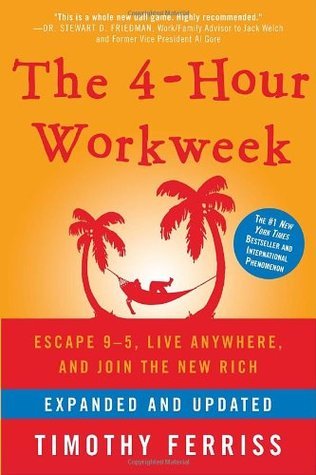
The 4-Hour Workweek: Escape 9-5, Live Anywhere, and Join the New Rich
by Timothy Ferriss
Rating: 3.9 ⭐
• 48 recommendations ❤️
sach ky nang

"Visions of Japan: Kawase Hasui's masterpieces brings together in a single volume one hundred of the artist's most celebrated prints. Fully illustrated, this publication includes annotated descriptions for each work, as well as two essays on Hasui's life and work by Dr. Kendall H. Brown." Kawase Hasui (1883-1957) is considered the foremost Japanese landscape print artist of the 20th century, and he is most closely associated with the pioneering Shin-hanga (New prints) publisher Watanabe Shozaburo (1885-1962). Hasui's work became hugely popular, not only in his native Japan but also in the West, especially in the United States. His valuable contribution to the woodblock print medium was acknowledged in 1956, a year before his death, when he was honoured with the distinction of 'Living National Treasure'.

The Year of Living Biblically: One Man's Humble Quest to Follow the Bible As Literally As Possible
by A.J. Jacobs
Rating: 3.8 ⭐
• 5 recommendations ❤️
What would it require for a person to live all the commandments of the Bible for an entire year? That is the question that animates this hilarious, quixotic, thought-provoking memoir from Jacobs (The Know-It-All). He didn't just keep the Bible's better-known moral laws (being honest, tithing to charity and trying to curb his lust), but also the obscure and unfathomable ones: not mixing wool with linen in his clothing; calling the days of the week by their ordinal numbers to avoid voicing the names of pagan gods; trying his hand at a 10-string harp; growing a ZZ Top beard; eating crickets; and paying the babysitter in cash at the end of each work day. (He considered some rules, such as killing magicians, too legally questionable to uphold.) In his attempts at living the Bible to the letter, Jacobs hits the road in highly entertaining fashion to meet other literalists, including Samaritans in Israel, snake handlers in Appalachia, Amish in Lancaster County, Pa., and biblical creationists in Kentucky. Throughout his journey, Jacobs comes across as a generous and thoughtful (and, yes, slightly neurotic) participant observer, lacing his story with absurdly funny cultural commentary as well as nuanced insights into the impossible task of biblical literalism.

Unlikely Disciple: A Sinner's Semester at America's Holiest University
by Kevin Roose
Rating: 4.0 ⭐
• 2 recommendations ❤️
The hilarious and heartwarming, respectful and thought-provoking memoir of a college student's semester at Liberty University, the "Bible Boot Camp" for young evangelicals, that will inspire believers and nonbelievers alike.No drinking.No smoking.No cursing.No dancing.No R-rated movies.Kevin Roose wasn't used to rules like these. As a sophomore at Brown University, he spent his days fitting right in with Brown's free-spirited, ultra-liberal student body. But when Roose leaves his Ivy League confines to spend a semester at Liberty University, a conservative Baptist school in Lynchburg, Virginia, obedience is no longer optional.Liberty is the late Reverend Jerry Falwell's "Bible Boot Camp" for young evangelicals, his training ground for the next generation of America's Religious Right. Liberty's ten thousand undergraduates take courses like Evangelism 101 and follow a forty-six-page code of conduct that regulates every aspect of their social lives. Hoping to connect with his evangelical peers, Roose decides to enroll at Liberty as a new transfer student, chronicling his adventures in this daring report from the front lines of America's culture war.His journey takes him from an evangelical hip-hop concert to a spring break mission trip to Daytona Beach (where he learns to preach the gospel to partying coeds). He meets pastors' kids, closet doubters, Christian rebels, and conducts what would be the last print interview of Rev. Falwell's life.

Her name was Henrietta Lacks, but scientists know her as HeLa. She was a poor black tobacco farmer whose cells--taken without her knowledge in 1951--became one of the most important tools in medicine, vital for developing the polio vaccine, cloning, gene mapping, and more. Henrietta's cells have been bought and sold by the billions, yes she remains virtually unknown, and her family can't afford health insurance. This phenomenal New York Times bestseller tells a riveting story of the collision between ethics, race, and medicine; of scientific discovery and faith healing; and of a daughter consumed with questions about the mother she never knew.

Drop Dead Healthy: One Man's Humble Quest for Bodily Perfection
by A.J. Jacobs
Rating: 3.8 ⭐
• 1 recommendation ❤️
A New York Times bestseller in hardcover, a chronicle of A.J. Jacob’s mission to radically improve every element of his body and mind—from his brain to his fingertips to his abs.Having lifted his spirit in The Year of Living Biblically and sharpened his mind in The Know-It-All, A.J. Jacobs had one feat left in the self-improvement trinity: to become the healthiest man in the world.The task was massive. First, he had to tackle a complicated web of diet and exercise advice, most of which is nonsensical, unproven, and contradictory. Second, he had to consult a team of medical advisers. And finally, he had to subject himself, over the course of two years, to a grueling regimen of exercises, a range of diets and nutritional plans, and a brutal array of techniques and practices to improve everything from his hearing to his sleep—all the while testing the patience of his long-suffering wife.Drop Dead Healthy bursts with hilarity and warmth, overturning myths about what makes good health and allowing you to reflect on your own health, body, and eventual mortality.

The Better Angels of Our Nature: Why Violence Has Declined
by Steven Pinker
Rating: 4.1 ⭐
• 28 recommendations ❤️
Selected by The New York Times Book Review as a Notable Book of the Year. The author of The New York Times bestseller The Stuff of Thought offers a controversial history of violence. Faced with the ceaseless stream of news about war, crime, and terrorism, one could easily think we live in the most violent age ever seen. Yet as New York Times bestselling author Steven Pinker shows in this startling and engaging new work, just the opposite is true: violence has been diminishing for millennia and we may be living in the most peaceful time in our species' existence. For most of history, war, slavery, infanticide, child abuse, assassinations, pogroms, gruesome punishments, deadly quarrels, and genocide were ordinary features of life. But today, Pinker shows (with the help of more than a hundred graphs and maps) all these forms of violence have dwindled and are widely condemned. How has this happened?This groundbreaking book continues Pinker's exploration of the essence of human nature, mixing psychology and history to provide a remarkable picture of an increasingly nonviolent world. The key, he explains, is to understand our intrinsic motives- the inner demons that incline us toward violence and the better angels that steer us away-and how changing circumstances have allowed our better angels to prevail. Exploding fatalist myths about humankind's inherent violence and the curse of modernity, this ambitious and provocative book is sure to be hotly debated in living rooms and the Pentagon alike, and will challenge and change the way we think about our society.
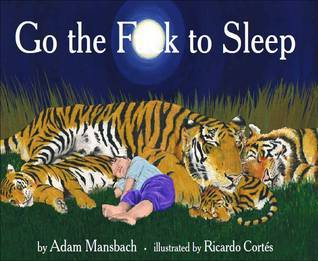
A laugh-out-loud, adults-only bedtime story for parents familiar with the age-old struggle of putting their kids to bed“Hell no, you can’t go to the bathroom. You know where you can go? The f**k to sleep.”Go the Fuck to Sleep is a book for parents who live in the real world, where a few snoozing kitties and cutesy rhymes don’t always send a toddler sailing blissfully off to dreamland. Profane, affectionate, and radically honest, it captures the familiar—and unspoken—tribulations of putting your little angel down for the night. Read by a host of celebrities, from Samuel L. Jackson to Jennifer Garner, this subversively funny bestselling storybook will not actually put your kids to sleep, but it will leave you laughing so hard you won’t care.

The Righteous Mind: Why Good People Are Divided by Politics and Religion
by Jonathan Haidt
Rating: 4.3 ⭐
• 10 recommendations ❤️
NEW YORK TIMES BESTSELLER • The acclaimed social psychologist challenges conventional thinking about morality, politics, and religion in a way that speaks to conservatives and liberals alike—a “landmark contribution to humanity’s understanding of itself” ( The New York Times Book Review ).Drawing on his twenty-five years of groundbreaking research on moral psychology, Jonathan Haidt shows how moral judgments arise not from reason but from gut feelings. He shows why liberals, conservatives, and libertarians have such different intuitions about right and wrong, and he shows why each side is actually right about many of its central concerns.In this subtle yet accessible book, Haidt gives you the key to understanding the miracle of human cooperation, as well as the curse of our eternal divisions and conflicts. If you’re ready to trade in anger for understanding, read The Righteous Mind .

As it was in Anna Karenina, Madame Bovary, and Othello, so it is in life. Most forms of private vice and public evil are kindled and sustained by lies. Acts of adultery and other personal betrayals, financial fraud, government corruption—even murder and genocide—generally require an additional moral defect: a willingness to lie.In Lying , best-selling author and neuroscientist Sam Harris argues that we can radically simplify our lives and improve society by merely telling the truth in situations where others often lie. He focuses on "white" lies—those lies we tell for the purpose of sparing people discomfort—for these are the lies that most often tempt us. And they tend to be the only lies that good people tell while imagining that they are being good in the process.

Belief in free will touches nearly everything that human beings value. It is difficult to think about law, politics, religion, public policy, intimate relationships, morality—as well as feelings of remorse or personal achievement—without first imagining that every person is the true source of his or her thoughts and actions. And yet the facts tell us that free will is an illusion.In this enlightening book, Sam Harris argues that this truth about the human mind does not undermine morality or diminish the importance of social and political freedom, but it can and should change the way we think about some of the most important questions in life.

Giftology: The Art and Science of Using Gifts to Cut Through the Noise, Increase Referrals, and Strengthen Retention
by John Ruhlin
Rating: 4.0 ⭐
• 1 recommendation ❤️
Does it feel like you work in a 'red ocean filled with sharks?' Eat or be eaten. Fierce competition. Continual battling over scarce resources.What if there was another path? What if you could create your own blue oasis where profits are higher, marketing is as natural as breathing, and competition is nearly nonexistent? This nirvana can be a reality when you practice the principles of Giftology . In this unusual un-marketing resource you'll discover...* Why Giftology isn't an expense...it's an investment that can pay off with huge dividends.* How to practice Giftology on a tight budget... it's easy and very effective.* How Giftology turns existing clients into your best salespeople.* Why (and how) gifts with a relatively low value can trump something expensive.* When is the best time to send gifts? (The answer may surprise you.)* How to unleash a Referral Factory, a small army of influencers vouching for you no gimmicks, no catches.* Find out how Giftology can transform your supply chain.* The ten worst gifts...definitely avoid these. (This info is available in the expanded bonus resource. Just click the link inside! It's my gift to you.)The average person is hit with at least thirty thousand messages a day, courtesy of that red ocean filled with sharks. Giftology neutralizes that deadly philosophy and equips you with every tool you need to make your message a priority. Every time. Get your copy today!

KJV Holy Bible, Giant Print Standard Size Faux Leather Red Letter Edition - Thumb Index & Ribbon Marker, King James Version, Dark Brown
by Anonymous
Rating: 4.7 ⭐
• 40 recommendations ❤️
New - Holy Bible: KJV Giant Print Thumb Index Edition: Brown (King James Bible). Great for gift or personal study.
Enlightenment Now: The Case for Reason, Science, Humanism, and Progress
by Steven Pinker
Rating: 4.2 ⭐
• 18 recommendations ❤️
If you think the world is coming to an end, think again: people are living longer, healthier, freer, and happier lives, and while our problems are formidable, the solutions lie in the Enlightenment ideal of using reason and science.Is the world really falling apart? Is the ideal of progress obsolete? In this elegant assessment of the human condition in the third millennium, cognitive scientist and public intellectual Steven Pinker urges us to step back from the gory headlines and prophecies of doom, which play to our psychological biases. Instead, follow the data: In seventy-five jaw-dropping graphs, Pinker shows that life, health, prosperity, safety, peace, knowledge, and happiness are on the rise, not just in the West, but worldwide. This progress is not the result of some cosmic force. It is a gift of the Enlightenment: the conviction that reason and science can enhance human flourishing.Far from being a naïve hope, the Enlightenment, we now know, has worked. But more than ever, it needs a vigorous defense. The Enlightenment project swims against currents of human nature–tribalism, authoritarianism, demonization, magical thinking–which demagogues are all too willing to exploit. Many commentators, committed to political, religious, or romantic ideologies, fight a rearguard action against it. The result is a corrosive fatalism and a willingness to wreck the precious institutions of liberal democracy and global cooperation.With intellectual depth and literary flair, Enlightenment Now makes the case for reason, science, and humanism: the ideals we need to confront our problems and continue our progress.

The idea was deceptively New York Times bestselling author A.J. Jacobs decided to thank every single person involved in producing his morning cup of coffee. The resulting journey takes him across the globe, transforms his life, and reveals secrets about how gratitude can make us all happier, more generous, and more connected.Author A.J. Jacobs discovers that his coffee—and every other item in our lives—would not be possible without hundreds of people we usually take for farmers, chemists, artists, presidents, truckers, mechanics, biologists, miners, smugglers, and goatherds.By thanking these people face to face, Jacobs finds some much-needed brightness in his life. Gratitude does not come naturally to Jacobs—his disposition is more Larry David than Tom Hanks—but he sets off on the journey on a dare from his son. And by the end, it’s clear to him that scientific research on gratitude is true. Gratitude’s benefits are It improves compassion, heals your body, and helps battle depression.Jacobs gleans wisdom from vivid characters all over the globe, including the Minnesota miners who extract the iron that makes the steel used in coffee roasters, to the Madison Avenue marketers who captured his wandering attention for a moment, to the farmers in Colombia.Along the way, Jacobs provides wonderful insights and useful tips, from how to focus on the hundreds of things that go right every day instead of the few that go wrong. And how our culture overemphasizes the individual over the team. And how to practice the art of “savoring meditation” and fall asleep at night. Thanks a Thousand is a reminder of the amazing interconnectedness of our world. It shows us how much we take for granted. It teaches us how gratitude can make our lives happier, kinder, and more impactful. And it will inspire us to follow our own “Gratitude Trails.”

The Polymath: Unlocking the Power of Human Versatility
by Waqas Ahmed
Rating: 3.8 ⭐
• 1 recommendation ❤️
Every human is born with multifarious potential. Why, then, do parents, schools and employers insist that we restrict our many talents and interests; that we 'specialise' in just one?We've been sold a myth, that to 'specialise' is the only way to pursue truth, identity, or even a livelihood. Yet specialisation is nothing but an outdated system that fosters ignorance, exploitation and disillusionment and thwarts creativity, opportunity and progress.Following a series of exchanges with the world’s greatest historians, futurists, philosophers and scientists, Waqas Ahmed has weaved together a narrative of history and a vision for the future that seeks to disrupt this prevailing system of unwarranted ‘hyper-specialisation.’In The Polymath , Waqas shows us that there is another way of thinking and being. Through an approach that is both philosophical and practical, he sets out a cognitive journey towards reclaiming your innate polymathic state. Going further, he proposes nothing less than a cultural revolution in our education and professional structures, whereby everyone is encouraged to express themselves in multiple ways and fulfil their many-sided potential.Not only does this enhance individual fulfilment, but in doing so, facilitates a conscious and creative society that is both highly motivated and well equipped to address the complexity of 21st century challenges.

Range: Why Generalists Triumph in a Specialized World
by David Epstein
Rating: 4.2 ⭐
• 2 recommendations ❤️
The #1 New York Times bestseller that has all America talking—with a new afterword on expanding your range—as seen on CNN's Fareed Zakaria GPS, Morning Joe, CBS This Morning, and more.“The most important business—and parenting—book of the year.” — Forbes“Urgent and important. . . an essential read for bosses, parents, coaches, and anyone who cares about improving performance.” —Daniel H. Pink Shortlisted for the Financial Times /McKinsey Business Book of the Year AwardPlenty of experts argue that anyone who wants to develop a skill, play an instrument, or lead their field should start early, focus intensely, and rack up as many hours of deliberate practice as possible. If you dabble or delay, you’ll never catch up to the people who got a head start. But a closer look at research on the world’s top performers, from professional athletes to Nobel laureates, shows that early specialization is the exception, not the rule. David Epstein examined the world’s most successful athletes, artists, musicians, inventors, forecasters and scientists. He discovered that in most fields—especially those that are complex and unpredictable—generalists, not specialists, are primed to excel. Generalists often find their path late, and they juggle many interests rather than focusing on one. They’re also more creative, more agile, and able to make connections their more specialized peers can’t see.Provocative, rigorous, and engrossing, Range makes a compelling case for actively cultivating inefficiency. Failing a test is the best way to learn. Frequent quitters end up with the most fulfilling careers. The most impactful inventors cross domains rather than deepening their knowledge in a single area. As experts silo themselves further while computers master more of the skills once reserved for highly focused humans, people who think broadly and embrace diverse experiences and perspectives will increasingly thrive.

In the vein of Mindy Kaling, Ali Wong, and Amy Poehler, a collection of hilarious personal essays, poems and even amusement park maps on the subjects of insecurity, fame, anxiety, and much more from the charming and wickedly funny creator of Crazy Ex-Girlfriend.Rachel Bloom has felt abnormal and out of place her whole life. In this exploration of what she thinks makes her "different," she's come to realize that a lot of people also feel this way; even people who she otherwise thought were "normal."In a collection of laugh-out-loud funny essays, all told in the unique voice (sometimes singing voice) that made her a star; Rachel writes about everything from her love of Disney, OCD and depression, weirdness, and female friendships to the story of how she didn't poop in the toilet until she was four years old; Rachel's pieces are hilarious, smart, and infinitely relatable (except for the pooping thing).

The Sweet Spot: The Pleasures of Suffering and the Search for Meaning
by Paul Bloom
Rating: 3.6 ⭐
• 1 recommendation ❤️
“This book will challenge you to rethink your vision of a good life. With sharp insights and lucid prose, Paul Bloom makes a captivating case that pain and suffering are essential to happiness. It’s an exhilarating antidote to toxic positivity.” —Adam Grant, #1 New York Times bestselling author of Think Again and host of the TED podcast WorkLife One of Behavioral Scientist 's "Notable Books of 2021" From the author of Against Empathy , a different kind of happiness book, one that shows us how suffering is an essential source of both pleasure and meaning in our lives Why do we so often seek out physical pain and emotional turmoil? We go to movies that make us cry, or scream, or gag. We poke at sores, eat spicy foods, immerse ourselves in hot baths, run marathons. Some of us even seek out pain and humiliation in sexual role-play. Where do these seemingly perverse appetites come from? Drawing on groundbreaking findings from psychology and brain science, The Sweet Spot shows how the right kind of suffering sets the stage for enhanced pleasure. Pain can distract us from our anxieties and help us transcend the self. Choosing to suffer can serve social goals; it can display how tough we are or, conversely, can function as a cry for help. Feelings of fear and sadness are part of the pleasure of immersing ourselves in play and fantasy and can provide certain moral satisfactions. And effort, struggle, and difficulty can, in the right contexts, lead to the joys of mastery and flow. But suffering plays a deeper role as well. We are not natural hedonists—a good life involves more than pleasure. People seek lives of meaning and significance; we aspire to rich relationships and satisfying pursuits, and this requires some amount of struggle, anxiety, and loss. Brilliantly argued, witty, and humane, Paul Bloom shows how a life without chosen suffering would be empty—and worse than that, boring .

The Puzzler: One Man's Quest to Solve the Most Baffling Puzzles Ever, from Crosswords to Jigsaws to the Meaning of Life
by A.J. Jacobs
Rating: 3.9 ⭐
• 2 recommendations ❤️
The New York Times bestselling author of The Year of Living Biblically goes on a rollicking journey to understand the enduring power of puzzles: why we love them, what they do to our brains, and how they can improve our world.What makes puzzles--jigsaws, mazes, riddles, sudokus--so satisfying? Be it the formation of new cerebral pathways, their close link to insight and humor, or their community-building properties, they're among the fundamental elements that make us human. Convinced that puzzles have made him a better person, A. J. Jacobs--four-time New York Times bestselling author, master of immersion journalism, and nightly crossworder--set out to determine their myriad benefits. And maybe, in the process, solve the puzzle of our very existence. Well, almost.In The Puzzler, Jacobs meets the most zealous devotees, enters (sometimes with his family in tow) any puzzle competition that will have him, unpacks the history of the most popular puzzles, and aims to solve the most impossible head-scratchers, from a mutant Rubik's Cube, to the hardest corn maze in America, to the most sadistic jigsaw. Chock-full of unforgettable adventures and original examples from around the world--including new work by Greg Pliska, one of America's top puzzle-makers, and a hidden, super-challenging but solvable puzzle that will earn the first reader to crack it a $10,000 prize*--The Puzzler will open readers' eyes to the power of flexible thinking and concentration. Whether you're puzzle obsessed or puzzle hesitant, you'll walk away with real problem-solving strategies and pathways toward becoming a better thinker and decision maker--for these are certainly puzzling times.