Loading genres...
Explore the best books about Plants genre.


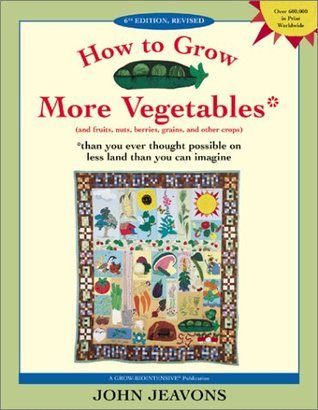
A classic in the field of sustainable gardening, HOW TO GROW MORE VEGETABLES shows how to produce a beautiful organic garden with minimal watering and care, whether it's just a few tomatoes in a tiny backyard or enough food to feed a family of four on less than half an acre. Updated with the latest biointensive tips and techniques, this is an essential reference for gardeners of all skill levels seeking to grow some or all of their own food.
Living at the limits of our ordinary perception, mosses are a common but largely unnoticed element of the natural world. Gathering Moss is a beautifully written mix of science and personal reflection that invites readers to explore and learn from the elegantly simple lives of mosses. Robin Wall Kimmerer's book is not an identification guide, nor is it a scientific treatise. Rather, it is a series of linked personal essays that will lead general readers and scientists alike to an understanding of how mosses live and how their lives are intertwined with the lives of countless other beings, from salmon and hummingbirds to redwoods and rednecks. Kimmerer clearly and artfully explains the biology of mosses, while at the same time reflecting on what these fascinating organisms have to teach us.Drawing on her diverse experiences as a scientist, mother, teacher, and writer of Native American heritage, Kimmerer explains the stories of mosses in scientific terms as well as in the framework of indigenous ways of knowing. In her book, the natural history and cultural relationships of mosses become a powerful metaphor for ways of living in the world.Gathering Moss will appeal to a wide range of readers, from bryologists to those interested in natural history and the environment, Native Americans, and contemporary nature and science writing.

Opium Drugs Culture studies Drug policy Poppy

What are hallucinogenic plants? How do they affect mind and body? Who uses them - and why? This unique Golden Guide surveys the role of psychoactive plants in primitive and civilized societies from early times to the present. The first nontechnical guide to both the cultural significance and physiological effects of hallucinogens, HALLUCINOGENIC PLANTS will fascinate general readers and students of anthropology and history as well as botanists and other specialists. All of the wild and cultivated species considered are illustrated in brilliant full color.

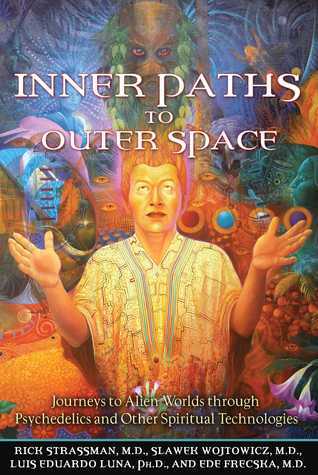
An investigation into experiences of other realms of existence and contact with otherworldly beings • Examines how contact with alien life-forms can be obtained through the “inner space” dimensions of our minds • Presents evidence that other worlds experienced through consciousness-altering technologies are often as real as those perceived with our five senses • Correlates science fiction’s imaginal realms with psychedelic research For thousands of years, voyagers of inner space--spiritual seekers, shamans, and psychoactive drug users--have returned from their inner imaginal travels reporting encounters with alien intelligences. Inner Paths to Outer Space presents an innovative examination of how we can reach these other dimensions of existence and contact otherworldly beings. Based on their more than 60 combined years of research into the function of the brain, the authors reveal how psychoactive substances such as DMT allow the brain to bypass our five basic senses to unlock a multidimensional realm of existence where otherworldly communication occurs. They contend that our centuries-old search for alien life-forms has been misdirected and that the alien worlds reflected in visionary science fiction actually mirror the inner space world of our minds. The authors show that these “alien” worlds encountered through altered states of human awareness, either through the use of psychedelics or other methods, possess a sense of reality as great as, or greater than, those of the ordinary awareness perceived by our five senses.

The first new book on psychoactive mushrooms in 10 years. Introducing a rich variety of psychoactive mushrooms from around the globe -including some rare and little-known species - the author describes dozens of species and covers a broad range of mushroom- related topics, from distribution maps to comparisons of cultural attitudes to laboratory analyses of active ingredients. One of the book's most remarkable features is its multi-disciplinary chemistry, botany, biology, history, anthropology, religion, pharmacology, medicine - all of these are among the fields contributing a diversity of data, questions and information that are assembled into one of the most comprehensive and intriguing portraits of psychoactive mushrooms ever created. Lavishly illustrated, well-organized and enriched by numerous accounts of mushroom experiences, this book explores the psychoactive mycoflora on five continents and reconstructs a continuity of psychoactive mushroom use throughout history, from as early as 10,000 years ago to the present day. You will also find detailed chapters on mushroom cultivation techniques, psychotherapy applications, the bluing phenomenon, the dangers of accidental poisonings caused by misidentification of species, and more. A treasure trove of information, illustrations and magnificent color photography, the book contains much novel information as well, such as the first report on the psychoactivity of baeocystin and up-to-date findings on the use of plant growth hormones to accelerate growth.**************************** "Jochen Gartz has made an outstanding contribution to the field of mycology by embracing the Magic Mushrooms of Germany and from around the world and by pursuing their scientific study and investigation." - Christian Ratsch, from his Introduction**************************** 130 pages, 8"x11", sturdy softcover 30 color plates 36 black & white illustrations 3 maps of geographic distribution patterns 10 tables 18 reprodu! ctions of historic source materials and citations from the early mycological literature Bibliography of 250+ citations and sources FROM THE TABLE OF "Who Was the First Magician?" - Foreword by Christian Rtsch 1. Introduction 2. Fancy of Fools or Flesh of the Reflections on the History Study of Magic Mushrooms 3. The Current State of Knowledge About European Species 3.1 Psilocybe semilanceata - The Classic Psychotropic Species of Europe 3.2 Psilocybe cyanescens - Potent Mushrooms Growing on Wood Debris 3.3 Panaeolus subbalteatus - Mycology & Myths about the Panaeolus Species 3.4 Inocybe aeruginascens - Fast-Spreading New Arrivals 3.5 Gymnopilus purpuratus - Magnificent Mushrooms from South America 3.6 Conocybe cyanopus - Tiny Mushrooms of Remarkable Potency 3.7 Pluteus salicinus - A Little-Known Wood-Inhabiting Species 4. Mushroom The Potential for Deadly Mistakes 5. The Bluing Phenomenon and Metol Testing - Reality vs. Wishful Thinking 6. Mushroom Cultivation - Classic Findings and New Techniques 7. Psychotropic Mushroom Species All Around The World 7.1 Spotlight on North America and Hawaii 7.2 Mycophilia in Central and South America 7.3 Australia's Mycoflora Attracts Attention 7.4 European Customs and Conventions 7.5 Japanese Experiments 7.6 Intoxications and the Oldest Known Mushroom Cult in Africa 7.7 Usage in Asia and Oceania 8. Remarks About Effects of Mushrooms from the Category Phantastika 9. Psychotherapy 10. Outlook 11. Bibliography (Reference Section with over 250 entries)

Ever since the first human settlements 10,000 years ago, weeds have dogged our footsteps. They are there as the punishment of 'thorns and thistles' in Genesis and , two millennia later, as a symbol of Flanders Field. They are civilisations' familiars, invading farmland and building-sites, war-zones and flower-beds across the globe. Yet living so intimately with us, they have been a blessing too. Weeds were the first crops, the first medicines. Burdock was the inspiration for Velcro. Cow parsley has become the fashionable adornment of Spring weddings.Weaving together the insights of botanists, gardeners, artists and poets with his own life-long fascination, Richard Mabey examines how we have tried to define them, explain their persistence, and draw moral lessons from them. One persons weed is another's wild beauty.

An accessible and compelling story of a scientist's discovery of plant communication and how it influenced her research and changed her life. In this "phytobiography"—a collection of stories written in partnership with a plant—research scientist, Monica Gagliano, reveals the dynamic role plants play in genuine first-hand accounts from her research into plant communication and cognition. By transcending the view of plants as the objects of scientific materialism, Gagliano encourages us to rethink plants as people--beings with subjectivity, consciousness, and volition, and hence having the capacity for their own perspectives and voices. The book draws on up-close-and-personal encounters with the plants themselves, as well as plant shamans, indigenous elders, and mystics from around the world and integrates these experiences with an incredible research journey and the groundbreaking scientific discoveries that emerged from it. Gagliano has published numerous peer-reviewed scientific papers on how plants have a Pavlov-like response to stimuli and can learn, remember, and communicate to neighboring plants. She has pioneered the brand-new research field of plant bioacoustics, for the first time experimentally demonstrating that plants emit their own 'voices' and, moreover, detect and respond to the sounds of their environments. By demonstrating experimentally that learning is not the exclusive province of animals, Gagliano has re-ignited the discourse on plant subjectivity and ethical and legal standing. This is the story of how she made those discoveries and how the plants helped her along the way.